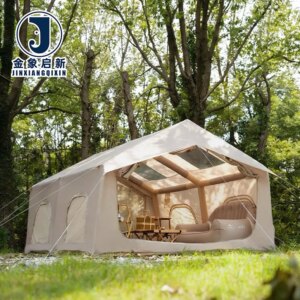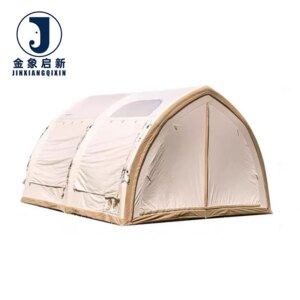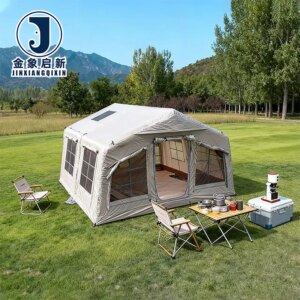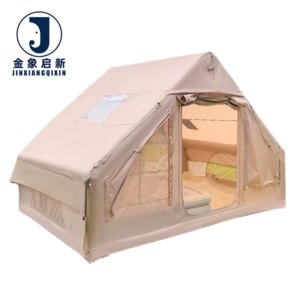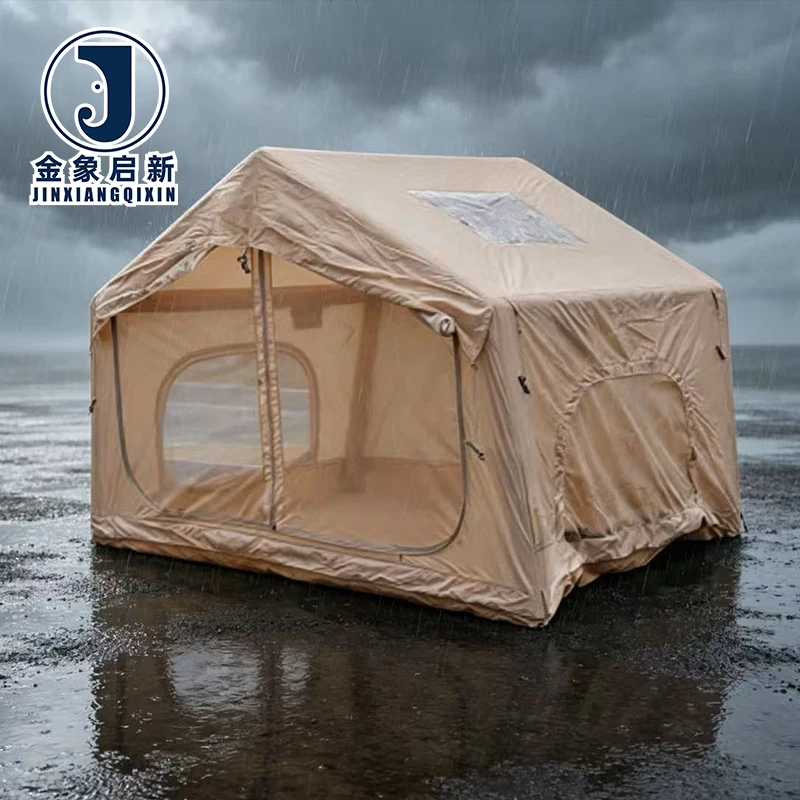
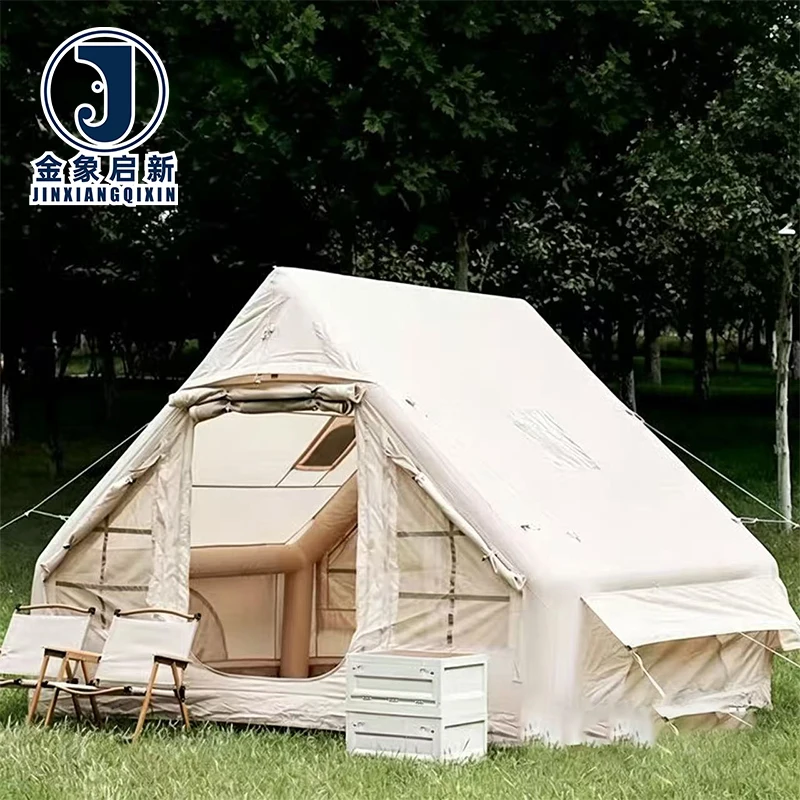
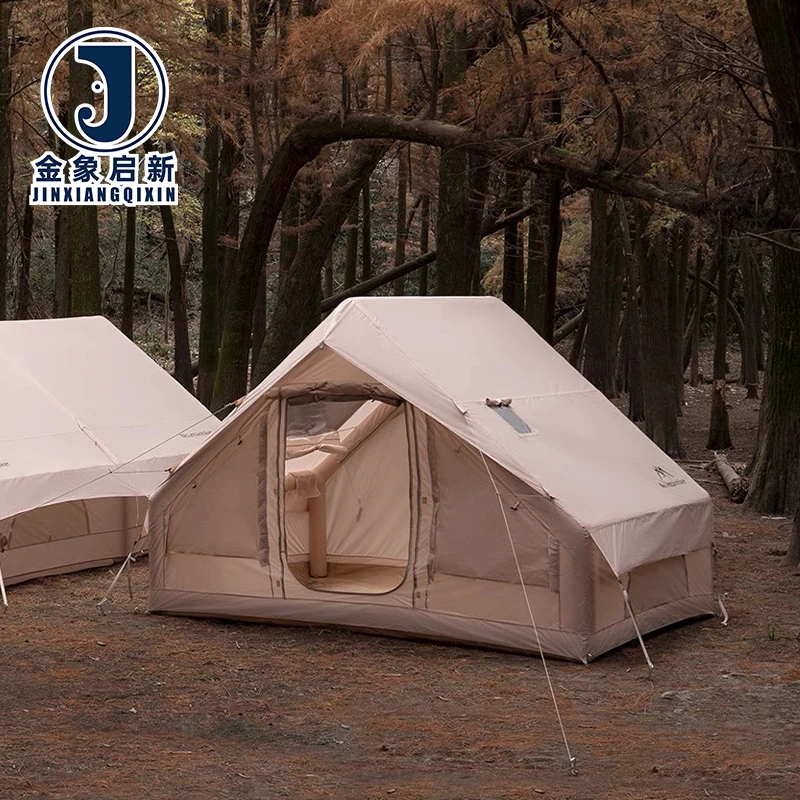
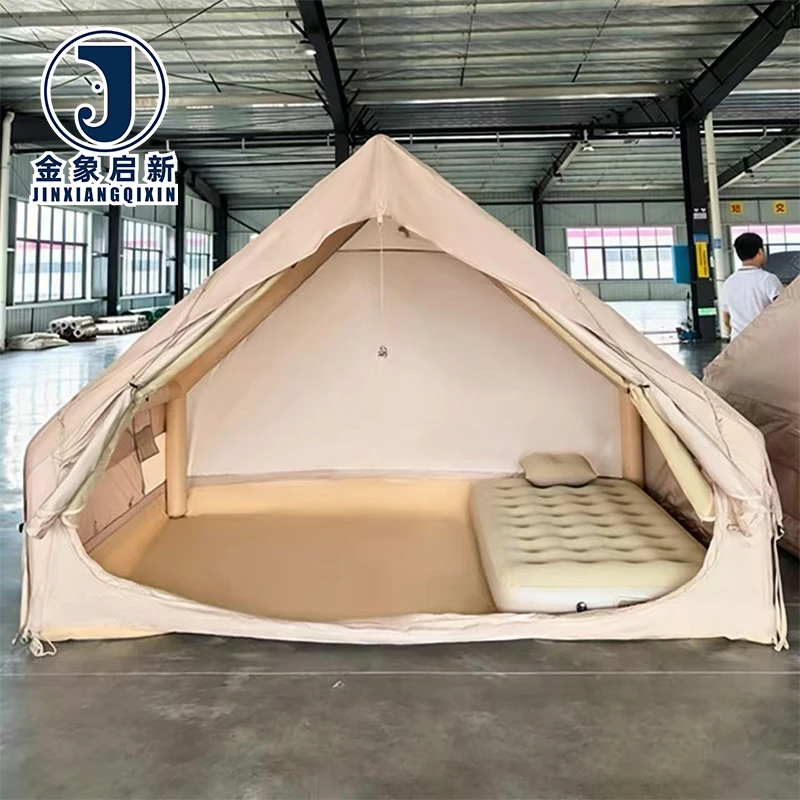
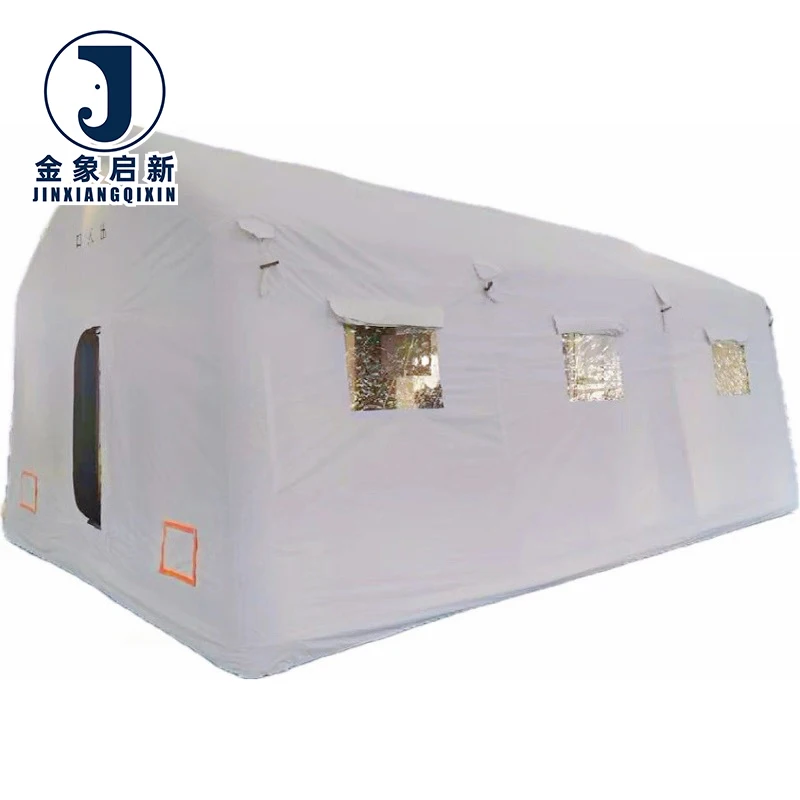
Inflatable Camping Tent — Waterproof UV-Resistant PVC Fabric, Quick Automatic Opening, Tear-Resistant Single Layer
- Four-season extended design with OEM/ODM customization including pattern printing
- Full catalogue sourcing covering the complete inflatable range with treatment options and sizing from design to delivery
- Dedicated QA/QC at every production stage with 100% inspection before shipment ensures consistent batch quality across your order
Description
Process Control Depth — Three full production lines and 36 sets of processing equipment allow this Inflatable Camping Tent to move from sample approval to bulk dispatch with consistent coating weight and adhesion across every roll.
Technical Specifications
| Parameter | Value |
|---|---|
| Product Type | Inflatable Camping Tent |
| Core Material | Waterproof UV-Resistant PVC Fabric |
| Key Performance | Waterproof, UV-Resistant, Tear-Resistant |
| Construction | Single Layer |
| Design Feature | Quick Automatic Opening, Extended Type, Four-Season |
| Customization Service | OEM & ODM (sample customization, pattern printing) |
| Production Facility Area | 9180 square meters |
| Production Lines | 3 full production lines |
| Processing Equipment | 36 sets of professional processing equipment |
| R&D Team Scale | 10 technicians |
| Quality Control System | Strict full-process quality inspection with dedicated QA & QC staff |
| Flame Retardant Grade | (grade not stated in source) |
| UV Treatment | (test basis not stated in source) |
| Standards | ISO9001, ISO14001, ISO45001, CE |
Application Suitability
| Application | Exposure & Requirement |
|---|---|
| Temporary site shelters for construction projects | Wind loading, rain exposure, repeated inflation cycles, abrasive ground contact |
| Mobile storage facilities for logistics operations | UV exposure during yard storage, moisture ingress risk, forklift proximity abrasion |
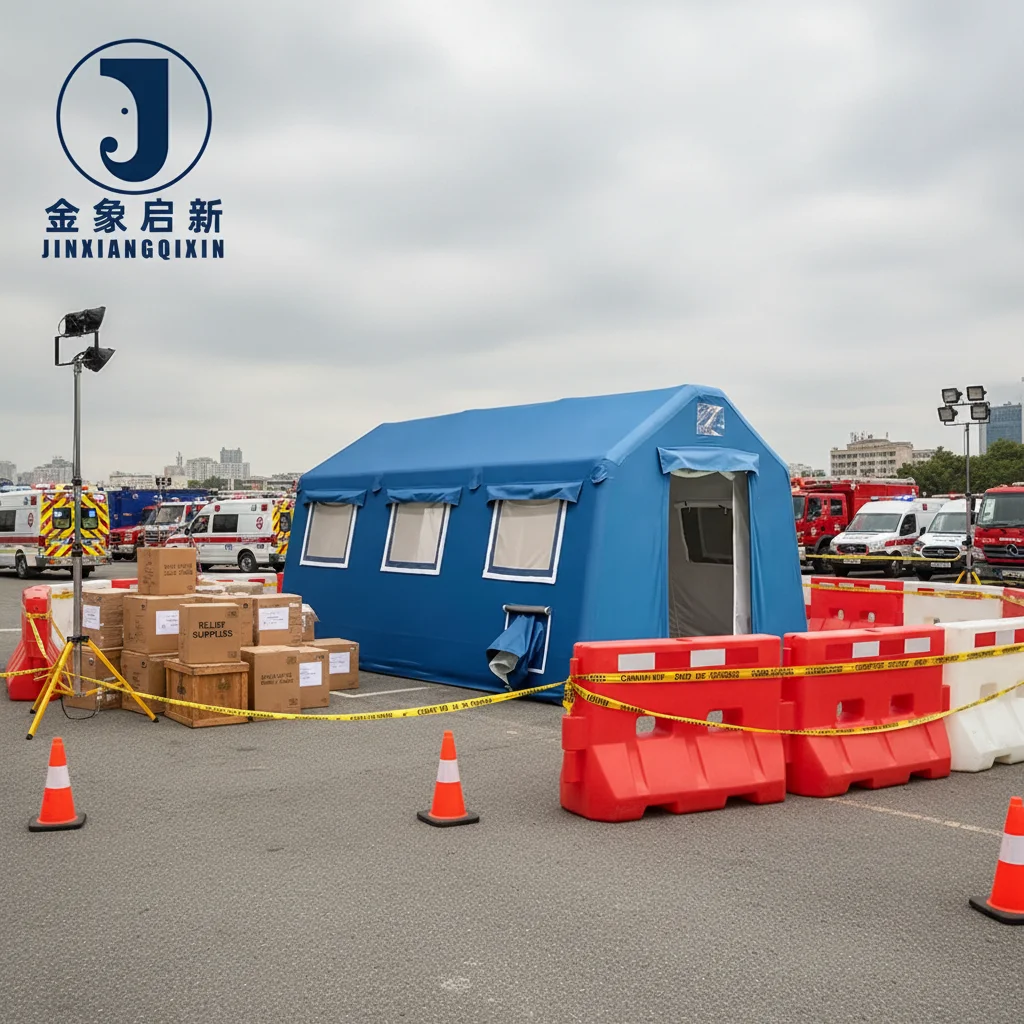
| Emergency response units for disaster management | Rapid deployment requirement, unpredictable weather, transport compression |
| Component manufacturing for outdoor gear companies | Batch-to-batch consistency, weld seam integrity, colour matching across production runs |
| Commercial camping equipment manufacturing | Consumer-facing finish quality, extended outdoor exposure, brand colour specifications |
| Industrial outdoor shelters | Continuous UV and weather exposure, structural inflation pressure, thermal fluctuation |
Why Claimed Treatments Fail Verification Without Test Documentation
A specification sheet without a test report is a marketing claim, not a material guarantee.
Buyers sourcing PVC-coated fabric for inflatable structures frequently receive quotations listing UV resistance or flame retardancy as standard features. When the rolls arrive, the documentation package often lacks the test report that would confirm the treatment level. This gap creates compliance exposure — particularly for inflatable tent fabric shipped to markets with mandatory fire classification for temporary structures. [NEED_CITE: fire classification requirements for temporary membrane structures vary by jurisdiction]
I have seen procurement teams accept a supplier declaration at face value, only to discover at the job site that the local inspector requires a specific test standard the fabric was never tested against. The cost of replacing installed inflatable tent fabric in the field far exceeds the cost of requesting documentation before the order ships. This Inflatable Camping Tent is available in flame retardant grades — confirm the grade required for your market before production begins. UV treatment details and the applicable test basis should be verified per order to match your destination market’s exposure expectations.
Coating Adhesion and the Weld Line Reality
Inflatable structures place continuous stress on welded seams because the air chambers flex with every pressure change and wind gust. The Inflatable Camping Tent fabric must maintain coating-to-base-fabric adhesion through these cycles. When adhesion is weak, the coating delaminates at the weld line long before the base fabric reaches its tensile limit. Our 10-person R&D team evaluates coating formulation and base fabric preparation specifically for heat-welded inflatable construction, ensuring the seam becomes the strongest point rather than the first failure. Sourcing teams evaluating an Inflatable Tent Fabric manufacturer custom solution should request peel strength data alongside tensile figures.
Deployment Speed Versus Fabric Weight Trade-Off
Emergency response operators and commercial camp operators both need fast inflation, but they carry different logistical constraints. A heavier PVC construction resists puncture and abrasion during rough handling yet demands more inflation pressure and takes longer to erect. The single-layer, extended-type design of this Inflatable Camping Tent balances structural rigidity with manageable weight for transport and rapid deployment. Quick automatic opening is engineered into the chamber geometry, and the four-season rating means the fabric must perform across a wide thermal range without becoming brittle in cold conditions or overly soft in heat. [NEED_CITE: PVC coated fabric low-temperature flexibility thresholds for inflatable applications]
How Single-Layer Construction Affects Long-Term Performance
The single-layer PVC construction of this Inflatable Camping Tent eliminates the inter-layer moisture trapping that can occur in multi-laminate fabrics when condensation forms between plies. Waterproof performance depends entirely on the coating integrity and seam quality, since there is no secondary barrier. UV-resistant treatment is applied to the outer surface where solar exposure is greatest, and tear resistance derives from the base fabric weave density combined with the coating penetration depth. When evaluating any inflatable tent fabric, buyers should understand that single-layer designs place higher demands on the coating process — pinholes, thin spots, or adhesion failures have no backup layer to compensate. The 36 sets of professional processing equipment in our facility support the consistent coating application that single-layer inflatable fabrics require.
The Hidden Cost of Skipping Pre-Production Sample Validation
Colour variation between rolls in the same shipment is one of the most visible defects once inflatable shelters are erected side by side at a commercial campsite or event venue. When a buyer approves a Pantone reference from a screen image rather than a physical sample, the gap between expectation and delivery becomes apparent only after installation. Weld seam failure under inflation pressure is another consequence of skipping sample testing — heat welding parameters that work for one PVC formulation may produce weak, brittle seams on another. Requesting a physical sample of the Inflatable Camping Tent fabric, testing your specific weld parameters, and confirming colour under the lighting conditions of your end-use environment prevents these costly field discoveries. [NEED_CITE: weld parameter optimisation for PVC coated fabric seam strength]
Why Procurement Teams Consolidate Inflatable Fabric Sourcing Here
Material selection is handled by a 10-person R&D team that works directly from your application brief, recommending base fabric and coating combinations suited to inflatable tent structures rather than offering a generic catalogue pick.
Sample development runs in parallel with specification finalisation, so design changes are validated on physical fabric before mass production tooling is committed.
Three full production lines provide the capacity to fulfil bulk inflatable tent fabric orders on confirmed lead times, while 36 sets of professional processing equipment handle the cutting, welding, and finishing operations in-house.
Dedicated QA and QC staff inspect every production stage — coating weight, colour consistency, and seam integrity are checked against the order specification before any roll is cleared for packing.
The 9,180 square metre facility consolidates coating, printing, and fabrication under one roof, reducing the hand-off points where specification drift typically occurs in multi-vendor supply chains.
Documentation & Verification
- Material specification sheet stating GSM, base fabric type, coating composition, and colour reference for every Inflatable Camping Tent order
- Test reports for UV and flame-retardant grades provided where applicable to support your market compliance requirements
- 100% pre-shipment inspection record confirming roll count, colour consistency, and surface quality before dispatch
- Batch quality inspection report linking each roll to its production run for traceability
- ISO9001, ISO14001, ISO45001, and CE certificates available for import documentation and audit submissions
- Pre-shipment sample retained on file for future re-order colour and specification matching
Fabrication, Handling & Storage
- Heat welding temperature and dwell time must be calibrated to the specific PVC coating formulation of this Inflatable Camping Tent fabric before production runs begin
- Store rolls vertically on padded racks to prevent flat-spot creasing that transfers into visible marks on the single-layer inflated surface
- Pattern printing adhesion should be validated on a sample panel before full-run branding is committed to the waterproof PVC surface
- Allow cold-stored rolls to acclimatise to workshop temperature before unrolling to avoid coating micro-cracking on the tear-resistant fabric
- Use PVC-compatible solvent cleaners only; aggressive alkaline agents can degrade the UV-resistant surface treatment over repeated cleaning cycles
- Cut panels with allowance for weld overlap; single-layer construction requires precise seam alignment to maintain air chamber integrity
Before You Request a Quote
To scope an Inflatable Camping Tent fabric order accurately, share the inflation pressure range your design operates at, the climate zone and UV exposure conditions of the end-use environment, and whether your market requires a specific flame retardant grade for temporary structures. If you need pattern printing or custom colour matching, provide Pantone references and indicate whether you require roll stock or finished cut-and-welded panels. Specify your annual volume and whether sample validation is needed before production commitment.
Frequently Asked Questions
Q: What customization options are available for inflatable tent fabric orders?
A: We support OEM and ODM including sample customization, pattern printing, and size adjustment for the Inflatable Camping Tent. Our R&D team develops physical samples within days so you can validate colour, weld behaviour, and inflation performance before mass production begins. Minimum order quantities depend on the specific colour, width, and printing requirements of your project.
Q: What is the UV treatment test basis and expected outdoor service life?
A: UV treatment is applied to the PVC coating surface of this Inflatable Camping Tent fabric. The specific test basis and grade should be confirmed per order to match your destination market requirements. We provide test reports where applicable and recommend requesting a sample for independent evaluation if your application demands verified UV performance data for compliance submissions.
Q: How does the sample approval workflow operate before production?
A: Submit your design brief including dimensions, colour references, and performance requirements. Our 10-person R&D team produces a physical sample of the Inflatable Camping Tent fabric for your evaluation. You test weld parameters, colour accuracy, and inflation behaviour, then approve or request adjustments. Production begins only after written sample approval.
Q: How is batch-to-batch colour consistency controlled across multiple shipments?
A: Each production run of Inflatable Camping Tent fabric is linked to a retained reference sample and a batch inspection record. Our QA staff compare every roll against the approved colour standard under controlled lighting before clearing it for dispatch. For multi-shipment contracts, we hold a master reference to ensure consistency across orders placed months apart.
Q: What welding and seam guidelines apply to inflatable structure fabrication?
A: Single-layer PVC construction requires precise heat welding parameters matched to the coating formulation of this Inflatable Camping Tent fabric. We recommend calibrating temperature, pressure, and dwell time on a sample panel before production. Seam integrity is critical for air-holding inflatable structures, and our processing team can provide weld parameter guidance based on the specific fabric grade you select.
Related products
-
Inflatable Four-season Camping Tent-PVC Coated Waterproof Eco-Friendly Quick Inflation CE Certified ODM/OEM Accepted
Read more -
Inflatable Camping Tent Waterproof PVC Outdoor Air Tent Easy Setup Family Camping Shelter
Read more -
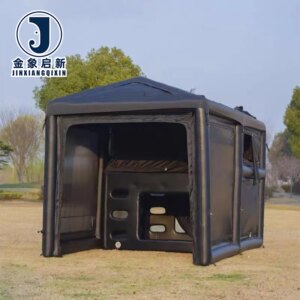
Premium Four-season Inflatable Tents for Camping Easy-to-Use Spacious Portable Waterproof Outdoor Tent Quick
Read more -
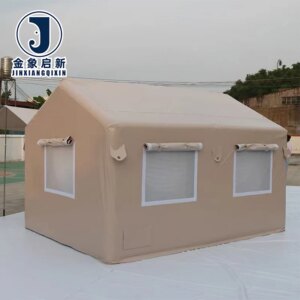
Tente événementielle gonflable quatre saisons extérieure en PVC étanche ouverture automatique rapide pour 6 à 8 personnes logo personnalisé
Read more