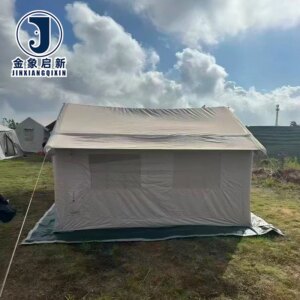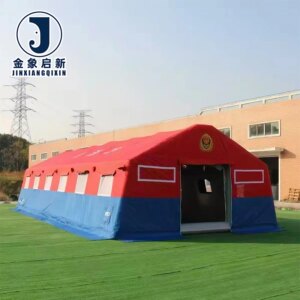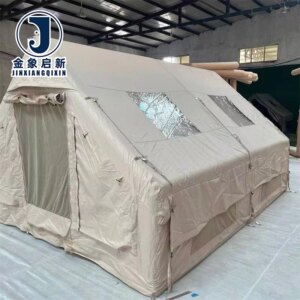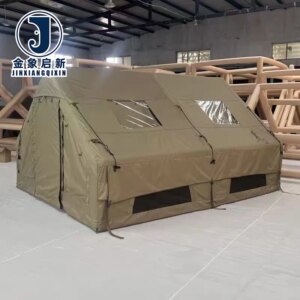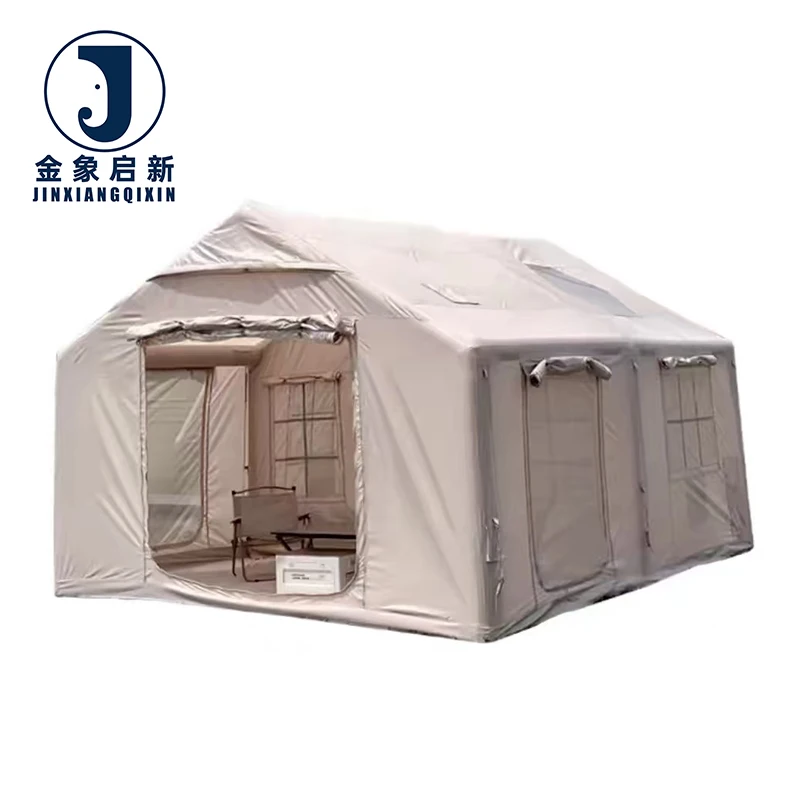
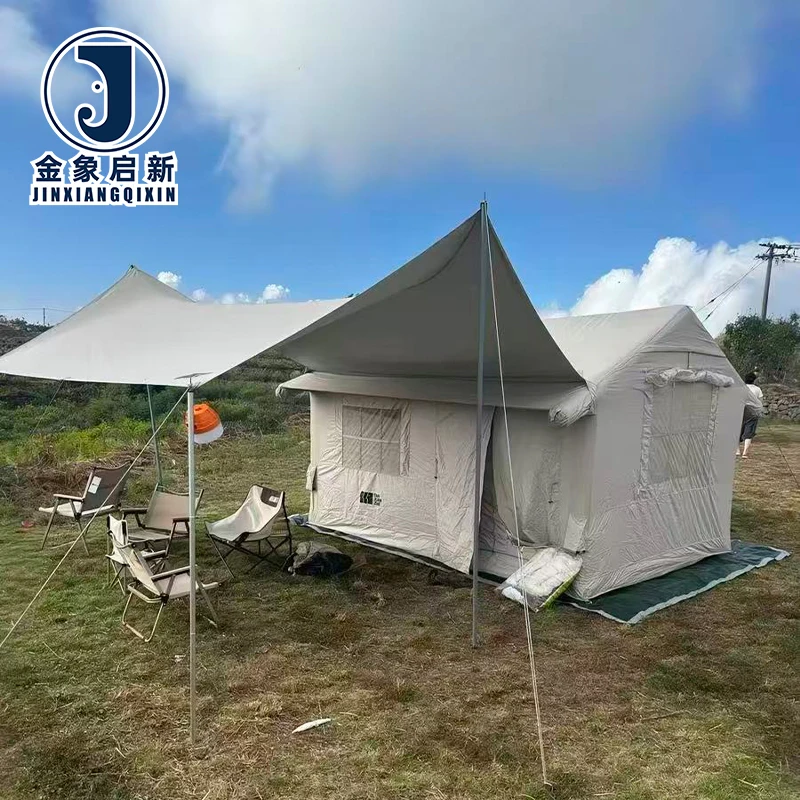
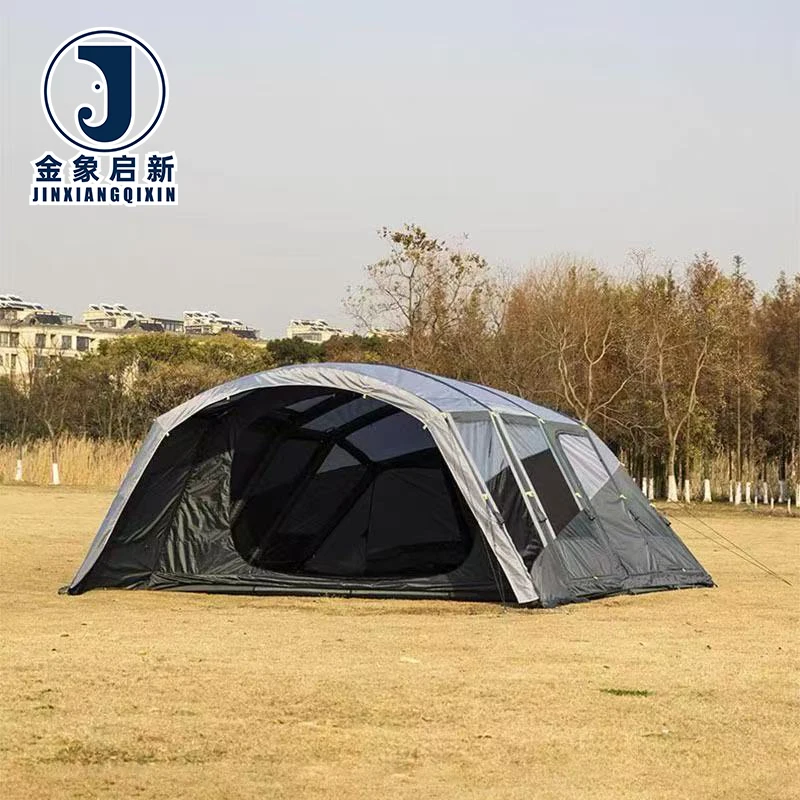
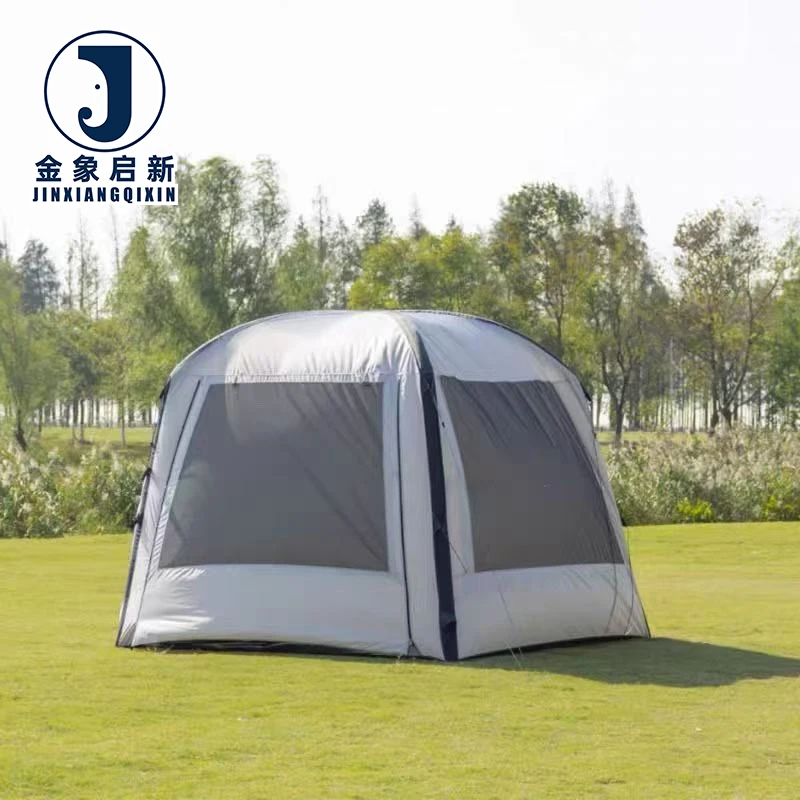
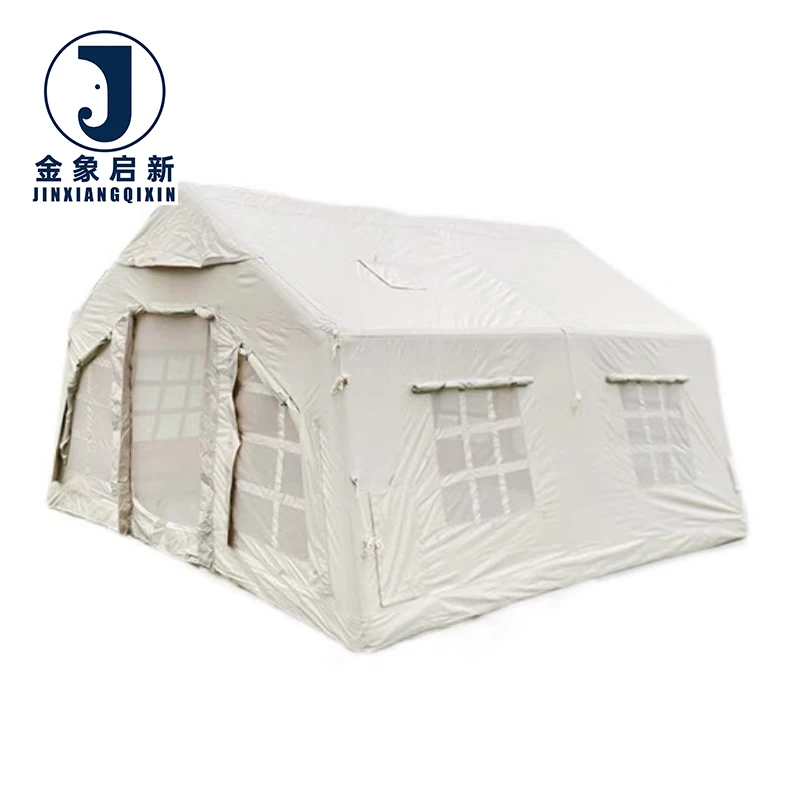
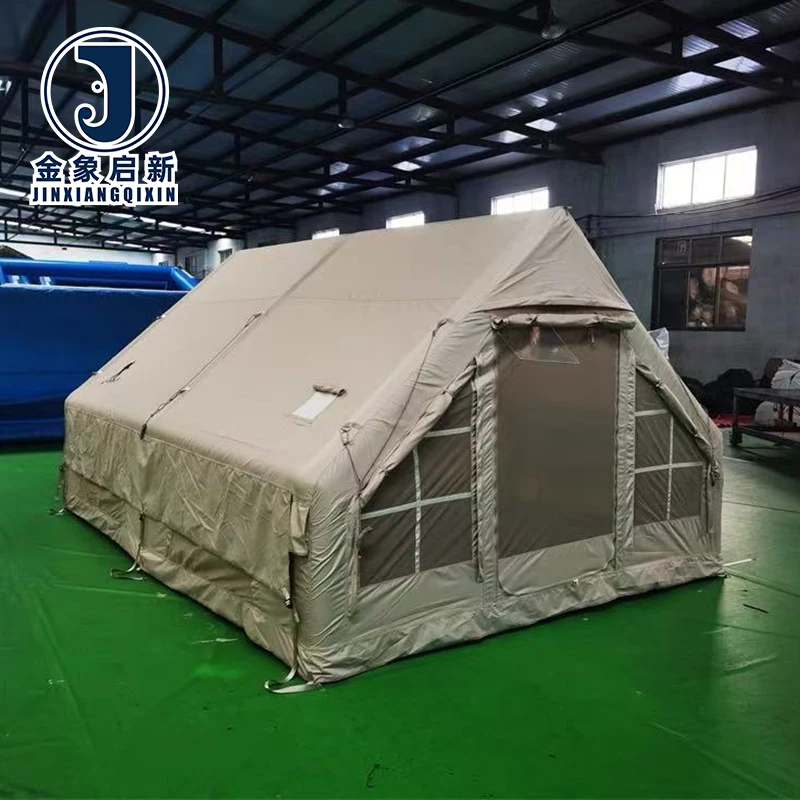
Automatic Inflatable Four-season PVC Tent, 3-5 Person, 0.4mm–1.2mm PVC Tarpaulin — single-layer construction rated for -20°C to 60°C operating range with waterproof and tear-resistant performance.
UV-resistant knife-coated PVC fabric extends service life under sustained outdoor exposure, while 24-hour inflation testing validates structural integrity at seam and valve points before dispatch.
- 16 quality checkpoints with full pre-shipment inspection record
- Sample development within 5-7 days for custom dimensions and pattern printing
- Complete documentation including ISO, CE, and material specification sheets per batch
Description
Fabric expertise backed by in-process QA — dedicated coating control and 100% pre-shipment inspection ensure every inflatable tent fabric roll meets stated thickness and treatment grades before leaving our Jinan facility.
Technical Specifications
| Parameter | Value |
|---|---|
| Product Type | Inflatable Tent |
| Core Material | PVC Tarpaulin |
| Capacity | 3-5 Person |
| Construction | Single Layer |
| Key Features | UV Protection, Waterproof, Tear-Resistant, Four-Season Durability |
| Operating Temperature Range | -20°C to 60°C |
| Tear Resistance | 200N/5cm (source value — verify against manufacturer catalog) |
| Hydrostatic Pressure Rating | ≥3000mmH₂O (source value — verify against manufacturer catalog) |
| Flame Retardancy | UL94 V-2 (source value — verify against manufacturer catalog) |
| Material Thickness Options | 0.4mm to 1.2mm |
| Production Tolerance | ±2cm for dimensions |
| Customization Scope | OEM & ODM, pattern printing, material thickness, dimensions, valve types, color |
| Quality Control Protocol | 16 quality checkpoints, 24-hour inflation testing before shipment |
| Sample Lead Time | 5-7 business days |
| Mass Production Lead Time | 15-20 days for standard models |
| Certifications | ISO 9001, ISO 14001, ISO 45001, CE, RoHS |
Application Suitability
| Application | Exposure & Requirement |
|---|---|
| Disaster relief operations | Rapid deployment, sustained UV exposure, wind loading on inflated frame |
| Temporary site shelters | Dust, rain, thermal cycling between day and night shifts |
| Equipment storage | Abrasion from machinery contact, ground moisture, forklift proximity |
| Emergency response centers | High occupant density, heating equipment proximity, continuous inflation pressure |
| On-site command posts | Extended outdoor exposure, cable and antenna penetrations, frequent relocation |
Why a Generic Inflatable Tent Fails When UV Treatment Is Missing from the Test Report
A tent that looks fine on day one can crack along the inflated seams within months if the UV stabilizer grade was never verified.
I worked on a batch of inflatable shelter fabric shipped to a European client years ago. The quotation stated anti-UV treatment, but no test report traveled with the goods. After a single season of alpine sun, the membrane surface turned brittle and split at the heat-welded joints. The entire order came back. Since then, I check that every roll of inflatable tent fabric carries documentation matching the treatment claimed. If the UV stabilizer package is not backed by a test result, it is just a line on a quote [NEED_CITE: UV degradation test methods for PVC coated fabrics].
Coating Weight and Air-Holding Integrity
The PVC knife-coated fabric used in this inflatable tent relies on uniform coating adhesion to maintain continuous air pressure across the inflated frame. When coating weight varies from roll to roll, the membrane flexes unevenly under internal pressure, concentrating stress at weld intersections. Our three full production lines maintain consistent coating application, which is why the 24-hour inflation test before shipment catches leaks that shorter checks miss. Specifying the correct thickness within the 0.4mm to 1.2mm range ensures the air chamber holds shape without over-pressurizing the seams.
Thermal Stability Across Deployment Seasons
Operating between -20°C and 60°C means the PVC compound must resist both low-temperature embrittlement and high-temperature softening. In cold conditions, a membrane that lacks proper plasticizer formulation will crack when folded or transported. In hot conditions, the same membrane may sag under its own weight, reducing headroom inside the shelter. The four-season formulation in this inflatable tent addresses both boundaries, so a single unit can serve through winter emergency deployment and summer event operations without seasonal replacement [NEED_CITE: PVC plasticizer migration at temperature extremes].
Decoding the Specification Sheet for Shelter Buyers
Material thickness options ranging from 0.4mm to 1.2mm directly influence how the inflated structure resists puncture and maintains rigidity. Thinner grades suit short-term emergency shelter where weight and pack-down size matter; heavier grades serve equipment storage and command posts that remain inflated for extended periods. The single-layer construction balances durability with transport portability — a double-layer build would add insulation but also bulk that complicates air freight to disaster zones. Tear resistance and hydrostatic pressure ratings must be read together: a membrane that holds water column pressure but tears easily under mechanical contact will fail in high-traffic storage scenarios. Flame retardancy to UL94 V-2 indicates the material self-extinguishes after ignition source removal, though site-specific fire codes may require additional classification — always confirm the grade required for your market before placing the order.
The Hidden Cost of Skipping Pre-Shipment Inflation Testing
I have seen inflatable structures arrive on site only to lose pressure within hours because the weld seam was never tested under sustained inflation. A quick five-minute air check at the factory catches nothing; slow leaks at valve fittings or heat-welded joints only reveal themselves over extended hold times. When a buyer accepts delivery without verifying that the supplier ran a full 24-hour inflation test, the first indication of failure comes during deployment — often in conditions where replacement is impossible. The 16-point quality checkpoint protocol exists specifically to prevent this outcome [NEED_CITE: heat-weld seam integrity testing for inflatable structures].
What Differentiates This Source for Inflatable Shelter Fabric
Nearly 30 years of coated fabric production means the team understands how PVC adhesion behaves under continuous inflation stress, not just static tensile load. The 10-person R&D team develops custom thickness and valve configurations within days, so sample approval does not stall project timelines. Three full production lines with 36 sets of professional equipment support the monthly supply capacity needed for multi-unit disaster relief contracts. Dedicated QA/QC runs at every stage — coating weight, weld temperature, dimensional accuracy — and the 100% pre-shipment inspection record ships with every order. ISO and CE documentation is not an afterthought; it is compiled per batch and matches the specific material grades in your inflatable tent.
Documentation & Verification
- Material specification sheet confirming PVC thickness, coating type, and treatment grades per roll
- Batch-specific UV and flame retardancy test reports matching the shipment lot
- Pre-shipment inspection record showing 24-hour inflation test results for each unit
- ISO 9001, ISO 14001, ISO 45001, CE, and RoHS certificates included with dispatch
- Certificate of origin and customs support documentation for cross-border shipment
Fabrication, Handling & Storage
- Heat-weld seams at recommended temperature to avoid coating delamination on PVC tarpaulin panels
- Allow membrane to reach ambient temperature before unfolding in cold conditions to prevent cracking
- Store rolls upright on pallets to avoid permanent creasing across the coating surface
- Use mild detergent for cleaning; solvent-based agents may degrade the UV treatment layer
- Repair minor punctures with compatible PVC adhesive patches matching the material thickness
What We Need from Your Inquiry
Tell us the deployment scenario and expected environmental exposure so we can recommend the correct PVC thickness and treatment package. Specify any fire classification or compliance standard your destination market requires, along with target dimensions and color preferences. Confirm whether you need finished inflatable tent units or roll stock for your own fabrication line, and whether a pre-production sample is necessary before bulk commitment.
Frequently Asked Questions
Q: What customization parameters are available for the inflatable tent?
A: We customize material thickness within the 0.4mm to 1.2mm range, dimensions with ±2cm production tolerance, valve types, color, and pattern printing. OEM and ODM orders are supported with sample development in 5-7 business days, allowing you to verify fit and inflation performance before mass production begins.
Q: What certifications and test reports ship with the order?
A: Each shipment includes material specification sheets, batch-specific test reports for UV and flame retardancy where applicable, ISO 9001, ISO 14001, ISO 45001, CE, and RoHS certificates. The pre-shipment inspection record documents 24-hour inflation test results for every unit, giving you traceable quality evidence upon delivery.
Q: How does UV treatment affect long-term outdoor performance?
A: UV stabilizers integrated into the PVC coating slow surface degradation caused by sustained sunlight exposure, reducing the risk of embrittlement and cracking. The specific treatment grade must match your deployment climate — we provide test reports so you can verify the UV package meets your site conditions rather than relying on generic claims.
Q: What is the timeline from sample approval to mass delivery?
A: Sample development takes 5-7 business days. Once approved, mass production for standard inflatable tent models requires 15-20 days, subject to order volume and customization complexity. Custom thickness or color may extend this window, which we confirm at quotation stage so your project schedule stays on track.
Related products
-
Tente événementielle gonflable quatre saisons extérieure en PVC étanche ouverture automatique rapide pour 6 à 8 personnes logo personnalisé
Read more -
Inflatable Tent Four-Season Quick Automatic Opening PVC 3000mm Waterproof Foldable Eco-Friendly 2-3/3-4/6-8 Person Outdoor Use
Read more -
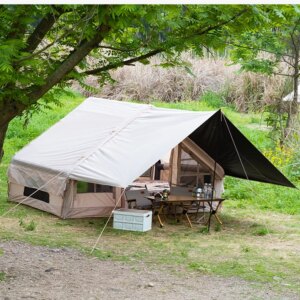
Tente de camping gonflable PVC imperméable résistante aux UV quatre saisons ouverture automatique rapide personnalisable 2-3 personnes
Read more -
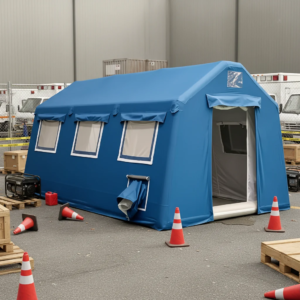
Outdoor Waterproof Inflatable Tent for Camping Portable Air Camping Tent Shelter
Read more