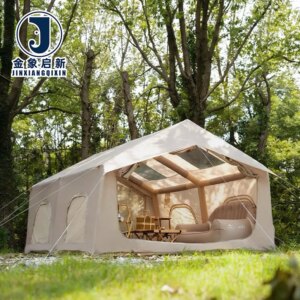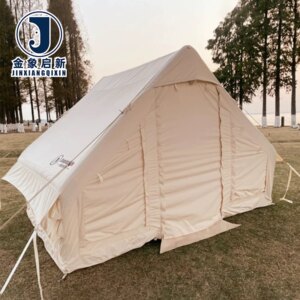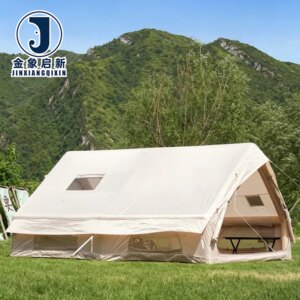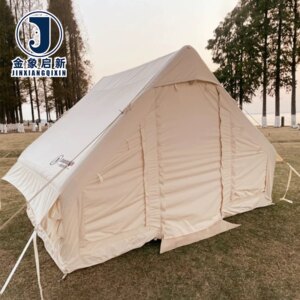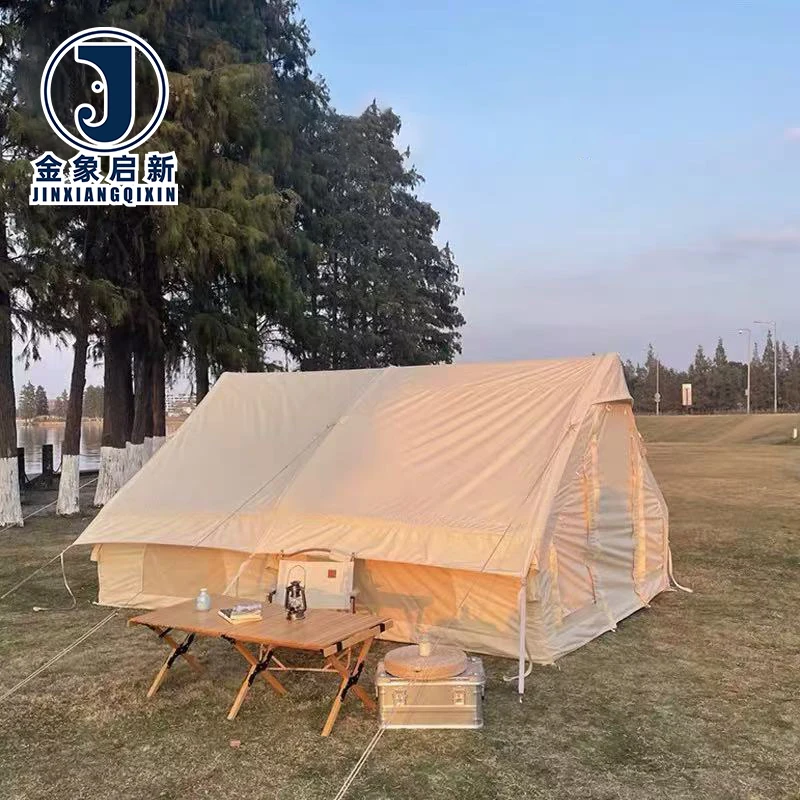
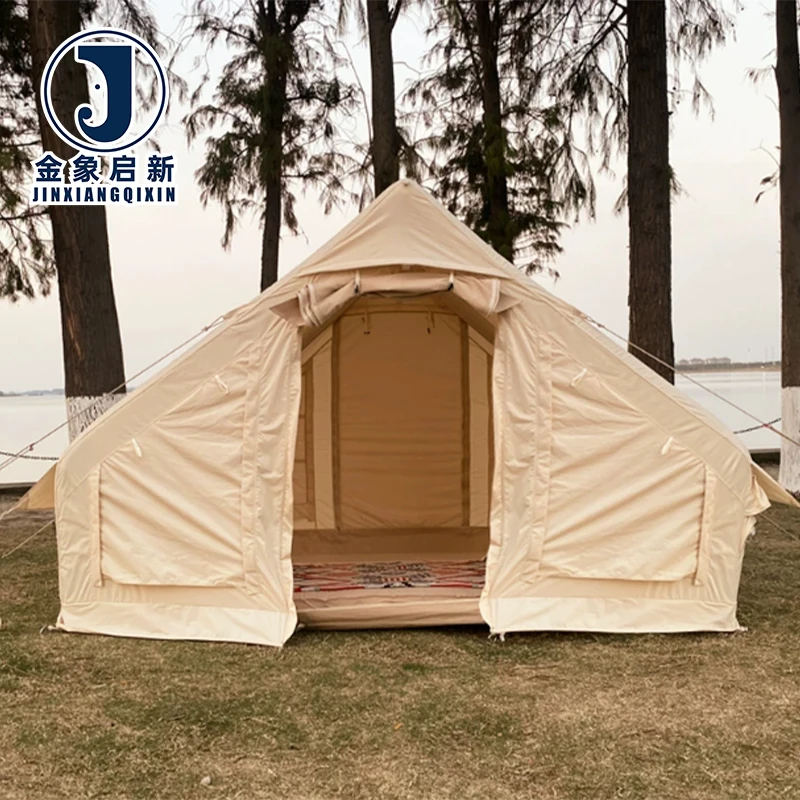
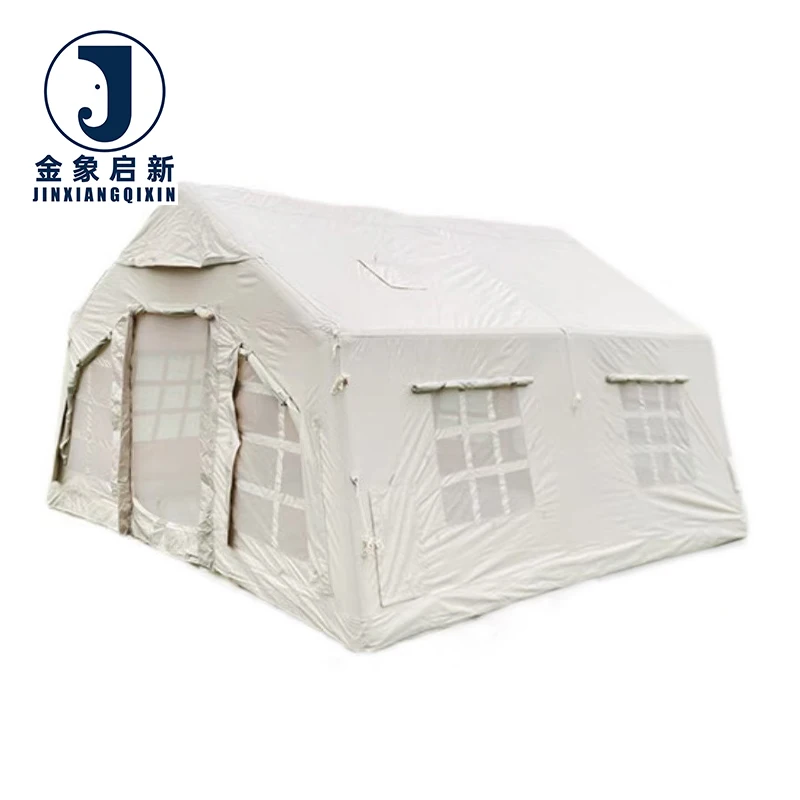
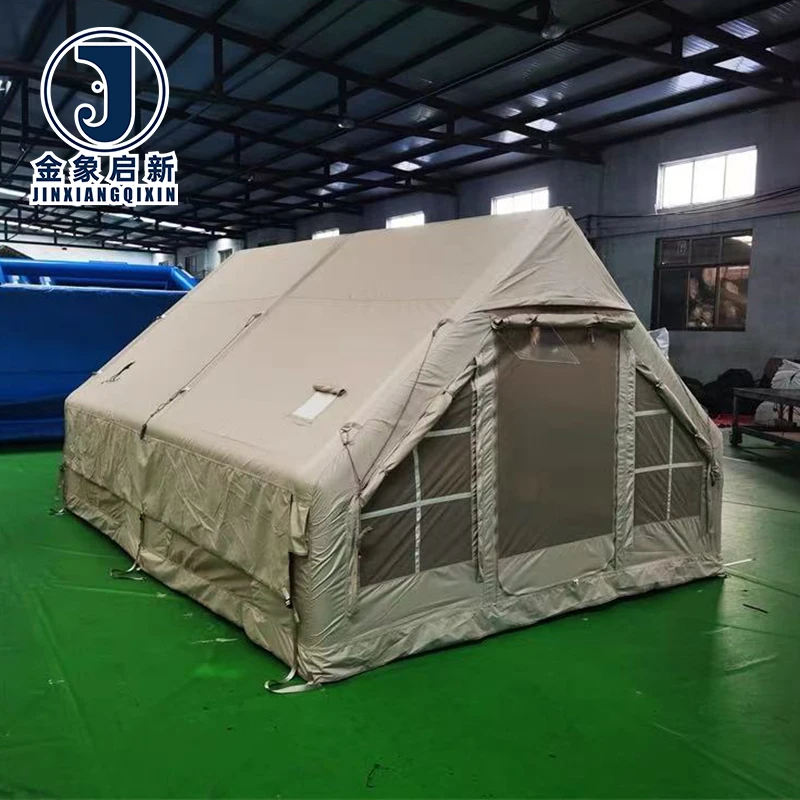
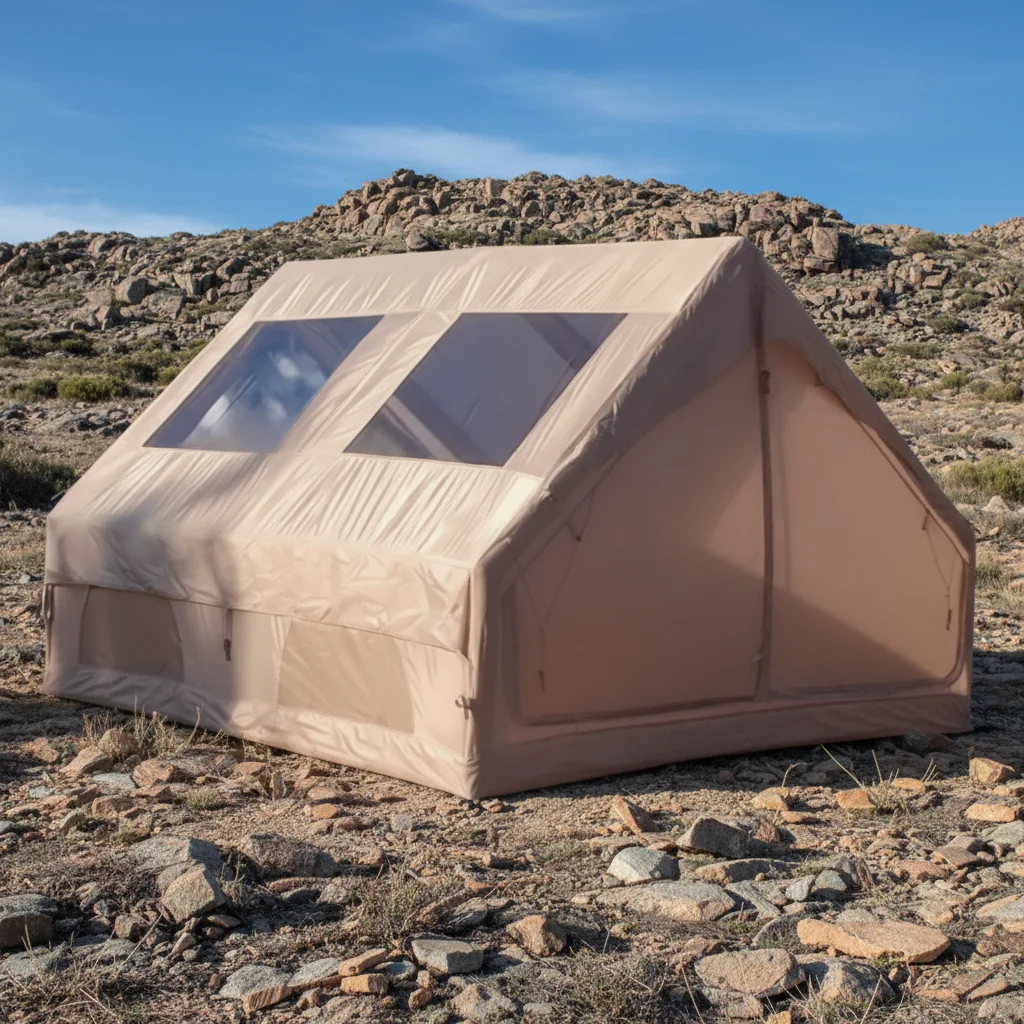
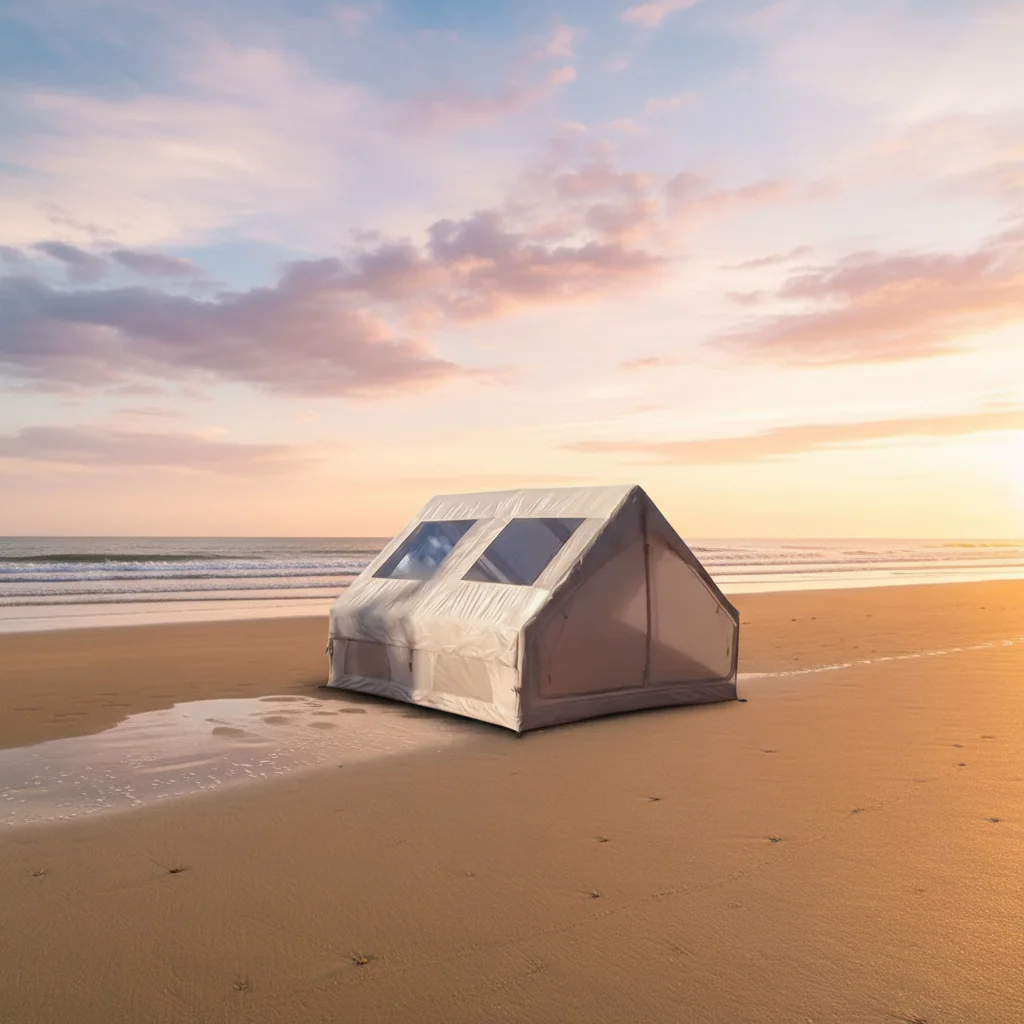
Waterproof PVC Inflatable Tent with quick automatic opening and fire-retardant treatment (EN 13501-1) — UV-resistant to 5000+ hours, tear strength 1500N/5cm warp and weft, wind resistance up to Beaufort scale 8.
- Full OEM & ODM capability with custom sizing, colour matching, and pattern branding
- Coated PVC tarpaulin engineered for controlled weight and adhesion across finished tent structures
- Welded seams built to flex at high-stress points without delamination
Every unit backed by 100% pre-shipment QA inspection, with material spec sheets, UV and flame-retardant test reports, and full customs documentation included per batch.
Description
Proven Coating Control — Three full production lines manage coating weight and adhesion specifically for inflatable tent structures, ensuring batch-to-batch consistency across every four-season glamping unit.
Technical Specifications
| Parameter | Value |
|---|---|
| Product Type | Inflatable Tent |
| Core Material | PVC Tarpaulin (knife coated) |
| Waterproof Rating | Hydrostatic head ≥10,000mm (source value — verify against manufacturer catalog) |
| UV Resistance | 5000+ hours sunlight exposure (source value — verify against manufacturer catalog) |
| Fire-retardant Standard | EN 13501-1 (grade not stated in source) |
| Anti-Static | Stated, surface resistance or standard not confirmed |
| Tear/Tensile Strength | 1500N/5cm warp and weft (test basis not stated in source) |
| Wind Resistance | Beaufort scale 8 |
| Product Forms | Finished tent structure |
| Customization Service | OEM & ODM (sample customization, pattern printing, size adjustments, custom color matching, logo application) |
| Key Features | Waterproof, UV-resistant, tear-resistant, fire-retardant, anti-static |
Application Suitability
| Application | Exposure & Requirement |
|---|---|
| Luxury glamping resorts | Four-season weather exposure, guest comfort expectations, branded exterior appearance, repeated inflation cycles |
| Eco-tourism facilities | Environmental compliance requirements, low-VOC material expectations, semi-permanent installation across varied terrain |
| Event accommodation services | Rapid deployment and breakdown, frequent transport and re-installation, high guest turnover cleaning cycles |
| Commercial camping areas | Year-round UV and rainfall exposure, wind loading on inflated structures, ground moisture contact at base perimeter |
Why Coated Fabric Consistency Matters More Than Quoted GSM
A quoted weight tells you what was ordered, not what arrives on site.
When sourcing a Waterproof PVC Glamping Tent manufacturer custom project, buyers frequently encounter rolls that test lighter than the agreed specification once unrolled and measured. The discrepancy rarely shows up until multiple tent units are erected side by side and the thinner panels reveal different translucency under sunlight. Welded seams on underweight material tend to fail at the flex points where the inflatable beam meets the roof panel, because the coating adhesion was insufficient from the start [NEED_CITE: tensile and tear test methods for coated fabrics per ISO 1421]. This is not a defect visible during factory inspection — it is a process control gap that only becomes apparent after weeks of wind loading and thermal cycling in the field.
Coating Weight and Adhesion Across the Inflatable Beam
The inflatable beam is the structural backbone of any glamping tent. Knife-coated PVC tarpaulin provides controlled coating penetration into the base fabric, which directly influences how well the material holds an airtight seal under continuous internal pressure. The Waterproof PVC Glamping Tent manufacturer custom capability here extends to adjusting coating formulations so the beam section maintains flexibility without sacrificing peel strength at the weld line.
Seam Integrity at High-Stress Flex Points
Where the inflatable tube meets the roof membrane, the fabric undergoes repeated bending every time the structure is inflated and deflated. A welded seam that fails before the fabric body does is one of the most common field complaints in commercial tent deployments. Production process control focuses on matching the welding temperature and pressure to the specific coating weight of each batch [NEED_CITE: welded seam peel strength testing for PVC coated fabrics]. This prevents the scenario where a tent passes factory inspection but develops seam delamination after the third setup cycle on a client site.
Reading the Specifications Beyond the Quoted Weight
The 1500N/5cm warp and weft tensile strength figure describes the force the base fabric and coating system can sustain together. This value depends on both the denier of the yarns and the density of the weave, not simply the total weight per square meter. A heavier fabric with a loose weave may show lower tear propagation resistance than a lighter fabric with a tighter construction. Knife coating, as opposed to lamination or calendering, typically produces higher peel strength because the PVC compound is forced into the interstices of the base cloth rather than bonded as a surface film. This matters for inflatable tent applications where the internal air pressure places continuous peeling force on every welded joint. The EN 13501-1 fire classification referenced in the specification corresponds to European building material reaction-to-fire requirements, though the specific sub-grade should be confirmed against your local jurisdiction’s commercial accommodation fire codes.
The Hidden Cost of Unverified Material Claims
Colour variation between tent units in the same order becomes immediately visible once the structures are erected in a resort layout. Guests notice when adjacent tents show different hues under morning light, and operators face the reputational cost of replacing entire batches. Missing fire-retardant documentation is another frequent blocker: site inspectors at commercial camping developments will not sign off on occupancy permits without a test report that names the exact standard and grade. When UV resistance is claimed without a documented test basis, the tent may show premature chalking or colour shift after a single season of continuous outdoor exposure, turning a capital investment into a recurring replacement expense [NEED_CITE: accelerated weathering test standards for PVC coated textiles].
Why This Production Setup Supports Your Tent Program
Nearly 30 years of focused coated fabric manufacturing means the process parameters for knife coating are established, not experimental. Three full production lines and 36 sets of processing equipment provide the capacity to run a complete glamping resort order — multiple tent sizes, matched colours, and branded panels — within a single production window, reducing batch-to-batch drift. The 10-person R&D team handles sample development for custom sizing, pattern printing, and colour matching before mass production begins, so design changes are resolved at the sample stage rather than on the production floor. Dedicated QA and QC staff inspect at every stage from raw material intake through final assembly, with 100% pre-shipment inspection on finished tent structures.
Documentation & Verification
- Material specification sheet confirming base fabric type, coating method, and colour reference per order
- UV resistance and flame-retardant test reports included with each shipment batch
- Batch-specific quality inspection covering critical checkpoints from raw material to final assembly
- ISO 9001, ISO 14001, ISO 45001, and CE certificates supplied for compliance verification
- Certificate of origin and customs documentation included for international shipment clearance
- Pre-shipment inspection record with photographic evidence available before dispatch
Fabrication, Handling & Storage
- Hot-air welding temperature must match the knife-coated PVC formulation to achieve full peel strength at inflatable beam joints
- Reinforced webbing at tie-down points distributes wind load across the PVC tarpaulin panel without concentrating stress
- Finished tent structures should be stored dry and loosely folded to prevent permanent crease marks on the coated surface
- Cold-weather deployment requires gradual inflation to allow the PVC tarpaulin to reach ambient flexibility before full pressurization
- Mild detergent cleaning preserves the surface coating; solvent-based cleaners may degrade the UV treatment layer
- Field repairs on minor punctures require compatible PVC repair compound matched to the knife-coated formulation
What to Include in Your Inquiry
To move from specification to sample, share your intended deployment climate, the local fire safety standard your site inspector will enforce, and the number of tent units required per phase. If you need custom dimensions, branded panels, or specific colour references, provide those details early so the sample stage addresses all variables before production commitment.
Frequently Asked Questions
Q: How do you ensure material consistency across a large glamping resort order?
A: Every batch undergoes weight verification and coating adhesion testing against the agreed specification before cutting begins. The 10-person R&D team develops a confirmed sample first, and production follows that locked reference. Dedicated QA staff inspect at each stage, and 100% pre-shipment inspection covers all finished units.
Q: Can you provide test reports for fire-retardant and UV performance?
A: Test reports for UV resistance and flame-retardant grades are included with each shipment. The fire-retardant specification references EN 13501-1, but we recommend confirming the exact sub-grade required by your local commercial accommodation regulations before production so the correct formulation is applied.
Q: What customization options exist for sizing, colour, and branding?
A: OEM and ODM services cover custom dimensions, colour matching to your reference, pattern printing, and logo application. A pre-production sample is developed and approved before mass manufacturing begins, ensuring all design elements are resolved and verified before the full order enters the production lines.
Q: How is welded seam integrity verified on inflatable tent structures?
A: Weld parameters are calibrated to the specific coating weight and formulation of each batch. Seam peel strength is checked during in-process QA at the welding stage, and high-stress flex points where inflatable beams connect to roof panels receive additional reinforcement and inspection before the unit is cleared for shipment.
Q: What documentation arrives with the shipment for customs and site compliance?
A: Each order ships with a material specification sheet, UV and flame-retardant test reports, batch quality inspection records, ISO and CE certificates, a certificate of origin, and a roll packing list. Pre-shipment inspection records with photographic evidence are available on request before dispatch.
Related products
-
Tente de camping gonflable imperméable PVC Air Tent extérieur installation facile abri de camping familial quatre saisons >3000mm imperméable rapide
Read more -
Inflatable Camping Tent Waterproof PVC Outdoor Air Tent Easy Setup Family Camping Shelter
Read more -
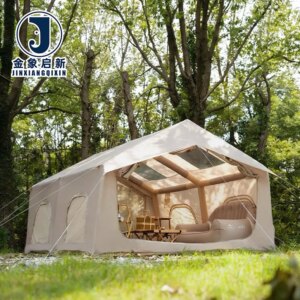
Camping Tent Inflatable UV Resistant Customizable Four-season Waterproof PVC Eco-Friendly Windproof Foldable Quick Automatic
Read more -
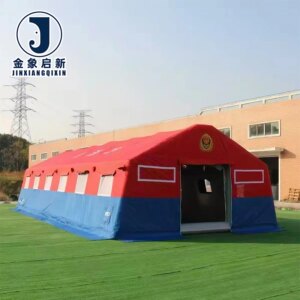
Inflatable PVC Camping Tent Four-Season Waterproof CE Certified Quick Automatic Opening 3000mm+ Factory Direct Sale
Read more