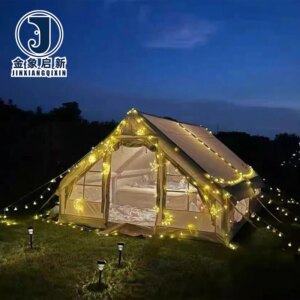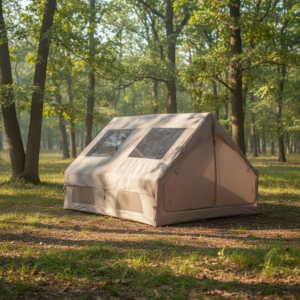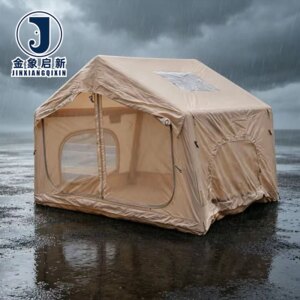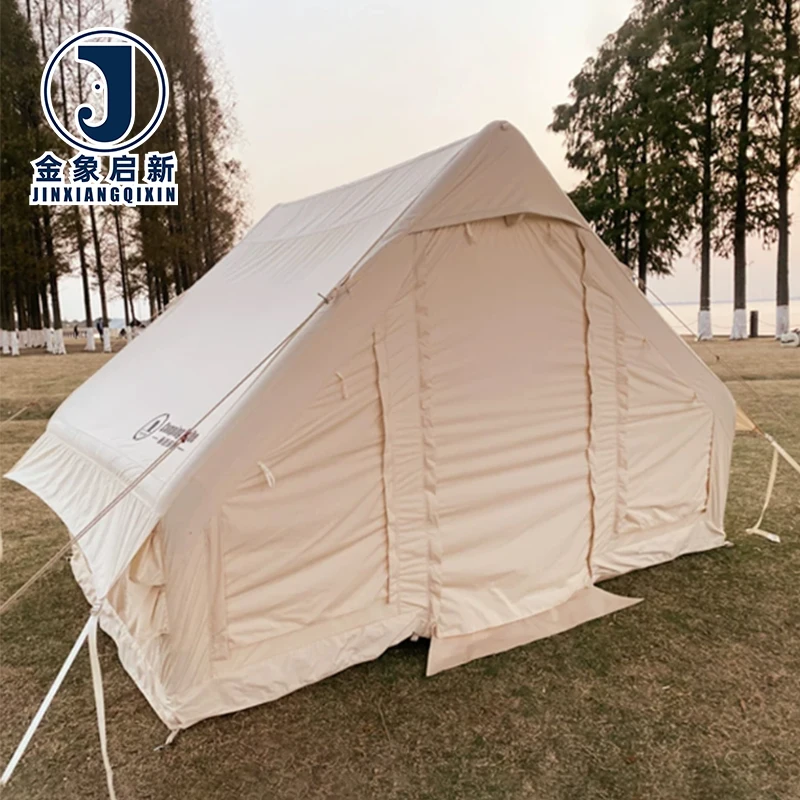
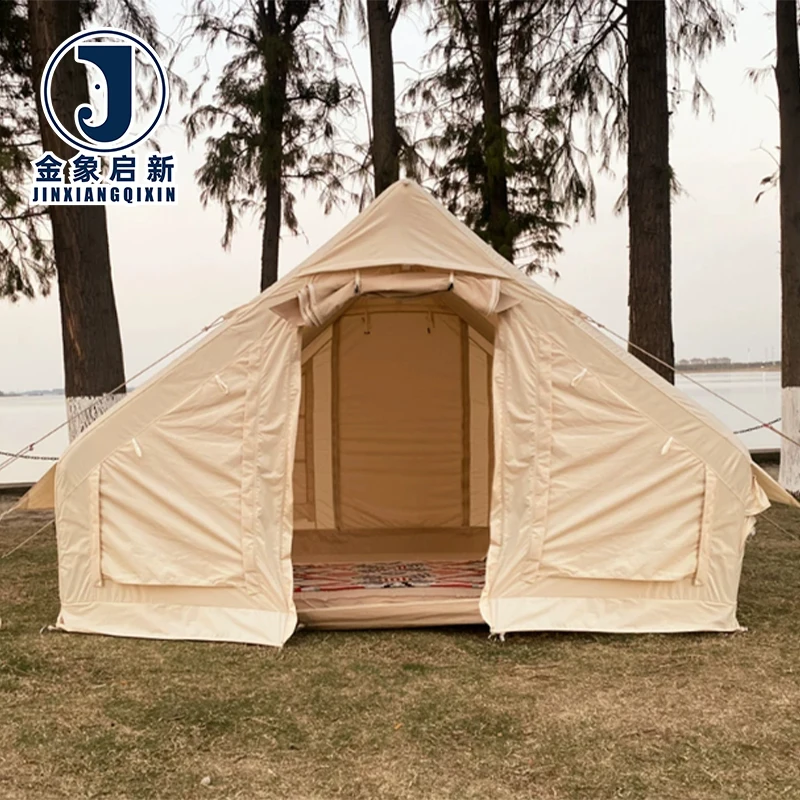
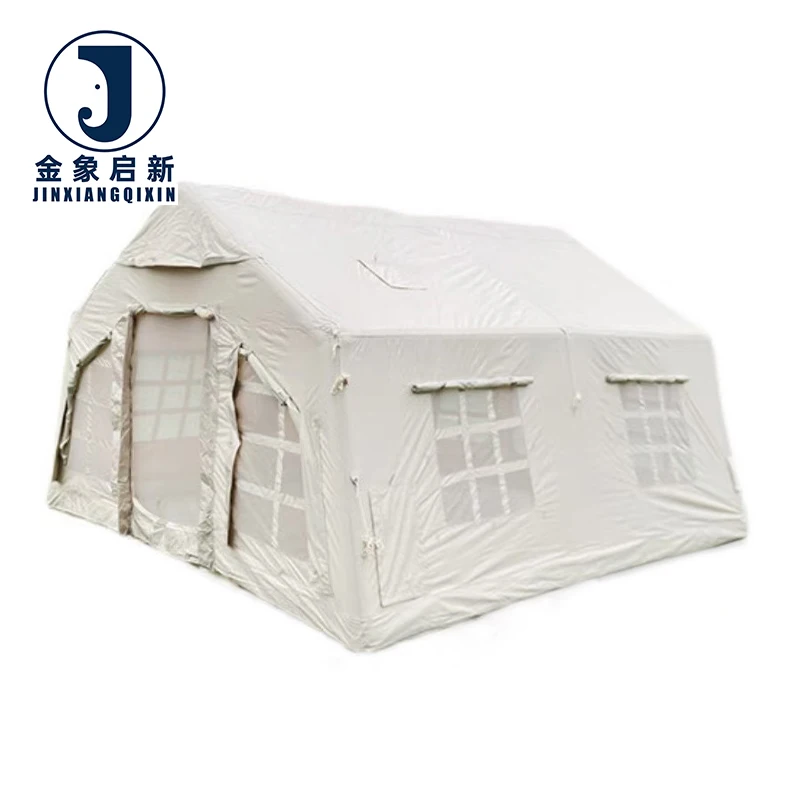
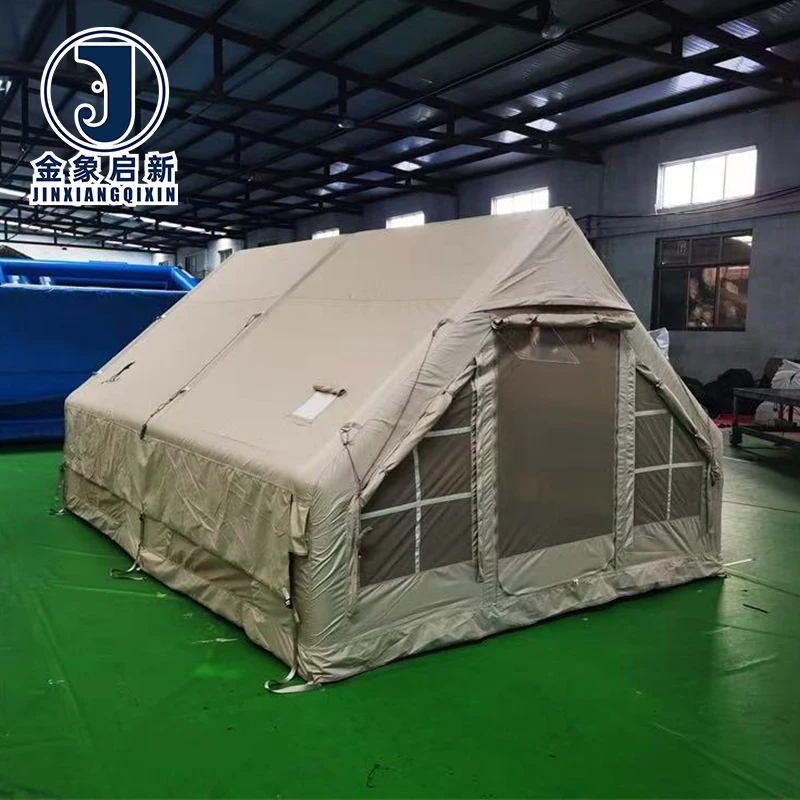
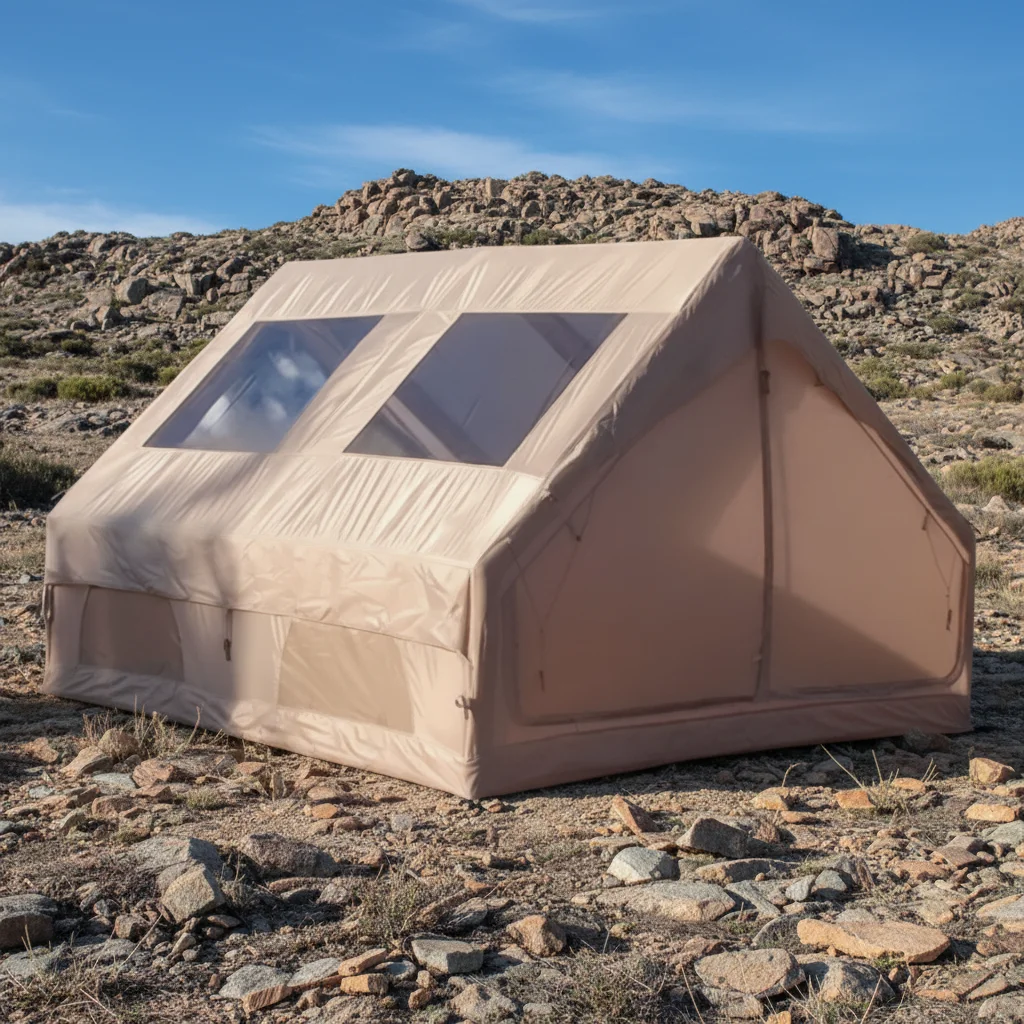
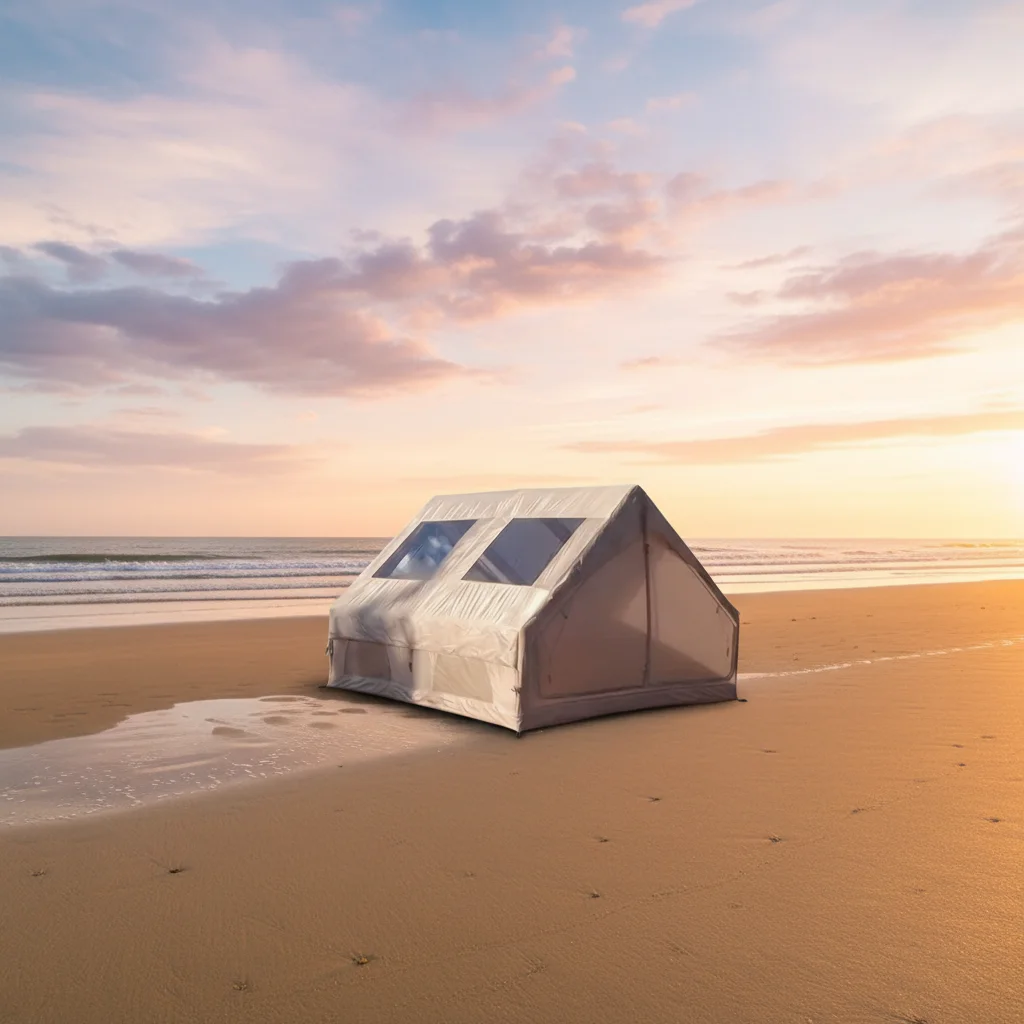
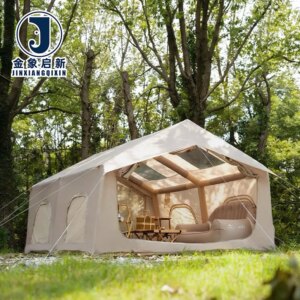
PVC Inflatable Camping Tent — waterproof, UV-resistant, tear-resistant inflatable structure with full OEM & ODM customization for commercial outdoor applications.
- Core PVC tarpaulin fabric with customizable GSM grade, glossy or matte finish, and optional flame-retardant treatment to EN 13501-1
- 10-person R&D team delivers sample development within 5–7 days, supporting custom dimensions, Pantone colour matching, and branded pattern printing
- Strict QA/QC system includes 24-hour continuous air pressure testing with ≤5% decay and high-frequency weld seam inspection
Three full production lines and 36 sets of professional equipment ensure batch-to-batch consistency and reliable on-time delivery for bulk orders.
Description
Deep Process Control Over Coating Weight and Adhesion — every roll of PVC inflatable tent fabric we produce undergoes dedicated QA/QC checkpoints at each coating and lamination stage, ensuring the structural integrity your inflatable products depend on.
Technical Specifications
| Parameter | Value |
|---|---|
| Product Type | PVC Inflatable Camping Tent |
| Core Material | PVC tarpaulin |
| Product Forms | Inflatable structure, single layer construction |
| Waterproof | Yes, industrial standard rating |
| UV Resistance | Retains 85% tensile strength after 500 hours accelerated weather testing |
| Tear Strength | 300N per ISO 13937-2 |
| Flame Retardant | EN 13501-1 compliant (grade not stated) |
| Air Pressure Testing | 24 consecutive hours, pressure decay not exceeding 5% |
| Seam Strength Tolerance | ±3% via high-frequency welding |
| Customization | OEM & ODM, sample customization, pattern printing |
| Production Facility | 9,180 m² with 3 full production lines |
| Processing Equipment | 36 sets of professional equipment |
| R&D Team | 10 technicians |
| Standards | ISO 9001, ISO 14001, ISO 45001, CE, EN 13501-1, ISO 13937-2, EU REACH |
Application Suitability
| Application | Exposure & Requirement |
|---|---|
| Commercial camping ground operations | Continuous outdoor weather exposure, repeated inflation-deflation cycles, guest safety compliance |
| Large-scale outdoor event facilities | High wind loading on inflated surfaces, UV degradation across seasons, rapid deployment needs |
| Industrial temporary shelter projects | Heavy-duty abrasion from equipment movement, flame retardant compliance on work sites |
| Construction camps and expedition bases | Extreme temperature variation, remote logistics, extended unattended deployment |
| Commercial adventure parks | High-frequency public use, branding and colour consistency across multiple structures |
| Professional outdoor equipment distribution | Roll-to-roll batch consistency, OEM pattern printing, regional certification requirements |
Why Batch Colour Consistency Determines Your Inflatable Tent Brand Reputation
Colour shift between rolls becomes visible the moment two panels are welded side by side on an inflatable structure.
When a commercial buyer receives an Inflatable Tent manufacturer order with even slight hue variation across rolls, the finished product looks mismatched under sunlight — and the buyer’s own customer notices immediately. We have seen inflatable structure manufacturers forced to reject entire batches because one roll sat at the edge of the Pantone tolerance while the next sat at the opposite edge [NEED_CITE: Pantone colour tolerance standards for coated fabrics]. The cost is not only the material itself but the production time already invested in cutting and welding before the mismatch appears. Our batch-specific quality reports document the colour reference for every roll shipped, so your procurement team can verify consistency before the material enters your production line.
Full PVC Tarpaulin Customization for Inflatable Structures
Selecting the right PVC inflatable camping tent material starts with matching the coating weight and base fabric to the structural demands of your design. Our range covers lightweight to heavy-duty GSM grades, with options for glossy or matte surface finish depending on whether your priority is easy cleaning or print adhesion for branded panels. Anti-UV treatment is available across grades to address the accelerated degradation that inflatable structures face under continuous sun exposure.
OEM and ODM Capability from Fabric to Finished Structure
Our 10-technician R&D team handles material selection, pattern printing, and custom sizing for inflatable tent product lines. Sample development follows a structured process where your design team reviews material behaviour under inflation before committing to bulk production. This matters because a PVC inflatable camping tent panel that performs well flat may behave differently once curved under internal air pressure — and catching that at sample stage avoids costly re-engineering later [NEED_CITE: structural behaviour of inflatable PVC membranes under pressure].
How Tear Strength, Weld Integrity, and UV Stability Interact in the Field
Tear resistance measured at 300N per ISO 13937-2 tells you how the PVC tarpaulin resists propagation once a puncture or cut occurs — critical for inflatable structures where a single tear under air pressure can unzip rapidly across a panel. But tear strength alone does not guarantee field performance. The high-frequency welded seams, held within ±3% strength tolerance, must match or exceed the base fabric’s resistance, otherwise the seam fails before the fabric does at the exact point the structure flexes most during wind loading. UV stability compounds this: a fabric that loses tensile strength after seasons of sun exposure will see its tear resistance decline proportionally, which is why the 500-hour accelerated weather test result — retaining 85% of original tensile strength — provides a documented baseline for predicting long-term behaviour in commercial camping and event applications.
The Hidden Cost of Specifying Inflatable Tent Fabric on Price Per Kilogram
Buyers who select PVC inflatable camping tent material primarily on cost per kilogram often discover the real expense later. A lighter coating may meet the quoted GSM on paper but deliver insufficient adhesion for high-frequency welding, causing seams to delaminate during the 24-hour air pressure test or, worse, after deployment in the field. Flame retardant claims without an accompanying EN 13501-1 test report can result in failed site inspections at commercial event venues or construction camps where fire safety documentation is mandatory [NEED_CITE: EN 13501-1 fire classification requirements for temporary structures]. Batch inconsistency forces manufacturers to sort and match rolls manually, adding labour cost and delaying production schedules.
Why Inflatable Structure Manufacturers Source From This Facility
Three full production lines and 36 sets of professional processing equipment provide the capacity to run large custom inflatable tent orders without splitting production across different machines — which is where batch variation typically originates. The dedicated QA/QC system inspects every production stage rather than relying on end-of-line sampling, catching coating weight deviations and colour drift before they compound. A 10-person R&D team supports full OEM and ODM development, from material grade selection through pattern printing and bespoke sizing, with sample turnaround structured to keep your product launch on schedule. Every shipment includes a 24-hour continuous air pressure test record with pressure decay not exceeding 5%, so you receive documented proof of structural integrity before the product leaves the facility. The 100% pre-shipment inspection covers dimensional verification and surface quality, not just roll count.
Documentation & Verification
- Material specification sheet stating GSM, base fabric, coating type, and colour reference for every roll
- Test reports for UV resistance and EN 13501-1 flame retardant included per batch, not on request
- 24-hour air pressure test record with decay data for each inflatable structure before dispatch
- Dimensional inspection report confirming custom sizing against your approved sample specifications
- ISO 9001, ISO 14001, CE, and EU REACH certificates supporting customs clearance across markets
- Pre-shipment inspection record documenting surface quality, weld integrity, and roll consistency
Fabrication, Handling & Storage
- High-frequency welding parameters should be calibrated to the specific PVC coating weight for consistent seam strength within ±3% tolerance
- Store PVC tarpaulin rolls upright in climate-controlled conditions to prevent creasing that weakens the coating at fold lines
- Clean glossy finish surfaces with neutral pH solutions to preserve the coating without degrading UV treatment compounds
- Allow cold-stored rolls to reach ambient temperature before unrolling to prevent cracking in the PVC coating layer
- Pattern printing adhesion should be verified on sample panels before full production runs on custom inflatable tent orders
- Cut panels with allowance for weld seam overlap to maintain structural air-holding integrity at every joint
What We Need to Quote Your Custom Inflatable Tent Project
Provide the intended application environment — whether commercial camping, event facility, or industrial shelter — along with the specific fire safety and compliance standards your target market requires. Share your required dimensions, surface finish preference, and whether you need finished inflatable structures or PVC tarpaulin fabric by the roll for your own production line. If custom colour matching or pattern printing is part of the specification, include your Pantone references and artwork files so our R&D team can begin sample development immediately.
Frequently Asked Questions
Q: How do you ensure batch-to-batch colour consistency across a large inflatable tent order?
A: Every roll is produced with a documented colour reference tied to your approved sample. Our QA/QC team checks colour at each production stage across all three production lines, and batch-specific quality reports accompany your shipment so you can verify consistency before material enters your cutting and welding process.
Q: What flame retardant certification is provided and does it meet my target market’s fire safety requirements?
A: We supply PVC inflatable camping tent fabric compliant with EN 13501-1, with test reports included per batch. Since fire safety regulations vary by country and application — particularly for temporary structures at public events — we recommend confirming the specific grade your market requires so we can match the formulation accordingly.
Q: Can you customize dimensions, pattern printing, and branding for OEM inflatable tent product lines?
A: Yes. Our 10-technician R&D team handles custom sizing, pattern printing, and surface finish selection from glossy to matte. Sample development follows a structured approval process so your team can evaluate material behaviour under inflation before we proceed to bulk production on your custom inflatable camping tent order.
Q: How is inflatable structure air-holding integrity verified before shipment?
A: Each completed inflatable structure undergoes 24 consecutive hours of continuous air pressure testing, with acceptable pressure decay not exceeding 5%. The test record is documented and included in your shipment, providing traceable evidence that the high-frequency welded seams and PVC fabric meet structural requirements.
Q: What documentation is included with each shipment to support customs clearance and end-customer compliance?
A: Every order ships with a material specification sheet, UV and flame retardant test reports, ISO and CE certificates, EU REACH documentation, pre-shipment inspection records, a roll packing list, and a certificate of origin. This documentation package supports customs clearance and provides your end customers with the compliance evidence they need.
Related products
-
Waterproof Inflatable Camping Tent Outdoor Easy Setup Air Tent for Camping
Read more -
Camping Tent Inflatable UV Resistant Customizable Four-season Waterproof PVC Quick Automatic Opening 2-3 Person Outdoor
Read more -
High Quality Four-Season Inflatable Tent for Camping Durable PVC Waterproof All-Weather Resistance Quick Automatic Opening
Read more -
Inflatable Four-season Camping Tent-PVC Coated Waterproof Eco-Friendly Quick Inflation CE Certified ODM/OEM Accepted
Read more