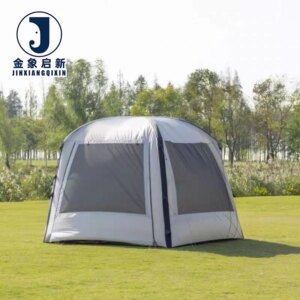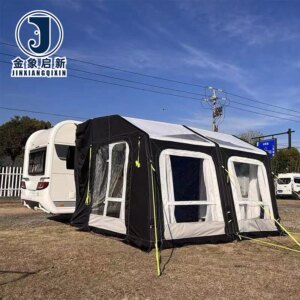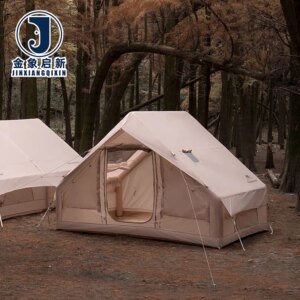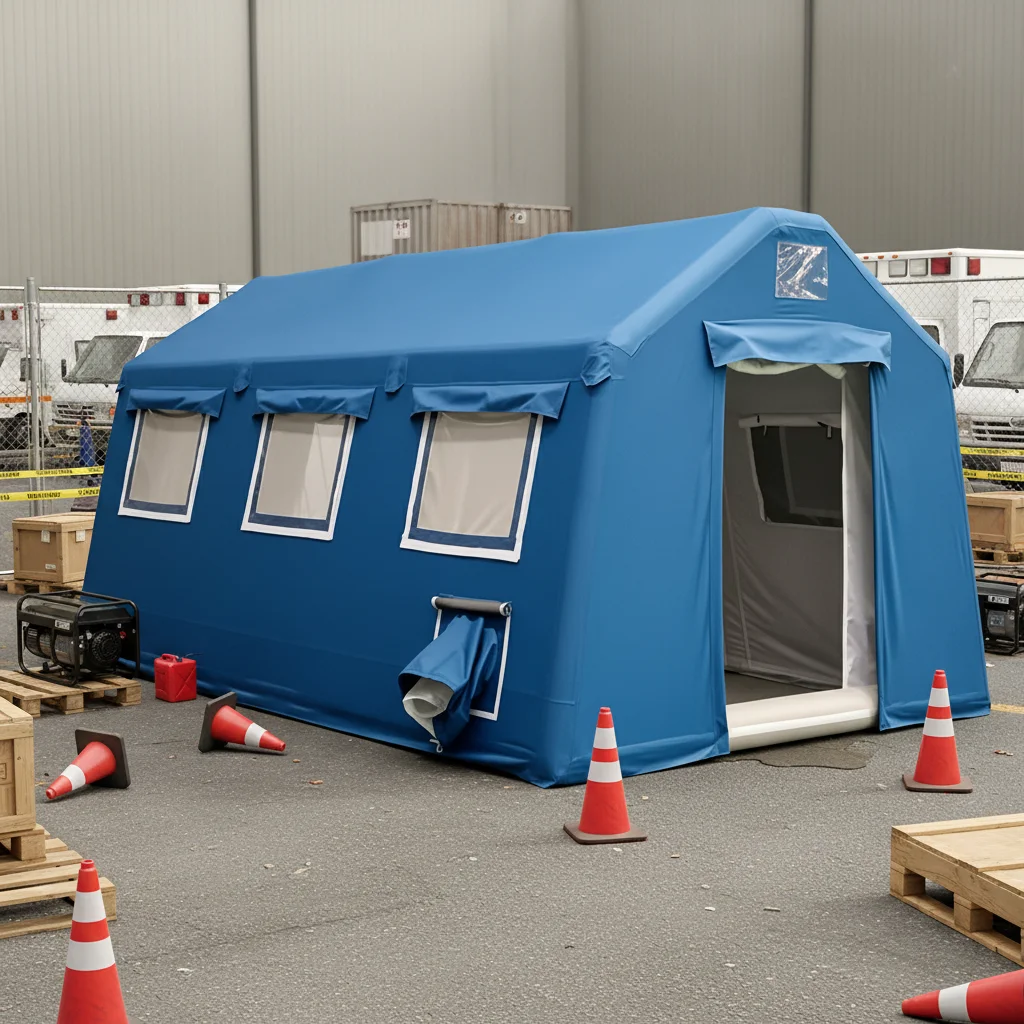
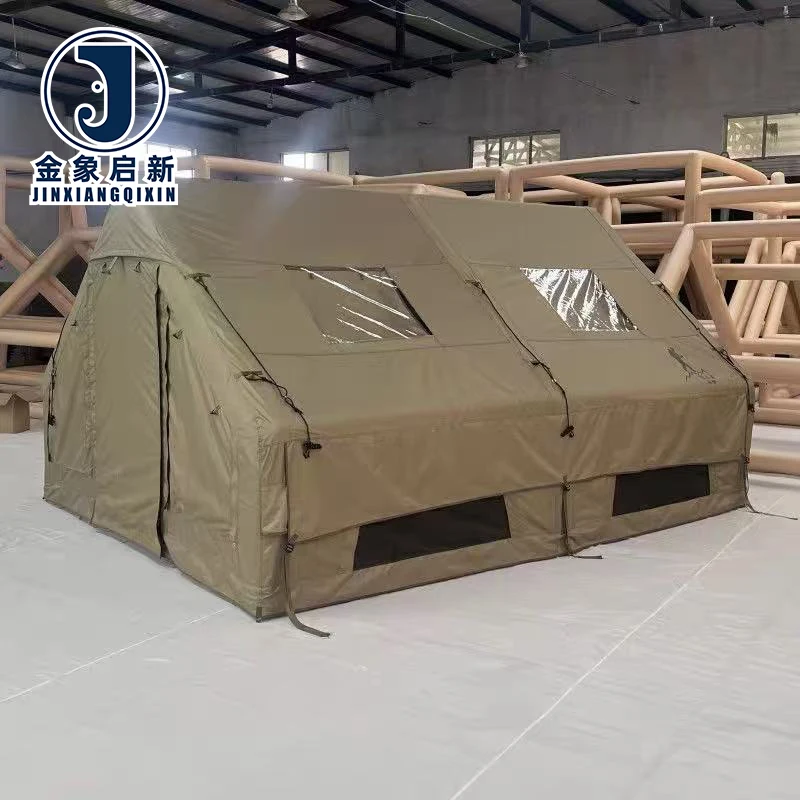
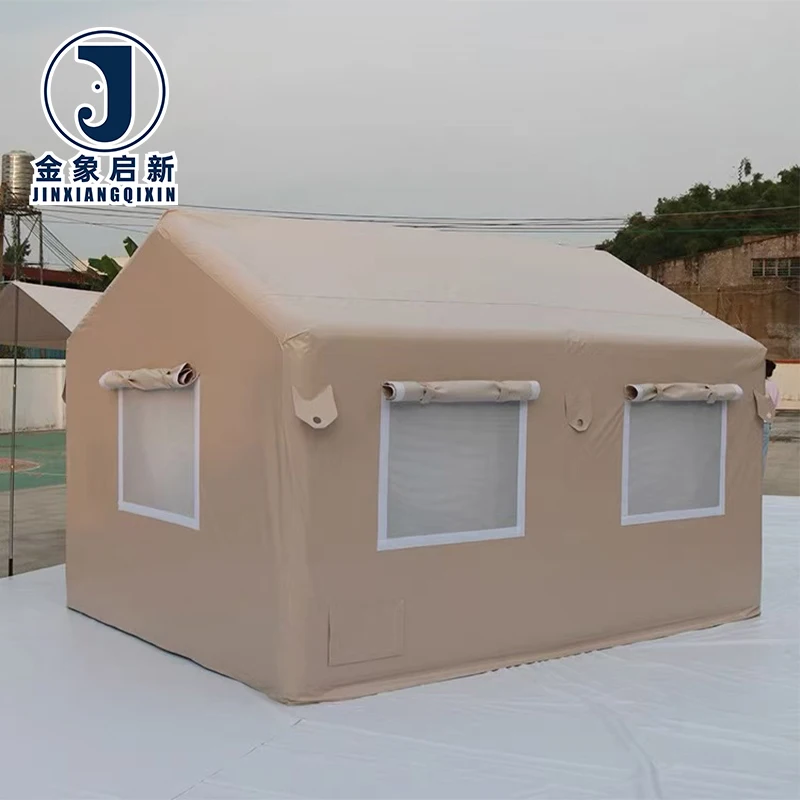
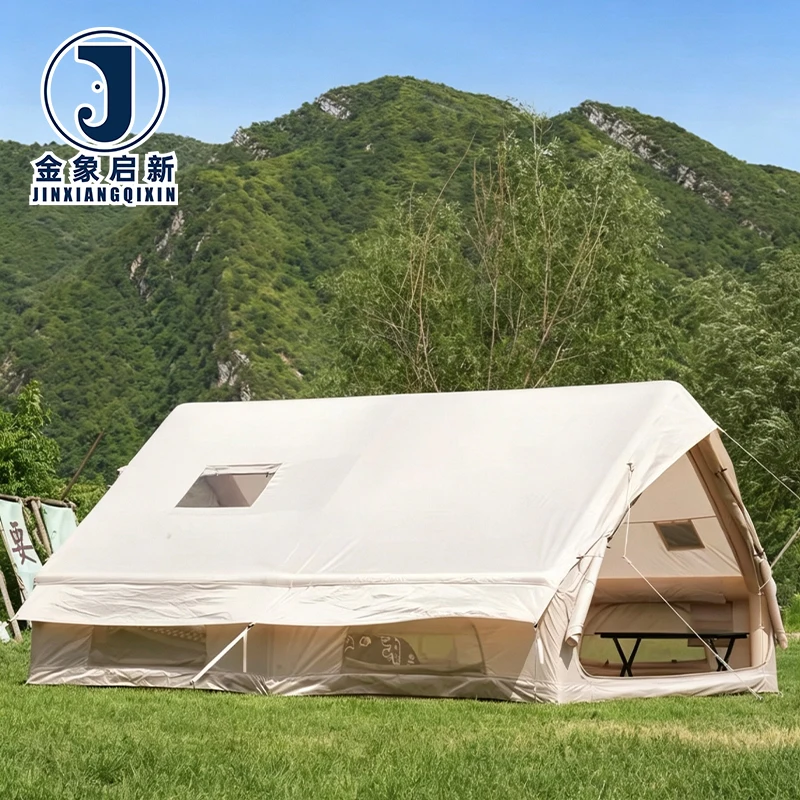
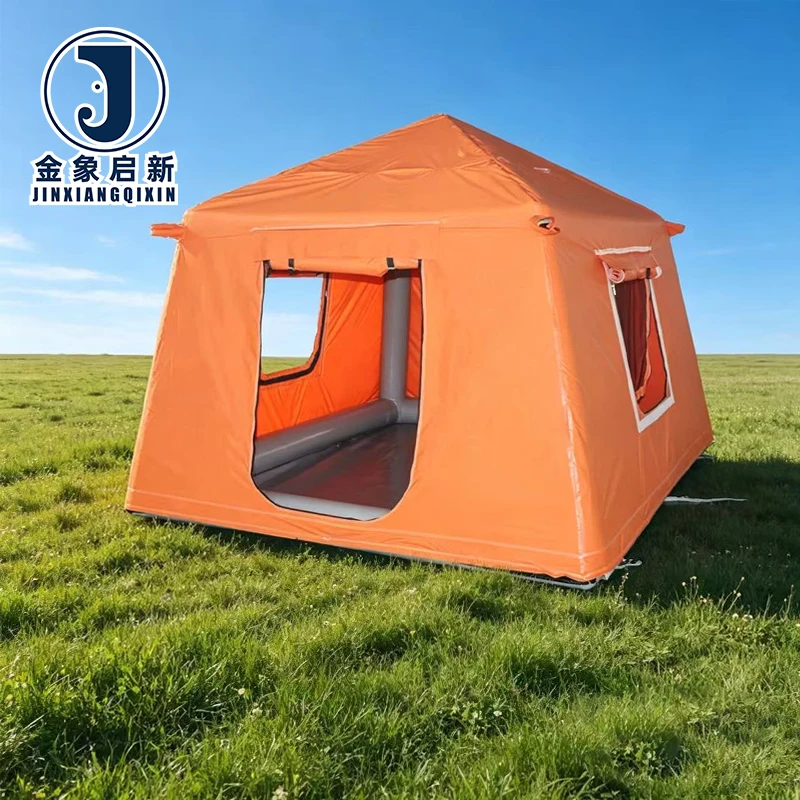
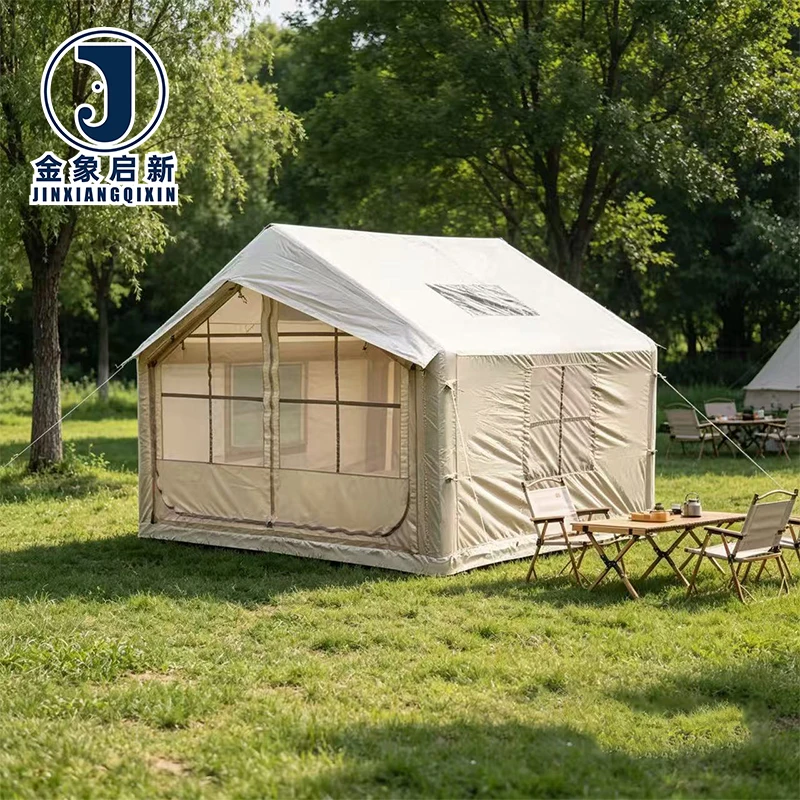
PVC Inflatable Camping Tent — waterproof, UV-resistant, tear-resistant single-layer construction for rapid commercial deployment. Fully customizable in size, colour, pattern printing and structural layout from a single-source coated fabric manufacturer. Each unit undergoes 24-hour inflation testing before packaging to guarantee structural integrity on delivery. Backed by nearly 30 years of coated fabric expertise, 100% pre-shipment inspection, and batch-specific quality reports covering material performance.
Description
Single-Source Coated Fabric Expertise — Every PVC inflatable tent rolls off one of three dedicated lines with in-process QA checkpoints at coating, lamination and cutting stages.
Technical Specifications
| Parameter | Value |
|---|---|
| Product Type | Inflatable Tent |
| Core Material | PVC Tarpaulin |
| Construction | Single Layer |
| Key Features | Waterproof, UV-Resistant, Tear-Resistant |
| Flame Retardancy | Available in flame retardant grades — confirm the grade required for your market |
| Certifications | ISO9001, ISO14001, ISO45001, CE |
| Customization | OEM & ODM, sample customization, pattern printing |
| Quality Control | Full-process inspection with dedicated QA & QC staff |
| R&D Support | 10 technicians for material selection and structural design |
Application Suitability
| Application | Exposure & Requirement |
|---|---|
| Outdoor commercial events and exhibitions | Sustained sun exposure, frequent inflation cycles, crowd contact abrasion |
| Temporary worksite storage and mobile facilities | Heavy equipment movement nearby, dust and moisture ingress, rapid deployment needs |
| Construction and field operation shelters | Wind load stress on seams, ground contact abrasion, temperature fluctuation |
| Commercial emergency scenarios | Immediate inflation readiness, all-weather waterproof barrier, transport portability |
| Four-season outdoor operations | Freeze-thaw cycling, prolonged UV exposure, repeated folding and packing |
Why Coating Weight Alone Does Not Guarantee Inflatable Structural Integrity
A 650 GSM label tells you nothing about the adhesion between the PVC film and the base fabric.
Early in my career on the production floor, I watched a Middle East buyer reject an entire shipment of outdoor waterproof inflatable tent fabric because the received material tested at 590 GSM against the quoted 650 GSM. But the problem went deeper than weight. The coating formulation had not been matched to the base fabric density, which meant the bond between layers could not survive the repeated inflation and deflation cycles that inflatable structures demand. When a PVC inflatable tent aftermarket supplier quotes only a weight number without specifying the base fabric denier, weave density and coating method, buyers are left guessing whether the material will hold air under real field conditions [NEED_CITE: tensile and tear test methods for coated fabrics per ISO 1421].
How Single-Layer Construction Balances Portability With Field Durability
A single-layer PVC tarpaulin construction removes the dead weight of multi-layer laminates while retaining the coated waterproof barrier that inflatable camping tents require for commercial deployment. The trade-off is that every structural load — from wind pressure to internal air tension — transfers directly through one fabric plane. This makes the base fabric weave density and the coating adhesion strength the two non-negotiable variables that determine whether a PVC Inflatable Tent aftermarket supplier can deliver a product that holds shape through a full event season without delamination at the stress points.
The Relationship Between Coating Formulation and Repeated Inflation Stress
Inflatable tents flex at the seams and curvature points every time they are pressurized or deflated. The PVC coating must maintain its plasticity across the temperature range encountered in four-season outdoor operations — stiffening in cold conditions leads to microcracking at fold lines, while excessive softening in high heat reduces the dimensional stability needed to hold the inflated form [NEED_CITE: PVC plasticizer migration and low-temperature flexibility in coated technical textiles]. Matching the coating formulation to the base fabric specification is where our 10-person R&D team spends most of its development time before any sample leaves for buyer approval.
Reading the Specification Sheet Beyond the GSM Number
GSM measures total areal weight — base fabric plus coating combined — but two fabrics at identical GSM can behave completely differently under tension. A PVC tarpaulin built on a high-denier, tightly woven base with a thinner coating will show higher tensile and tear resistance than one using a loose weave loaded with heavy coating to reach the same weight. The coating method also matters: knife-over-roll coating produces a smoother surface suited to pattern printing and branding, while lamination can yield higher peel strength at a lower production cost. For inflatable tent applications where heat-welded seams carry the structural load, the peel strength between coating and substrate determines whether the weld line or the fabric body fails first under internal air pressure.
The Hidden Cost of Underspecified Inflatable Tent Fabric
When a buyer accepts a quotation based on GSM alone, three failure modes typically surface after delivery. First, the coating may be lighter than stated because the supplier padded the weight figure with base fabric, leaving insufficient PVC film for full waterproof coverage at the seams. Second, colour consistency between rolls in the same order can drift visibly once panels are installed side by side on a large inflatable structure — a problem that only becomes apparent on-site. Third, flame-retardant or anti-UV treatment may be claimed on the invoice but arrive without any test documentation, leaving the buyer unable to pass a site inspection or insurance audit [NEED_CITE: fire classification standards for temporary structures and tents]. These are not manufacturing defects — they are specification gaps that originate in the purchasing conversation.
Why Sourcing Inflatable Tent Fabric Through This Facility Works
Our three full production lines and 36 sets of professional equipment give us the capacity to run custom-width inflatable tent fabric rolls without inflating minimums or lead times beyond what a commercial event schedule can absorb. The 10-technician R&D team handles material selection, pattern printing layout and structural configuration directly — there is no separate design house adding a layer of miscommunication between your specification and the production floor. Dedicated QA and QC staff inspect every roll at coating, curing and slitting stages, so the batch consistency across a mixed-colour order holds up when panels are joined on site. Full-process quality inspection with 100% pre-shipment checking means the documentation you receive — from weight verification to treatment test reports — matches the physical material in the container.
Documentation & Verification
- Material specification sheet stating base fabric denier, coating weight and colour reference per roll
- Batch-specific test report for waterproof performance, tensile strength and coating adhesion
- UV or flame-retardant test results matching the grade specified on the purchase order
- Pre-shipment inspection record with weight verification against quoted specification
- Certificate of origin and customs documentation package for export clearance
Fabrication, Handling & Storage
- Heat-weld seam parameters must match the specific PVC coating thickness to prevent adhesive failure at inflation stress points
- Store rolls vertically on pallets to avoid flat-spot deformation that shows as surface ridges after inflation
- Use only PVC-compatible cleaners — solvent-based products degrade the coating surface and compromise waterproof integrity
- Allow cold-transported rolls to acclimatize before unrolling to prevent cracking in the PVC film layer
- Pattern printing areas require specific heat and pressure settings during welding to avoid colour distortion at seam lines
What We Need to Move Your Inquiry Forward
Send us the intended application environment, including the expected temperature range and whether the inflatable tent will face sustained UV exposure or seasonal deployment. Confirm any fire-safety or compliance grades your local jurisdiction requires for temporary structures so we can match the coating treatment and provide supporting test documentation. Specify the target dimensions, colour references and whether pattern printing or branding is part of the design — this lets our R&D team prepare an accurate sample for your approval before we commit to a production run.
Frequently Asked Questions
Q: What customization options are available for size, colour and printing?
A: Our OEM and ODM service covers custom dimensions, colour matching against standard references, and pattern printing for branding or identification. The 10-person R&D team develops samples within days for your approval, covering structural layout and surface finish. Once you sign off on the sample, production follows the verified specification without deviation.
Q: How do I verify UV-resistant or flame-retardant treatment claims?
A: We supply batch-specific test reports matching the treatment grade stated on your purchase order. For flame-retardant orders, confirm the classification standard your market requires before production starts. Every report is traceable to the specific roll batch and ships with the order documentation so your compliance team can review it before installation.
Q: Can I order mixed sizes and colours in one shipment with consistent quality?
A: Yes. Each roll undergoes full-process quality inspection at coating, curing and slitting stages, with dedicated QA and QC staff verifying colour consistency and material specification across the entire order. A pre-shipment inspection record covering weight, thickness and visual match accompanies every dispatch so you can confirm quality before the container leaves.
Q: What documentation ships with each order for customs and compliance?
A: Every shipment includes a material specification sheet, batch quality inspection report, ISO and CE certificates, certificate of origin, roll packing list and any applicable treatment test reports. This documentation package supports customs clearance at destination and gives your site compliance team the records needed for temporary structure permits and insurance requirements.
Q: How does the sample approval process work before mass production?
A: You provide the application details, dimensions, colour references and any treatment requirements. Our R&D team produces a sample matching those parameters and sends it for your evaluation. Once you approve the sample in writing, production is locked to that verified specification. Any changes after approval trigger a revised sample cycle to protect consistency.
Related products
-
Premium Four-season PVC Inflatable Tents for Camping Easy-to-Use Spacious Portable Waterproof Outdoor Tent with Pump
Read more -
Tente événementielle gonflable quatre saisons extérieure en PVC étanche ouverture automatique rapide pour 6 à 8 personnes logo personnalisé
Read more -
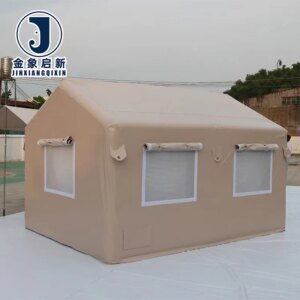
Inflatable Camping Tent PVC Waterproof Four-Season Outdoor Air Tent with Quick Automatic Opening for 3-4 Person
Read more -
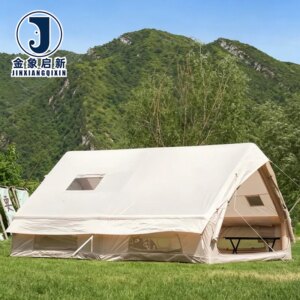
Inflatable Camping Tent PVC Four-Season Waterproof Outdoor Air Tent with Quick Automatic Opening for 2-3 Person
Read more