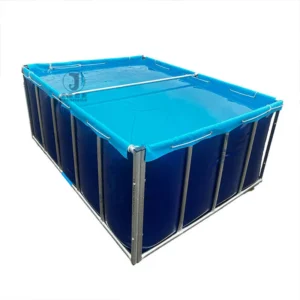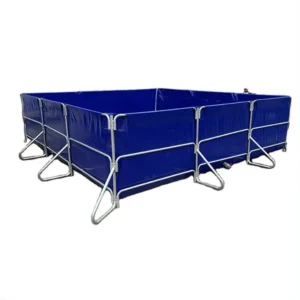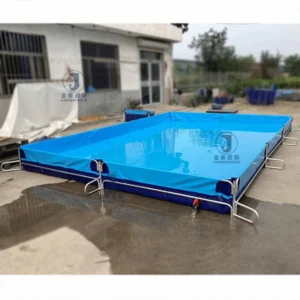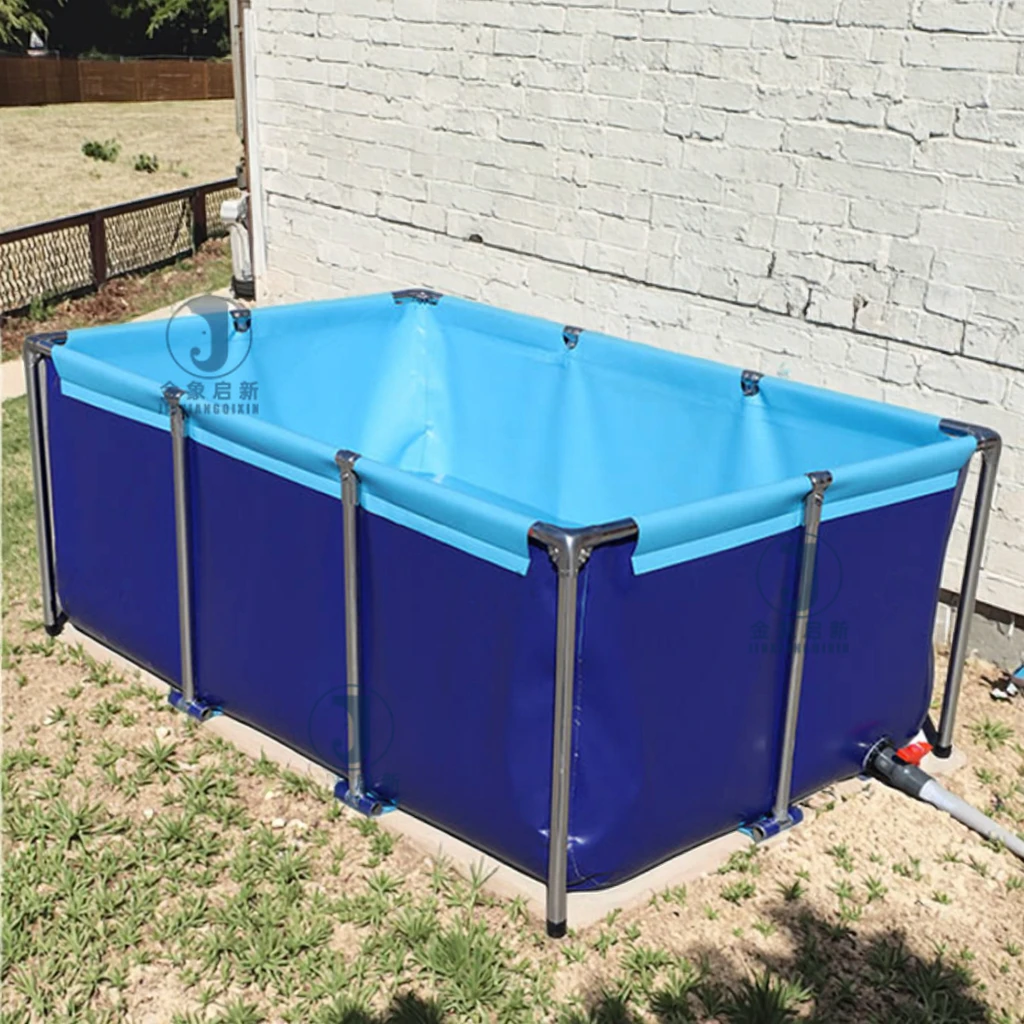
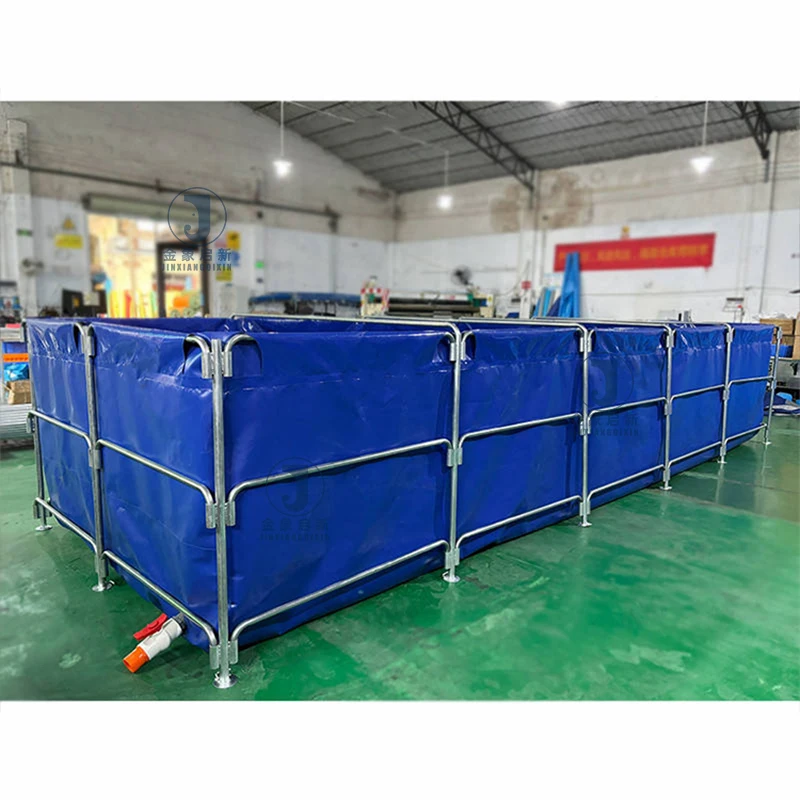
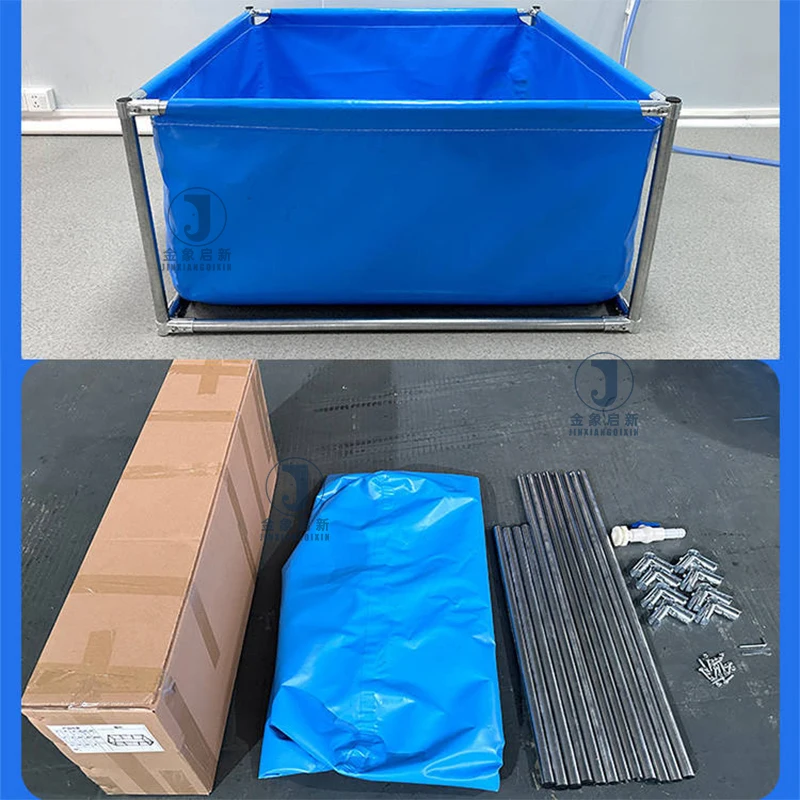
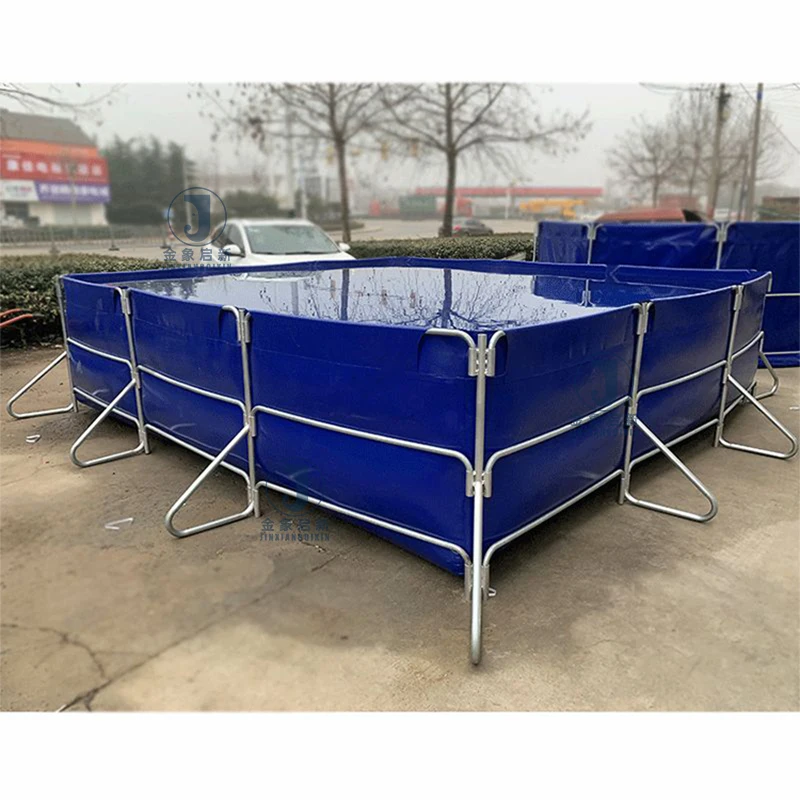
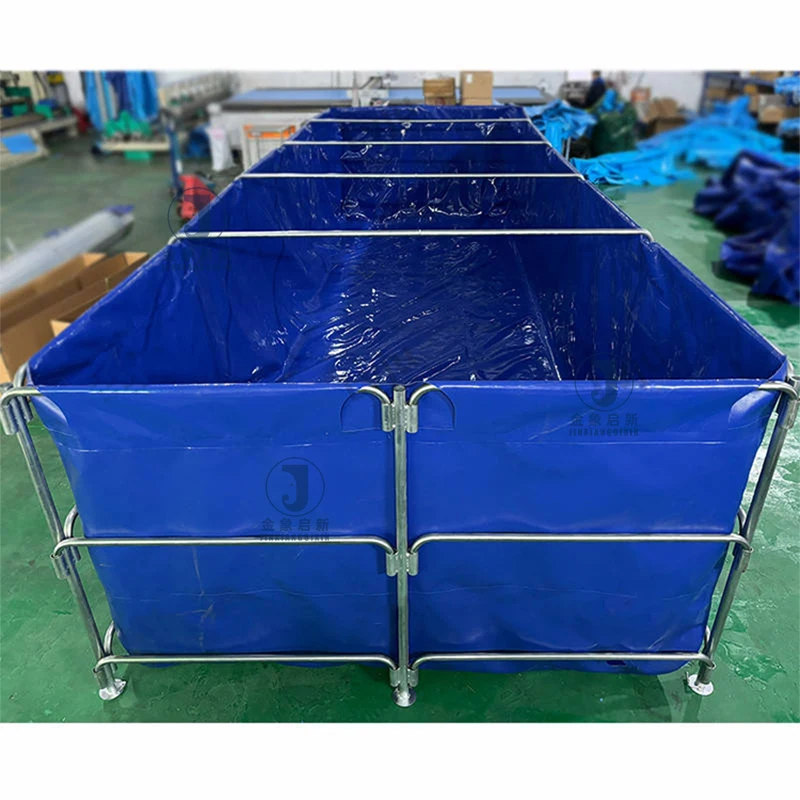
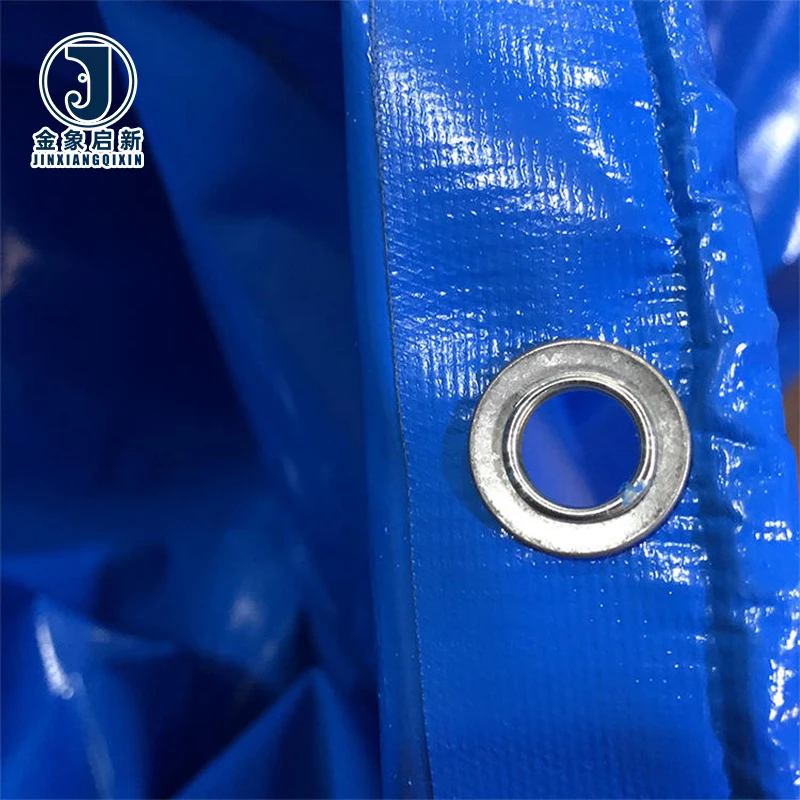
PVC Coated Tarpaulin for Fish Pond Lining, 350–900 g/m², 0.29–0.65mm Thickness — available in multiple yarn counts from 500D×840D to 1300D×1300D for aquaculture containment.
- Complete tarpaulin range with full custom capability across GSM, colour and roll width
- PVC coating delivers overall sealing without seam leakage common in PE construction
- Anti-UV and water-resistant treatment for outdoor pond and tank exposure
Backed by 100% pre-shipment inspection and in-process QA across three dedicated production lines.
Description
Proven Coated Fabric Process Control — Nearly 30 years of dedicated production experience ensures every roll of PVC pond liner meets the stated GSM, verified by 100% inspection before dispatch.
Technical Specifications
| Parameter | Value |
|---|---|
| Product Type | PVC Coated Tarpaulin |
| Material Composition | PVC coating on polyester base fabric |
| Yarn Count Options | 500D×840D / 500D×1000D / 1000D×1000D / 1000D×1300D / 1300D×1300D / 1000D×2000D |
| Thickness Range | 0.29mm to 0.65mm |
| GSM Range | 350 / 400 / 420 / 500 / 600 / 650 / 750 / 900 g/m² |
| Density (Mesh Count) | 30×19 / 20×20 / 30×15 |
| Tensile Strength (Warp) | 1650N to 3900N (test basis not stated in source) |
| Tensile Strength (Weft) | 1600N to 3500N (test basis not stated in source) |
| Surface Finish | Smooth, leather-like texture |
| Key Features | Waterproof, water resistant, available in anti-UV and flame retardant grades — confirm the grade required for your application |
| Repair Method | Hot air welding |
Application Suitability
| Application | Exposure & Requirement |
|---|---|
| Fish pond lining | Permanent water contact, substrate abrasion, soil chemistry, puncture risk from rocks and roots |
| Aquaculture tanks and shrimp ponds | Constant water immersion, stock movement abrasion, UV exposure in open-air installations |
| Agricultural water reservoirs | Seasonal UV radiation, mechanical damage from maintenance equipment, large surface area coverage |
| Hatchery and nursery tanks | Clean water contact, frequent draining and cleaning cycles, custom panel shapes and dimensions |
Why a Stated GSM Does Not Guarantee What Arrives on the Dock
GSM on paper means nothing unless every roll is weighed and recorded before it leaves the factory floor.
Aquaculture operators and agricultural contractors regularly face a painful discrepancy: the PVC Pond Liner manufacturer quotes a specific weight, but the material that arrives feels noticeably lighter, stretches more easily, and shows early signs of coating delamination. This is rarely a simple counting error. It is a process control failure that begins when production runs are pushed to cut coating weight for margin. [NEED_CITE: coating weight verification methods for PVC coated textiles] A liner that arrives lighter than specified will compromise water containment integrity long before the expected service period ends.
The Complete Tarpaulin Range for Water Containment
This PVC Pond Liner manufacturer supplies the full spectrum of coated fabric options, from lighter grades used in temporary nursery tanks to heavy-duty rolls specified for deep commercial fish ponds. The catalogue spans multiple base fabric deniers and coating weights, meaning buyers sourcing custom aquaculture tarpaulin can match the exact material to their containment depth, substrate conditions, and installation method.
How Specification Choices Translate to Field Performance
Selecting the correct denier and GSM for a pond liner is not a matter of simply choosing the heaviest option available. A shallow freshwater pond on compacted clay requires different structural support than a deep shrimp tank on a gravel base. The base fabric construction — yarn count, weave density, and coating adhesion — collectively determine how the liner behaves under hydrostatic pressure, substrate puncture, and mechanical stress during installation. [NEED_CITE: hydrostatic pressure requirements for aquaculture pond liners] This is why the product range includes options from 500D×840D through to 1000D×2000D base fabric, each paired with appropriate coating weights to deliver the required tensile and tear performance.
Understanding the Relationship Between GSM, Base Fabric, and Coating Weight
A common specification error is evaluating pond liner fabric by GSM alone, without examining what contributes to that weight. The total GSM is a sum of the base polyester fabric weight and the PVC coating applied to both sides. Two rolls can share an identical GSM yet perform completely differently: one may have a heavier base fabric with thinner coating (higher tear strength but reduced chemical resistance), while the other has a lighter base with thicker coating (better waterproofing but lower structural integrity). For aquaculture applications, the base fabric denier — ranging here from 500D×840D to 1000D×2000D — establishes the tensile and tear foundation, while the double-sided PVC coating provides the watertight seal and chemical barrier. The mesh density (30×19, 20×20, or 30×15) further influences how load distributes across the fabric under water pressure. Specifying the correct combination requires understanding both your pond depth and the mechanical stresses the liner will endure during and after installation.
The Hidden Cost of Selecting the Wrong Grade for Your Substrate
When a liner grade is chosen based solely on price or a generic GSM recommendation, the failure typically appears at the seams and at points of concentrated substrate contact. A lighter base fabric denier, installed over an unprepared gravel base, will concentrate puncture loads on individual yarn intersections rather than distributing force across the weave. The PVC coating may remain intact while the polyester base fabric tears beneath it, creating slow leaks that go undetected until water levels drop noticeably. [NEED_CITE: puncture resistance test methods for geomembrane liners] In aquaculture operations, this type of failure is often discovered only after stock losses have already occurred, making grade selection a decision with direct operational consequences.
Why Aquaculture Operators Source This PVC Pond Liner Manufacturer
The production facility operates three full coating lines with 36 sets of professional equipment, supporting consistent output volume across multiple GSM grades and widths simultaneously. A 10-person R&D team handles material selection and sample development, producing custom-width rolls and cut-to-size panels within days rather than weeks. Dedicated quality control at each production stage — including 100% pre-shipment inspection — ensures that the GSM stated on your documentation is the GSM that arrives. ISO and CE certified processes provide the documentation framework that commercial aquaculture operations and agricultural projects require for compliance and traceability.
Documentation & Verification
- Material specification sheet stating exact GSM, base fabric denier, and coating weight per roll
- Pre-shipment inspection record confirming 100% weight and dimension verification before dispatch
- UV treatment test report supplied for applicable anti-UV grades — request at inquiry stage
- Roll packing list with certificate of origin and customs documentation for international shipment
- ISO and CE certificates supporting facility and process compliance claims
Fabrication, Handling & Storage
- Hot air welding recommended for on-site seam joining — smooth PVC surface promotes consistent weld adhesion
- Store rolls upright on a flat surface to prevent permanent creasing across the polyester base fabric
- Avoid dragging unrolled liner over sharp substrate; the PVC coating resists abrasion but puncture risk remains at rock contact points
- Unroll material in ambient conditions and allow thermal expansion before final welding, particularly in cold weather
- Clean installed liner surfaces with mild detergent; harsh solvents will degrade the PVC coating over time
- Plan panel layout to minimize transverse welds, as each seam represents a potential stress concentration under hydrostatic load
Specifying Your Pond Liner Inquiry
To receive an accurate recommendation, provide your intended pond depth, substrate type, and whether the installation is permanent or seasonal. Confirm the total surface area and any required custom widths or cut-to-size panel dimensions. If your project is in a region with high UV exposure, specify whether anti-UV treatment is required so that the appropriate grade and test documentation can be included with your shipment.
Frequently Asked Questions
Q: How do I verify the GSM of pond liner rolls when they arrive at my site?
A: Request the pre-shipment inspection record with your order, which documents the measured weight per roll. On arrival, cut a measured sample from the roll edge and weigh it on a calibrated scale to confirm it matches the stated specification. Discrepancies beyond normal manufacturing tolerance should be reported immediately with photographic evidence of the sample and scale reading.
Q: Which denier and GSM grade should I specify for a deep commercial fish pond?
A: Deeper ponds generate higher hydrostatic pressure, requiring stronger base fabric construction to resist stretching and substrate puncture. Heavier denier options such as 1000D×1000D or 1300D×1300D paired with a correspondingly higher GSM are typically specified for these conditions. Confirm your pond depth, substrate type, and water volume with the supplier to receive a grade recommendation matched to your installation.
Q: Is anti-UV treatment available and how is it verified?
A: Anti-UV treatment is available in specific grades within this product range. When specifying UV resistance, request the test report associated with the grade being quoted so you can verify the treatment level matches your outdoor exposure conditions. Always confirm the required UV grade at the inquiry stage, as treatment levels vary and the appropriate grade depends on your geographic location and installation duration.
Q: What is the recommended method for joining PVC pond liner panels on site?
A: Hot air welding is the standard joining method for this PVC coated fabric, producing a continuous seal that matches the waterproof performance of the parent material. The smooth, leather-like surface promotes consistent weld bead adhesion. Seam taping is not recommended as a primary joining method for permanent water containment, as adhesive bonds degrade with prolonged water immersion and temperature cycling.
Q: Can I order custom widths and cut-to-size panels, and what are the minimum requirements?
A: Custom widths, roll lengths, and cut-to-size panels are available across the full GSM and denier range. Minimum order requirements vary depending on whether you are ordering full rolls or fabricated panels, and on the specific colour and grade selected. Provide your total project area, required dimensions, and any colour preference at the inquiry stage to receive minimum and lead time details specific to your order.
Related products
-
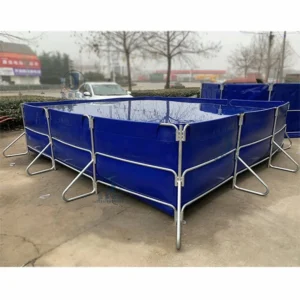
Custom PVC Tarpaulin Fish Pond Liner for Aquaculture
Read more -
Inflatable Swimming Pool Cover Rainproof Ground Outdoor Bathtub Waterproof Coated Blackout Organic Plain Tarpaulin Boys Girls PE
¥1.00 Select options This product has multiple variants. The options may be chosen on the product page -
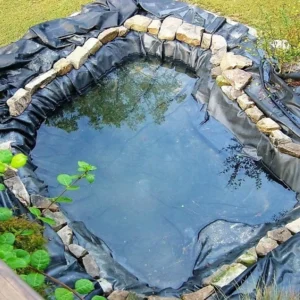
Waterproof Heavy Duty Coated Blackout Fish Pond Tarpaulin Truck Cover Sheet Tent Swimming Pool Liner Anti UV
¥1.00 Select options This product has multiple variants. The options may be chosen on the product page -
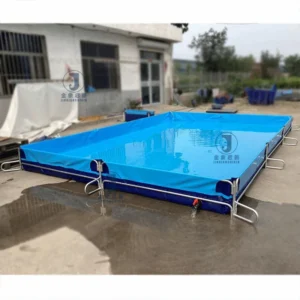
Custom PVC Tarpaulin for Fish Pond – Full Range
Read more