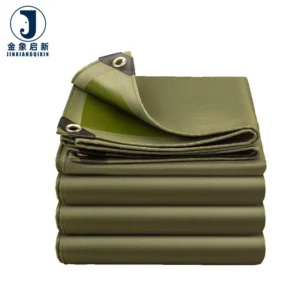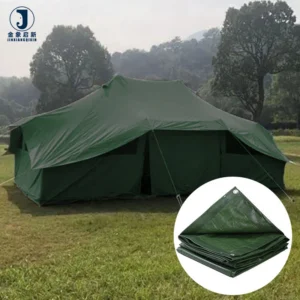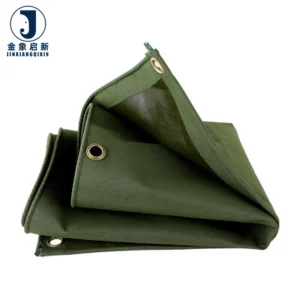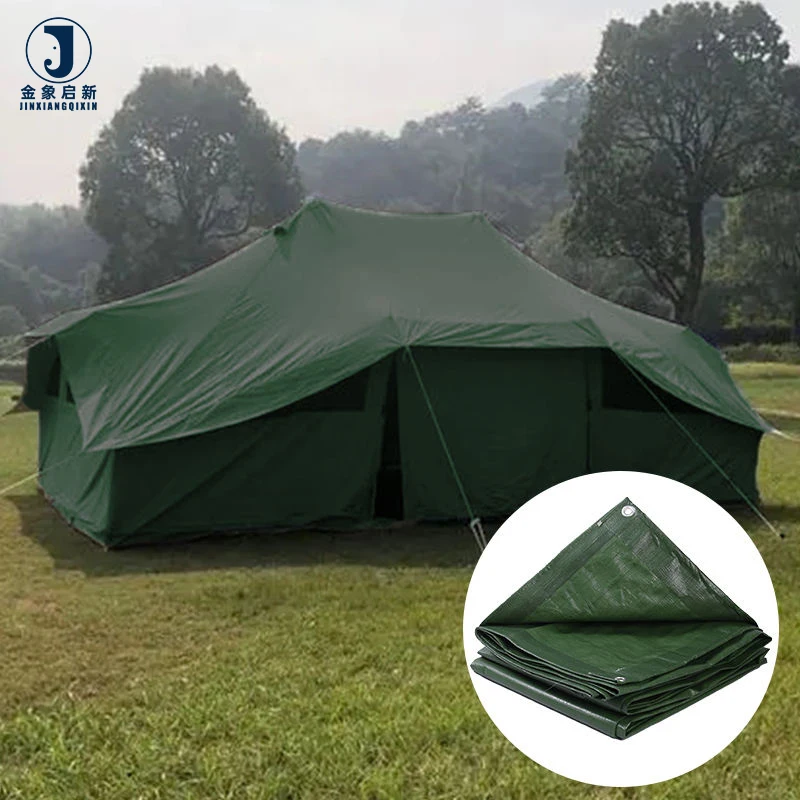
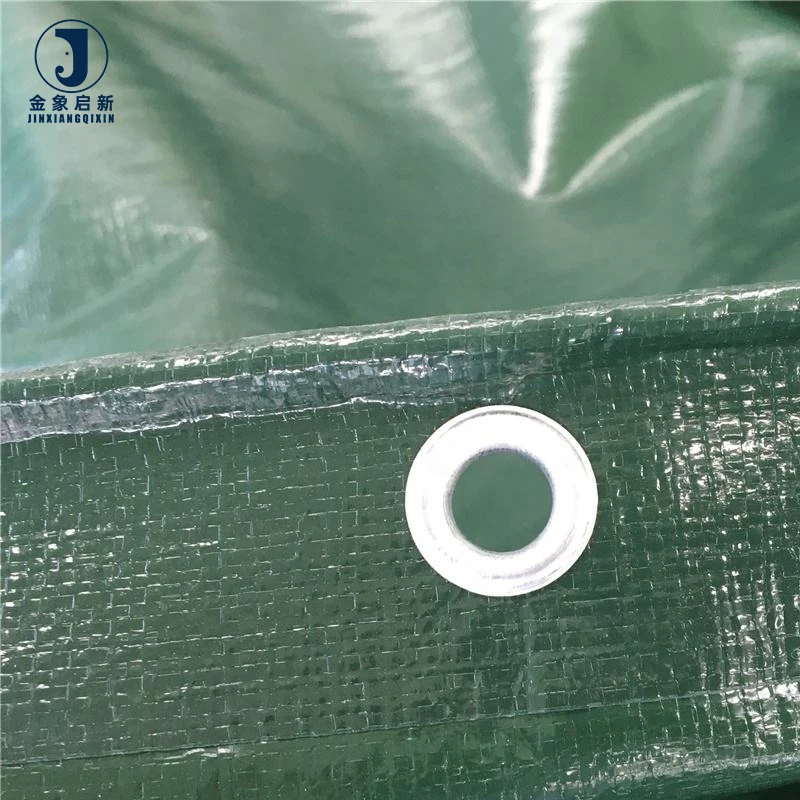
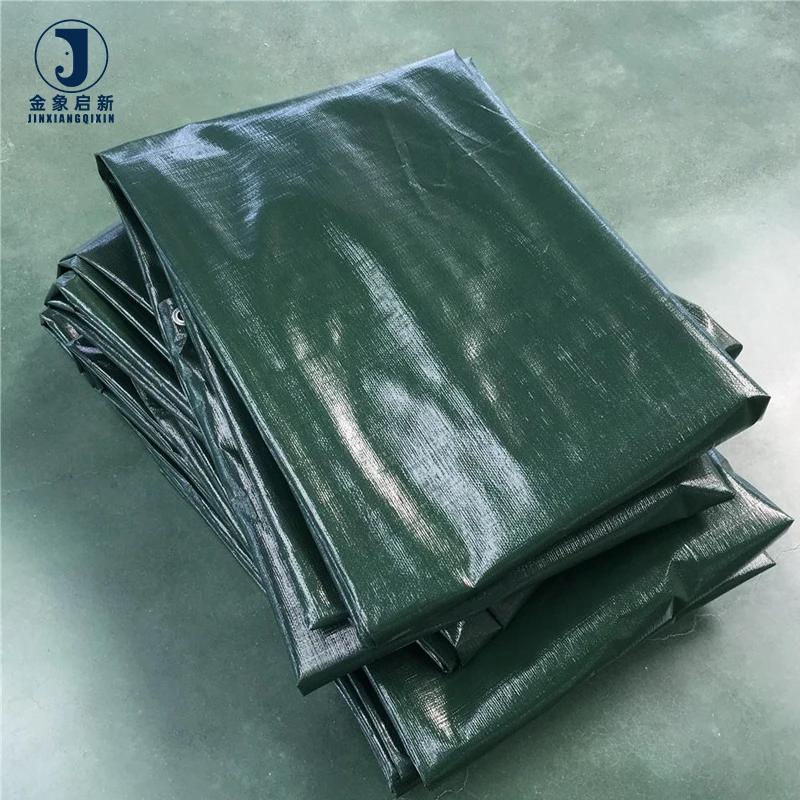
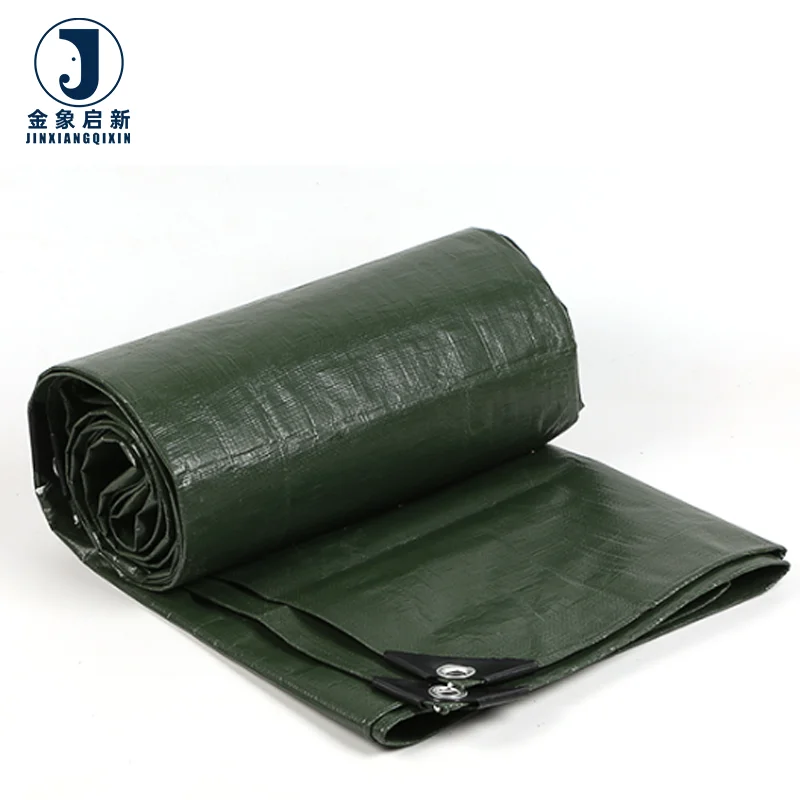
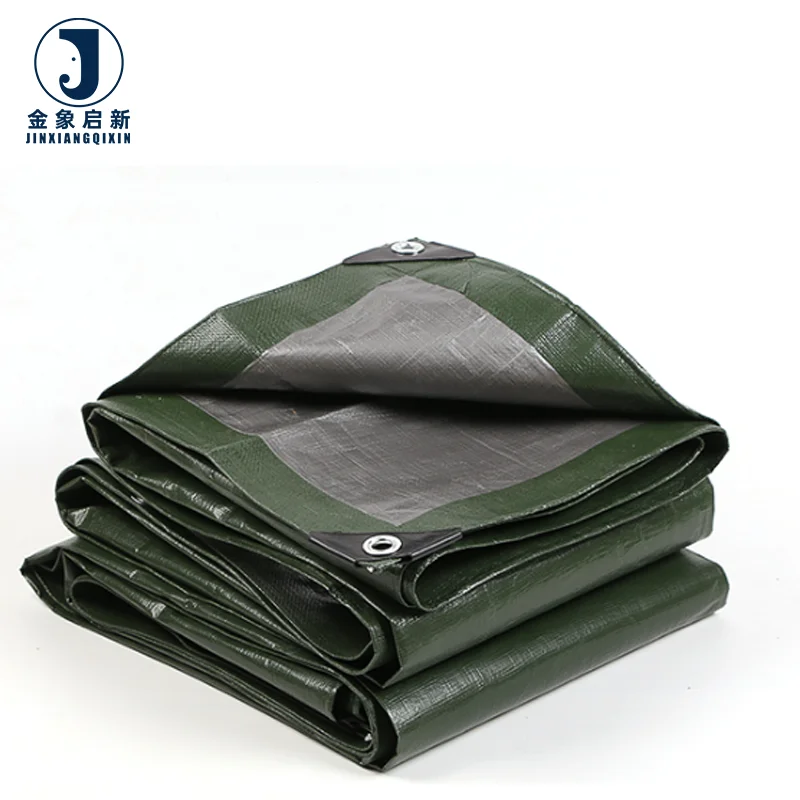
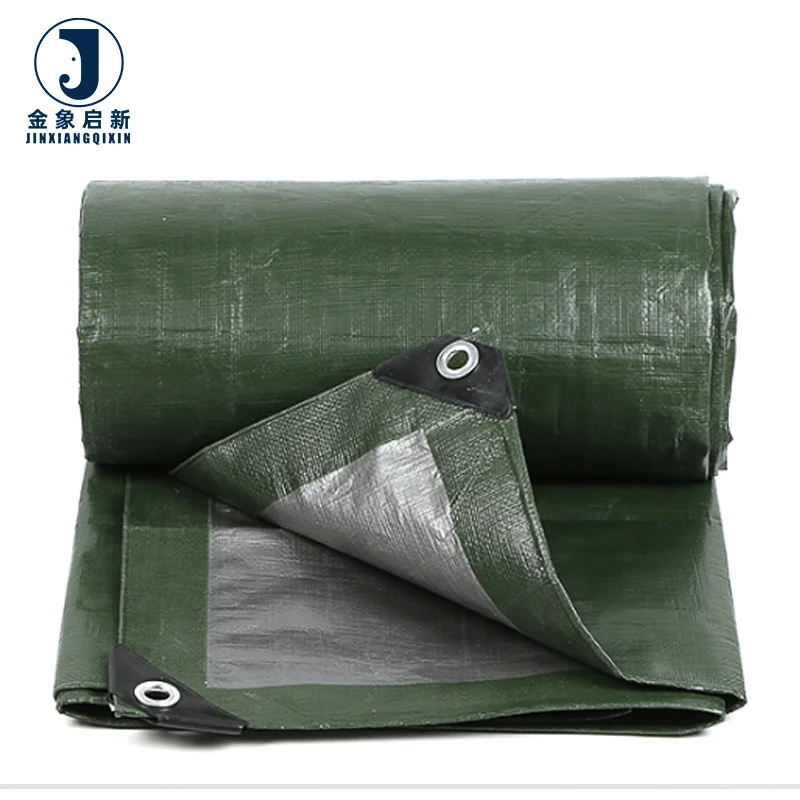
Heavy Duty Waterproof Polyethylene Tarpaulin Fabric — HDPE woven with dual-side LDPE coating, 50–300 g/m², 6×6 to 16×16 mesh density, rustproof aluminum eyelets every 1–1.5 m.
- Mesh density and GSM together determine tensile and tear performance across load sizes
- PP rope hem with reinforced plastic triangle corners matches seam strength to fabric body
- Roll or cut-to-size formats available for truck, construction and agricultural covering
Backed by nearly 30 years of coated fabric process control and 100% pre-shipment inspection across three dedicated production lines.
Description
Process-Controlled Coating Expertise — Every PE tarpaulin roll is verified against the agreed GSM and mesh count with a pre-shipment inspection record before dispatch, ensuring the specification on paper matches the material on the dock.
Technical Specifications
| Parameter | Value |
|---|---|
| Product Type | PE Tarpaulin |
| Material | HDPE woven fabric with LDPE coating on both sides |
| Mesh Density | 6×6 to 16×16 |
| Weight Range | 50 g/m² to 300 g/m² (confirm the grade for your application) |
| Sheet Sizes | 2×3, 3×4, 3×5, 4×5, 5×6, 6×8, 10×10, 10×12, 12×14 m or custom |
| Roll Length | 100 m per roll or custom length |
| Edge Construction | PP rope in hem |
| Corner Reinforcement | Black plastic triangle |
| Eyelets | Rustproof aluminum, spaced every 1 m or 1.5 m |
| Colour Options | Blue, Orange, White, Black, Grey, Yellow, Green, Red, or custom |
| Printing | Logos or company information available |
| Special Treatment | Fire resistant / UV protection available — confirm the grade required for your market |
| Anti-Aging | Anti-oxidants added (test basis not stated in source) |
Application Suitability
| Application | Exposure & Requirement |
|---|---|
| Truck and trailer load covering | Road abrasion, wind flex, UV exposure, tie-down stress at eyelet points |
| Construction site and equipment covers | Debris impact, prolonged outdoor weathering, frequent handling and folding |
| Agricultural and aquaculture stock covering | Moisture contact, biological contamination, seasonal UV exposure |
| Outdoor industrial protection | Chemical splash resistance, dust containment, multi-season weather cycling |
| Pond and reservoir lining | Permanent water contact, soil chemistry, puncture risk during installation |
Why the Specification Sheet Matters More Than the Quoted GSM
A quoted weight means nothing without a verified inspection record tied to the shipment.
Every year, transport fleets and construction contractors receive PE tarpaulin that measures lighter than the GSM stated on the original quotation. The material arrives, the cover is fitted, and within months the fabric tears at stress points that a correctly weighted grade would have handled. The gap between what was quoted and what was delivered is rarely caught until the cover fails in service. When sourcing custom PE tarpaulin for fleet or site use, the documentation accompanying the shipment is as important as the fabric itself. [NEED_CITE: ISO 1421 test methods for tensile and tear strength of coated fabrics]
How Mesh Density and Coating Weight Work Together
The base fabric mesh count — from 6×6 to 16×16 — defines the woven grid that carries the tensile load. A tighter weave distributes stress across more yarn intersections, reducing the chance of a tear propagating once the surface is punctured. The LDPE coating on both sides locks that weave in place and provides the waterproof barrier. A PE tarpaulin manufacturer with process control over both weaving and coating can hold the specified GSM consistently from the first metre of a roll to the last.
Selecting Sheet Size or Roll Format for Your Operation
Cut sheets from 2×3 m to 12×14 m serve contractors who need ready-to-deploy covers for equipment and stockpiles. Roll stock at 100 m per roll suits distributors and fabricators who cut to order or produce fitted truck covers in-house. Custom PE tarpaulin orders can specify non-standard sheet dimensions or roll lengths to match production workflows, reducing waste at the cutting table.
Understanding the Link Between GSM, Density, and Field Performance
GSM alone does not predict how a tarpaulin will perform under load. A 180 g/m² fabric woven at 14×14 mesh with a heavy coating may resist water penetration well but show lower tear resistance than a 160 g/m² fabric woven at 16×16 with a lighter, more balanced coating. The HDPE yarn denier and the coating-to-base-fabric ratio both influence the final tensile and tear values. This is why a material specification sheet listing mesh count, base fabric weight, and coating weight separately provides far more useful information than a single GSM figure. [NEED_CITE: relationship between woven fabric density and tear propagation in coated textiles]
The Hidden Cost of Specifying on Price Per Kilogram Alone
When buyers select PE tarpaulin primarily on cost per kilogram, suppliers have an incentive to reduce coating weight while maintaining the quoted GSM by using a heavier base fabric with less LDPE. The result is a stiffer, less flexible cover that cracks at fold lines after repeated handling. Welded seams may fail before the fabric body does, because the coating thickness at the seam is insufficient for a strong thermal bond. These failures show up months after delivery, long after the invoice is paid. [NEED_CITE: thermal weld strength relative to coating thickness in polyethylene tarpaulin]
Why Procurement Teams Source This PE Tarpaulin Here
The production process controls coating weight and adhesion at every stage, verified by dedicated QA/QC checks rather than end-of-line sampling. Three full production lines and 36 sets of equipment support bulk roll orders with consistent lead times, so distributors and fleet operators can plan container loading by roll count and weight. A 10-person R&D team develops samples within days when custom colours, printing, or non-standard sheet dimensions are required, allowing buyers to approve the exact material before full production runs.
Documentation & Verification
- Material specification sheet stating GSM, mesh count, base fabric, LDPE coating weight, and colour reference
- Pre-shipment inspection record with weight verification per roll against the agreed specification
- Test report for UV protection and fire-resistant grades where applicable
- ISO and CE certificates with certificate of origin and customs documentation
- Roll packing list with batch identification for traceability across the shipment
Fabrication, Handling & Storage
- Heat-weld seams using temperature and dwell time matched to the LDPE coating thickness for full bond strength
- Specify 1 m eyelet spacing for heavy-duty truck covers to distribute tie-down load across the PP rope hem
- Store rolls upright on pallets to prevent flat-spotting and permanent creasing of the LDPE coating surface
- Avoid dragging sheets across abrasive ground during deployment to protect the outer LDPE coating layer
- Clean with mild detergent and soft brush; solvents may degrade the LDPE coating and anti-oxidant additives
- Allow sheets to reach ambient temperature before unfolding in cold conditions to prevent coating crack at fold lines
Requesting a Specification Match for Your Application
Provide the cover dimensions or roll format you need, the mesh density and GSM range suited to your exposure conditions, and any fire-resistant or UV protection grade your market requires. If colour consistency across multiple rolls is critical, state the colour reference and the number of rolls per batch so the production team can plan a single coating run. Confirm whether you need finished sheets with eyelets and reinforced hems, or roll stock for your own fabrication line.
Frequently Asked Questions
Q: How is GSM verified, and what documentation accompanies each shipment?
A: Every roll is weighed and measured during pre-shipment inspection, and the results are recorded against the agreed specification. The inspection record, material specification sheet, and packing list ship with the order. For UV or fire-resistant grades, a test report is included when the treatment has been applied and verified.
Q: What roll lengths and sheet sizes are available, and what are the minimums on custom dimensions?
A: Standard roll length is 100 m, and standard sheets range from 2×3 m to 12×14 m. Custom lengths and cut sizes are available. Minimum order quantities depend on colour and treatment requirements; solid stock colours typically carry lower minimums than custom-matched or printed runs.
Q: How do you ensure colour consistency across multiple rolls or sheets in the same order?
A: Colour matching is controlled at the LDPE coating stage. For orders where rolls will be installed side by side, production is planned as a single coating batch to eliminate inter-batch variation. A colour reference sample is retained for comparison during the pre-shipment inspection.
Q: What eyelet spacing and hem reinforcement options are available for heavy-duty use?
A: Rustproof aluminum eyelets are offered at 1 m or 1.5 m spacing, with PP rope sewn into the hem and black plastic triangle reinforcement at each corner. For high-stress applications such as truck side curtains, closer eyelet spacing and additional corner patches can be specified.
Q: Can fire-resistant treatment be certified to the standard my market requires?
A: Fire-resistant treatment is available on request. The applicable grade and test standard must be confirmed at the inquiry stage so the correct formulation is applied and documented. Provide the standard required by your local fire authority or project specification, and the production team will match the treatment and supply the supporting test report.
Related products
-
Very Heavyweight Heavy Duty Heat Resistant PVC Laminated Woven Canvas Tarpaulin Waterproof Tent Fabric for Accessories
¥195.00 Add to cart -
Canvas Tarpaulin for Truck Cover – Custom Made
Read more -
Custom Heavy Duty Canvas Truck Tarp for Trailer – Manufacturer
Read more -
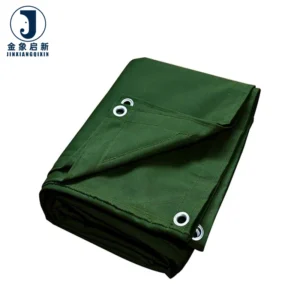
Custom Heavy Duty Woven PVC Laminated Industrial Canvas Tarpaulin Ripstop Style Waterproof Car Truck Cover Home Textiles Bags
¥10.00 Add to cart