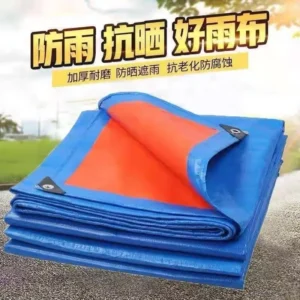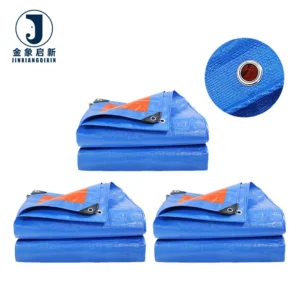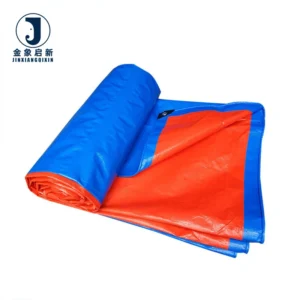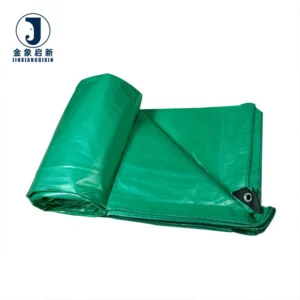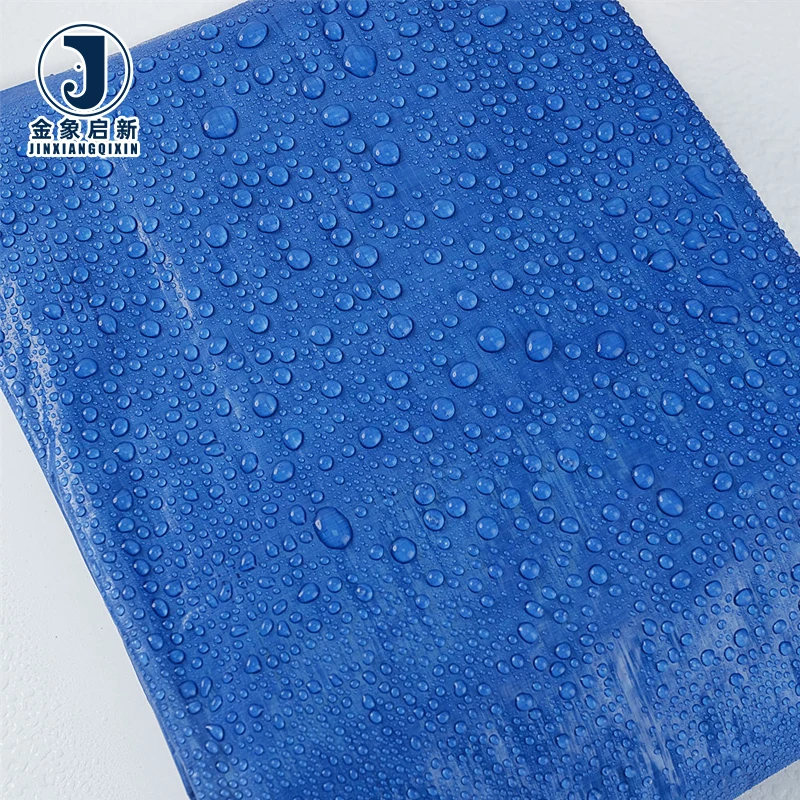
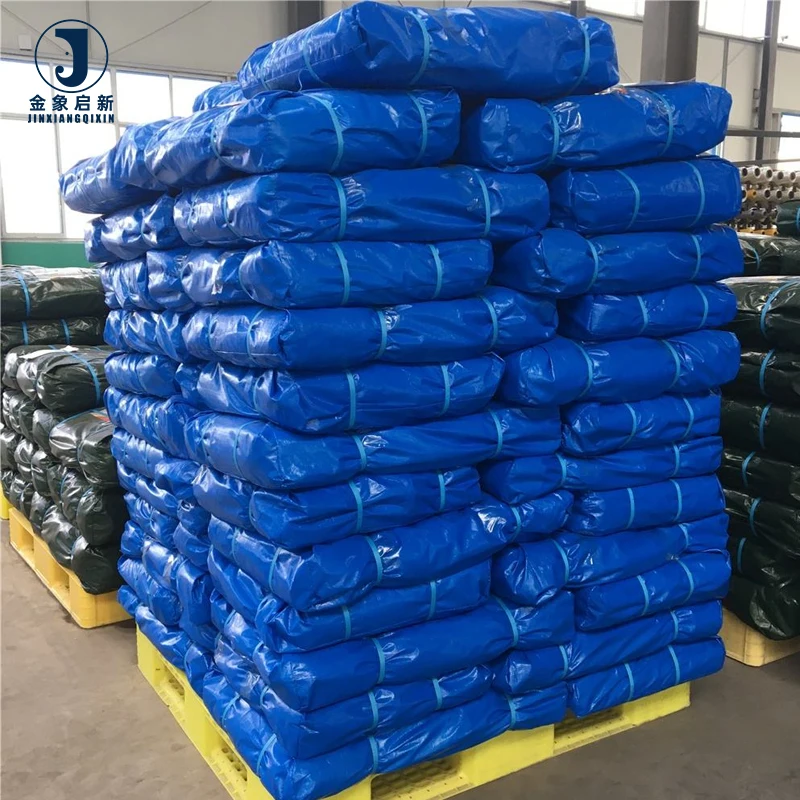
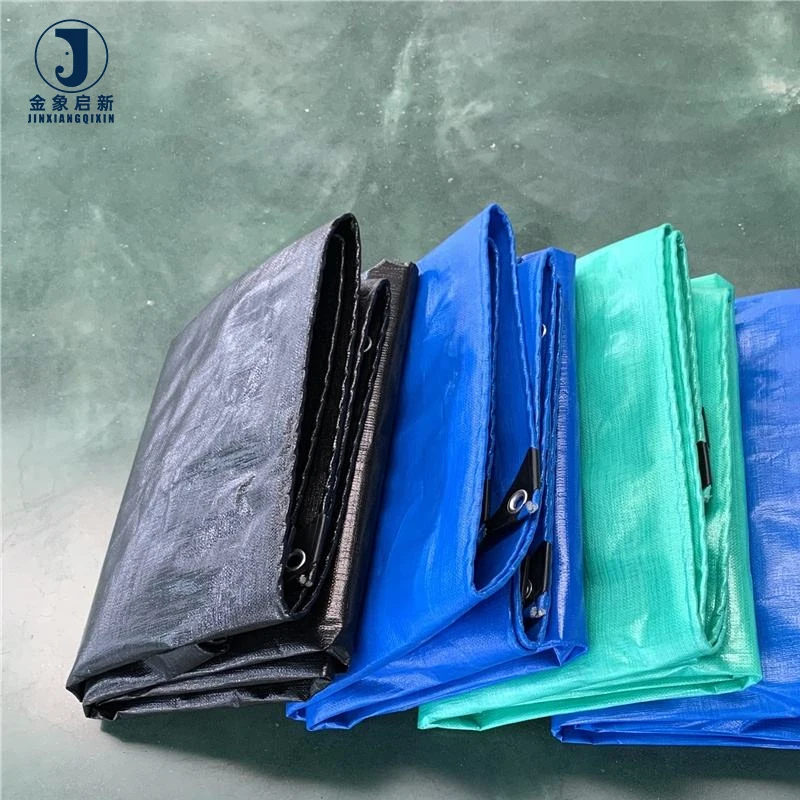
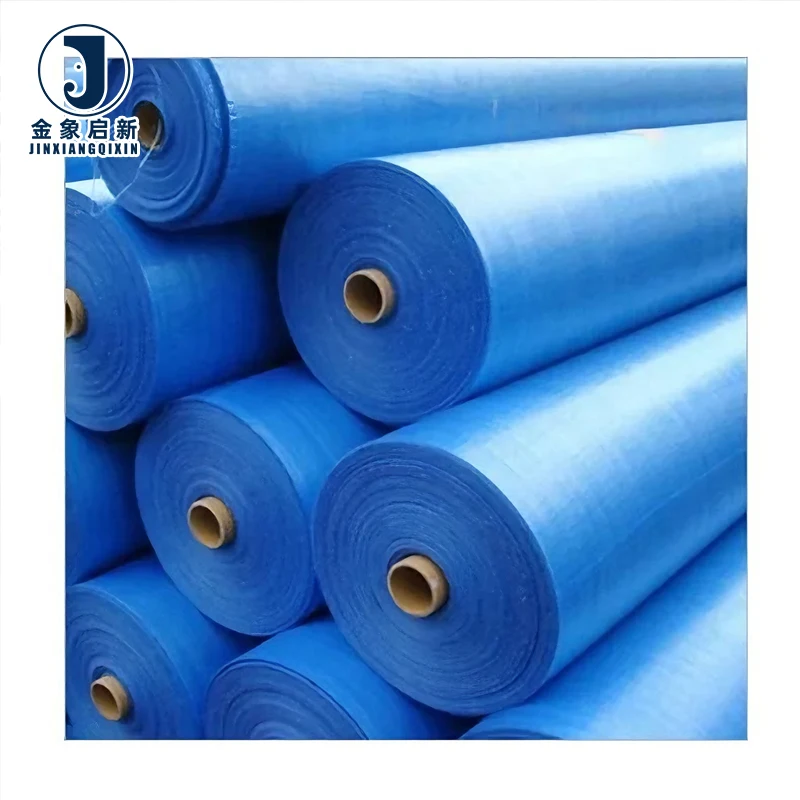
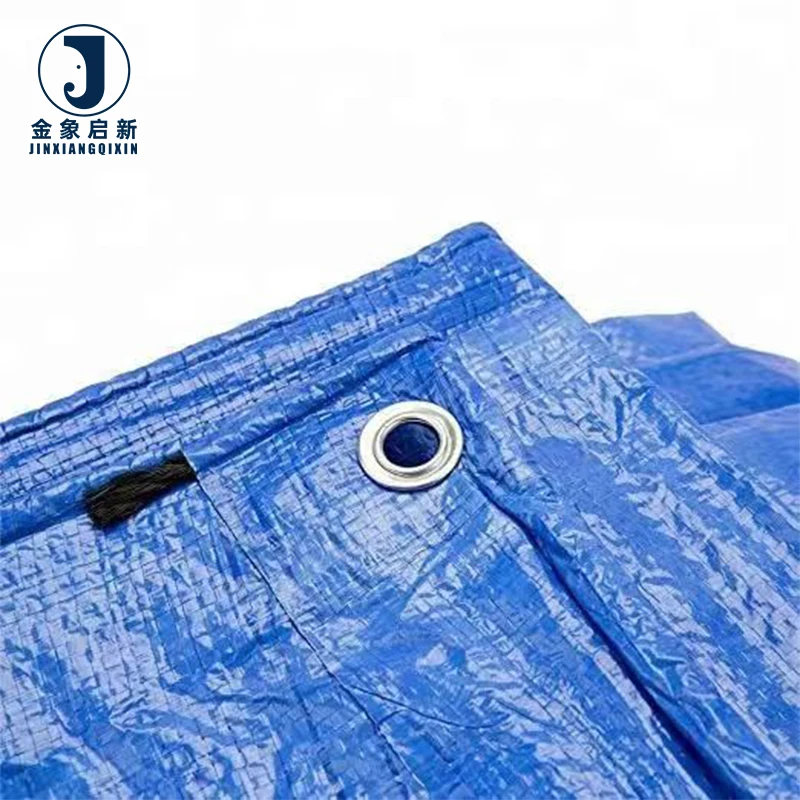
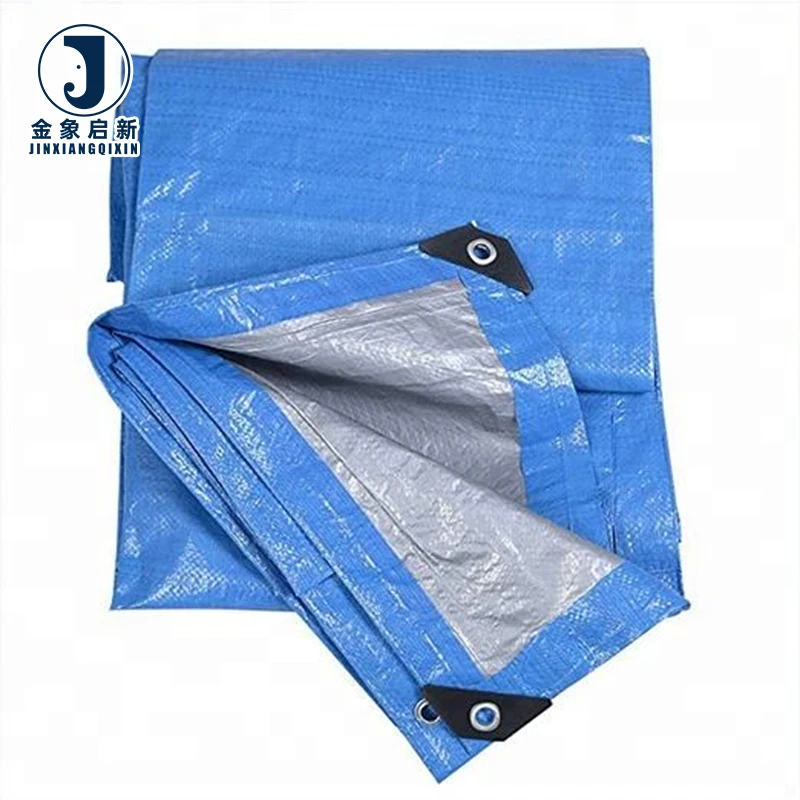
PE Tarpaulin 40-500g/m², Custom Size, 8×8 to 12×12 Knitting Density — waterproof polyethylene covers with lightweight, medium and heavy-duty grades for precise outdoor awning and canopy application matching.
Weight and knitting density together determine tensile strength and tear resistance across the range, from 80-110g/m² agricultural covers to 160-240g/m² industrial sheets, with reinforced corners and custom eyelet placement for load-bearing points.
Three full production lines and 100% pre-shipment inspection ensure batch consistency and verified GSM across every roll delivered.
Description
Proven Coating Control — every roll of PE tarpaulin we produce is weighed, measured, and tested before it leaves the line, so the GSM on your quote matches the GSM on your dock.
Technical Specifications
| Parameter | Value |
|---|---|
| Product Type | PE Coated Tarpaulin Waterproof Rainproof Outdoor Awning Shade Sail Canopy |
| Material | Polyethylene |
| Size | Custom size available |
| Color | Custom color available |
| Weight Range | 40g–500g/m² |
| Lightweight Grade Thickness | 0.18–0.22 mm |
| Lightweight Grade Weight | 80–110 g/m² |
| Lightweight Grade Knitting Density | 8×8 |
| Lightweight Grade Tensile Strength | Meridian 300–500 / Latitude 250–450 N/5cm |
| Medium Grade Thickness | 0.22–0.28 mm |
| Medium Grade Weight | 120–150 g/m² |
| Medium Grade Knitting Density | 10×10 |
| Medium Grade Tensile Strength | Meridian 500–800 / Latitude 400–700 N/5cm |
| Heavy-Duty Grade Thickness | 0.30–0.35 mm |
| Heavy-Duty Grade Weight | 160–240 g/m² |
| Heavy-Duty Grade Knitting Density | 12×12 |
| Heavy-Duty Grade Tensile Strength | Meridian 900–1200 / Latitude 700–1000 N/5cm |
| Water Resistance | Double waterproof surfaces, tear-resistant, washable |
| Reinforcements | Reinforced corners |
| Center to Center Spacing | 39.4 inches |
| Certifications | ISO, CE |
Application Suitability
| Application | Exposure & Requirement |
|---|---|
| Agricultural covering | Constant sun exposure, wind loading, moisture ingress, seasonal temperature swing |
| Warehouse coverage | Rain pooling risk, dust containment, moderate UV, occasional foot traffic on edges |
| Truck tarpaulin | Road vibration, flexing at load points, wind shear, tie-down abrasion at corners |
| Outdoor awning | Continuous UV exposure, rain runoff, repeated deployment and retraction cycles |
| Shade sail canopy | High tensile load at anchor points, sustained UV, wind uplift, water drainage slope |
| Industrial protective cover | Chemical splash contact, forklift puncture risk, heavy equipment movement nearby |
Why Stated Weight and Actual Weight Drift Apart on PE Tarpaulin
The PE tarpaulin aftermarket supplier you choose must verify mass per unit area at the roll level, not just at the sample stage.
I once watched a shipment sit at a port for two months because the buyer weighed incoming rolls and found the material came in below the agreed GSM. The quotation said 180 g/m²; the rolls averaged 155 g/m². That gap is enough to shift the knitting density down and reduce tear resistance noticeably in the field. The issue is rarely deliberate — it usually traces back to inconsistent resin feed rate or a laminator that was not recalibrated after a roll change. Either way, the buyer absorbs the loss. [NEED_CITE: ISO 1421 tensile and tear test methods for coated fabrics]
Full Product Range from Lightweight Covers to Heavy-Duty Transport Sheets
Selecting the right weight grade is the first decision any PE tarpaulin aftermarket supplier will ask you to make. Lightweight grades at 80–110 g/m² suit short-season agricultural covers and temporary site protection where the material sees limited handling. Medium grades at 120–150 g/m² cover warehouse sheeting and medium-term awning applications that face daily UV exposure. Heavy-duty grades at 160–240 g/m² are built for truck tarpaulins and shade sail canopies where the fabric must hold tension at anchor points without stretching or tearing.
Knitting Density and Tensile Performance Across the Range
The knitting density specification — 8×8 for lightweight, 10×10 for medium, and 12×12 for heavy-duty — directly controls how much load each yarn intersection can carry before the weave distorts. A 12×12 fabric at 160–240 g/m² delivers meridian tensile strength up to 1,200 N/5cm, which is the figure that matters when a shade sail canopy is pulled tight across a steel frame in a coastal wind zone. The latitude strength runs slightly lower at 700–1,000 N/5cm, which reflects the standard weaving bias and is why installers orient the stronger meridian direction along the primary tension axis. [NEED_CITE: relationship between knitting density and biaxial tensile behaviour in woven PE]
How Coating Weight, Fabric Density, and Thickness Interact
GSM alone does not predict performance — it is the combination of base fabric denier, knitting density, and coating thickness that determines the final behaviour. A medium-grade PE tarpaulin at 120–150 g/m² with a 10×10 weave and 0.22–0.28 mm total thickness relies on the coating to fill the interstices between yarns and create a continuous waterproof barrier. If the coating is too thin, pinholes appear at the weave intersections and water penetrates under hydrostatic pressure. If the coating is too thick relative to the base fabric, the material becomes stiff and cracks along fold lines during repeated deployment. The 0.18–0.22 mm thickness on lightweight grades keeps the fabric flexible enough for easy handling, while the 0.30–0.35 mm on heavy-duty grades provides the abrasion resistance needed where the tarp contacts steel trailer edges.
The Hidden Cost of Specifying the Wrong Grade for the Job
A buyer who selects a lightweight 80–110 g/m² grade for a shade sail canopy will see the fabric stretch and deform at the anchor points within the first high-wind event. The 8×8 knitting density simply cannot hold the tension that a tensioned membrane structure demands. On the other side, specifying a heavy-duty 160–240 g/m² grade for a temporary agricultural cover means paying for strength the application never uses, and the added stiffness makes the tarp difficult for one person to unfold across a stockpile. The real cost shows up later — either as premature failure that triggers a warranty claim, or as excess material cost on every roll in the order. [NEED_CITE: tarpaulin grade mismatch as a leading cause of field failure]
Why Buyers Source This PE Tarpaulin Range Through Jinxiang
Three full production lines and 36 sets of professional equipment mean we hold capacity for bulk roll orders without queuing your shipment behind another client’s urgent run. The 10-person R&D team handles custom sizing, colour matching, and sample development so you can confirm material behaviour before committing to a production batch. Every roll goes through in-process QA checks on coating weight and adhesion, followed by 100% pre-shipment inspection against the stated GSM and thickness. Samples are developed within days for custom requirements, which shortens the approval cycle on new colours or printed branding. We ship with a complete documentation set including material specification sheets, test reports where applicable, and packing lists that match the roll count on your purchase order.
Documentation & Verification
- Material specification sheet stating GSM, base fabric knitting density, and coating thickness per roll
- Colour reference and batch number recorded for cross-roll consistency checks
- UV and flame-retardant test reports provided for treated grades upon specification
- ISO and CE certificates included with the shipping documentation package
- Pre-shipment inspection record confirming weight verification against the agreed GSM
- Certificate of origin and customs documentation prepared per destination country requirements
Fabrication, Handling & Storage
- Heat-seal temperature must match the PE coating grade; lightweight 80–110 g/m² material requires lower heat to avoid melting through the base fabric
- Reinforced corners should be added at all tie-down points on heavy-duty 160–240 g/m² sheets to distribute load across the 12×12 weave
- Store rolls vertically in a dry, shaded area to prevent flat spots that cause permanent creasing on the 0.30–0.35 mm heavy-duty grades
- Unfold and deploy cold-stored tarps gradually; the 0.18–0.22 mm lightweight grades are more flexible but still risk coating crack below freezing
- Clean with mild detergent only — aggressive solvents attack the double waterproof coating surfaces and reduce water resistance over time
- Plan cutting layout to align the meridian tensile direction with the primary load axis, maximising the 900–1,200 N/5cm strength on heavy-duty grades
What to Include in Your Inquiry
Provide the application scenario and the environmental conditions the material will face — UV exposure duration, wind loading, temperature range, and whether the fabric will be under sustained tension. Tell us the target market so we can confirm which fire classification or UV treatment grade applies. Share your required width, roll length, and annual volume so we can quote against the correct production run and confirm lead time.
Frequently Asked Questions
Q: What GSM grade do I need for my application?
A: Lightweight 80–110 g/m² suits temporary agricultural covers and short-term site protection. Medium 120–150 g/m² works for warehouse sheeting and awning applications with daily UV exposure. Heavy-duty 160–240 g/m² is the correct choice for truck tarpaulins and shade sail canopies under sustained tension. We recommend sending us your application details so we can confirm the grade and knitting density match your load requirements.
Q: Can you match our existing color across multiple production runs?
A: Yes. We record the colour reference and batch number for every production run, and we hold that reference on file for repeat orders. The QA team checks colour consistency roll-to-roll before dispatch. For large orders spanning multiple batches, we produce a control sample from the first batch and compare subsequent rolls against it to prevent visible variation once the material is installed side by side.
Q: What certifications come with UV-treated or flame-retardant grades?
A: Treated grades ship with test reports confirming the specific treatment level applied. Available options are confirmed against your target market requirements — let us know which fire classification or UV performance standard your local regulations demand. We provide ISO and CE certificates as standard documentation with every shipment, and we can arrange additional third-party testing if your specification calls for it.
Q: How do you ensure welded seam strength matches the fabric?
A: The heat-seal temperature and pressure are calibrated to the specific PE coating grade and thickness — the parameters for an 80–110 g/m² lightweight sheet differ from those for a 160–240 g/m² heavy-duty fabric. Our production team tests seam peel strength during each run. Reinforced corners and proper eyelet placement distribute load away from the weld line, which is where most field failures originate under cyclic tension.
Q: What is the lead time for custom width and printed branding?
A: Custom width, colour, and printed branding orders require a dedicated production run, so lead times depend on the order volume and the complexity of the print specification. We develop samples within days for approval before the main production starts. Confirm your required width, print artwork, and target delivery date at inquiry stage, and we will provide a firm schedule with the quotation.
Related products
-
Hot Selling Organic Coated Blackout Waterproof Canvas PE Tarpaulin Tarp for Boys & Girls Construction Transportation Cover
¥1.68 Select options This product has multiple variants. The options may be chosen on the product page -
PE Coated Blackout Tarpaulin Poly Tarp with UV Protection Standard Size Fabric Sheet for Agriculture & Industrial Use
¥0.35 Select options This product has multiple variants. The options may be chosen on the product page -
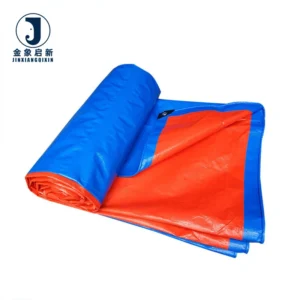
France Hot Sales Blue Color Polyethylene PE Tarpaulin Waterproof Sheet for Truck Canopy and Outdoor Awning
¥0.66 Select options This product has multiple variants. The options may be chosen on the product page -
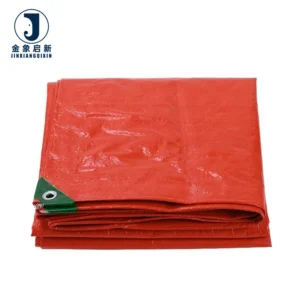
China JINGXIANG PE Coated Waterproof Blackout Truck & Trailer Cover Tarpaulin for Boys & Girls
¥0.35 Select options This product has multiple variants. The options may be chosen on the product page