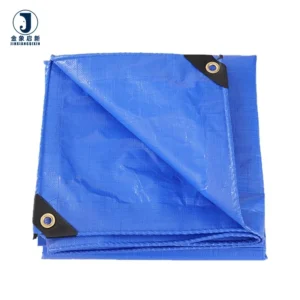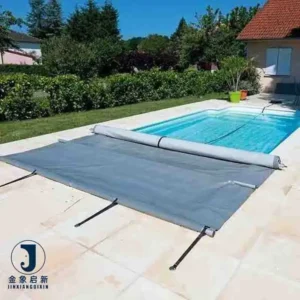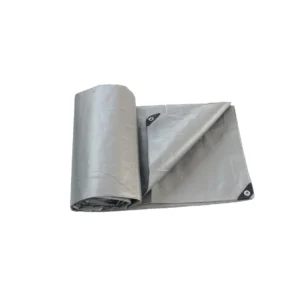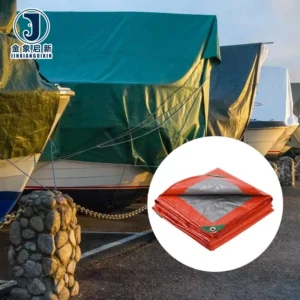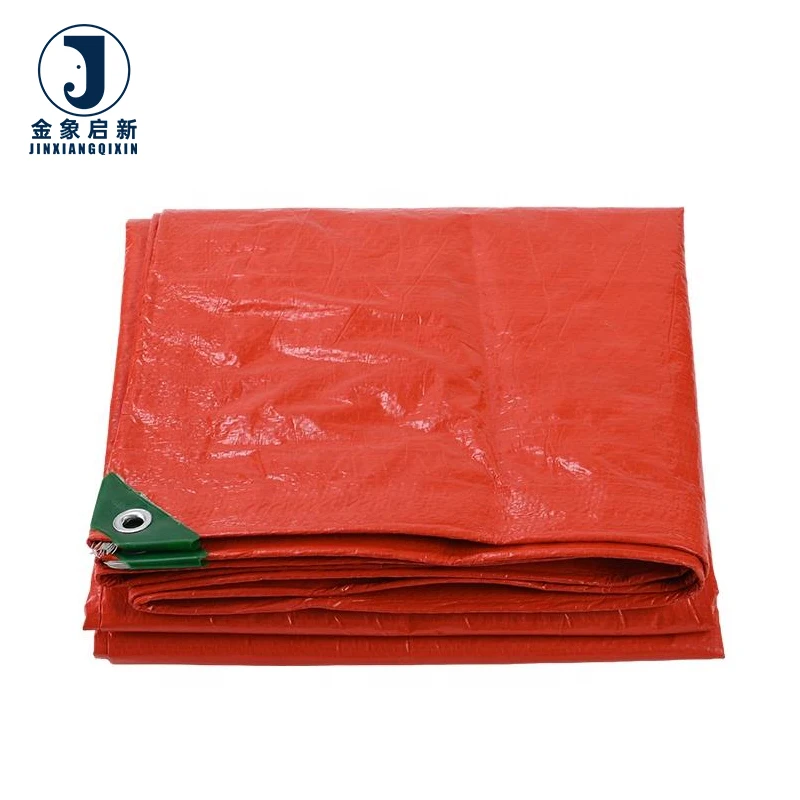
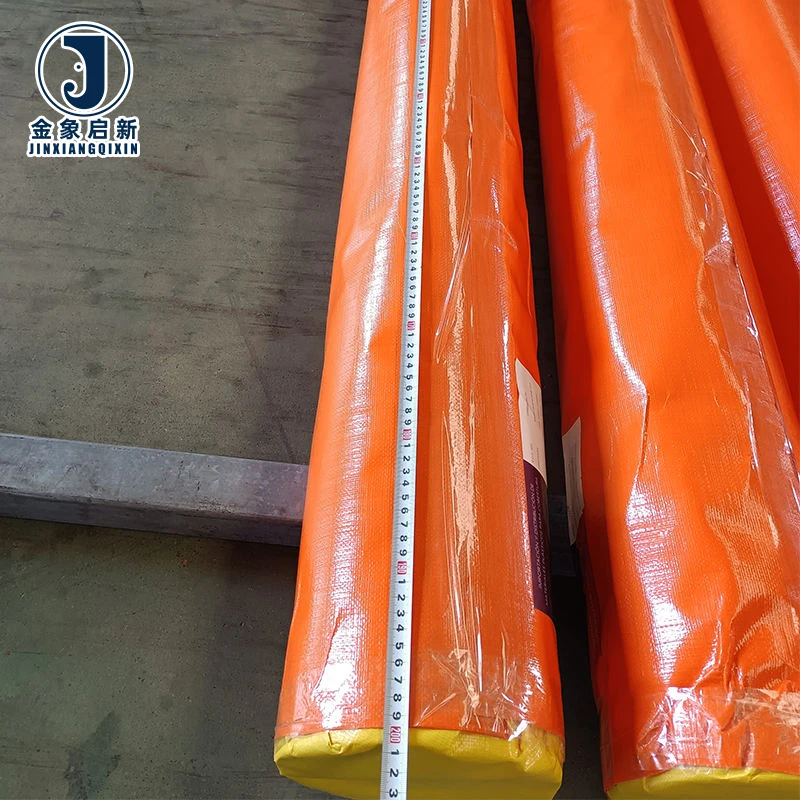
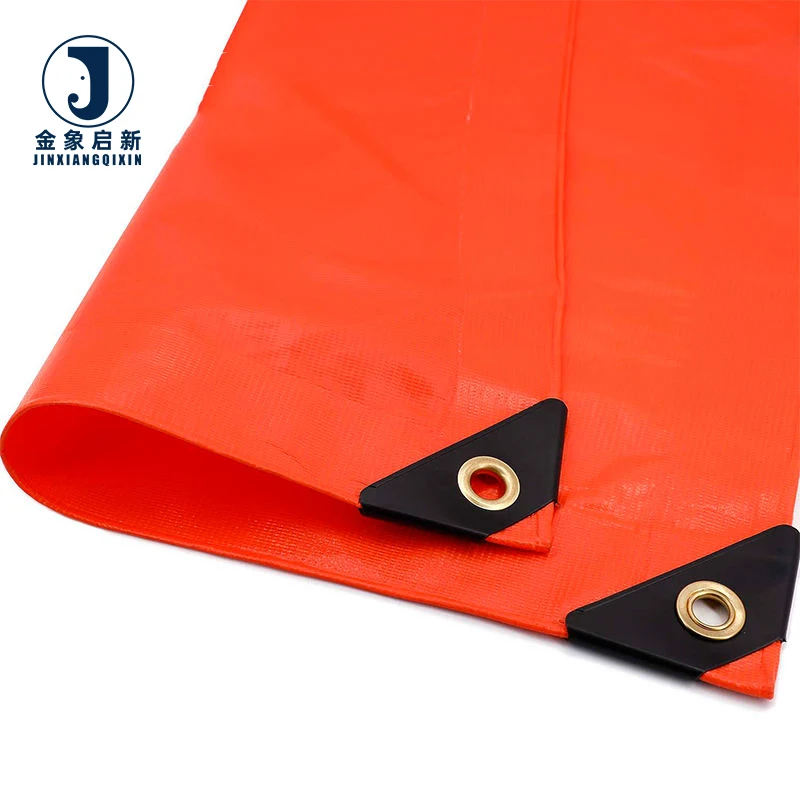
PE Tarpaulin Custom Truck & Trailer Cover, 40g~500g/m² — double waterproof surfaces with reinforced corners, center-to-center spacing 39.4 inches, tear-resistant polyethylene construction across lightweight to heavy-duty grades for exact trailer fitment.
- Full customization from design to delivery, with pattern printing and branding options
- Color consistency verified roll-to-roll; GSM matched to quotation on every shipment
Backed by 100% pre-shipment inspection and samples developed within days for custom requirements.
Description
Full Product Range, Custom Sizing — PE tarpaulin produced across three GSM tiers with buyer-specified dimensions, colours and reinforcement, backed by 100% pre-shipment inspection on every roll.
Technical Specifications
| Parameter | Value |
|---|---|
| Product Type | PE Tarpaulin |
| Material | Polyethylene |
| Weight (GSM) | 80–110 (lightweight) / 120–150 (medium) / 160–240 (heavy-duty) |
| Total Thickness | 0.18–0.22 mm (lightweight) / 0.22–0.28 mm (medium) / 0.30–0.35 mm (heavy-duty) |
| Mesh Count | 8×8 (lightweight) / 10×10 (medium) / 12×12 (heavy-duty) |
| Tensile Strength | Meridian 300–500 N/5cm, Latitude 250–450 N/5cm (lightweight); Meridian 500–800 N/5cm, Latitude 400–700 N/5cm (medium); Meridian 900–1200 N/5cm, Latitude 700–1000 N/5cm (heavy-duty) (test basis not stated) |
| Coating Material | PE |
| Waterproof Construction | Double waterproof surfaces |
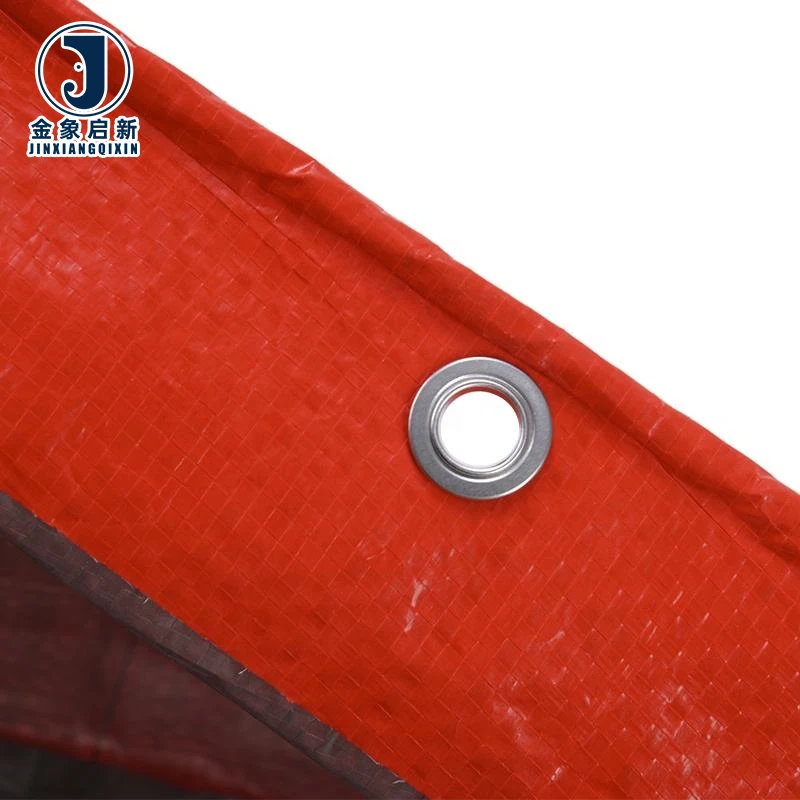
| Corner Reinforcement | Reinforced corner patches |
| Eyelet Spacing (Center to Center) | 39.4 Inches |
| UV Treatment | Available (test basis not stated in source) |
| Size | Custom size |
| Color | Custom color |
| Standards | ISO 14001, ISO 45001, CE |
Application Suitability
| Application | Exposure & Requirement |
|---|---|
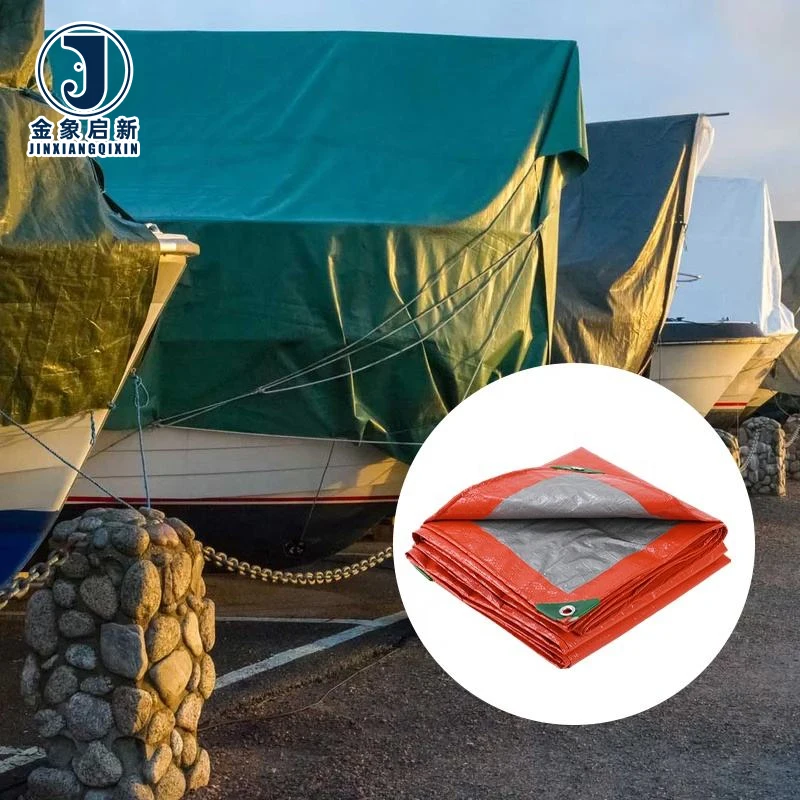
| Truck and trailer load covering | Road vibration, weather exposure, repeated tie-down tension at eyelet points, abrasion from load shifting |
| Agricultural stock and pond covering | Continuous moisture contact, soil chemistry, puncture from substrate irregularities, UV exposure in open field |
| Warehouse and construction equipment protection | Standing water, dust ingress, handling abrasion during placement and removal, wind uplift on large spans |
| Industrial protective wrapping for transport | Compression from stacking, forklift contact, moisture during transit, flexing at load edges |
Why the Quoted GSM Does Not Always Match What Arrives
GSM verification at the receiving dock must be supported by a pre-shipment inspection record, not just a quotation line.
A recurring complaint among tarpaulin buyers is that the material on arrival feels lighter than agreed. The PE tarpaulin manufacturer custom process should include a documented weight check per roll before dispatch, with the measured GSM noted on the packing list. When verification is left to the buyer after delivery, discrepancies are difficult to resolve without a baseline record. [NEED_CITE: coated fabric weight verification methods per ISO 3801]
This issue becomes more costly at container-load volumes, where a shortfall across dozens of rolls compounds into significant material and financial exposure. Specifying the acceptable GSM tolerance band in the purchase order — and requiring the supplier to document compliance per roll — shifts verification from a post-delivery dispute to a pre-shipment control point.
Specifying the Right GSM Tier for Your Application
The three available weight tiers — 80–110 g/m², 120–150 g/m², and 160–240 g/m² — serve distinct operational roles. Lightweight grades suit temporary agricultural covers and short-term warehouse protection where handling frequency is low and wind load is minimal. Medium grades address general transport and construction site covers that experience moderate tie-down tension and repeated folding. Heavy-duty grades are specified for long-haul truck tarpaulin use, where sustained road vibration and load shifting demand higher tensile and tear margins. Selecting the correct tier prevents both over-specification cost and premature field failure.
Double-Surface Coating and Reinforcement Under Load
The double waterproof PE-coated surface construction ensures moisture protection regardless of which face is exposed to the elements — a practical advantage when tarpaulins are flipped during re-use across multiple loads. Reinforced corner patches address the highest stress concentration on any fitted cover: the points where tie-down straps transmit load into the fabric. Configurable eyelet spacing at 39.4-inch centres allows the cover to be secured evenly across the load surface, reducing unsupported spans where wind can penetrate and cause billowing. [NEED_CITE: tarpaulin reinforcement design at stress concentration points]
How Mesh Count, Coating Weight and Tensile Strength Interact
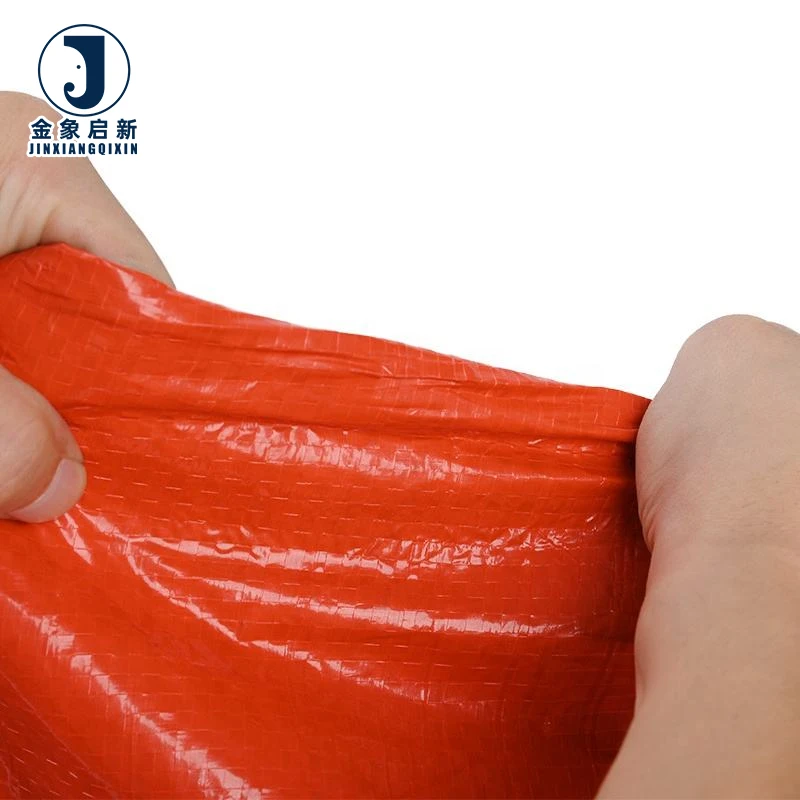
GSM alone does not predict how a PE tarpaulin will perform under load. The mesh count — 8×8, 10×10, or 12×12 depending on the grade — determines the density of the base fabric weave, which directly influences how tensile forces distribute across the material. A higher mesh count provides more yarn intersections per unit area, improving tear propagation resistance. The PE coating weight applied to each surface adds to the total GSM but also fills the weave interstices, contributing to waterproofing and surface abrasion resistance. Tensile strength values across the three tiers — ranging from 300 N/5cm meridian at lightweight to 1200 N/5cm at heavy-duty — reflect the combined contribution of base fabric density and coating adhesion rather than coating weight alone.
The Hidden Cost of Colour Inconsistency Across Rolls
When multiple rolls of PE tarpaulin are installed side by side — on adjacent truck bays, along a warehouse perimeter, or across a construction site — even subtle colour variation between rolls becomes immediately visible. This is not a cosmetic concern alone; it signals inconsistency in the coating process that may extend to weight and thickness as well. Batch-to-batch colour control requires consistent pigment dosing and coating temperature across the production run. Without documented process controls, a buyer ordering ten rolls may receive material that looks and performs as though it came from different suppliers. [NEED_CITE: colour consistency measurement methods for coated textiles]
Why This PE Tarpaulin Manufacturer Custom Process Fits Your Sourcing Needs
Three full production lines with 36 sets of professional equipment support bulk roll output with reliable scheduling, reducing the risk of delayed container loading.
A dedicated 10-person R&D team handles material selection, custom sizing and sample development, producing samples within days for buyer approval before bulk production begins.
Dedicated QA/QC at every production stage, with 100% inspection before shipment, ensures the GSM, colour and reinforcement you specified are verified before dispatch — not after arrival.
Custom width, length, colour and printing are accommodated without the extended lead times and high minimums that buyers commonly encounter with standard suppliers.
Every order ships with a material specification sheet, pre-shipment inspection record and roll packing list, giving your receiving team documented verification rather than an unmarked roll.
Documentation & Verification
- Material specification sheet stating GSM, base fabric mesh count, coating type and colour reference for each order
- Pre-shipment inspection record confirming measured weight per roll against the agreed specification
- Roll packing list detailing roll count, individual roll dimensions and net weight for receiving reconciliation
- Certificate of origin and customs documentation included with every international dispatch
- UV treatment test report documentation available where applicable to the specified grade
Fabrication, Handling & Storage
- Heat-seal the reinforced corner patches at temperatures matched to the PE coating grade to avoid delamination at stress points
- Store rolls horizontally on pallets to prevent edge compression marks that affect flatness during deployment
- Use UV-stable thread for any stitched seams, as standard polyester thread degrades faster than the PE-coated fabric under sun exposure
- Avoid dragging heavy-duty 160–240 g/m² rolls across abrasive surfaces during unloading to protect the waterproof coating face
- Clean with mild detergent and soft brush; solvent-based cleaners may soften the PE coating and reduce surface water repellency
Requesting a Specification Match for Your Project
To specify the correct PE tarpaulin grade for your application, provide the intended use, expected exposure conditions (UV, moisture, mechanical abrasion), required dimensions and annual volume. If your market requires specific fire classification or UV resistance documentation, state the applicable standard so the correct treatment grade can be confirmed. Colour references or Pantone codes should be shared early so a sample can be developed and approved before production commitment.
Frequently Asked Questions
Q: How is the GSM verified on arrival and what documentation supports the quoted weight?
A: Each roll is weighed during the pre-shipment inspection and the measured GSM is recorded on the inspection report. This document, along with the material specification sheet and roll packing list, ships with your order so your receiving team can verify the actual weight against the quotation without needing to conduct their own destructive sampling.
Q: What UV treatment test basis is available for PE tarpaulin intended for extended outdoor exposure?
A: UV treatment is available across the PE tarpaulin range. Where a test basis is required for your market or project specification, confirm the applicable standard during the inquiry stage. A test report can then be arranged for the specific grade and treatment level selected for your order before bulk production begins.
Q: How are custom sizes, eyelet placement and reinforced hems specified and confirmed before production?
A: Provide your required dimensions, eyelet spacing preference and hem reinforcement details during the inquiry. A sample is developed within days reflecting these specifications. Once you approve the sample for size, colour, reinforcement and eyelet configuration, bulk production proceeds to that confirmed specification.
Q: How is batch-to-batch colour consistency controlled across multiple rolls in a single order?
A: Pigment dosing and coating parameters are held constant across the production run for a single order. The pre-shipment inspection includes a visual colour check across rolls to identify any variation before dispatch. For orders requiring strict colour matching across multiple shipments, a reference swatch is retained for comparison.
Q: What is the sample development process and lead time for custom colour or printed PE tarpaulin?
A: Submit your colour reference, size requirement and any printing artwork during the inquiry. A sample is developed within days and shipped for your approval. Bulk production only begins after you confirm the sample meets your specification for colour, weight, finish and dimensions.
Related products
-
Baisite Coated Organic Blackout Waterproof PE Tarpaulin Roll 4mx50m Customized 4mx6m Outdoor Tent Awning Truck Cover
¥0.77 Select options This product has multiple variants. The options may be chosen on the product page -
Multi-color & Size Waterproof Breathable Organic Blackout Coated PE Tarpaulin with UV Customizable Weft Knitted for Boys & Girls
¥0.21 Select options This product has multiple variants. The options may be chosen on the product page -
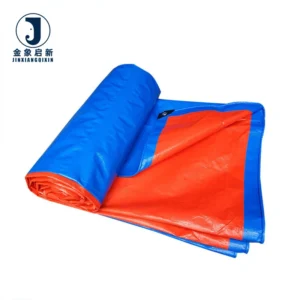
France Hot Sales Blue Color Polyethylene PE Tarpaulin Waterproof Sheet for Truck Canopy and Outdoor Awning
¥0.66 Select options This product has multiple variants. The options may be chosen on the product page -
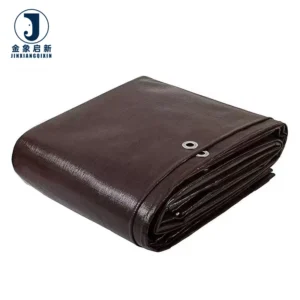
Multi Use Organic Breathable Plain Water Resistant PE Coated Blackout Heavy Duty Woven Canvas Tarpaulin UV Resistant Industrial
¥0.40 Select options This product has multiple variants. The options may be chosen on the product page