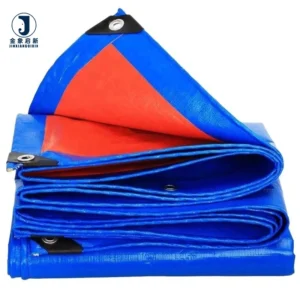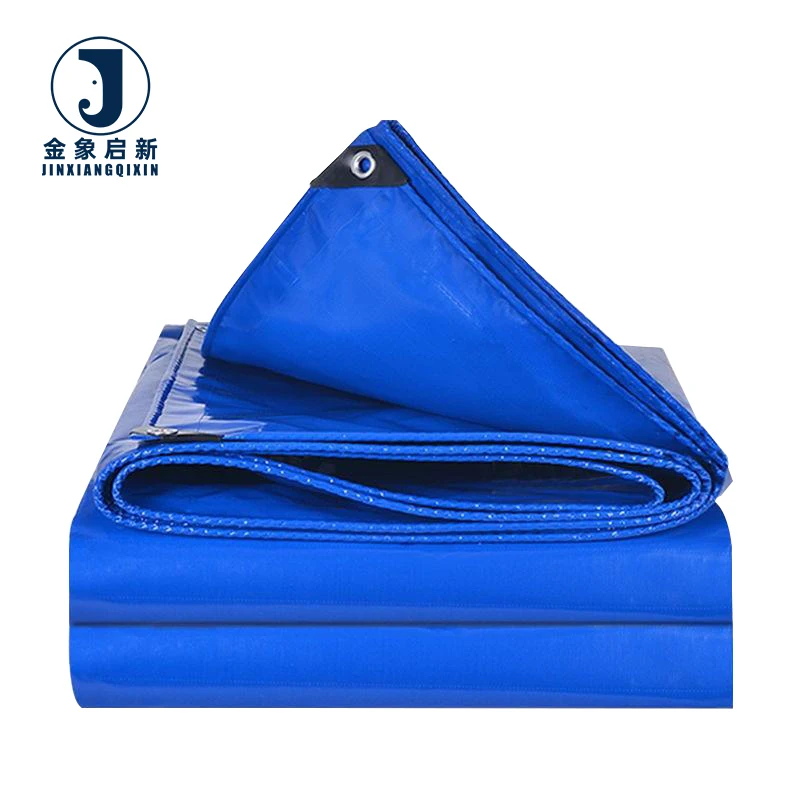
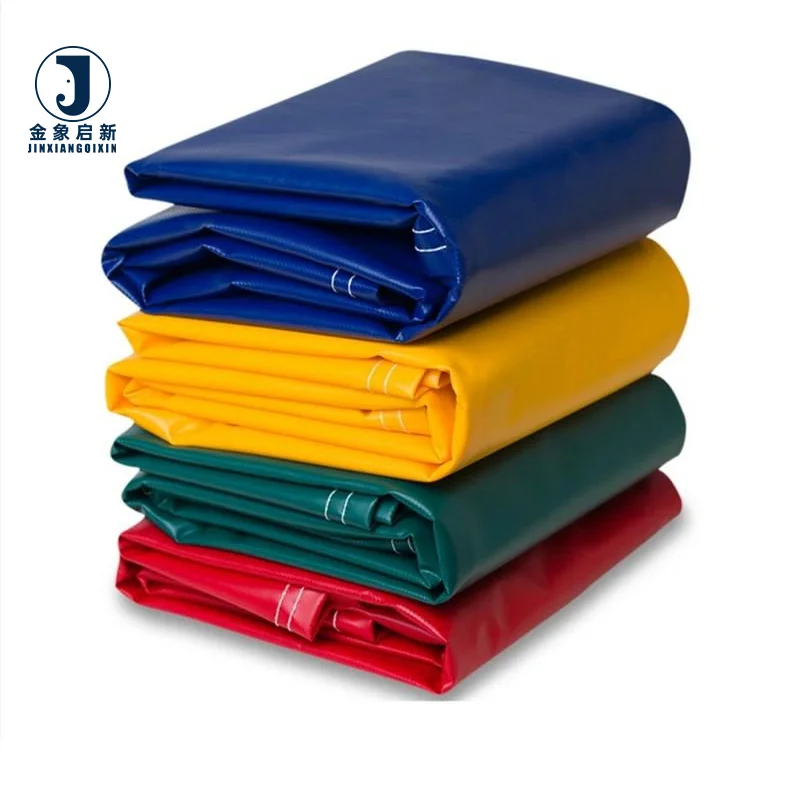
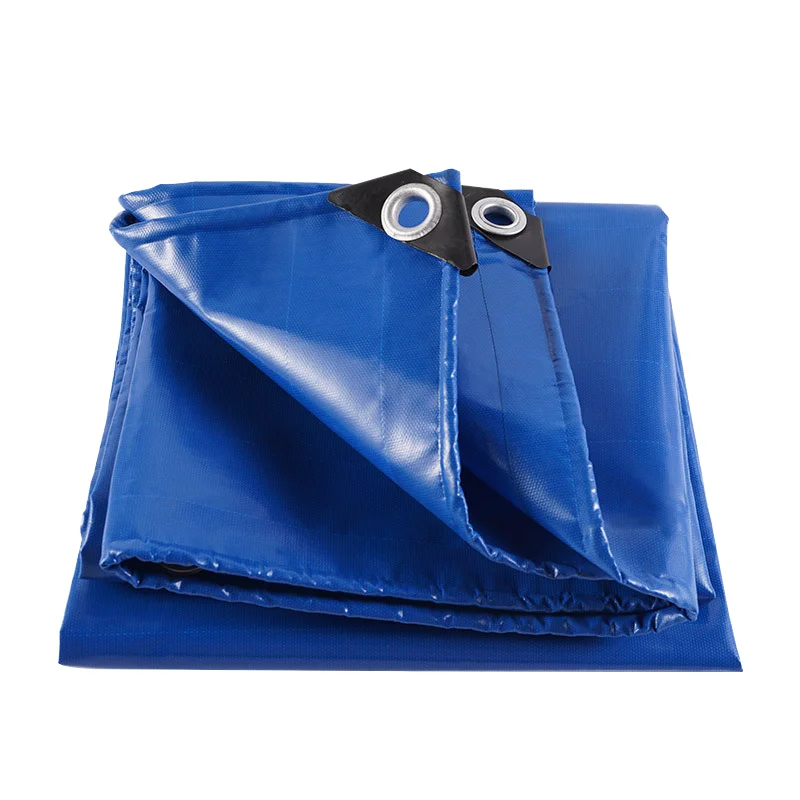
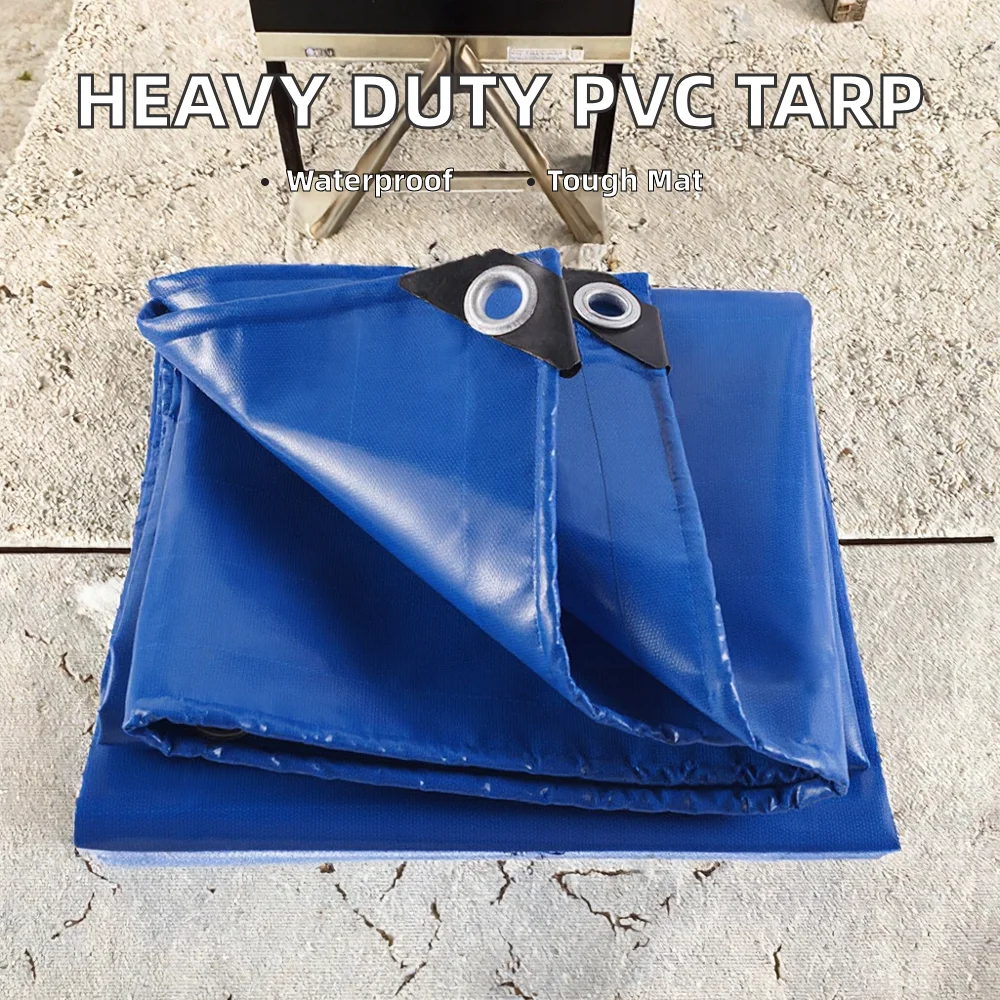
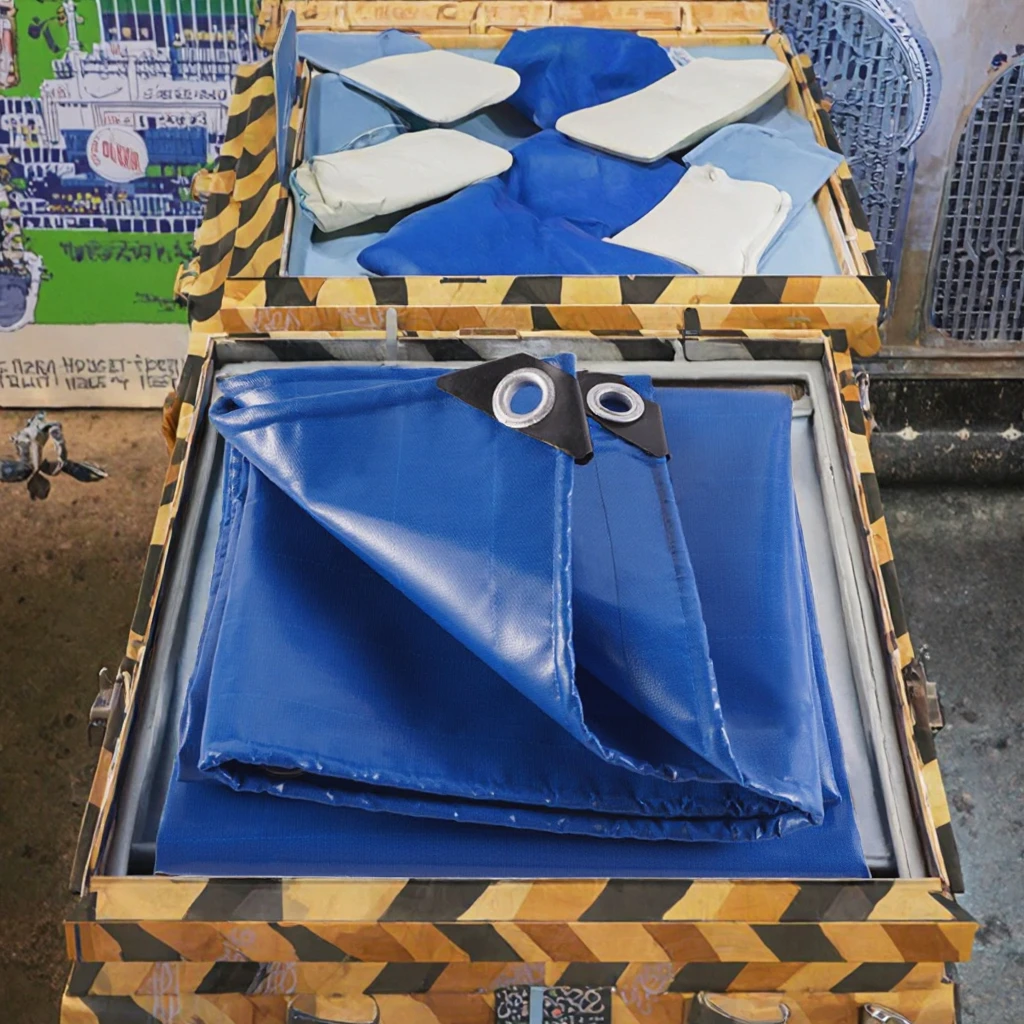
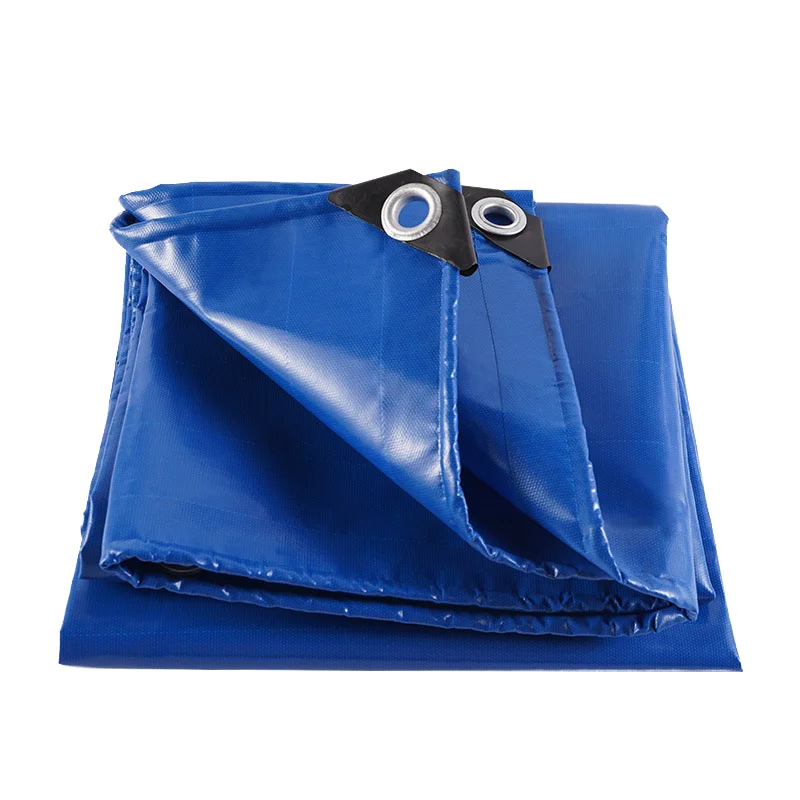
Heavy Duty PVC Coated Tarpaulin — 350gsm to 750gsm, hot-melt coated on high-tenacity polyester mesh for consistent coating weight and adhesion strength.
- Laminated and hot-melt coating technology delivers reliable peel strength, with outstanding tearing resistance at welded seams where load flex stress concentrates
- Available with UV stable, anti-fungal, anti-static and flame retardant treatments upon request
Supported by 30 years of coated fabric process control and 100% pre-shipment inspection across three full production lines.
Description
Coating Process Control — Every roll of PVC coated tarpaulin undergoes dedicated QA/QC with 100% pre-shipment weight verification, ensuring the GSM on the quotation matches the material on the pallet.
Technical Specifications
| Parameter | Value |
|---|---|
| Product Type | PVC Coated Tarpaulin |
| Material | PVC + High-strength polyester mesh fabric |
| Coating Material | PVC |
| Coating Method | Laminated technology & Hot-melt Coating technology |
| Weight (GSM) | 350gsm / 420gsm / 500gsm / 550gsm / 600gsm / 750gsm (range covers product family — confirm the grade for this item) |
| Total Thickness | 0.32mm / 0.35mm / 0.4mm / 0.45mm / 0.5mm / 0.65mm (range covers product family — confirm the grade for this item) |
| Roll Size | 2m width × 75m length / 2.1m width × 50m length |
| Color | Blue / Red / Yellow / Light blue / Grey (Customized) |
| Waterproof | 100% Waterproof |
| Cold Crack Resistance | Yes |
| Anti-Mildew | Yes |
| Flame Retardant | Flame retardant (grade not stated in source — confirm the grade required for your market) |
| UV Treatment | UV Stable (test basis not stated in source — request test report for your specific requirement) |
| Anti-Static | Anti-Static treatment (standard not stated in source) |
| Adhesion Strength | Good adhesion strength (source value — verify against manufacturer catalog) |
| Tear Strength | Outstanding tearing strength for welding (source value — verify against manufacturer catalog) |
| Recyclability | 100% Recyclable |
| Standards | ISO 14001, ISO 45001, CE, RoHS |
Application Suitability
| Application | Exposure & Requirement |
|---|---|
| Truck awning and side curtain | Constant flexing at load points, road abrasion, UV exposure, wind-driven rain ingress at seams |
| Tent and event structure cover | Sustained sun exposure, thermal cycling, wind uplift stress at tensioned corners |
| Cargo ship and marine cover | Salt spray, prolonged moisture, deck abrasion from shifting loads |
| Fish tank and pool liner | Permanent water contact, chemical treatment exposure, puncture risk from substrate |
| Equipment and machinery cover | Outdoor weather, dust ingress prevention, thermal expansion and contraction |
Why the GSM on the Quote Does Not Guarantee Fabric Integrity
The stated weight only matters when every roll is verified against it before leaving the factory.
A common frustration in coated fabric procurement is receiving material that feels lighter than expected. The quoted PVC coated tarpaulin custom manufacturer may specify a particular GSM, but without in-process control, actual coating weight can drift across a production run. The result is a cover that underperforms under load or fails to meet the tensile demand of the application. [NEED_CITE: tensile and tear test methods for coated fabrics per ISO 1421]
How Coating Technology Defines Fabric Behaviour
This PVC coated tarpaulin is produced using both laminated and hot-melt coating technology. Hot-melt coating drives the PVC compound into the high-strength polyester mesh under heat and pressure, producing strong adhesion between the coating layers and the base fabric. This bond is what prevents delamination when the material flexes repeatedly at stress points like welded seams and eyelet zones.
The Role of Base Fabric in Structural Performance
The high-tenacity polyester yarns forming the base mesh determine how the material behaves under tension and tear loads. Coating weight alone does not define strength — the denier and weave density of the base fabric work together with the PVC layer to resist tear propagation. A heavier GSM on a loosely woven base may not outperform a lighter grade on a tightly constructed mesh. Buyers specifying material for high-stress applications should request both the base fabric construction and the coating weight as separate data points. [NEED_CITE: relationship between base fabric weave density and tear propagation in coated textiles]
Reading the Specification Sheet Beyond GSM
The available GSM range — from 350gsm through 750gsm — corresponds to thickness options from 0.32mm to 0.65mm, but these numbers alone do not tell the full story. The coating method affects how that weight is distributed: laminated technology tends to produce a more uniform film with consistent thickness, while hot-melt coating can deliver stronger adhesion at the interface. For applications where welded seams carry structural loads, such as truck side curtains or tensioned tent panels, adhesion strength and tear resistance at the weld line matter more than total weight. Available flame retardant and anti-static treatments change the surface chemistry of the coating, and the applicable grade should be confirmed against the fire safety standard required in the destination market. Anti-mildew treatment is standard, protecting against biological growth in humid and marine environments.
When Specification Mismatches Surface on Site
A roll that arrives lighter than specified does not just reduce lifespan — it changes how the fabric behaves during fabrication. Welding parameters set for a heavier grade will burn through a lighter material, and eyelet pull-through resistance drops when the base fabric is less dense than expected. Colour inconsistency between rolls in the same order becomes visible only after installation, when two panels hang side by side on a truck or tent structure. [NEED_CITE: colour variation tolerance standards for coated fabric batches]
Flame retardant grades must match the local building or transport regulation before the material is installed, because a grade accepted in one market may not satisfy the authority having jurisdiction in another.
What Production Capability Means for Your Order
Three full production lines and 36 sets of professional equipment support bulk roll output with consistent lead times for this PVC coated tarpaulin. The 10-person R&D team handles custom sizing, pattern printing and colour matching within the same facility, reducing the coordination gaps that occur when material supply and finishing are separated. Samples are developed within days for custom requirements, allowing you to verify GSM, colour and weld behaviour before committing to production volume. A dedicated QA/QC process runs at every production stage, with 100% inspection before shipment — not a sampling protocol that leaves margin for undetected variation. Roll widths of 2m and 2.1m in standard lengths allow efficient container loading, while custom width and length options are available for specific fabrication needs.
Documentation & Verification
- Material specification sheet stating GSM, base fabric denier, coating weight and colour reference for every order
- Test report for UV and flame-retardant grades provided where applicable with traceable standard references
- Pre-shipment inspection record including actual weight verification per roll against stated GSM
- Roll packing list with lot traceability for batch-to-batch colour consistency checks
- Certificate of origin and customs documentation prepared per destination market requirements
Fabrication, Handling & Storage
- Hot-melt coated rolls accept heat welding readily — set temperature and dwell time to the specific GSM grade ordered
- Rolls stored upright on cores to prevent flat-spot creasing that transfers through the PVC coating layer
- Anti-mildew treatment reduces biological risk during sea freight but rolls should remain wrapped until deployment
- Cold crack resistant material tolerates low-temperature transport without brittle fracture on unrolling
- Custom widths of 2m and 2.1m allow panel layout planning to minimise offcuts and welded seam count
Before You Request a Quote
Provide the end-use application and the environmental exposure conditions the material will face, including UV intensity, moisture contact and temperature range. Specify whether you need roll stock in standard widths or finished cut-to-size covers with eyelets and reinforced hems. If flame retardant or anti-static certification is required by the project specification, state the applicable standard and the destination market so the correct grade can be matched from the available options.
Frequently Asked Questions
Q: What GSM and thickness grades are available, and how is GSM verified on arrival?
A: The product family spans 350gsm to 750gsm with thickness from 0.32mm to 0.65mm. Each roll undergoes weight verification during pre-shipment inspection, and the actual measured GSM is recorded against the specification sheet before dispatch. Buyers should weigh a sample section on arrival using a calibrated scale to confirm consistency with the documented inspection record.
Q: Are UV stable and flame-retardant grades supported by independent test reports?
A: UV stable and flame-retardant treatments are available upon request. The applicable grade and test standard vary by market requirement — confirm the regulation or specification your project must satisfy, and the matching test report will be provided with the shipment documentation. This ensures the grade supplied aligns with the authority having jurisdiction.
Q: How do you ensure colour consistency across multiple rolls in the same order?
A: Rolls within a single production batch are run from the same colour compound mix to minimise variation. A colour reference is documented on the material specification sheet for every order. If the order spans multiple batches, pre-shipment inspection includes a visual comparison against the approved reference, and the packing list identifies roll lot numbers for traceability.
Q: What is the lead time and minimum order for custom width, colour or printed branding?
A: Custom width, colour and printed branding are handled in-house by the R&D team, with samples developed within days for approval before production. Lead times and minimums depend on the specific customisation requested and the total volume. Provide the required width, colour reference and print artwork with your enquiry for a confirmed schedule.
Q: Can finished covers be cut to fit specific vehicle models rather than generic sizes?
A: Finished covers can be produced to the exact dimensions required for specific truck and trailer models, with eyelets, reinforced hems and branded printing completed in the same facility. Provide the vehicle model or dimensional drawings with your enquiry, and the R&D team will develop a sample for fitment verification before bulk production.
Related products
-
Woven Coated Plain Anti-UV Waterproof PE Tarpaulin Roll Customized for Car Outdoor Tent Awning Truck & Industrial Cover
¥0.29 Select options This product has multiple variants. The options may be chosen on the product page -
Heavy Duty Organic Breathable PVC Coated Weft Tarpaulin 400gsm Waterproof UV Resistant for Trucks Buildings Agriculture Boys
¥0.87 Select options This product has multiple variants. The options may be chosen on the product page -
Waterproof Organic Blackout PE Coated Medium Duty All-Purpose Truck Tarpaulin for Outdoor Use Boys
¥6.81 Select options This product has multiple variants. The options may be chosen on the product page -
Hot Selling Heavy Duty PVC Coated Tarpaulin Covers Waterproof Plastic for Truck Tent Outdoor
¥3.10 Select options This product has multiple variants. The options may be chosen on the product page