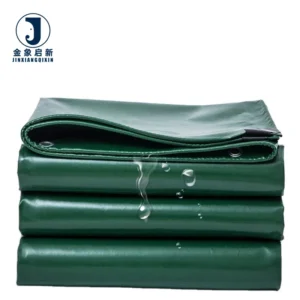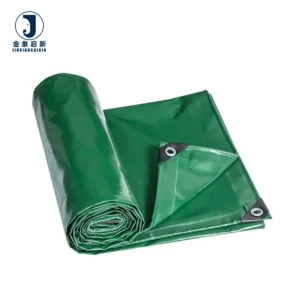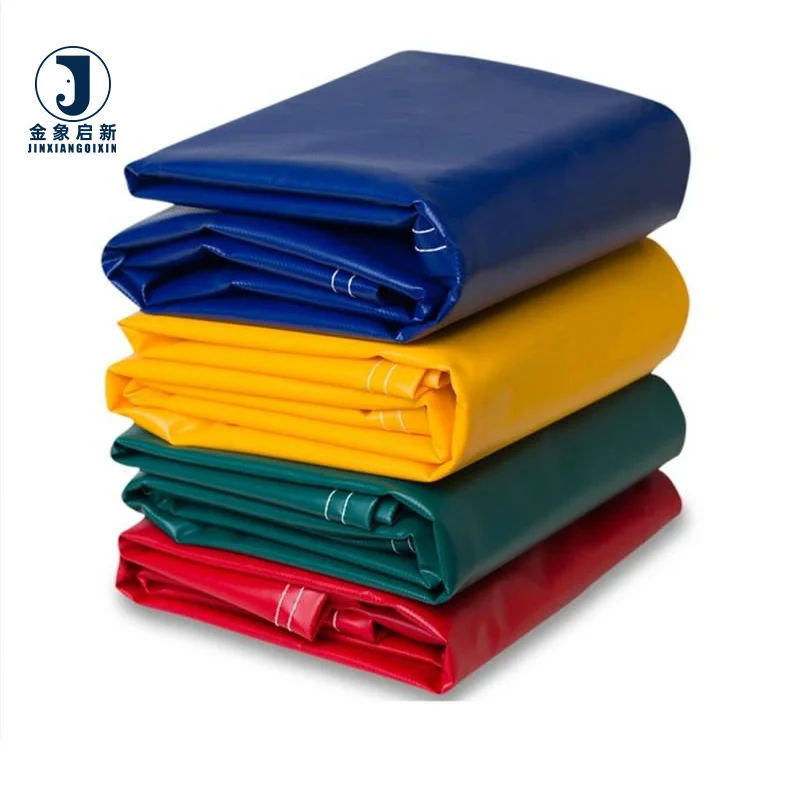
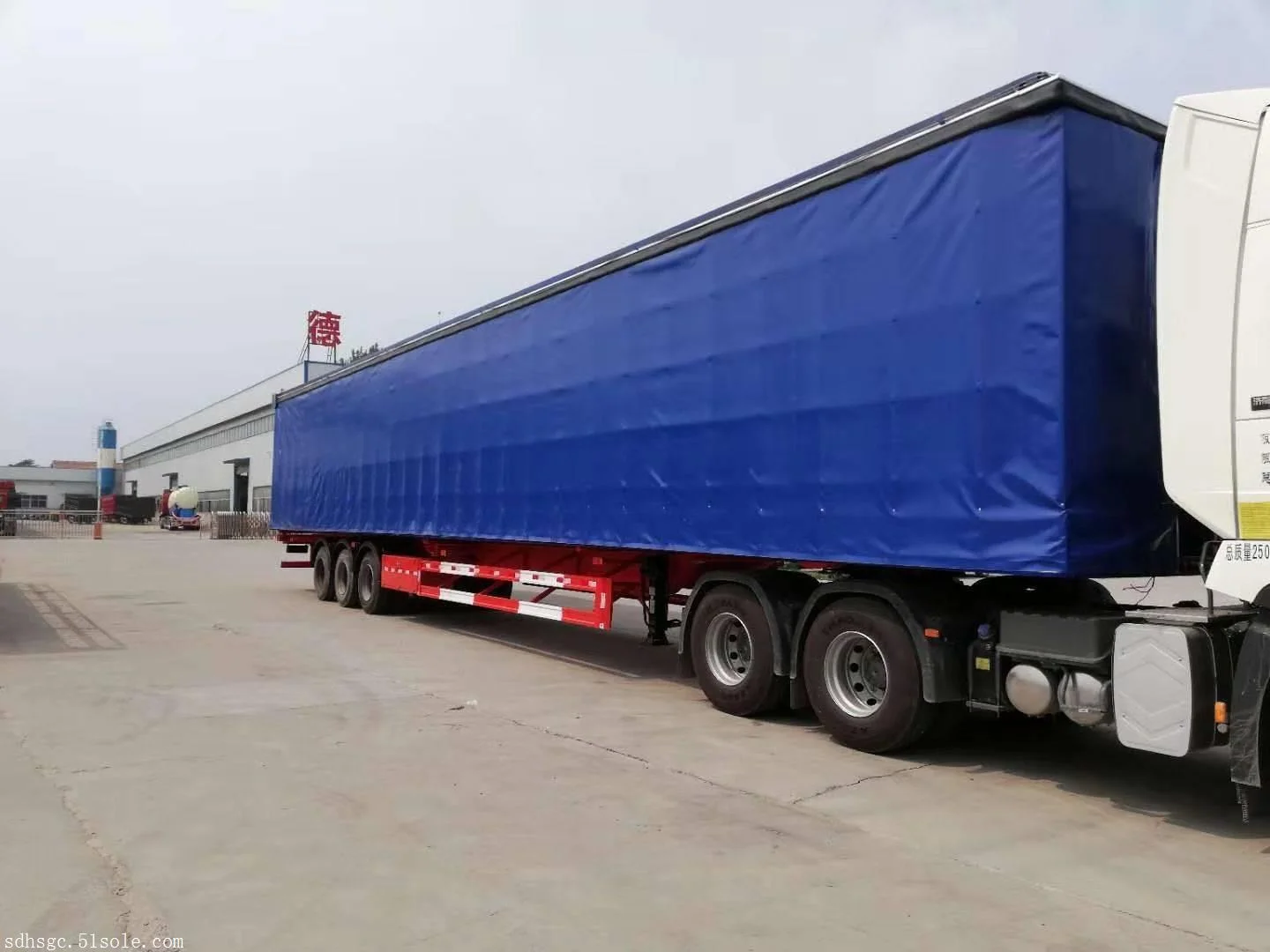
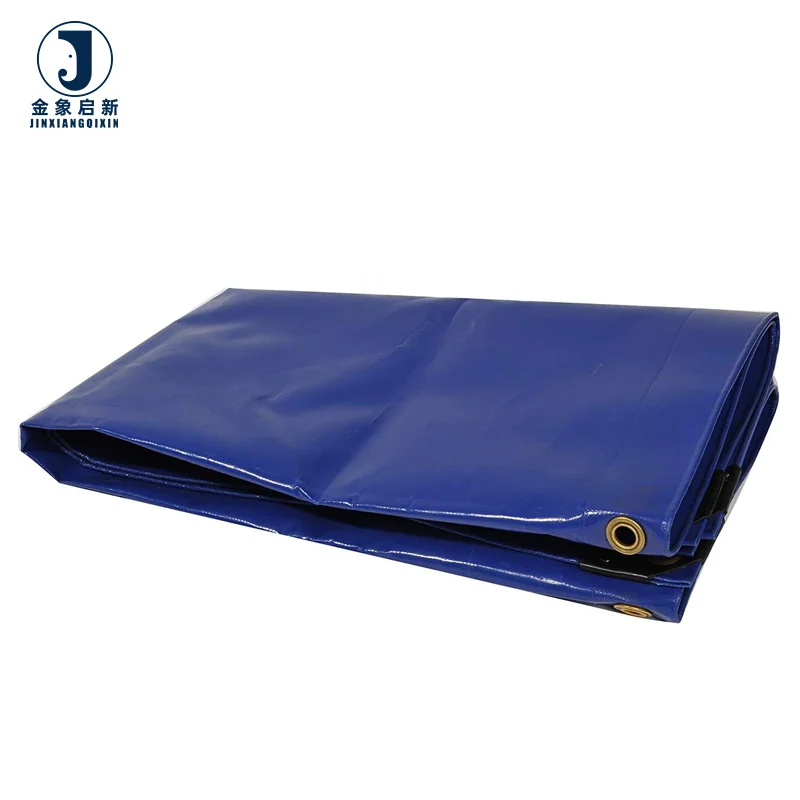
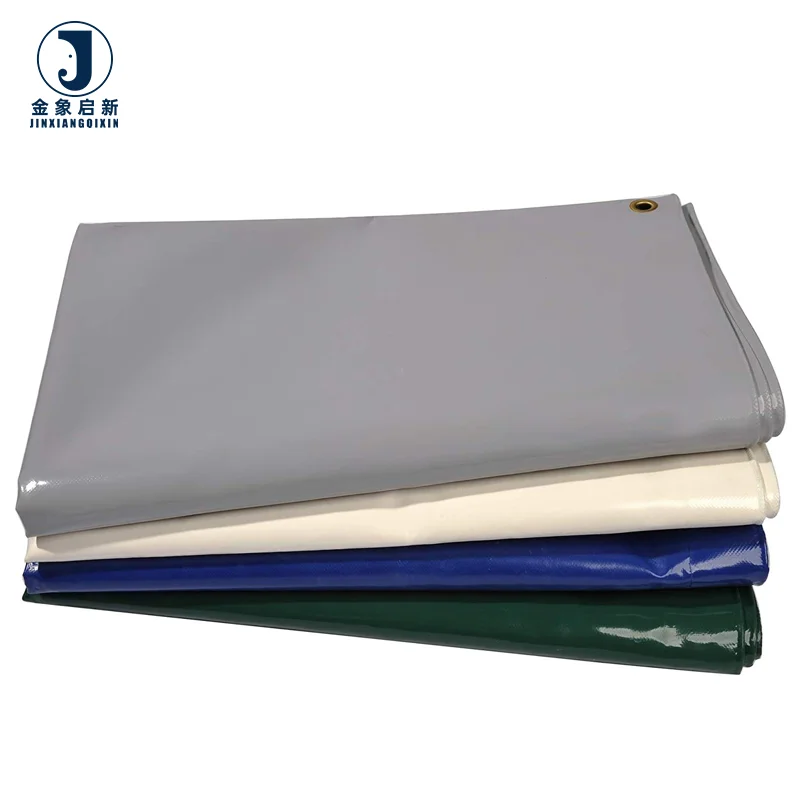
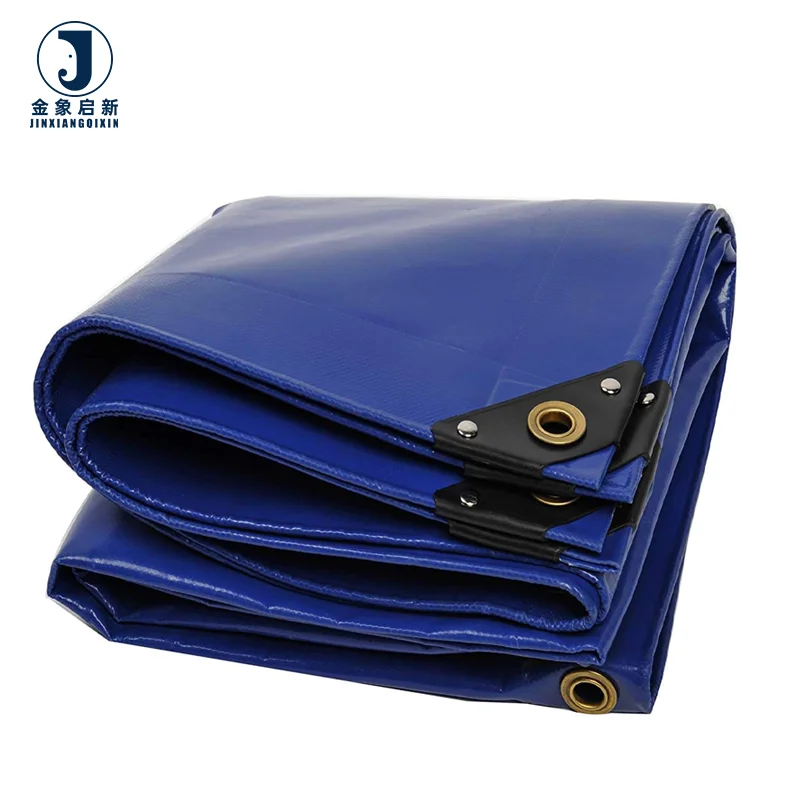
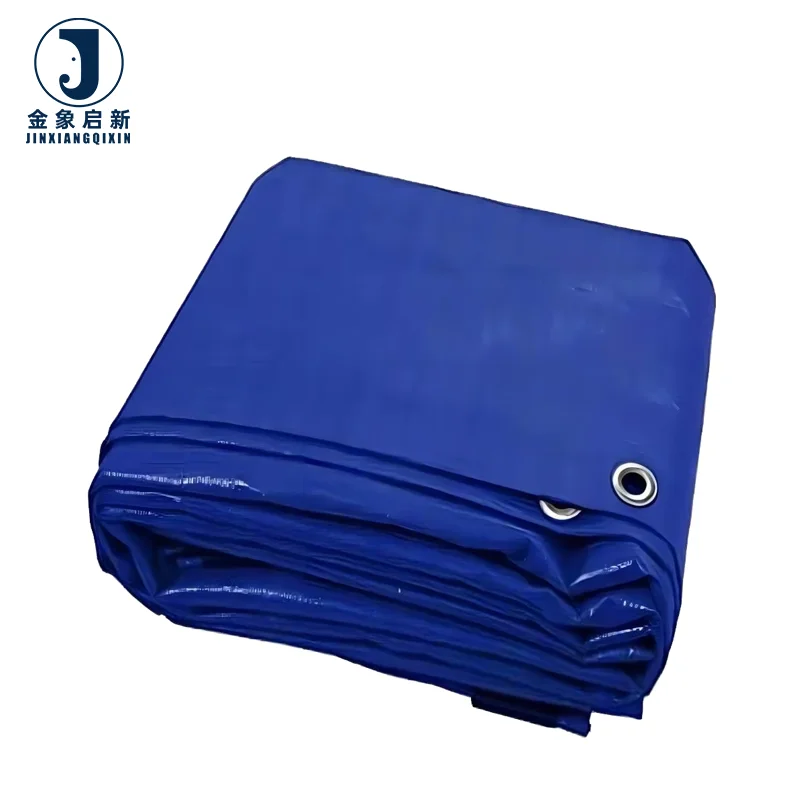
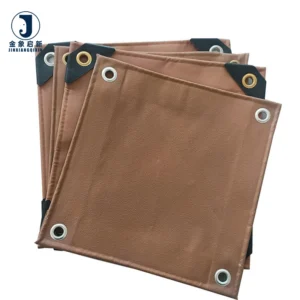
Heavy Duty PVC Coated Tarpaulin — polyester base fabric with double-sided PVC coating, 0.29mm–0.65mm thickness range, brass eyelets every 1 meter and reinforced edges.
- Yarn counts from 500D×840D to 1300D×1300D, supporting varying tensile and tear demands for truck covers, side curtains and temporary enclosures
- Coating weight controlled at every production stage, so quoted GSM matches material on arrival
- High frequency hot melt and sewing treatment options for flexible seam construction
Backed by 100% pre-shipment inspection, 10-person R&D team for custom sizing and a 30-year coating process track record.
Description
Deep Process Control Over Coating Weight — Verified GSM per roll with 100% pre-shipment inspection ensures material arrives exactly as specified, eliminating the common shortfall in coated fabric procurement.
Technical Specifications
| Parameter | Value |
|---|---|
| Product Type | PVC Coated Tarpaulin |
| Base Fabric Denier Options | 500D×840D / 500D×1000D / 1000D×1000D / 1000D×1300D / 1300D×1300D / 1000D×2000D |
| Mesh Count | 30×19 / 20×20 / 30×15 |
| Weight Range | 350 GSM, 400 GSM, 420 GSM, 500 GSM, 600 GSM, 650 GSM, 750 GSM, 900 GSM (confirm grade for your item) |
| Total Thickness Range | 0.29 mm – 0.65 mm |
| Tensile Strength (Warp) | Up to 3900 N (test basis not stated in source) |
| Tensile Strength (Weft) | Up to 3500 N (test basis not stated in source) |
| Coating Material | PVC, double-sided |
| Waterproof | Yes |
| Anti-Mildew | Yes |
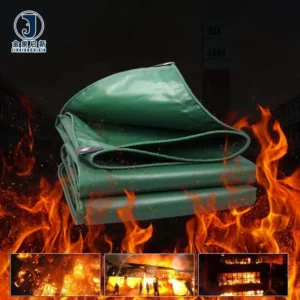
| Flame Retardant | Available in flame retardant grades — confirm the grade required for your market |
| UV Treatment | Available — confirm test basis and grade for your application |
| Finish | Customized |
| Printing Option | Customized |
| Joining Method | High frequency hot melt, hot air, sewing |
| Eyelet & Hem Options | 3 cm enlarged aluminum alloy buttonhole, 5 mm thick rope reinforcement, reinforced corners |
Application Suitability
| Application | Exposure & Requirement |
|---|---|
| Truck and trailer side curtains | Constant flexing at fold points, road debris abrasion, prolonged UV exposure, wind load tension |
| Top roof and load covers | Full weather immersion, ponding water, tie-down stress at eye*embly and teardown, UV exposure, crowd safety compliance |
| Pallet and equipment covers | Warehouse stacking abrasion, moisture ingress prevention, handling friction |
| Inflatable and membrane structures | Internal air pressure, structural tension, seam integrity under continuous stress |
| Construction site enclosures | Wind-driven rain, scaffolding contact, temporary structure fire compliance |
Why GSM Alone Does Not Define Tarpaulin Performance
A quoted GSM tells you weight, not how the fabric will behave when a loaded trailer flexes on the highway.
Buyers frequently receive PVC coated tarpaulin that matches the weight on the quotation but fails prematurely at the seams or tears under load. The reason is that two fabrics at 650 GSM can have completely different base fabric denier, mesh density, and coating adhesion. I have seen heavy-grade coated rolls delaminate at the weld line while lighter grades with a tighter weave held firm. [NEED_CITE: tensile and tear test methods for coated fabrics per ISO 1421] When sourcing as a PVC Coated Tarpaulin manufacturer, requesting verified tensile data and coating adhesion results alongside GSM closes this gap.
How Base Fabric Density Drives Real-World Strength
The yarn count and mesh density in this PVC coated tarpaulin range span from 500D×840D to 1000D×2000D, which directly controls how load transfers through the fabric. A tighter weave like 30×19 distributes tension across more yarn intersections, reducing the chance of a single yarn failure propagating into a tear. The PVC Coated Tarpaulin manufacturer can recommend the right denier based on whether the end use involves static covering or dynamic flexing under transport conditions.
Coating Adhesion and Weld Integrity in the Field
Double-sided PVC coating must bond firmly to the polyester base fabric to survive repeated folding and heat-sealed seam construction. Poor adhesion shows up as delamination at the hem or eyelet line — areas where stress concentrates during use. This PVC coated tarpaulin family supports high frequency hot melt, hot air, and sewing as joining methods, giving fabricators flexibility depending on the seam specification. [NEED_CITE: weld seam strength testing for PVC coated fabrics] Consistent coating weight across the roll surface is essential for uniform weld performance.
Reading the Specification Sheet Beyond Weight
Weight in GSM is only one input. A 500 GSM fabric woven from 1000D×1000D yarns at 20×20 density behaves differently from a 500 GSM fabric at 500D×1000D and 30×19 density — the former prioritizes tear resistance through thicker yarns, the latter prioritizes tensile strength through higher thread count. Thickness from 0.29 mm to 0.65 mm across the range correlates with coating thickness and overall durability. Surface finish, whether customized as glossy or matte, influences how the material cleans and whether printed branding adheres well. Flame retardant grades are available for markets requiring building or transport fire compliance — confirm the grade required for your project with the PVC Coated Tarpaulin manufacturer before placing the order.
The Cost of Overlooking Colour and Batch Consistency
Colour variation between rolls in a single shipment becomes visible the moment panels are installed side by side on a truck fleet or event structure. This is not a cosmetic issue alone — it signals inconsistency in the coating process that may extend to weight and adhesion. Buyers who have received mismatched batches face project delays, client rejections, and the cost of replacement material. Requesting a pre-shipment inspection record that documents colour reference alongside GSM and tensile data prevents this outcome. [NEED_CITE: batch colour consistency standards for coated textiles]
Why Procurement Teams Source This Range Here
Nearly 30 years of PVC coating process control means coating weight and adhesion are managed at every stage, not just measured at the end. Three full production lines and 36 sets of professional equipment provide the bulk capacity needed for fleet-scale orders without sacrificing on-time delivery. A 10-person R&D team handles material selection, custom sizing, pattern printing, and sample development within days rather than weeks. Dedicated QA/QC covers every production stage with 100% inspection before any PVC coated tarpaulin shipment leaves the facility. The result is documentation you can actually use for site compliance and customs clearance.
Documentation & Verification
- Material specification sheet stating exact GSM, base fabric denier, and coating details per roll
- Pre-shipment inspection record with verified weight and tensile data
- ISO and CE certificates supporting quality management compliance
- UV and flame retardant test reports available where applicable to the specified grade
- Roll packing list and certificate of origin for customs processing
Fabrication, Handling & Storage
- High frequency hot melt settings must be adjusted to the selected GSM and coating thickness for reliable seam strength
- Reinforced corners and 5 mm rope hems distribute tie-down load and prevent tearing at stress points
- Store rolls upright on pallets to avoid permanent creases in the PVC coating surface
- Allow cold-transported rolls to acclimate to workshop temperature before unrolling and cutting
- Use mild detergent for cleaning; aggressive solvents may compromise the customized surface finish
- Plan cutting layout around standard roll widths to minimize welded seams on large truck covers
What to Include in Your Inquiry
Provide the application scenario — whether this PVC coated tarpaulin is for truck side curtains, static equipment covers, or event structures — along with the expected mechanical and environmental exposure. Specify the target market fire compliance requirements if flame retardant grades are needed. Confirm whether you require rolls for your own fabrication or finished cut sizes with eyelets and hems. [NEED_CITE: fire classification requirements for transport and building textiles] Requesting a sample for your specific colour, width, and printing requirement allows validation before production begins.
Frequently Asked Questions
Q: How is GSM verified before shipment to prevent material arriving lighter than quoted?
A: Every roll undergoes weight verification against the stated GSM during 100% pre-shipment inspection. The inspection record is included with your documentation, showing actual measured values. This process catches any deviation before dispatch, addressing one of the most common complaints in coated fabric procurement.
Q: Can you match colour consistently across multiple rolls in a large fleet order?
A: Colour consistency is controlled through the coating process with reference standards maintained for each colour code. The pre-shipment inspection record documents the colour reference for your order. For large orders spanning multiple production runs, requesting a physical sample approval step ensures alignment before the full batch is produced.
Q: What test reports are provided for UV resistance and flame retardant grades?
A: Test reports are supplied for the specific flame retardant grade and UV treatment level applied to your order. Because compliance requirements vary by market — building codes, transport regulations, mining safety standards — confirm the required grade with our team during inquiry so the correct test documentation accompanies your shipment.
Q: What is the sample development process for custom sizes, colours, or printed branding?
A: Once your application requirements are defined, the R&D team prepares samples covering material selection, colour matching, and any printing specification. Samples are developed within days. Approval of the sample triggers production with the same process controls applied to the full order, ensuring the delivered PVC coated tarpaulin matches the approved reference.
Related products
-
Factory 12ftx20ft Construction Cold Weather Insulated Pe Tarps Poly Tarp Heavy Duty Concrete Curing Blanket Tarpaulin Roll Sheet
¥0.66 Add to cart -
Waterproof Heavy Duty Tarpaulin Water Proof Cover Tarpaulin Manufacturer
¥1.48 Add to cart -
Pvc Coated Waterproof Tarpaulin Heavy Duty Tarp for Tent Roof Stocklot Lumber
¥1.60 Add to cart -
JX Fireproof 500gsm 600gsm Customizable PVC Tarpaulin Waterproof Truck Cargo Cover
¥0.79 Select options This product has multiple variants. The options may be chosen on the product page