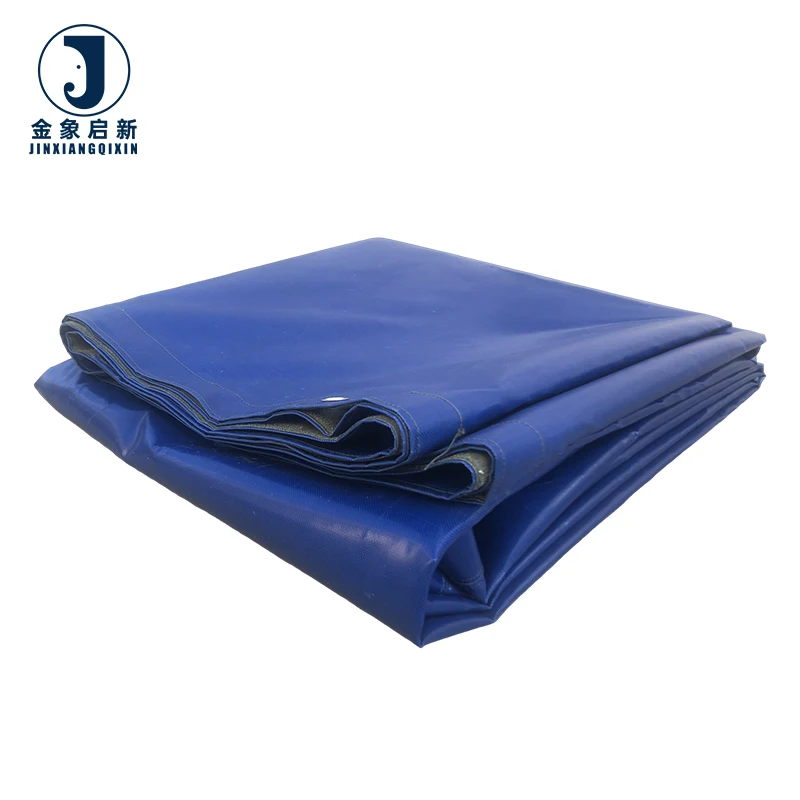
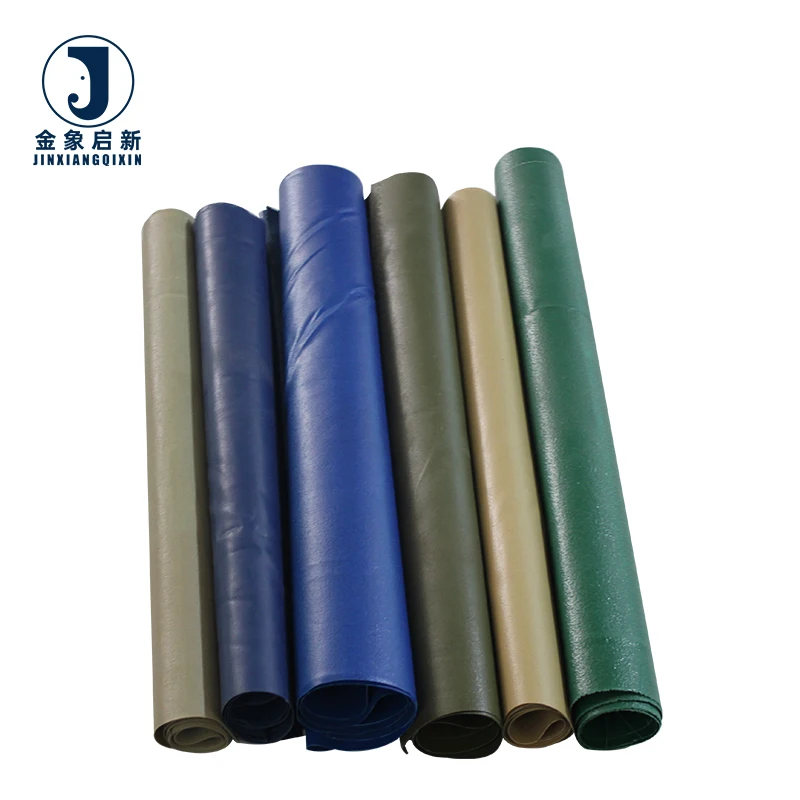
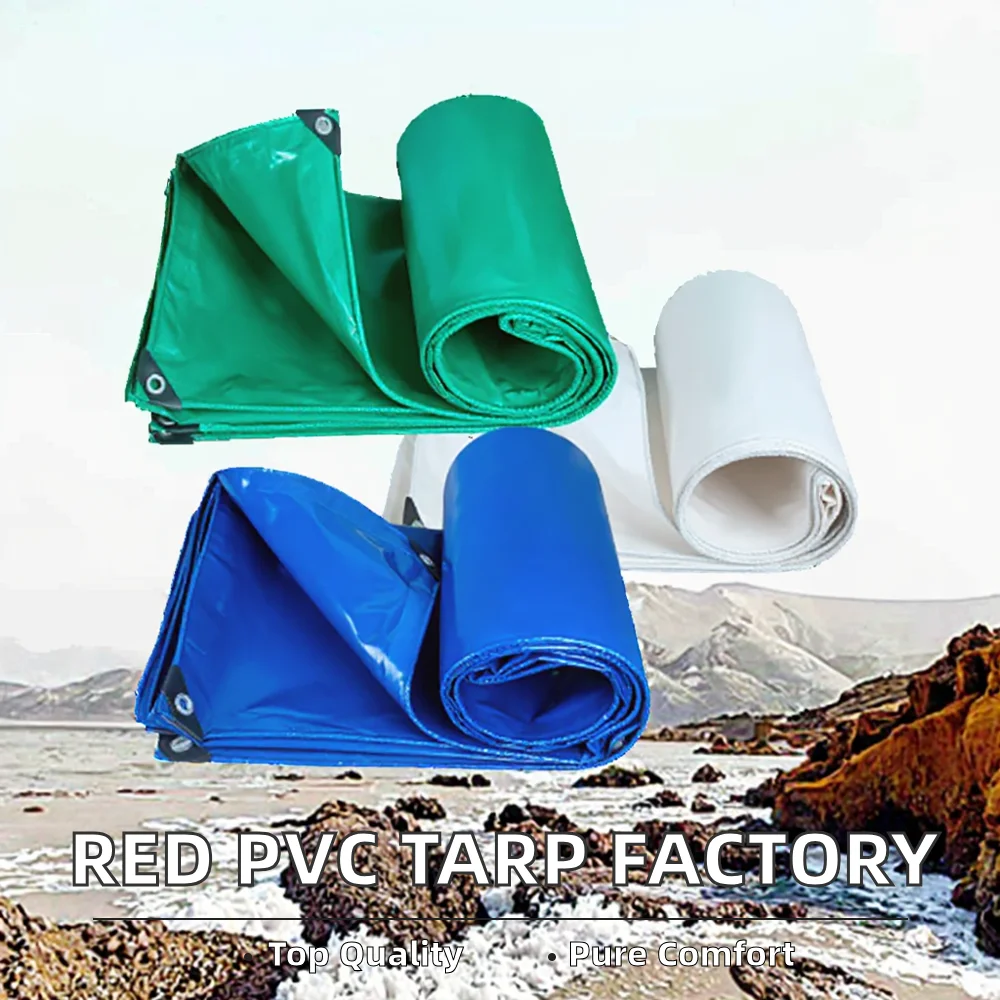
Industrial Grade Waterproof PVC Tarpaulin Roll, 400-1500 g/m², 500D-2000D — hot melt coated high toughness polyester base with lamination technology for superior adhesion and welding tear strength.
- Complete weight range from lightweight 400 g/m² to super heavy 1500 g/m² covering truck covers to tensioned structures, with full custom sizing, color matching and pattern printing capability.
- 10-person R&D team supports sample development within days, backed by dedicated QA/QC at every production stage with 100% pre-shipment inspection.
Description
Deep process control — coating weight and adhesion monitored at every stage across three production lines to ensure each PVC coated tarpaulin roll ships exactly as specified.
Technical Specifications
| Parameter | Value |
|---|---|
| Product Type | PVC Coated Tarpaulin Roll |
| Coating Material | PVC |
| Coating Method | Lamination technology and hot melt coating technology |
| Base Fabric | 100% high toughness polyester yarn |
| Base Fabric Denier | 500D / 1000D / up to 2000D (grade-dependent) |
| Weight Range | 400–500 GSM (medium), 700–1000 GSM (heavy-duty), 1100–1500 GSM (super heavy) |
| Total Thickness | 0.35–0.45 mm (medium), 0.70–1.0 mm (heavy-duty), 1.2–1.5 mm (super heavy) |
| Tensile Strength (Warp/Weft) | 1500–3000 / 1200–2800 N/5cm (grade-dependent) |
| Key Features | Waterproof, cold resistant, mold proof, anti-static treatment available, flame retardant available, anti-UV treatment available |
| Welding Tear Strength | Excellent (test basis not stated in source) |
| Color Fastness | Best (test basis not stated in source) |
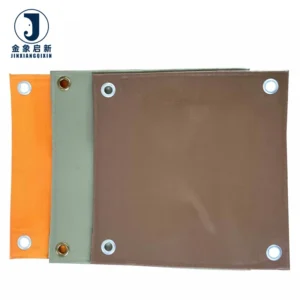
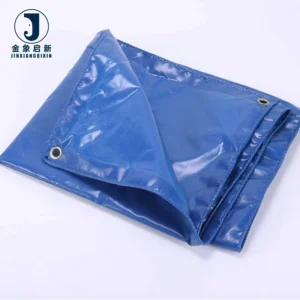
| Available Colors | Blue, Blue/Orange, Green, Grey, Black, Clear, Grey/Green, Orange, or custom |
| Available Cut Sizes | 8’×10′, 10’×12′, 12’×16′, 16’×20′, 20’×20′, 20’×30′ |
| Standards | ISO, CE |
Application Suitability
| Application | Exposure & Requirement |
|---|---|
| Truck and trailer load covering | Road abrasion, constant wind flap, UV exposure, weather extremes — requires reinforced hems and secure tie-down points |
| Construction and engineering site protection | Punctures from debris, prolonged rain, UV degradation over project duration — demands high tensile strength and waterproof integrity |
| Industrial pipe canopy and tensioned structures | Sustained mechanical load, thermal cycling, wind uplift — super heavy-duty grades needed for structural stability |
| Agricultural equipment and bulk material covers | Moisture ingress, mold growth in humid storage, UV exposure during field use — cold resistant and mold proof treatment essential |
| Pool and pond covers | Permanent water contact, chemical exposure from treatment agents, puncture risk from substrate — waterproof coating with adequate GSM critical |
Why Quoted GSM Is Not the Only Measure That Matters
When a PVC coated tarpaulin roll manufacturer quotes a weight figure, that number alone tells you nothing about how the fabric will perform once it is deployed under load.
Base fabric denier and coating adhesion together determine real-world durability far more than weight alone.
A buyer who specifies 650 GSM expects a certain duty level, yet two rolls both marked 650 GSM can behave very differently on a truck side curtain or a construction canopy. One may use a finer denier base yarn with a thicker coating layer, gaining weight but losing tensile strength. The other may use a heavier base fabric with a thinner, better-bonded coating, delivering far superior tear resistance at the same total weight. We have seen rolls arrive at port measuring lighter than the quotation stated, with no recourse once the container is opened. [NEED_CITE: ISO 1421 test methods for tensile and tear properties of coated fabrics]
Full Product Family from Medium to Super Heavy-Duty
This PVC coated tarpaulin aftermarket supplier range covers three distinct weight tiers, each matched to specific duty requirements. The medium grades from 400 to 500 GSM suit lightweight covers and temporary site protection where the fabric sees limited mechanical stress. Heavy-duty grades between 700 and 1000 GSM handle truck tarpaulins and construction wraps that face wind load and abrasion daily. Super heavy grades from 1100 to 1500 GSM serve tensioned structures and industrial pipe canopies where the fabric carries sustained structural load. Specifying the correct tier at the inquiry stage prevents both overspending on unnecessary weight and underperforming on critical applications.
Custom Treatment Options Across the Range
Buyers surveying options before specifying need to see what is available beyond standard stock grades. Flame retardant treatment is offered as a special option — confirm the grade required for your target market, whether that means B1 per DIN 4102, M2 for French compliance, or NFPA 701 for North American venues. Anti-UV and anti-static treatments are similarly available on request with supporting test documentation. Color matching extends to custom references, and the R&D team develops samples within days so you can evaluate the actual hand feel, weld behavior, and color accuracy before committing to a production run. [NEED_CITE: DIN 4102 fire classification for building materials and textile structures]
How Coating Technology Affects Performance in the Field
The lamination and hot melt coating technology used across this range affects more than surface finish. Hot melt coating drives the PVC into the interstices of the polyester base yarn, creating a mechanical bond that resists delamination under repeated flexing. This matters on truck side curtains where the fabric flexes thousands of times per journey, and on tensioned structures where wind gusts create cyclic loading. Lamination technology bonds a pre-formed PVC film to the base fabric, delivering a smoother surface and consistent thickness that suits printed branding and clean visual appearance. The choice between these methods influences welding tear strength, surface texture, and how the fabric behaves during fabrication — all factors a technical buyer should evaluate against the end use.
The Hidden Cost of Specifying the Wrong Grade
Selecting a PVC coated tarpaulin roll based on price per kilogram rather than application-matched specification creates downstream costs that far outweigh the initial saving. A roll that is lighter than agreed will fail at stress points — typically at welded seams or grommet lines — well before the expected service life. [NEED_CITE: welded seam failure patterns in PVC coated polyester fabrics under cyclic loading] A flame retardant grade specified without a verified test standard may pass the quotation stage but fail site inspection when the safety officer requests documentation. Color variation between rolls in the same shipment becomes visible the moment two panels are installed side by side on a truck fleet or a market stall row, forcing rejection of the entire batch. These are not theoretical risks; they are recurring complaints from buyers who did not request pre-shipment verification.
Why Procurement Teams Source from Jinxiang
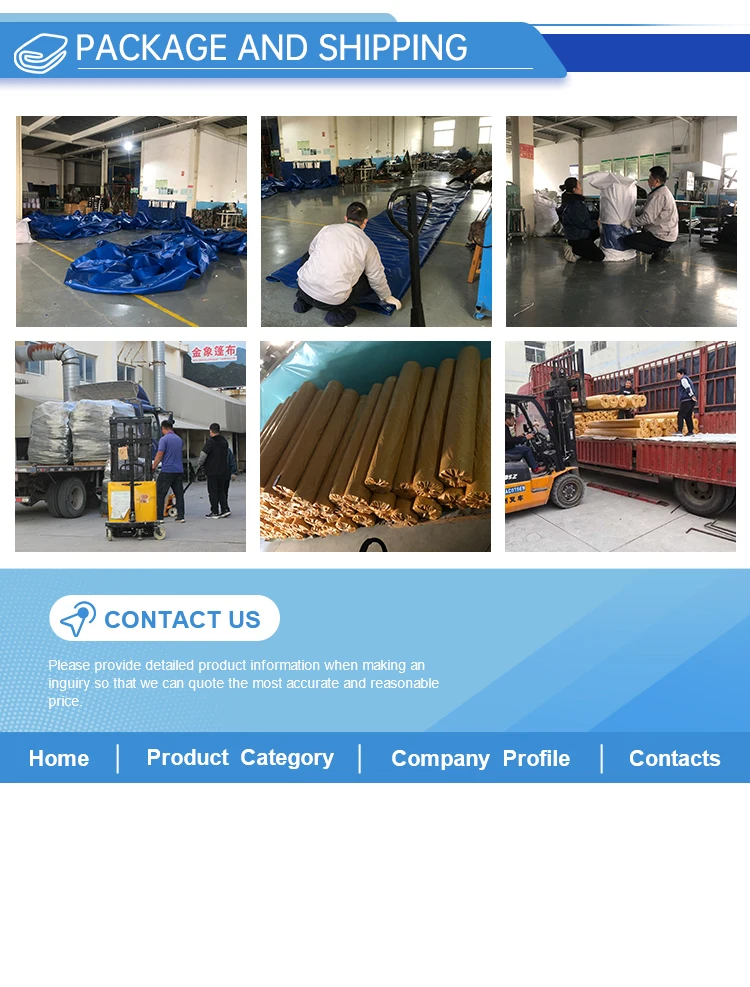
Nearly 30 years of focused coated fabric production means process parameters for adhesion, coating weight, and color consistency are controlled from experience, not guesswork. Three full production lines and 36 sets of professional equipment support bulk volume while maintaining on-time delivery across custom and stock orders. A dedicated 10-person R&D team handles material selection, custom sizing, pattern printing, and sample development — bringing sample turnaround down to days rather than weeks. QA and QC operate at every production stage, culminating in 100% pre-shipment inspection so that each roll matches the material specification sheet before it leaves the facility. ISO and CE certification underpins the quality system, with full documentation provided at dispatch.
Documentation & Verification
- Material specification sheet stating exact GSM, base fabric denier, and coating method per roll
- Test reports for flame retardant and anti-UV grades provided where applicable before order confirmation
- Pre-shipment inspection record confirming 100% QA coverage across the production run
- ISO and CE certificates included with dispatch alongside certificate of origin
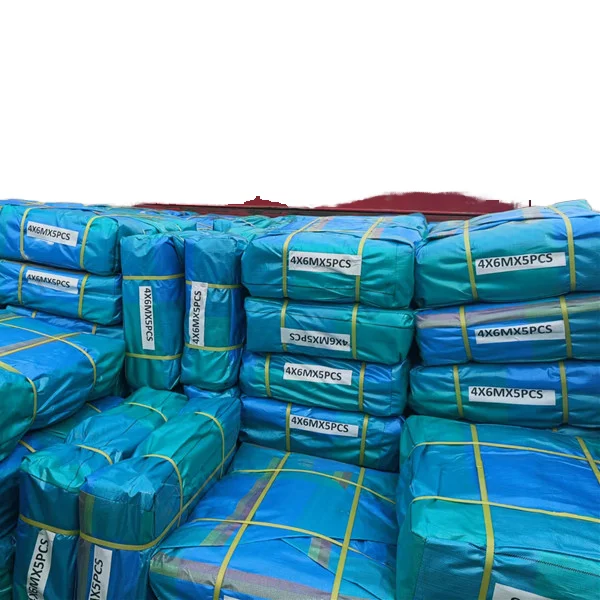
- Roll packing list with weight and dimension detail for customs and warehouse receiving
- Customs documentation support for export clearance at destination port
Fabrication, Handling & Storage
- Hot melt coated rolls weld reliably at standard RF or hot air parameters — test weld settings on a sample offcut before full production
- Cut sizes from 8’×10′ to 20’×30′ allow layout planning that minimizes offcut waste on standard trailer dimensions
- Store rolls upright on pallets in dry conditions to prevent edge compression marks that telegraph through the coating
- Cold resistant grades remain flexible during winter transport, but allow rolls to reach ambient temperature before unrolling to avoid creasing
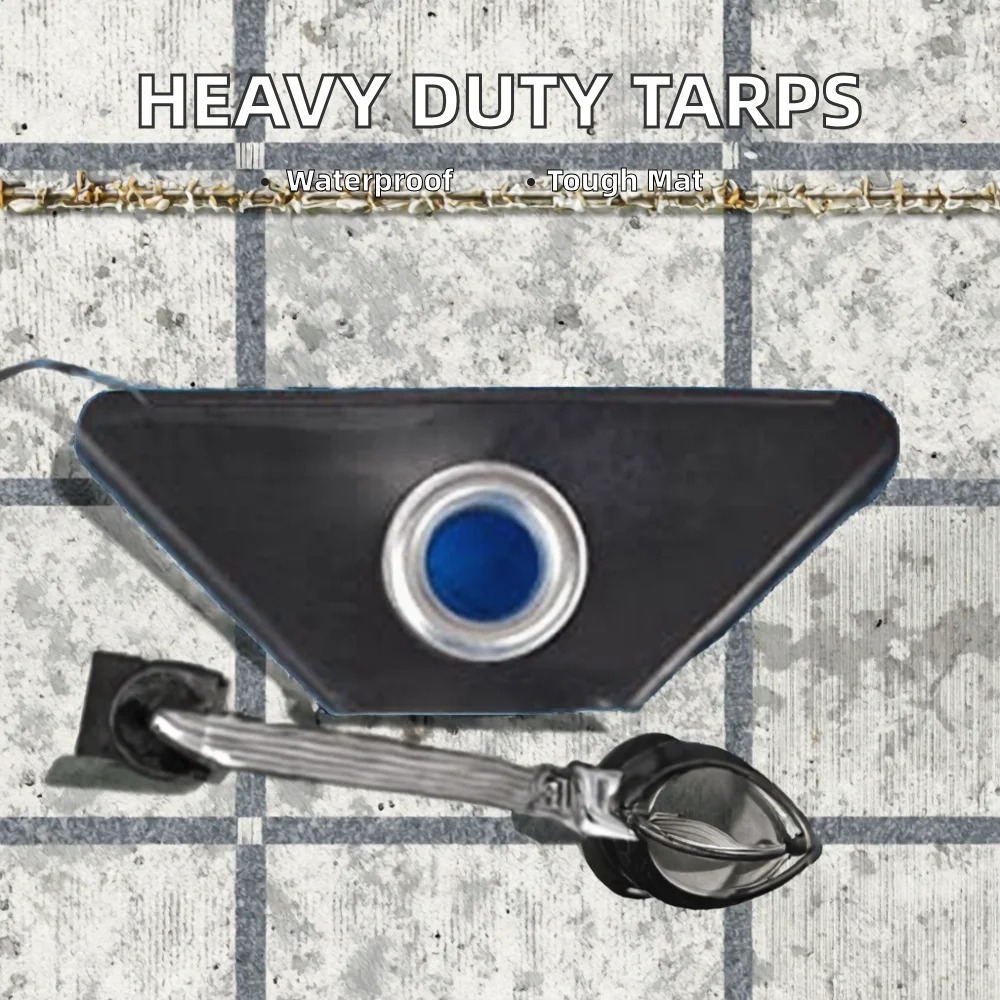
- Reinforce grommet and hem areas with additional PVC patches on heavy-duty grades where tie-down loads concentrate stress
- Clean with mild detergent only — solvent-based cleaners may degrade the PVC coating surface over repeated use
Before You Send an Inquiry
To get an accurate specification recommendation and sample, share your end application and the environmental conditions the fabric will face — wind load, UV exposure duration, temperature range, and any chemical contact. State your target market’s fire safety or regulatory requirements so the correct flame retardant grade can be proposed. Confirm whether you need rolls at a custom width and length or pre-cut finished panels, and indicate your color reference or branding requirements. If the application is new to your product line, request a sample first to validate weld behavior and fabrication compatibility.
Frequently Asked Questions
Q: What GSM grade should I specify for truck tarpaulins versus structural covers?
A: Medium grades from 400 to 500 GSM suit lightweight temporary covers. Heavy-duty grades from 700 to 1000 GSM handle daily truck use with wind and road abrasion. Super heavy grades from 1100 to 1500 GSM serve tensioned structures and industrial canopies under sustained load. Provide your application details so we recommend the correct tier rather than defaulting to the heaviest option.
Q: How do you verify flame retardant claims with test documentation?
A: Flame retardant treatment is available in multiple grades. Before order confirmation, we provide the relevant test report for your target standard — request documentation matching your market’s specific requirement such as DIN 4102, NFPA 701, or local building codes. Do not accept a quotation stating "flame retardant" without a named grade and test reference behind it.
Q: Can you guarantee color consistency across multiple rolls in one shipment?
A: Color matching is controlled per production batch using reference standards. For orders requiring multiple rolls installed side by side, we conduct visual and instrumental checks before dispatch. Request a color reference sample before production, and confirm your Pantone or RAL number at the inquiry stage so the match is locked before coating begins.
Q: What custom options are available and what is the sample turnaround?
A: Custom width, length, color, and printed branding are all available. The R&D team develops samples within days for most treatment combinations. Provide your specification requirements at inquiry, and we return a sample with full material documentation for your evaluation before you commit to a production order.
Q: What documentation ships with the rolls?
A: Every dispatch includes a material specification sheet per roll, pre-shipment inspection record, roll packing list, ISO and CE certificates, and certificate of origin. Test reports for special treatments like flame retardant or anti-UV are included where applicable. Confirm your documentation requirements at the quotation stage so everything is prepared before loading.
Related products
-
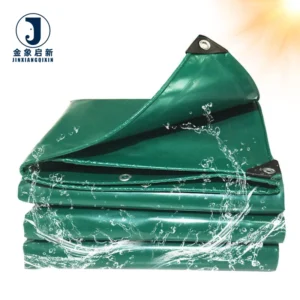
Waterproof Heavy Duty Tarpaulin Water Proof Cover Tarpaulin Manufacturer
¥1.48 Add to cart -
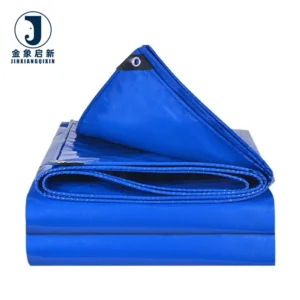
Factory Custom 9×11 Poultry Curtains Tarpaulin PVC Coated Waterproof Anti-Static Eco-Friendly Tarp for Chicken Coop Boys Girls
¥0.90 Select options This product has multiple variants. The options may be chosen on the product page -
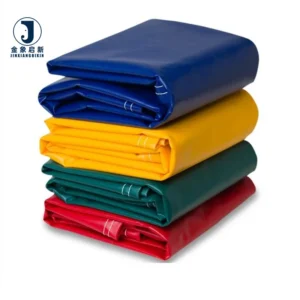
Heavy Duty Waterproof PVC Tarpaulin Roll Cover for Truck Tent Outdoor Storage and Industrial Use
¥1.48 Add to cart -

PVC Coated Tarpaulin PVC Fabric Tarpaulinheavy duty fire retardant waterproof pvc coated tarpaulin rolling pvc tarp
¥1.00 Select options This product has multiple variants. The options may be chosen on the product page