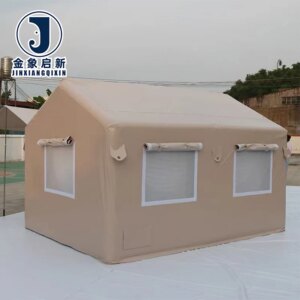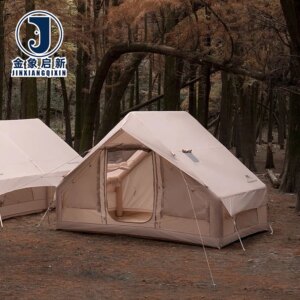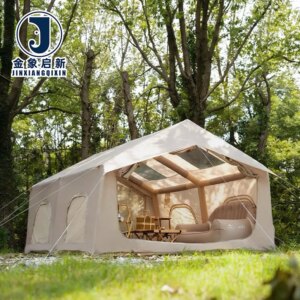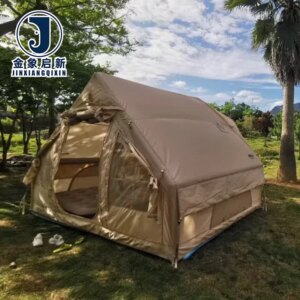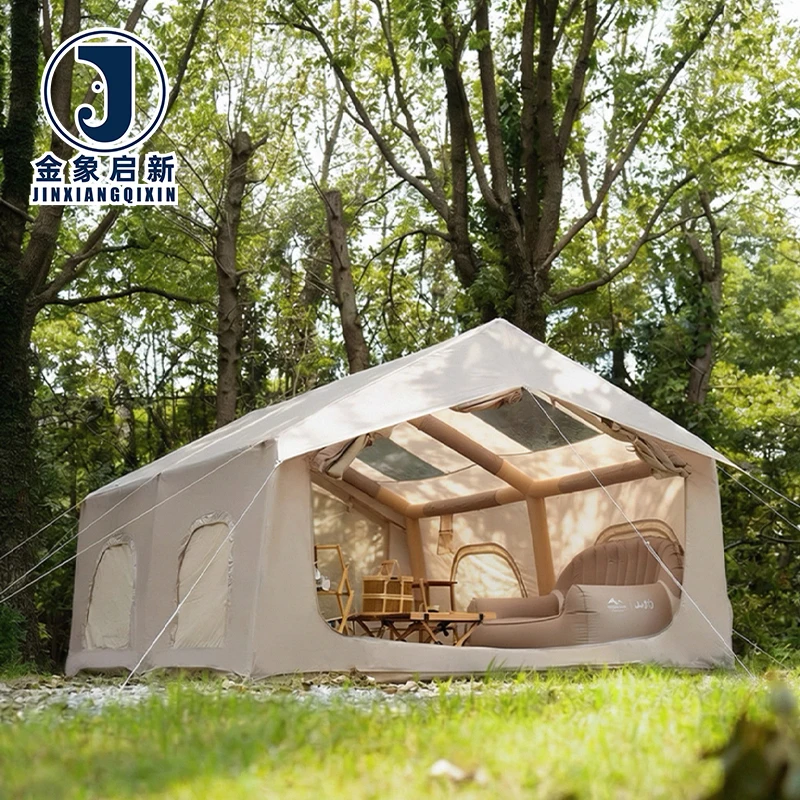
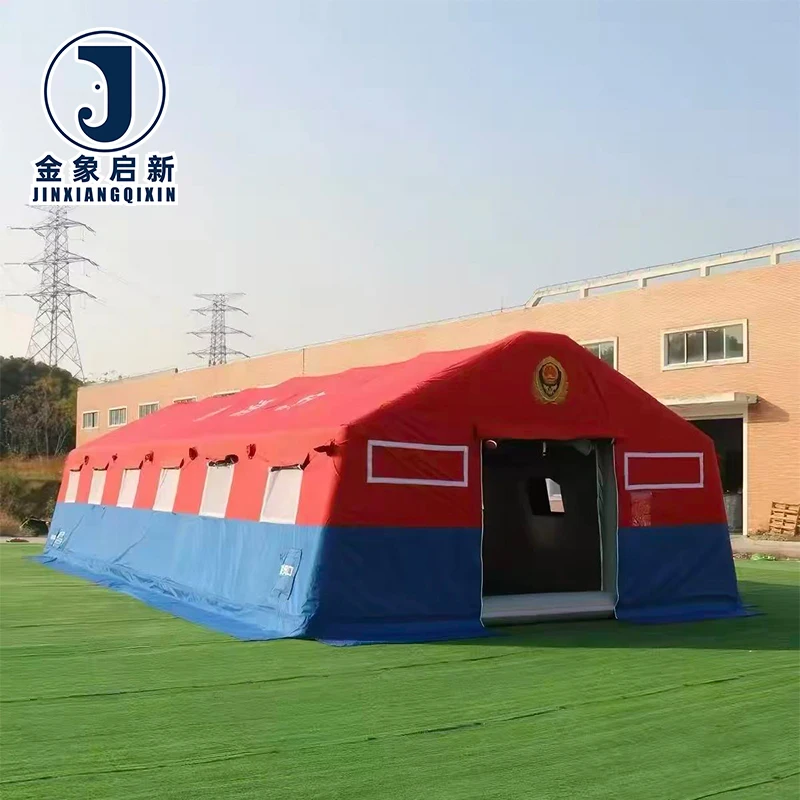
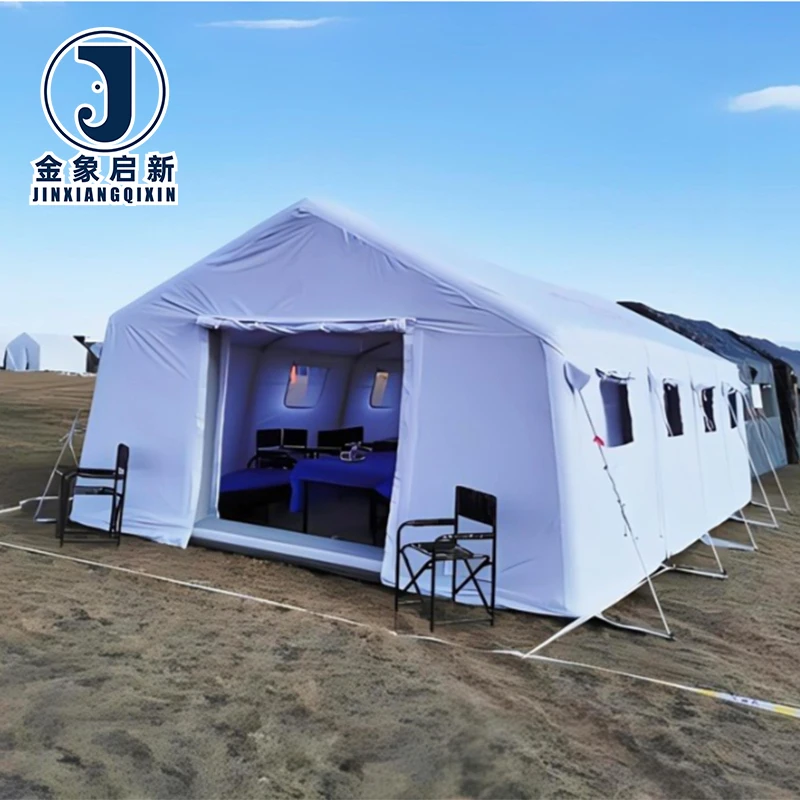
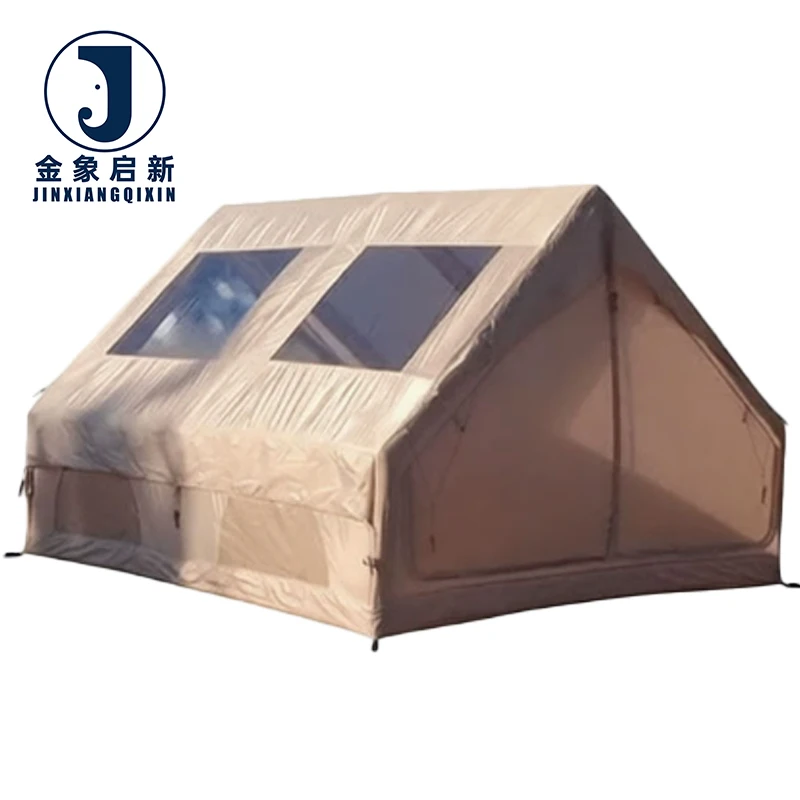
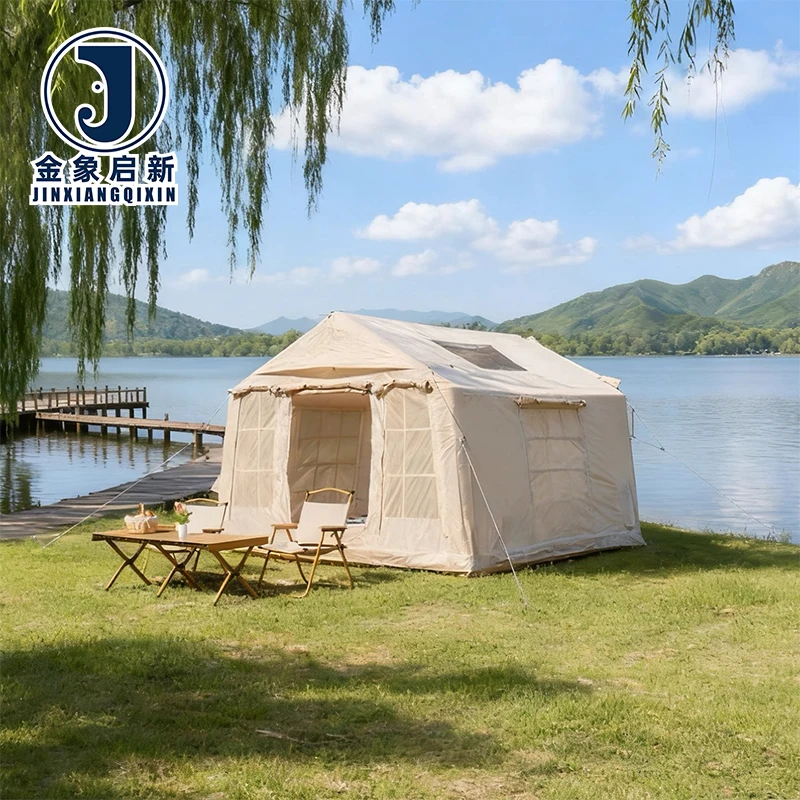
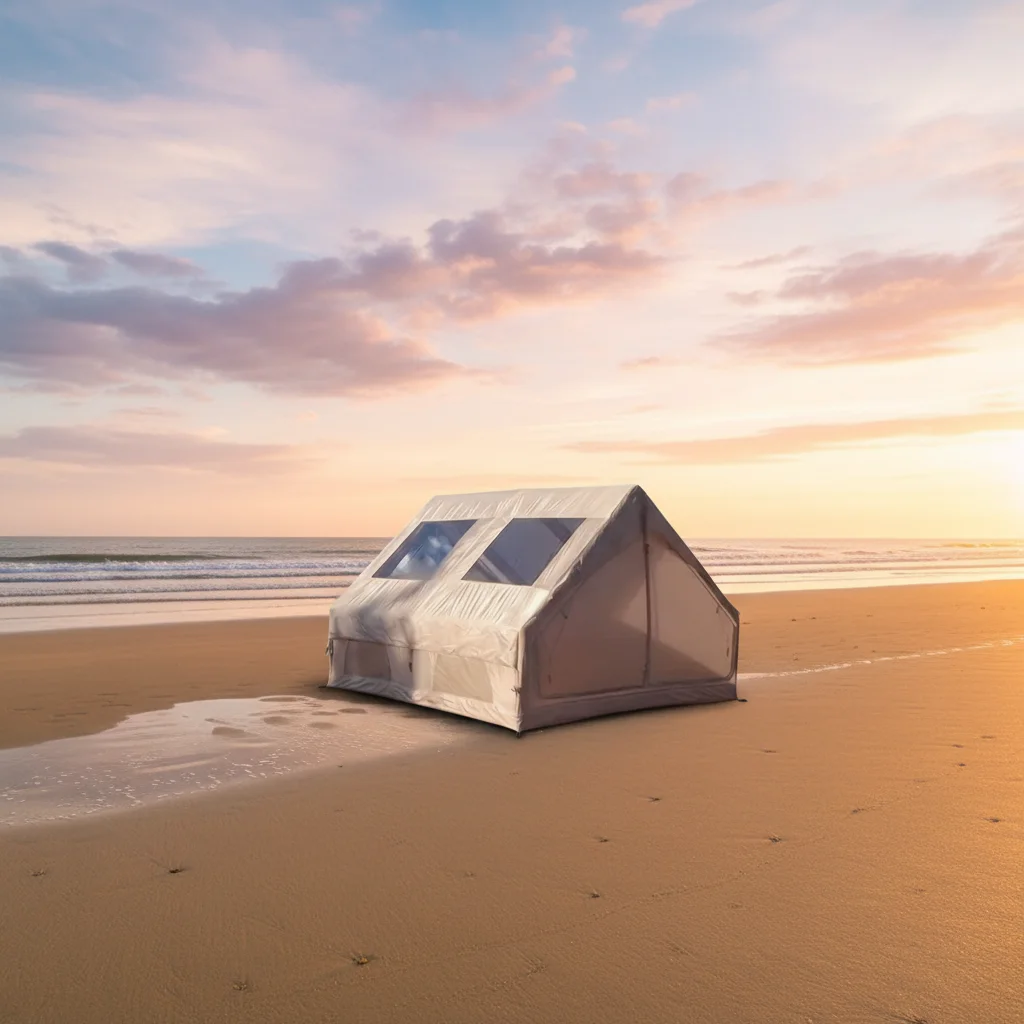
PVC Inflatable Camping Tent, waterproof & UV-resistant PVC tarpaulin, 2–3 person capacity, four-season single-layer design. Engineered for commercial outdoor gear manufacturers requiring consistent material performance across production batches. Tear-resistant construction supports frequent setup and teardown cycles in demanding field conditions. Full OEM/ODM customization from material thickness to pattern printing available.
- 3 full production lines and 36 sets of equipment ensure reliable bulk capacity and on-time delivery
- 10-person R&D team handles material selection, product design, and sample development within days
- 100% pre-shipment inspection with dedicated QA/QC at every production stage
Description
Production Depth — Nearly 30 years focused on coated fabric, with deep process control over coating weight and adhesion ensuring every inflatable tent fabric roll meets your brand’s specifications.
Technical Specifications
| Parameter | Value |
|---|---|
| Product Type | Inflatable Tent |
| Core Material | PVC Tarpaulin |
| Capacity | 2-3 Person |
| Design | Four-season, Single Layer Construction |
| Key Features | Waterproof, UV-resistant (test basis not stated), Tear-resistant |
| Customization Service | OEM & ODM — material selection, product design, pattern printing |
| R&D Team | 10 technicians supporting sample development |
| Production Facility | 9,180 m² with 3 full production lines |
| Processing Equipment | 36 sets of professional processing equipment |
| Quality Control | Full-process QA/QC with dedicated on-site staff |
| Certifications | ISO 9001, ISO 14001, ISO 45001, CE |
Application Suitability
| Application | Exposure & Requirement |
|---|---|
| Commercial outdoor gear manufacturing | Consistent roll-to-roll quality for branded inflatable camping tent production runs |
| Construction site temporary shelters | Prolonged weather exposure, abrasion from site activity, frequent relocation |
| Outdoor event facility deployment | High-visibility branding, repeated inflation and deflation cycles, UV exposure |
| Industrial camping shelters | Extended use in variable climates, waterproof integrity under wind-driven rain |
Why Waterproof Claims Alone Damage Outdoor Gear Brands
Waterproof performance must be verified at the seam, not just on the fabric face.
When an inflatable camping tent leaks at a welded joint during the first rainfall, the end user does not blame the material supplier. They blame the brand printed on the door. Inconsistent PVC coating thickness and poor heat-sealing behaviour are common causes of field failures that trigger product returns. As a PVC Inflatable Tent aftermarket supplier, we address this by controlling coating adhesion from the base fabric upward, so weld strength matches or exceeds the fabric’s own tear resistance [NEED_CITE: tensile and tear test methods for coated fabrics per ISO 1421]. Brands sourcing inflatable tent fabric frequently discover that the waterproof rating quoted applies only to the uncut roll, not the finished product after fabrication.
Coating Consistency Across Every Linear Metre
Inflatable tent structures place continuous stress on the material during inflation, making uniform coating weight essential for predictable performance. Our three full production lines maintain controlled coating application across the PVC tarpaulin surface. This ensures that when your fabrication team sets heat-sealing parameters, the result is consistent from the first panel to the last. PVC Inflatable Tent aftermarket supplier capability depends on this level of process control — variation in coating thickness is a primary cause of seam delamination in inflatable structures.
Tear Resistance Through Base Fabric and Coating Bond
A four-season inflatable tent must withstand strong winds and the mechanical stress of repeated setup and teardown. Tear resistance in PVC tarpaulin is governed by the interaction between base fabric weave and the coating’s bond strength. Our 10-person R&D team evaluates this interaction during material selection for each OEM and ODM project [NEED_CITE: coating adhesion and peel strength testing for PVC tarpaulin]. When the coating separates from the base yarn under stress, a small nick propagates rapidly. Maintaining bond integrity is therefore as important as the base fabric’s inherent tear strength.
Understanding What the Specification Sheet Actually Tells You
The PVC tarpaulin used in inflatable tent construction is defined by several interacting parameters. Coating weight determines waterproof integrity and contributes to overall stiffness, but the base fabric’s denier and weave density are what resist tearing once a puncture initiates. The four-season single-layer construction specified for this inflatable tent product requires that the coating and substrate perform as one composite — a weak bond between them will fail before either layer reaches its individual limit. Surface finish affects both printability for branding and field cleanability. Available in grades suitable for UV-resistant applications, though the specific test basis should be confirmed for your target market’s climate classification. Waterproof performance is inherent to the PVC coated construction, meaning the material itself forms a continuous barrier rather than relying on applied treatments that degrade with abrasion.
The Hidden Cost of Ignoring Fabrication Compatibility
Selecting PVC tarpaulin based only on roll price or stated weight creates downstream problems that surface after the inflatable tent reaches the end customer. Material that is too stiff at low temperature will crack when folded for transport. Welded seams that are weaker than the base fabric will split at the point of highest stress — typically where the inflatable tube meets the tent body. Colour variation between production rolls forces manufacturers to either mix shades on a single tent or scrap partial rolls [NEED_CITE: colour consistency standards in batch production of coated fabrics]. These issues do not appear on a quotation; they appear on a return authorization form.
What Manufacturing Discipline Brings to Your Supply Chain
Our 36 sets of professional processing equipment support both bulk roll production and the precision slitting required for custom inflatable tent panel dimensions. The 10-person R&D team develops customised samples within days, allowing your design engineers to test inflation behaviour, weld parameters, and print registration before committing to a production order. Full-process quality inspection with dedicated QA and QC staff means each roll is checked against the agreed specification before it leaves the facility. ISO 9001, ISO 14001, and ISO 45001 certification provides a documented management framework rather than a marketing claim. Three full production lines give the capacity to fulfil container-quantity orders within typical multi-week lead times for custom colours and prints.
Documentation & Verification
- Material specification sheet stating PVC tarpaulin composition, coating type, and colour reference for each roll
- Batch-specific quality inspection report covering coating weight and visual defect count before dispatch
- Test documentation for UV-resistant and waterproof performance available upon request for your compliance file
- Product specification sheet detailing capacity rating, four-season design parameters, and fabrication guidance
- Certificate of origin and CE documentation to support customs clearance in your destination market
Fabrication, Handling & Storage
- Heat-sealing temperature and dwell time must be calibrated to the PVC tarpaulin coating thickness for each inflatable tent panel
- Weld seam width should exceed the minimum to account for flex stress at tube-to-body junctions on the inflatable structure
- Store rolls upright on a flat surface to prevent permanent creasing in the PVC coated fabric before cutting
- Avoid folding the four-season tent material at temperatures below the coating’s cold-flex threshold to prevent surface cracking
- Clean printed branding areas with mild detergent only — solvent-based cleaners attack the PVC coating surface layer
- Pattern printing registration marks should be aligned with the base fabric grain direction for dimensional stability during inflation
Tell Us What Your Inflatable Tent Programme Requires
Share your target tent dimensions, expected inflation pressure range, and the climate zone where the end product will be used. If your market requires specific fire-retardant or UV-resistance certification, state the standard so we can confirm the appropriate PVC tarpaulin grade. Specify whether you need finished cut panels with welded seams or full-width rolls for your own fabrication line, and indicate your annual volume and colour requirements so we can plan production slots accordingly.
Frequently Asked Questions
Q: What UV-resistance test basis applies to this inflatable tent fabric?
A: The PVC tarpaulin is formulated for UV-resistant performance, but the specific test standard and exposure rating should be confirmed against your destination market’s requirements. We can supply material for independent testing or provide existing test data if available. Request the grade documentation before finalising your specification for commercial outdoor gear production.
Q: How are custom sizes and minimum order quantities handled?
A: OEM and ODM customisation covers material selection, product design adjustments, and pattern printing for inflatable tent applications. Minimum quantities depend on whether you require custom-colour production runs or standard stock grades. Our R&D team develops samples within days, enabling design confirmation before mass production commitment.
Q: How is pattern print colour matched and sampled?
A: Pattern printing for inflatable tent branding is matched to your supplied colour references during the sample development phase. A printed sample is produced for your approval before the full production run begins, ensuring registration accuracy and colour consistency across all panels of the finished inflatable structure.
Q: What measures control batch-to-batch colour variation?
A: Each production batch of PVC tarpaulin is inspected by dedicated QA and QC staff against the approved colour standard for that order. Rolls from the same production run are grouped together for dispatch. If your inflatable tent programme spans multiple orders, we retain colour reference records to maintain consistency across shipments.
Q: What are the key fabrication considerations for heat-welding this material?
A: The four-season PVC tarpaulin construction requires heat-sealing parameters matched to the specific coating weight. Weld strength should be validated through peel testing on sample panels before full production. Our technical team can provide baseline temperature and dwell-time recommendations, and we advise testing weld integrity at the highest-stress junction points of the inflatable tent design.
Related products
-
Premium Four-season Inflatable Tents for Camping Easy-to-Use Spacious Portable Waterproof Outdoor Tent Quick
Read more -
Inflatable Tent Four-Season Quick Automatic Opening PVC 3000mm Waterproof Foldable Eco-Friendly 2-3/3-4/6-8 Person Outdoor Use
Read more -
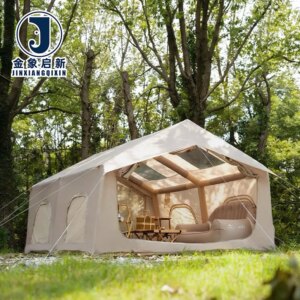
Inflatable Four-season Camping Tent-PVC Coated Waterproof Eco-Friendly Quick Inflation CE Certified ODM/OEM Accepted
Read more -
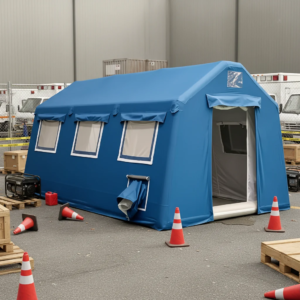
Outdoor Waterproof Inflatable Tent for Camping Portable Air Camping Tent Shelter
Read more