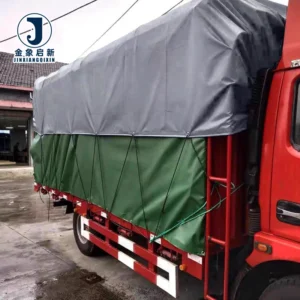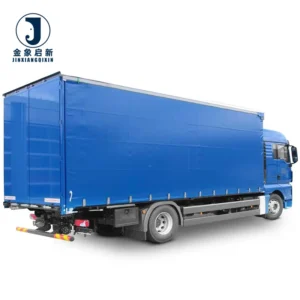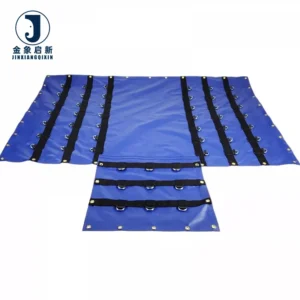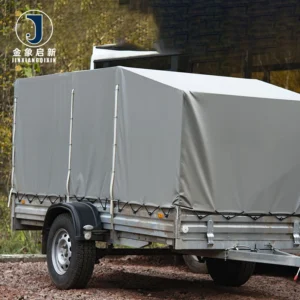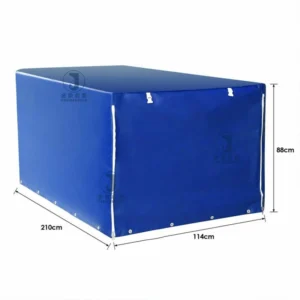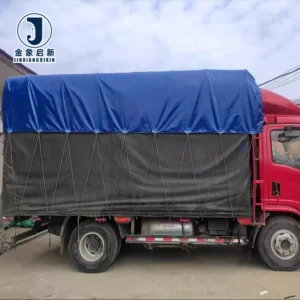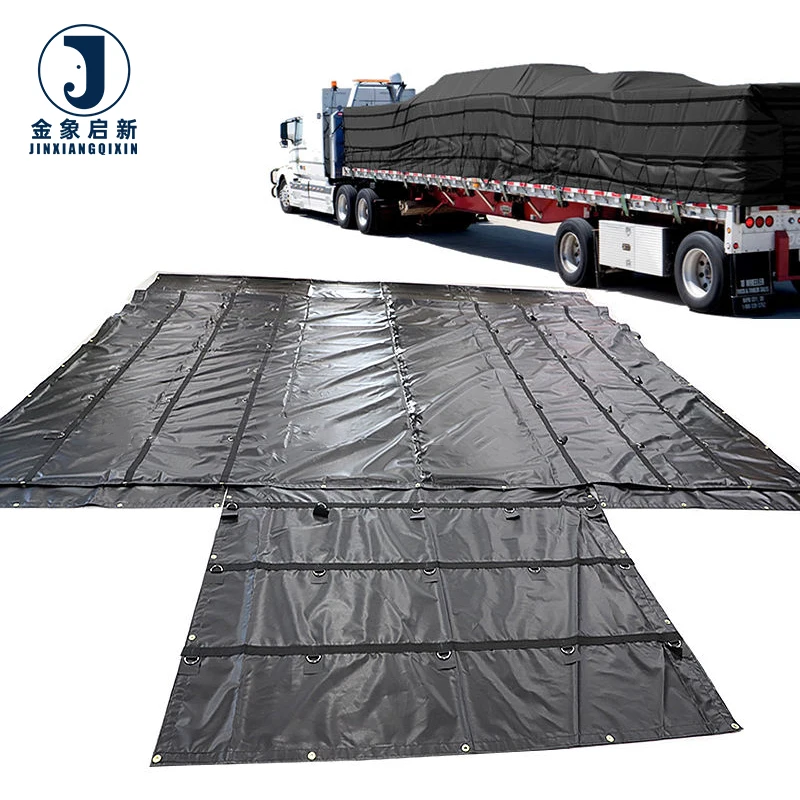
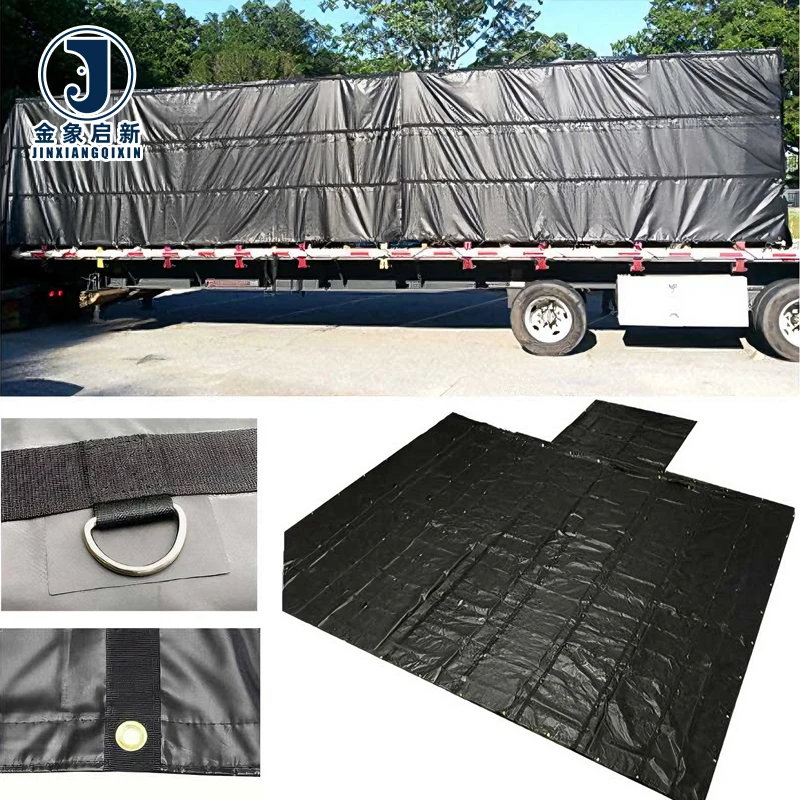
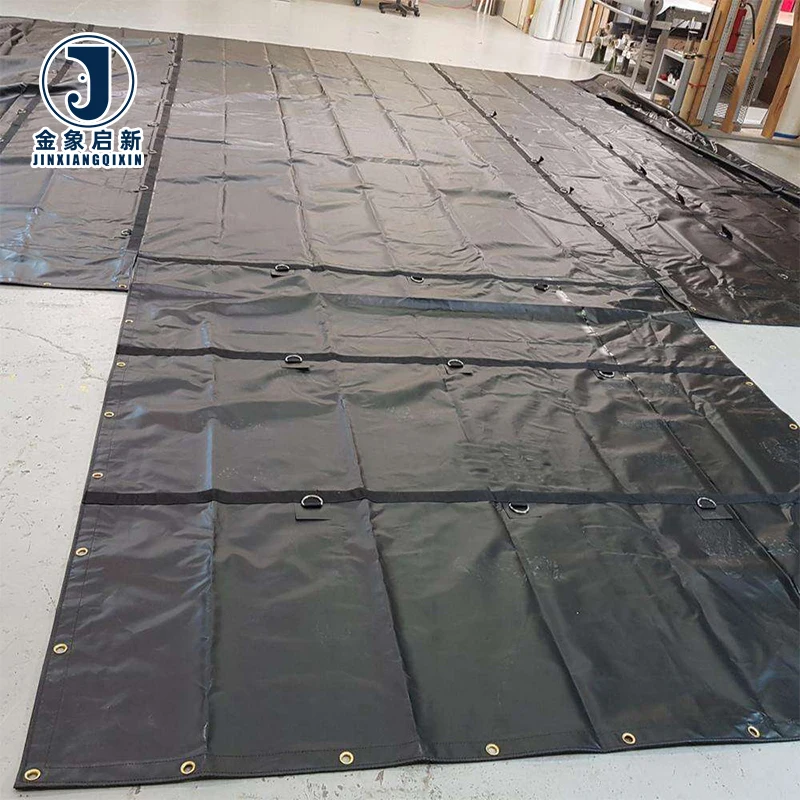
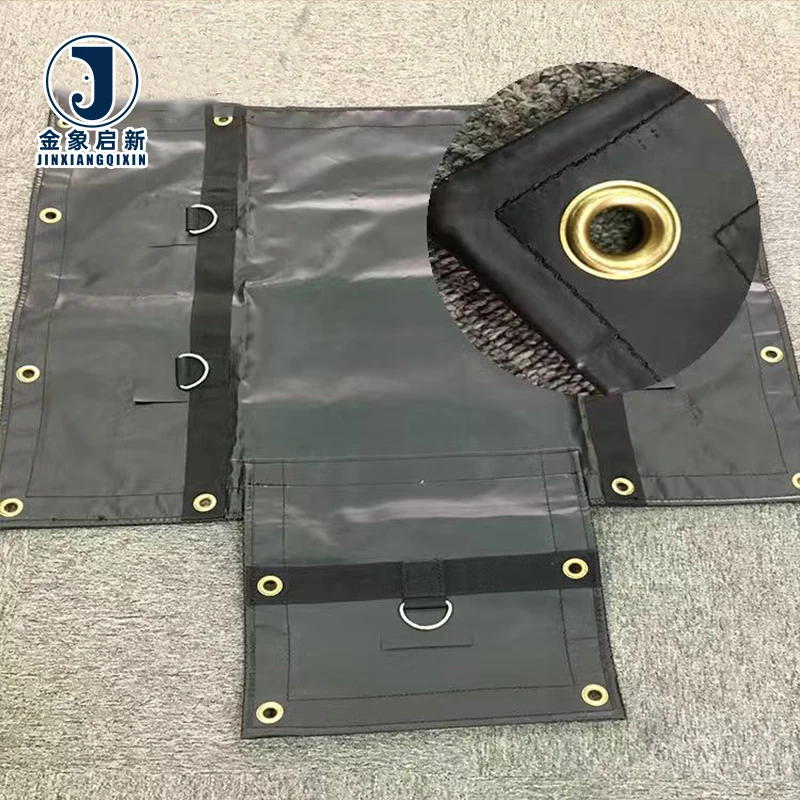
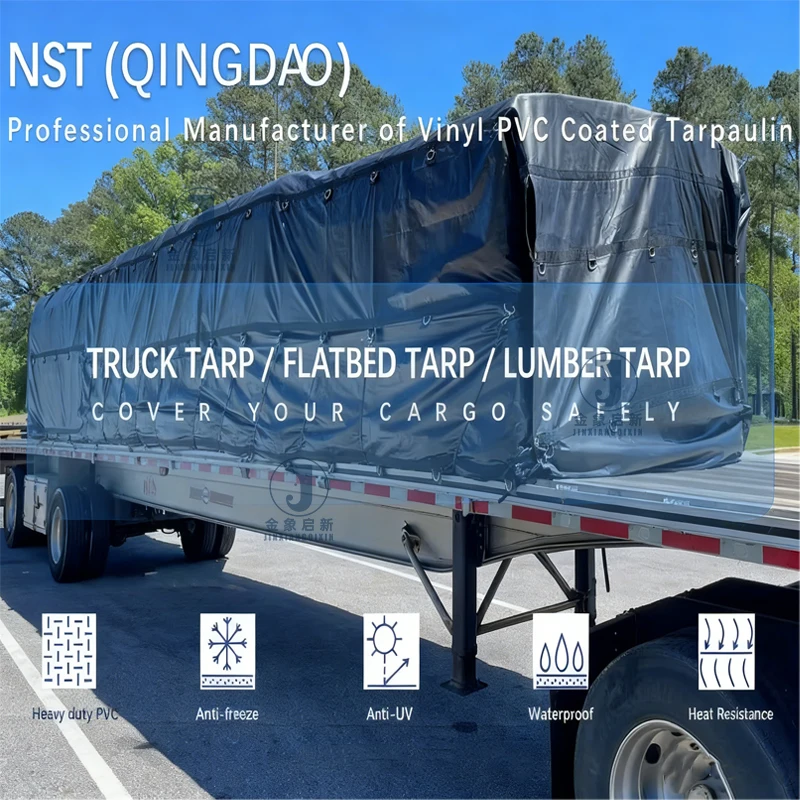
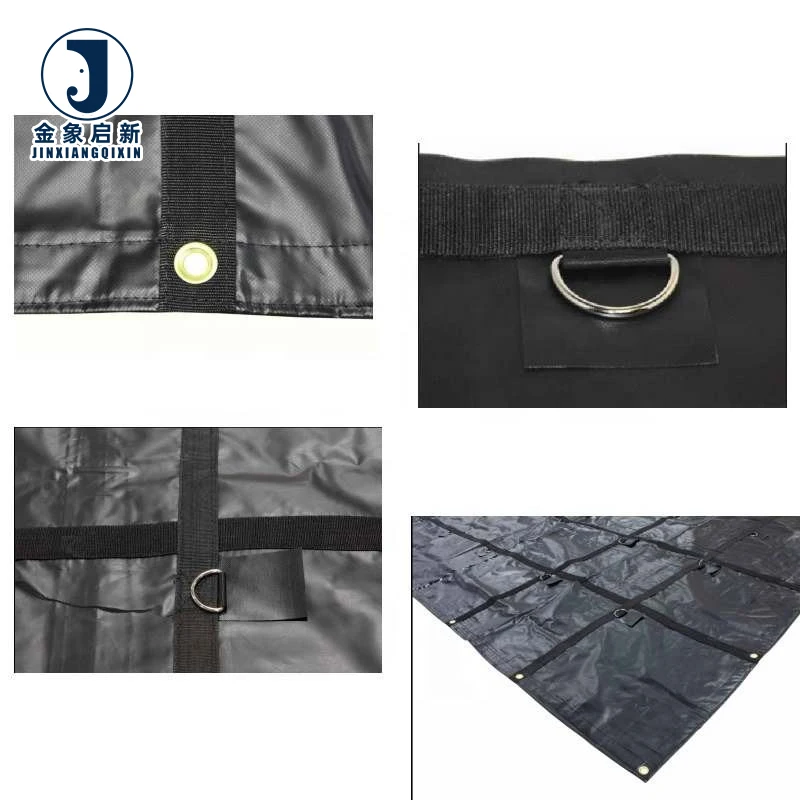
Flatbed Semi Truck Lumber Tarp — 12oz/15oz Vinyl or RipSTOP, 8′ Drops, 1PC/2PC/3PC construction
- Engineered to exact trailer width and drop length, eliminating edge gaps and road drag on flatbed loads.
- RipSTOP base fabric halts puncture spread during transit; anti-pull reinforcement at tie-down points resists tearing under tension.
- Abrasion-resistant and anti-mildew treated for long-haul lumber, steel, and building material transport.
Backed by 30 years of coated fabric process control, 100% pre-shipment inspection, and full custom sizing from our 10-person R&D team.
Description
Proven coating process control — every roll of PVC coated fabric runs through dedicated QA at each stage, with 100% inspection before dispatch to ensure weld integrity matches the RipSTOP base.
Technical Specifications
| Parameter | Value |
|---|---|
| Product Type | PVC Truck Cover |
| Material Options | 12oz 15oz Vinyl or RipSTOP |
| Drop Length | 8′ Drops |
| Construction Options | 1PC / 2PC / 3PC |
| Treatment | Abrasion-Resistant, Anti-Mildew, Anti-Pull |
| Waterproof | Yes |
| Density | Customizable |
| Weight Grade | Very Heavyweight |
Application Suitability
| Application | Exposure & Requirement |
|---|---|
| Flatbed lumber transport | Constant road vibration, tie-down tension at corners, abrasion from rough-cut timber edges |
| Steel and building material hauls | Sharp-edged cargo contact, heavy point loads, long-haul weather exposure |
| Mixed fleet standardization | Consistent sizing across varying trailer models, batch colour matching, repeat ordering |
Why a Flatbed Cover Cut to Generic Dimensions Fails on the Road
A truck cover must match the exact trailer width and drop, or it creates wind catch and edge drag that accelerates wear.
When we supplied an early batch of lumber tarps to a North American fleet, the 8′ Drops worked in static tests but failed at the corner welds once drivers hit highway speeds. The tarp was the right size on paper — but the load shifted, the tie-down straps pulled the fabric at an angle, and the seams opened where the RipSTOP base met the heat-weld line. That experience changed how we approach the PVC Truck Cover aftermarket supplier relationship: we now confirm trailer dimensions, load profile, and strap routing before we recommend a construction [NEED_CITE: common failure modes in heavy-duty flatbed tarpaulin systems under dynamic load].
The problem with off-the-shelf covers is rarely the fabric itself. It is the gap between what the tarp was designed for and what actually happens at 65 mph with a full load of dimensional lumber. Edge gaps let water in. Excess material flaps and abrades against itself. A cover that drags on the road surface picks up debris and tears from underneath.
How RipSTOP Base Fabric Changes the Failure Pattern
Standard vinyl tarpaulin tears in a straight line once punctured — a small cut from a timber splinter or a sharp steel edge propagates across the entire panel. The RipSTOP weave interrupts that propagation with a heavier reinforcement yarn set on a grid, so a puncture stays local instead of becoming a full-width split. For fleet operators running flatbed loads, this matters because road debris and load shift create small damage points regularly. The PVC Truck Cover aftermarket supplier needs to understand which base fabric suits which cargo profile before recommending a grade.
Construction Choices: 1PC, 2PC, and 3PC Explained
A single-piece cover is one continuous panel that drapes over the load — simple to deploy but harder to handle due to weight and size. A two-piece construction splits the cover at the ridge, reducing individual panel weight and making it manageable for one person. Three-piece designs separate the top and both side drops entirely, allowing damaged sections to be replaced independently. The right construction depends on trailer length, crew size, and how often the cover is removed and reinstalled during multi-stop routes. Each option affects where the welded seams fall relative to the highest-stress points [NEED_CITE: seam placement and stress distribution in multi-piece flatbed tarpaulin assemblies].
Reading Weight, Base Fabric, and Treatment Together
The 12oz and 15oz grades refer to the fabric weight per square yard, but weight alone does not define performance. A 15oz vinyl with a standard weave may tear more easily than a 12oz RipSTOP because the reinforcement grid in the base fabric arrests tear propagation at the yarn level. Coating adhesion to the base fabric determines whether the PVC layer delaminates under repeated flexing — particularly at fold points where the tarp meets the trailer edge. The anti-mildew treatment is relevant for routes through humid climates where the cover stays folded while damp, and the anti-pull reinforcement at tie-down points directly addresses the corner stress that causes premature failure in generic covers. Density is customizable so the fabric construction can be matched to the specific abrasion and tension profile of the cargo being hauled.
What Happens When Heat-Weld Settings Do Not Match the Base Fabric
We learned this the hard way with that early lumber tarp order. The RipSTOP grid has a different thermal mass than standard woven polyester — the thicker reinforcement yarns absorb heat differently, and if the welding temperature is set for a uniform vinyl base, the weld at the grid intersection either does not fuse fully or burns through the coating. The result is a seam that passes a static pull test but opens under the dynamic load of highway driving. Getting the heat-weld parameters right for RipSTOP specifically is not optional — it is the difference between a cover that lasts and one that fails at the first major load shift [NEED_CITE: thermal welding parameters for coated fabrics with variable base weave density].
Why Sourcing Matters for Flatbed Fleet Covers
Three full production lines with 36 sets of professional equipment mean that custom-width rolls and cut-to-size panels run on dedicated machinery rather than squeezed between unrelated orders. The 10-person R&D team develops samples within days when a fleet needs a specific drop length or tie-down layout validated before committing to a full order. Every roll and finished cover passes through QA at each production stage — coating weight, colour match, weld integrity — with 100% pre-shipment inspection, not spot-check sampling. This level of process control is what allows the PVC Truck Cover aftermarket supplier to deliver consistent batch colour across a multi-trailer fleet order and reliable seam performance on every panel. Near 30 years of focused coated fabric production means we have already encountered and solved the failure modes that show up in flatbed applications.
Documentation & Verification
- Material spec sheet confirming GSM, base fabric type, and coating weight per roll
- Abrasion and anti-mildew treatment test results for the specified grade
- Pre-shipment inspection record covering weld strength and dimensional accuracy
- Roll packing list with individual roll IDs for traceability
- Certificate of origin and customs documentation for cross-border shipment
Fabrication, Handling & Storage
- Heat-weld temperature must be calibrated to the specific vinyl or RipSTOP base to prevent seam failure
- Tie-down reinforcement zones should align with the anti-pull treatment layout specified at order
- Store rolls upright on a clean, dry surface to avoid permanent creasing in heavyweight grades
- Unfold covers fully before first use to release any compression set from shipping
- Clean with mild detergent only — harsh solvents degrade the PVC coating and anti-mildew finish
- Field repairs should use compatible PVC adhesive patches matched to the coating weight
Before You Request a Quote
Send your trailer make, deck width, length, and the drop measurement you need on each side — front, rear, and side drops can all differ. Specify whether you need 1PC, 2PC, or 3PC construction based on your crew’s handling routine. If your fleet operates in a region with specific compliance requirements for coated fabrics, include the standard reference so we can match the correct grade. Let us know your annual volume and whether you want finished, eyeletted covers or roll stock for your own fabrication.
Frequently Asked Questions
Q: How do I measure my trailer for a custom-fit PVC truck cover?
A: Measure the deck width from outside edge to outside edge, the deck length, and then the drop — the distance from the deck surface down to where you want the cover to stop on each side. Front, rear, and side drops can be different depending on cargo height and access requirements. Send all four dimensions so the cover pattern accounts for drape and tie-down clearance.
Q: What is the difference between 1PC, 2PC, and 3PC construction?
A: 1PC is a single continuous panel covering the entire load — heaviest to handle but fewest seams. 2PC splits at the ridge line into two halves, reducing individual panel weight for single-person deployment. 3PC separates the top panel and both side drops entirely, allowing individual section replacement if one area is damaged without replacing the full cover.
Q: Can I order different drop lengths for front, side, and rear?
A: Yes. Flatbed loads are rarely uniform — lumber overhangs differently than steel coil, and rear access requirements may dictate a shorter drop. Specify each drop dimension separately when ordering. Our production team will adjust the panel pattern and weld layout to match the exact configuration your trailer and cargo profile require.
Q: How is the RipSTOP fabric different from standard vinyl tarpaulin?
A: RipSTOP uses a heavier reinforcement yarn woven into the base fabric on a regular grid. When a puncture occurs, the grid arrests tear propagation so damage stays local. Standard vinyl tears in a continuous line once punctured. For flatbed loads with sharp-edged cargo like lumber or steel, RipSTOP reduces the chance of a small cut becoming a full-panel failure.
Q: What documentation comes with the shipment for customs and compliance?
A: Each shipment includes a material specification sheet with GSM and base fabric details, a packing list with roll-level traceability, certificate of origin, and any applicable treatment test reports. Pre-shipment inspection records confirming dimensional accuracy and weld integrity are included so you have verification before the cover reaches your yard.