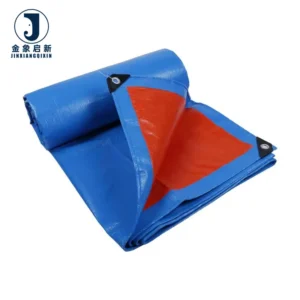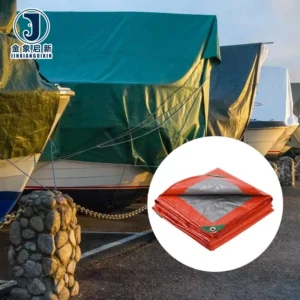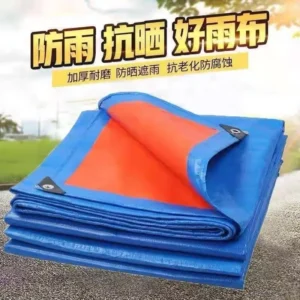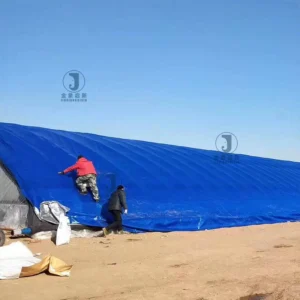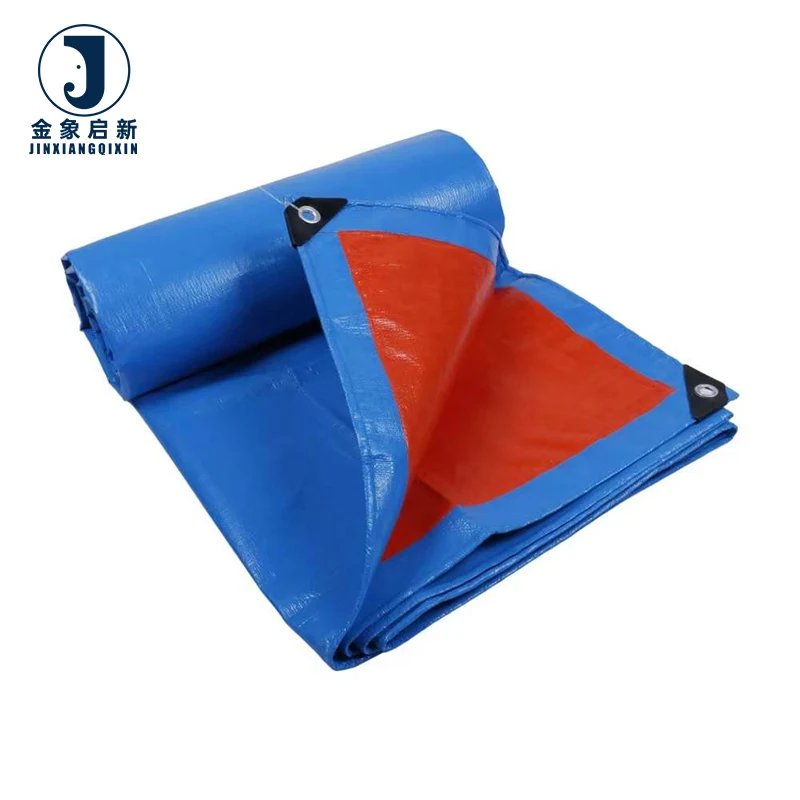
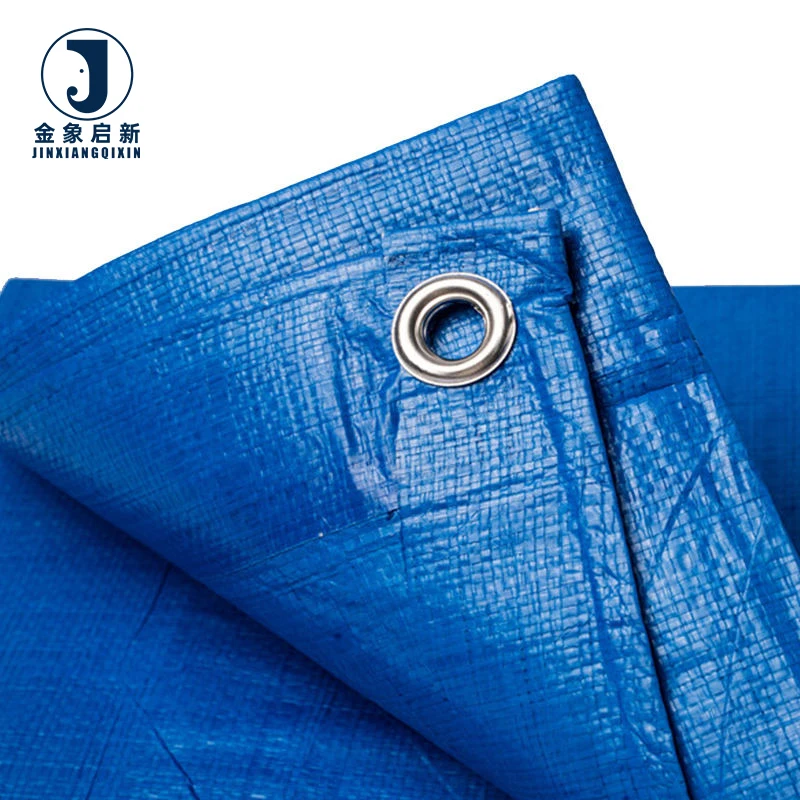
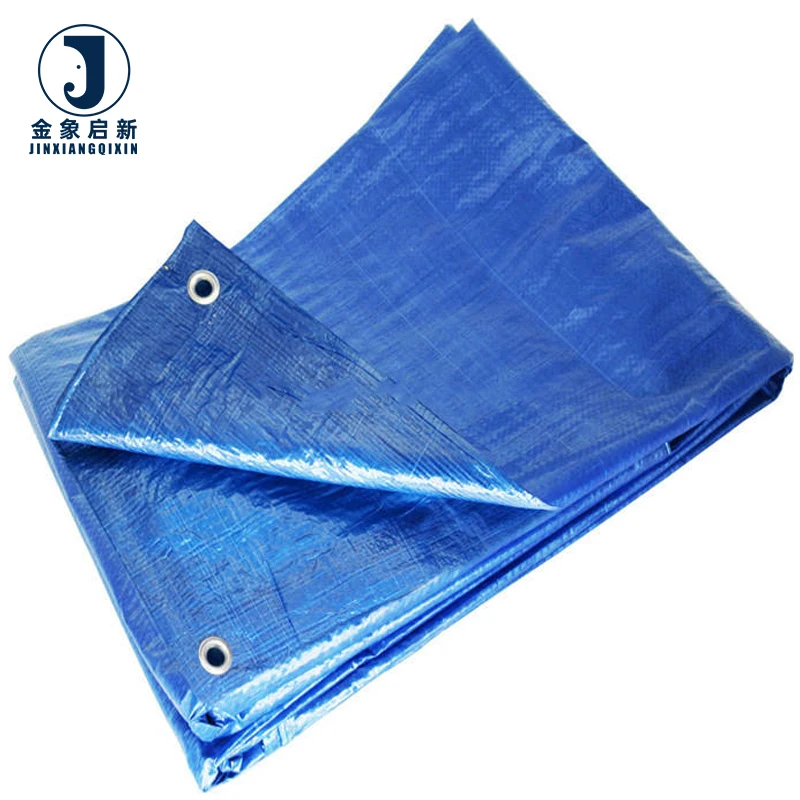
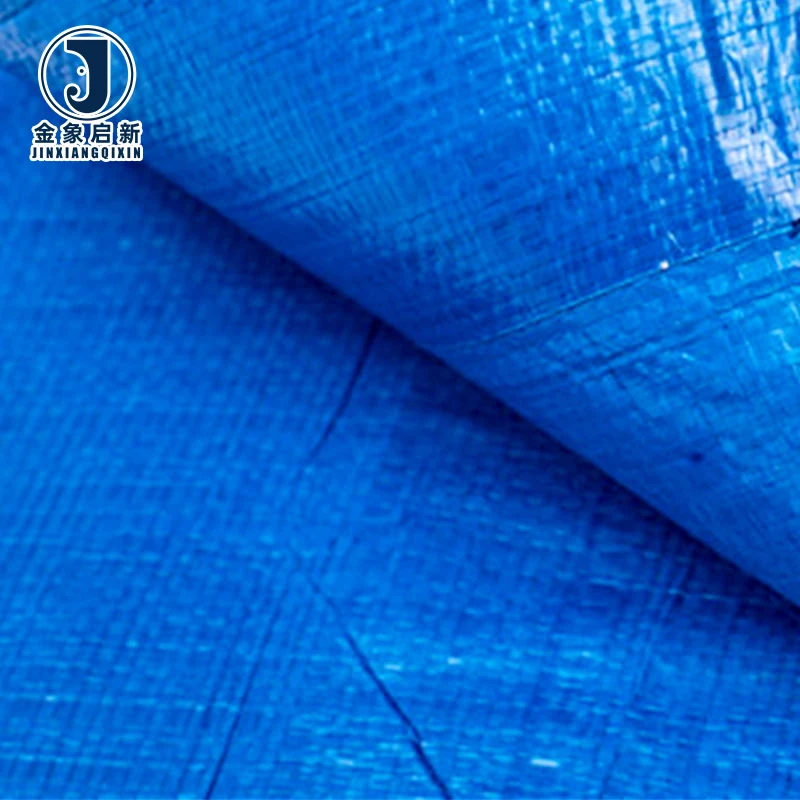
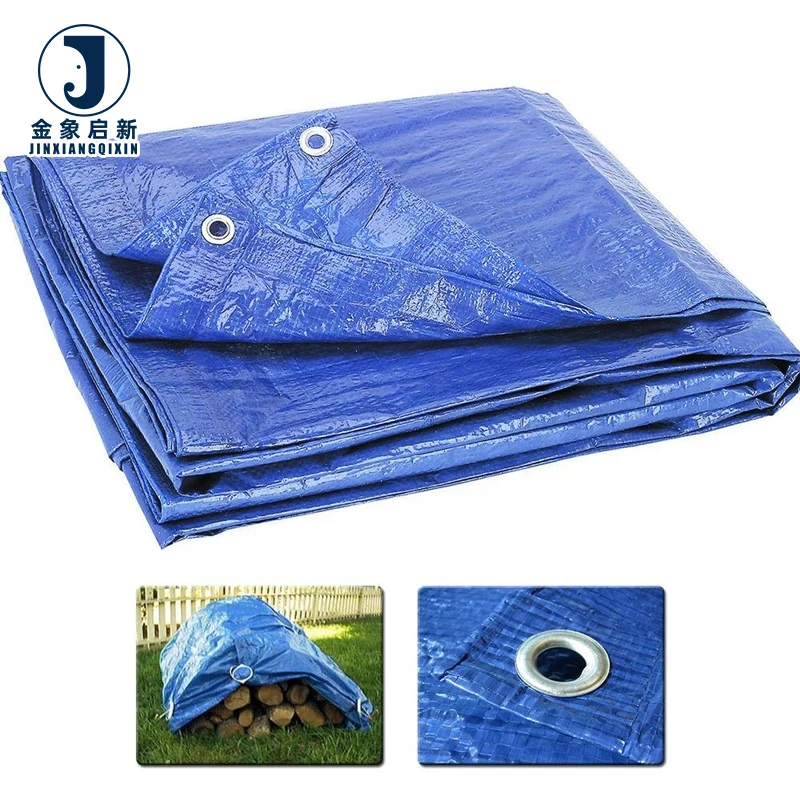
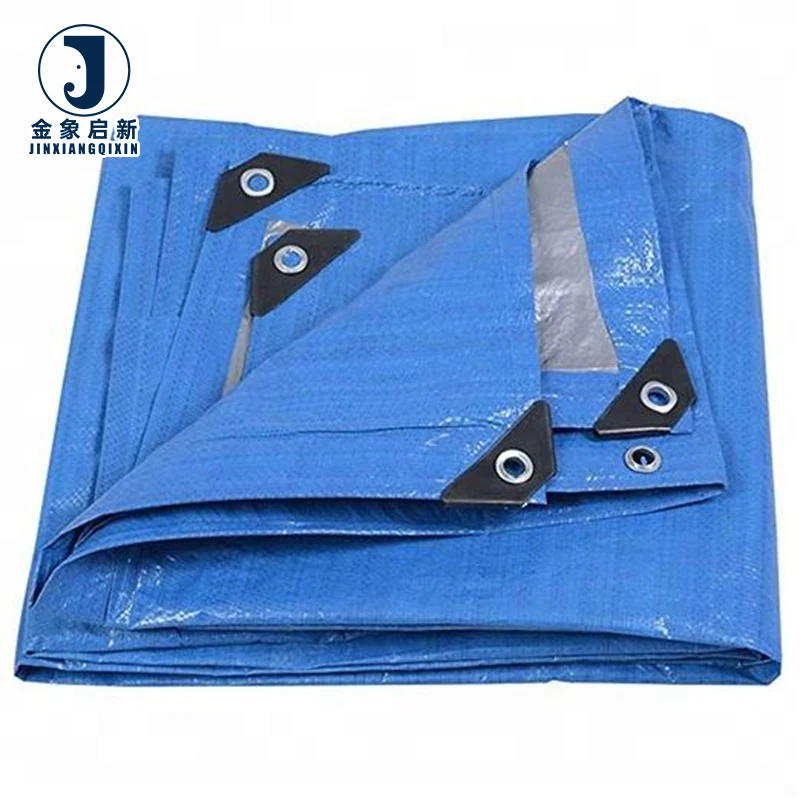
Waterproof PE Tarpaulin Roll — HDPE woven base with PE coating, UV and mildew-proof treated, custom sizes and colors available.
- Full range from lightweight to heavyweight grades for truck, tent and industrial covers
- Batch-to-batch colour consistency across the order, verified when rolls sit side by side
- Custom width, eyelets and reinforced hems engineered for flex-point durability
Backed by 3 production lines, a 10-person R&D team handling samples in days, and 100% pre-shipment inspection with documented record.
Description
Coated Fabric Expertise — Nearly 30 years of PE coating process control delivering verified GSM, batch-consistent colour, and full custom sizing from a single production source.
Technical Specifications
| Parameter | Value |
|---|---|
| Product Type | PE Tarpaulin Roll |
| Base Fabric | Woven HDPE |
| Coating Material | PE |
| Coating Method | Coated |
| Waterproof | Yes |
| Mildew-Proof | Yes |
| UV Treatment | Yes (test basis not stated in source) |
| Flame Retardant | Available in flame retardant grades — confirm the grade required for your market |
| Color | Customizable |
| Size | Customizable |
| Style | Plain |
| Construction | Heavyweight |
| Eyelet & Hem Options | Eyelets available |
Application Suitability
| Application | Exposure & Requirement |
|---|---|
| Truck and trailer covers | Road debris impact, constant weather exposure, tie-down tension at eyelets, flex at load points |
| Outdoor tent and awning fabric | Prolonged UV exposure, wind loading, repeated folding and deployment, colour visibility |
| Car and equipment covers | Abrasion from contact surfaces, moisture ingress, dust and chemical splash, fit to irregular shapes |
| Industrial and roofing covers | Extended outdoor weathering, mechanical stress from wind uplift, water pooling on flat spans |
| Agricultural and poultry tarpaulin | Humidity, ammonia exposure, frequent wash-down, mildew risk in enclosed structures |
| Tank and rescue tarpaulin | Containment of liquids or particulates, rapid deployment, puncture risk from sharp edges |
Why Quoted GSM Often Fails the Roll That Arrives on Site
A stated weight means nothing without documented coating and base fabric verification at every production stage.
When a logistics fleet orders PE tarpaulin rolls for side curtains or truck covers, the quoted GSM becomes the baseline for tensile and tear expectations. If the material arrives lighter than agreed, the entire load protection strategy is compromised — covers tear at tie-down points, seams fail under wind load, and the cost of replacing cargo exposure far exceeds the tarpaulin itself. Sourcing a PE Tarpaulin Roll manufacturer custom requires more than a price per kilogram; it demands a supply chain that treats weight verification as a non-negotiable gate. [NEED_CITE: ISO 1421 tensile and tear test methods for coated fabrics]
Woven HDPE Base and Coated Construction
The woven HDPE base fabric provides the structural skeleton of every roll. Yarn denier and weave density determine how load distributes across the fabric plane, while the PE coating locks the weave in place and delivers waterproof performance. This PE Tarpaulin Roll manufacturer custom approach ensures the base fabric and coating are specified together — not as independent variables — so tensile performance remains consistent from the first metre to the last.
Treatment Package for Extended Outdoor Service
Waterproof, mildew-proof, and UV-resistant treatments are integrated during the coating stage rather than applied as an afterthought. This means protection runs through the coating layer itself, not just on the surface where it can wear away after a season of rain and sun. For buyers installing covers side by side across a fleet or a construction site, batch-to-batch colour consistency is controlled through pigment dosing at the extrusion stage, reducing the risk of visible drift between adjacent rolls. [NEED_CITE: ASTM G154 accelerated weathering exposure cycles for coated textiles]
Reading the Specs That Actually Matter
Coated PE tarpaulin performance depends on the interplay between base fabric density and coating weight. A heavier coating on a loose weave may hit the target GSM but deliver poor tear resistance because the yarns can shift under point load. Conversely, a tight weave with a thin coating may offer excellent tensile strength but lack the abrasion resistance needed for truck side curtains that flex continuously. Understanding this balance allows buyers to specify the right combination for their application rather than relying on a single GSM figure. The coated construction method used here ensures adhesion between the PE coating and the woven HDPE substrate, which directly affects how well the fabric withstands heat welding during fabrication.
The Hidden Cost of Specifying on Price Alone
When procurement decisions rest on the lowest per-roll quote, the shortcuts are invisible until the cover fails. A coating weight that falls short of the quoted GSM leads to early cracking at fold lines. Mildew-proof treatment omitted from the formulation causes staining and fibre degradation in humid environments. Flame retardant grades claimed without a supporting test report leave the buyer exposed during site safety audits. These failures surface months after delivery, when the supplier relationship has already closed and the replacement cost lands on the end user. [NEED_CITE: typical field failure modes of coated PE tarpaulin in transport applications]
Production Control Built Around the Roll, Not the Quotation
Material selection starts with the woven HDPE base fabric, sourced and inspected for weave consistency before coating begins. The PE coating formulation is matched to the application — heavier grades for truck covers that face road abrasion, lighter grades for tent fabric that must fold compactly. Custom widths, colours, and roll lengths run on dedicated production lines equipped to handle non-standard specifications without the long lead times typically associated with made-to-order fabric. Every roll undergoes weight and dimension checks before packing, with a pre-shipment inspection record documenting the results. A 10-person R&D team develops samples within days for buyers who need to confirm colour, hand feel, and welding behaviour before committing to bulk.
Documentation & Verification
- Material specification sheet listing GSM, woven HDPE base fabric type, and PE coating weight for incoming goods verification
- Pre-shipment inspection record confirming roll-by-roll weight and dimension check against the approved specification
- Test report for UV-resistant and flame retardant grades where applicable, matched to the treatment stated on the quotation
- Roll packing list detailing net weight, roll count, and dimensions for container loading and customs clearance
- Certificate of origin and customs documentation prepared for export shipments to international markets
Fabrication, Handling & Storage
- Heat welding parameters should be adjusted to the PE coating thickness to ensure seam strength matches the base fabric tensile capacity
- Eyelet spacing must account for the woven HDPE weave density to prevent pull-through under tie-down tension loads
- Store rolls upright on a flat surface to avoid permanent creasing that weakens the coated layer at the fold line
- Allow rolls to acclimatise before unrolling in cold conditions to prevent coating stiffness and cracking at the hem
- Use mild detergent for cleaning; solvent-based agents may degrade the PE coating surface and reduce mildew-proof effectiveness
Moving from Enquiry to Confirmed Order
To specify the right PE tarpaulin roll, share the end-use application and the environmental conditions the cover will face — UV intensity, moisture exposure, mechanical stress from wind or load movement. Provide the target width, roll length, and annual volume so production can be scheduled against available line capacity. If colour matching or flame retardant certification is required for your market, confirm the reference standard and any third-party testing expectations before sample development begins.
Frequently Asked Questions
Q: How is the actual GSM verified on arrival against what was quoted?
A: Every roll is weighed and measured during the pre-shipment inspection, and the results are documented on a material specification sheet that travels with the shipment. Buyers can cross-check coating weight and base fabric density against the approved sample. This eliminates the gap between the quotation figure and the roll that arrives on site.
Q: Can UV-resistant and flame retardant grades be supported by test reports?
A: Where UV-resistant or flame retardant treatment is specified, a test report is provided to confirm the grade claimed. Buyers should confirm the specific standard required by their local market or site safety regulations during the enquiry stage so the correct formulation is selected and tested before bulk production.
Q: What is the minimum order for a custom width, colour, or printed roll?
A: Minimum order quantities vary with the degree of customisation — standard widths and colours carry lower thresholds, while non-standard widths or Pantone-matched colours require dedicated production runs. Lead times are confirmed at the quotation stage. Buyers are encouraged to request a sample before committing to bulk volume.
Q: How do you keep colour consistent across multiple rolls in one order?
A: Pigment is dosed at the coating formulation stage rather than added during extrusion, which gives tighter control over shade across the full batch. Rolls from the same production run are grouped on the packing list so that adjacent rolls installed side by side come from the same dye lot, reducing visible variation.
Q: Which documentation is included with every shipment?
A: Each dispatch includes a material specification sheet, pre-shipment inspection record, roll packing list, and certificate of origin. Where applicable, UV and flame retardant test reports are attached to match the treatment stated on the order. All documents are prepared to support customs clearance in the destination market.
Related products
-
Heavy Duty Poly Tarps 5/10/12/16/20 Mil Waterproof Tarpaulin Cover 701 Fire Retardant Anti-UV and Windproof for Cars Tents
¥0.20 Select options This product has multiple variants. The options may be chosen on the product page -
Waterproof Coated Organic Blackout Polyethylene Tarpaulin Sheets for Outdoor Garden Greenhouses and Tents
¥0.59 Select options This product has multiple variants. The options may be chosen on the product page -
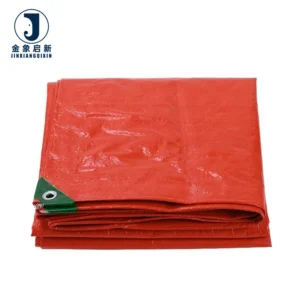
China JINGXIANG PE Coated Waterproof Blackout Truck & Trailer Cover Tarpaulin for Boys & Girls
¥0.35 Select options This product has multiple variants. The options may be chosen on the product page -
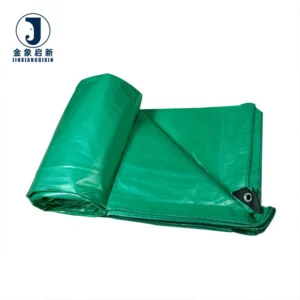
Heavy Duty Organic Breathable PVC Coated Weft Tarpaulin 400gsm Waterproof UV Resistant for Trucks Buildings Agriculture Boys
¥0.87 Select options This product has multiple variants. The options may be chosen on the product page