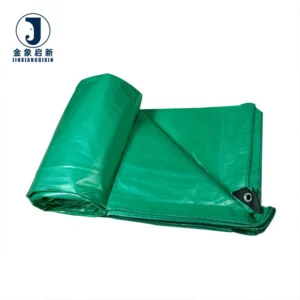
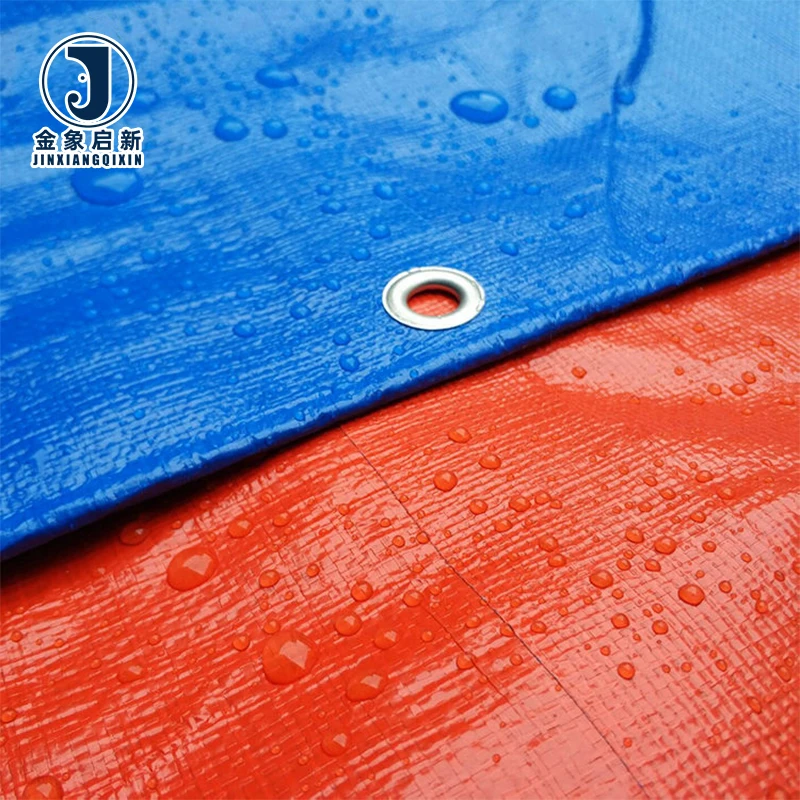
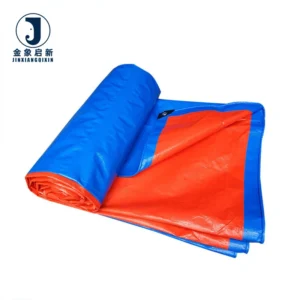
PE Tarpaulin 100-300gsm for Activity Ponds — HDPE woven with LDPE double-side lamination, available in multiple weave densities from 6×6 to 14×16, UV and anti-aging treated.
- Engineered for pond lining and agricultural covers where GSM accuracy and roll-to-roll colour consistency matter; weave count and lamination weight are matched to target GSM for transparent specification across cut sizes and roll stock.
- Backed by dedicated QA/QC at every production stage with 100% pre-shipment inspection, full documentation including test reports, and sample development within days for custom sizing or colour requirements.
Description
Coating Weight Control — In-house production lines and dedicated QA ensure every PE tarpaulin roll and finished sheet ships with documented weight verification matching the quoted GSM.
Technical Specifications
| Parameter | Value |
|---|---|
| Product Type | PE Tarpaulin Roll / Finished PE Tarpaulin |
| Material | HDPE weaving with LDPE lamination on both sides |
| Weight Range | 100 g/m² – 300 g/m² |
| Total Thickness | 0.2–0.4 mm (8–16 mil) |
| Mesh Count Options | 6×6, 6×7, 7×7, 7×8, 8×8, 9×9, 8×10, 10×10, 12×12, 14×14, 14×16 |
| Roll Width Options | 6 ft, 8 ft, 10 ft, 12 ft / 2 m, 4 m, 6 m |
| Roll Length Options | 100 yards, 100 meters, or custom |
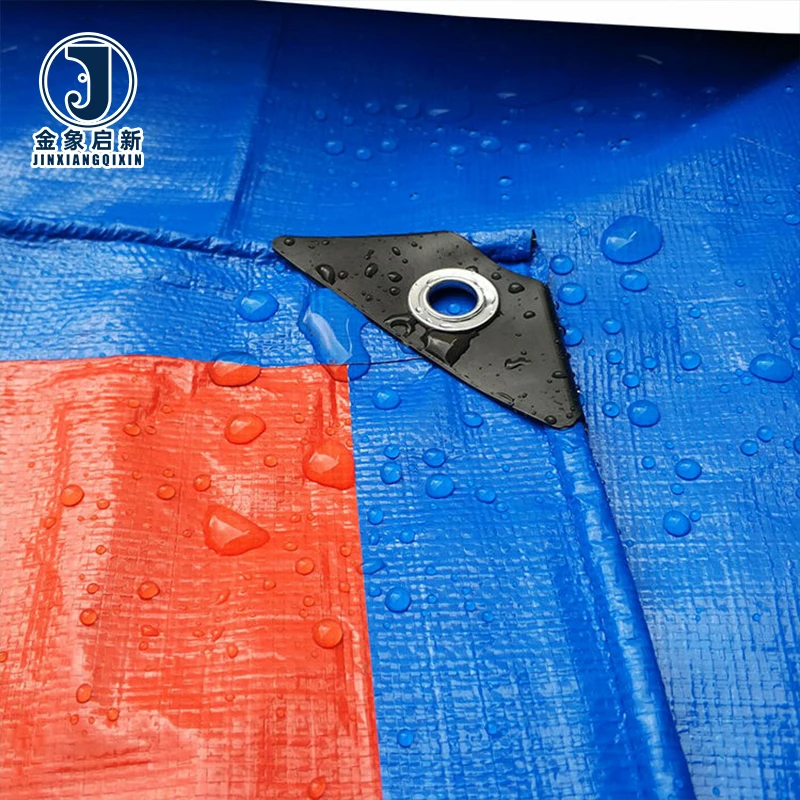
| Colour Options | Blue, Blue/Orange, Green, Grey, Black, Clear, Grey/Green, Orange, or custom |
| Finish | Laminated both sides |
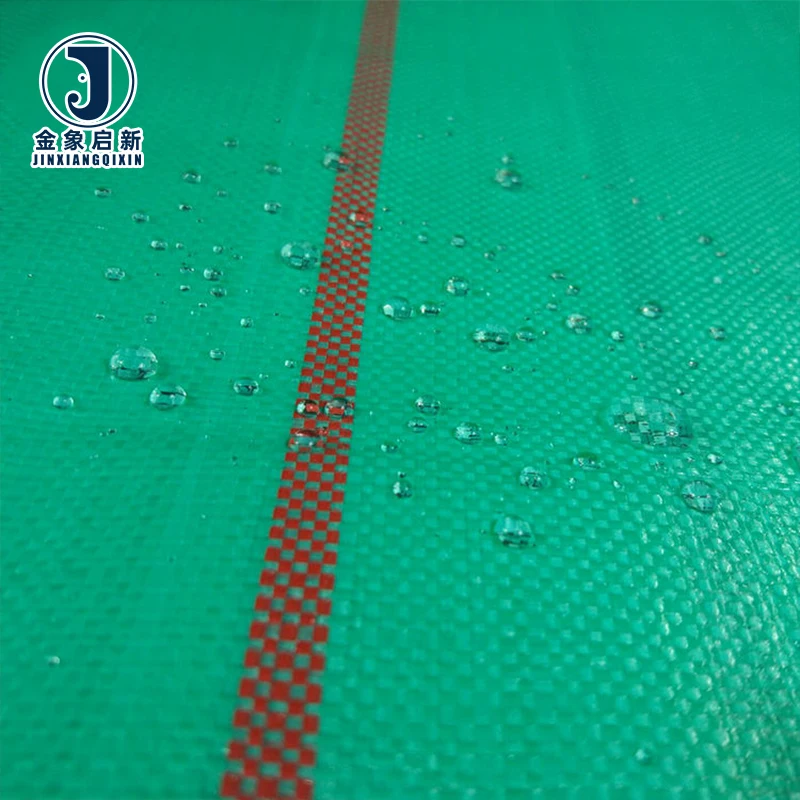
| Waterproof | Yes |
| UV Treatment | Available (test basis not stated — confirm standard for your market) |
| Mildew & Anti-Aging | Yes |
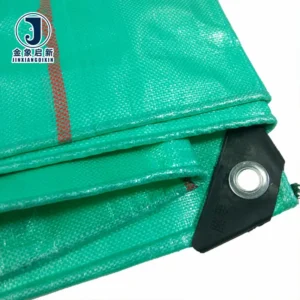
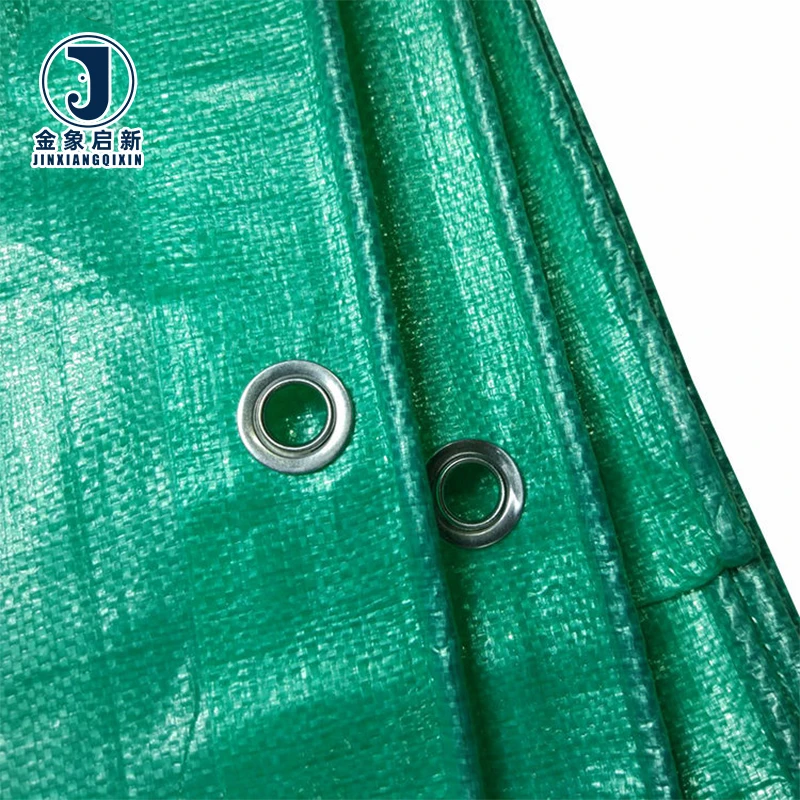
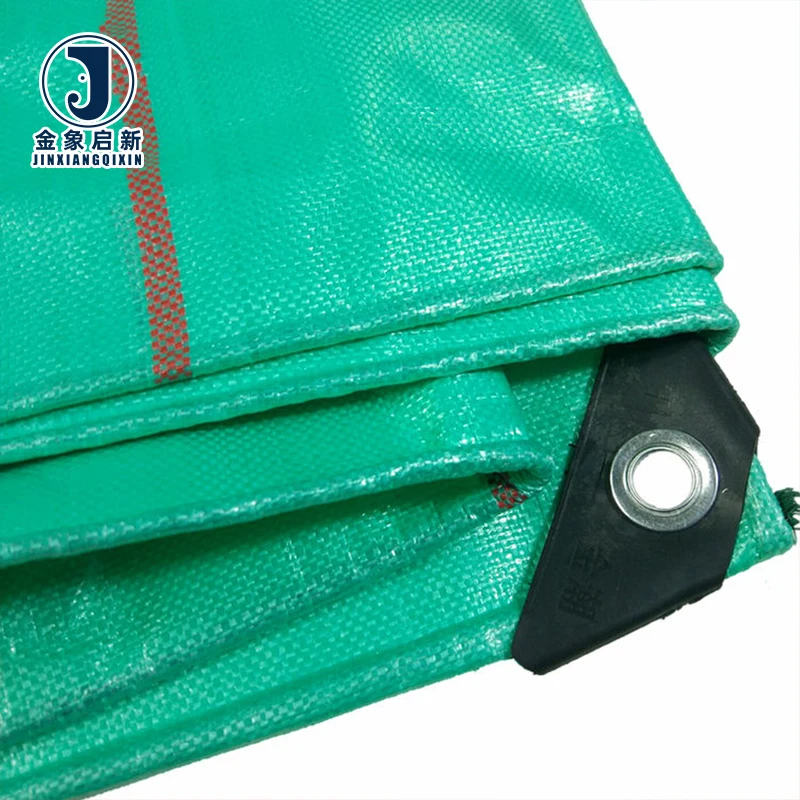
| Edge Reinforcement | PP rope in hem on all four edges (finished sheets) |
| Eyelet Interval | Galvanized eyelets every 3 ft or 1 m |
| Corner Reinforcement | Reinforced plastic corners |
| Printing | Custom printing accepted |
| Certifications | ISO, CE |
Application Suitability
| Application | Exposure & Requirement |
|---|---|
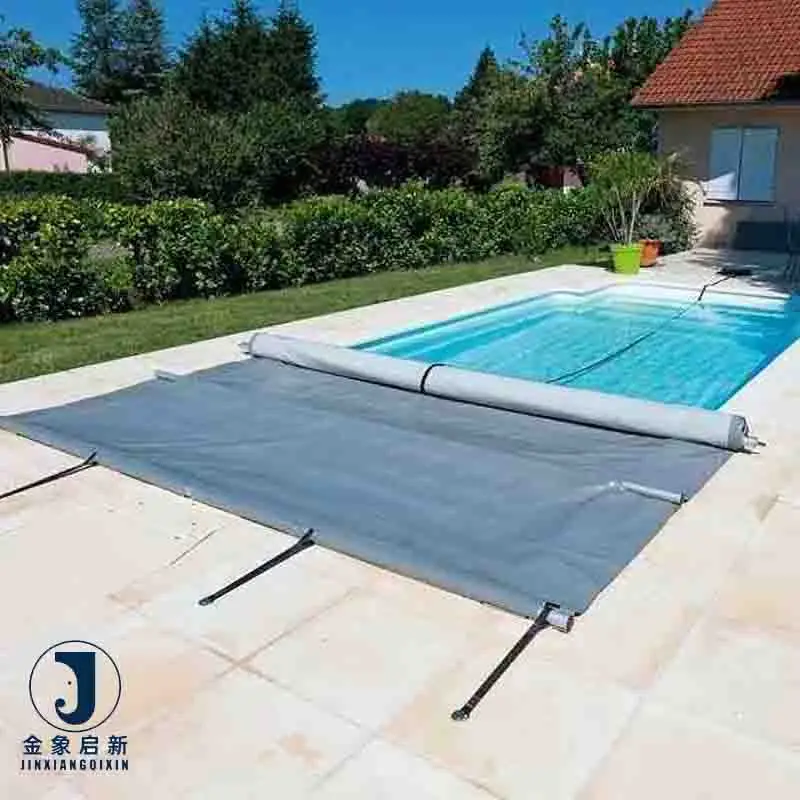
| Activity ponds and aquaculture lining | Permanent water contact, soil chemistry, puncture risk from substrate |
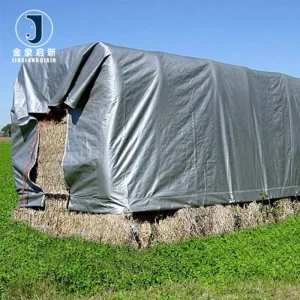
| Agricultural covers for hay, timber and crops | UV exposure, moisture ingress, wind uplift on large span |
| Construction scaffolding wraps and site sheets | Abrasion against scaffolding tubes, rain, dust containment |
| Truck and container covers | Road debris impact, flexing at tie-down points, weather |
| Garden furniture and gazebo canopies | UV fading, mildew in humid conditions, repeated folding |
Why Stated GSM Does Not Guarantee Pond Liner Durability
A 200 g/m² PE tarpaulin can outperform a 250 g/m² sheet if the weave density and lamination adhesion are engineered for water containment.
When sourcing PE tarpaulin for activity ponds, buyers often focus on the quoted weight as the primary strength indicator. Yet weight alone tells you nothing about the bond between the HDPE woven base and the LDPE lamination. A sheet with poor adhesion will delaminate under hydrostatic pressure long before the base fabric reaches its tensile limit [NEED_CITE: peel strength test methods for laminated fabrics per ISO 2411]. Manufacturers that control coating weight and weave count on their own lines can hold tighter GSM tolerances, reducing the gap between the quotation and the material that arrives on site.
Matching Mesh Count to Pond and Cover Loads
The HDPE woven base is available in 11 mesh count options from 6×6 to 14×16. Lower counts such as 6×6 or 7×7 suit temporary covers and light-duty wrapping where cost efficiency matters. Higher counts like 12×12 or 14×16 concentrate more yarn per square centimetre, raising both tensile and tear resistance for activity ponds where the liner must resist puncture from stones and root penetration. Selecting the correct PE tarpaulin grade means pairing the mesh count with the expected mechanical stress rather than defaulting to the heaviest option.
Lamination Adhesion and Long-Term Water Exposure
Both sides of the HDPE woven base receive LDPE lamination through a controlled heat process. For activity ponds, the critical factor is how well the lamination bonds to the woven substrate. Weak adhesion leads to blistering and eventual delamination when the liner sits under continuous water pressure. Our production lines maintain consistent temperature and pressure across the laminating nip, and in-process QA checks adhesion at intervals during each run [NEED_CITE: coating adhesion and peel testing for laminated polyethylene fabrics].
Reading the Spec Sheet Beyond the Weight Number
Thickness at 0.2–0.4 mm correlates with the combined mass of base fabric and lamination, but it is the mesh count and yarn denier that govern tear propagation. A 200 g/m² sheet woven at 10×10 will resist tear spread differently than a 200 g/m² sheet at 8×8 with heavier individual yarns. The lamination finish also matters: a smoother surface sheds sediment and algae more readily in pond applications, while a slightly textured surface can improve grip during installation on scaffolding. Colour options from blue to black allow specifiers to choose a liner that blends with natural surroundings or signals a specific containment zone on a construction site.
The Hidden Cost of Specifying by Weight Alone
Ordering a PE tarpaulin by GSM without confirming mesh count and lamination adhesion often leads to field failures that appear unrelated to material quality. Pond liners that delaminate after one season, scaffold wraps that tear at the eyelet under wind load, and truck covers that crack along the fold line are symptoms of a specification that ignored weave density and bonding strength [NEED_CITE: common failure modes in laminated tarpaulin field use]. Batch-to-batch colour variation is another consequence of loose process control, visible when adjacent panels are installed on the same structure.
Why Procurement Teams Source PE Tarpaulin Here
Our three full production lines and 36 sets of professional equipment handle roll stock and finished cut sizes under one roof, eliminating handoff delays between weaving and lamination. A 10-person R&D team develops custom colour and printing samples within days, so distributors can confirm visual consistency before committing to a full container. Dedicated QA/QC at every stage means each roll is weighed and measured against the order specification, and the inspection record travels with the shipment. Export documentation, including certificate of origin, is prepared in-house for buyers shipping to regulated markets.
Documentation & Verification
- Material specification sheet listing confirmed GSM, mesh count, and colour reference per roll
- Pre-shipment inspection record with weight verification against the quoted specification
- UV treatment test report provided where applicable — confirm the test standard required
- Roll packing list with lot numbers for batch traceability
- Certificate of origin and customs documentation for export clearance
Fabrication, Handling & Storage
- Heat-seal laminated PE sheets at moderate temperature to avoid melting through the LDPE coating layer
- Space galvanized eyelets at 1 m intervals to distribute tie-down load across the 100–300 g/m² fabric
- Store rolls upright on hard paper tubes to prevent flat spots and permanent creasing on the lamination
- Unfold finished sheets at ambient temperature; cold-stiffened LDPE can crack if forced open below freezing
- Clean pond liners with mild detergent; avoid solvents that attack the LDPE lamination surface
- Cut panels with a sharp blade on a flat surface to prevent fraying the HDPE woven base yarns
Requesting a Quote That Matches Your Project
Tell us the intended application, whether you need roll stock or finished cut-to-size sheets, and the exposure conditions the fabric will face. Specify the mesh count or GSM range you have used previously, the required roll width, and any custom colour or printed branding. For pond liners, provide the dimensions and whether reinforced corners and eyelet spacing are needed for anchor points.
Frequently Asked Questions
Q: How do you verify GSM matches the quotation before shipment?
A: Every roll and finished PE tarpaulin sheet is weighed during our 100% pre-shipment inspection. The recorded GSM is logged against the order specification, and the inspection report ships with the consignment. If any roll falls outside the agreed tolerance, it is held and reworked before dispatch.
Q: Can I get a test report for UV or anti-aging treatment?
A: UV treatment is available across the PE tarpaulin range. The test basis varies by grade, so confirm the standard your market or project requires — such as accelerated weathering per ISO 4892 — and our team will supply the corresponding report with your sample or shipment.
Q: What is the minimum order for a custom colour or printed tarpaulin?
A: Custom colours and printed branding are subject to a minimum that depends on roll width and print complexity. Our R&D team produces a sample within days so you can approve colour accuracy and print registration before the production run is scheduled.
Q: How do you control colour consistency across multiple rolls in one order?
A: Pigment batching and lamination temperature are monitored at every production stage. Rolls within the same order are grouped from a single coating run where possible, and visual checks under controlled lighting are recorded in the pre-shipment inspection to catch variation before packing.
Q: What edge and eyelet options are available for finished cut sizes?
A: Finished PE tarpaulin sheets come with PP rope reinforcement in the hem on all four edges, galvanized eyelets spaced at 3 ft or 1 m intervals, and reinforced plastic corners. Custom eyelet spacing and additional reinforcement at high-load points can be specified to match your installation method.
Related products
-
Custom Made PE Tarpaulin with Eyelets – Waterproof Tear-Resistant
Read more -
Hot Selling Heavy Duty PVC Coated Tarpaulin Covers Waterproof Plastic for Truck Tent Outdoor
¥3.10 Select options This product has multiple variants. The options may be chosen on the product page -
Woven Coated Plain Anti-UV Waterproof PE Tarpaulin Roll Customized for Car Outdoor Tent Awning Truck & Industrial Cover
¥0.29 Select options This product has multiple variants. The options may be chosen on the product page -
France Hot Sales Blue Color Polyethylene PE Tarpaulin Waterproof Sheet for Truck Canopy and Outdoor Awning
¥0.66 Select options This product has multiple variants. The options may be chosen on the product page