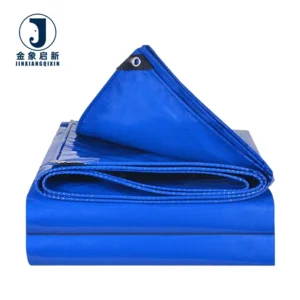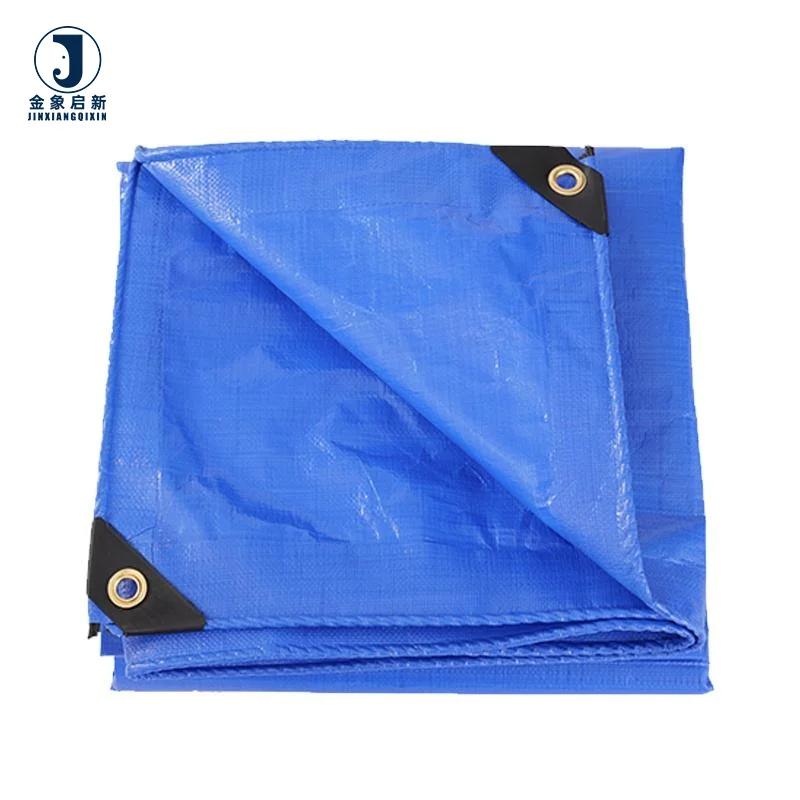
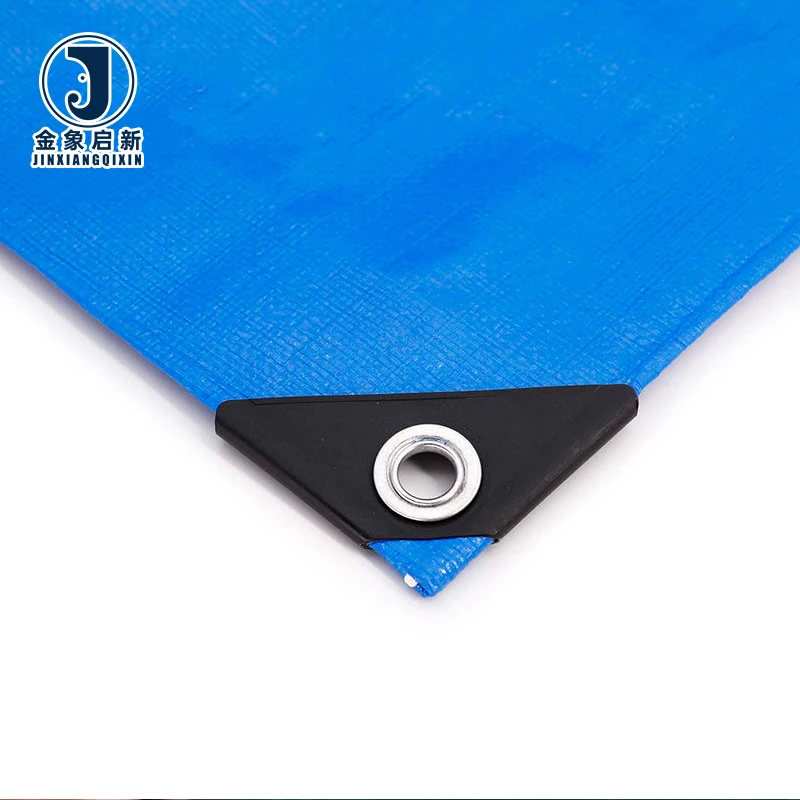
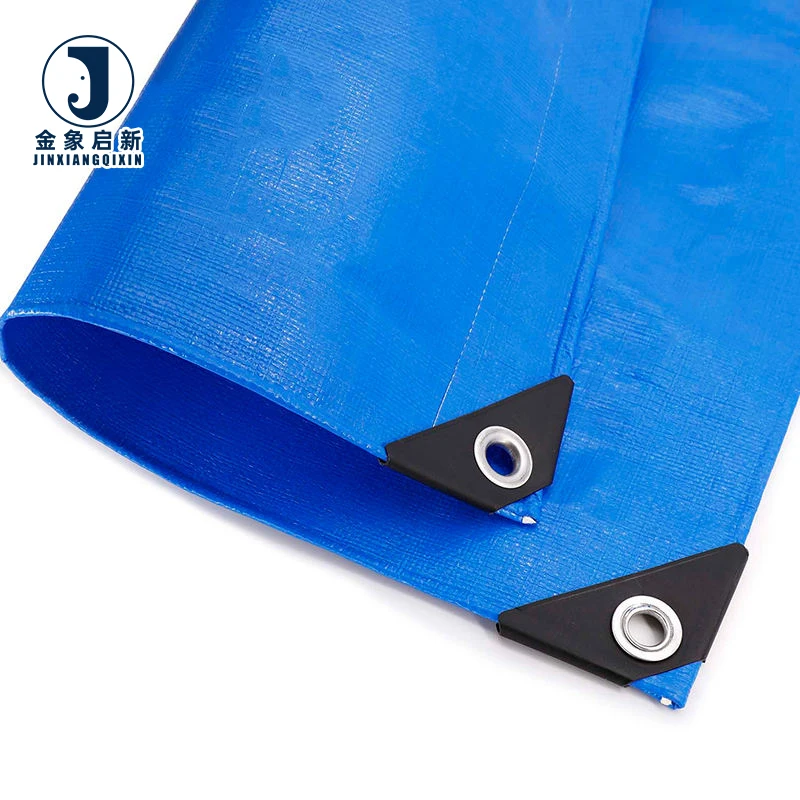
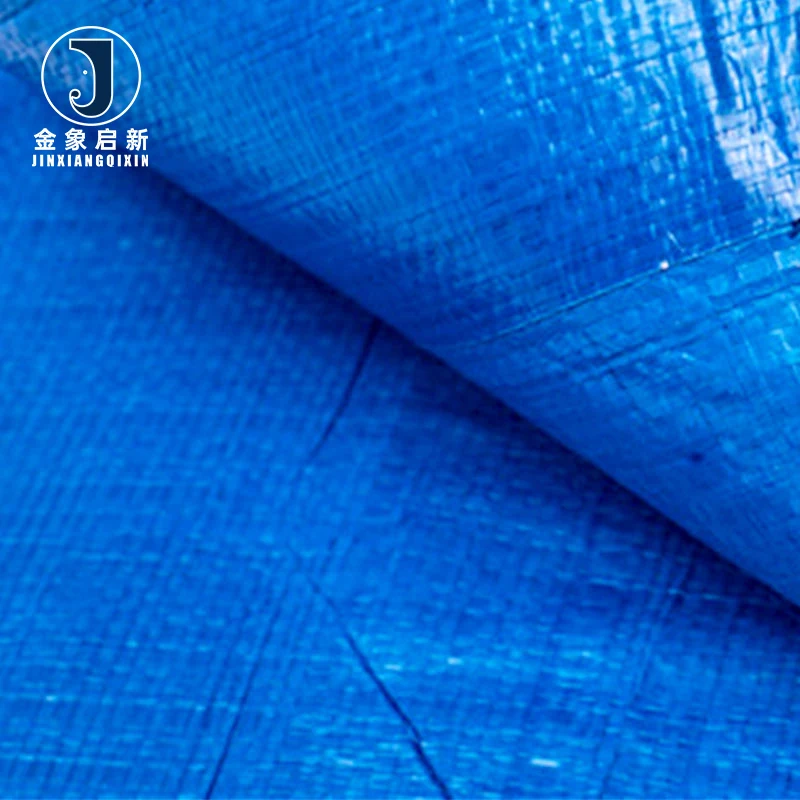
Waterproof PE Tarpaulin for Construction Transportation — HDPE woven with LDPE lamination, 50-220 g/m² GSM range, 8×8 to 12×12 knitting density, galvanized eyelets every 3ft with PP rope hem reinforcement.
- Complete PE tarpaulin range from lightweight to heavy-duty grades, with full customization on width, length, colour and printing for construction covers and transport loads.
- GSM and base fabric density together determine tensile and tear performance; UV treatment available where specified with test documentation.
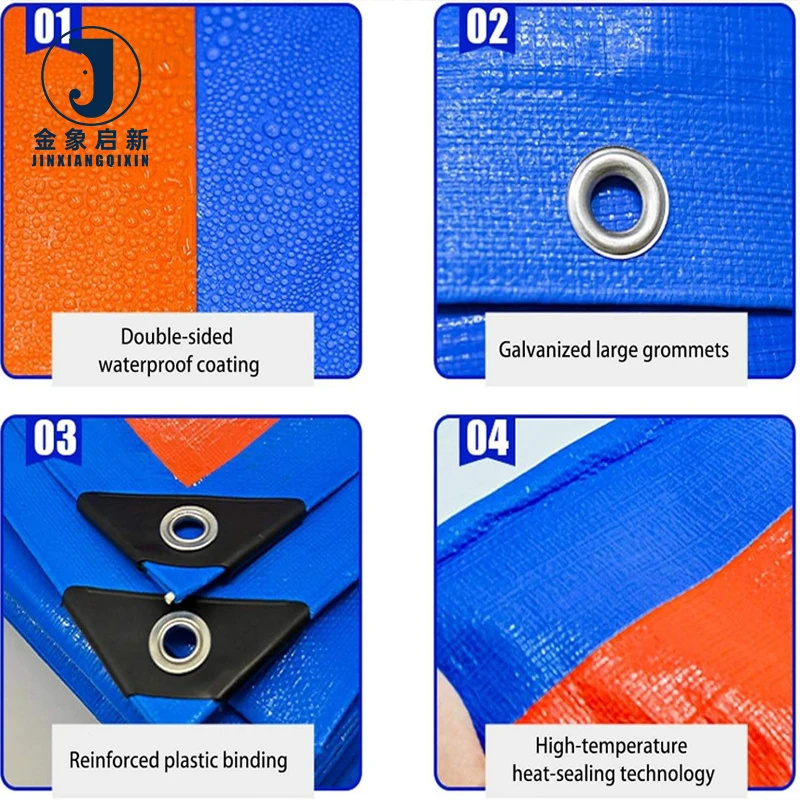
- PP rope reinforced on all four edges and galvanized eyelets distribute tie-down forces evenly at stress points.
Backed by 100% pre-shipment inspection, dedicated QA at every production stage, and samples developed within days for custom sizing and print requirements.
Description
[Full Range Customisation] — every PE tarpaulin roll or finished cover is produced in-house from HDPE weaving through to LDPE lamination, cutting, hemming and printing, so the specification you approve is the exact product dispatched.
Technical Specifications
| Parameter | Value |
|---|---|
| Product Type | PE Tarpaulin |
| Material | HDPE weaving with LDPE lamination on both sides |
| Weight (GSM) | 50 g/m² – 220 g/m² (confirm grade required for your application) |
| Total Thickness | 0.18 mm – 0.35 mm (varies by grade) |
| Thickness Option | 0.2–0.4 mm / 8 mil–16 mil / Custom |
| Knitting Density | 8×8 (lightweight), 10×10 (medium), 12×12 (heavy-duty) |
| Tensile Strength (N/5 cm) | Meridian 300–1200 / Latitude 250–1000 (varies by grade, test basis not stated in source) |
| Roll Width | 6 ft, 8 ft, 10 ft, 12 ft or 2 m, 4 m, 6 m |
| Roll Length | 100 yards, 100 meters, or custom |
| Finished Sizes | 2×2 m, 3×3 m, 3×5 m, 4×4 m, 4×5 m, 4×6 m, 4×8 m, 4×10 m, 5×5 m, 5×6 m, 5×8 m, 5×10 m, 6×6 m, 6×8 m, 6×10 m, 8×10 m and imperial equivalents |
| Edge Reinforcement | PP rope in hem on all four edges |
| Eyelets | Galvanised, every 3 ft or 1 m interval |
| Corner Reinforcement | Reinforced plastic corners |
| Colour | Blue, Blue/Orange, Green, Grey, Black, Clear, Grey/Green, Orange, or custom |
| UV Treatment | Available (confirm test standard required for your market) |
| Flame Retardant | Available in flame retardant grades — confirm the grade required for your market |
| Printing | Custom brand printing available |
| Key Features | Waterproof, washable, tear resistant, weather proof, mildew proof, anti-aging |
Application Suitability
| Application | Exposure & Requirement |
|---|---|
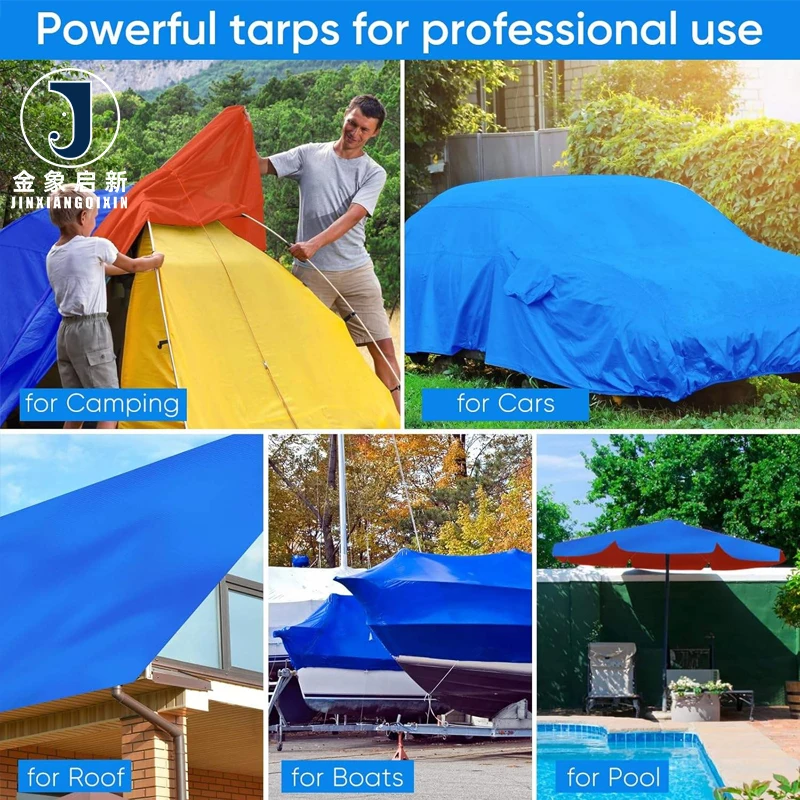
| Construction site covers | Constant weather exposure, wind load on eyelets, abrasion from stacked materials, frequent repositioning |
| Truck and trailer load covers | Road vibration, UV exposure, tie-down tension at eyelets, flexing at load contours |
| Agricultural stock and pond covers | Prolonged sunlight, contact with soil and moisture, resistance to mildew and chemical leaching |
| Warehouse temporary roofing | Overhead water load, wind uplift stress on reinforced hems, long-term UV exposure |
| Industrial equipment covers | Dust and moisture ingress prevention, repeated handling and folding, resistance to surface abrasion |
Why the Same GSM from Two PE Tarpaulin Suppliers Arrives at Completely Different Strengths
GSM measures weight, not structural integrity — knitting density and base fabric denier define how that weight translates into usable tensile and tear performance.
A buyer who specifies 120 GSM from two different sources often receives fabric with different knitting densities, meaning the yarn count per square inch is not the same. One roll may use a tighter 10×10 weave while another uses a looser 8×8, and the lighter base fabric simply has more coating applied to hit the target weight. The result is a PE tarpaulin that weighs the same on the scale but tears more easily under tie-down tension [NEED_CITE: relationship between knitting density and tear propagation in woven PE fabrics]. This is why pre-shipment weight verification must be paired with visual weave inspection, not weight alone.
From Roll Stock to Finished Cover in One Production Flow
Sourcing PE tarpaulin as roll stock and then sending it to a separate workshop for cutting and finishing introduces handling delays, margin stacking, and quality handoff gaps. Our production model covers the full chain: weaving the HDPE base, laminating both sides with LDPE, cutting to finished size, heat-sealing hems with PP rope insertion, punching galvanised eyelets, and applying reinforced plastic corners — all within one facility. This eliminates the colour mismatch risk that occurs when roll stock and conversion happen at different sites.
Colour Matching and Batch Consistency Across Large Orders
When a logistics fleet orders multiple PE tarpaulin covers for identical trailers, visible colour variation between rolls becomes a branding problem the moment the covers are installed side by side. We control colour at the compounding stage before lamination, matching to your reference and holding that formulation across the entire production run. Batch consistency is verified during the in-process QA stage, not after the container is loaded [NEED_CITE: colour consistency standards for batch-dyed PE lamination]. Custom colours are developed through our in-house R&D team with samples produced for your approval before bulk runs begin.
How Knitting Density, Coating Weight and Thickness Interact on Site
The knitting density of a PE tarpaulin — whether 8×8, 10×10, or 12×12 — determines the base fabric’s contribution to tensile and tear strength. A higher mesh count means more yarn intersections per square inch, distributing load more evenly when a tie-down strap concentrates force at one point. The LDPE lamination on both sides fills the weave gaps and provides waterproof integrity, but it is the base fabric that resists tear propagation once a puncture occurs. Total thickness, ranging from 0.18 mm in lightweight grades to 0.35 mm in heavy-duty grades, reflects both the base fabric denier and the lamination weight combined. Selecting thickness without considering knitting density can lead to a tarpaulin that feels substantial in hand but lacks the structural yarn count to resist tearing under wind uplift on a construction site. Width options from 2 m to 6 m affect how many seams are needed when covering large areas — fewer seams mean fewer potential failure points during extended outdoor deployment.
The Hidden Cost of Under-Specifying Eyelet Reinforcement
A PE tarpaulin cover that tears at the eyelet on the first windy night is usually not a fabric failure — it is a reinforcement failure. When galvanized eyelets are punched without adequate corner reinforcement or hem rope, the load concentrates on the thin laminated edge and propagates a tear within hours [NEED_CITE: eyelet pull-through failure modes in tensioned tarpaulin covers]. The PP rope inserted in the hem on all four edges distributes the tie-down load along the full edge length rather than at individual puncture points. Reinforced plastic corners add a second load path at the four points where wind uplift concentrates most aggressively. Skipping any of these three elements — rope hem, galvanised eyelet, corner patch — to save on unit cost transfers the expense to the first replacement cycle.
What Backs the Specification You Approve
Three full production lines and professional equipment sets dedicated to PE tarpaulin weaving, lamination and finishing run concurrently, supporting bulk volume with maintained delivery schedules. A dedicated QA team inspects every roll before it enters the cutting stage and again before packing, catching GSM deviation, weave faults and colour drift before they reach your container. The in-house R&D team handles custom width, colour matching and brand printing without outsourcing to third-party converters. Samples for custom requirements are developed for buyer approval prior to bulk production. All output is manufactured under ISO and CE certified management systems.
Documentation & Verification
- Material specification sheet stating GSM, HDPE base fabric mesh count, and LDPE coating weight for each roll
- Pre-shipment inspection record confirming weight and visual quality per roll before dispatch
- Colour reference sheet matched to approved sample for batch consistency tracking
- Roll packing list with individual roll dimensions, weight and net/gross totals
- Certificate of origin and customs documentation support for destination market
- UV or flame retardant test report supplied when applicable treatment is specified
Fabrication, Handling & Storage
- Heat-seal at moderate temperature settings to avoid melting the LDPE lamination through the HDPE weave
- Punch eyelets through the PP rope hem to distribute load and prevent edge tear propagation
- Store rolls upright on a flat surface to avoid permanent creasing in the laminated surface
- Allow rolled PE tarpaulin to acclimatise before unrolling in cold conditions to reduce stiffness cracking
- Use mild detergent and soft brush for cleaning — avoid solvent-based cleaners that degrade LDPE lamination
- Plan cutting layout from full roll width to minimise offcut waste on custom finished sizes
Request a Specification Match for Your Application
Tell us the application environment, the exposure conditions you expect, and whether you need roll stock or finished cut-size covers. Provide your target GSM range, colour reference or Pantone code, and any brand printing artwork so we can develop a sample for your review. If your market requires UV or flame retardant certification, specify the standard you need so we can confirm grade availability and test documentation before production.
Frequently Asked Questions
Q: How is GSM verified on each roll before shipment?
A: Every roll is weighed individually during the pre-shipment inspection stage. The recorded weight is compared against the GSM stated on your material specification sheet, and any roll falling outside tolerance is held back. An inspection record with per-roll data accompanies the shipment so you can verify on arrival.
Q: What are the minimums for custom width or roll length?
A: Minimum order quantities depend on the custom parameter — width changes require loom setup, while roll length adjustments are more flexible. Share your required width and length, and we confirm the minimum and lead time for your specific combination before you commit.
Q: How do you ensure colour consistency across all rolls in one order?
A: Colour is controlled at the LDPE compounding stage before lamination. The approved sample colour is used as the reference for the entire production batch, and rolls are checked during in-process QA against that reference. This prevents the visible mismatch that occurs when different colour batches are mixed into one shipment.
Q: Can eyelet spacing and corner reinforcement be adjusted for finished covers?
A: Yes. Standard spacing is galvanised eyelets every 3 ft or 1 m with reinforced plastic corners at each corner. If your tie-down system requires different spacing or additional reinforcement points along the hem, specify the interval and we adjust the punching pattern accordingly.
Q: What is involved in custom brand printing on PE tarpaulin?
A: Provide your artwork in vector format with colour references. Our R&D team prepares a print sample on the same PE tarpaulin grade you are ordering so you can approve colour accuracy and adhesion before the full print run. Lead time includes the sample approval step.
Related products
-
Wholesale Organic Breathable PVC Waterproof Oilcloth Blackout Fabric Sun Protection Tarpaulin Outdoor Awning Industrial Tent
¥0.89 Select options This product has multiple variants. The options may be chosen on the product page -
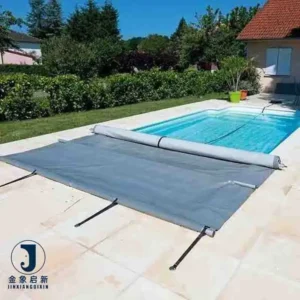
Waterproof PE Tarpaulin Fabric 100-300gsm Anti-Uv Outdoor Use for Boys & Girls Activity Ponds
¥0.31 Select options This product has multiple variants. The options may be chosen on the product page -
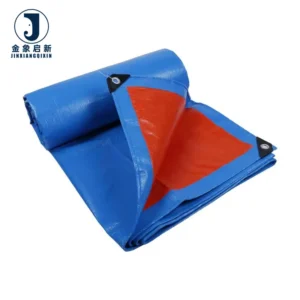
Woven Coated Plain Anti-UV Waterproof PE Tarpaulin Roll Customized for Car Outdoor Tent Awning Truck & Industrial Cover
¥0.29 Select options This product has multiple variants. The options may be chosen on the product page -
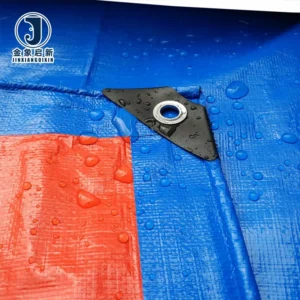
JX PE Woven Plain Resistance Tarpaulin Tent with Durable Waterproof Features for Outdoor Use
¥0.30 Select options This product has multiple variants. The options may be chosen on the product page