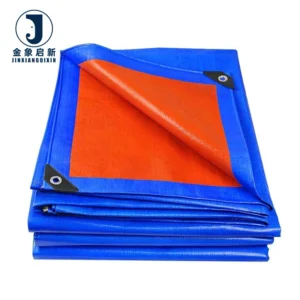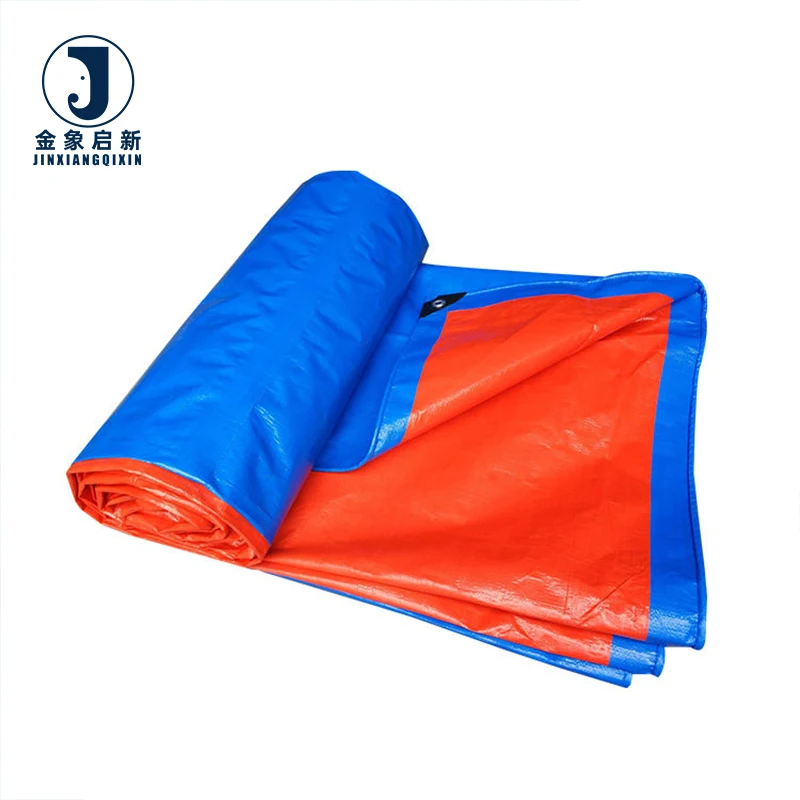
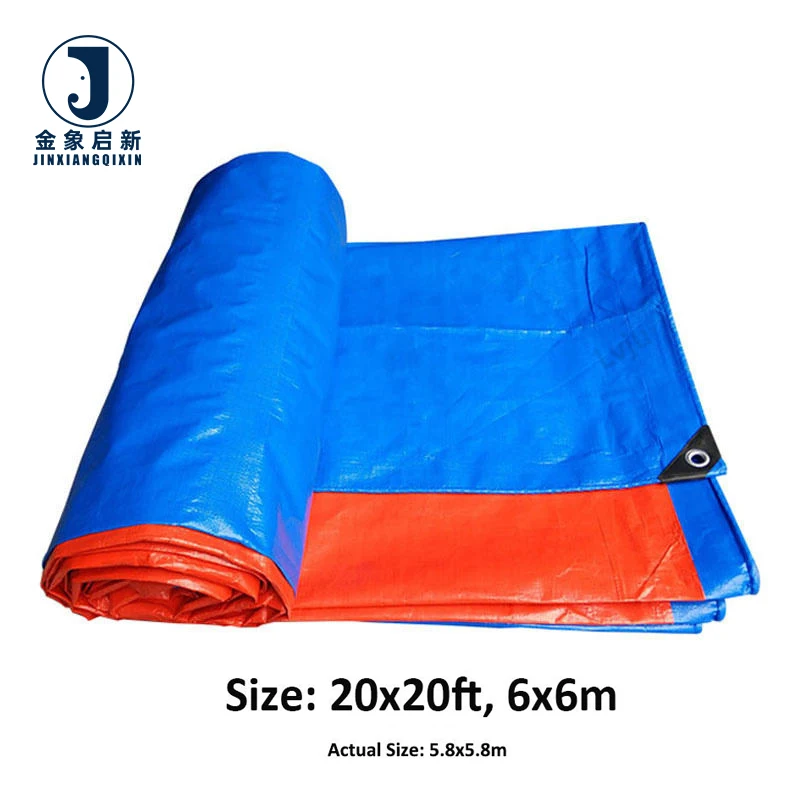
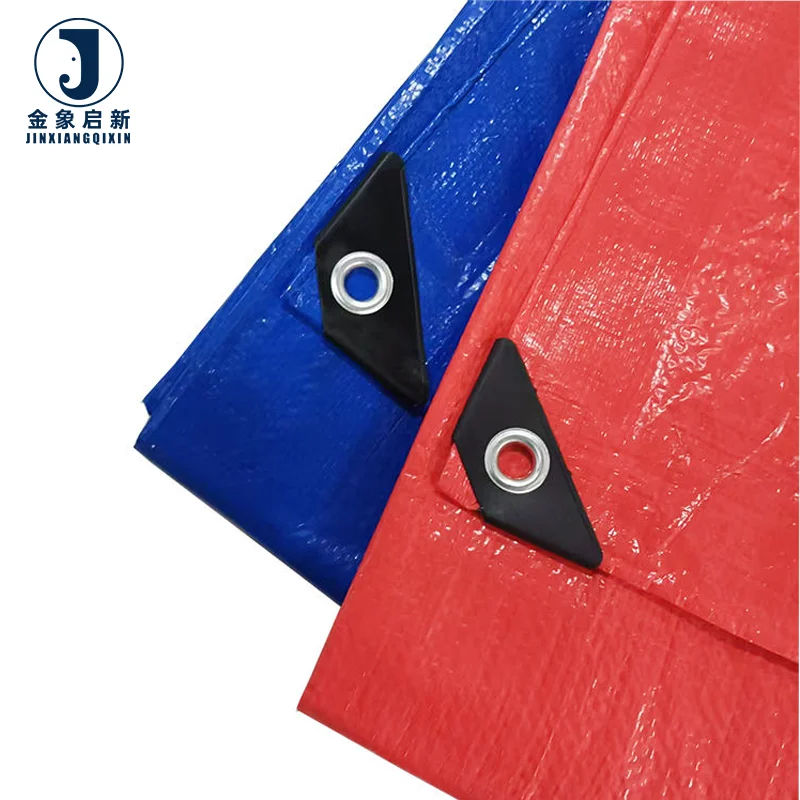
Polyethylene PE Tarpaulin — HDPE weaving with dual-side LDPE lamination, 50–300gsm range across 8 weave densities from 6×6 to 14×16, reinforced PP rope hems with galvanized eyelets at 1m intervals
- Waterproof, tear resistant and mildew proof for truck covers, construction wraps and agricultural use
- Roll widths from 2m to 6m, custom cut sizes with plastic-reinforced corners and colour matching per order
- Eight density-to-GSM mappings let you specify by tensile performance, not guesswork — one factory, one spec, consistent roll-to-roll
- Samples developed within days, 100% pre-shipment inspection, full dispatch documentation included
Description
Dedicated QA at Every Stage — every roll of this PE Tarpaulin is checked against its stated GSM, base fabric weave, and LDPE lamination weight before it leaves the production floor.
Technical Specifications
| Parameter | Value |
|---|---|
| Product Type | PE Tarpaulin |
| Material Construction | HDPE woven base with LDPE lamination on both sides |
| Weight Range (GSM) | 50 gr/m² ~ 220 gr/m² (confirm grade for your application) |
| Total Thickness | 0.2–0.4 mm / 8 mil–16 mil |
| Mesh Count Options | 6×6, 6×7, 7×7, 7×8, 8×8, 9×9, 8×10, 10×10, 12×12, 14×14, 14×16 |
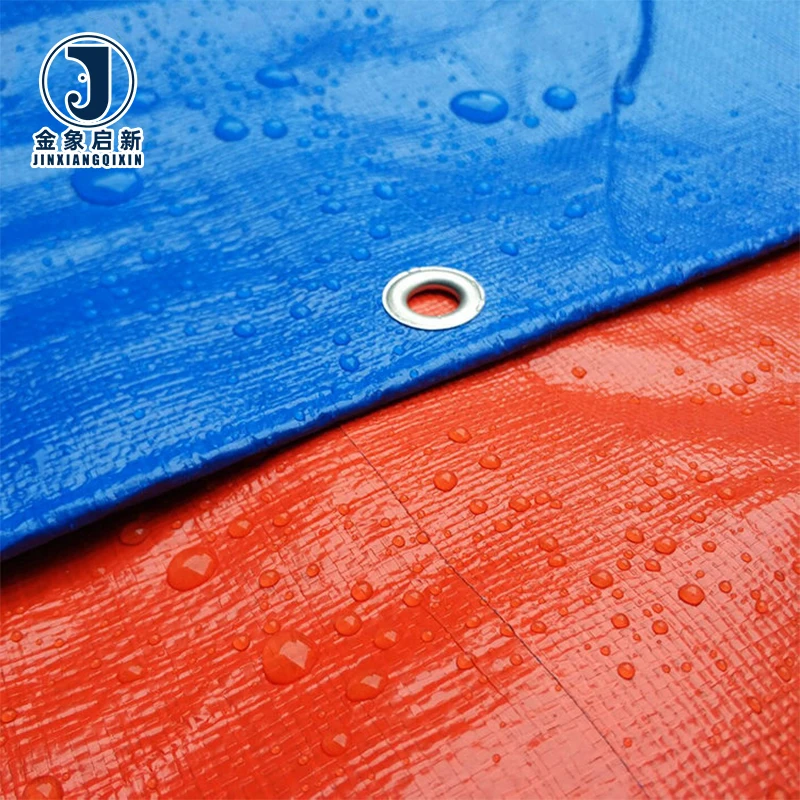
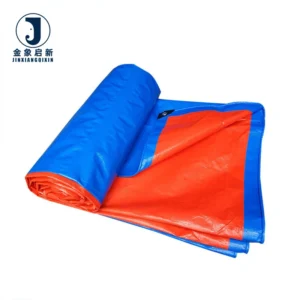
| Colour Options | Blue, Blue/Orange, Green, Grey, Black, Clear, Grey/Green, Orange, or custom |
| Roll Width Options | 6 ft, 8 ft, 10 ft, 12 ft, 2 m, 4 m, 6 m |
| Roll Length Options | 100 yards, 100 meters, or custom |
| Finished Edge Treatment | All four edges heat-sealed and reinforced with PP rope in hem |
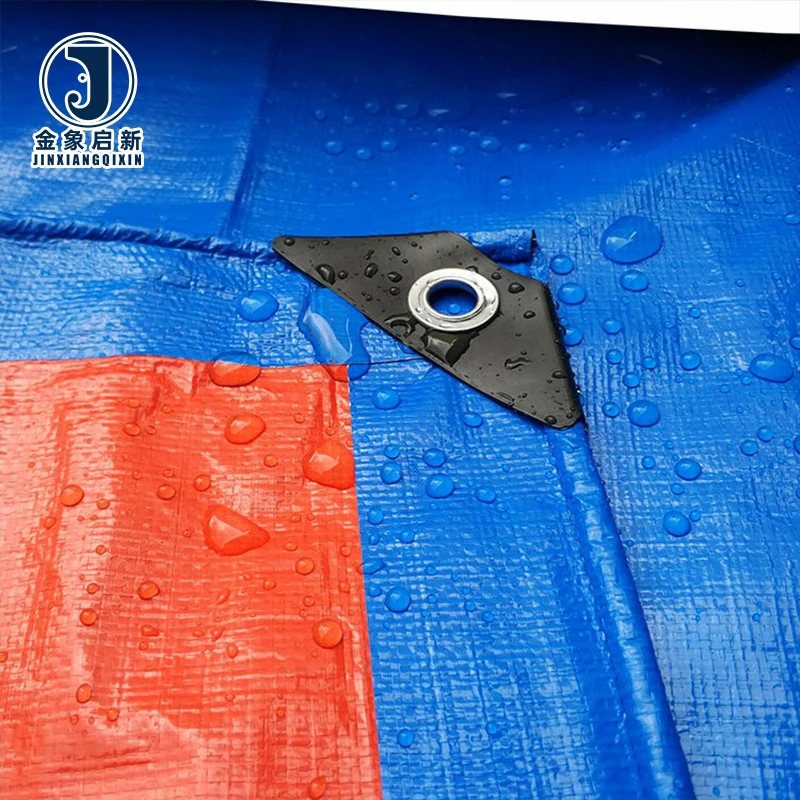
| Eyelet Spacing | Galvanized eyelets every 3 ft or 1 m interval |
| Corner Reinforcement | Reinforced plastic corners on finished tarpaulins |
| Waterproof | Fully waterproof LDPE-laminated construction |
| UV Treatment | Available — confirm UV test basis for your market |
| Mildew Resistance | Mildew proof |
| Anti-aging | Anti-aging treatment applied |
| Flame Retardant Grade | Not stated — confirm flame retardant grade required for your application |
| Certification | ISO and CE certified facility |
Application Suitability
| Application | Exposure & Requirement |
|---|---|
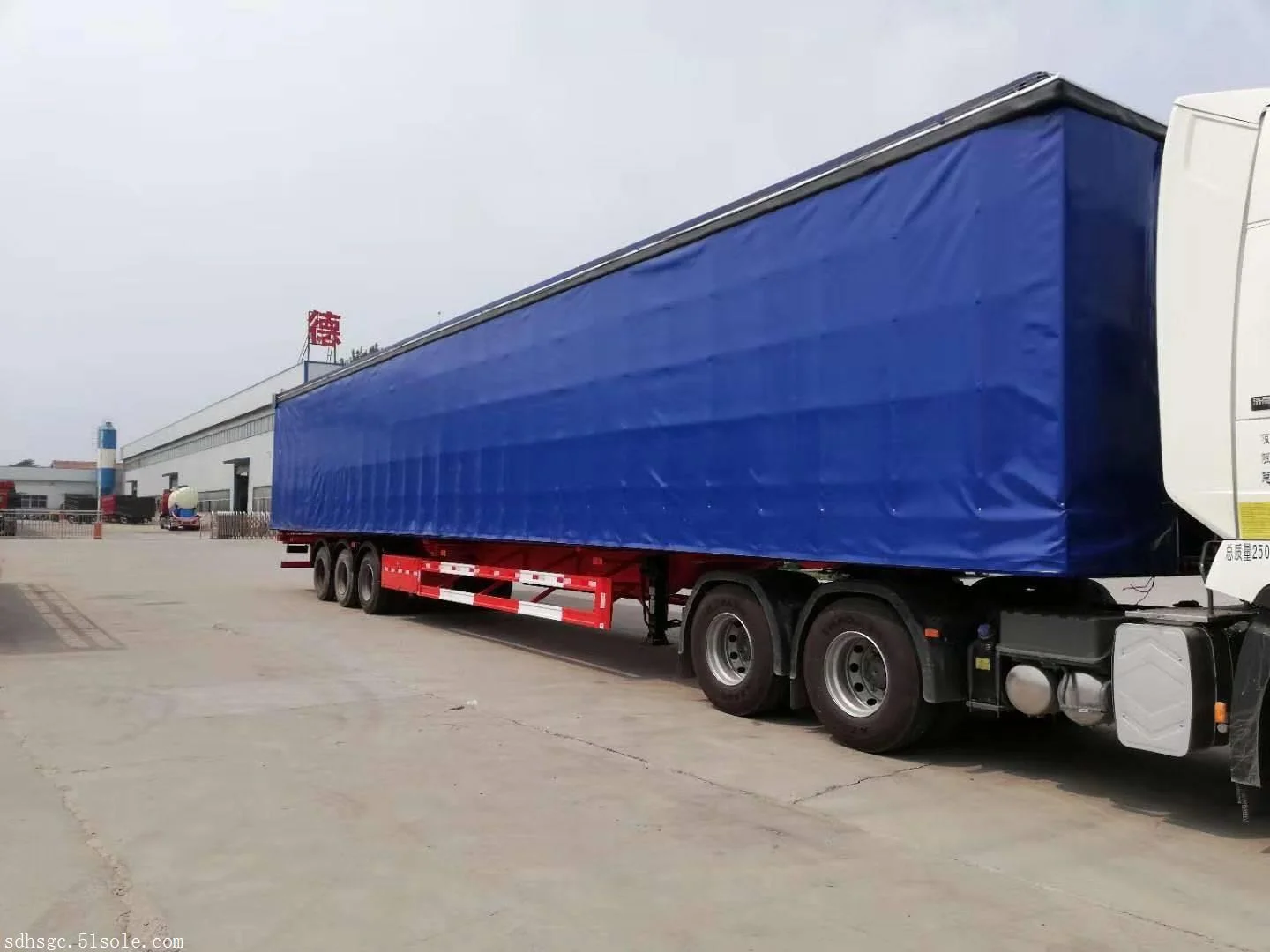
| Truck canopy and side curtain | Road abrasion, constant wind flap, UV exposure, tie-down stress at eyelets |
| Outdoor awning and gazebo cover | Sun exposure, rain pooling, repeated folding and unfolding |
| Construction scaffolding wrap | Wind load, scaffold tube abrasion, dust and debris containment |
| Timber, hay and crop cover | Moisture ingress, ground contact, UV degradation over storage periods |
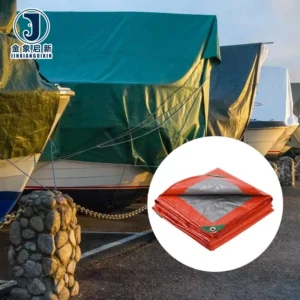
| Boat and container cover | Salt spray, standing water, rope friction at tie-down points |
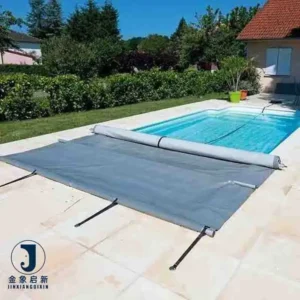
| Furniture and swimming pool cover | Chlorine or cleaning chemical contact, UV, seasonal folding |
Why the Quoted GSM Rarely Tells the Full Story for PE Tarpaulin Buyers
GSM without weave density is just a number on paper — what matters is how that weight is distributed across the warp and weft.
I have seen procurement teams accept a PE Tarpaulin manufacturer quotation at a specific GSM, only to find the delivered rolls feel noticeably lighter during installation. The issue is rarely outright fraud. More often, the GSM was measured on a small sample that included the thicker LDPE lamination at the edges, while the body of the roll ran below tolerance. When the base fabric is a loose 6×6 weave, even a heavy coating cannot compensate for the lack of tensile structure underneath. [NEED_CITE: tensile and tear test methods for coated fabrics per ISO 1421] This is why requesting a material specification sheet that documents both GSM and mesh count — not just one or the other — is essential before production begins.
How HDPE Weave and LDPE Lamination Work Together on PE Tarpaulin
The waterproof integrity of a PE Tarpaulin sheet depends on the interplay between the HDPE woven base and the LDPE laminated coating on both sides. The woven base provides dimensional stability and tear resistance, while the dual-side lamination seals the weave gaps that would otherwise allow water through. When sourcing custom PE Tarpaulin, specifying only the lamination thickness without considering the base denier and weave density leaves the mechanical performance of the fabric undefined.
Mesh Density as the Real Indicator of Load-Bearing Capability
A 6×6 weave at 55 gsm and a 10×10 weave at 110 gsm behave fundamentally differently under tie-down tension, even though both are technically "PE tarpaulin." The tighter weave distributes point loads from eyelets and rope hems across more yarns, reducing the chance of tear propagation at stress concentrations. [NEED_CITE: relationship between mesh count and tear propagation in woven polyethylene fabrics] For truck canopy applications where wind flap creates cyclic loading, a higher mesh count is typically more important than a thicker lamination layer alone.
Reading the GSM-to-Weave Relationship in This Product Range
This PE Tarpaulin range maps specific weave densities to GSM bands: a 6×6 or 6×7 weave corresponds to the 50–60 gsm range suited for lightweight temporary covers; an 8×8 or 9×9 weave sits at 80–90 gsm for general-purpose outdoor sheeting; a 12×12 weave reaches 120–150 gsm for applications requiring higher puncture and tear resistance. Rather than selecting by weight alone, buyers should identify the mechanical demand of their application and then choose the weave density that meets it — the GSM follows as a natural consequence. The LDPE lamination weight on each side should be verified separately, as two fabrics with identical GSM can carry very different lamination-to-base-fabric ratios.
The Hidden Cost of Specifying Colour Without a Locked Reference
When multiple rolls of PE tarpaulin arrive on site and are installed side by side on a large awning or scaffolding wrap, even a slight shade variation between rolls becomes immediately visible. This is not a cosmetic concern — it often signals inconsistency in the LDPE lamination compound or masterbatch ratio, which can correlate with variations in UV treatment concentration across the batch. [NEED_CITE: colour consistency standards for batch-dyed polyethylene laminated fabrics] Locking a Pantone or RAL reference per purchase order, and requiring a pre-shipment inspection record that confirms roll-to-roll shade match, prevents costly on-site rejection and rework.
What Consistent Supply Chain Control Means for This Fabric
Sourcing from a single PE Tarpaulin manufacturer with integrated weaving, lamination, and finishing under one roof eliminates the variability that comes from buying base fabric from one supplier and coating from another. Here, the 10-person R&D team handles material selection and sample development before production starts, so custom widths, colours, and eyelet spacing are confirmed on a physical sample — not assumed from a catalogue line. Every roll passes through dedicated QA/QC at each production stage, and a 100 percent pre-shipment inspection verifies GSM, colour, and edge finishing against the purchase order before dispatch. The three full production lines and 36 sets of professional equipment support bulk volume without sacrificing the batch consistency that repeat orders require.
Documentation & Verification
- Material specification sheet stating exact GSM, HDPE weave density, and LDPE lamination weight per roll
- Pre-shipment inspection record confirming roll-to-roll colour consistency and dimensional compliance
- UV treatment test report supplied with batch where UV-treated grades are ordered
- Roll packing list with certificate of origin and customs documentation for export shipments
- ISO and CE certificates available for facility and production compliance verification
Fabrication, Handling & Storage
- Heat-seal seams at temperatures compatible with LDPE lamination to avoid delamination at stress points
- Install galvanized eyelets with reinforced plastic corners to distribute tie-down loads on finished sheets
- Store rolls upright on a flat pallet to prevent permanent creasing in the HDPE woven base
- Avoid dragging finished tarpaulins across abrasive surfaces that can cut through the LDPE coating layer
- Clean with mild detergent only — solvent-based cleaners can degrade the LDPE lamination surface
- Unfold in moderate temperatures to prevent stiffness-related cracking in cold-weather conditions
What to Include in Your Enquiry
To receive an accurate specification and sample, share the application environment including exposure to sun, wind, or chemical contact, the required roll width and whether you need finished cut sizes with eyelets or rolls only, and your target colour reference or branding requirements. If your market mandates a specific UV performance or flame retardant grade, state the standard so we can confirm feasibility before sampling.
Frequently Asked Questions
Q: How do you verify GSM on arrival matches the quotation, and what happens if it does not?
A: Each roll is checked during 100 percent pre-shipment inspection against the GSM stated on the material specification sheet. If a discrepancy is found before dispatch, the roll is held and corrected. Buyers receive a pre-shipment inspection record with the actual measured values, providing documentary evidence that the delivered product matches the order.
Q: What is the test basis for your anti-UV claim, and can you supply a report with each batch?
A: UV treatment is available across the PE Tarpaulin range, but the specific test basis must be confirmed for your market requirement. When UV-treated grades are ordered, a test report documenting the exposure method and result is supplied with the batch. State your target standard at enquiry stage so the correct treatment level is applied.
Q: How do you control colour variation between rolls in the same order?
A: A colour reference is locked per purchase order before production. The LDPE lamination masterbatch is mixed to that reference, and roll-to-roll shade consistency is verified during pre-shipment inspection. This prevents visible colour shifts when multiple rolls are installed side by side on awnings or scaffolding wraps.
Q: What are the minimum order quantities for custom width, colour, or printed branding?
A: Minimums vary by the specific customisation requested — custom widths, non-standard colours, and printed branding each have different production thresholds. Provide your required dimensions, colour reference, and annual volume at enquiry stage, and the minimum for your configuration will be confirmed with the quotation and sample.
Related products
-
Sunshade Awning Waterproof Cloth. 7X8 Waterproof Polyurethane Waterproof Cloth – Multi-purpose Cover Water tank Waterproof Cloth
¥0.18 Select options This product has multiple variants. The options may be chosen on the product page -
China JINGXIANG PE Coated Waterproof Blackout Truck & Trailer Cover Tarpaulin for Boys & Girls
¥0.35 Select options This product has multiple variants. The options may be chosen on the product page -
Custom PE Tarpaulin for Industrial Use – Full Range
Read more -
Custom Made PE Tarpaulin with Eyelets – Waterproof Tear-Resistant
Read more