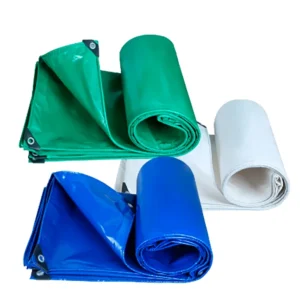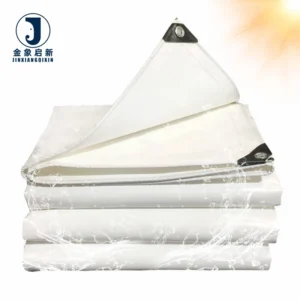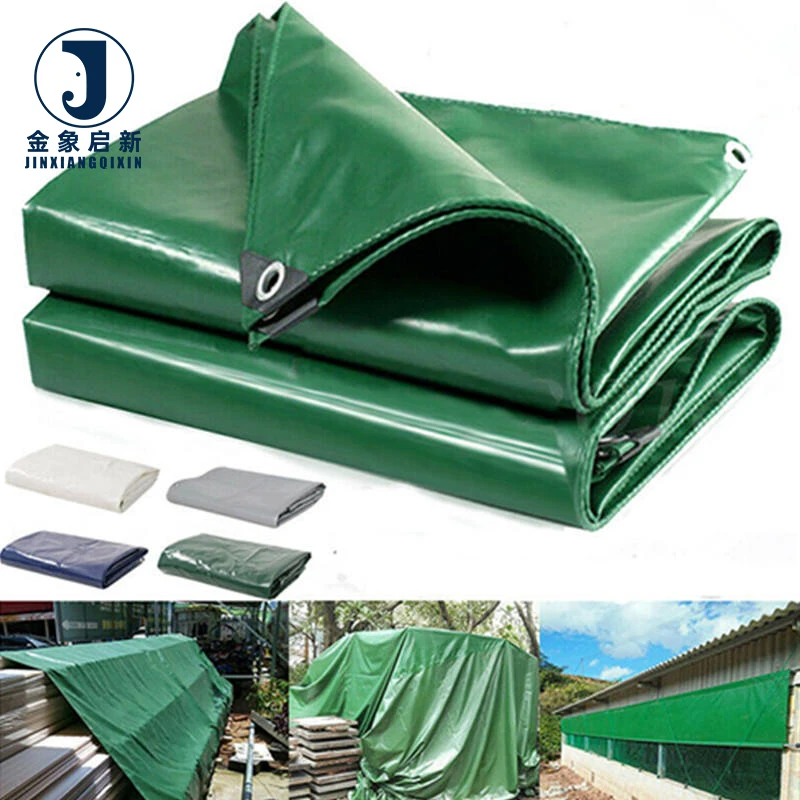
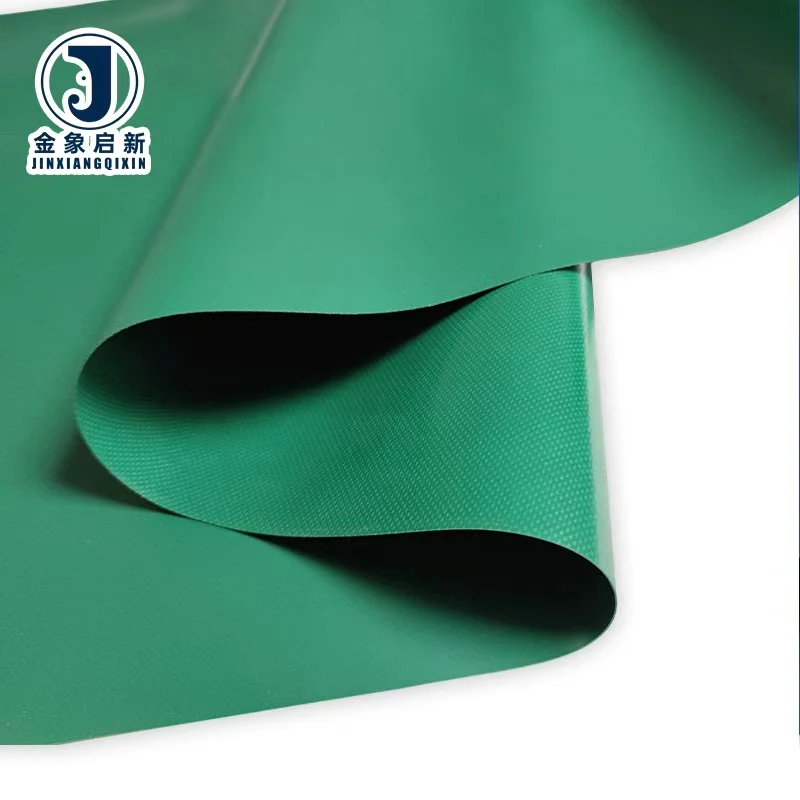
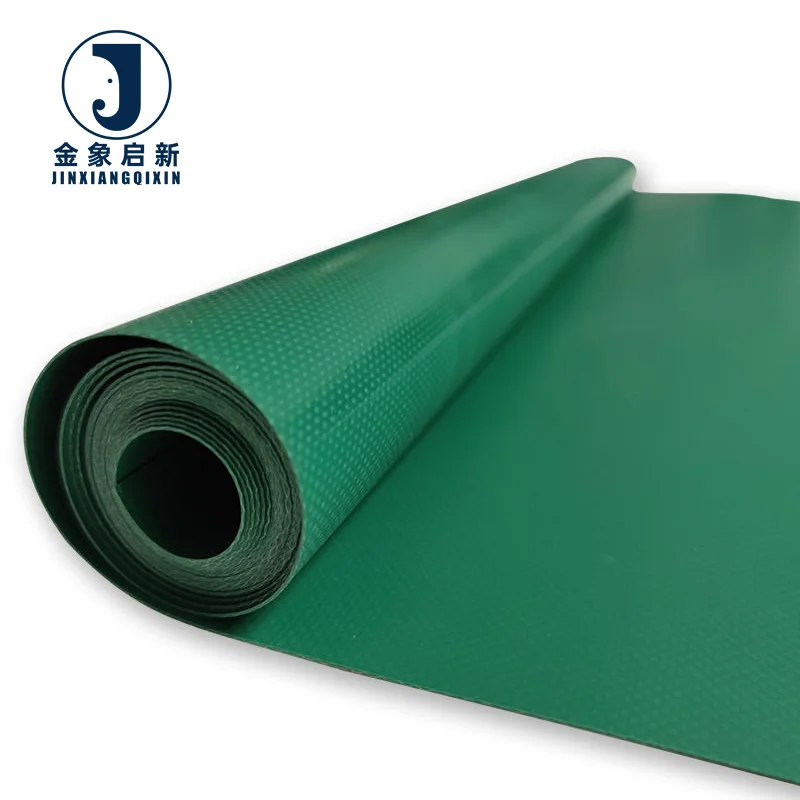
PVC Knife-Coated Fabric for Membrane Structures — available in medium to super heavy-duty grades with thickness 0.35–1.5mm, tensile strength up to 3000 N/5cm warp.
- Roll widths up to 6m with custom length options, reducing seam count on large membrane panels
- Knife-coated construction delivers strong coating-to-base adhesion, critical for long-span tensioned structures where flex fatigue concentrates at joints
Backed by nearly 30 years of coating process control, a 10-person R&D team, and 100% pre-shipment inspection on every roll.
Description
Deep Coating Adhesion Control — Every roll of PVC knife-coated fabric undergoes dedicated QA/QC at each production stage, ensuring the coating weight and bond strength match the material specification sheet before dispatch.
Technical Specifications
| Parameter | Value |
|---|---|
| Product Type | PVC Coated Tarpaulin |
| Base Fabric Denier (medium) | 500D |
| Base Fabric Denier (heavy-duty) | 1000D |
| Base Fabric Denier (super heavy) | 500D–2000D |
| Total Thickness (medium) | 0.35–0.45 mm |
| Total Thickness (heavy-duty) | 0.70–1.0 mm |
| Total Thickness (super heavy) | 1.2–1.5 mm |
| Weight (medium) | 400–500 g/m² |
| Weight (heavy-duty) | 700–1000 g/m² |
| Weight (super heavy) | 1100–1500 g/m² |
| Tensile Strength (medium) | Warp 1500–2000 / Weft 1200–1800 N/5cm (test basis not stated) |
| Tensile Strength (heavy-duty) | Warp 2000–2500 / Weft 1800–2200 N/5cm (test basis not stated) |
| Tensile Strength (super heavy) | Warp 2500–3000 / Weft 2200–2800 N/5cm (test basis not stated) |
| Waterproof | Yes |
| Mildew Proof | Yes |
| Anti-aging | Yes |
| Tear Resistant | Yes |
| UV Treatment | Available (test basis not stated) |
| Flame Retardant | Available in flame retardant grades — confirm the grade required for your market |
| Roll Width Options | 6ft, 8ft, 10ft, 12ft / 2m, 4m, 6m or custom |
| Roll Length Options | 100 yards, 100 meters, or custom |
| Product Type Options | Tarpaulin rolls / Finished Tarpaulin |
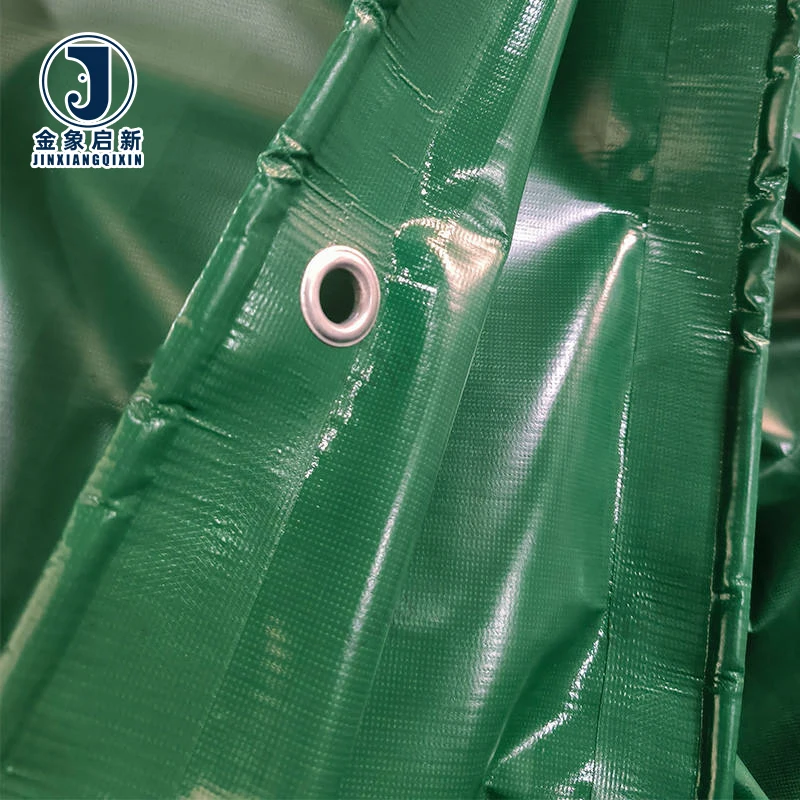
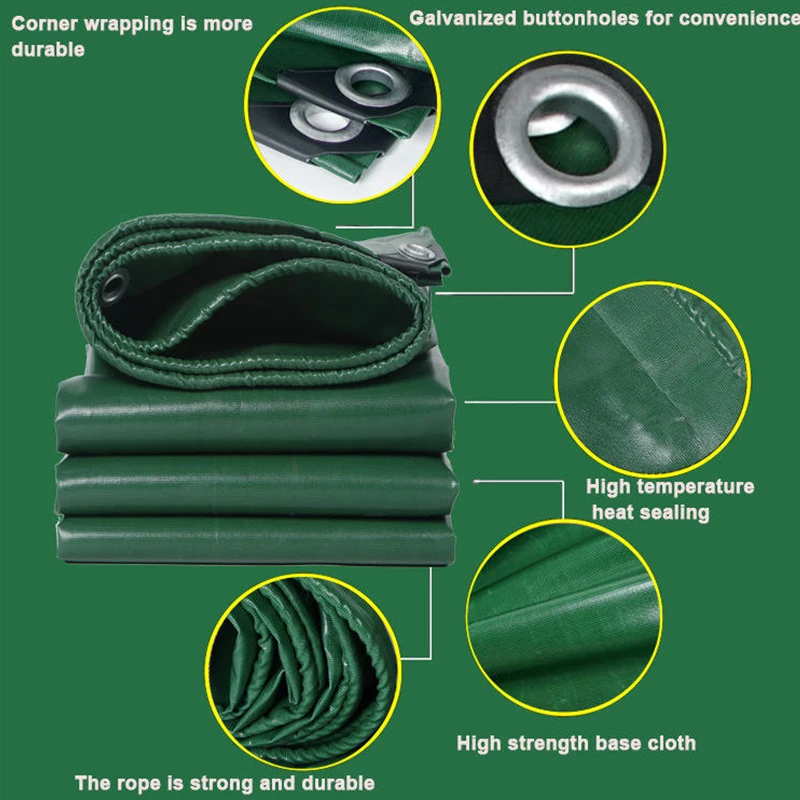
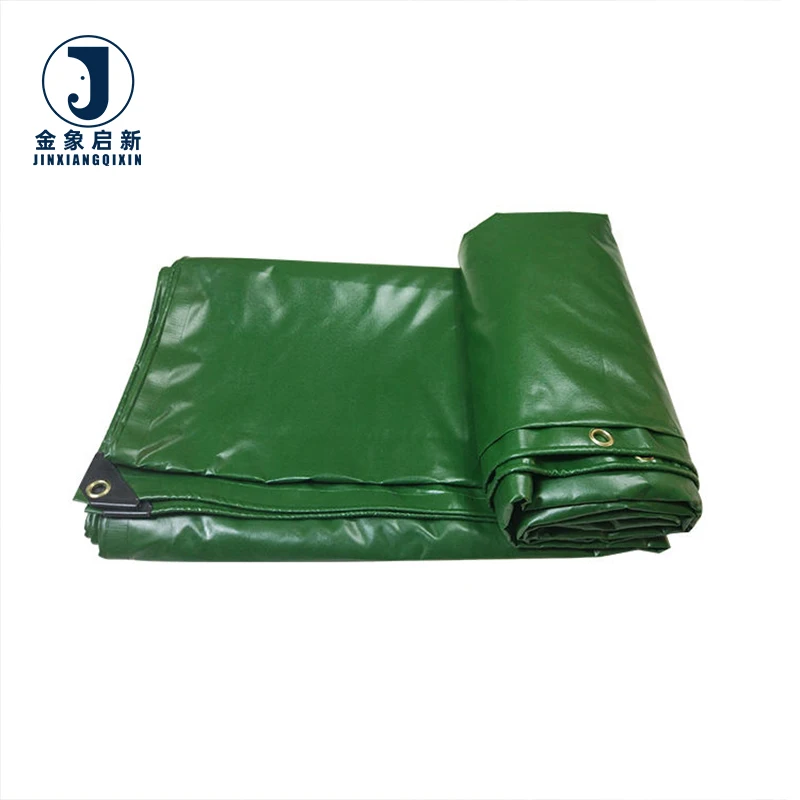
| Finished Hem | All four edges reinforced with PP rope |
| Eyelet Interval | Galvanized eyelets every 3ft or 1 meter |
| Corner Reinforcement | Reinforced plastic corners |
| Color Options | Blue, Blue/Orange, Green, Grey, Black, Clear, Grey/Green, Orange, or custom |
| Printing | Custom brand printing available |
| Certifications | ISO, CE |
Application Suitability
| Application | Exposure & Requirement |
|---|---|
| Truck tarpaulin and side curtains | Constant flexing at load points, road debris abrasion, UV and weather exposure, tie-down tension at eyelets |
| Membrane and tensioned structures | Sustained tensile load across large spans, wind uplift, UV exposure, weld seam integrity at panel joints |
| Awning and tent canvas | Repeated folding and unfolding, sun exposure, water shedding, colour consistency across adjacent panels |
| Industrial pipe canopy and engineering covers | Heavy equipment contact, puncture risk, chemical splash, long-term outdoor weathering |
| Pond and reservoir liners | Permanent water immersion, soil chemistry contact, puncture from substrate irregularities |
| Inflatable structure fabric | Internal air pressure loading, repeated inflation cycles, seam strength under biaxial stress |
Why the Quoted GSM Is Not the Whole Story When Buying PVC Knife-Coated Fabric
Coating adhesion and base fabric construction determine real-world performance far more than weight alone.
A common frustration among buyers sourcing PVC coated tarpaulin is receiving rolls that technically meet the stated GSM on a scale test, yet underperform in the field because the coating bond to the base fabric was insufficient. The knife-coating process allows precise control over how much PVC paste penetrates the weave versus sitting on the surface. When penetration is shallow, the coating can delaminate under flex stress — the material weighs the same, but the effective service life drops sharply. [NEED_CITE: peel strength test methods for coated fabrics per ISO 2411]
I have seen situations where two rolls from different suppliers, both invoiced at the same g/m², behaved completely differently during fabrication. One welded cleanly with consistent bead formation; the other showed bubbling at the seam because the coating composition varied across the roll width. Without in-process adhesion checks and 100% pre-shipment inspection, the GSM figure on the quotation tells you almost nothing about how the fabric will behave on your welding table or in the field.
Product Families Sized by End Use, Not Just by Weight
The PVC coated tarpaulin range covers three distinct construction tiers. Medium-duty grades in the 400–500 g/m² bracket use a 500D base fabric at 0.35–0.45 mm total thickness, suited to awning canvas and lighter tensioned covers where flexibility matters more than extreme tensile capacity. Heavy-duty grades move to a 1000D base at 0.70–1.0 mm and 700–1000 g/m², handling truck tarpaulin and engineering protective cloth applications where the fabric must resist sustained mechanical load.
Super heavy grades push the base denier up to 2000D with total thickness reaching 1.2–1.5 mm and weight up to 1500 g/m². These are the grades specified for large-span membrane structures and industrial canopy applications where the fabric carries permanent tensile loads and must maintain dimensional stability across wide unsupported panels. Choosing between tiers depends on the mechanical demands of the installation, not simply on selecting the heaviest option available.
How Roll Format and Finishing Options Reduce Fabrication Waste
Roll widths from 2 m to 6 m and lengths of 100 yards or 100 meters — or custom dimensions — allow fabricators to align panel cuts with the material grain, minimizing off-cuts. For membrane structure manufacturers, ordering in widths that match panel geometry reduces the number of welded seams, which is where most structural failures originate. [NEED_CITE: tensile and tear test methods for coated fabrics per ISO 1421]
Finished tarpaulin options include PP rope-reinforced hems on all four edges, galvanized eyelets spaced at 3 ft or 1 m intervals, and reinforced plastic corners. These details matter for transport and construction buyers who receive cut-to-size covers and need immediate installation without additional edge finishing. Custom brand printing is available across the range, applied during the coating stage so the print sits within the PVC layer rather than on top, reducing abrasion loss during handling.
Reading the Specification Sheet Beyond the GSM Number
Base fabric denier and weave density determine how load distributes across the material. A 1000D yarn at high pick count creates more crossover points per square centimeter, which arrests tear propagation — when a puncture occurs, the tear meets resistance at every yarn intersection rather than running freely along the warp or weft. This is why two fabrics at identical g/m² can show very different tear behaviour in practice.
The knife-coating process itself affects peel strength and weldability. When PVC paste is forced through the base fabric under controlled pressure, it creates a mechanical lock around each yarn, producing higher adhesion than a simple surface coat. This mechanical bond is what allows heat-welded seams to approach the strength of the parent fabric. Coating weight distribution across the roll width also matters: uneven coating leads to inconsistent weld parameters, forcing fabricators to adjust temperature and pressure across the seam length.
Surface finish — glossy or matte — influences more than appearance. Glossy surfaces shed dirt and water more readily, which matters for truck covers and outdoor canopy applications where self-cleaning extends intervals between maintenance. Matte surfaces accept ink and adhesive better, which is relevant when the fabric will receive printed branding or bonded patches during fabrication.
The Hidden Cost of Choosing the Wrong Grade for the Application
Specifying a medium-duty grade for a tensioned membrane structure because it is lighter and easier to handle can result in premature creep under sustained load, where the fabric stretches beyond recovery and the structure loses its designed geometry. Conversely, using a super heavy grade for a truck side curtain adds unnecessary weight to the vehicle and makes the fabric harder to fold and secure during daily operations. [NEED_CITE: long-term creep behaviour of PVC coated polyester under sustained tensile load]
Colour inconsistency across rolls in the same order is another cost multiplier that is not visible until the panels are installed side by side. A batch-to-batch colour variation that looks acceptable on individual sample swatches becomes obvious when two adjacent membrane panels reflect light differently. Dedicated QA/QC at every production stage with colour reference checks against the material specification sheet prevents this from reaching the installation site.
Why Fabricators and Distributors Source This Range Here
Three full production lines and 36 sets of professional equipment provide the capacity to fulfil bulk roll orders with consistent lead times, which matters when a membrane structure project depends on all fabric arriving in a single shipment to maintain colour and batch continuity. The 10-person R&D team handles material selection, custom sizing, and pattern printing, developing samples within days so buyers can verify weld parameters and colour accuracy before committing to production volume.
Dedicated QA/QC at every production stage with 100% inspection before shipment addresses the GSM and colour consistency concerns that buyers have experienced with other sources. ISO and CE certification underpins the documentation package, and the pre-shipment inspection record provides independent verification that what leaves the factory matches the material specification sheet.
Documentation & Verification
- Material specification sheet stating GSM, base fabric denier, coating type, and colour reference for every roll
- Test reports for UV and flame-retardant grades supplied where applicable to the ordered specification
- Pre-shipment inspection record confirming 100% QC coverage before dispatch
- Roll packing list with individual roll weights and dimensions for container loading verification
- Certificate of origin and customs documentation included with each shipment
- ISO and CE certificates available for compliance submission in the destination market
Fabrication, Handling & Storage
- Heat-weld at temperatures matched to the specific coating thickness — 0.35 mm and 1.5 mm grades require different platen settings for consistent bead formation
- Store rolls horizontally on racking to prevent flat spots that become permanent creases in heavy-duty 1000D and above grades
- Galvanized eyelets in finished tarpaulins should be set through the reinforced PP rope hem to distribute tie-down load across the weave
- Allow cold-stored rolls to reach ambient temperature before unrolling to prevent coating cracking in grades below 0.70 mm thickness
- Clean glossy-surface panels with mild detergent — solvent-based cleaners can soften the PVC coating and reduce surface tension
- Repair field punctures in heavy-duty grades using PVC-compatible adhesive patches cut at least 50 mm larger than the damage on all sides
Requesting a Specification Recommendation
Provide the application type and exposure conditions — whether the fabric will carry sustained tensile load as a membrane structure, face daily flexing as a truck side curtain, or serve as a static protective cover. Include your required roll width and annual volume, along with any colour or brand printing needs. If your market has specific fire classification requirements, state the standard and grade so the correct treatment can be confirmed before sampling. Indicate whether you need roll stock for in-house fabrication or finished tarpaulin in cut sizes with edge reinforcement and eyelets.
Frequently Asked Questions
Q: How do you verify GSM matches the quotation when the rolls arrive?
A: Each roll is weighed and measured during pre-shipment inspection, and the results are recorded in the inspection report shipped with the order. On arrival, you can verify by cutting a measured sample from the roll edge and comparing the weight per square metre against the material specification sheet. Any discrepancy outside the agreed tolerance is addressed through the after-sales support process.
Q: Can you supply test reports for anti-UV or flame-retardant treatments?
A: Test reports are available for UV and flame-retardant grades where applicable. Because fire classification requirements vary by market and application — a building membrane structure needs a different grade than a temporary construction cover — we confirm the specific standard and grade required for your project before running the treatment and issuing the corresponding report.
Q: How do you control colour consistency across multiple rolls in one order?
A: Colour reference is specified on the material specification sheet before production begins. During coating, in-process checks compare the running colour against the approved reference under controlled lighting. Rolls that drift outside the tolerance band are flagged during the 100% pre-shipment inspection and excluded from the shipment, ensuring all rolls in your order match when installed side by side.
Q: What is the minimum order for custom width, colour, or printing?
A: Minimums depend on the specific combination of width, colour, and print complexity. Standard stock widths and colours carry lower minimums, while custom Pantone colours and branded printing require a production run that covers the coating line setup. Samples are developed within days so you can approve colour and print quality before the bulk run is scheduled.
Q: What documentation comes with each shipment for customs and quality verification?
A: Every shipment includes a material specification sheet, roll packing list with individual weights, pre-shipment inspection record, certificate of origin, and ISO and CE certificates. For orders with UV or flame-retardant treatment, the corresponding test report is included. This documentation package supports customs clearance and provides the quality verification trail your project requires.
Related products
-
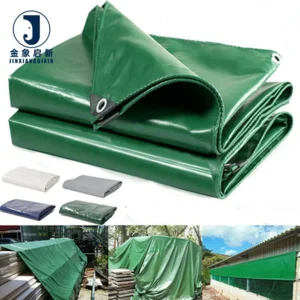
PVC Knife-Coated Tarpaulin Fabric for Membrane Structures – Custom Made
Read more -
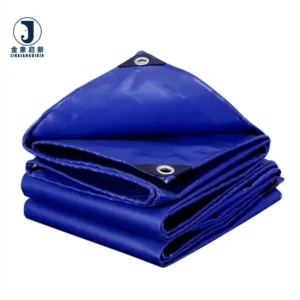
Custom PVC Knife-Coated Tarpaulin for Railway Wagon
Read more -
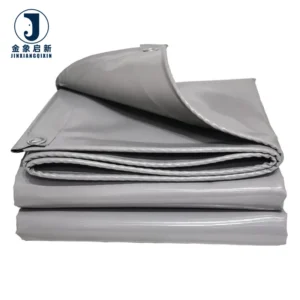
Custom 500-600GSM PVC Knife-Coated Fabric for Tents – Full Range
Read more -
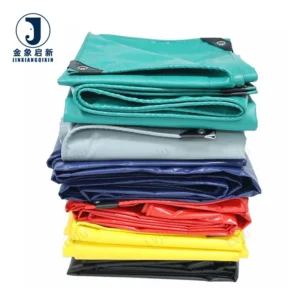
Different Colors 500 GSM Heavy Duty PVC Tarpaulin Knife Fabric Cloth Tent Canopy Awnings Truck Ship Rainproof Tarp Cover
¥1.45 Select options This product has multiple variants. The options may be chosen on the product page