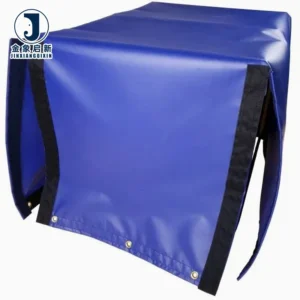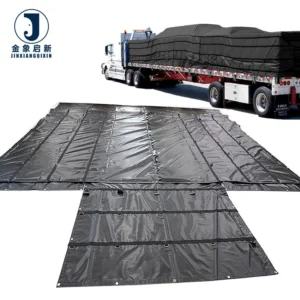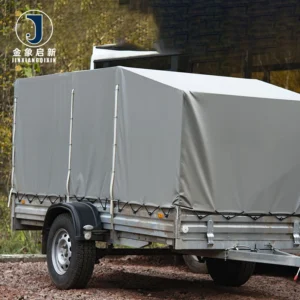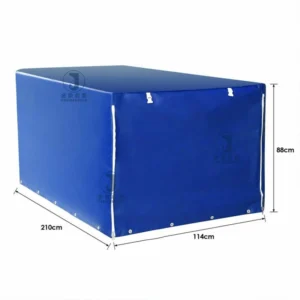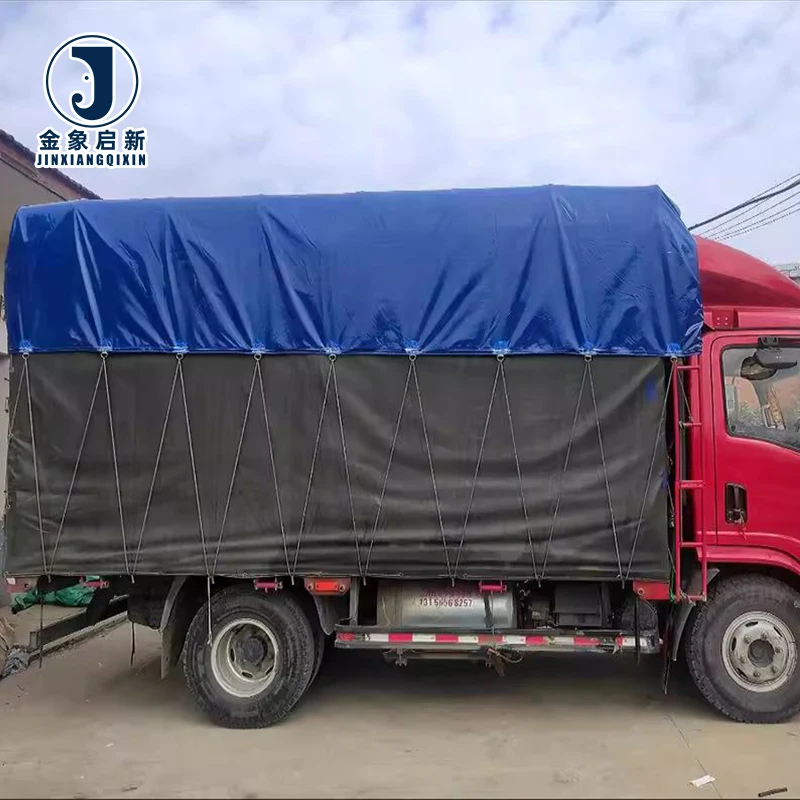
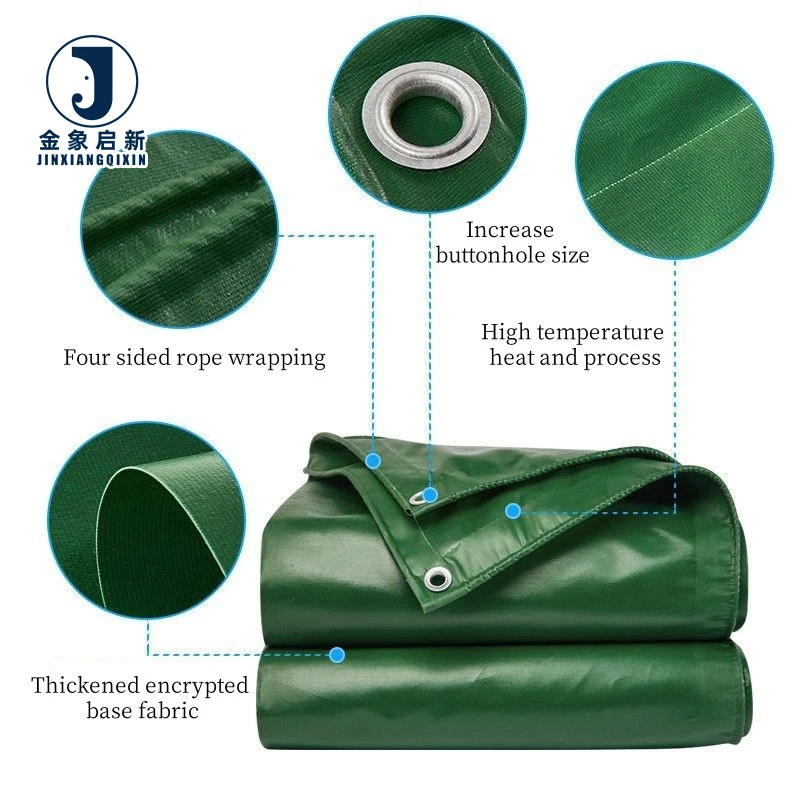
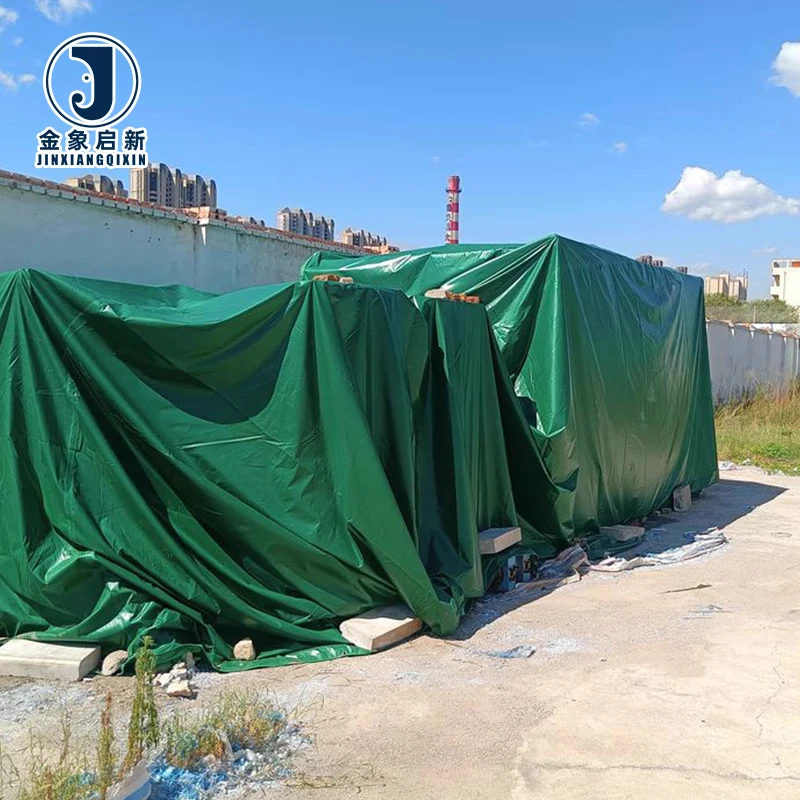
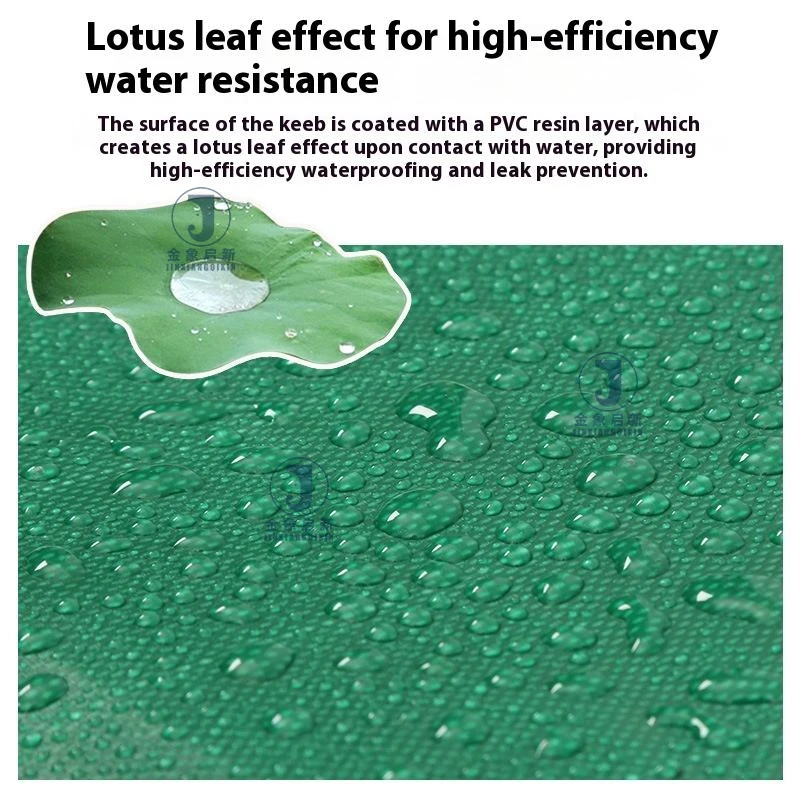
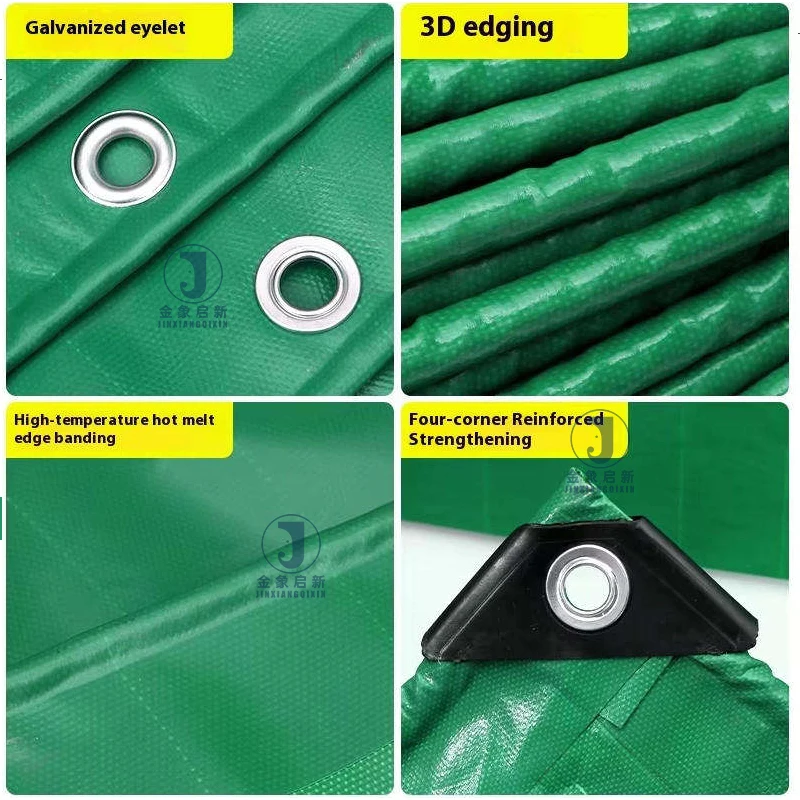
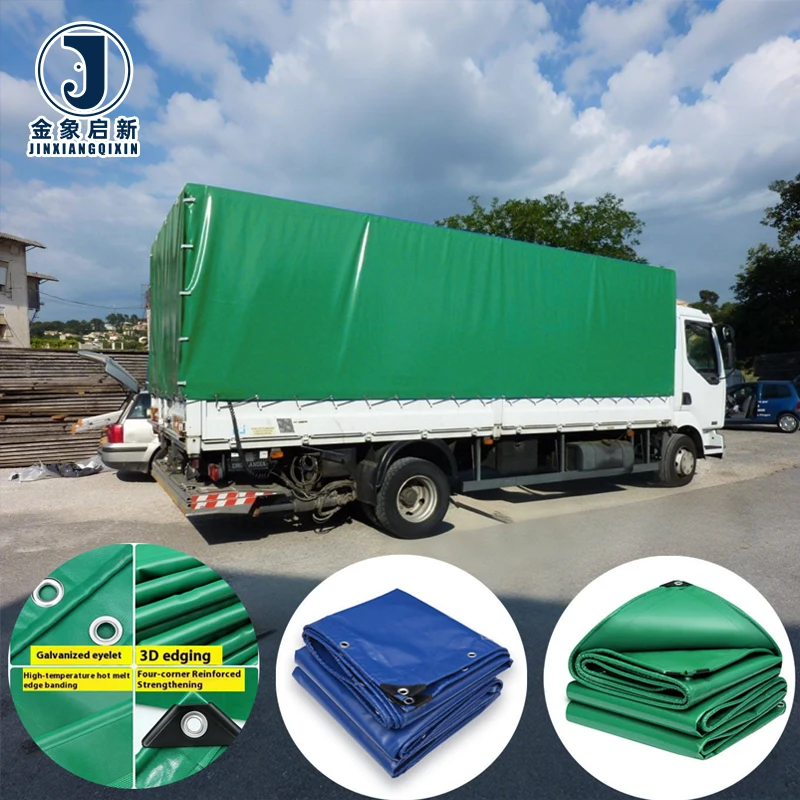
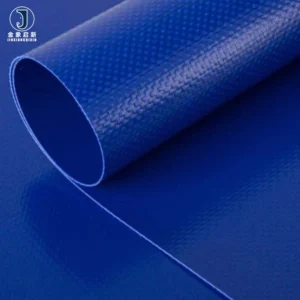
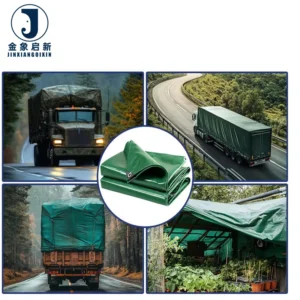
PVC Coated Tarpaulin with water-resistant, anti-UV and flame-retardant treatment, double-faced finish in multiple colors for truck trailer protection.
Covers truck and trailer loads with custom sizing to exact vehicle dimensions, preventing the fit issues that generic tarps create. Material spec sheets state base fabric and coating details so GSM and treatment claims are verifiable on arrival.
Backed by nearly 30 years of coated fabric process control, dedicated QA at every production stage, and full documentation from material spec to pre-shipment inspection.
Description
Coated Fabric Expertise — three full production lines and 36 sets of equipment dedicated to PVC coated tarpaulin, delivering batch consistency across every roll of truck cover fabric.
Technical Specifications
| Parameter | Value |
|---|---|
| Product Type | PVC Coated Tarpaulin |
| Coating Material | PVC (vinyl canvas) |
| Surface Finish | Double-faced |
| Water Resistance | Water resistant |
| Anti-UV Treatment | Available — confirm test basis for your market |
| Flame Retardant | Available in flame retardant grades — confirm the grade required for your market |
| Color Options | Multiple colors available |
Application Suitability
| Application | Exposure & Requirement |
|---|---|
| Truck top roof cover | Continuous UV and rain exposure, mechanical abrasion from tie-down straps, flexing under load movement |
| Side curtain for trailers | Repeated rolling and unrolling tension, road debris impact, wind-driven rain ingress at overlap seams |
| Pallet and equipment cover | Forklift contact abrasion, stacking compression, outdoor storage weathering |
| Outdoor event tent (block-out) | Full sun exposure, crowd safety flame retardant requirements, rapid setup and teardown handling |
| Inflatable castle and water tank | Internal air pressure stress, constant water contact, puncture risk from ground surfaces |
| Architecture membrane structure | Long-term UV degradation, wind load tension, building code fire classification compliance |
Why Quoted GSM Does Not Guarantee Truck Cover Durability
GSM alone never tells the full story — base fabric denier, weave density, and coating adhesion together determine whether a PVC coated truck tarpaulin survives its first winter on the road.
I have seen transport fleets receive rolls that matched the quoted GSM on the scale yet tore at the hem within months because the base fabric weave was too open and the coating sat on the surface without penetrating the yarn structure. A heavy coating on a light base fabric inflates the weight number without adding real tear resistance. Conversely, a tightly woven base with moderate coating weight outperforms a heavier but loosely constructed alternative in both tensile and tear tests. [NEED_CITE: tensile and tear test methods for coated fabrics per ISO 1421]
Double-Faced Coating for Balanced Weather Protection
A double-faced PVC coating ensures that both the outer and inner surfaces of the truck cover resist water penetration and UV degradation equally. For fleet operators running side curtains that fold inward during loading, the inner face sees as much abrasion and moisture exposure as the outer face. This PVC coated truck tarpaulin construction prevents premature failure on the side that typically goes unmonitored until a tear appears during transit.
Color Consistency Across a Multi-Roll Shipment
When a transport company orders ten rolls of side curtain fabric for a fleet refresh, visible color variation between panels is unacceptable once installed side by side on adjacent trailers. Batch consistency control during coating and pigment mixing is the difference between a professional fleet appearance and a patchwork look that draws customer complaints. Each roll in your order is produced under controlled pigment dosing to maintain color uniformity across the entire shipment. [NEED_CITE: industrial color measurement standards for coated textiles]
How Base Fabric and Coating Weight Interact
The relationship between base fabric denier and PVC coating weight determines real-world performance far more than GSM alone. A higher denier yarn in the warp direction resists the tensile loads imposed by wind buffeting on a trailer top cover, while weft density controls tear propagation when a puncture occurs at a tie-down point. The PVC coating fills the weave interstices and bonds to the yarn surface — if coating adhesion is weak, the laminate delaminates under flexing, exposing the base fabric to water ingress. Knife-over-roll coating typically achieves* producing stronger peel strength at the coating-to-fabric interface. [NEED_CITE: coating adhesion and peel strength testing per ISO 2411] The double-faced construction of this PVC truck cover fabric means both surfaces carry protective coating, reducing the risk of delamination from either face during service.
The Hidden Cost of Specifying on Weight Alone
When a logistics fleet specifies truck cover material purely by GSM, the receiving inspection may confirm the weight yet miss a loosely woven base that tears at the first strap tension point. Welded seams fail before the fabric body does when the base fabric lacks density at the flex zone, leaving the load exposed mid-transit. Color variation between rolls forces the installer to reject panels and reorder, adding weeks to a fleet refurbishment timeline. [NEED_CITE: common failure modes in PVC coated transport fabrics] These problems are invisible on the quotation sheet and only surface once the cover is cut, welded, and put under real working conditions.
Why Source This PVC Coated Truck Tarpaulin Here
Nearly three decades of focused PVC coating production means the process parameters — oven temperature, knife gap, line speed — are controlled to maintain coating weight tolerance roll after roll. Three full production lines running 36 sets of professional equipment provide the capacity to fulfill fleet-scale orders without compressing lead times at the expense of quality. A ten-person R&D team handles custom color matching, treatment formulation, and sample development so you can verify material behavior before committing to a production run. Dedicated QA and QC at every production stage, with full inspection before dispatch, catches coating defects and dimensional deviations before the rolls leave the facility.
Documentation & Verification
- Material specification sheet stating GSM, base fabric denier, and PVC coating type per roll
- UV and flame retardant test reports provided where the specified grade applies
- Pre-shipment inspection record covering coating adhesion, color, and dimensional checks
- Roll packing list with individual roll weights and dimensions for receiving verification
- Certificate of origin and customs documentation included for cross-border shipments
Fabrication, Handling & Storage
- Heat weld parameters must match the PVC coating thickness to avoid seam failure at flex points
- Reinforce eyelet zones with additional PVC patches to distribute tie-down strap tension
- Store rolls upright on pallets to prevent flat-spot deformation of the double-faced coating
- Allow cold-stored rolls to reach ambient temperature before unrolling to avoid coating crack
- Use mild detergent for cleaning — solvent-based cleaners may soften the PVC coating surface
- Plan cut layouts to minimize waste, accounting for the available roll width and hem allowances
What to Include in Your Inquiry
Provide the specific trailer models or structure dimensions so the PVC coated truck tarpaulin can be sized to fit without field trimming. State the fire safety classification required by your destination market so the correct flame retardant grade is formulated and documented. Confirm whether you need rolls for your own fabrication line or finished covers with welded hems and eyelets installed.
Frequently Asked Questions
Q: How is GSM verified on arrival and what documentation supports the quoted weight?
A: Every shipment includes a material specification sheet stating the exact GSM, base fabric denier, and PVC coating weight. You can verify by weighing a measured sample on arrival and comparing it against the documented value. Our pre-shipment inspection record also confirms weight compliance for each roll before dispatch.
Q: What flame retardant grades are available and how do they align with market requirements?
A: Flame retardant formulations are available in multiple grades. The correct grade depends on your target market’s fire safety regulations — building membrane applications often require different classifications than transport covers. Share your compliance requirement and we will confirm the matching grade with its test report.
Q: How is color consistency maintained across multiple rolls in one order?
A: Pigment dosing is controlled throughout the coating run to maintain color uniformity. Rolls within a single production batch are checked for shade variation before packing. If your order spans multiple batches, we align color references across runs using controlled measurement standards.
Q: What custom sizing and finishing options are available for truck covers?
A: This PVC coated truck tarpaulin is available in custom widths and lengths. Finishing options include welded hems, reinforced eyelets, and pattern printing. Provide your trailer dimensions and installation method so we can recommend the appropriate edge treatment and panel sizing.
Q: How long does sample development take for custom requirements?
A: Samples for custom color, size, or treatment specifications are typically developed within days. This allows you to evaluate the actual PVC coated truck tarpaulin material — including coating hand feel, color accuracy, and weld behavior — before approving the full production order.
Related products
-
Wholesale High Quality Rainproof Pvc Tarpaulin Truck Cover Truck Side Curtain for the Trailer
¥1.25 Select options This product has multiple variants. The options may be chosen on the product page -
PVC Lumber Tarpaulin 24′ X 27′ with 8ft Drop – Custom Made
Read more -
PVC Tarpaulin for Truck Covers – Custom Made
Read more -
Pvc Truck Cover Tarps Mildew Resistant Pvc Tarpaulin Cover for Trucks
¥1.48 Add to cart