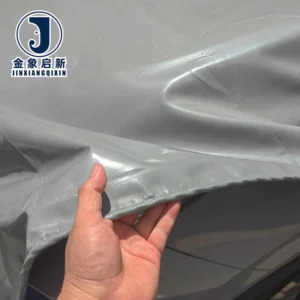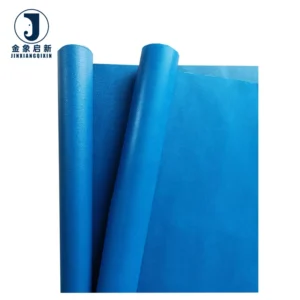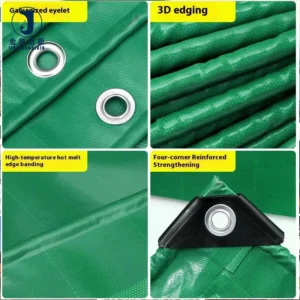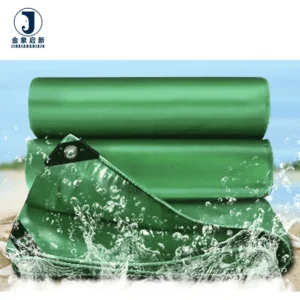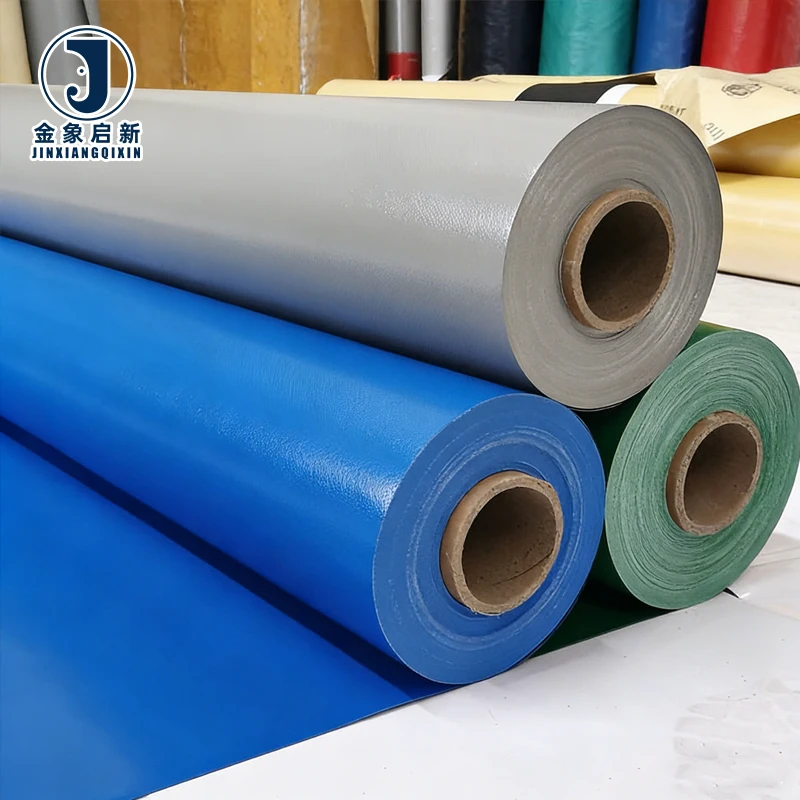
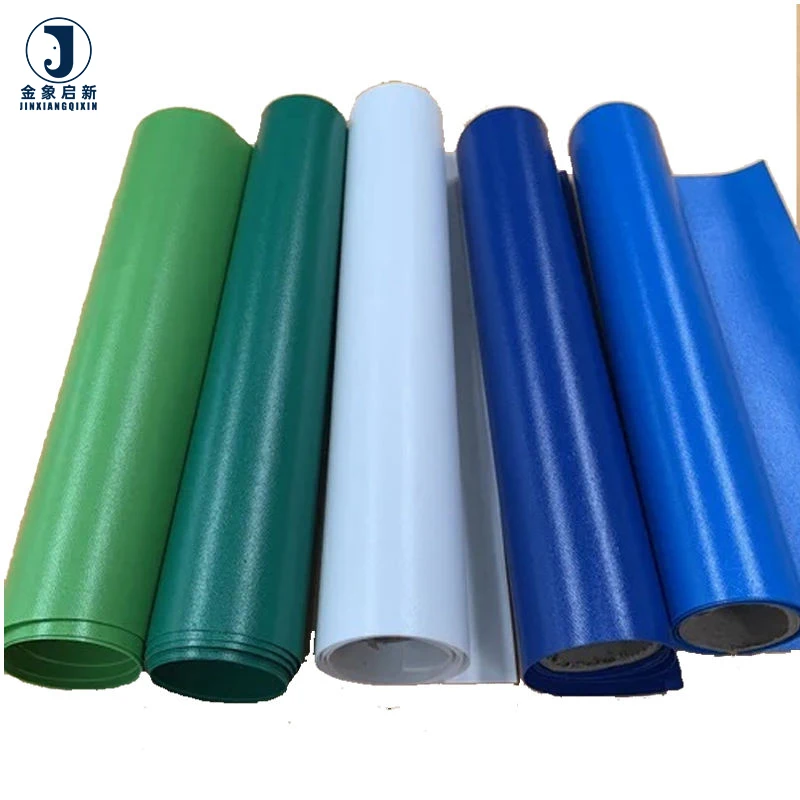
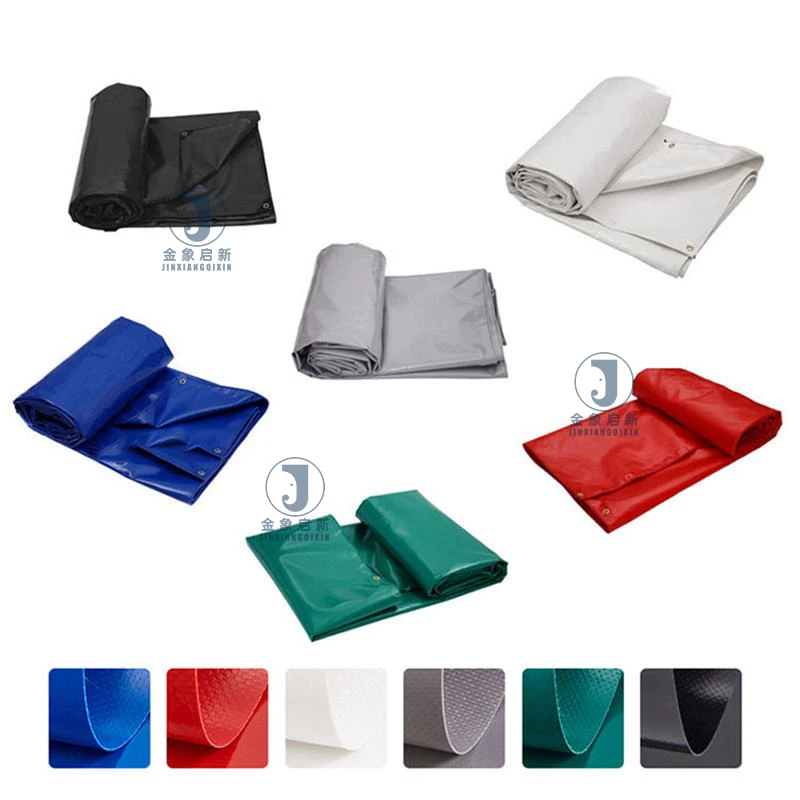
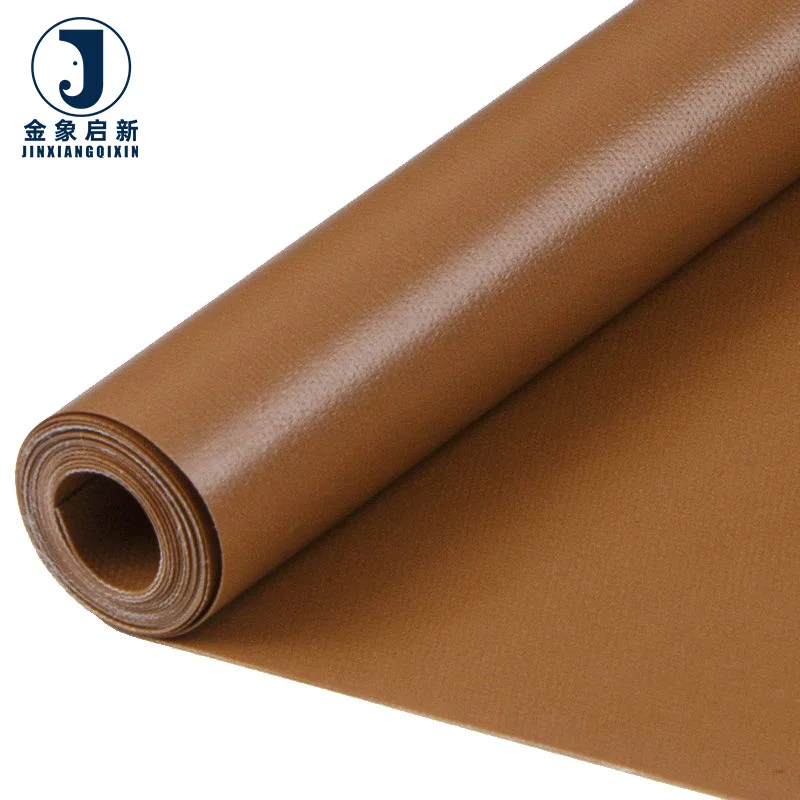
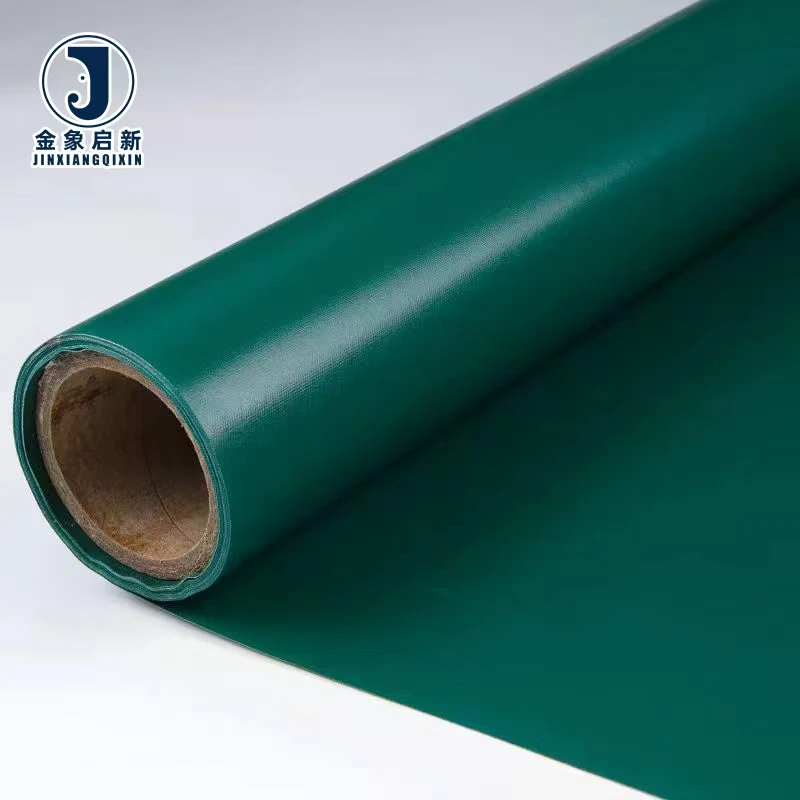
PVC Tarpaulin Roll 510-800gsm — PVC coated polyester fabric with glossy or matte finish, available in custom widths and lengths with heat-welded seams.
Our full catalogue covers every specification from base fabric selection through coating weight control, anti-UV treatment and flame-retardant grades, with samples developed within days for your exact requirement.
- Heat welded seams for long-term flex durability
- Batch-consistent colour across all rolls in one order
- 100% pre-shipment inspection on every roll before dispatch
Description
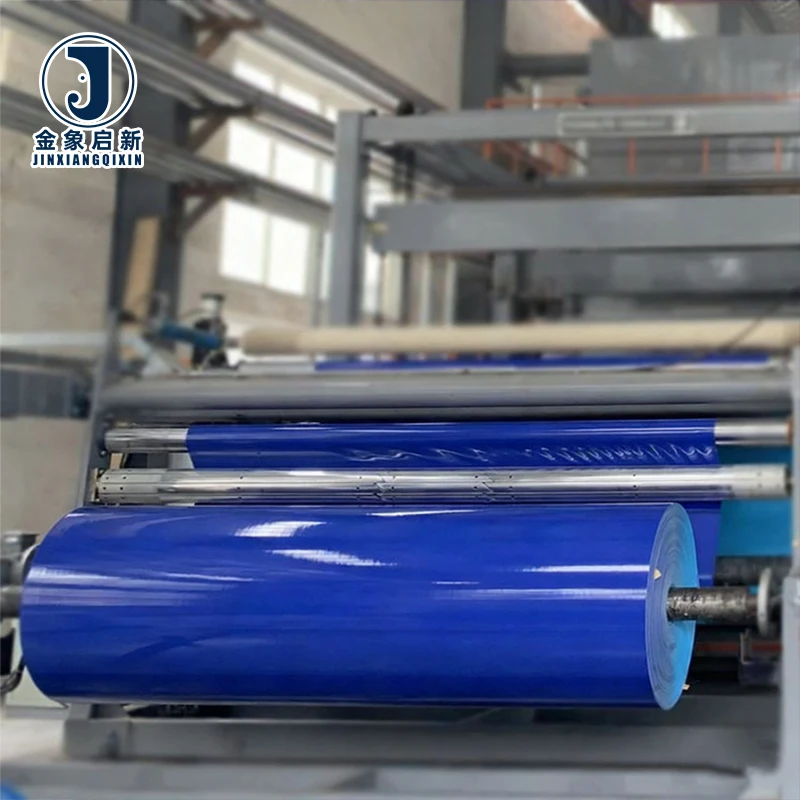
Coated Fabric Expertise — three full production lines process PVC coated tarpaulin rolls with dedicated QA/QC at every stage, ensuring the GSM on the quotation is the GSM verified before dispatch.
Technical Specifications
| Parameter | Value |
|---|---|
| Specification | PVC Coated Tarpaulin Roll 610gsm 650gsm 800gsm |
| Base Fabric | PVC coated polyester fabric |
| Surface Finish | Available in glossy or matte finish |
| Surface Pattern | Ripstop woven pattern (available) |
| Colour | Customizable |
| Width | Customizable |
| Length | Customizable |
| Flame Retardant | Available — confirm the grade required for your market |
| Anti-UV Treatment | Available — confirm the test basis required for your market |
| Waterproof Rating | Water resistant |
| Seam Construction | Heat welded |
| Standards | ISO, CE |
Application Suitability
| Application | Exposure & Requirement |
|---|---|
| Truck and trailer covers | Road abrasion, constant wind flexing, UV exposure, tie-down load at hems |
| Tent and awning fabrication | Outdoor weather cycles, tension at frame contact points, colour consistency across panels |
| Outdoor protective covers | Prolonged sun exposure, water pooling, dust ingress, periodic handling |
| Inflatable products | Repeated inflation stress, internal air pressure on seams, puncture risk |
| Industrial side curtains | Daily roll and unroll cycles, forklift contact, UV and rain on loading docks |
| Construction site covers | Debris impact, water resistance, wind uplift, temporary fastening |
Why GSM Verification Matters More Than the Number Itself
When the PVC tarpaulin roll arrives lighter than quoted, the buyer absorbs every downstream consequence — from premature tearing under load to rejected shipments from a fleet client.
GSM is a purchasing specification, not a performance guarantee — and it only matters if the weight is actually verified on the roll that ships.
The gap between quoted weight and delivered weight is one of the most common disputes in coated fabric procurement. A roll that reads 610gsm on the invoice but weighs closer to 560gsm in practice will behave differently under tension, resist abrasion for a shorter period, and fail at seams sooner than expected. Buyers often discover this only after cutting, welding and installing the material — at which point the cost of replacement far exceeds the original material saving. [NEED_CITE: industry disputes over delivered vs quoted GSM in coated fabrics]
Matching Roll Specifications to End-Use Demands
Selecting the right PVC coated tarpaulin roll begins with the exposure profile of the finished product. A tent manufacturer cutting panels for a tensioned frame needs a fabric that holds dimensional stability under sustained pull, while a transport fleet specifying side curtains prioritises flex endurance and abrasion resistance at contact points. The 610gsm, 650gsm and 800gsm options allow buyers to align material weight with mechanical demand rather than defaulting to a single grade across all products.
Custom width and length ordering reduces off-cuts during fabrication, which directly affects yield per roll and total material cost for cut-and-sew operations. The availability of glossy and matte finishes also influences downstream decisions — matte surfaces tend to accept printed graphics with fewer adhesion issues, while glossy surfaces shed dirt more readily in exposed outdoor installations.
Treatment Options and Market-Specific Compliance
Anti-UV and flame-retardant treatments are available across the range, but the specific grade and test basis must be matched to the regulatory environment of the destination market. A PVC tarpaulin roll destined for a European construction enclosure will need flame-retardant documentation aligned with EU classification systems, while the same material shipped to a North American event site may require a different standard entirely. [NEED_CITE: flame retardant classification systems for textile membranes across export markets]
Buyers should request the applicable test report before confirming a bulk order, and verify that the report covers the exact GSM and coating weight being supplied. UV stabiliser packages also vary — some are formulated for high-altitude installations with intense solar loading, while others target moderate temperate climates. Specifying the exposure conditions at the inquiry stage ensures the correct treatment is compounded into the coating rather than applied as a surface afterthought.
How Weight, Weave and Coating Interact on the Roll
GSM alone does not determine how a PVC coated tarpaulin roll performs under load. The base fabric denier and weave density establish the tensile and tear baseline, while the PVC coating weight adds surface protection and seam integrity. A 650gsm roll built on a high-density polyester base may outperform an 800gsm roll with a looser weave under tear propagation tests, because the yarn structure — not just the total weight — controls how damage spreads once the surface is breached. The ripstop woven pattern, available as a variant, introduces reinforcement threads at regular intervals to limit tear extension.
Coating method affects how the PVC bonds to the base fabric and how it behaves during heat welding. A well-controlled coating process produces uniform adhesion across the roll width, which means the weld seam achieves consistent strength whether it sits at the centre or the edge of the fabric. Surface finish also plays a role: matte finishes can improve ink adhesion for pattern printing and branding, while glossy finishes offer easier wipe-down cleaning on covers that accumulate road grime or construction dust.
The Downstream Cost of Specification Misalignment
Ordering a flame-retardant PVC coated tarpaulin roll without confirming the grade against the site requirement can result in a failed inspection after installation — at which point the entire cover must be removed and replaced, doubling material and labour costs. Similarly, colour variation between rolls in the same batch becomes visible only after panels are installed side by side, forcing either a costly re-order or an accepted visual compromise on a high-profile project. [NEED_CITE: batch colour consistency challenges in multi-roll coated fabric orders]
Underspecifying weight for an application that involves daily flexing and abrasion leads to early coating delamination at stress points. The material may look intact in the field, but the coating separates from the base fabric at fold lines, allowing water ingress that accelerates degradation. These failures typically appear months after delivery, well outside the window for straightforward warranty claims.
Sourcing Confidence Built Into the Production Process
Dedicated QA/QC at every production stage means each PVC tarpaulin roll is checked against the material specification before it reaches the packing area — not sampled from a batch after the fact. This catches weight deviations and visual defects before they ship.
A 10-person R&D team handles custom width, colour matching, pattern printing and sample development in-house, with samples typically developed within days so buyers can confirm the specification before committing to full production volumes. Three full production lines with 36 sets of equipment provide the capacity to fulfil multi-roll container orders on schedule without splitting a single order across subcontractors.
ISO and CE certified production ensures that process controls are documented and auditable. Every roll ships with a packing list that traces it back to the production batch, supporting traceability for buyers who need to match material to project documentation.
Documentation & Verification
- Material specification sheet confirming GSM, base fabric and coating weight per roll
- Test report for flame-retardant grade where applicable, matched to destination market
- UV treatment verification document referencing the stabiliser package used
- Pre-shipment inspection record covering weight and visual consistency per roll
- Roll packing list with batch traceability for every unit in the container
- Certificate of origin and customs documentation included with each dispatch
Fabrication, Handling & Storage
- Heat weld at temperatures suited to the specific PVC coating weight for consistent seam strength
- Allow 650gsm and 800gsm rolls to acclimatise before unrolling in cold conditions to avoid crease damage
- Store rolls upright on core ends to prevent flat-spotting and surface impression marks
- Use compatible PVC adhesive for field repairs, matching the coating chemistry of the roll
- Plan cutting layout to exploit custom roll width and minimise off-cuts on panel-based products
- Avoid abrasive cleaners on matte finish surfaces to preserve ink adhesion for printed graphics
What to Include in Your Enquiry
Provide the end-use application and exposure conditions so the correct GSM grade and treatment package can be recommended from the 610gsm, 650gsm and 800gsm range. Specify the required width, roll length and colour reference, along with any flame-retardant or anti-UV standards your destination market mandates.
If the project involves pattern printing or branding, share the artwork and confirm whether you need rolls only or finished cut-and-sew panels. Request a sample in your exact specification to verify colour, finish and weight before authorising bulk production.
Frequently Asked Questions
Q: How is the stated GSM verified before shipment and what proof is provided?
A: Every roll undergoes weight verification during 100% pre-shipment inspection. The inspection record confirms the actual GSM against the quoted specification, and a material specification sheet detailing base fabric, coating weight and GSM is included in the documentation package with each dispatch.
Q: Can I receive a sample matching my exact colour and treatment before ordering?
A: Yes. The R&D team develops custom samples within days, matching your specified colour reference, finish and treatment options including flame-retardant and anti-UV grades. This allows you to verify appearance and performance before committing to a full container order.
Q: How is colour consistency controlled across multiple rolls in one order?
A: All rolls within a single order are produced under unified process control with coordinated coating batches. The pre-shipment inspection checks visual consistency roll by roll, and the inspection record documents the result so shade variation is caught before packing.
Q: What fire classification documentation is available for different export markets?
A: Flame-retardant grades are available with supporting test reports. Specify your destination market and the classification system required at the inquiry stage so the correct grade is applied and the relevant documentation is prepared before production begins.
Q: How are rolls packed to prevent damage during container transit?
A: Rolls are packed on core ends with protective wrapping to prevent surface abrasion and flat-spotting. A detailed roll packing list accompanies each container, enabling verification on arrival and supporting batch traceability for project documentation.
Related products
-
Hot Selling Heavy Duty Waterproof Large Camping Tarp Outdoor Use 500gsm Pvc Laminated Tarpaulin Tent
¥3.20 Add to cart -
PVC Tarpaulin Glossy 650GSM 1000D*1000D 23*23 1.50*50M/R for Multi-purpose Cover SAMPLE FREE
¥2.70 Add to cart -
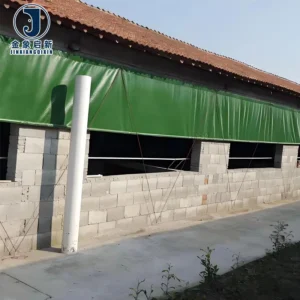
JX PVC Coated Tarpaulin/Cover for Farm Waterproof Warp Knitted Tent Pig Broiler Sheep Chicken Farm Plain Style
¥1.40 Add to cart -
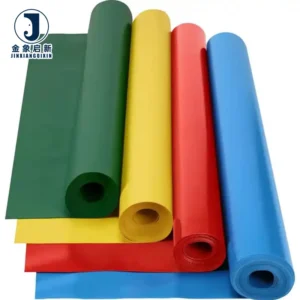
Stock PVC Tarpaulin Fabric Rolls 500D*500D 18*17 Hot Selling Colors in Stock China Manufacture Wholesale Fabrics Best Price
¥1.26 Select options This product has multiple variants. The options may be chosen on the product page