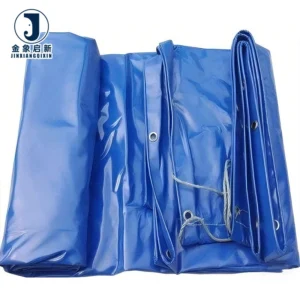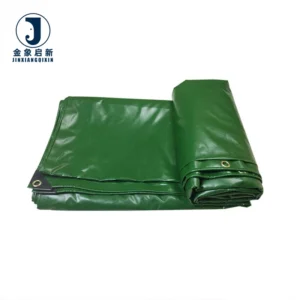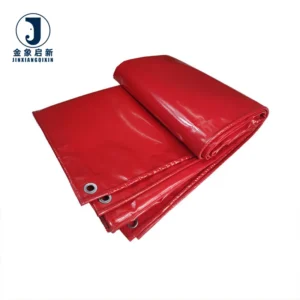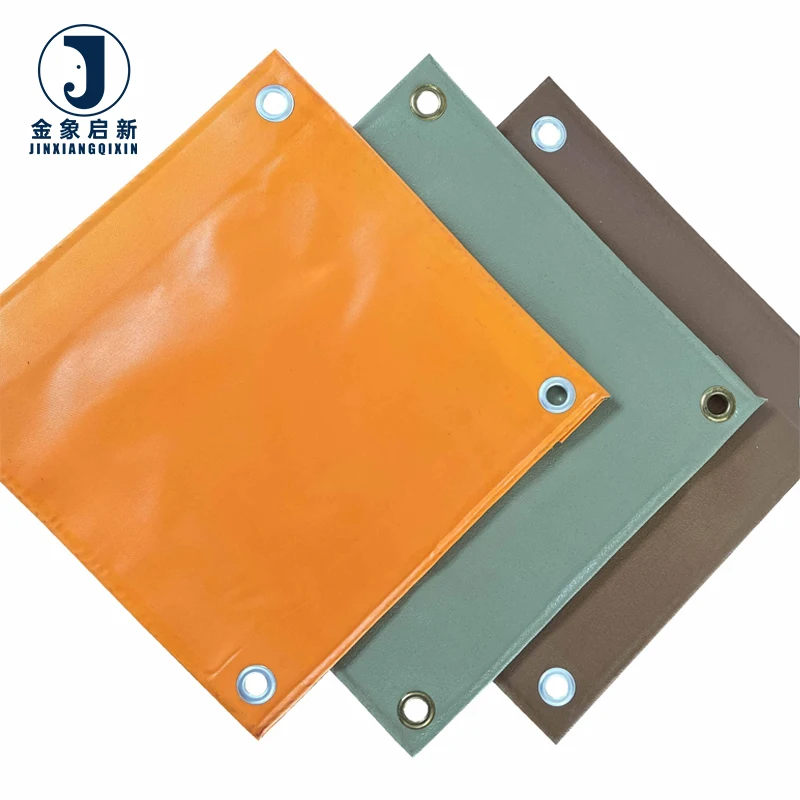
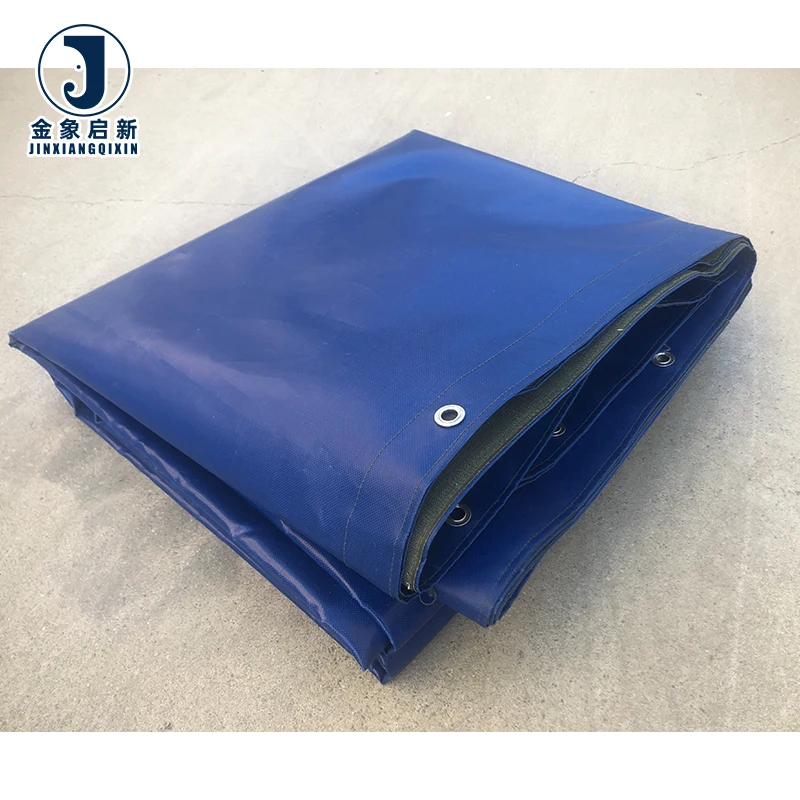
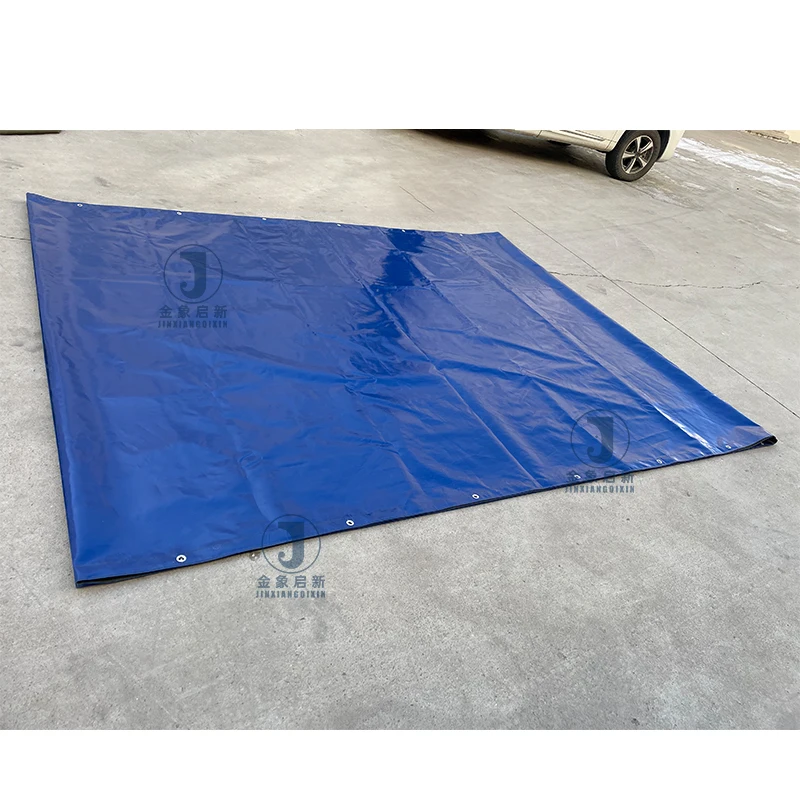
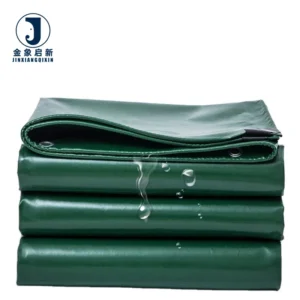
Anti-Static Printable PVC Coated Tarpaulin — 100% high toughness polyester yarn base, hot-melt PVC coated at 400–1500 g/m², with anti-static treatment and printable surface for graphics and branding.
- Engineered for exhibition backdrops, truck side curtains and tensioned membrane structures where anti-static performance and print clarity are critical to the application
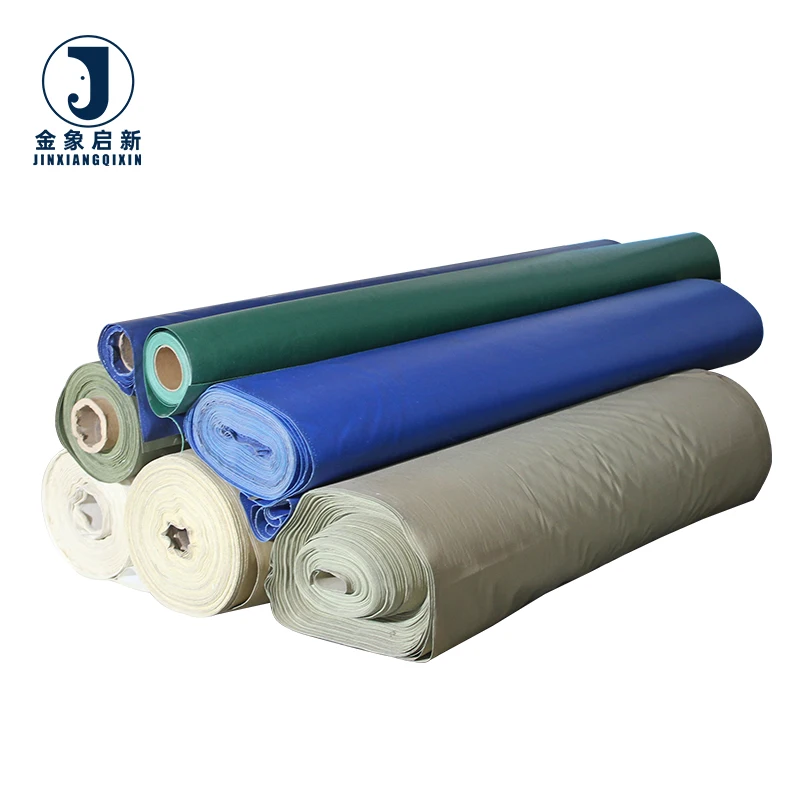
- Colour matched batch-to-batch across rolls, with welded seams inspected at flex points to prevent failure under load movement
Description
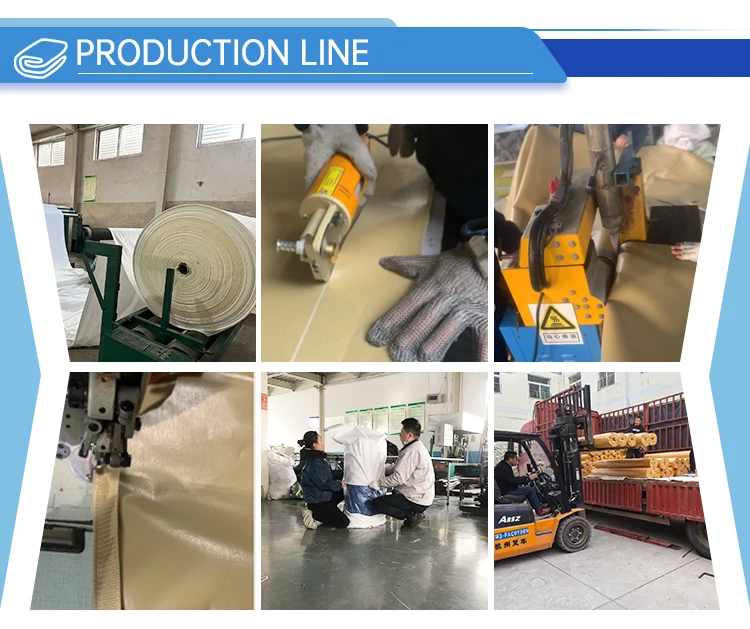
Complete Coating Control — Three dedicated production lines with in-process QA ensure batch-to-batch GSM accuracy and colour consistency across every anti-static printable PVC coated tarpaulin roll shipped.
Technical Specifications
| Parameter | Value |
|---|---|
| Product Type | PVC Coated Tarpaulin |
| Base Fabric | 100% high toughness polyester yarn |
| Coating Material | PVC |
| Coating Method | Lamination technology and hot melt coating technology |
| Thickness | 0.35–1.5 mm |
| Weight (GSM) | 400–1500 g/m² |
| Base Fabric Denier | 500D–2000D |
| Tensile Strength | Warp 1500–3000 / Weft 1200–2800 N/5cm (test basis not stated) |
| Cold Crack Resistance | -30°C |
| Key Features | Waterproof, anti-mildew, anti-static treatment, flame retardant (grade not stated), UV treatment (test basis not stated), printable surface, custom colour |
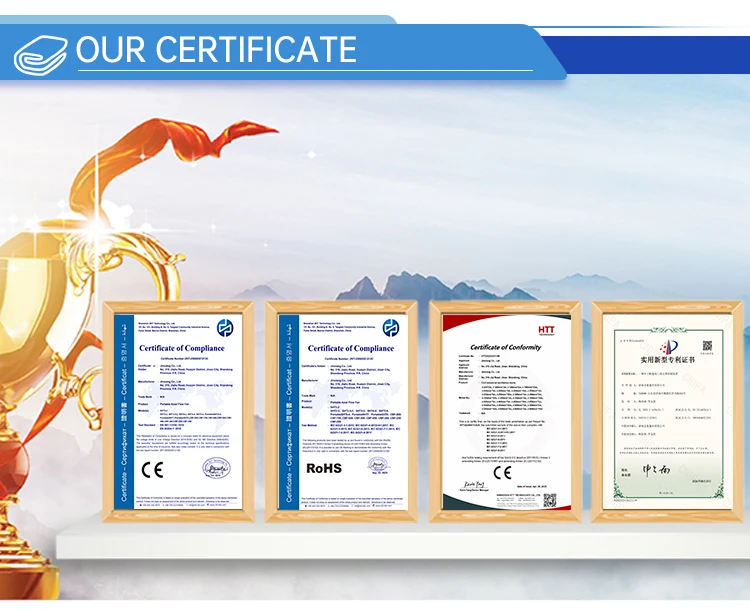
| Certifications | ISO, CE |
Application Suitability
| Application | Exposure & Requirement |
|---|---|
| Exhibition booth and event backdrop | Indoor or semi-outdoor display — requires printable surface, anti-static treatment to repel dust, and batch colour consistency across panels |
| Tensioned membrane and inflatable structures | Permanent tensile load and wind uplift — demands high tensile and tear strength with stable coating adhesion |
| Truck and trailer tarpaulin | Constant flexing, road abrasion, UV exposure, and weather cycling |
| Industrial pipe canopy and protective covers | Outdoor weathering, mechanical abrasion, and chemical contact from industrial environments |
Why Colour Consistency Fails on Multi-Panel Exhibition Backdrops
Matched colour across rolls requires dedicated QA at the coating stage, not a hope at dispatch.
When a buyer orders multiple rolls of anti-static printable PVC coated tarpaulin for a large exhibition backdrop, the panels are installed side by side under bright venue lighting. Even minor shade variation between rolls becomes immediately visible once the fabric is tensioned on a frame. This is rarely a printing error; it originates in the coating line where pigment dosing, mixing temperature, and coating weight fluctuate between production runs. Sourcing an Anti-Static Printable PVC Coated Tarpaulin manufacturer with documented in-process colour checks eliminates the cost of re-printing and the embarrassment of a mismatched booth wall [NEED_CITE: colour tolerance standards for coated textile panels per ISO 105 series].
Coating Technology and Surface Quality
The lamination and hot melt coating processes used for this Anti-Static Printable PVC Coated Tarpaulin determine how well the PVC layer bonds to the polyester base fabric. Hot melt coating drives the PVC compound into the weave under heat and pressure, producing strong adhesion that resists delamination at welded seams. This matters most when panels are joined by high-frequency or hot-air welding for wide exhibition walls, where seam failure under tension would compromise the entire display structure.
Printable Surface and Anti-Static Treatment
Large-format solvent, UV, or latex printing requires a surface that accepts ink uniformly and holds colour density across the full panel width. The printable surface option on this fabric is designed for direct digital or screen printing without an additional primer layer. The anti-static treatment reduces dust attraction during storage and installation — dust settling on the surface before printing causes pinholes and colour defects that only appear after the ink dries.
Reading the Specification Sheet Beyond GSM
A buyer comparing a 650 GSM roll to a 900 GSM roll often assumes the heavier option is stronger, but tensile and tear performance depend on the interaction between base fabric denier, knitting density, and coating weight. A 500D base with tight weave and moderate coating can outperform a 1000D base with loose construction and heavy coating in tear propagation tests. The lamination and hot melt coating methods also influence peel strength — the force required to separate the coating from the yarn — which directly affects how the fabric behaves at welded joints and folded hems. Cold crack resistance rated to -30°C means the PVC compound remains flexible in winter installations without embrittlement, a property governed by plasticiser formulation rather than GSM alone [NEED_CITE: relationship between plasticiser content and cold crack performance in PVC coated fabrics].

The Hidden Cost of Specifying on Price Per Square Metre Alone
Choosing coated tarpaulin on unit cost without verifying coating weight, adhesion strength, or treatment certification leads to failures that surface after installation. A flame retardant claim without a stated grade means the fabric may not meet the fire safety code required by the venue or the local authority having jurisdiction, resulting in failed inspections and forced replacement before the event opens. Similarly, an anti-static claim without a measured surface resistance value leaves the buyer unable to confirm suitability for environments where static discharge is a compliance concern [NEED_CITE: surface resistance measurement methods for anti-static textile materials]. Batch colour mismatch discovered at installation turns a straightforward backdrop build into a multi-day rework exercise.
Why Buyers Specify This Source
Three full production lines running lamination and hot melt coating allow the facility to hold GSM tolerance and colour match across large roll orders without splitting production between different machines. A 10-person R&D team develops custom width, colour, and printable surface samples within days, letting buyers confirm print compatibility and colour accuracy before committing to full production volume. Dedicated QA/QC inspection at every coating stage catches shade drift and coating weight deviation before the roll reaches the packing area. Material specification sheets ship with every roll, stating base fabric denier, GSM, coating method, and colour reference so the buyer can verify what arrived matches what was ordered.
Documentation & Verification
- Material specification sheet stating GSM, base denier, and coating method per roll
- Pre-shipment inspection record confirming 100% visual and dimensional check
- Test report for flame retardant grade — confirm the grade required for your market
- Anti-static surface resistance report available — request the measurement standard
- Roll packing list and certificate of origin for customs clearance
- ISO and CE certificates provided with shipment documentation
Fabrication, Handling & Storage
- Hot-air welding at manufacturer-recommended temperature ensures seams match the hot melt coated PVC layer adhesion
- Store rolls horizontally on pallets to prevent permanent creasing across the 400–1500 g/m² range
- Use compatible PVC-based cleaners on the printable surface to avoid stripping the anti-static treatment
- Allow cold-stored rolls to reach ambient temperature before unrolling to protect the -30°C rated coating
- Plan panel layout to minimise welded seams on wide-width exhibition backdrop installations
What to Provide With Your Inquiry
To specify the correct grade from this Anti-Static Printable PVC Coated Tarpaulin manufacturer, share the intended application and exposure conditions — indoor exhibition, outdoor tensioned structure, or transport cover — along with the required roll width and estimated annual volume. If the fabric will be printed, state the print method (solvent, UV, latex) and request a test roll for colour and adhesion confirmation. For venues or sites with fire safety requirements, provide the applicable standard so the correct flame retardant grade can be quoted.

Frequently Asked Questions
Q: How is batch-to-batch colour consistency controlled across large exhibition backdrop orders?
A: Each production run is monitored at the coating stage with in-process colour checks against the approved reference. All rolls for a single order are produced on the same line with the same pigment batch to minimise shade variation. Pre-shipment inspection includes a side-by-side visual comparison before packing.
Q: What GSM and denier should be specified for exhibition backdrop versus tensioned structure use?
A: Exhibition backdrops typically use the lighter end of the range where print surface quality and handling weight matter most. Tensioned membrane structures require the higher denier base fabric with greater tensile strength to sustain permanent load. Request a specification recommendation based on your frame design and wind load requirement.
Q: How is the anti-static property verified, and what surface resistance standard applies?
A: Anti-static treatment is verified by measuring the surface resistance of the coated fabric. The applicable standard depends on the end-use environment and local regulations. Request the test report and confirm which surface resistance range your application or compliance framework requires before approving production.
Q: What are the thermal welding options for joining wide-width panels?
A: Hot-air welding and high-frequency welding are both compatible with the hot melt coated PVC surface. Weld strength depends on matching the welding temperature and speed to the specific coating formulation and GSM. Request welding parameters for the grade you are ordering to ensure seams perform at flex points.
Q: What is the lead time and minimum order for custom width, colour, or printed tarpaulin?
A: Lead time and minimum order depend on the roll width, colour match, and volume required. Standard widths and stock colours are available with shorter turnaround. Custom colours and non-standard widths require sample approval before full production runs. Contact the sales team with your specification to receive a quotation.
Related products
-
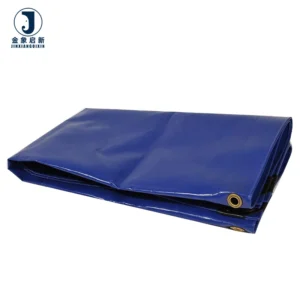
900GSM Heavy Duty PVC Coated Tarpaulin Panama Tarpaulin Curtains for Lorries
¥7.78 Add to cart -
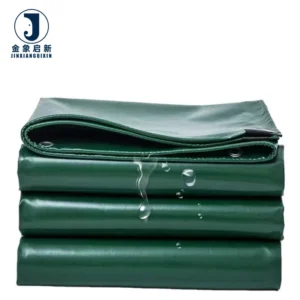
Pvc Coated Waterproof Tarpaulin Heavy Duty Tarp for Tent Roof Stocklot Lumber
¥1.60 Add to cart -
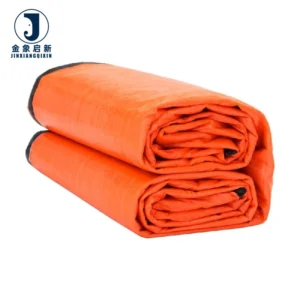
Factory 12ftx20ft Construction Cold Weather Insulated Pe Tarps Poly Tarp Heavy Duty Concrete Curing Blanket Tarpaulin Roll Sheet
¥0.66 Add to cart -
Factory Direct Sale Flatbed Trailer Tarps Black Heavy Duty Lumber Pe Tarp Flatbed Truck Transportation Tarpaulin Roll Sheet
¥1.25 Select options This product has multiple variants. The options may be chosen on the product page