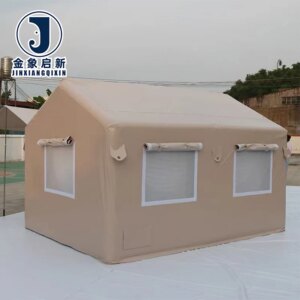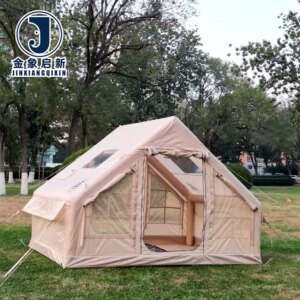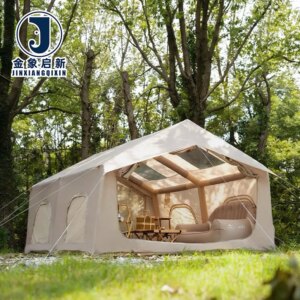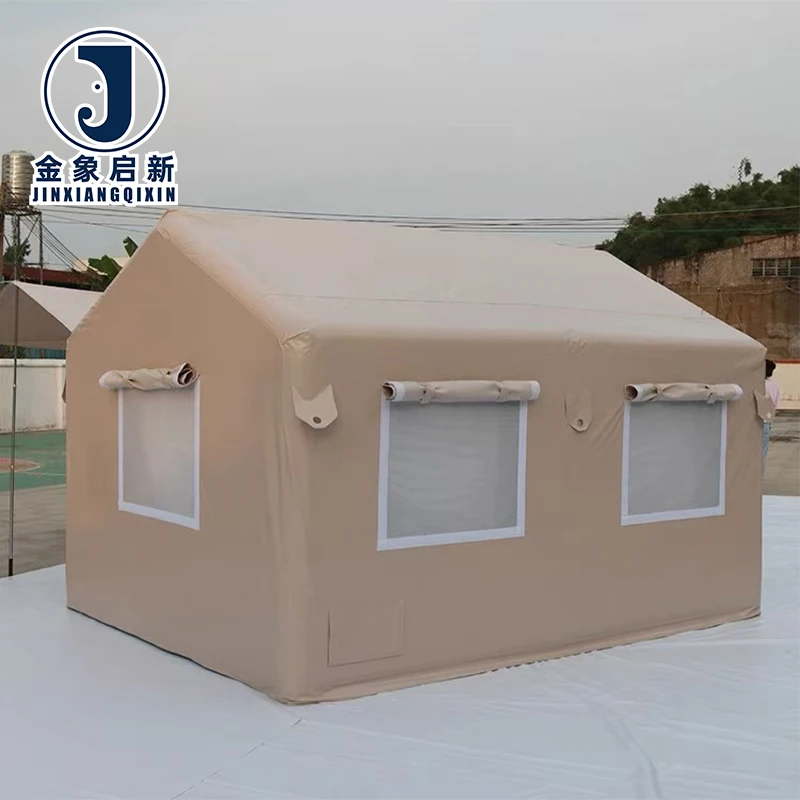
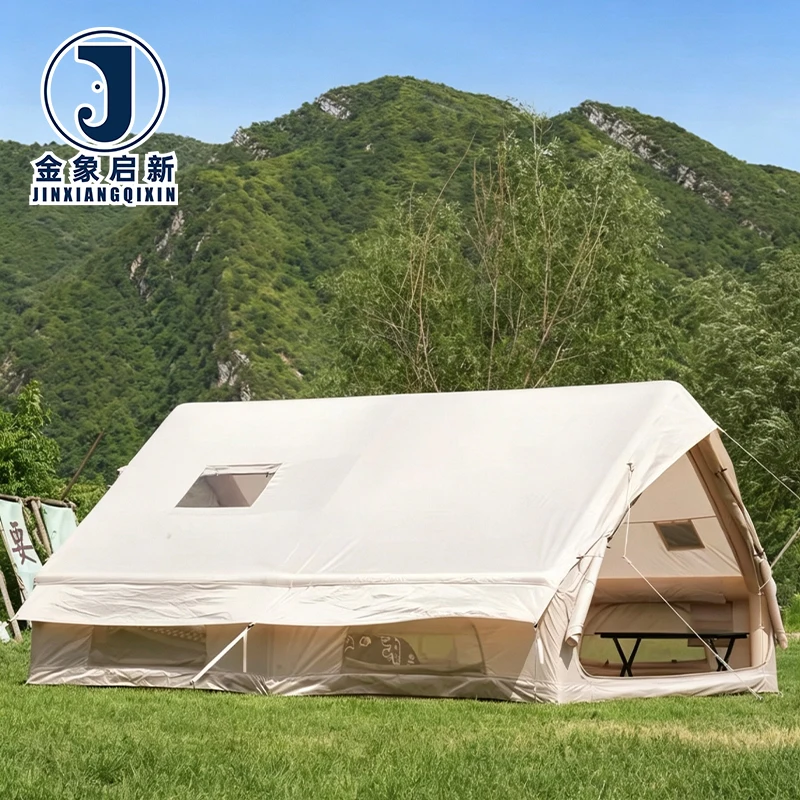
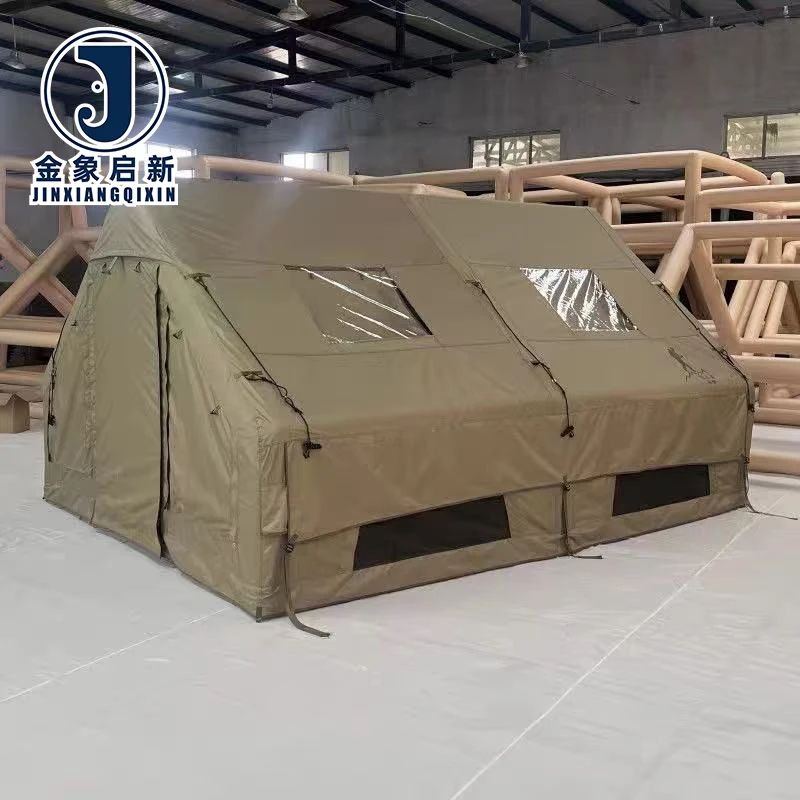
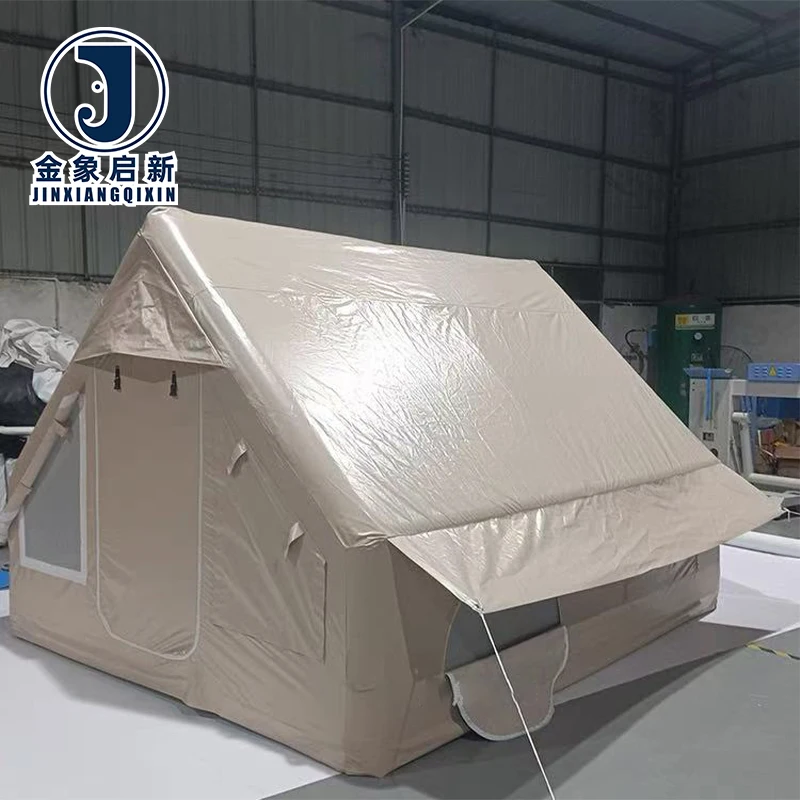
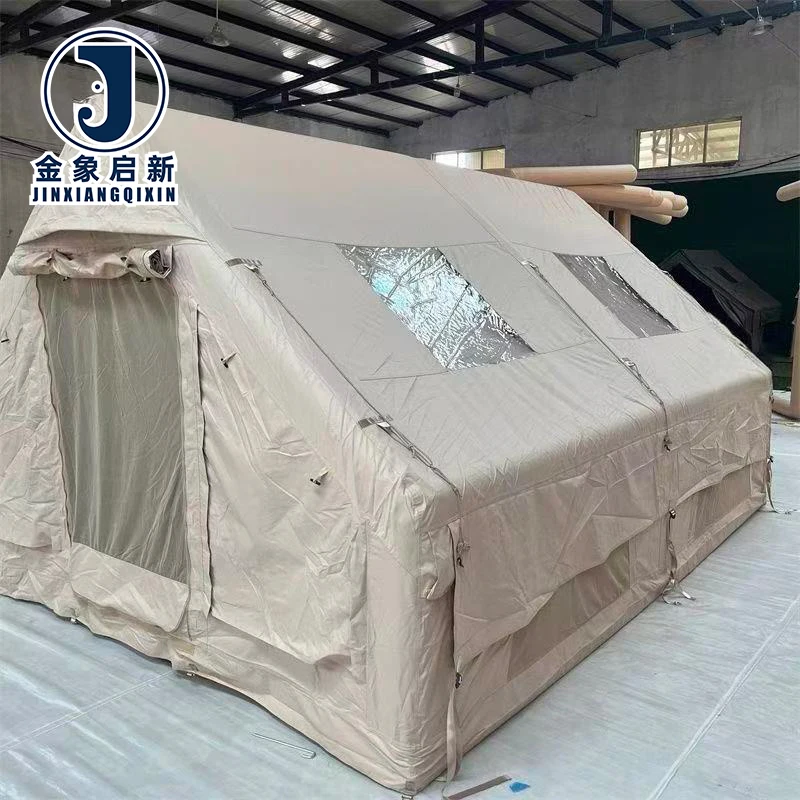
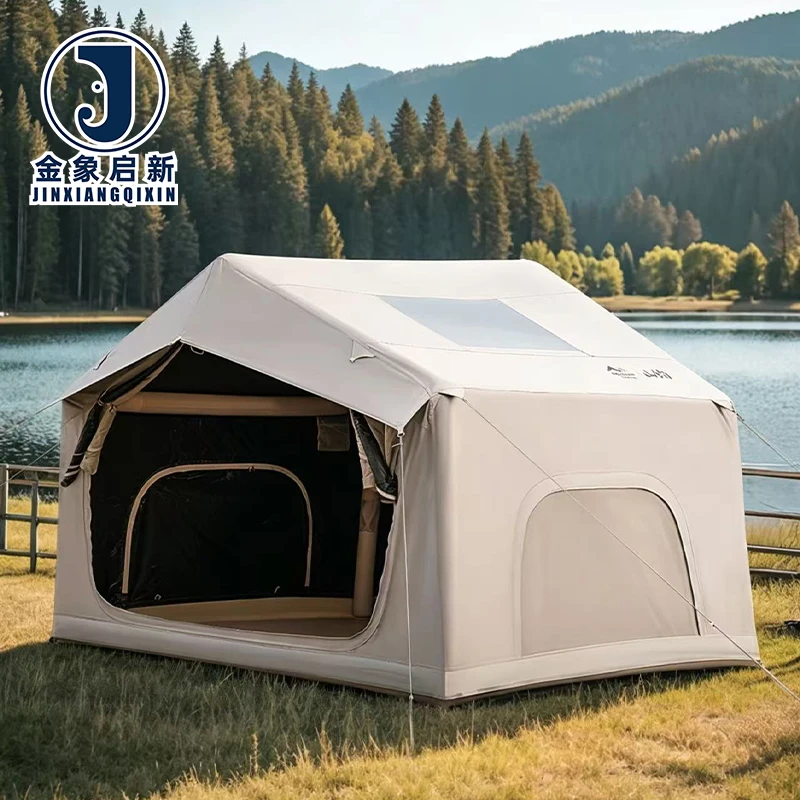
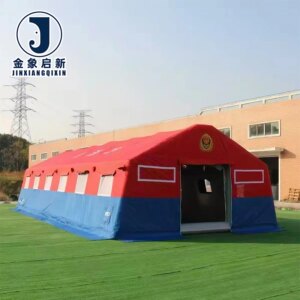
Inflatable Event Tent — PVC knife-coated fabric, quick automatic opening, 6-8 person capacity. Waterproof to ≥2000mm H₂O with tear resistance ≥300N and tensile strength ≥2500N/5cm for structural integrity under wind load. Single-layer construction reduces weight by 15% versus traditional tents while maintaining four-season durability and UV resistance verified at 500+ hours direct sunlight.
- Custom logo, Pantone color matching, and door/window configurations available
- 16 critical manufacturing checkpoints with 72-hour pressure retention test before shipment
- Sample development in 7 business days with full OEM/ODM support from a 30-year coated fabric specialist
Description
Precision-Coated Fabric Expertise — Our 9,180 m² facility converts three decades of PVC coating process control into inflatable event tents that hold pressure, match colour, and survive repeated deployments without weld failure.
Technical Specifications
| Parameter | Value |
|---|---|
| Product Type | Inflatable Event Tent |
| Core Material | PVC Tarpaulin (knife-coated fabric) |
| Capacity | 6–8 Persons |
| Opening Mechanism | Quick Automatic Opening |
| Construction | Single Layer |
| Design Class | Four-Season |
| Waterproof Rating | ≥2000 mm H₂O |
| Tear Resistance | ≥300 N (test standard not stated) |
| Tensile Strength | ≥2500 N / 5 cm (test standard not stated) |
| UV Treatment | UV-resistant (test basis not stated) |
| Customization | Custom logo, OEM & ODM, Pantone colour matching |
| Pressure Retention Test | 72-hour before shipment |
| Quality Checkpoints | 16 critical + 12-point production checks |
| Certifications | ISO 9001, ISO 14001, ISO 45001, CE |
Application Suitability
| Application | Exposure & Requirement |
|---|---|
| Outdoor event management | High-frequency inflation cycles, wind loading, rapid setup and teardown |
| Temporary exhibition spaces | Branded surface consistency, indoor-outdoor transition, repeated transport |
| Industrial site shelters | Dust, equipment abrasion, extended static inflation under sun exposure |
| Trade show product display zones | Colour and logo fidelity across multiple units, professional appearance |
| Staff break areas on construction sites | UV exposure, thermal fluctuation, heavy foot traffic at entry points |
When "Waterproof" Is Not Enough: Why Coating Adhesion Decides Tent Lifespan
A tent that leaks at the seam was never truly waterproof — it was only waterproof until the first flex cycle.
Event operators often specify inflatable event tents based on waterproof rating alone, assuming that a ≥2000 mm H₂O column guarantees field performance. Yet the most common failure point is not the fabric face but the thermally welded joint where two panels meet under tension. When coating adhesion to the base fabric is weak, the weld peels apart under the cyclic stress of inflation and deflation, long before the membrane itself degrades. [NEED_CITE: tensile and tear test methods for coated fabrics per ISO 1421]
Single-Layer Construction and Weight Efficiency for Event Logistics
The single-layer PVC tarpaulin design reduces overall transport weight compared to multi-layer or double-wall inflatable structures. For event crews managing multiple units per site, every kilogram saved at load-in translates into faster deployment and lower handling risk. This custom inflatable tent design maintains structural rigidity through the inherent stiffness of the knife-coated PVC membrane rather than relying on internal baffles, simplifying both repair and repacking on site.
Pantone-Matched Colour Across a Full Fleet Order
Brand consistency across ten, twenty, or fifty inflatable event tents deployed at a single venue is a coating chemistry problem, not a printing problem. Each batch of PVC compound must be pigment-matched to the same Pantone reference before it enters the coating line. When colour is added at the compounding stage rather than surface-printed, the hue remains consistent through the full depth of the coating, meaning that scratches and field wear do not reveal a different colour beneath. [NEED_CITE: Pantone colour matching standards for PVC coating compounds]
Reading the Spec Sheet: What the Numbers Actually Mean
The stated tensile strength of ≥2500 N / 5 cm and tear resistance of ≥300 N describe two different failure modes that matter at different moments in a tent’s life. Tensile strength governs what happens when the entire membrane is under uniform inflation pressure — it tells you the fabric will not stretch and thin out until it ruptures. Tear resistance, by contrast, governs what happens after a puncture or cut: it measures how far the damage propagates before the weave arrests it. Neither figure is meaningful in isolation; a fabric with high tensile but low tear will survive steady pressure but fail catastrophically once nicked by a stake or sharp edge. The knife-coating process used on this PVC tarpaulin core bonds the PVC compound into the interstices of the woven base fabric, which contributes to both values simultaneously by locking yarns in place and preventing slippage under load. Waterproof performance at ≥2000 mm H₂O reflects the continuity of that coating layer — any pinhole or thin spot would register as a failure during hydrostatic testing.
The Hidden Cost of Skipping Batch Colour Verification
A colour shift between tents in the same order becomes visible the moment they are inflated side by side at a venue. This is not a cosmetic complaint — it signals inconsistent PVC compound batching, which can also mean variable plasticizer content and therefore variable flexibility in cold weather. Event operators who discover mismatched shades on the morning of installation have no time to reorder, and the reputational damage falls on them, not the factory. [NEED_CITE: batch consistency standards for coated technical textiles]
Why Source This Custom Inflatable Tent Here
Three full production lines and 36 sets of professional equipment within a single 9,180 m² facility mean that coating, welding, and assembly happen under one quality system rather than across subcontracted workshops. The 10-person R&D team handles Pantone colour matching, logo placement engineering, and dimensional adjustments before production begins, reducing sample rejection cycles. A dedicated QA/QC protocol runs 16 critical checkpoints during manufacturing and a 72-hour pressure retention test on every finished unit, catching slow leaks that a quick inflation check would miss. ISO 9001, ISO 14001, and ISO 45001 certification covers quality management, environmental control, and occupational safety respectively, giving procurement teams the audit trail that large-event contracts require. CE marking supports entry into European markets where inflatable structures fall under product safety directives. Pre-production samples are developed within days, allowing buyers to verify material hand, weld quality, and colour accuracy before committing to a full production run.
Documentation & Verification
- Material specification sheet stating PVC base fabric, coating weight, and colour reference per roll batch
- Waterproof and UV test reports aligned to the stated performance claims
- 72-hour pressure retention test record attached to each unit’s packing file
- ISO 9001 / ISO 14001 / ISO 45001 / CE certificates covering production and product safety
- Pre-shipment inspection record with dimensional and visual defect checks
- Certificate of origin and customs documentation for cross-border shipment
Fabrication, Handling & Storage
- Thermally weld seams at temperatures matched to the PVC knife-coated compound to prevent delamination at flex points
- Store deflated tents flat or loosely rolled — tight compression creases the single-layer PVC and leaves permanent fold marks
- Clean the coated surface with mild, non-solvent detergents to preserve the UV-resistant top layer
- Inspect welded joints around door and window openings after each event cycle, as these zones concentrate inflation stress
- Allow the tent to reach ambient temperature before unfolding in cold conditions to avoid low-temperature cracking of the PVC membrane
- Repair minor punctures with compatible PVC adhesive patches applied to a clean, dry coating surface
Before You Request a Quote
Tell us the deployment environment — open-field festival, semi-sheltered exhibition ground, or industrial yard — so we can recommend the appropriate PVC grade and reinforcement level. Specify your Pantone colour reference and logo artwork early, as custom colour compounding requires lead time before coating begins. Confirm whether you need standard 6–8 person capacity or a modified footprint, and whether door and window configurations must align with a site plan.
Frequently Asked Questions
Q: Can we add our logo and specify a custom Pantone colour?
A: Yes. Logo placement, size, and colour are confirmed during the sample stage. We match your Pantone reference at the PVC compounding stage so the colour runs through the full coating depth. Minimum order quantities for branded runs depend on the number of colour variants — share your artwork and quantity so we can confirm.
Q: How do you ensure colour stays consistent across a large order?
A: Every batch of PVC compound is mixed against the same Pantone master before it enters the coating line. We retain a reference swatch from each production run and compare it under controlled lighting before tents are packed. If your order spans multiple coating batches, we flag the split and hold samples for your approval.
Q: What is the sample and production timeline for a custom inflatable event tent?
A: Pre-production samples are typically ready within seven business days once material, colour, and logo details are confirmed. Full production for custom orders follows a multi-week schedule that accounts for coating, welding, pressure testing, and inspection. We provide a confirmed dispatch date before production starts.
Q: Can we arrange a third-party inspection before shipment?
A: Third-party inspectors are welcome at our facility before containers are sealed. We coordinate access and provide all test records, inspection reports, and packing lists in advance so the audit runs efficiently. For large-volume projects, we can schedule dedicated inspection windows aligned to your logistics timeline.
Related products
-
Camping Tent Inflatable UV Resistant Customizable Four-season Waterproof PVC Quick Automatic Opening 2-3 Person Outdoor
Read more -
Inflatable Camping Tent Waterproof Outdoor Air Tent for Camping Inflatable Tent Shelter
Read more -
Outdoor Portable Camping Inflatable Tent Luxury All-Season Use Overnight Large Space Rainproof Insulated Quick Automatic Opening
Read more -
Inflatable PVC Camping Tent Four-Season Waterproof CE Certified Quick Automatic Opening 3000mm+ Factory Direct Sale
Read more