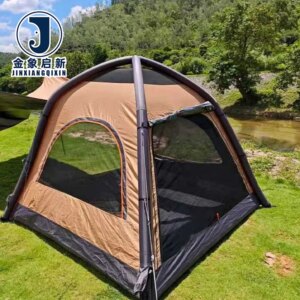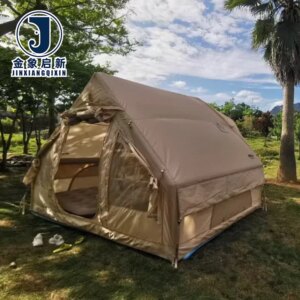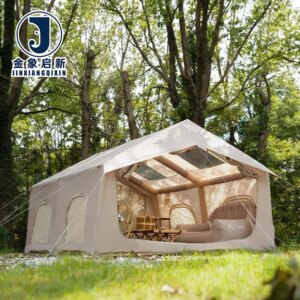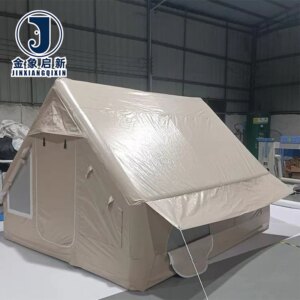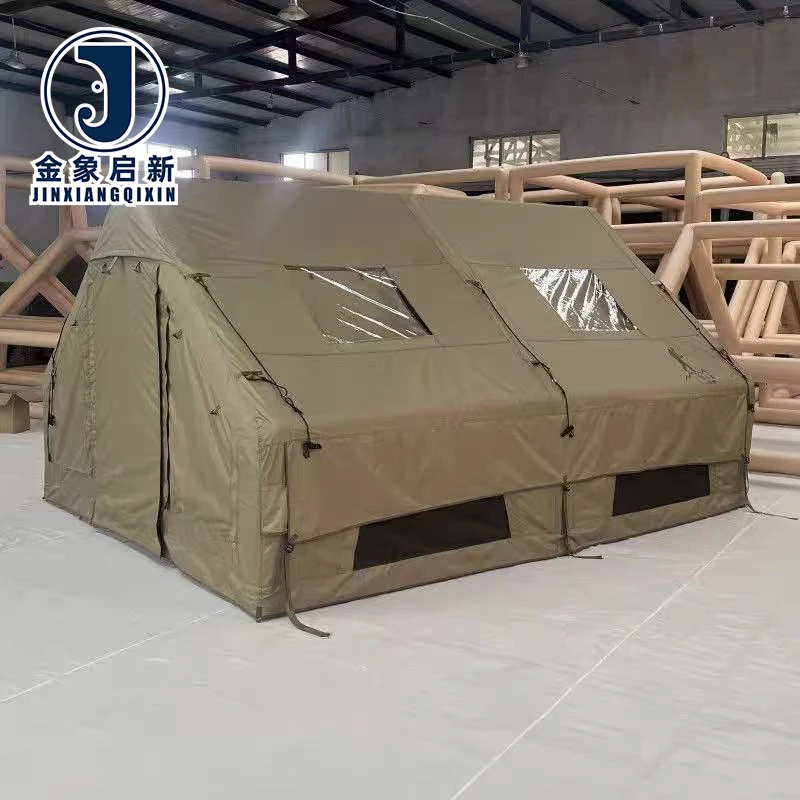
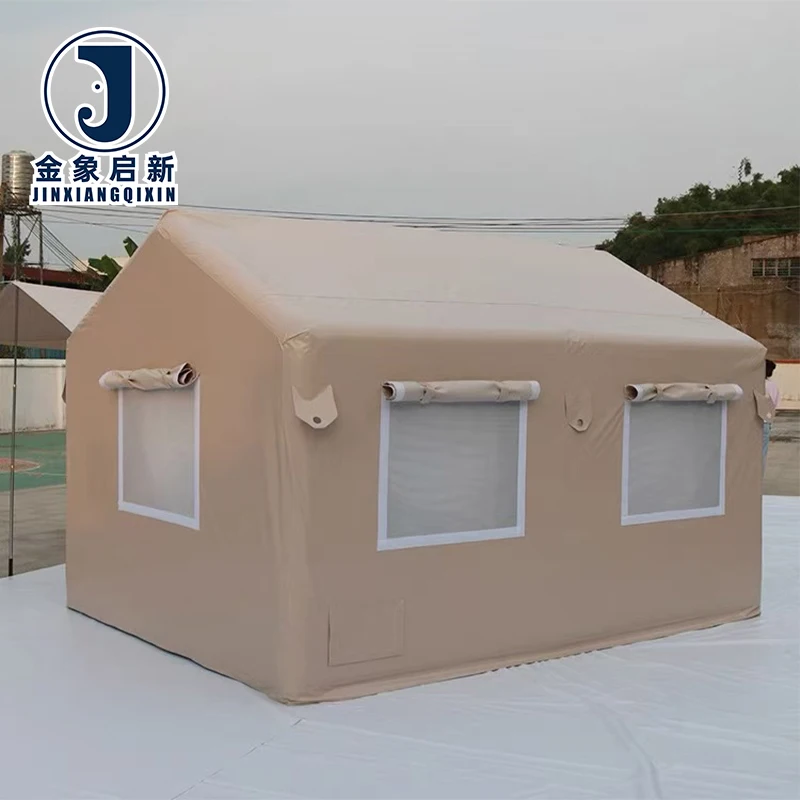
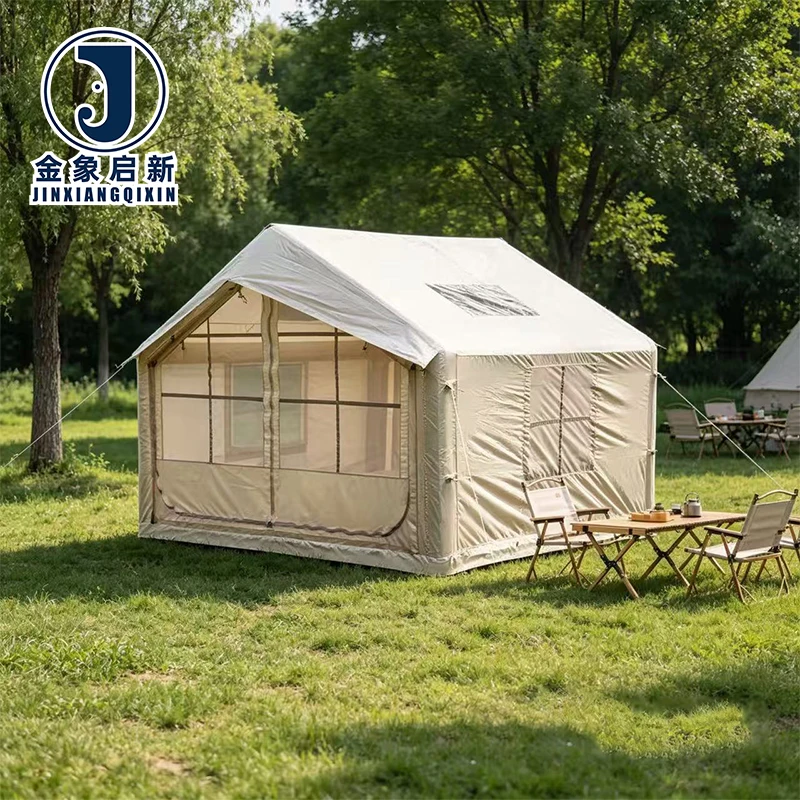
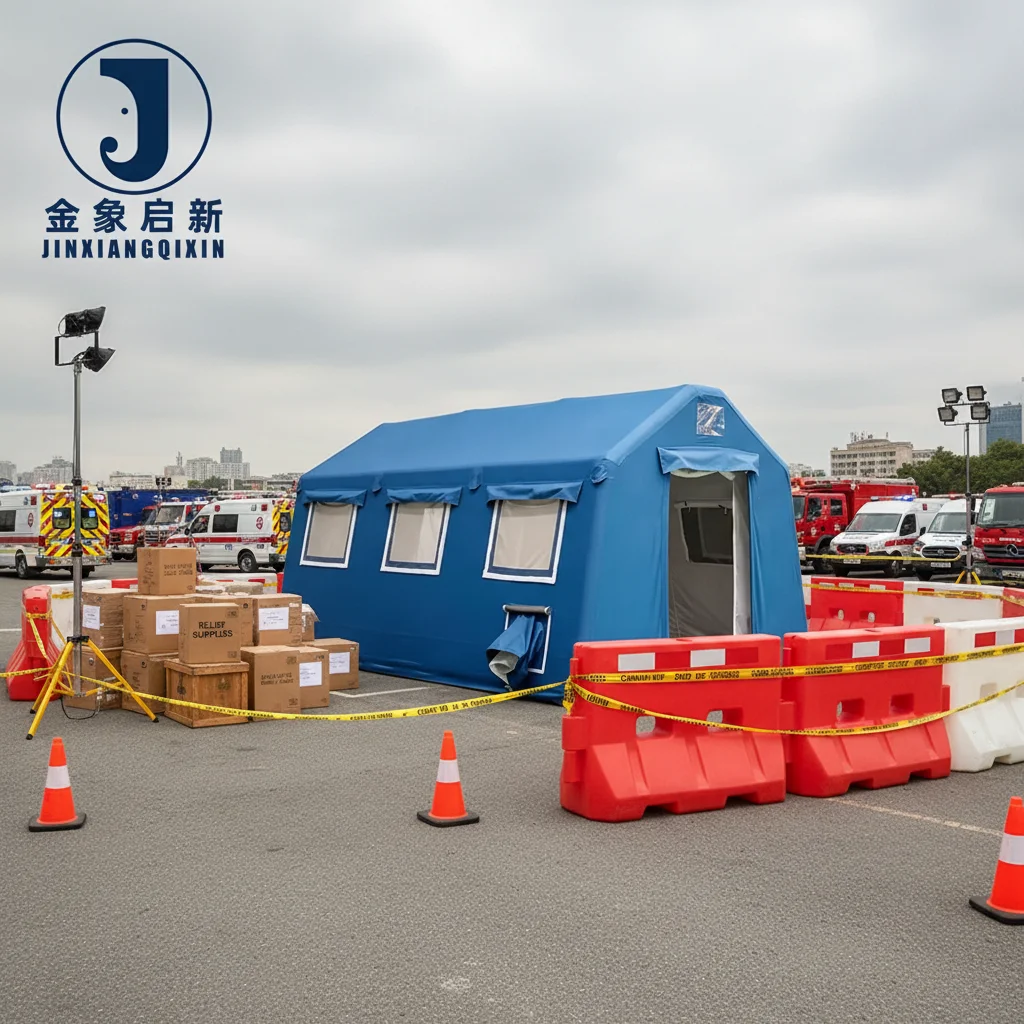
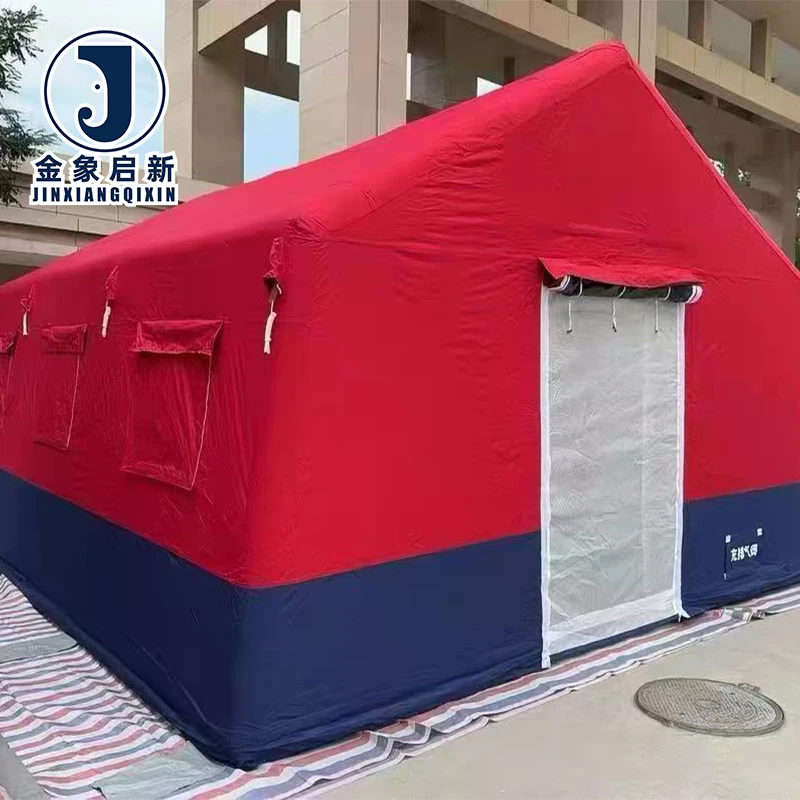
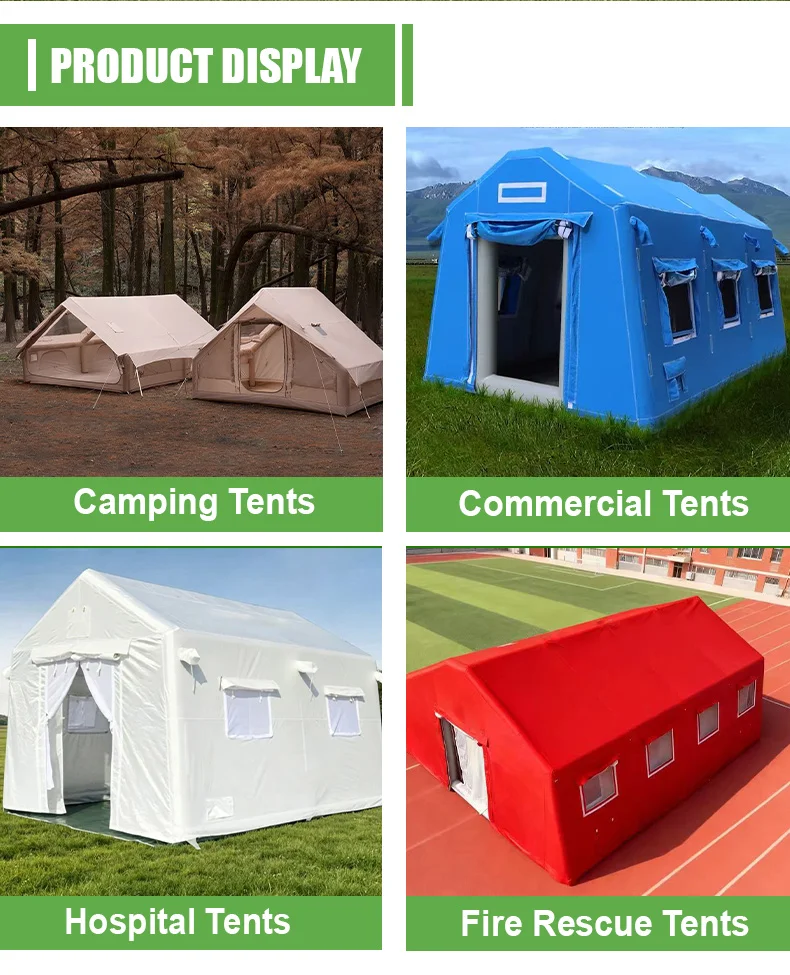
Inflatable Camping Tent — Waterproof, UV-Resistant, Tear-Resistant
- Core material: PVC tarpaulin, single-layer construction
- Four-season rating for year-round deployment
- OEM & ODM supported with custom sizes and pattern printing
Our complete custom range covers fabric weight selection, dimensional tailoring, colour matching and branded printing — built around your project specs rather than off-the-shelf limits. Every roll undergoes dedicated QA at each coating and finishing stage, with 100% pre-shipment inspection and full documentation including material spec sheets and test reports where applicable.
Description
Complete Custom Capability — Every inflatable camping tent project is developed through a controlled process from PVC material selection to final print and sizing, backed by dedicated QA at each production stage.
Technical Specifications
| Parameter | Value |
|---|---|
| Product Type | Inflatable Tent |
| Core Material | PVC Tarpaulin |
| Key Performance | Waterproof, UV-Resistant (test basis not stated in source), Tear-Resistant |
| Product Forms | Inflatable Camping Tent |
| Construction | Single Layer |
| Season Rating | Four-Season |
| Customization Service | OEM & ODM, sample customization, pattern printing |
| Standards | ISO9001, ISO14001, ISO45001, CE |
Application Suitability
| Application | Exposure & Requirement |
|---|---|
| Outdoor event management and temporary site accommodations | Rapid deployment in remote locations, constant UV exposure, wind load on inflatable structure, waterproof integrity during continuous occupation |
| Industrial storage shelters | Year-round deployment across diverse environmental conditions, abrasion from stored goods, thermal cycling affecting seam integrity |
| Commercial camping equipment manufacturing | Batch consistency across production runs, pattern printing clarity for branding, material behaviour under repeated inflation cycles |
Why Anti-UV Claims Without Test Data Cost You More Than You Think
Request the test report before you approve the sample, not after the container arrives.
When sourcing a custom inflatable tent for long-term outdoor deployment, buyers frequently encounter quotations that state "anti-UV treated" without referencing a specific test standard or exposure duration. The material arrives, passes a visual check, and is deployed — only for the PVC surface to chalk, crack, or lose tensile integrity far earlier than the project timeline anticipated. In commercial camping equipment manufacturing or remote site accommodation projects, a fabric failure mid-season means warranty claims, replacement logistics, and reputational damage that no quotation discount can offset. [NEED_CITE: accelerated UV weathering test methods for coated fabrics] An Inflatable Tent manufacturer that documents its UV treatment grade per order removes this uncertainty entirely.
Material Selection That Matches the Inflation Cycle
An inflatable camping tent places demands on PVC tarpaulin that differ fundamentally from static covers. The fabric must withstand repeated inflation and deflation without delamination at the coating-to-base-fabric interface, and it must maintain dimensional stability so that the structure holds its intended shape under varying internal pressure. Our R&D team evaluates base fabric denier and coating weight together when specifying material for an inflatable tent project, ensuring the single-layer construction performs consistently whether the structure is deployed in high-altitude cold or lowland heat. Available in flame retardant grades — confirm the grade required for your market before specifying.
From Pattern Print to Batch-Consistent Colour
Commercial camping equipment manufacturers and event management companies require branding and colour to be consistent not just within a single tent, but across an entire production batch. Colour shift between rolls becomes immediately visible when multiple units are installed side by side at a festival site or a commercial campground. [NEED_CITE: colour measurement and tolerance standards for coated fabrics] We manage this by controlling the coating formulation per batch and running colour reference checks at the point of production, so the pattern printing on your custom inflatable tent matches the approved sample from first unit to last.
How Base Fabric and Coating Weight Interact
The relationship between GSM and actual field performance in an inflatable tent is not linear. A heavier coating weight improves waterproof integrity and abrasion resistance at contact points, but if the base fabric denier and weave density are not proportioned to carry the structural load, the material will tear before the coating fails. Conversely, a high-denier base fabric with insufficient coating will wick moisture through exposed yarn at cut edges and seam lines. For inflatable camping tent applications, where the entire structure depends on airtight integrity, specifying the correct balance between base fabric and PVC coating mass is critical. Single-layer construction makes this balance even more important because there is no secondary membrane to catch a primary layer failure. Coating adhesion — the bond strength between PVC and polyester base — determines whether welded seams hold through repeated inflation cycles or begin to peel at the flex points. [NEED_CITE: coating adhesion test methods per ISO 2411]
What Happens When the Weld Fails Before the Fabric Does
Inflatable structures concentrate stress at seam junctions and at the points where the air beam meets the ground plane. If the heat-welding parameters are not matched to the specific PVC coating formulation and weight, the welded seam will become the weakest point in the entire structure. [NEED_CITE: thermal welding behaviour of PVC coated polyester fabrics] Buyers who have experienced this failure describe the same pattern: the fabric itself shows no damage, but the seam peels open at the exact location where the load flexes most during wind gusts or occupant movement. For a commercial camping equipment manufacturer, a seam failure in the field translates to product recalls. The remedy is not thicker fabric — it is documented welding parameters validated against the specific material batch.
What a Dedicated Production Line Means for Your Inflatable Tent Order
Consistent output across bulk orders requires more than capacity — it requires process control at every stage of coating, printing, and cutting. Our three full production lines and 36 sets of professional processing equipment allow us to dedicate specific lines to inflatable tent projects, maintaining coating weight consistency from the first roll to the last. The 10-technician R&D team develops custom samples within days, adjusting GSM, colour, and pattern printing to your specification before full-scale production begins. Every roll undergoes in-process QA checks, and a 100% pre-shipment inspection verifies weight, colour, and coating adhesion against the approved sample. This controlled workflow means your custom inflatable tent order ships with documented evidence of what was produced, not just what was quoted.
Documentation & Verification
- Material specification sheet stating GSM, base fabric denier, coating type, and colour reference for every inflatable tent order
- UV and flame-retardant test reports referenced by batch number where applicable to the specified grade
- ISO and CE certificates provided alongside each shipment with pre-shipment inspection records
- Roll packing list detailing net weight, roll count, and dimensions for customs clearance
- Certificate of origin and full customs documentation support for international inflatable tent shipments
Fabrication, Handling & Storage
- Heat-weld parameters must be validated against the specific PVC coating weight before production seam assembly begins
- Store rolls horizontally on padded racks to prevent permanent creasing in the PVC coating layer
- Inflate test structures gradually to allow the single-layer PVC tarpaulin to reach equilibrium tension without shock-loading seams
- Clean surfaces with pH-neutral detergent only — solvent-based cleaners degrade the PVC coating plasticiser
- Cut patterns with allowance for thermal expansion to prevent stress concentration at welded junctions in cold conditions
What We Need to Quote Your Inflatable Tent Project Accurately
To provide a specification that matches your deployment conditions, we need your target application and the environmental exposure profile — particularly UV intensity, wind load expectations, and temperature range. Specify whether you require roll stock for your own fabrication or finished inflatable camping tents cut and welded to your dimensions. Provide your pattern printing artwork and colour references if branding consistency across the batch is a requirement. Let us know the applicable fire safety or compliance standards for your destination market so we can confirm the correct treatment grade before sampling begins.
Frequently Asked Questions
Q: How is anti-UV performance tested and documented for inflatable tent fabric?
A: UV resistance is verified through standardised accelerated weathering tests that measure colour retention and tensile strength loss over defined exposure intervals. For inflatable camping tent orders where UV treatment is specified, we supply a test report referenced to the production batch, documenting the test method used and the results achieved, so you have verifiable data rather than an unsupported claim on the quotation.
Q: What custom sizing and pattern printing options are available for inflatable tents?
A: We produce custom inflatable tent structures to your specified dimensions, adjusting air beam diameter, entrance configurations, and overall footprint. Pattern printing is applied during the coating stage for permanent brand integration. Colour references are matched per batch, and a printed sample is produced for your approval before the full order enters production, ensuring visual consistency across every unit.
Q: How is colour consistency maintained across multiple tent units in the same order?
A: Colour drift between rolls is controlled by formulating the PVC coating compound per batch rather than relying on stock masterbatch. Each roll is checked against the approved colour reference during production, and any roll falling outside tolerance is segregated before it reaches the cutting stage. This process ensures that multiple inflatable tent units installed side by side present a uniform appearance.
Q: What documentation ships with each inflatable tent order?
A: Every shipment includes a material specification sheet stating GSM, base fabric, and coating details, alongside test reports for UV or flame-retardant grades where specified. ISO and CE certificates, a pre-shipment inspection record, a detailed roll packing list, and a certificate of origin are provided. This documentation package supports customs clearance and gives your procurement team full traceability.
Q: What is the sample development process and lead time for custom inflatable tent requirements?
A: Once we receive your application details, size requirements, and any pattern printing artwork, the R&D team develops a material sample reflecting the specified GSM, colour, and treatment grade. This sample is shipped for your review and approval before bulk production is scheduled. Sample development typically takes days rather than weeks, allowing your procurement timeline to proceed without unnecessary delay.
Related products
-
Inflatable Tent Four-Season Quick Automatic Opening PVC 3000mm Waterproof Foldable Eco-Friendly 2-3/3-4/6-8 Person Outdoor Use
Read more -
Inflatable Camping Tent PVC Waterproof Four-Season Outdoor Air Tent with Quick Automatic Opening for 3-4 Person
Read more -
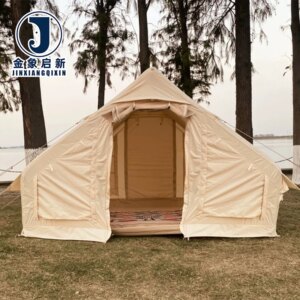
Four-Season Inflatable Tent Single Layer >3000mm Waterproof Windproof Quick Automatic Opening PVC Fabric Eco-Friendly
Read more -
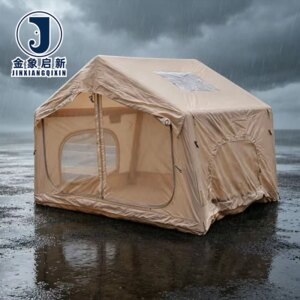
Inflatable Camping Tent Waterproof Outdoor Air Tent for Camping Inflatable Tent Shelter
Read more