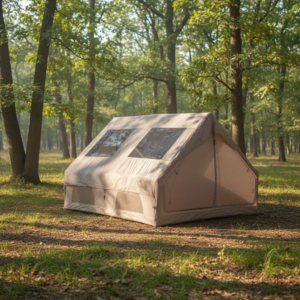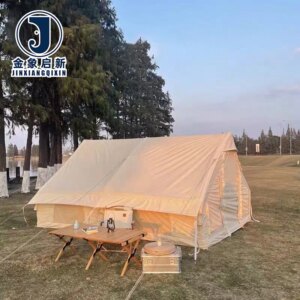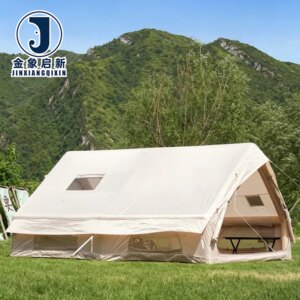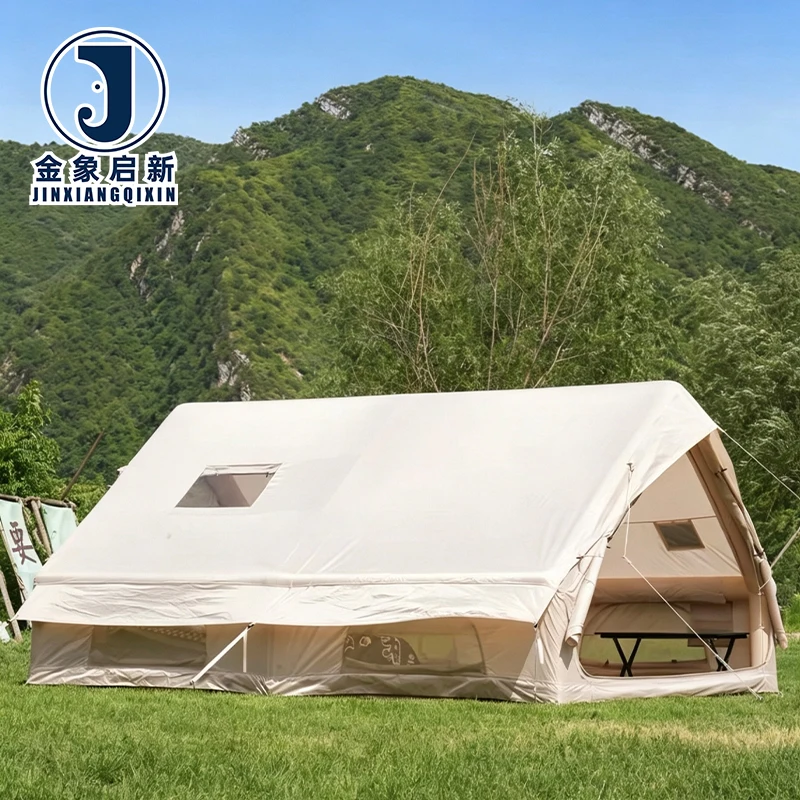
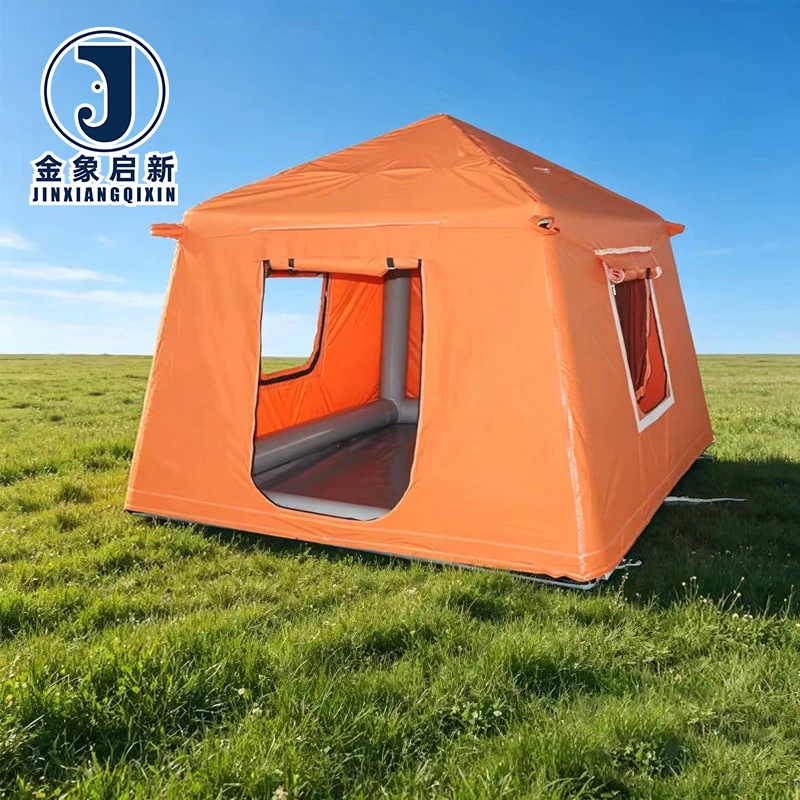
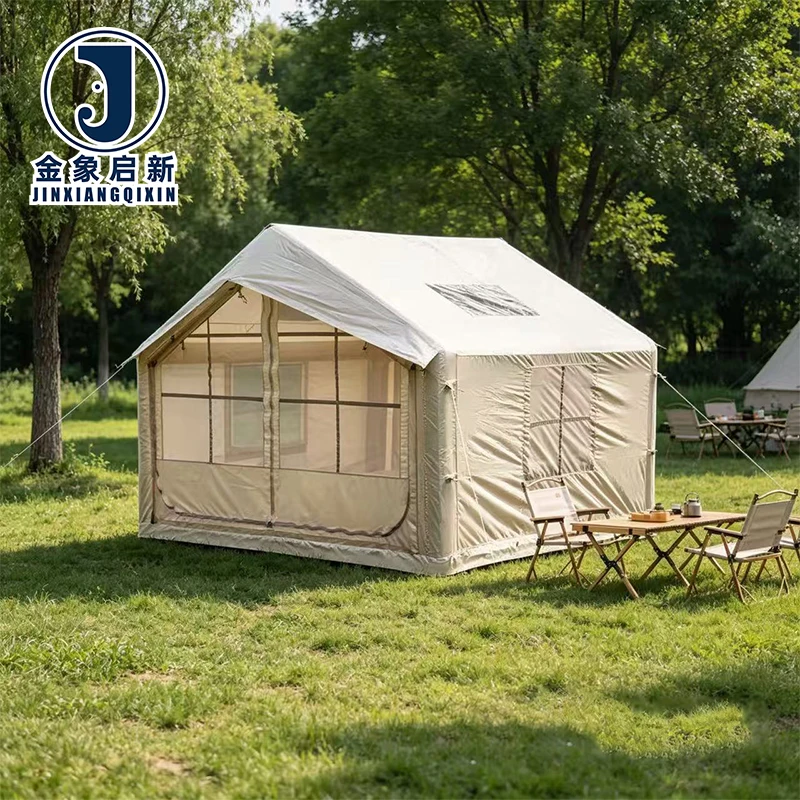
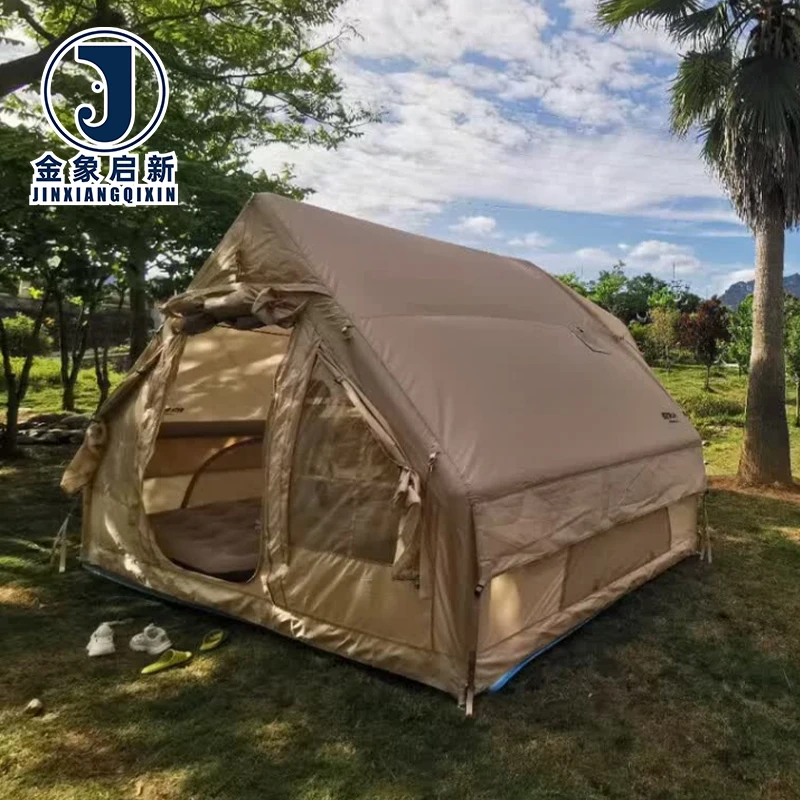
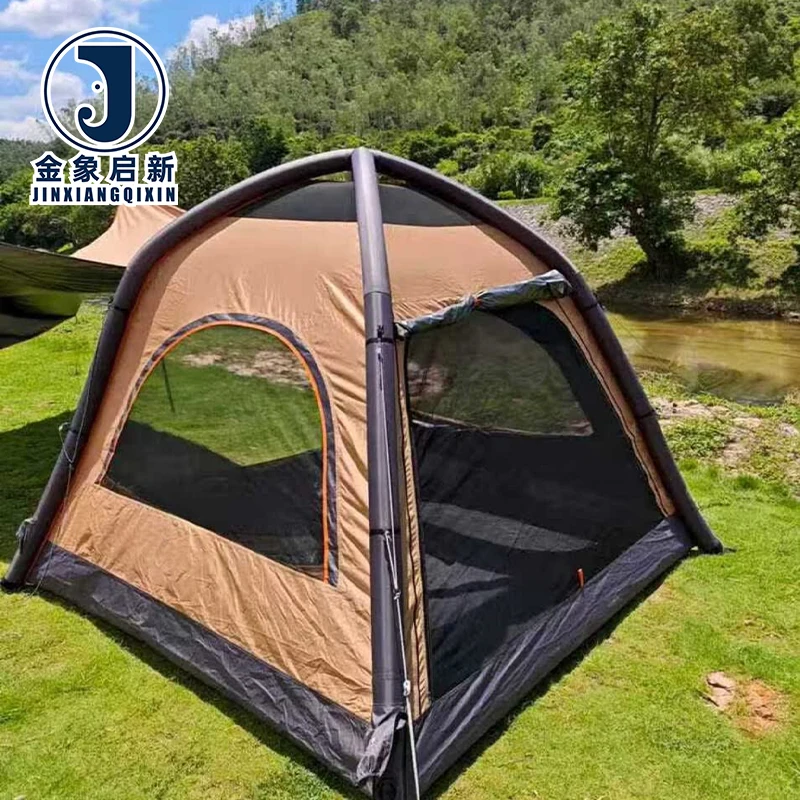
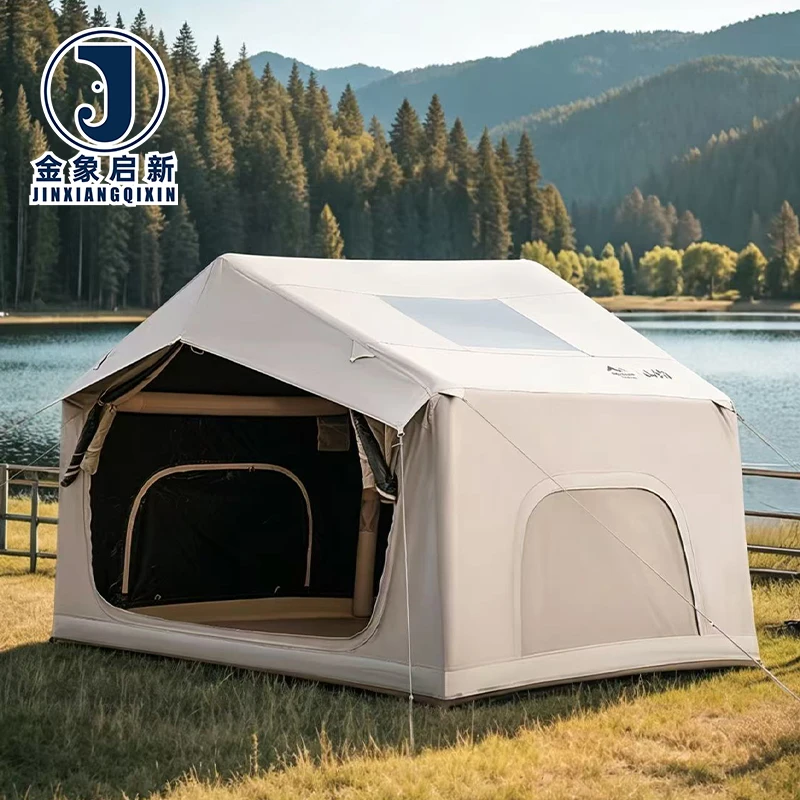
Inflatable Tent — PVC tarpaulin, 2-3 person capacity, four-season rating, heat-sealed seams — designed for commercial outdoor equipment manufacturing and industrial site accommodation.
Specifying inflatable structure fabric means weighing waterproof integrity against UV stability and flame retardancy; heat-sealed seams maintain air-holding performance where stitched panels would fail under inflation pressure. Fire-retardant to EN 13501-1 with anti-static treatment for industrial environments.
- Full OEM & ODM capability with sample development, pattern printing and custom sizing
- Waterproof rating ≥5000mm H₂O and tensile strength ≥2000N/5cm
- 10-technician R&D team supporting material selection and structure design
- 100% pre-shipment inspection across three dedicated production lines
Description
Coated Fabric Expertise — nearly 30 years of PVC knife-coated production control supporting inflatable structure manufacturers with consistent seam integrity and material performance.
Technical Specifications
| Parameter | Value |
|---|---|
| Product Type | Inflatable Tent Fabric |
| Core Material | PVC knife-coated fabric |
| Product Forms | Inflatable structure, 2-3 person capacity |
| Coating Method | Knife coated |
| Seam Construction | Heat-sealed seams |
| Waterproof Rating | ≥5000mm H₂O (source value — verify against manufacturer catalog) |
| Tensile Strength | ≥2000N/5cm (standard not stated in source) |
| Flame Retardant | EN 13501-1 (grade not stated in source) |
| UV Treatment | UV-resistant (test basis not stated in source) |
| Anti-Static | Anti-static (standard not stated in source) |
| Thickness Tolerance | ±5% (source value — verify against manufacturer catalog) |
| Printing Option | Pattern printing available (OEM & ODM) |
| Standards | ISO 9001, ISO 14001, ISO 45001, CE, EN 13501-1 |
Application Suitability
| Application | Exposure & Requirement |
|---|---|
| Commercial inflatable tent production | Repeated inflation cycles, seam stress under pressure, UV exposure during extended outdoor deployment |
| Industrial event temporary structures | Rapid deployment and teardown, wind loading, foot traffic abrasion at ground contact points |
| Site accommodation enclosures | Prolonged weather exposure, temperature fluctuation, fire safety compliance on construction sites |
| Emergency response training scenarios | Frequent inflation and deflation, transport and storage between deployments, all-weather reliability |
| Equipment storage covers | Static load bearing, moisture ingress prevention, dust and debris exclusion |
Why Inflatable Structures Fail at the Seam Before the Fabric Gives Way
Heat-sealed seams must match or exceed the base fabric strength to prevent catastrophic deflation under load.
Most inflatable tent returns trace back to a single point: the welded joint separating under inflation pressure while the surrounding PVC knife-coated fabric remains intact. When seam adhesion is weaker than the coated fabric itself, the structure loses pressure at the exact location experiencing the highest flex cycle count. This is not a material defect — it is a fabrication process gap. Manufacturers sourcing custom inflatable structure PVC need test data on seam peel strength, not just fabric tensile values [NEED_CITE: tensile and tear test methods for coated fabrics per ISO 1421].
Seam Integrity Under Continuous Inflation Pressure
Every inflatable tent fabric manufacturer understands that the air beam is only as reliable as its weakest weld. Our heat-sealed seam construction is designed to maintain bond integrity across repeated inflation and deflation cycles, addressing the most common failure mode in commercial inflatable structures. The knife-coated PVC surface provides a consistent bonding interface for thermal welding equipment.
Balancing Weight and Structural Performance
Inflatable structures demand a fabric that holds pressure without excessive weight — heavier GSM grades add stability but increase packed size and deployment effort. The PVC knife-coated construction balances coated fabric durability with the lightweight requirements of portable inflatable tent systems. This matters for commercial outdoor equipment manufacturers producing units that end users must transport and deploy without specialized machinery.
Thickness Uniformity and Inflation Consistency
An inflatable tent relies on uniform wall thickness to inflate evenly and hold its designed shape. Thickness variation across the fabric surface creates soft spots that deform under pressure and stiff zones that resist forming. Our in-line thickness control targets ±5% tolerance across the coated fabric roll, giving inflatable structure manufacturers a predictable material behaviour during fabrication and end-use [NEED_CITE: thickness uniformity standards for coated technical textiles].
Understanding the Specification Parameters
Knife-coated PVC fabric for inflatable structures requires reading multiple specifications together rather than isolating any single value. Tensile strength rated at ≥2000N/5cm indicates the load the base fabric can sustain before rupture, but this figure is meaningful only when paired with seam peel strength data — a fabric that tears at 2000N while its weld fails at half that load offers no practical advantage. The EN 13501-1 flame retardant classification addresses reaction-to-fire requirements increasingly specified for temporary structures at public events and industrial sites, though the specific grade within that standard should be confirmed against your local jurisdiction’s fire code. Waterproof rating of ≥5000mm H₂O reflects the hydrostatic head the coated surface can resist before water penetration, a critical parameter for four-season inflatable tent applications where rain loading combines with wind-driven moisture. The heat-sealed seam construction eliminates needle holes that would otherwise compromise this waterproof barrier at every panel joint.
What Happens When Material Specifications Are Not Verified Before Production
Colour variation between rolls in a multi-roll inflatable tent order becomes visible only after fabrication, when adjacent panels show mismatched tones across the finished structure. Fabric that arrives lighter than the quoted GSM may still inflate and hold pressure initially, but the reduced coating weight accelerates wear at high-flex zones around valve ports and beam junctions. Flame retardant claims without supporting test documentation create compliance risk at the point of installation — a site inspector requesting certification that does not exist means the entire structure is rejected [NEED_CITE: EN 13501-1 fire classification for building materials].
Why Source Inflatable Tent Fabric Through This Facility
Three full production lines with 36 sets of professional equipment provide the capacity for inflatable tent fabric orders that demand consistent roll-to-roll quality across volume batches. The 10-person R&D team handles material selection, pattern printing, and custom sizing directly — specifications are developed in-house rather than passed through intermediaries. Dedicated QA/QC at every production stage with 100% pre-shipment inspection catches thickness deviation and seam adhesion issues before rolls leave the facility. Sample development within days allows inflatable structure manufacturers to validate material behaviour on their own welding equipment before committing to production volumes.
Documentation & Verification
- Material specification sheet stating GSM, base fabric denier, and coating weight per batch
- UV and flame retardant test reports with documented standards where applicable
- Batch-specific quality inspection report covering waterproof rating and tensile results
- Pre-shipment inspection record with 24-point checklist including seam integrity verification
- Certificate of origin and customs documentation for international inflatable tent fabric shipments
Fabrication, Handling & Storage
- Heat-sealed seams require calibrated temperature and dwell time matched to the PVC knife-coated fabric thickness
- Store rolls upright on pallets to prevent flat-spot deformation across the coated surface
- Allow cold-stored rolls to reach ambient temperature before unrolling to avoid coating crack damage
- Use PVC-compatible cleaners only — solvent-based products degrade the knife-coated surface layer
- Pattern printing adhesion should be tested on sample pieces before full-run production application
- Cut panels with sealed edges where possible to prevent moisture ingress into the base fabric weave
Preparing Your Inflatable Tent Fabric Inquiry
Provide your intended application, deployment environment, and the inflation pressure range your structure operates within. Specify any fire safety classification required by your target market so we can confirm available flame retardant grades. Indicate whether you need rolls for your own fabrication line or finished panels with heat-sealed seams and valve ports. Share your colour reference and whether pattern printing or branding is required for your inflatable structure product line.
Frequently Asked Questions
Q: How can I verify GSM and material weight when my inflatable tent fabric order arrives?
A: Every shipment includes a material specification sheet stating the GSM, base fabric, and coating details for each roll. We conduct weight verification per roll against stated values before dispatch. Buyers should perform their own cut-sample weighing upon receipt using a calibrated scale to confirm the delivered fabric matches the quoted specification within acceptable tolerance.
Q: What fire-retardant certifications are available for inflatable structures in different markets?
A: Our PVC inflatable tent fabric is classified under EN 13501-1 for reaction to fire. The specific grade within this standard depends on your application and local regulatory requirements. We recommend confirming the exact fire classification your market demands before placing an order, and we provide test reports documenting the applicable grade for each production batch.
Q: How is batch-to-batch colour consistency maintained across multi-roll inflatable tent orders?
A: Colour consistency across rolls is controlled through standardized pigment dosing and in-line coating monitoring during production. For orders spanning multiple rolls, we reference a single colour standard throughout the batch. We recommend requesting a production sample from the first roll to verify colour match before the remaining rolls are completed and shipped.
Q: What customization options exist for sizing, printing, and minimum order quantities?
A: Our inflatable tent fabric supports OEM and ODM customization including pattern printing, custom widths, and cut-to-size panels. The 10-person R&D team develops samples within days for your approval before bulk production. Contact our team with your specific dimensions, colour requirements, and printing details to receive a quotation with applicable minimums and lead times.
Q: How is heat-sealed seam performance tested and what does quality control cover?
A: Heat-sealed seams undergo integrity verification as part of our 24-point pre-shipment inspection checklist, which includes seam peel strength assessment and visual examination for bonding defects. A 72-hour inflation pressure test is conducted on fabricated structures to identify any leak points before dispatch. Inspection records documenting these results ship with every order.
Related products
-
Luxury PVC Inflatable Tent for Glamping Outdoor Waterproof with Quick Automatic Opening Four-Season Foldable Design and Pump
Read more -
Inflatable Camping Tent PVC Waterproof Four-Season Outdoor Air Tent with Quick Automatic Opening for 3-4 Person
Read more -
Inflatable Camping Tent Waterproof Outdoor Air Tent for Camping Inflatable Tent Shelter
Read more -
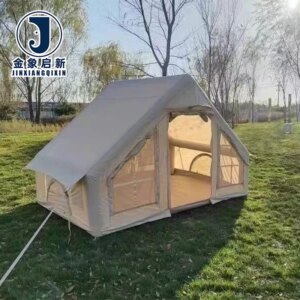
Outdoor Portable Camping Inflatable Tent Luxury All-Season Use Overnight Large Space Rainproof Insulated Quick Automatic Opening
Read more