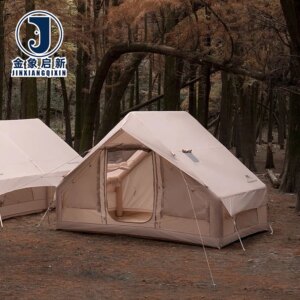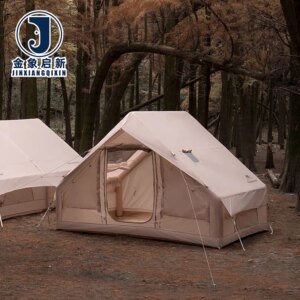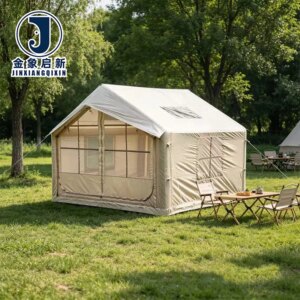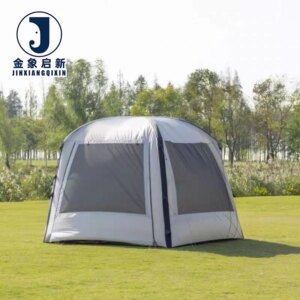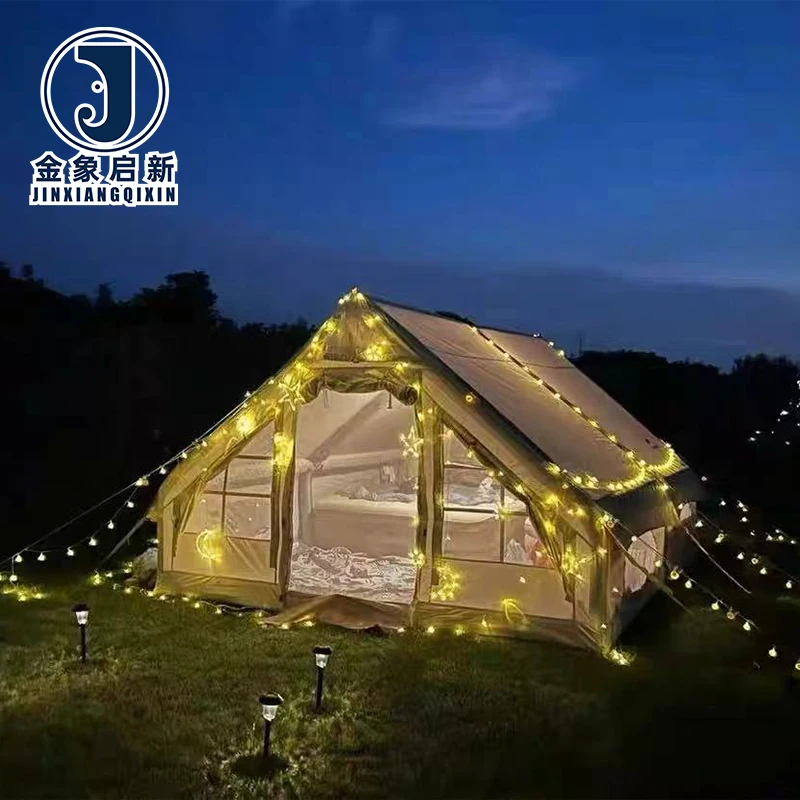
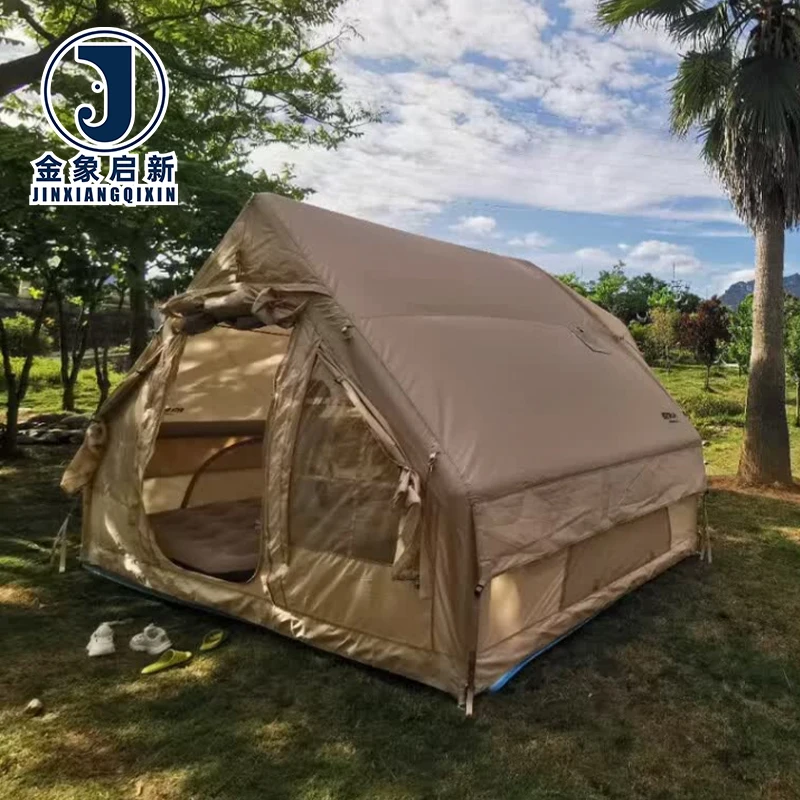
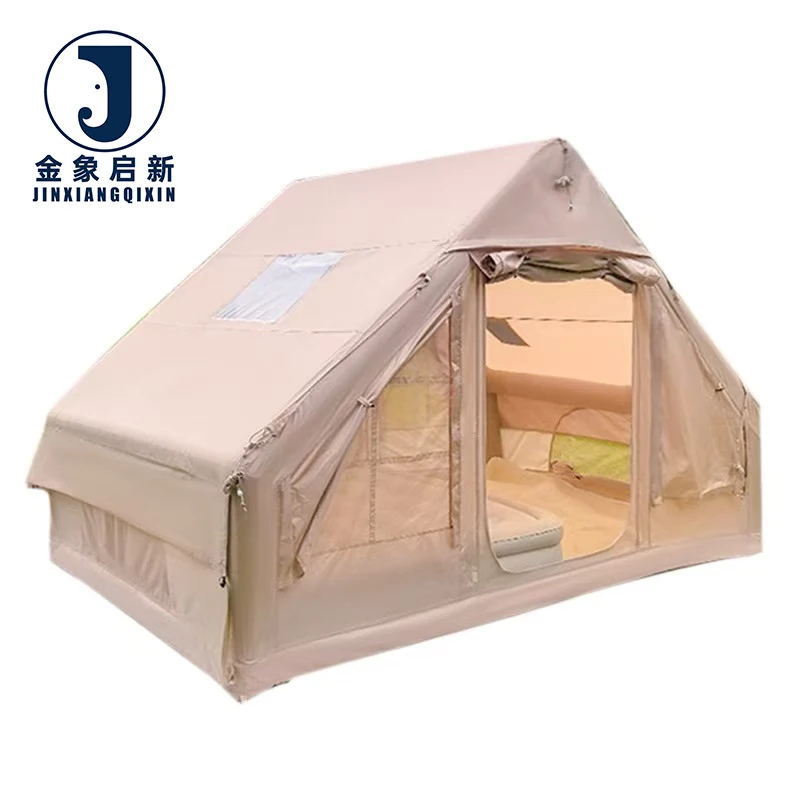
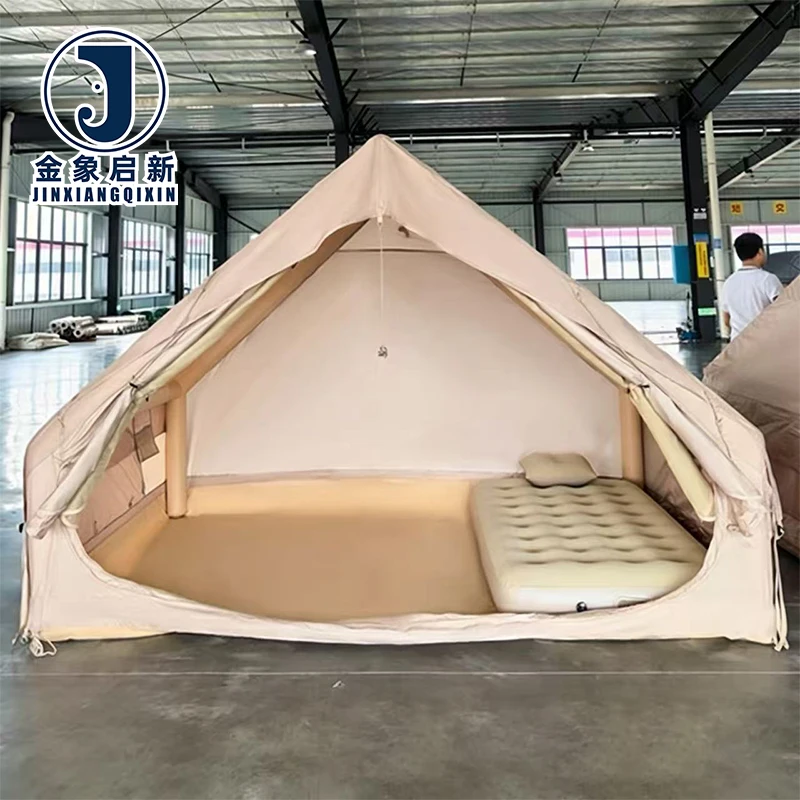
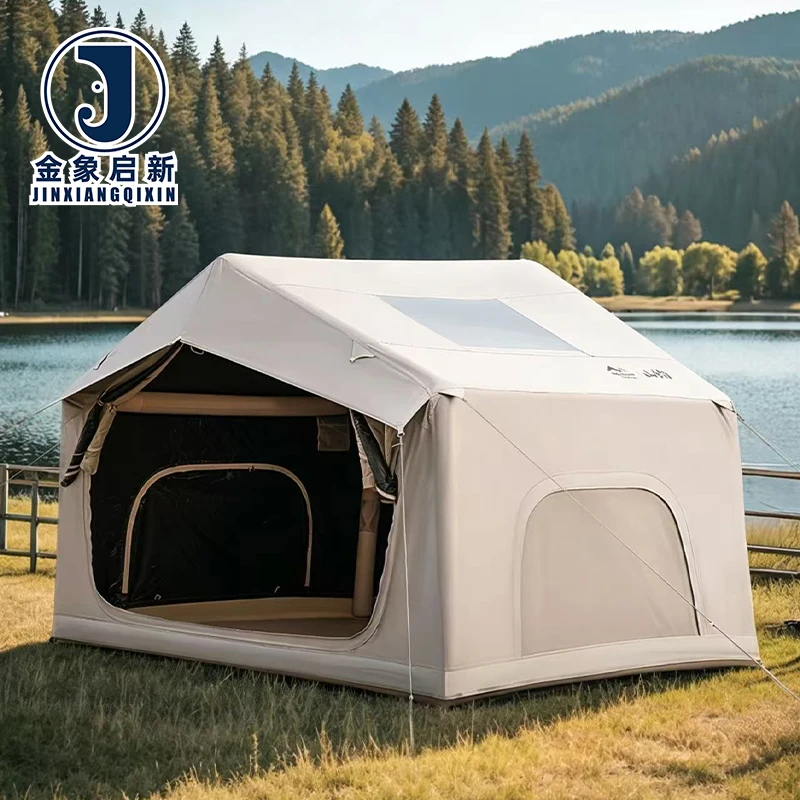
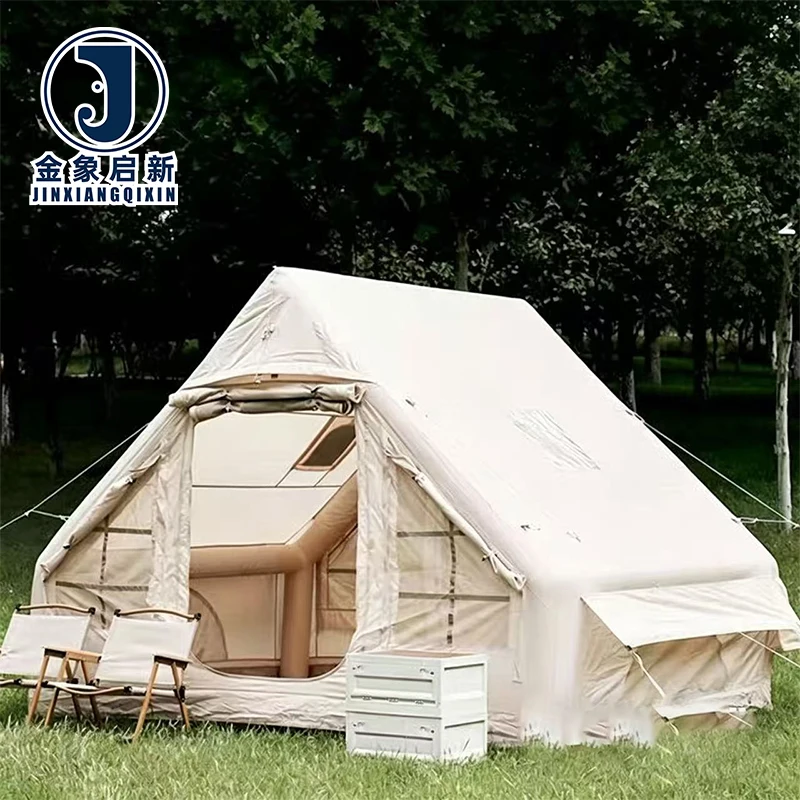
Waterproof Inflatable Camping Tent for 4-6 Person — PVC tarpaulin construction with double door design and UV-resistant coating for reliable outdoor deployment.
- Built on nearly 30 years of coated fabric expertise, each tent undergoes strict material and seam control to ensure batch-consistent waterproofing and structural integrity across large orders.
- Full OEM and ODM support covers dimensional changes, custom pattern printing, and material thickness adjustments, with samples developed rapidly for buyer evaluation before commitment.
Backed by 100% pre-shipment inspection, dedicated QA at every stage, and a 10-person R&D team handling full customization from concept to delivery.
Description
Process Control — Nearly 30 years of coating expertise applied to every roll of inflatable tent fabric, with QA checks at every production stage rather than only at dispatch.
Technical Specifications
| Parameter | Value |
|---|---|
| Product Type | Inflatable Tent |
| Core Material | PVC tarpaulin |
| Capacity | 4-6 Person |
| Design Feature | Double Door |
| Key Performance | Waterproof, UV-resistant (test basis not stated), tear-resistant |
| Waterproof Rating | Hydrostatic head resistance exceeding industry standards (specific value not stated) |
| UV Treatment | Proprietary UV-resistant coating formulation (test basis not stated) |
| Customization | OEM & ODM: sample customization, pattern printing, dimensional modifications |
| Standards | ISO 9001, ISO 14001, ISO 45001, CE |
Application Suitability
| Application | Exposure & Requirement |
|---|---|
| Commercial camping equipment rental fleets | Repeated inflation cycles, seasonal UV exposure, frequent packing and transport abrasion |
| Glamping and outdoor hospitality operations | Extended seasonal deployment, guest-facing aesthetics, weather resistance across variable conditions |
| Event infrastructure and temporary shelters | Rapid deployment and teardown, wind load on inflated structure, public safety compliance |
| Expedition outfitting services | Remote field conditions, temperature fluctuation, reliability where replacement is not an option |
Why Coated Fabric Consistency Matters More Than You Think for Inflatable Camping Tents
Batch-to-batch coating variation is the leading cause of premature inflatable tent failure in rental and commercial fleets.
When an inflatable tent manufacturer sources PVC tarpaulin from suppliers without in-line coating weight control, the result is fabric that passes initial inspection but degrades unevenly across a production run. One roll may hold air pressure reliably through an entire rental season, while the next develops micro-leaks at the weld seams within weeks. For operators managing dozens of units, this inconsistency translates directly into warranty claims, customer complaints, and unplanned replacement costs. [NEED_CITE: PVC coating adhesion variability and weld seam performance in inflatable structures]
Coating Weight Control and Inflatable Structure Integrity
The performance of any inflatable camping tent depends entirely on the uniformity of the PVC coating applied to the base fabric. Uneven coating thickness creates weak points where air pressure concentrates stress, particularly at welded seams and valve attachment zones. Our three full production lines maintain continuous coating weight monitoring, ensuring that each roll of inflatable tent fabric meets the specified thickness across its entire width and length. This level of control is what separates fabric that holds pressure reliably from fabric that develops slow leaks mid-season.
UV Resistance and Seasonal Deployment Cycles
Outdoor hospitality operators and rental fleet managers deploy inflatable camping tents through entire seasons of direct sun exposure. The proprietary UV-resistant coating formulation applied to this PVC tarpaulin extends service life under prolonged sunlight compared to standard untreated materials. For buyers specifying custom inflatable camping tents, it is important to confirm the UV test basis relevant to your target market, as regional standards and exposure conditions vary significantly between Northern European summers and equatorial deployments. [NEED_CITE: UV degradation test methods for PVC coated fabrics used in temporary structures]
Understanding How Base Fabric and Coating Work Together
The tear resistance of this inflatable tent fabric results from the interaction between the PVC tarpaulin coating and the underlying woven base fabric. Coating weight alone does not determine how the material behaves when punctured or stressed at fold lines. The base fabric’s weave pattern and yarn denier govern how a tear propagates once initiated, while the coating provides the waterproof barrier and contributes to overall stiffness. When evaluating an inflatable tent fabric manufacturer, request both the base fabric specification and the coating weight separately, rather than relying solely on a total GSM figure that obscures the contribution of each layer.
What Happens When the Wrong Fabric Grade Reaches Production
Specifying a lighter PVC tarpaulin grade to reduce unit cost on an inflatable camping tent often reveals itself only after the first deployment cycle. Weld seams that passed factory testing begin to separate under the combined stress of internal air pressure and wind loading. Rental operators discover that tents requiring mid-season patching were built from fabric that was marginal for the application from the start. The cost of field repairs and customer refunds consistently exceeds the per-unit savings from choosing a lower specification. [NEED_CITE: field failure rates of inflatable structures relative to fabric grade selection]
Why Procurement Teams Choose This Source
Dedicated coating process control across three production lines means that the PVC tarpaulin used for your inflatable tent order maintains consistent weight and adhesion from first roll to last. The 10-technician R&D team handles material selection and sample development specifically for inflatable applications, adjusting coating formulation and base fabric to match your inflation pressure requirements. Every roll undergoes in-process QA checks before it reaches the cutting table, and 100% pre-shipment inspection includes 24-hour pressure testing on finished inflatable structures to verify seam integrity. Pattern printing and dimensional customization are handled in-house, eliminating the coordination risk of sending fabric to a third-party converter. Documentation travels with every shipment, providing traceability from raw material batch to finished inflatable camping tent.
Documentation & Verification
- Material specification sheet listing PVC tarpaulin base fabric, coating weight, and colour reference per roll
- UV and waterproof test reports provided per batch upon confirmation of required standards
- Pre-shipment inspection record covering seam integrity and 24-hour pressure test results
- ISO 9001, ISO 14001, ISO 45001, and CE certificates included for compliance verification
- Roll packing list with batch traceability codes for every inflatable tent fabric shipment
Fabrication, Handling & Storage
- Heat welding parameters must be adjusted to the specific PVC tarpaulin coating weight to prevent seam delamination
- Store rolls upright on padded racks to avoid flat-spotting and permanent crease marks on the coating surface
- Allow cold-stored inflatable tent fabric to reach ambient temperature before unrolling to prevent coating micro-cracking
- Use PVC-compatible cleaners only; solvent-based products degrade the waterproof coating layer
- Pattern printing adhesion should be verified on sample panels before full production run commitment
What We Need to Build Your Specification
To move from inquiry to sample for your custom inflatable camping tent, provide the intended deployment environment and expected seasonal exposure duration. Confirm whether your target market requires specific fire classification or UV test documentation. Share the dimensional requirements, colour or printing specifications, and whether you need finished tents or fabric rolls for your own production line.
Frequently Asked Questions
Q: What customization options are available for dimensions, printing, and material adjustments?
A: The inflatable tent fabric supports OEM and ODM customization including pattern printing, dimensional modifications, and sample development. Our R&D team adjusts coating formulation and base fabric selection to match your inflation pressure and environmental requirements. Custom colours and printed branding are handled in-house across all three production lines.
Q: How is waterproof and UV performance verified before shipment?
A: Each batch undergoes in-process QA checks during production. Pre-shipment inspection includes hydrostatic head testing and visual examination of coating uniformity. UV resistance test reports are provided upon confirmation of the test standard required for your market. Finished inflatable camping tents also undergo 24-hour pressure testing to verify seam integrity.
Q: Can samples be provided for evaluation before bulk ordering?
A: Sample development is available for custom specifications, allowing you to evaluate the PVC tarpaulin coating weight, base fabric hand feel, and weld seam behaviour before committing to a production order. Samples are typically developed within days, and approval is required before bulk production begins.
Q: What documentation is included with each commercial order?
A: Every shipment includes a material specification sheet, batch inspection records, roll packing list with traceability codes, and relevant ISO and CE certificates. Pre-shipment inspection records cover seam integrity and pressure testing results. Certificates of origin and customs documentation are provided as standard for export orders.
Related products
-
High Quality Four-Season Inflatable Tent for Camping Durable PVC Material All-Weather Resistance Quick Automatic Opening
Read more -
Outdoor Camping Inflatable Tent Luxury All-Season Use PVC Waterproof Quick Automatic Opening Rainproof Insulated
Read more -
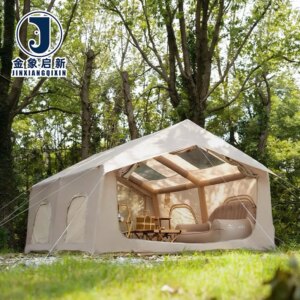
Inflatable Camping Tent Waterproof PVC Outdoor Air Tent Easy Setup Family Camping Shelter
Read more -
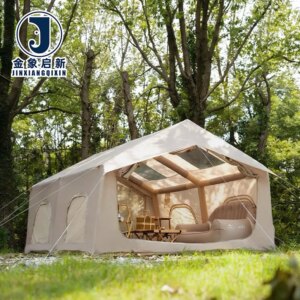
Inflatable Four-season Camping Tent-PVC Coated Waterproof Eco-Friendly Quick Inflation CE Certified ODM/OEM Accepted
Read more