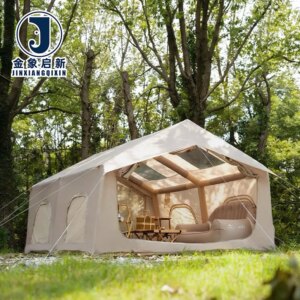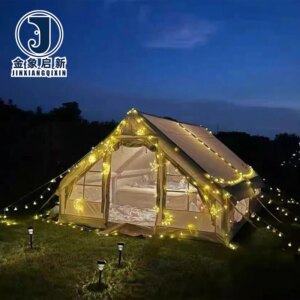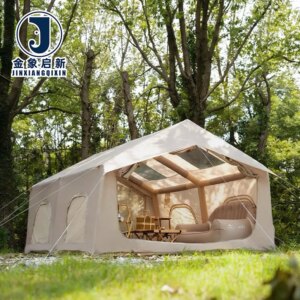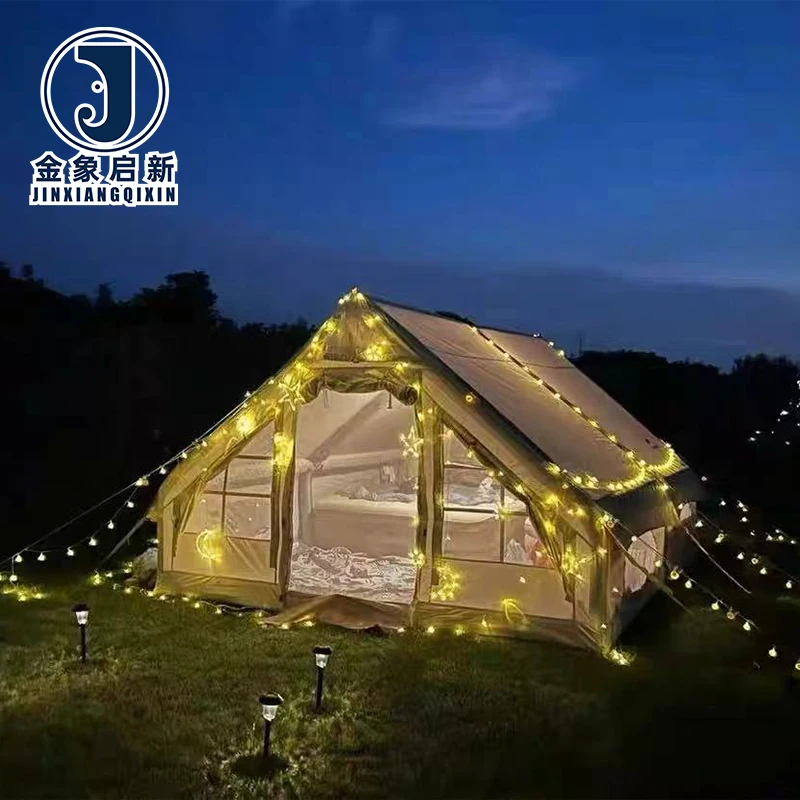
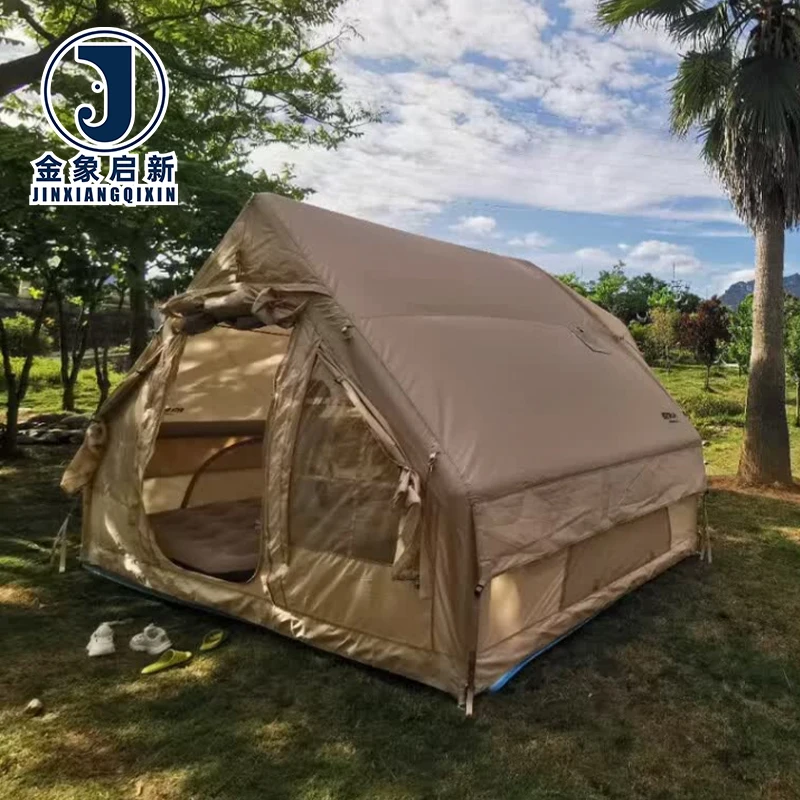
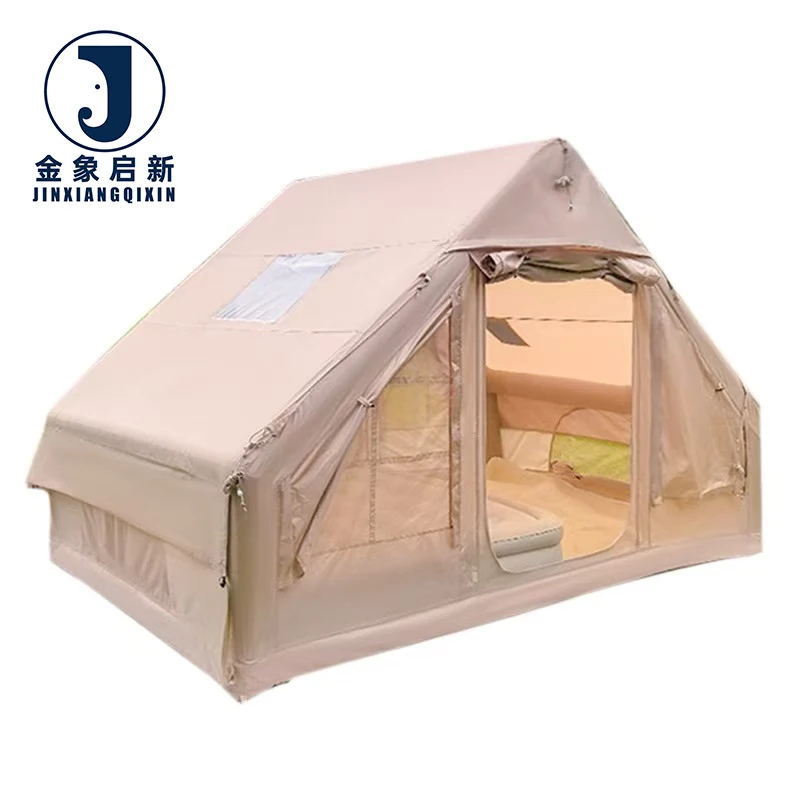
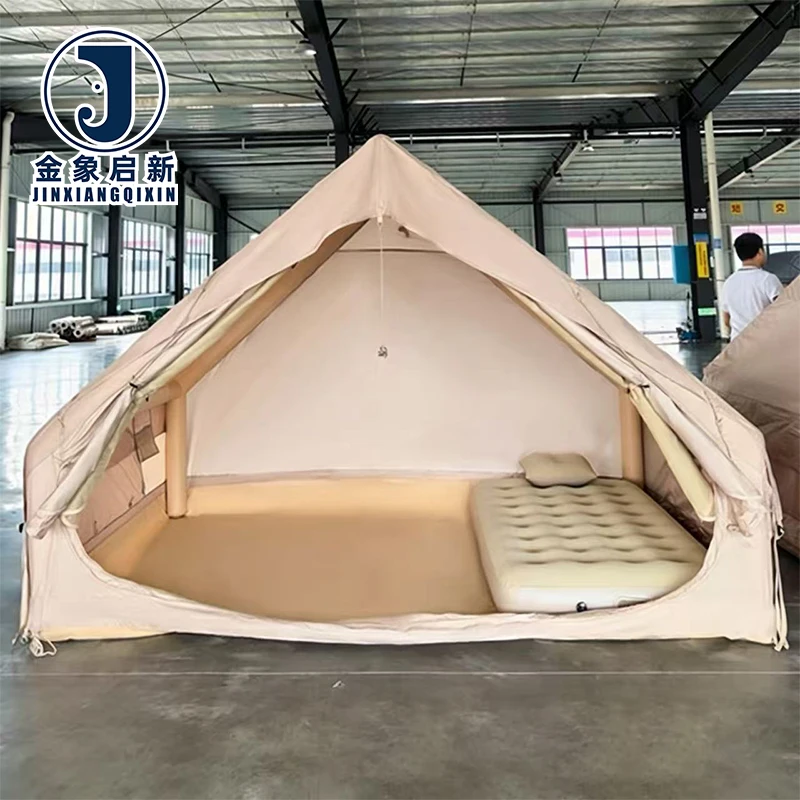
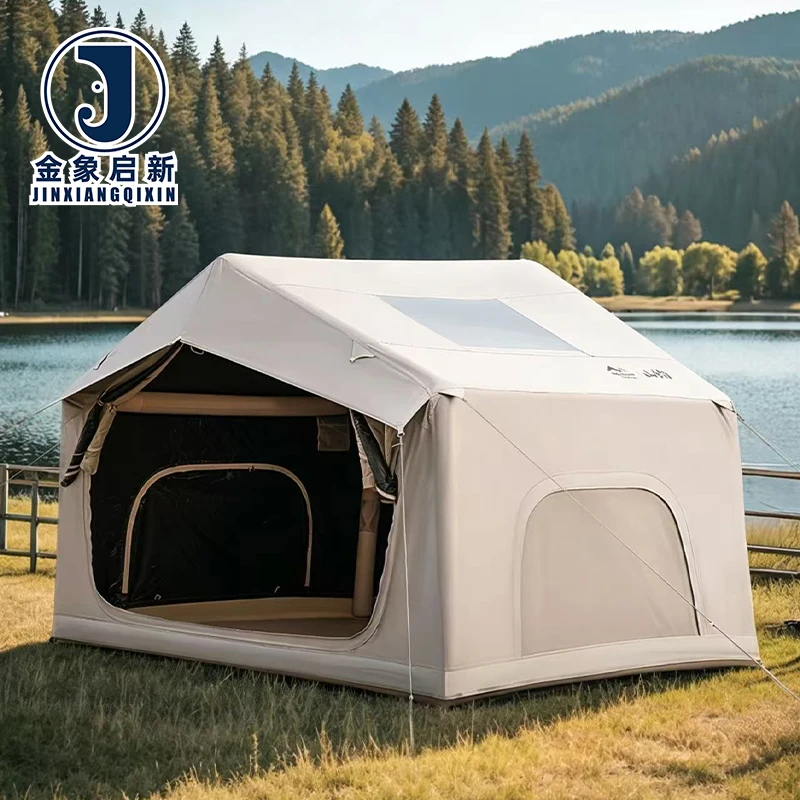
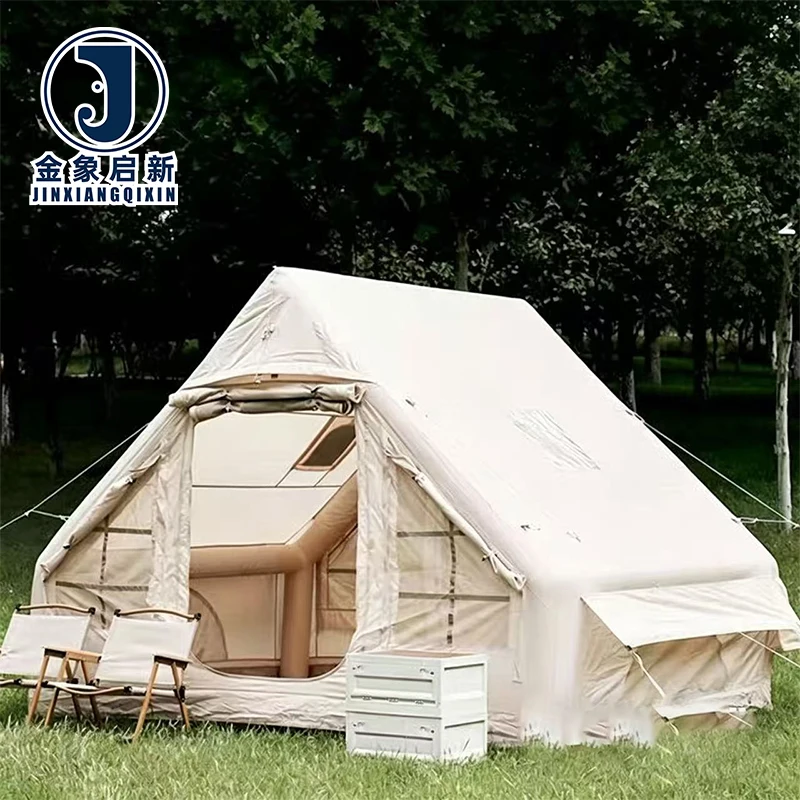
Inflatable Camping Tent — waterproof PVC tarpaulin construction with UV-resistant coating and double door design.
- Engineered for commercial rental fleets and glamping deployments where batch-to-batch material consistency directly impacts customer satisfaction and replacement costs
- Each unit undergoes 24-hour pressure testing to verify inflatable structure integrity before dispatch
10-person R&D team supports OEM customization from material thickness to pattern printing, with full-process QA inspection and sample development within days.
Description
Coated Fabric Depth — Three dedicated production lines and 36 sets of processing equipment underpin every inflatable camping tent fabric order, with in-process QA at each coating stage to catch weight drift before it reaches the slitting line.
Technical Specifications
| Parameter | Value |
|---|---|
| Product Type | Inflatable Camping Tent |
| Core Material | PVC tarpaulin |
| Key Features | Waterproof, UV-resistant, tear-resistant |
| Customization | OEM & ODM including sample customization and pattern printing |
| Quality Control | Full-process inspection with dedicated QA & QC staff |
| Certification | ISO9001, ISO14001, ISO45001, CE |
Application Suitability
| Application | Exposure & Requirement |
|---|---|
| Commercial rental fleet operations | Repeated inflation-deflation cycles, handling abrasion, storage compression between seasons |
| Glamping and outdoor hospitality sites | Continuous UV exposure, rain and wind loading, guest turnover demanding quick setup |
| Expedition outfitting and wholesale supply | Transport vibration, variable climate zones, bulk consistency across tent units |
| Event infrastructure provision | Short-term high-visibility deployment, frequent relocation, surface scuffing during rigging |
| Large-scale camping equipment distribution | Shelf-ready packaging integrity, batch-to-batch colour matching across container loads |
When Waterproof Claims Fail the First Rainstorm
Buyers source inflatable camping tent aftermarket supplier fabric expecting reliable hydrostatic performance, only to discover seam leakage during the first heavy downpour at a client site. Waterproof is a construction outcome, not a coating label. I have watched roll stock pass a basic spray test yet fail at the heat-welded seams where the inflatable tube joins the base panel. The coating may hold water, but if the weld temperature or dwell time misses the window for that specific PVC formulation, the bond opens under inflation pressure [NEED_CITE: tensile and peel test methods for coated fabrics per ISO 1421]. Commercial rental operators absorb the return cost, the reputational hit, and the logistics of swapping units mid-season.
Full Catalogue Range Meets Tent-Specific Demands
Selecting the right inflatable camping tent material starts with matching the base fabric denier and weave density to the inflation pressure the tube must hold. Our complete tarpaulin range covers lightweight through heavy-duty GSM grades, each available with anti-UV treatment and flame retardant grades — confirm the grade required for your market before specifying. Pattern printing and branding options let rental fleets and glamping operators differentiate their inventory without sourcing from a separate decorator.
Custom Width, Colour, and Finish Without Prohibitive Minimums
Tent makers often need widths that minimise panel joins on curved inflatable structures, and colour consistency across every roll in a seasonal production run. We hold stock grades in standard widths and run custom widths, single or double-side colour, and glossy or matte finish on dedicated campaigns. Sample development within days means you can verify hand feel, weld behaviour, and colour under your own lighting before committing to bulk [NEED_CITE: colour fastness evaluation methods for coated textiles].
How Base Fabric and Coating Weight Interact on Inflatable Structures
The tensile and tear behaviour of an inflatable camping tent panel depends on the relationship between base fabric denier, warp-and-weft density, and the PVC coating weight applied to each face. A heavier coating does not automatically mean higher tear resistance; if the base yarn count is low, the coating carries load it was never designed to bear, and cracks propagate through the film layer first. Knife-over-edge coating builds a thicker, more uniform film suited to high-pressure tubes, while calendered laminates sit lighter and suit low-pressure canopy panels where flexibility matters more than burst resistance. Glossy finish sheds dirt and water faster on exterior faces, whereas matte finish reduces glare and improves print adhesion for branded tent walls [NEED_CITE: coating method comparison for PVC tarpaulin tensile performance].
What Happens When Specifications Are Assumed Rather Than Verified
A tent fabric quoted at one GSM but delivered lighter will inflate correctly on day one yet sag and stress-concentrate at the tube bends within weeks of cyclic loading. Anti-UV treatment claimed without a supporting test result leaves the rental operator guessing when the first colour shift appears on the sun-facing panels. Welded seams that fail before the fabric does almost always trace back to a mismatch between the heat-seal temperature and the actual coating formulation on that batch — a variable that only in-process QA catches. I have seen entire container loads of finished tents rejected because the roll certificate did not match the arrival weight [NEED_CITE: pre-shipment inspection protocols for coated fabric orders].
Why Production Control Matters More Than Quoted Specs
Deep process control over coating weight and adhesion across three full production lines means the GSM on your inflatable camping tent order is the GSM that ships, verified at the coating head and again at final inspection. A 10-person R&D team handles material selection, sample formulation, and pattern printing trials so custom tent fabrics move from inquiry to approved sample in days rather than weeks. Every roll passes through dedicated QA and QC checkpoints — base fabric inspection, coating weight check, colour match under controlled lighting, and 100% pre-shipment inspection — before it is cleared for dispatch. ISO and CE certified documentation travels with every shipment, giving your receiving team the data to verify against the purchase order immediately.
Documentation & Verification
- Material specification sheet listing base fabric denier, coating type, and confirmed GSM for each roll
- UV and flame retardant test reports provided where the specified grade requires third-party validation
- Pre-shipment inspection record documenting weight verification and visual checks per roll
- Roll packing list with net and gross figures matched to the bill of lading
- Certificate of origin and customs documentation prepared for destination market requirements
Fabrication, Handling & Storage
- Set heat-seal temperature and dwell time to match the PVC coating formulation, not a generic PVC setting
- Reinforce inflation valve openings with extra fabric patches bonded at the recommended weld pressure
- Store rolls vertically on pallets to prevent flat-spot creasing across the PVC tarpaulin coating face
- Allow cold-stored rolls to reach ambient temperature before unrolling to avoid coating micro-cracking
- Clean finished tent surfaces with mild detergent only; solvent-based cleaners attack the plasticiser in the coating
What We Need to Quote Your Inflatable Tent Fabric Accurately
Provide the target GSM, base fabric preference, and the anti-UV or flame retardant grade your end market requires so we can match the formulation. Share your tube diameter and panel dimensions so we can recommend the width that minimises weld lines and material waste. If colour or printed branding is part of the specification, send Pantone references or artwork files with the inquiry so the sample stage covers visual approval as well as physical performance.
Frequently Asked Questions
Q: What customization options are available for material thickness and printing?
A: We run PVC tarpaulin in a range of GSM grades with glossy or matte finish options. Pattern printing and branding are handled in-house during the coating campaign, so your inflatable camping tent fabric arrives print-ready. Submit artwork files with your inquiry and we will produce a printed sample for colour and adhesion approval before the production run begins.
Q: Does the tent fabric meet international safety and environmental standards?
A: Our production holds ISO9001, ISO14001, ISO45001, and CE certification. For flame retardant grades, specify the standard your destination market requires — such as DIN 4102 or NFPA 701 — and we will supply the matching test report. Anti-UV performance is documented through third-party test results where the grade is specified on your order.
Q: Can product samples be provided before bulk order placement?
A: Yes. Our 10-person R&D team develops samples within days covering material weight, finish, colour, and any printed pattern you require. Approving the sample locks the formulation and production parameters so the bulk run matches exactly. We recommend testing weld behaviour on the sample before confirming the order.
Q: How is batch-to-batch consistency ensured across large orders?
A: Every roll passes through dedicated QA and QC checkpoints including coating weight measurement, colour comparison under controlled lighting, and visual surface inspection. A pre-shipment inspection record accompanies each dispatch so your receiving team can cross-reference the actual roll data against the purchase specification without waiting for lab results.
Q: What documentation is included with each shipment for quality verification?
A: Each inflatable camping tent fabric shipment carries a material specification sheet, roll packing list, and pre-shipment inspection record. Where UV or flame retardant grades are specified, the relevant test reports are included. Certificate of origin and customs support documents are prepared according to your destination country requirements.
Related products
-
Inflatable Camping Tent Waterproof PVC Outdoor Air Tent Easy Setup Family Camping Shelter
Read more -
Premium Four-season PVC Inflatable Tents for Camping Easy-to-Use Spacious Portable Waterproof Outdoor Tent with Pump
Read more -
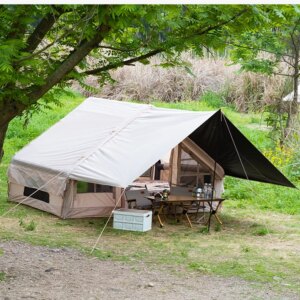
Camping Tent Inflatable PVC Waterproof UV Resistant Four-Season Quick Automatic Opening Customizable 2-3 Person
Read more -
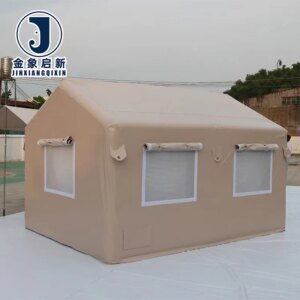
Inflatable Camping Tent PVC Waterproof Four-Season Outdoor Air Tent with Quick Automatic Opening for 3-4 Person
Read more