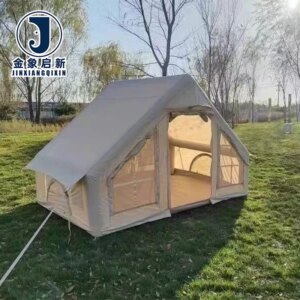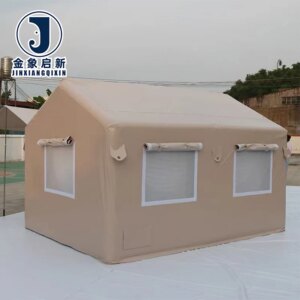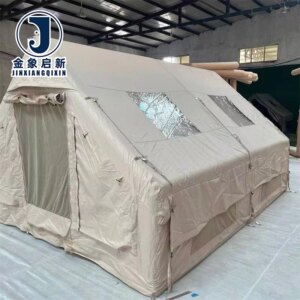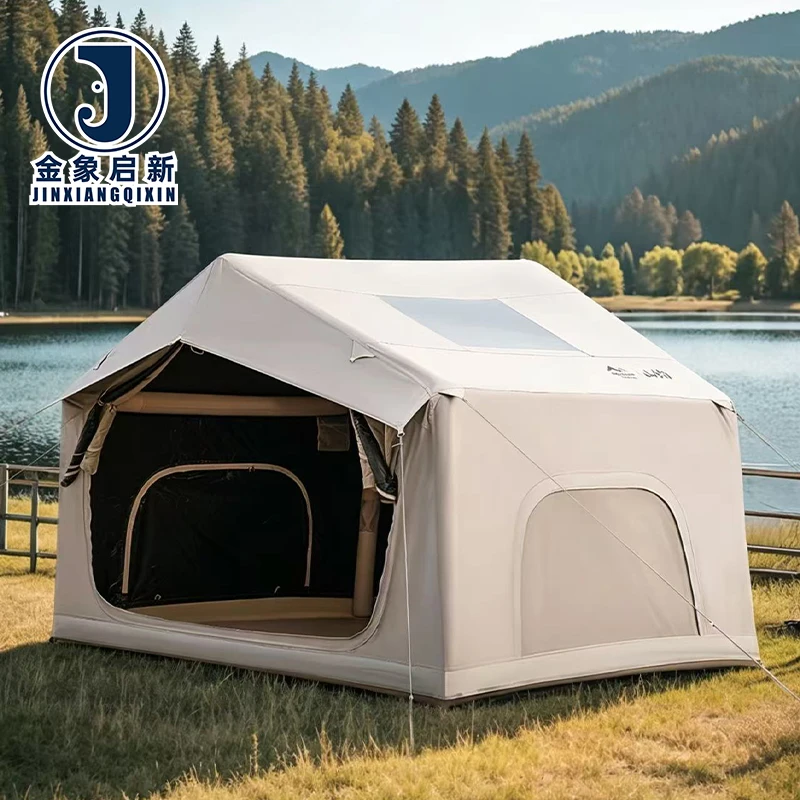
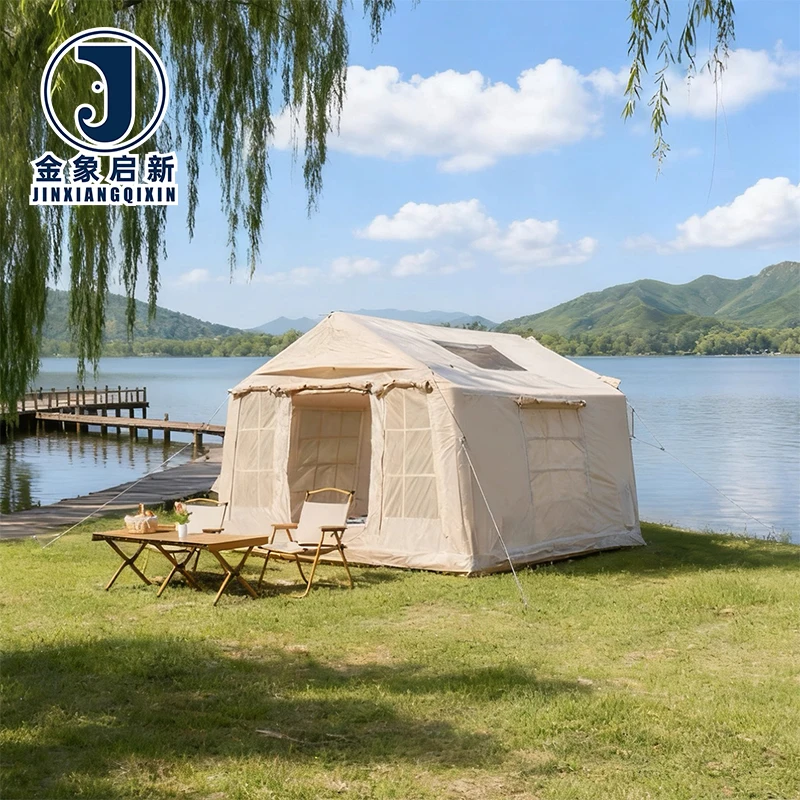
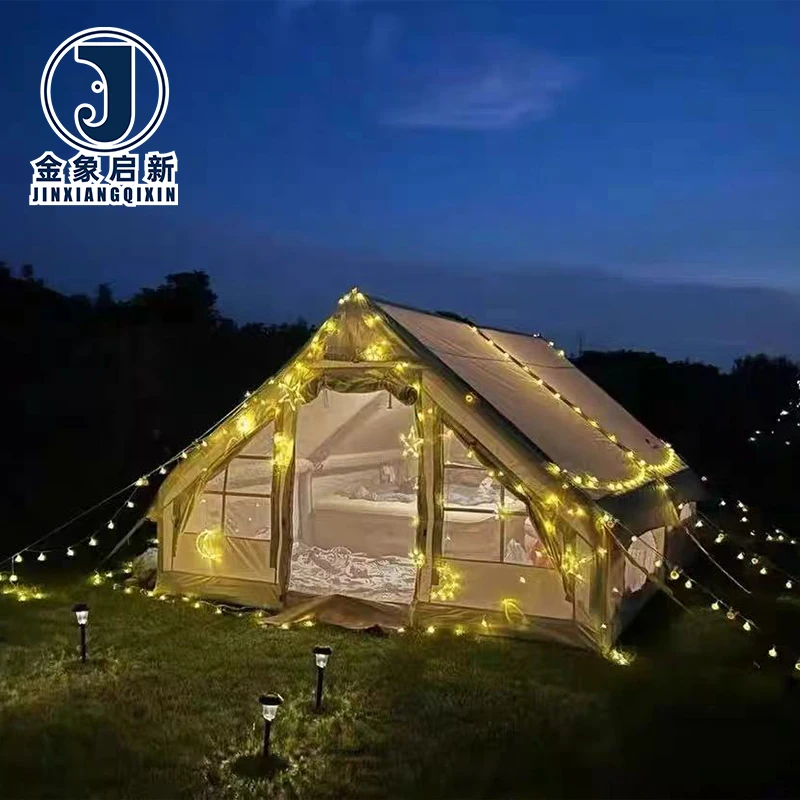
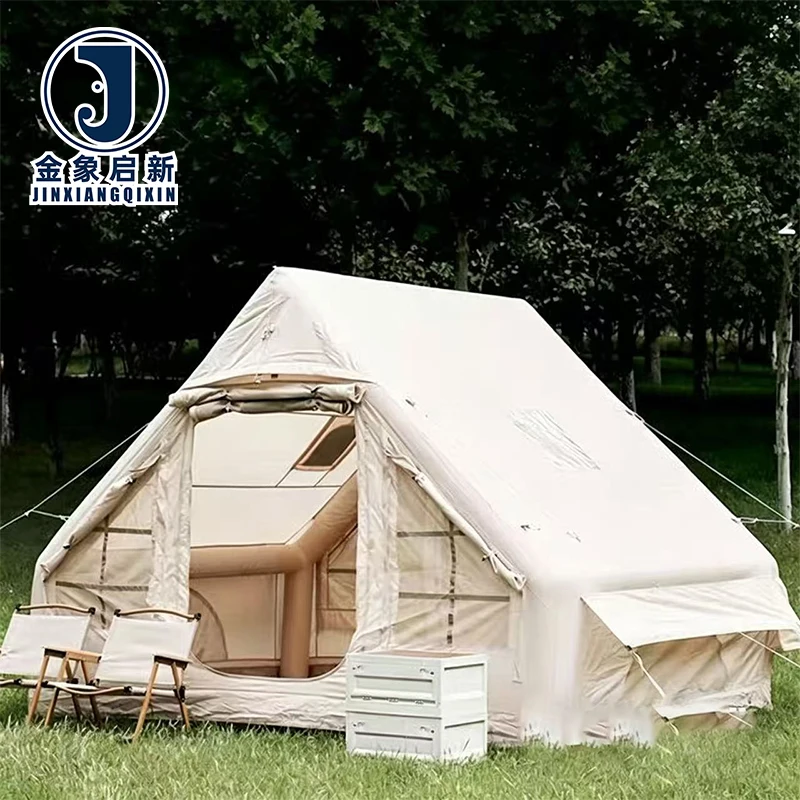
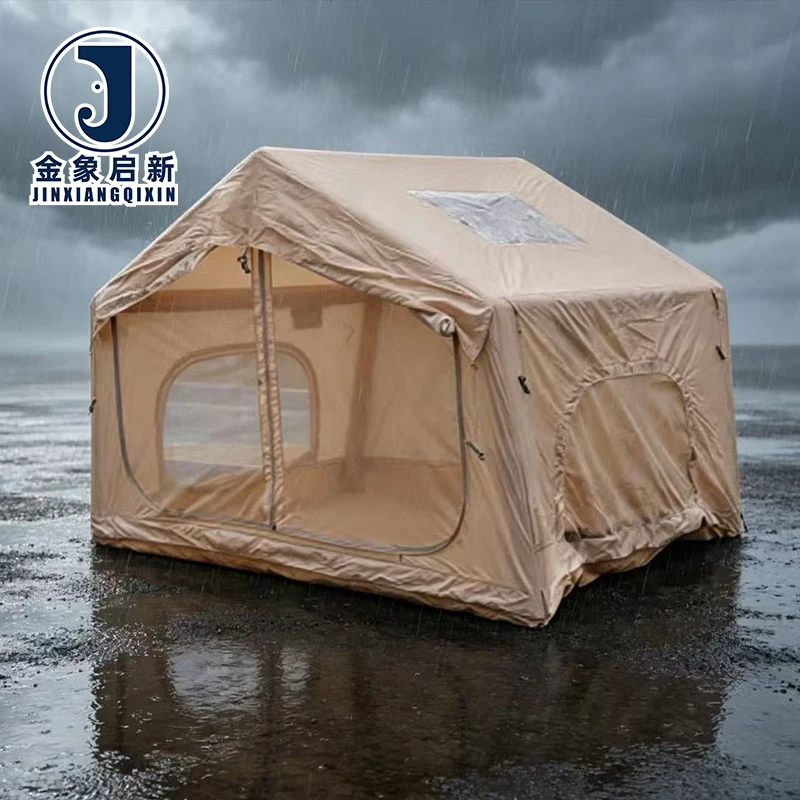
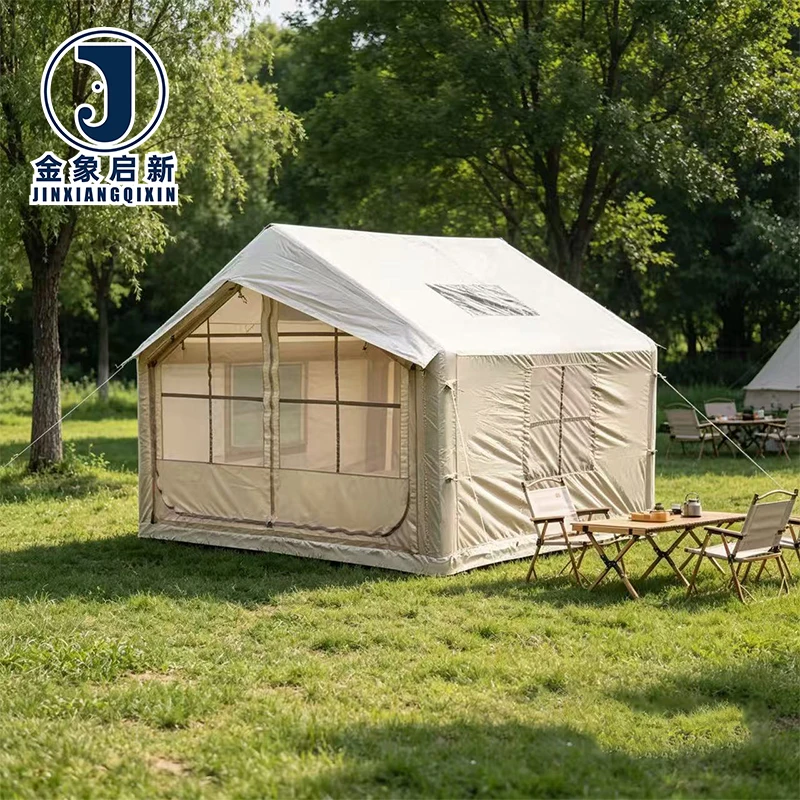
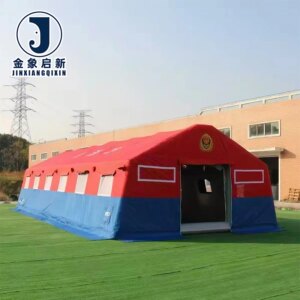
Inflatable Camping Tent — waterproof PVC tarpaulin with UV-resistant treatment, fire-retardant and anti-static certified, 6-8 person capacity with skylight design.
Built for commercial glamping fleets where material consistency across multiple units determines guest experience and brand credibility. PVC coating weight and base fabric selection directly affect seam weld integrity at high-stress inflation points.
OEM & ODM customization with pattern printing, sample approval within days, and 100% pre-shipment inspection on every order.
- Record ID: 7768
Description
Coated Fabric Expertise — Nearly 30 years of process control over PVC coating weight and adhesion, applied directly to inflatable tent fabric production with full material traceability from roll to finished unit.
Technical Specifications
| Parameter | Value |
|---|---|
| Product Type | Inflatable Tent |
| Core Material | PVC tarpaulin |
| Waterproof | Fully coated waterproof construction |
| UV Resistance | UV-resistant treatment available — confirm grade required for your market |
| Fire Retardancy | Fire-retardant grades available — confirm the grade required for your market |
| Anti-Static | Anti-static treatment available — confirm standard required for your site |
| Tear Resistance | Tear-resistant PVC coated fabric |
| Capacity | 6-8 Person |
| Feature | Skylight integration |
| Customization | OEM & ODM, sample customization, pattern printing |
| Standards | ISO 9001, ISO 14001, ISO 45001, CE |
Application Suitability
| Application | Exposure & Requirement |
|---|---|
| Commercial glamping resorts | Continuous outdoor weather exposure, guest safety compliance, uniform fleet appearance across multiple units |
| Festival and event temporary accommodation | Rapid deployment and deflation cycles, high foot traffic abrasion, variable ground conditions |
| Adventure tourism seasonal base camps | Remote site transport, UV and wind loading, repeated inflation cycles across seasons |
| Corporate retreat outdoor facilities | Premium visual presentation, branded surface requirements, fire safety compliance for occupied structures |
Why "Waterproof" Means Little Without Verifiable Coating Integrity
A waterproof claim on an inflatable camping tent is only as reliable as the coating adhesion and seam welding behind it.
Commercial glamping operators have learned that inflatable tent fabric can pass an initial water test yet develop micro-delamination after repeated inflation and deflation cycles. The stress concentration at air beam joints and skylight cutouts accelerates coating separation when the PVC layer lacks adequate bond strength to the base fabric. I have seen heavy-grade coated rolls fail at the weld line because the coating formulation was incompatible with the heat-sealing temperature window. [NEED_CITE: coating adhesion test methods for PVC tarpaulin per ISO 2411]
Material Selection for Inflatable Air Beam Construction
Inflatable tent manufacturer specifications must account for the unique stress profile of air-supported structures. Unlike pole tents where load distributes along rigid frames, inflatable camping tents concentrate tensile forces at curved beam junctions and connection valves. The PVC tarpaulin core material must maintain dimensional stability under continuous internal pressure while resisting the cyclic fatigue of daily inflation routines.
Skylight Integration and Panel Welding Challenges
The skylight feature in premium custom inflatable tent designs introduces additional fabrication complexity. Transparent or translucent panel inserts require compatible welding parameters to achieve leak-proof joints at the interface between opaque and clear PVC sections. Thermal expansion differences between panel types demand precise temperature control during fabrication. [NEED_CITE: thermal welding parameters for multi-layer PVC coated fabrics]
Understanding Coating Weight Versus Total Fabric Weight
The distinction between coating weight and total GSM matters significantly when specifying inflatable tent fabric. Total GSM combines the base fabric denier, weave density, and coating mass on both sides. A heavier base fabric with lower coating weight may offer superior tear propagation resistance but reduced surface waterproofing compared to a lighter base with thicker coating layers. For inflatable tent applications, the coating must be thick enough to seal the weave completely while remaining flexible enough to fold and pack without cracking.
What Happens When Fabric Consistency Varies Across Your Tent Fleet
Color and material inconsistency across production batches creates visible problems once inflatable camping tents are deployed side by side at a glamping site. Commercial operators ordering multiple units expect uniform appearance, yet variation in pigment dispersion or coating thickness between rolls produces noticeable shade differences under direct sunlight. Beyond aesthetics, inconsistent coating weight affects welding parameters, meaning fabric from one roll may seal properly while adjacent material scorches or under-welds at the same machine settings. [NEED_CITE: batch consistency standards for coated technical textiles]
Why Process Control Matters for Inflatable Tent Supply
Three full production lines and 36 sets of professional processing equipment support consistent output for custom inflatable tent orders at commercial volume. The 10-person R&D team handles material selection, pattern printing specifications, and sample development tailored to each operator’s deployment environment. Dedicated QA/QC inspection at every production stage catches coating defects, color drift, and weld weakness before finished rolls or fabricated units leave the facility. Pre-shipment inspection covers 100% of the order rather than sampling, ensuring every tent unit meets the agreed specification.
Documentation & Verification
- Material specification sheet stating PVC coating weight, base fabric construction, and treatment details per inflatable tent order
- Fire-retardant and anti-static test reports matched to the specific grade requested at inquiry stage
- ISO 9001, ISO 14001, ISO 45001, and CE certificates included with each commercial shipment
- Pre-shipment inspection record documenting coating adhesion, color consistency, and weld integrity checks
- Roll packing list with batch traceability for multi-unit inflatable tent fleet orders
Fabrication, Handling & Storage
- Heat-seal PVC tarpaulin panels using manufacturer-recommended temperature windows to avoid coating burn-through at air beam curves
- Reinforce skylight cutout edges with compatible PVC strip welding to prevent stress tearing under inflation pressure
- Store rolled inflatable tent fabric upright on pallets to prevent flat-spot creasing that weakens the coating layer
- Allow cold-transported PVC rolls to reach ambient temperature before unrolling to avoid surface cracking
- Clean deployed inflatable tent surfaces with pH-neutral solutions to preserve the UV-resistant treatment layer
Starting Your Inflatable Tent Specification
Provide your deployment environment details including typical wind loading, seasonal UV intensity, and site fire safety regulations so we can recommend appropriate PVC tarpaulin grades and treatment levels. Specify whether you require finished tent units with skylight integration or roll stock for your own fabrication. Share your target color references, pattern printing requirements, and expected annual volume to receive a custom inflatable tent proposal with realistic lead times.
Frequently Asked Questions
Q: How is fire-retardant grade verified and which standards does the inflatable tent fabric meet?
A: Fire-retardant treatment is applied during PVC coating production and verified through laboratory testing. The specific grade achieved depends on the formulation selected for your market requirements. Request the applicable test report during inquiry to confirm compliance with your local fire safety regulations before committing to full production.
Q: How is batch-to-batch color and material consistency controlled across multiple tent units?
A: Pigment formulation is locked after sample approval, and in-process inspections monitor coating weight and color at each production stage. Pre-shipment inspection covers every roll or finished unit rather than relying on batch sampling, ensuring your inflatable tent fleet maintains uniform appearance when deployed together.
Q: What customization options are available for size, printing, and skylight design?
A: The R&D team supports OEM and ODM development covering dimensions, panel layout, skylight placement, and branded pattern printing on the PVC tarpaulin surface. Sample development allows you to evaluate the custom inflatable tent design, weld quality, and print clarity before authorizing full production runs.
Q: What documentation supports import compliance and site safety audits for commercial deployments?
A: Each shipment includes material specification sheets, applicable treatment test reports, ISO and CE certificates, pre-shipment inspection records, and customs documentation. This package supports both import clearance procedures and the safety audit requirements that commercial glamping operators and event organizers typically face from local authorities.
Related products
-
Luxury PVC Inflatable Tent for Glamping Outdoor Waterproof with Quick Automatic Opening Four-Season Foldable Design and Pump
Read more -
Premium Four-season Inflatable Tents for Camping Easy-to-Use Spacious Portable Waterproof Outdoor Tent Quick
Read more -
Inflatable Camping Tent PVC Waterproof Four-Season Outdoor Air Tent with Quick Automatic Opening for 3-4 Person
Read more -
Inflatable PVC Camping Tent Four-Season Waterproof CE Certified Quick Automatic Opening 3000mm+ Factory Direct Sale
Read more