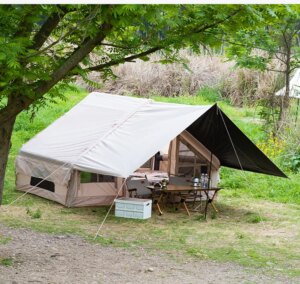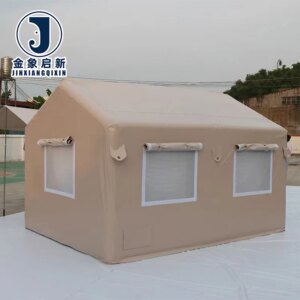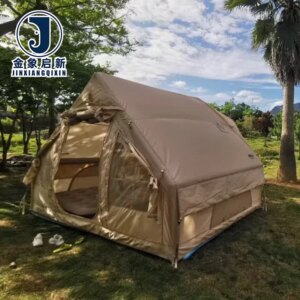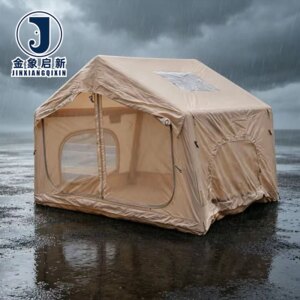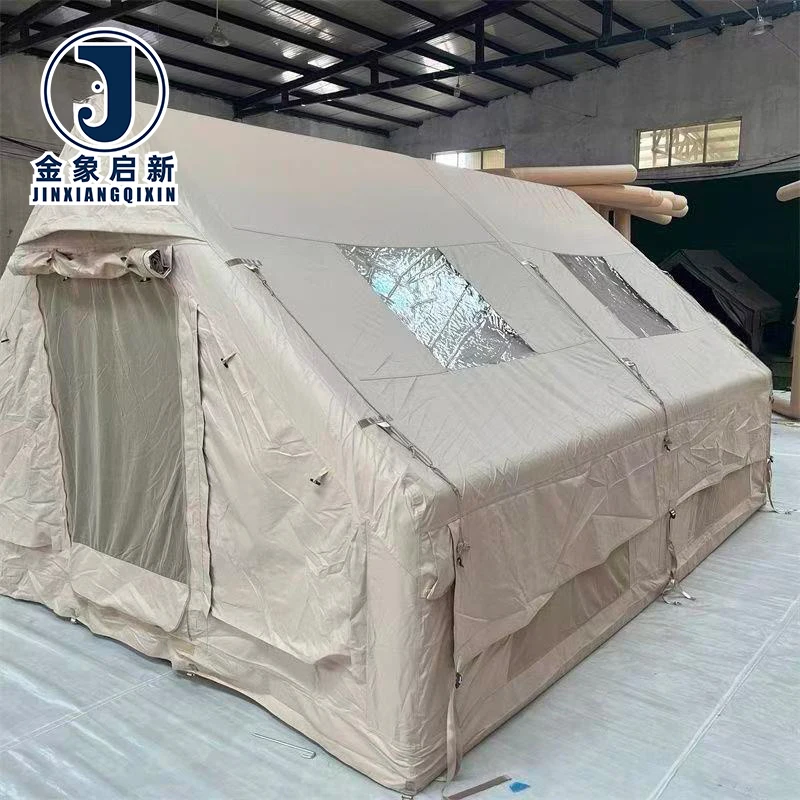
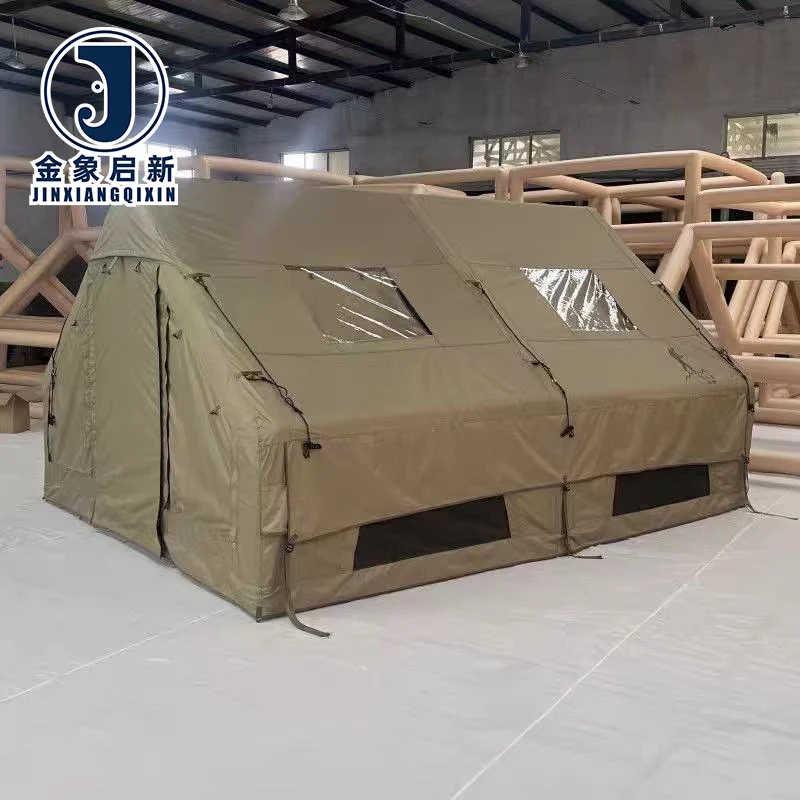
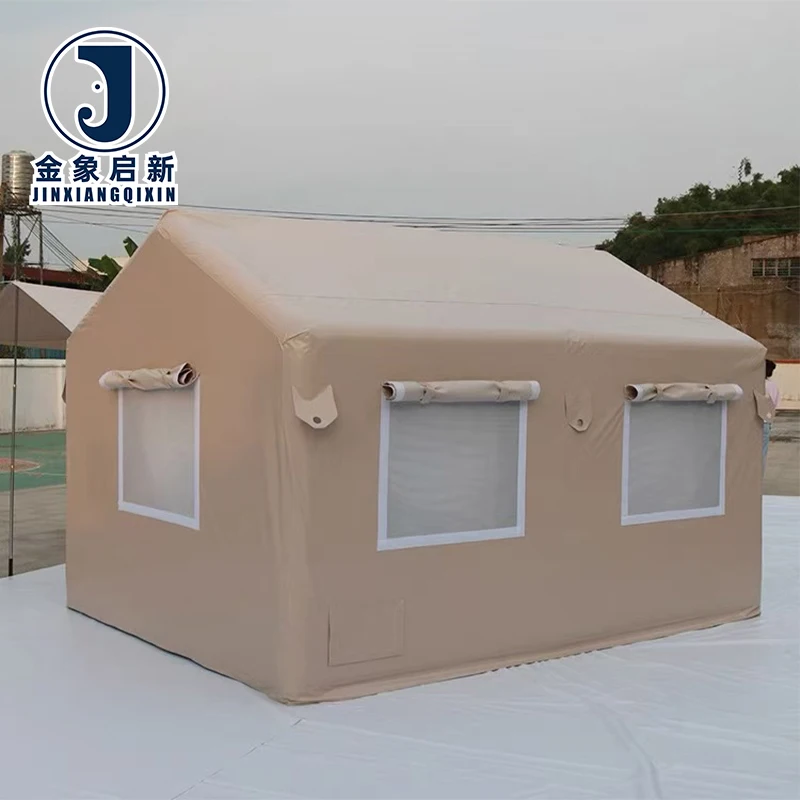
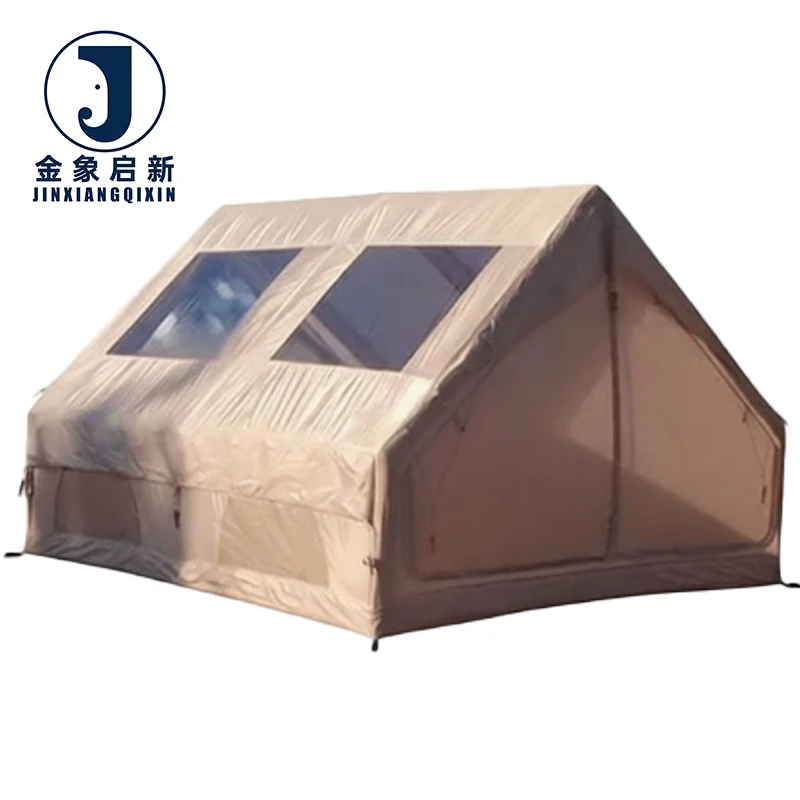
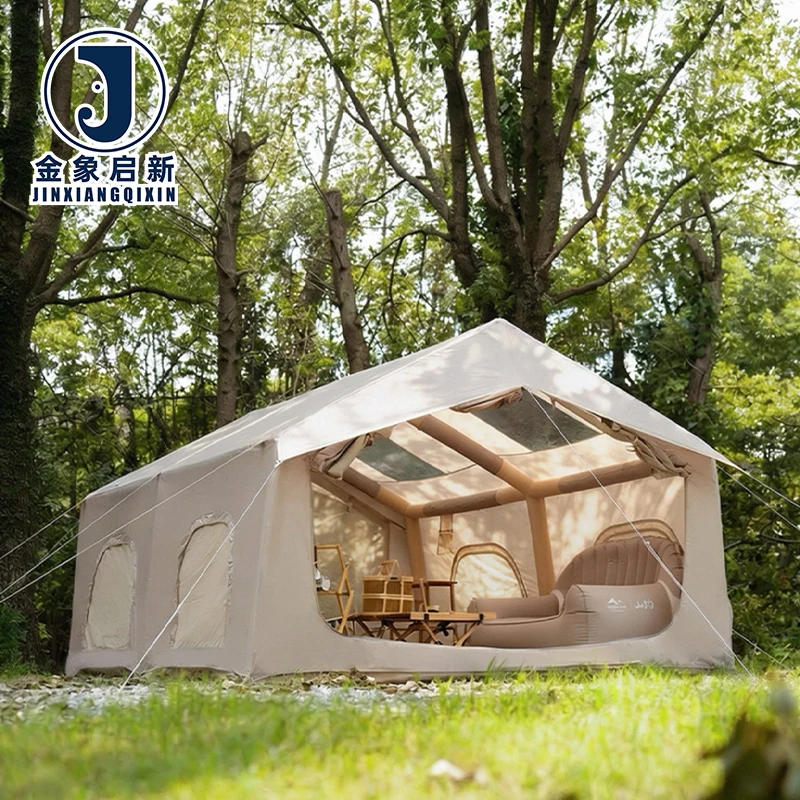
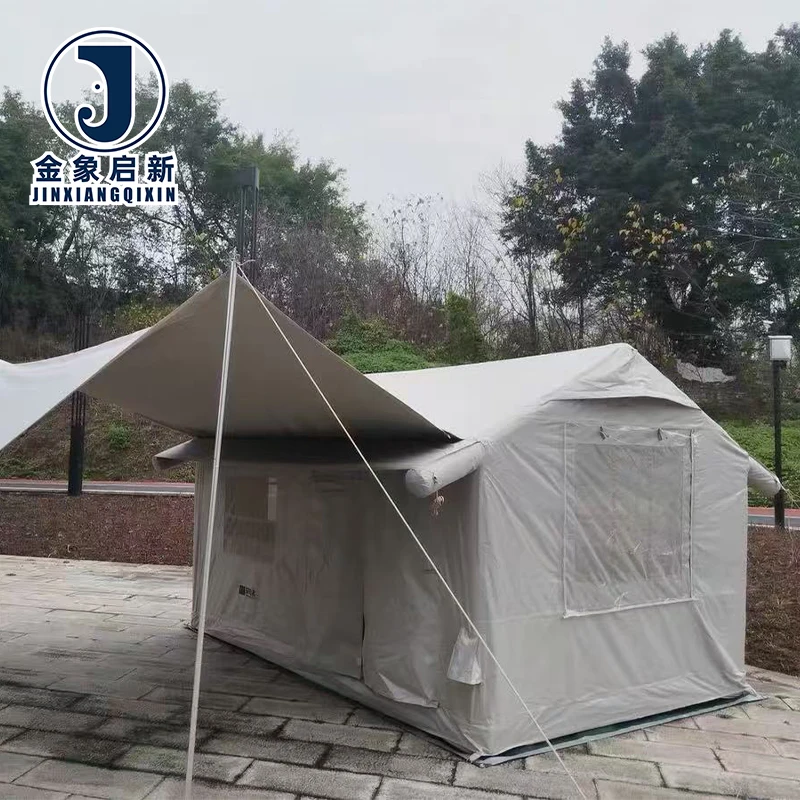
Inflatable Camping Tent 6-8 Person, PVC Tarpaulin, 4 Season — automatic air frame with waterproof, UV-resistant, and tear-resistant performance.
- Engineered from PVC-coated tarpaulin with verified coating weight and base fabric adhesion for sustained inflation pressure and structural flex
- Heat-welded seams tested at load points to outlast the fabric through repeated deployment cycles
- Full OEM & ODM support: custom dimensions, pattern printing, and material adjustments by 10-person R&D team
Backed by 100% pre-shipment inspection and material specification sheets per batch for full project compliance.
Description
Process-Controlled Coating Weight — Every roll of PVC tarpaulin leaving our facility is weighed and verified against the quoted specification, a discipline enforced across three full production lines and 36 sets of professional equipment so your inflatable tent fabric arrives exactly as ordered.
Technical Specifications
| Parameter | Value |
|---|---|
| Product Type | Inflatable Tent |
| Capacity | 6-8 Person |
| Core Material | PVC Tarpaulin |
| Season Rating | 4 Season |
| Assembly State | Automatic Opening / Inflatable Air Frame |
| Key Features | Waterproof, UV-resistant, Tear-resistant |
| Customization | OEM & ODM (sample customization, pattern printing) |
| R&D Support | 10 technicians |
| Certifications | ISO9001, ISO14001, ISO45001, CE |
Application Suitability
| Application | Exposure & Requirement |
|---|---|
| Commercial camping ground operations | Continuous UV exposure, repeated inflation and deflation cycles, ground moisture contact |
| Construction site temporary facilities | Wind load stress, dust and debris abrasion, documented material compliance required |
| Outdoor event management | Branded deployment, batch-consistent colour across multiple units, rapid setup and teardown |
| Temporary shelter deployment in variable weather | Rain ingress prevention, thermal retention in winter conditions, structural stability under snow load |
Why Material Verification Matters More Than the Brochure Promises for Your Inflatable Tent
A quoted GSM means nothing if the roll that arrives on your dock weighs less than the sample you approved.
I worked in a Jinan coating plant for years, moving from the production floor into technical liaison. Last year a client building inflatable tents ordered fabric at a stated weight, but when they ran incoming inspection the rolls came in noticeably under. The entire batch was rejected, production stopped, and the event season window was missed. The root cause was not fraud — it was a process drift on the coating line that nobody caught before dispatch. [NEED_CITE: coating weight consistency across production batches for PVC tarpaulin]
Coating Weight Consistency Across Every Roll
When you are sourcing PVC tarpaulin for an inflatable tent, the coating weight determines how the fabric behaves under inflation pressure, how it resists puncture during ground contact, and how it handles repeated folding between deployments. Our facility runs dedicated QA and QC at every production stage, and that includes weight verification before any roll is cleared for packing. You receive fabric that matches the specification sheet — not fabric that was close enough.
Heat-Welded Seams That Hold Under Inflation Pressure
The seams on an inflatable tent carry the structural load. When the air frame pressurizes, the stress concentrates at every welded joint, and when the tent flexes under wind the seams cycle through tension and compression. We control heat-weld parameters to match the coating formulation on this PVC tarpaulin, so the weld line reaches the tensile capacity of the base fabric rather than becoming the first point of failure. This inflatable tent material is engineered to survive deployment after deployment without seam delamination. [NEED_CITE: heat-weld peel strength testing methods for PVC coated fabrics]
Understanding the Relationship Between Base Fabric Weave and Structural Performance
The tear resistance of a PVC-coated inflatable tent fabric does not come from the coating alone. The base fabric denier and weave density set the baseline mechanical properties — warp and weft yarn count determine how a small cut propagates under load, and higher denier yarns arrest tear spread before it reaches a structural seam. The coating adds waterproofing, UV shielding, and abrasion resistance on top of that structural skeleton. When you evaluate this inflatable tent material, ask for both the base fabric specification and the coating weight separately. A heavier coating on a light base fabric will crack before it tears; a lighter coating on a heavy base fabric may abrade through prematurely. The balance matters, and our 10-person R&D team can adjust the formulation to match the inflation pressure and wind load profile your tent design requires.
The Hidden Cost of Skipping Pre-Shipment Verification
When a roll of PVC tarpaulin ships without documented weight verification, the downstream consequences compound quickly. A tent manufacturer cutting panels from underweight fabric will see those panels fail earlier in the field, generating warranty claims and damaging the brand. Colour variation between rolls in the same order becomes visible the moment two panels are installed side by side — a particular problem for event companies deploying multiple inflatable tent units at a single venue. And if the fire-retardant or anti-static treatment your local building code requires was claimed on the quotation but never tested, the entire installation can be shut down at inspection. [NEED_CITE: pre-shipment inspection standards for coated technical textiles]
Why Fabric Buyers Keep Returning to This Source
Our 9,180 m² production facility with three full lines means your inflatable tent fabric order is never squeezed into a gap between other jobs — capacity is planned, not improvised. The 36 sets of professional processing equipment allow us to run coating, welding, and finishing in-house, eliminating the quality gaps that appear when subcontractors handle intermediate steps. Sample development runs within days, so you can test inflation behaviour, weld parameters, and colour accuracy before committing to the full production run. Every order ships with a pre-shipment inspection record, meaning you can reconcile what you received against what you specified without waiting for a lab to run incoming tests. Our R&D team handles material selection, custom sizing, and pattern printing in one workflow, reducing the coordination burden on your procurement desk.
Documentation & Verification
- Material specification sheet stating GSM, base fabric denier, and coating type per production batch
- UV-resistance and waterproof test reports available by batch reference for compliance filing
- Pre-production sample sign-off record confirming colour, weight, and weld parameters
- Pre-shipment inspection record included with every dispatch documenting verified roll weights
- Certificate of origin and customs documentation prepared for cross-border inflatable tent fabric shipments
Fabrication, Handling & Storage
- Heat-weld temperature and dwell time must match the PVC tarpaulin coating formulation to achieve full peel strength at seam lines
- Store rolls horizontally on pallets to prevent permanent creasing that weakens the coating at fold lines
- Avoid dragging cut panels across abrasive ground surfaces before seam welding to preserve the coating face
- Use compatible PVC-based repair adhesive for field patching to maintain waterproof continuity at the repair site
- Allow cold-stored rolls to reach ambient temperature before unrolling to prevent coating crack on this PVC tarpaulin
What We Need to Quote Your Inflatable Tent Fabric Accurately
To move from inquiry to sample, provide your tent design dimensions, the inflation pressure your air frame operates at, and the climate conditions the structure will face — sustained sun, snow load, or coastal salt exposure each push the coating formulation in a different direction. Let us know whether you need certified fire-retardant grades for your target market and whether the order is roll stock for your own cutting line or finished panels with pattern printing. We will respond with a material recommendation, a sample for your approval, and a production timeline.
Frequently Asked Questions
Q: What GSM and coating options are available for different climate conditions?
A: We supply PVC tarpaulin across a range of weight grades suitable for inflatable tent applications. The correct specification depends on your inflation pressure, wind load expectations, and UV exposure duration at the deployment site. Share your climate profile and our R&D team will recommend a coating weight and base fabric combination, then produce a sample for your validation before mass production.
Q: Can you supply test reports for UV resistance and waterproof performance?
A: Yes. UV-resistance and waterproof test reports are generated per production batch and ship with your documentation package. If your project requires a specific test standard or certification body for local compliance, flag that requirement during the inquiry stage so we can align the testing scope before production begins.
Q: What customization options exist for dimensions, colour, and branding?
A: Our OEM and ODM capability covers custom dimensions, colour matching, and pattern printing directly onto the PVC tarpaulin surface. We develop a pre-production sample reflecting all custom specifications — colour, print registration, panel sizing — for your approval before the full run proceeds, ensuring batch consistency across your inflatable tent inventory.
Q: How is seam integrity verified before shipment?
A: Heat-welded seams on this inflatable tent fabric are inspected during the welding process and again at the pre-shipment quality gate. We check peel strength at sample intervals and visually inspect the full weld length for voids or incomplete bonding. Inspection records are included in your shipment documentation so you can trace seam quality back to the production batch.
Q: What documentation ships with each order for customs and project compliance?
A: Every order includes a material specification sheet, batch-referenced test reports where applicable, a pre-shipment inspection record, a roll packing list, and a certificate of origin. Additional documentation for project compliance — such as ISO and CE certificates — is provided upon request to support your local regulatory filing.
Related products
-
Four-Season Inflatable Tent Single Layer >3000mm Waterproof Windproof Quick Automatic Opening PVC Fabric Eco-Friendly
Read more -
High Quality Four-Season Inflatable Tent for Camping Durable PVC Material All-Weather Resistance Quick Automatic Opening
Read more -
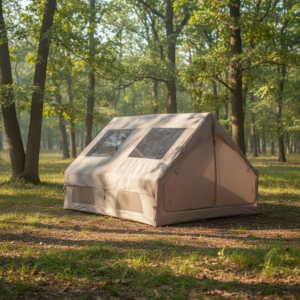
Inflatable Tent Four-Season Quick Automatic Opening PVC 3000mm Waterproof Foldable Eco-Friendly 2-3/3-4/6-8 Person Outdoor Use
Read more -
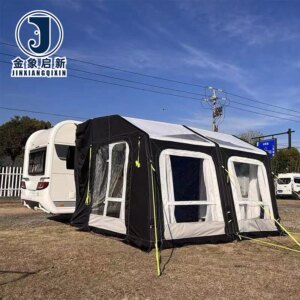
Outdoor Camping Inflatable Tent Luxury All-Season Use PVC Waterproof Quick Automatic Opening Rainproof Insulated
Read more