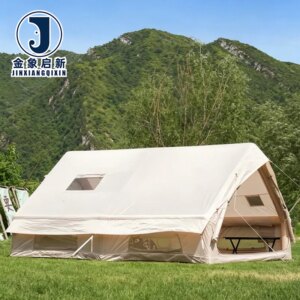
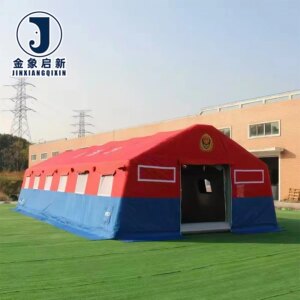
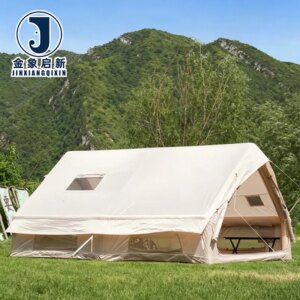
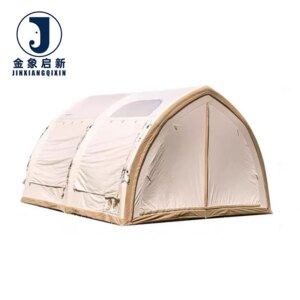
Portable Inflatable Camping Tent, 8-10 Person, IPX6 Waterproof — PVC tarpaulin with tear-resistant and UV-resistant construction for demanding outdoor environments.
Engineered with in-house coated fabric where GSM and coating adhesion are controlled at source, ensuring reliable pressure retention and welded seam integrity at flex points. Every unit undergoes 100% inflation testing before dispatch.
- Single-layer inflatable structure with ≤5% pressure loss in 12 hours
- Custom dimensions and pattern printing available with pre-production samples
Description
Coating Weight Control — In-house production lines monitor PVC adhesion at every pass, ensuring the inflatable tent fabric holds pressure without seam delamination.
Technical Specifications
| Parameter | Value |
|---|---|
| Product Type | Inflatable Tent |
| Core Material | PVC tarpaulin |
| Capacity | 8-10 Person |
| Waterproof Rating | IPX6 |
| UV Resistance | 4000 hours accelerated testing (ISO 4892) |
| Tear Strength | 200N force (ISO 13934-1) |
| Structure | Single-layer |
| Pressure Retention | ≤5% pressure loss in 12 hours |
| Inflation Test | 100% inflation testing for 24 hours prior to shipment |
| Certifications | ISO9001, ISO14001, ISO45001, CE |
Application Suitability
| Application | Exposure & Requirement |
|---|---|
| Construction site crew accommodation | Continuous UV exposure, abrasion from site dust, frequent inflation cycles, wind load stress |
| Industrial field project base camp | Extreme weather cycling, prolonged outdoor deployment, rapid setup and teardown demands |
| Mobile event shelter | High foot traffic, ground abrasion, quick deployment logistics, visible branding consistency |
| Outdoor equipment wholesale distribution | Retail-ready appearance, batch colour matching, long warehouse storage, end-user durability expectations |
Why Inflatable Tents Fail at the Seams Before the Fabric Does
Seam integrity depends on matching the welding temperature curve to the specific base fabric’s thermal response, not just the PVC coating thickness.
When an inflatable tent loses pressure overnight, the failure almost always traces back to the welded seam rather than the fabric body. I have seen heavy-grade coated rolls fail at the weld line because the heat input was calibrated for a standard polyester scrim, while the actual high-tenacity base required a different dwell time. The coating may look intact on the surface, but the molecular bond between overlapping panels weakens under cyclic inflation stress. Without a dedicated welding window test for each base fabric variant, the seam becomes the predictable failure point [NEED_CITE: tensile and tear test methods for coated fabrics per ISO 1421].
Pressure Retention Over Extended Deployment
An inflatable tent must hold internal pressure through temperature swings and wind gusts without constant re-inflation. The ≤5% pressure loss specification over 12 hours reflects airtightness at every welded junction — the inflation valve, the perimeter seams, and the internal baffle connections. Each unit undergoes a full 24-hour inflation test before shipment, which catches micro-leaks that a quick bench test would miss. This level of verification matters most when the tent serves as temporary site accommodation and cannot afford a mid-night deflation.
Colour Consistency Across Bulk Orders
Batch-to-batch colour variation becomes immediately visible when multiple inflatable tent units stand side by side at an event site or a field camp. The PVC coating colour is set during the compounding stage, and any shift in pigment ratio or coating temperature produces a noticeable tone difference between rolls. Dedicated QA/QC checkpoints at every production stage catch these shifts before the fabric reaches the cutting table, so the units you receive in a single container match visually when deployed together.
Reading the Specifications Beyond the Label
GSM alone tells you the weight per square metre, but it does not explain how the fabric will behave under inflation stress. A heavier coating may add mass without improving tear resistance if the base fabric denier and weave density remain unchanged. The 200N tear strength rating tested to ISO 13934-1 reflects the combined contribution of the polyester scrim and the PVC coating adhesion — neither component works alone. The IPX6 waterproof rating confirms the coated construction keeps water out under sustained exposure, which is essential when the tent sits on wet ground for extended periods. UV resistance validated through ISO 4892 accelerated testing indicates the coating formulation includes stabilisers that resist surface degradation under prolonged sun exposure [NEED_CITE: ISO 4892 methods for plastics exposure to laboratory light sources].
The Hidden Cost of Skipping the Welding Window Test
Jumping straight into production without testing the thermal welding parameters for a specific base fabric leads to field failures that no amount of fabric strength can compensate for. The seam peels apart at the exact point where the inflatable structure flexes most — the corners and the baffle junctions. Repairing a failed seam on site is rarely possible without professional heat-welding equipment, which means the entire unit becomes unusable until it is returned to a workshop. Buyers who skip the pre-production sample approval stage absorb this risk directly [NEED_CITE: hot air welding parameters for PVC coated polyester fabrics].
Production Controls Behind Every Unit
Three dedicated production lines and 36 sets of professional equipment allow the facility to run bulk inflatable tent orders without compromising coating consistency. The 10-person R&D team handles material selection and welding parameter development for each base fabric variant before production starts. A 100% pre-shipment inspection covers every inflated unit, checking pressure retention, seam integrity, and visual appearance before packing. Samples for custom dimensions and pattern printing are developed within days, allowing buyers to verify fit and colour before committing to the full run.
Documentation & Verification
- Material specification sheet listing GSM, base fabric denier, and coating weight per batch
- UV resistance test report per ISO 4892 included with each shipment
- Waterproof rating verification to IPX6 standards documented per production run
- ISO9001, ISO14001, ISO45001, and CE certificates provided for customs clearance
- Pre-shipment inspection record covering inflation test results for every unit
- Certificate of origin prepared for destination country import requirements
Fabrication, Handling & Storage
- Heat welding parameters must match the PVC coating formulation to prevent seam delamination
- Store rolled fabric in a dry, shaded environment to avoid surface marking and coating adhesion loss
- Avoid dragging the PVC surface across abrasive ground during on-site deployment
- Use mild detergent for cleaning — solvents degrade the PVC coating plasticisers over time
- Patch minor punctures with compatible PVC repair adhesive and a fabric overlap piece
- Allow the inflatable tent to reach ambient temperature before inflation in cold climates
What to Specify When Requesting a Quotation
Provide the intended application, expected deployment duration, and environmental exposure conditions so the correct PVC coating grade can be recommended. Specify the target market to ensure the documentation package meets local compliance and customs requirements. Include any colour matching references or pattern printing requirements along with the expected order volume. Indicate whether you need finished units or roll stock for your own fabrication line.
Frequently Asked Questions
Q: How is seam weld strength verified before shipment?
A: Every inflatable tent undergoes a continuous 24-hour inflation test before dispatch, during which pressure loss is monitored to confirm it stays within the ≤5% per 12 hours threshold. This catches any micro-leak at the welded seams, valve junctions, or internal baffles that a shorter test would miss, ensuring the structure holds pressure through overnight temperature drops.
Q: Can custom dimensions and branding be printed on the tent fabric?
A: Yes. The R&D team develops pre-production samples with your specified dimensions and pattern printing within days. Colour references are matched during the PVC compounding stage, and the printed design is verified on the sample before the full production run begins, so the final units carry consistent branding across the entire order.
Q: What documentation accompanies each shipment for customs clearance?
A: Each shipment includes a material specification sheet, UV and waterproof test reports, ISO and CE certificates, a pre-shipment inspection record, a roll packing list, and a certificate of origin. These documents cover the compliance and verification requirements that customs authorities and end-user procurement teams typically request for inflatable tent imports.
Q: How do you ensure colour consistency across a bulk order?
A: PVC coating colour is set during compounding and verified at every production stage through dedicated QA/QC checkpoints. Rolls destined for the same order are produced under matched temperature and pigment conditions, and visual comparison against the approved reference is performed before packing, so units deployed side by side show no visible tone difference.
Related products
-
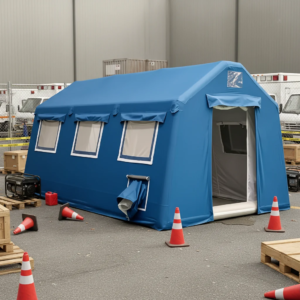
Outdoor Waterproof Inflatable Tent for Camping Portable Air Camping Tent Shelter
Read more -
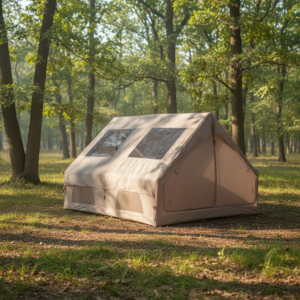
Inflatable Tent Four-Season Quick Automatic Opening PVC 3000mm Waterproof Foldable Eco-Friendly 2-3/3-4/6-8 Person Outdoor Use
Read more -
Outdoor Portable Camping Inflatable Tent Luxury All-Season Use Overnight Large Space Rainproof Insulated Quick Automatic Opening
Read more -
High Quality Four-Season Inflatable Tent for Camping Durable PVC Waterproof All-Weather Resistance Quick Automatic Opening
Read more