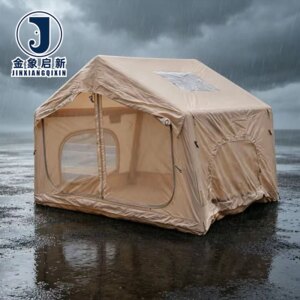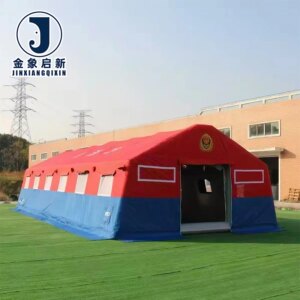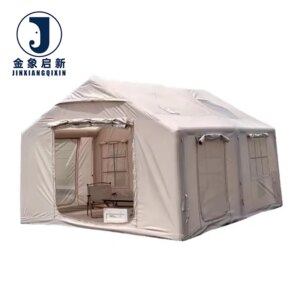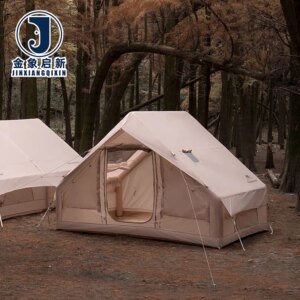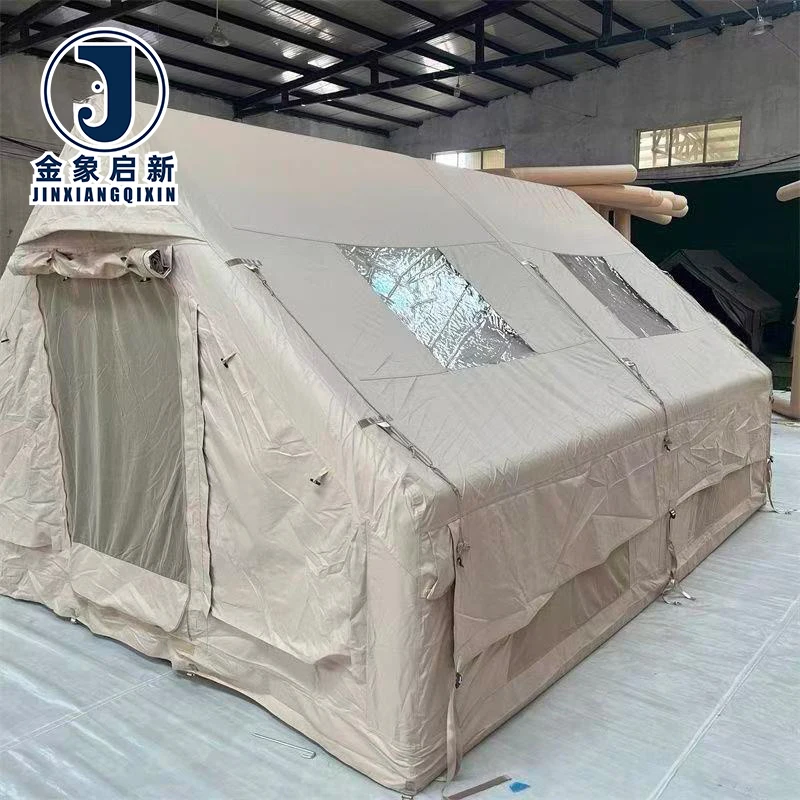
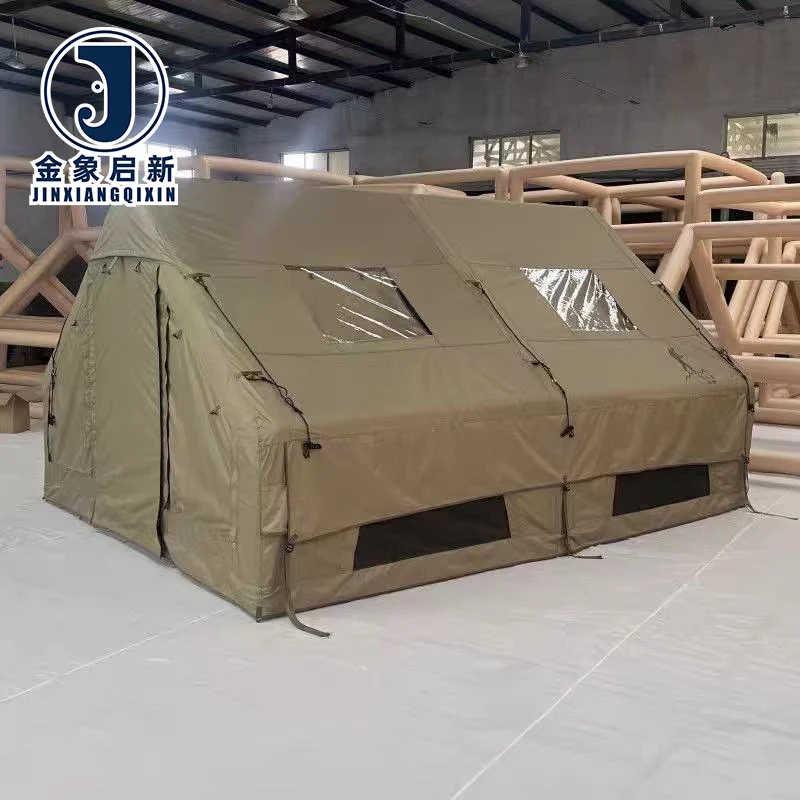
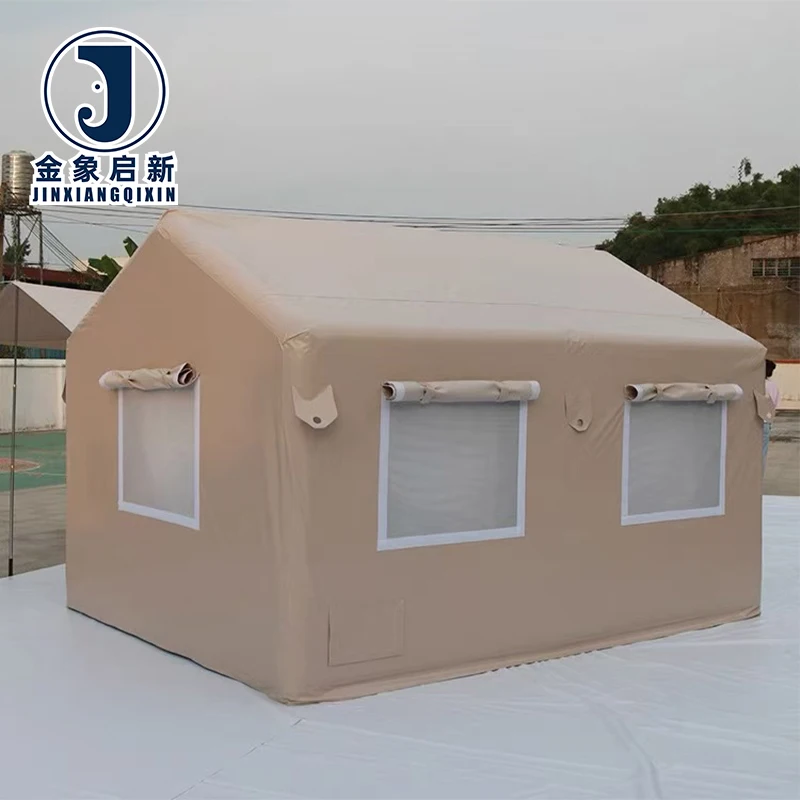
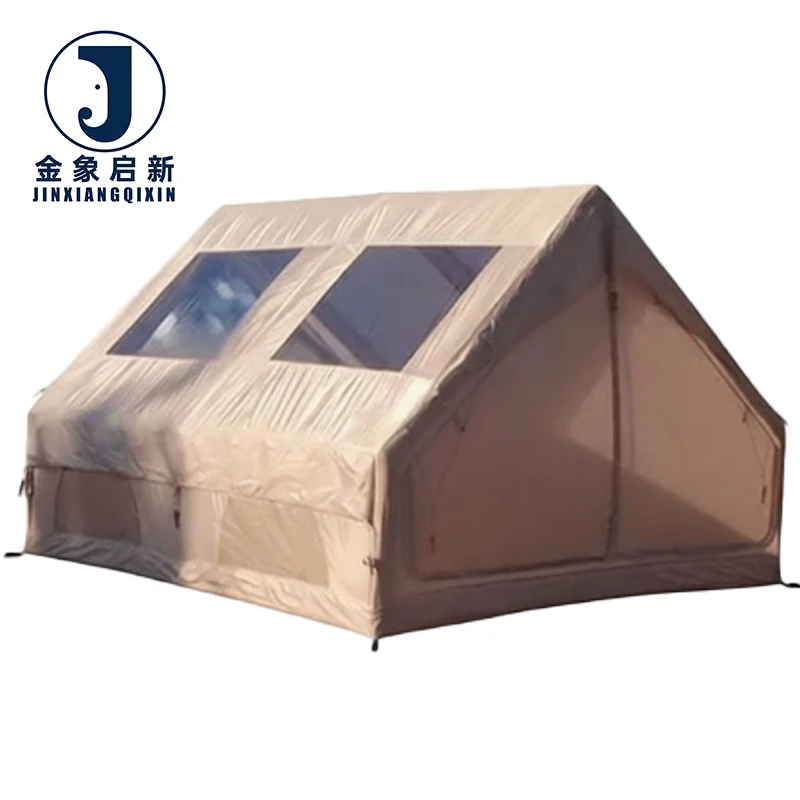
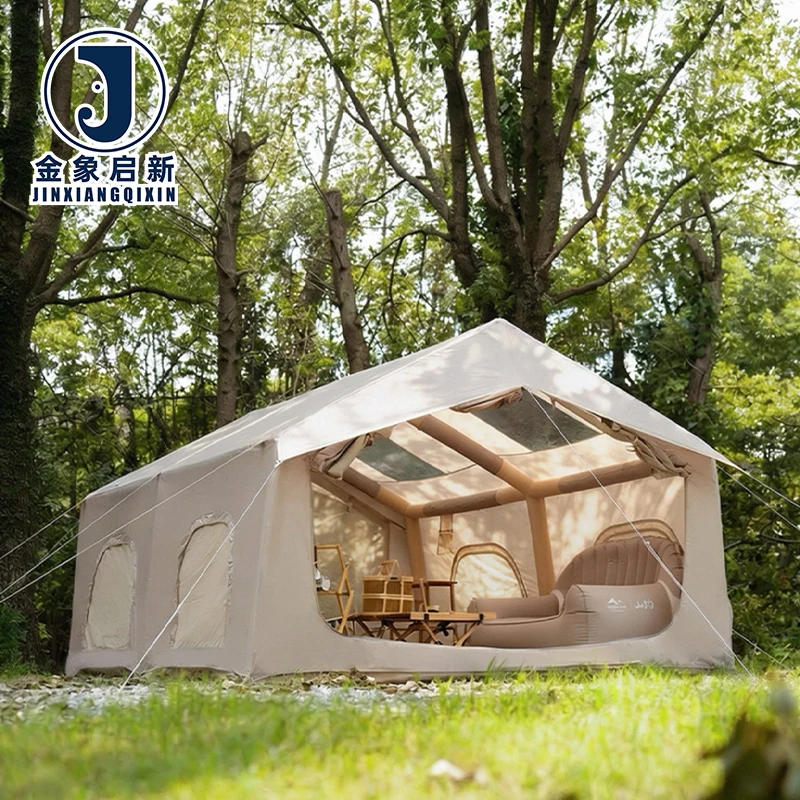
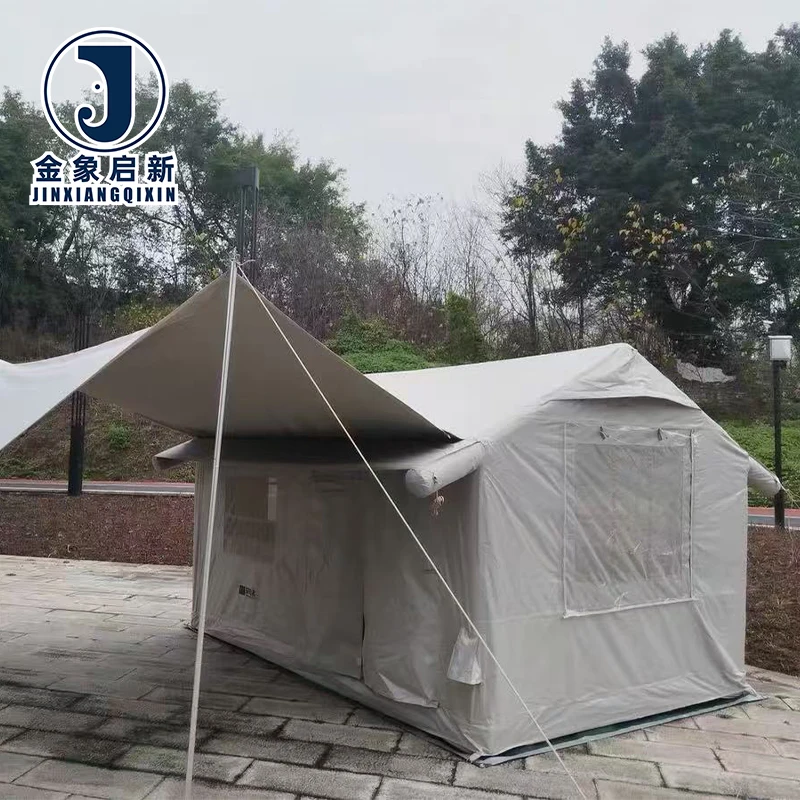
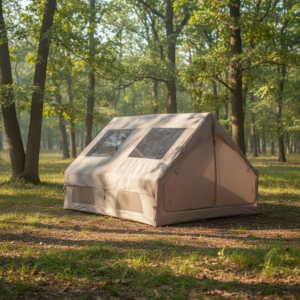
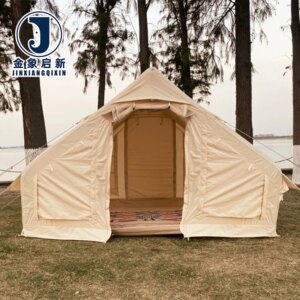
Inflatable Camping Tent 6-8 Person 4 Season — automatic air inflation, waterproof PVC tarpaulin, UV-resistant & tear-resistant for commercial outdoor use.
- Backed by nearly 30 years of coated fabric process control over coating weight and adhesion
- 3 full production lines with 36 sets of equipment ensure bulk capacity and on-time delivery
- 10-person R&D team supports full OEM/ODM sample development within days
ISO & CE certified manufacturing with 100% pre-shipment inspection for batch-consistent quality.
Description
Complete Catalogue Customization — Every inflatable tent fabric order is supported by a 10-person R&D team handling custom dimensions, pattern printing, and material adjustments from sample development through to final delivery.
Technical Specifications
| Parameter | Value |
|---|---|
| Product Type | Inflatable Tent |
| Core Material | PVC Tarpaulin |
| Key Performance | Waterproof, UV-resistant (test basis not stated), Tear-resistant |
| Construction | Single-layer |
| Capacity | 6-8 Person |
| Season Rating | 4 Season |
| Opening Mechanism | Automatic / Air Inflation |
| Customization Service | OEM & ODM (sample customization, pattern printing) |
| Production Lines | 3 full production lines |
| Processing Equipment | 36 sets of professional processing equipment |
| R&D Team Scale | 10 technicians |
| Manufacturing Facility | 9,180 m² |
| Quality Control | Full-process inspection with dedicated QA & QC staff |
| Standards | ISO9001, ISO14001, ISO45001, CE |
Application Suitability
| Application | Exposure & Requirement |
|---|---|
| Commercial camping ground operations | Prolonged UV and rain exposure, repeated inflation and deflation cycles, high guest turnover requiring rapid deployment |
| Outdoor events management | Temporary shelter subjected to variable wind loads, frequent transport between sites, quick setup and teardown schedules |
| Construction site temporary facilities | Abrasive site conditions, dust and debris accumulation, requirement for durable worker protection structures |
| Rapid deployment emergency shelters | Immediate inflation integrity, reliable seam strength under sustained air pressure, transport efficiency for bulk mobilization |
Why Inflatable Tent Structures Fail Before the Fabric Does
Seam integrity and coating adhesion determine real-world service life far more than base fabric weight alone.
Buyers specifying inflatable tent fabric often focus on GSM or base fabric denier, yet field failures consistently originate at welded joints and air retention seams rather than the body of the material. When an inflatable structure loses pressure during use, the problem is almost always a seam that was not engineered for the sustained internal pressure and cyclic flexing that air-supported designs demand [NEED_CITE: tensile and seam peel test methods for coated fabrics per ISO 1421]. An inflatable tent fabric manufacturer that controls both coating formulation and heat-welding parameters can address this failure mode at the production stage rather than leaving it to the fabricator to discover on site.
What Buyers Surveying Options Need to Verify First
When evaluating an inflatable tent fabric manufacturer for a commercial project, the first question should be whether the supplier tests air pressure retention on completed units or merely certifies base material properties. Coating weight and adhesion strength directly influence how well a heat-welded seam holds under continuous inflation. This inflatable tent fabric is produced across 3 full production lines, enabling consistent coating application that supports reliable weld performance at the seams where structural integrity depends on it most.
Balancing Durability with Transport Efficiency
Single-layer PVC tarpaulin construction is specified here to reduce packed weight and volume, which matters when commercial operators need to deploy multiple units across remote event sites or camping grounds. The tear-resistant base fabric supports structural stability under wind loads without requiring a heavier, more cumbersome double-layer design. For buyers comparing options across a full catalogue, this approach allows bulk container loading to remain practical while maintaining the waterproof and weather-resistant performance that commercial deployment demands [NEED_CITE: coating adhesion and peel strength requirements for inflatable structures].
Interpreting the Specification Sheet Beyond Surface Claims
The waterproof PVC tarpaulin core provides a continuous barrier against moisture ingress, which is fundamental for any shelter expected to perform across four seasons. UV-resistant coating is applied to mitigate degradation from prolonged sun exposure; buyers should confirm the specific UV test standard applicable to their destination market before placing bulk orders. The 6-8 person capacity and automatic air inflation mechanism define the structural geometry that the fabric must support, meaning that tensile loads concentrate at inflation chambers and anchor points rather than distributing evenly as they would in a pole-supported tent. Understanding this load path is essential when reviewing material specification sheets and determining whether the stated performance parameters are adequate for the intended deployment conditions.
The Cost of Overlooking Batch Consistency in Large Orders
Colour variation between rolls in the same shipment becomes immediately visible once multiple inflatable units are erected side by side at a commercial camping ground or event venue. Coating weight inconsistency from one production run to the next can produce units that inflate correctly and others that show soft spots or seam stress under the same pressure settings. These defects do not appear in a small sample approved weeks before delivery; they surface only when the full order arrives and is deployed in the field [NEED_CITE: batch-to-batch coating weight variance in PVC tarpaulin production]. Buyers who skip pre-shipment inspection or fail to specify acceptable colour tolerance ranges risk absorbing the cost of partial or full replacement.
What Production Capability Means for Your Order
Three full production lines and 36 sets of professional processing equipment provide the capacity to handle bulk commercial orders without extended queue times, which matters when event schedules or construction timelines are fixed. A 10-person R&D team develops pre-production samples for custom dimensions and pattern printing within days, allowing buyers to verify fit and appearance before committing to full production runs. Dedicated QA and QC staff conduct full-process inspection rather than sampling only at the final stage, catching coating defects or seam inconsistencies before they compound through later production steps. ISO9001, ISO14001, ISO45001, and CE certifications are maintained across the manufacturing system, providing the documented compliance that commercial procurement departments require. OEM and ODM customization covers sample development, pattern printing, and material adjustments aligned with specific project requirements.
Documentation & Verification
- Material specification sheet stating PVC tarpaulin composition, coating type, and performance parameters per batch
- Pre-shipment inspection record covering air pressure testing and seam integrity for every inflatable unit
- UV resistance and performance test data provided with batch traceability where applicable
- ISO9001, ISO14001, ISO45001, and CE compliance documentation for procurement audit requirements
- Certificate of origin and customs documentation included to support international shipment clearance
Fabrication, Handling & Storage
- Heat-weld seams using temperature and dwell settings calibrated to this PVC tarpaulin coating weight to avoid delamination at inflation chambers
- Store rolls upright on pallets in a dry, shaded area to prevent surface creasing that transfers into visible marks on inflated panels
- Avoid dragging single-layer PVC tarpaulin across abrasive ground surfaces during deployment to protect the outer coating finish
- Clean deployed inflatable tent surfaces with mild detergent and soft brush; solvent-based cleaners may degrade the PVC coating layer
- Inspect seam lines after each inflation cycle and apply PVC-compatible repair adhesive to any lifting edges before the next use
What to Include in Your Inquiry
To receive an accurate specification recommendation, share your intended application environment including expected wind exposure and duration of continuous inflation. Specify any pattern printing or branding requirements along with target dimensions and the number of units needed per shipment. Confirm whether your destination market requires a particular fire classification or UV test standard so the correct material grade can be quoted.
Frequently Asked Questions
Q: How can I verify UV resistance claims before committing to a full production order?
A: Request the specific UV test method and results associated with the PVC tarpaulin grade being quoted. Test basis varies by market, and a generic claim without supporting data does not confirm suitability for your deployment climate. Pre-production samples can be submitted for independent laboratory verification before bulk approval.
Q: What OEM customization options exist for dimensions and pattern printing?
A: The 10-person R&D team handles custom sizing, pattern printing, and material adjustments. Pre-production samples are developed within days for buyer approval before mass production begins, ensuring dimensions and visual branding match project requirements exactly.
Q: How is batch-to-batch colour and coating consistency maintained across large orders?
A: Full-process quality inspection is conducted by dedicated QA and QC staff at every production stage. Each batch is produced on calibrated lines with documented coating weight checks, and a pre-shipment inspection record accompanies every dispatch to confirm consistency against the approved sample.
Q: What certifications and documentation ship with each order?
A: Each shipment includes ISO9001, ISO14001, ISO45001, and CE compliance documentation along with material specification sheets, pre-shipment inspection records, certificates of origin, and customs support documents. Performance test data is provided where applicable to the specified grade.
Q: How are seam strength and air pressure integrity tested before delivery?
A: Every inflatable unit undergoes air pressure testing to verify inflation integrity and seam strength under sustained load. This testing is recorded in the pre-shipment inspection report, which is shared with the buyer before dispatch to confirm structural reliability.
Related products
-
Inflatable Camping Tent Waterproof PVC Outdoor Air Tent Easy Setup Family Camping Shelter Four-Season >3000mm Waterproof Quick
Read more -
Luxury Inflatable Tent for Glamping Outdoor Waterproof Air Tent with Pump
Read more -
Inflatable Tent Four-Season Quick Automatic Opening PVC 3000mm Waterproof Foldable Eco-Friendly 2-3/3-4/6-8 Person Outdoor Use
Read more -
Four-Season Inflatable Tent Single Layer >3000mm Waterproof Windproof Quick Automatic Opening PVC Fabric Eco-Friendly
Read more