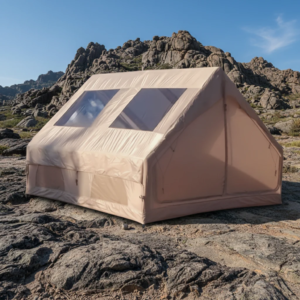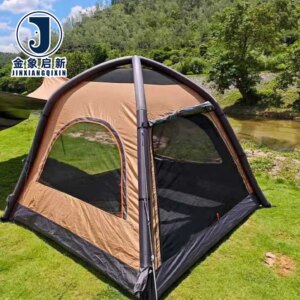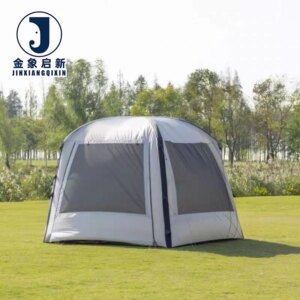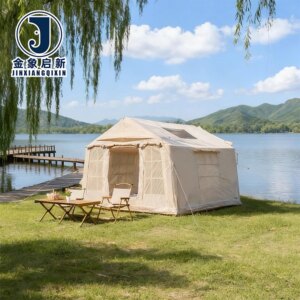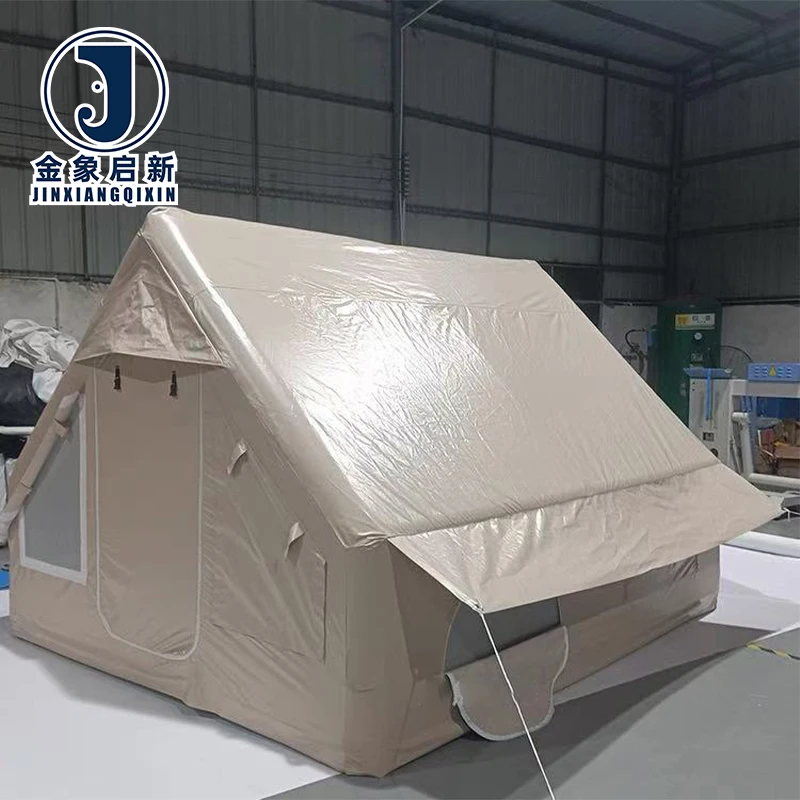
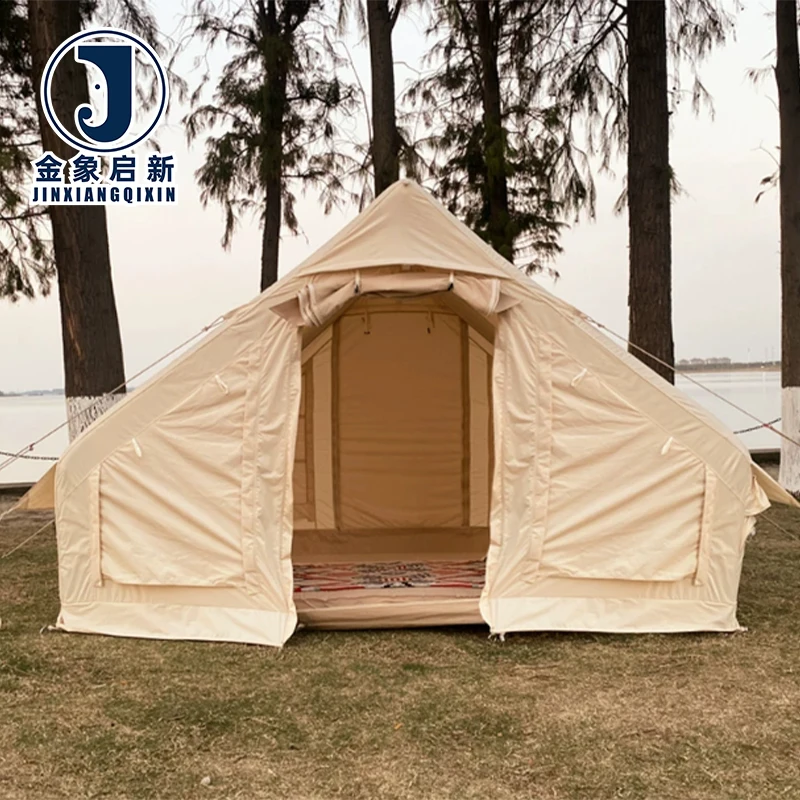
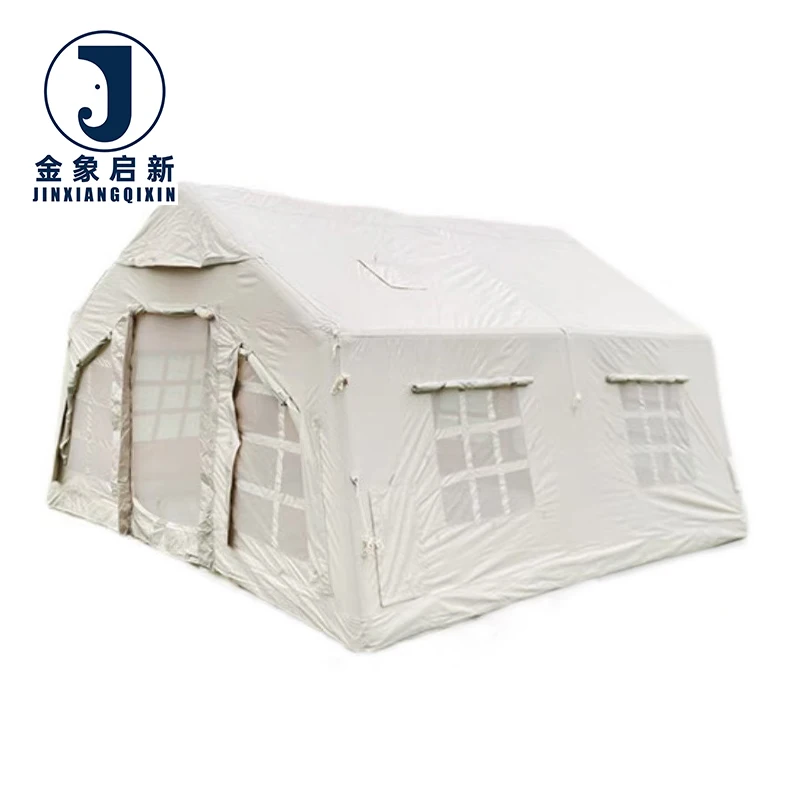
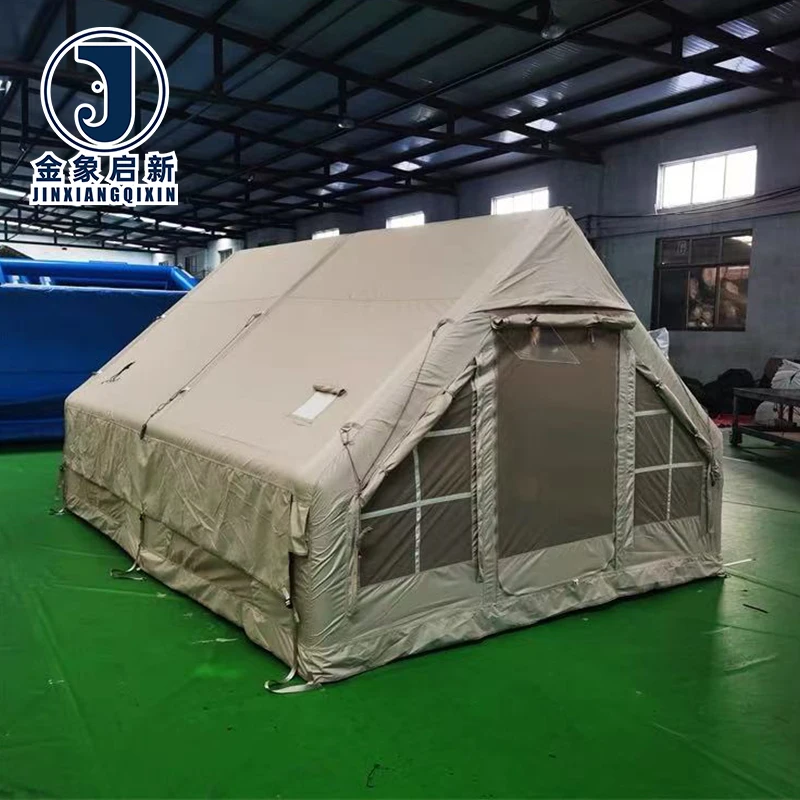
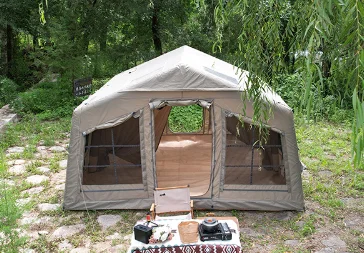
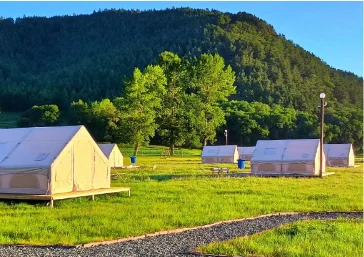
Waterproof Inflatable Camping Tent, 5-8 Person, PVC Tarpaulin — quick automatic opening, four-season single-layer design with tear-resistant and UV-resistant performance.
- Engineered for industrial workforce housing and field base camps, with material selection tuned to site exposure and repeated deployment cycles.
- 10-person R&D team handles pattern, sizing and material specification from sample to bulk, with 100% pre-shipment inspection on every order.
Description
Complete Custom Capability — from material selection through pattern design to final dispatch, every inflatable tent is built on a dedicated 10-person R&D team handling your exact site requirements.
Technical Specifications
| Parameter | Value |
|---|---|
| Product Type | Inflatable Tent |
| Core Material | PVC Tarpaulin |
| Capacity | 5–8 Person |
| Design Configuration | Four-Season, Single Layer, Quick Automatic Opening |
| Waterproof Performance | Fully waterproof coated construction |
| UV Resistance | UV-resistant treatment applied (test basis not stated — confirm grade required for your market) |
| Tear Resistance | Tear-resistant PVC-coated fabric |
| Customization Scope | OEM & ODM (Material Selection, Product Design) |
| Quality System | Full-Process Inspection, 12-Step Quality Inspection |
| Certifications | ISO 9001, ISO 14001, ISO 45001, CE |
Application Suitability
| Application | Exposure & Requirement |
|---|---|
| Industrial workforce temporary housing | Continuous sun and rain exposure, wind load on inflatable frame, frequent relocation between project sites |
| Field operation base camps | Remote terrain abrasion, temperature fluctuation across seasons, rapid deployment under time pressure |
| Commercial outdoor event facilities | High foot traffic interior wear, repeated inflation and deflation cycles, visible appearance standards |
| Outdoor accommodation in harsh climates | Sustained UV exposure, heavy rainfall, high-wind environments requiring structural air-beam integrity |
Why Material Consistency Matters More Than the Brochure Promises
Batch-to-batch variation in coated fabric is the leading cause of inflatable tent failures on active project sites.
When a buyer sources PVC inflatable camping tents from multiple suppliers or even different production runs from the same source, the coating weight and adhesion quality can shift enough to change how the air beams hold pressure. I have reviewed field reports where tents from one batch performed through an entire season while the next batch developed pinhole leaks within weeks — not because the specification changed on paper, but because the coating process drifted outside tolerance [NEED_CITE: coated fabric batch consistency and coating adhesion test methods per ISO 2411]. A PVC Inflatable Camping Tent manufacturer custom-building units for industrial deployment must control this at every stage, not just at final inspection.
Coated Fabric Selection for Inflatable Air Beams
The air beam is the structural spine of any inflatable tent. The PVC tarpaulin used here must maintain coating adhesion under repeated inflation cycles, where internal pressure flexes the fabric at every fold point. Our material selection process for each PVC Inflatable Camping Tent manufacturer custom order evaluates base fabric denier and coating weight together, because a heavy coating on a low-denier base will crack before the fabric itself fails. The R&D team specifies the coating formulation based on your deployment climate and expected inflation frequency.
Four-Season Design and Rapid Deployment on Site
Commercial and industrial users need shelters that deploy in hours, not days. The quick automatic opening design of this inflatable tent reduces on-site labour and eliminates the need for pole assembly in adverse weather. The single-layer, four-season construction balances thermal performance against pack weight, making it practical for remote base camps where transport volume is limited. Each unit is engineered so that the inflation system and valve placement allow a small crew to achieve full structural rigidity without specialist tools [NEED_CITE: inflatable structure deployment standards for temporary field shelters].
Reading the Specification Beyond the Surface
The PVC tarpaulin core material determines how the tent performs under real load. Coating weight and base fabric weave density work together: a tighter weave gives the coating more yarn surface to bond to, improving peel strength at the heat-welded seams that form the air beams. Waterproof performance depends on full encapsulation of the base fabric — any uncoated edge or poorly sealed weld becomes a water ingress path under sustained rain. UV-resistant treatment must be integrated into the coating compound rather than applied as a surface finish, otherwise abrasion from packing and unpacking strips the protection away within the first few deployment cycles. Tear resistance is governed by the base fabric’s yarn tenacity and the ripstop or plain weave structure, which determines whether a small puncture stays local or propagates across the panel.
The Real Cost of Specifying on Price Alone
When inflatable tent fabric is selected primarily on cost per square metre, the compromises are invisible until the tent is pressurised on site. Thin coating saves material cost but produces air beams that lose pressure in high heat as the PVC softens. Underspecified base fabric tears at the valve reinforcement patch — the exact point where load concentrates during inflation. Colour variation between production batches means replacement panels never match the originals, which matters when the tent serves as a visible commercial facility. Weld failures at seam junctions appear after a handful of inflation cycles, not because the welder was poorly set, but because the coating formulation did not support consistent heat activation across the seam width [NEED_CITE: heat-weld seam strength testing for PVC-coated fabrics per ISO 1421].
Why This Production Line Supports Your Specification
Deep process control over coating weight and adhesion is maintained across three full production lines and 36 sets of professional equipment, giving each PVC Inflatable Camping Tent manufacturer custom order consistent output at volume. The 10-person R&D team handles material selection and product design directly, so custom sizing or treatment requirements are engineered into the fabric rather than added as an afterthought. A 12-step quality inspection runs through every production stage, catching coating defects and weld weaknesses before they reach dispatch. Sample development is completed within days for custom requirements, allowing you to verify material performance and inflation behaviour before committing to bulk production.
Documentation & Verification
- Material specification sheet stating PVC coating type, base fabric construction, and treatment details per order
- Waterproof and UV-resistant test reports issued for each production batch on request
- ISO 9001, ISO 14001, ISO 45001, and CE certificates included with shipment documentation
- Pre-shipment inspection record with 12-step quality checkpoints available before dispatch
- Certificate of origin and customs documentation prepared per destination country requirements
Fabrication, Handling & Storage
- Heat-weld air beam seams using temperature and dwell time matched to the PVC tarpaulin coating formulation to avoid delamination
- Reinforce valve and inflation port patches with additional PVC tarpaulin layers to distribute stress at high-pressure points
- Store rolled inflatable tents vertically in a dry environment to prevent permanent creasing of the coated fabric surface
- Avoid dragging the PVC tarpaulin base across abrasive ground during deployment to protect the waterproof coating layer
- Clean with mild detergent and soft brush only — solvent-based cleaners degrade the PVC coating and UV-resistant treatment
- Carry a field repair kit with compatible PVC tarpaulin patches and adhesive for puncture repair on site
What We Need to Start Your Custom Quote
Provide your intended application environment — including expected wind conditions, temperature range, and deployment frequency — so we can specify the correct PVC tarpaulin grade and coating treatment. Confirm whether you need finished units with inflation systems or fabric panels only for your own assembly line. Share your target market’s fire safety or compliance requirements so we can align material certification with local regulations.
Frequently Asked Questions
Q: What customization options are available for bulk inflatable tent orders?
A: We offer full OEM and ODM services covering material selection, product design, capacity sizing from 5 to 8 person configurations, and treatment specifications. Our 10-person R&D team develops samples within days, allowing you to validate inflation performance, fabric hand feel, and colour accuracy before bulk production begins on any PVC Inflatable Camping Tent manufacturer custom order.
Q: How is waterproof performance tested and documented per batch?
A: Each production batch undergoes waterproof verification as part of our 12-step quality inspection process. Test reports documenting the coated fabric’s waterproof performance are issued per batch and included with shipment documentation. The PVC tarpaulin coating fully encapsulates the base fabric, and all heat-welded seams are inspected for adhesion integrity before dispatch.
Q: What is the UV-resistance test basis and how does it relate to service life?
A: UV-resistant treatment is integrated into the PVC tarpaulin coating compound. The specific test basis and grade depend on the formulation selected for your deployment climate — confirm the UV standard required for your market during the specification stage. We provide treatment documentation with each order so you can verify compliance with local outdoor exposure requirements.
Q: What certifications accompany each shipment and how are they verified?
A: Every order ships with ISO 9001, ISO 14001, ISO 45001, and CE certificates, along with a pre-shipment inspection record covering all 12 quality checkpoints. Material specification sheets, batch-specific test reports, and certificates of origin are prepared per destination requirements. All documentation references the specific production batch for full traceability.
Q: What is the typical lead time for custom OEM/ODM inflatable tent orders?
A: Lead time depends on the customization scope, order volume, and material availability for your specified PVC tarpaulin grade. Sample development is completed within days for approval. After sample sign-off, production scheduling is confirmed with a firm dispatch date. We provide the timeline during the quotation stage so you can plan your project mobilisation accordingly.
Related products
-
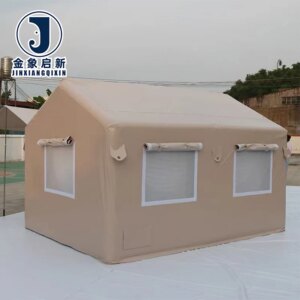
Inflatable Four-Season Event Tent Outdoor Waterproof PVC Quick Automatic Opening 6-8 Person Custom Logo
Read more -
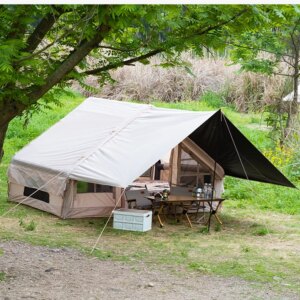
Camping Tent Inflatable PVC Waterproof UV Resistant Four-Season Quick Automatic Opening Customizable 2-3 Person
Read more -
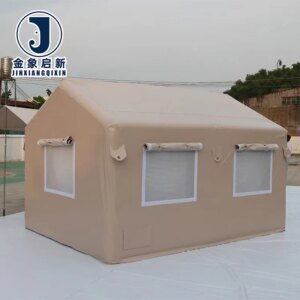
Inflatable Camping Tent PVC Waterproof Four-Season Outdoor Air Tent with Quick Automatic Opening for 3-4 Person
Read more -
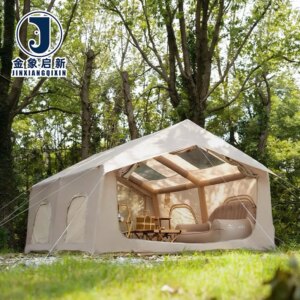
Inflatable Camping Tent Waterproof PVC Outdoor Air Tent Easy Setup Family Camping Shelter
Read more