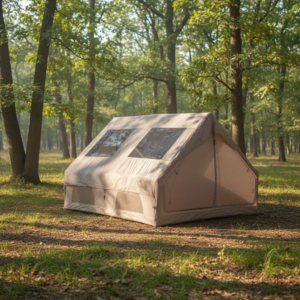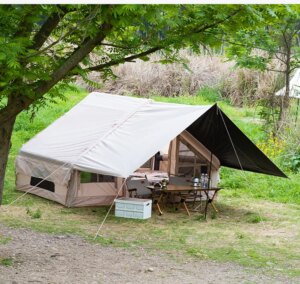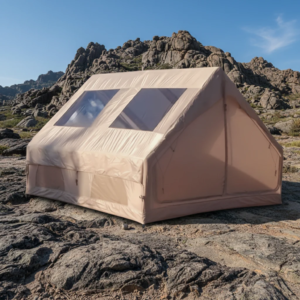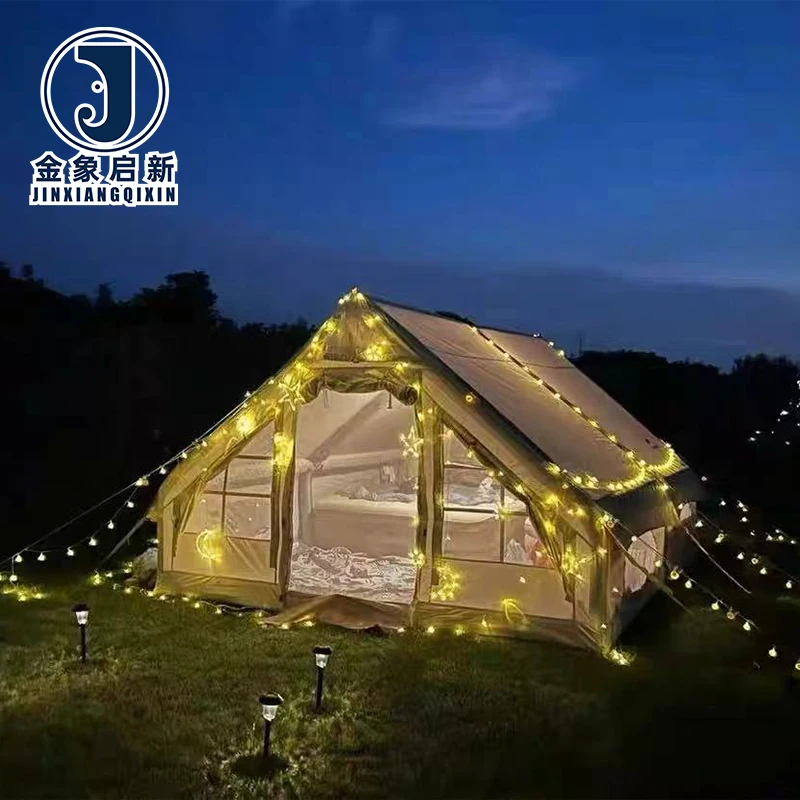
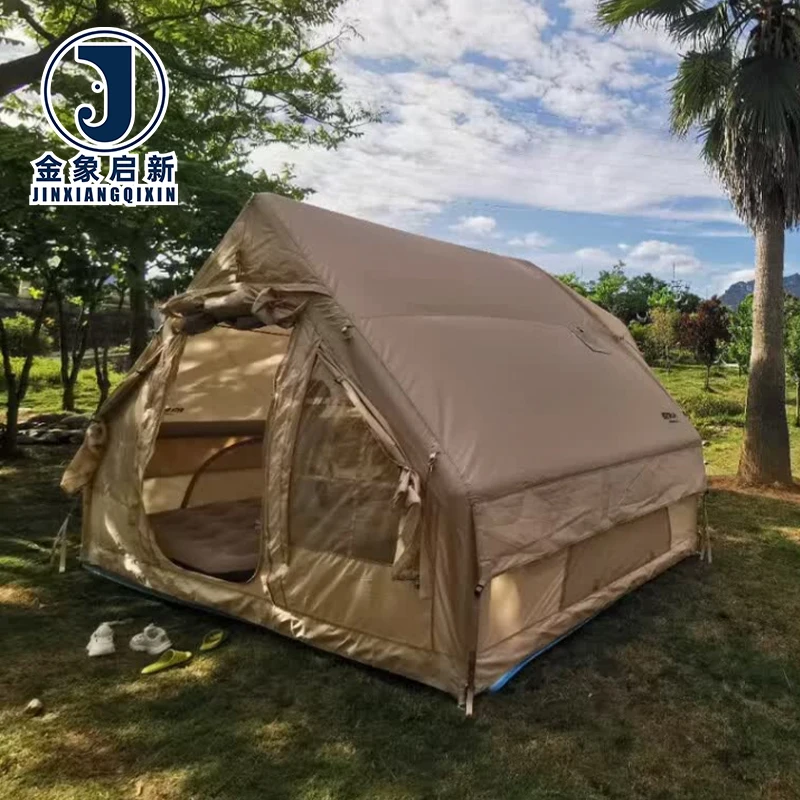
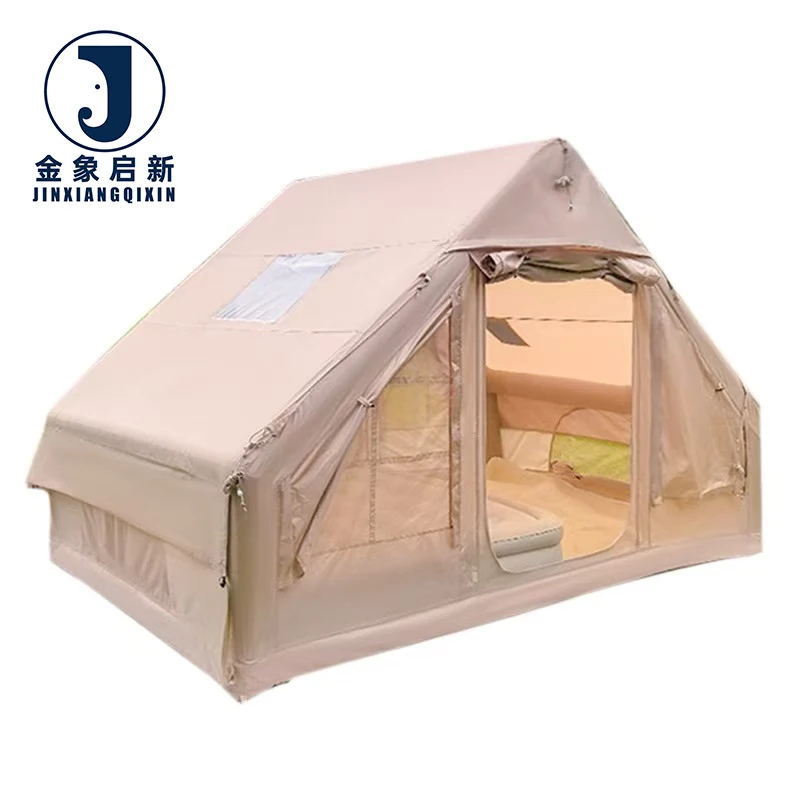
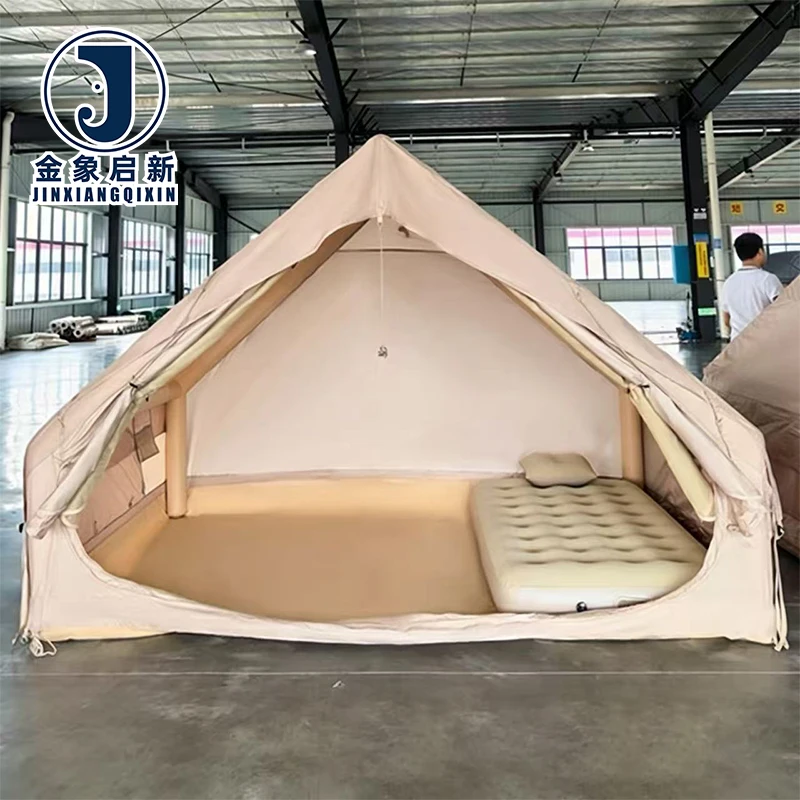
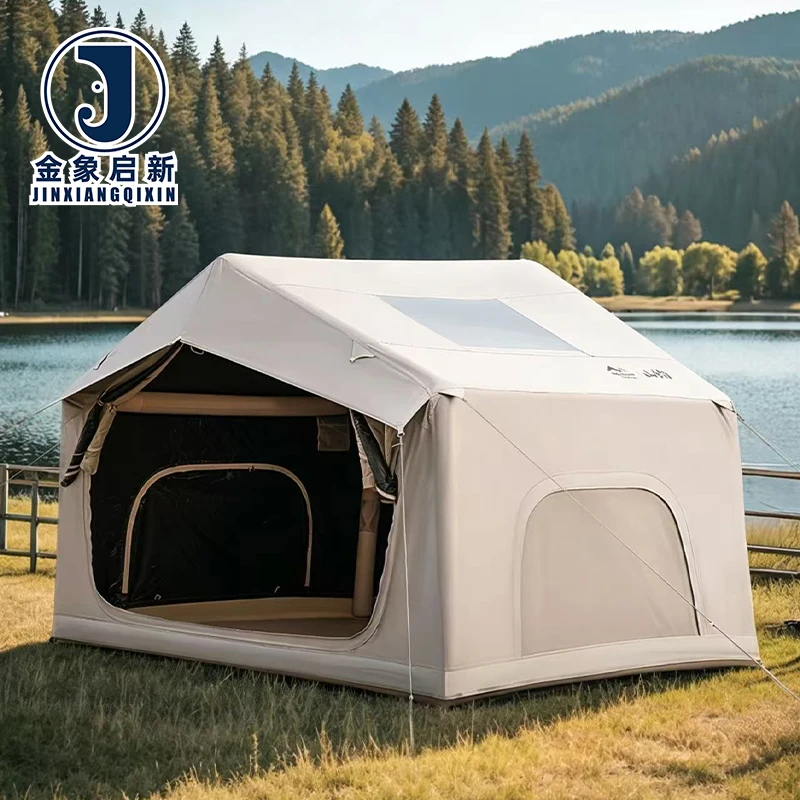
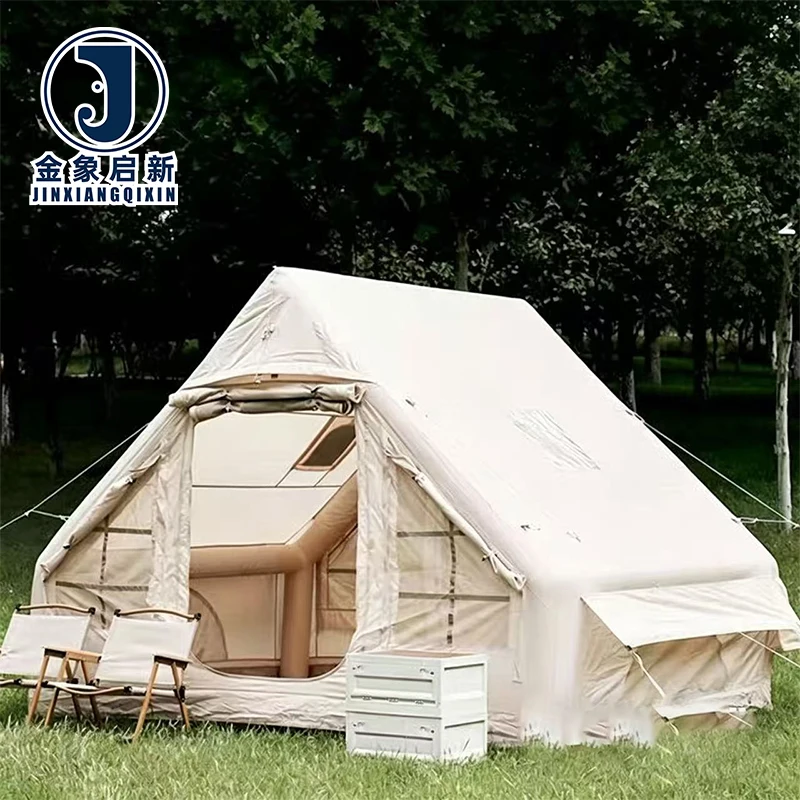
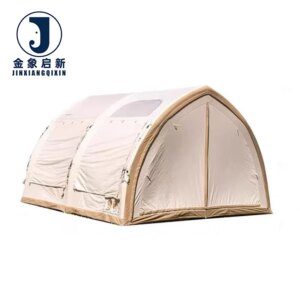
Waterproof Inflatable Camping Tent — PVC tarpaulin, 4-6 person capacity, double door design
- UV-resistant coating formulation maintains performance under prolonged sun exposure
- Inflatable structure integrity verified through pressure testing before dispatch
- Double door configuration supports airflow management in summer camping conditions
Backed by 3 full production lines, 100% pre-shipment inspection, and 10-person R&D team handling pattern printing and sample development.
Description
Proven Coating Expertise — Nearly 30 years of focused PVC coated fabric production delivers reliable material consistency across every roll of inflatable tent fabric we manufacture.
Technical Specifications
| Parameter | Value |
|---|---|
| Product Type | Inflatable Tent |
| Core Material | PVC tarpaulin |
| Key Performance | Waterproof, UV-resistant (test basis to be confirmed per order), tear-resistant |
| Capacity | 4-6 Person |
| Design | Double door |
| Season | Summer camping |
| Customization Service | OEM & ODM (sample customization, pattern printing) |
| Production Facility Area | 9180 square meters |
| Production Lines | 3 full production lines |
| Processing Equipment | 36 sets of professional processing equipment |
| R&D Team Scale | 10 technicians |
| Standards | ISO9001, ISO14001, ISO45001, CE |
Application Suitability
| Application | Exposure & Requirement |
|---|---|
| Commercial outdoor gear manufacturing | Consistent batch quality across seasonal production runs, waterproof integrity, UV exposure during storage and use |
| Event infrastructure provision | Rapid deployment cycles, repeated inflation and deflation, weather resistance during outdoor events |
| Camping equipment rental fleets | High-frequency use by multiple end users, abrasion from ground contact, demanding cleaning schedules |
| Expedition outfitting services | Extended field exposure, variable climate conditions, structural integrity under continuous air pressure |
| Outdoor hospitality operations | Guest-facing aesthetics, long-term UV and moisture exposure, compliance with commercial safety requirements |
Why Inflatable Tent Fabric Selection Demands More Than a GSM Number
A quoted GSM tells you the weight of the fabric, not how the inflatable structure will perform under sustained air pressure and outdoor exposure.
When sourcing material for inflatable camping tents, buyers frequently discover that a heavy-sounding GSM does not automatically translate to a structure that holds pressure reliably or resists the flex fatigue of repeated inflation cycles. The base fabric weave, coating adhesion, and seam construction all interact to determine whether a tent survives its first season in a rental fleet. [NEED_CITE: tensile and tear test methods for coated fabrics per ISO 1421]. An Inflatable tent aftermarket supplier who understands these interactions will always discuss the complete material system, not just a single number on a quotation.
Material Construction for Pressurised Structures
Inflatable tent fabric must withstand continuous internal air pressure that places uniform stress across every welded seam and panel. The PVC tarpaulin core material used in these structures provides waterproof performance and tear resistance suited to this pressurised environment. When an inflatable camping tent is deployed in summer conditions, the fabric also faces direct UV exposure that demands appropriate treatment to maintain structural integrity throughout the season. Sourcing from a qualified Inflatable Tent Fabric manufacturer ensures the coating weight and base fabric specification are matched to the pressure requirements of the intended design.
OEM and ODM Capability for Tent Brands
Commercial camping equipment brands and rental fleet operators need inflatable tent fabric that meets their specific design parameters. Our 10-person R&D team supports material selection, sizing adjustments, and pattern printing to align the fabric with each client’s product line. Sample customization allows buyers to evaluate the material in their own inflation prototypes before committing to a production run. This OEM and ODM approach reduces the risk of discovering fit or performance issues after full-scale manufacturing has already begun. [NEED_CITE: coated fabric sample development and testing protocols for inflatable structures].
How PVC Coating Weight and Base Fabric Interact in Tent Performance
The waterproof performance of inflatable tent fabric depends on both the PVC coating layer and the base fabric it encapsulates. A heavier coating does not compensate for a loosely woven base fabric — the tensile strength comes from the yarn denier and weave density, while the coating provides the air-holding barrier and surface protection. When the two are balanced correctly, the resulting PVC tarpaulin delivers tear resistance that prevents small punctures from propagating across a panel. The double door design in these tents creates additional seam lines that must be heat-welded with precision, making coating adhesion to the base fabric a critical factor in long-term durability. Buyers evaluating material should request both GSM data and base fabric specifications to understand the complete performance picture.
What Happens When Inflatable Tent Material Is Specified on Weight Alone
Selecting inflatable tent fabric based solely on a GSM figure leads to predictable failures in commercial use. A material that reaches the quoted weight through excessive coating on a weak base fabric will crack at fold lines during transport and develop pinhole leaks at weld seams after repeated inflation cycles. For rental fleets, this means tents returning from the field with seam failures that cannot be patched in the field. Batch inconsistency in coating weight compounds the problem — some rolls in the same order perform adequately while others fail prematurely, making quality control at every production stage essential. [NEED_CITE: common failure modes in PVC coated inflatable structures under cyclic loading].
Manufacturing Controls That Protect Your Order
Our 9180 square meter production facility operates 3 full production lines with 36 sets of professional processing equipment, giving us the capacity to fulfil bulk orders for commercial camping equipment supply. Every roll undergoes dedicated QA and QC inspection at each production stage, with 100 percent pre-shipment verification before dispatch. The 10-technician R&D team develops custom samples within days, allowing you to test material behaviour in your specific tent design before production begins. ISO9001, ISO14001, ISO45001, and CE certification underpin our process controls. Our coating expertise, built over nearly 30 years of focused PVC tarpaulin production, ensures consistent adhesion and weight distribution across every roll.
Documentation & Verification
- Material specification sheet stating GSM, base fabric details, coating type, and colour reference for each inflatable tent fabric roll
- UV-resistant treatment test report provided where applicable, matched to the specific batch and grade supplied
- ISO9001, ISO14001, ISO45001, and CE certificates included with every shipment
- Pre-shipment inspection record confirming weight and visual quality against the agreed specification
- Roll packing list detailing quantities and roll identification for traceability
- Certificate of origin and customs documentation supporting international dispatch
Fabrication, Handling & Storage
- Heat-weld seams using temperature and dwell time settings matched to the PVC tarpaulin coating weight to prevent delamination at inflatable panel joints
- Store rolls upright on pallets in a covered area to avoid compression creases that weaken the PVC coating layer over time
- Allow cold-stored rolls to reach ambient temperature before unrolling to prevent cracking in the PVC tarpaulin surface during fabrication
- Use PVC-compatible cleaners on finished tents to protect the coating surface and maintain waterproof integrity through rental cycles
- Plan panel cutting layouts to minimise offcuts, considering the available roll width and the double door design geometry
Before You Request a Quote
To match the right inflatable tent fabric to your application, share your intended use environment and the air pressure range your tent design operates within. Let us know whether you need UV-resistant treatment supported by specific test data for your target market, and provide your preferred dimensions, colour requirements, and any pattern printing specifications. Clarify whether you require finished tent units or fabric rolls for your own production line, and indicate your estimated annual volume so we can recommend the most efficient supply approach.
Frequently Asked Questions
Q: How do you verify material weight on delivery and what documentation supports it?
A: Every roll of inflatable tent fabric is weighed during our 100 percent pre-shipment inspection process. The inspection record documents the actual weight against the stated GSM on the material specification sheet. This record travels with your shipment, giving you a verifiable reference point to check on arrival before the material enters your production or warehouse.
Q: What evidence supports the UV-resistant claim for this inflatable tent fabric?
A: UV-resistant treatment is available for this PVC tarpaulin material, and a test report is provided where applicable to the specific grade you order. We recommend confirming the test standard required by your target market during the inquiry stage so we supply documentation that matches your compliance needs and end-use conditions.
Q: What customization is available for dimensions, colour, and pattern printing?
A: Our OEM and ODM service covers custom sizing, colour matching, and pattern printing for inflatable tent fabric. The 10-person R&D team develops samples based on your specifications, allowing you to evaluate material performance in your tent prototype before committing to full production. Lead times vary based on the complexity of the custom requirements.
Q: How is colour consistency controlled across multiple rolls in one order?
A: Colour consistency is managed through controlled coating formulation and in-process QA at every production stage. Rolls within a single production run are manufactured under the same parameters, and our 100 percent pre-shipment inspection includes visual comparison across rolls to identify any variation before dispatch to your facility.
Related products
-
Camping Tent Inflatable UV Resistant Customizable Four-season Waterproof PVC Quick Automatic Opening 2-3 Person Outdoor
Read more -
High Quality Four-Season Inflatable Tent for Camping Durable PVC Waterproof All-Weather Resistance Quick Automatic Opening
Read more -
Inflatable Camping Tent PVC Waterproof Four-Season Outdoor Air Tent with Quick Automatic Opening for 3-4 Person
Read more -
Premium Four-season PVC Inflatable Tents for Camping Easy-to-Use Spacious Portable Waterproof Outdoor Tent with Pump
Read more