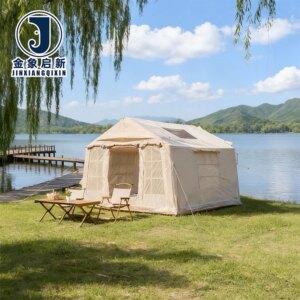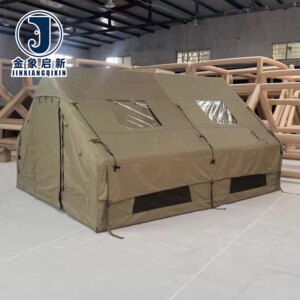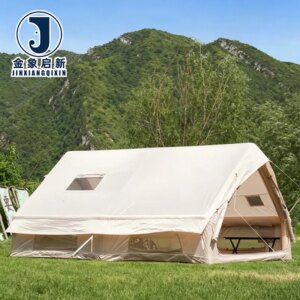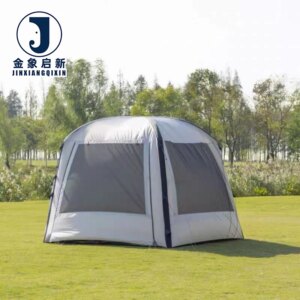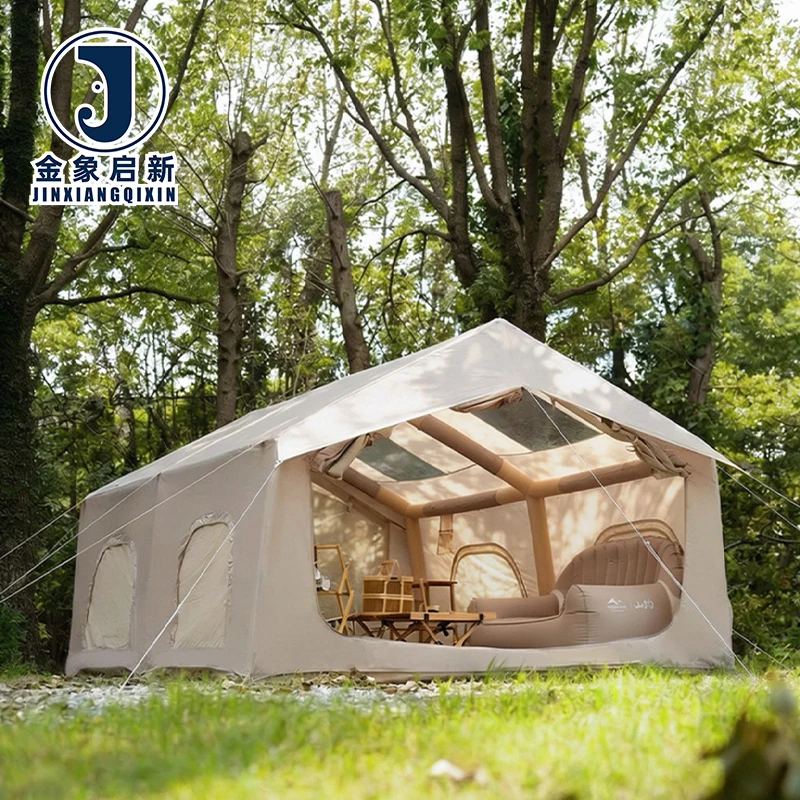
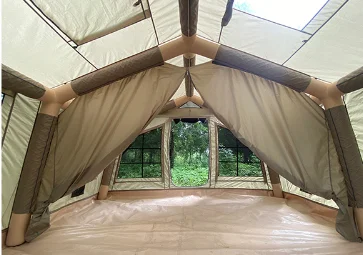
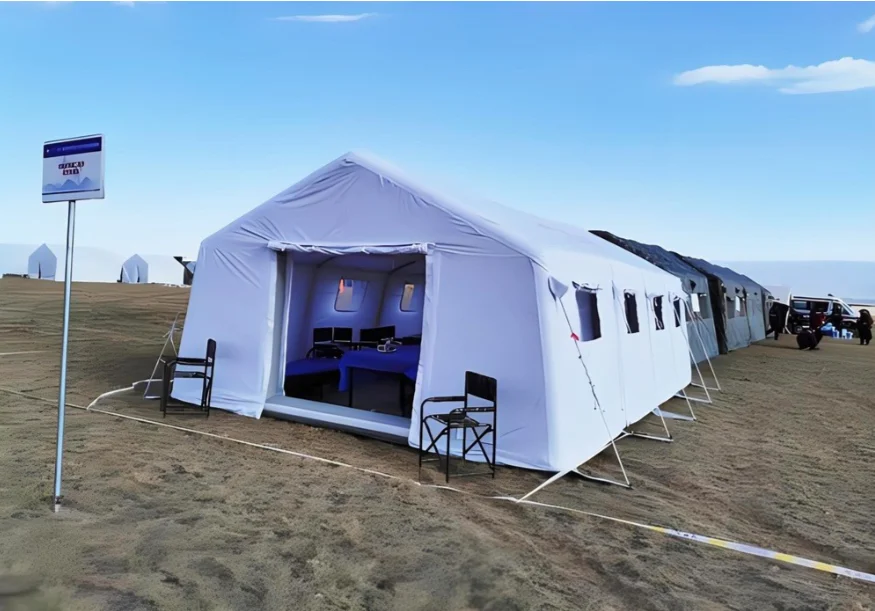
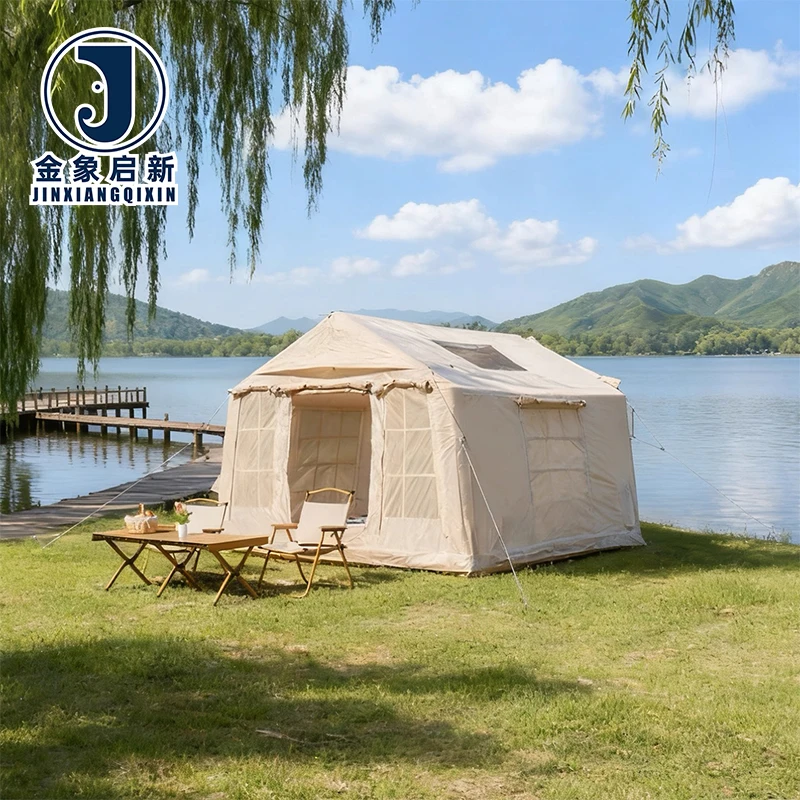
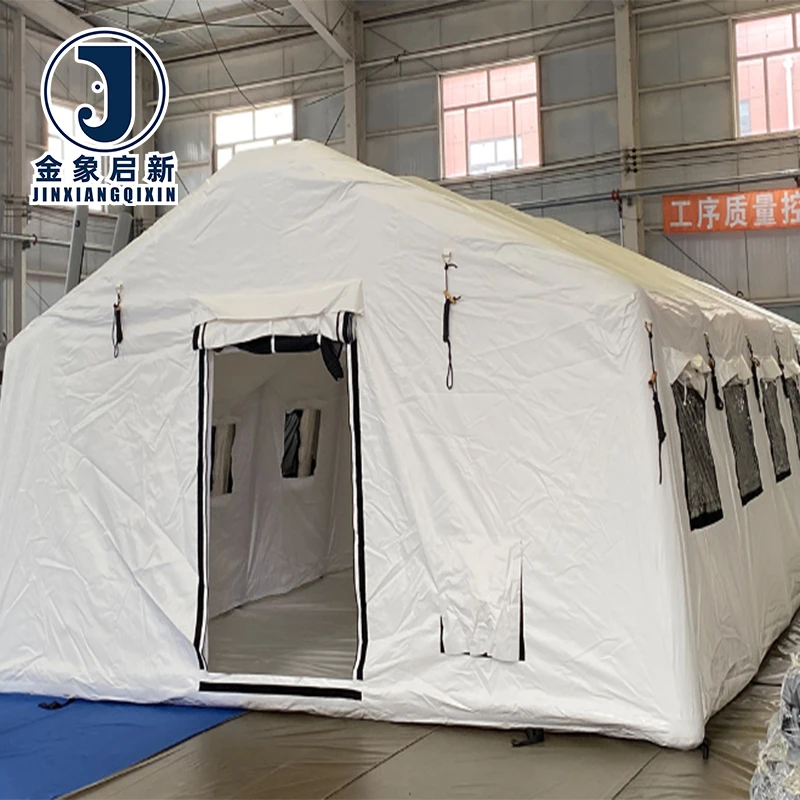
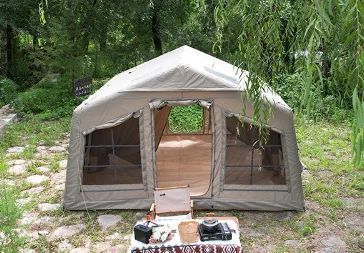
Inflatable Camping Tent with PVC Tarpaulin, 1-12 Person Capacity, Four-Season Rating — heat-sealed seams and proprietary coating process deliver consistent waterproof performance across the full surface, addressing the common failure point where welded seams fail before the fabric. Full OEM/ODM customization from a coated fabric manufacturer with nearly 30 years of process control over coating weight and adhesion, supported by a dedicated 10-person R&D team. Every tent undergoes 24-hour pressure retention testing and 100% pre-shipment inspection with complete documentation.
Description
Coated Fabric Process Control — proprietary PVC coating method verified through 24-hour pressure retention testing on every finished inflatable tent structure.
Technical Specifications
| Parameter | Value |
|---|---|
| Product Type | Inflatable Tent |
| Core Material | PVC Tarpaulin |
| Construction | Single layer |
| Capacity Range | 1-12 Person |
| Season Rating | Four-season |
| Waterproof Performance | Fully waterproof coated construction |
| UV Resistance | UV-resistant formulation (test basis not stated in source) |
| Tear Resistance | Tear-resistant construction (test basis not stated in source) |
| Customization | OEM & ODM — sample customization, pattern printing, size adjustments, material specification modifications |
| Quality Control | 24-hour pressure retention test for airtightness; full-process inspection; 100% pre-shipment inspection |
| Certifications | ISO9001, ISO14001, ISO45001, CE |
Application Suitability
| Application | Exposure & Requirement |
|---|---|
| Temporary site accommodations for construction crews | Repeated inflation and deflation cycles, ground contact abrasion, variable weather conditions including rain and sustained UV exposure |
| Mobile field operations bases for logistics and surveying | Rapid deployment requirement, transport vibration during relocation, need for consistent airtightness across multiple setup cycles |
| Emergency response staging areas | Unpredictable deployment timelines, exposure to harsh climate conditions, requirement for reliable structural integrity under wind load |
| Outdoor event infrastructure | Aesthetic presentation with pattern printing, public safety compliance, repeated assembly and disassembly over event season |
When Airtightness Claims Cannot Be Verified Before Shipment
Every inflatable tent structure undergoes a 24-hour pressure retention test before dispatch — not a spot check, but a full-unit verification.
Sourcing inflatable structures from suppliers who claim airtightness without documented testing protocols creates a failure pattern that only surfaces after the unit reaches the field. Seam delamination under pressure, valve fitting leaks, and coating micro-fractures at stress points remain invisible until the tent is inflated on-site. For buyers managing construction camp deployments or emergency response logistics, discovering airtightness failure after arrival means project delays, return shipping costs, and lost operational windows. [NEED_CITE: pressure testing protocols for inflatable fabric structures]
Full-Catalogue Customization From Design Through Delivery
The Inflatable Camping Tent manufacturer operates across the complete PVC tarpaulin product range, meaning tent structures are developed from the same material process control that governs roll stock production. Pattern printing, size adjustments from single-person to twelve-person configurations, and material specification modifications are handled in-house by a dedicated R&D team rather than outsourced to third-party converters. This vertical integration ensures that custom dimensions receive the same coating consistency and seam integrity verification as standard catalogue products.
Batch-to-Batch Consistency Across Custom Orders
When buyers specify custom-printed inflatable tent structures for event infrastructure or branded field operations, colour variation between production runs becomes visible the moment units are deployed side by side. The manufacturer addresses this through controlled coating weight application and dedicated colour batch matching across the three production lines. Each custom order receives the same material specification sheet and batch inspection documentation as standard products, allowing buyers to verify that printed branding and base fabric colour remain consistent whether ordering five units or fifty. [NEED_CITE: colour consistency standards in coated fabric production]
Reading the Specification Sheet Beyond GSM
The core material specification for an inflatable tent extends well beyond a single GSM figure. Base fabric denier and weave pattern determine how the structure responds to inflation pressure and wind loading, while the PVC coating method — whether knife-over-roll or calendered — directly affects peel strength between coating and substrate, which in turn governs how welded seams perform under repeated flex cycles. UV-resistant formulation addresses prolonged sun exposure, though buyers should confirm the specific test standard applied, as UV resistance claims vary significantly without documented testing methodology. The single-layer construction balances durability against transport weight, particularly relevant for mobile field operations requiring frequent relocation. Temperature performance boundaries — both low-temperature flexibility and high-temperature coating softening — should be confirmed against the deployment climate before finalizing material selection.
The Hidden Cost of Unverified Seam Integrity
Welded seams on inflatable structures fail at the point of maximum flex — typically where the tube geometry changes direction or where valve fittings penetrate the fabric. When seam welding parameters are not controlled against the specific PVC coating formulation, the bond between coating layers separates before the base fabric reaches its tear limit. This failure mode is invisible during visual inspection and only manifests after repeated inflation-deflation cycles. Buyers receiving structures without documented pressure testing protocols face the cost of field repairs, unit replacement, and operational downtime that far exceeds the original procurement savings. [NEED_CITE: seam failure analysis in inflatable fabric structures]
Why Procure From a Coated Fabric Manufacturer
The Inflatable Camping Tent manufacturer brings nearly three decades of PVC coating process expertise to inflatable structure production, meaning material selection and coating weight control are managed at the source rather than through intermediary converters. Three full production lines and thirty-six sets of processing equipment support both bulk capacity and custom specification flexibility without the extended lead times typical of outsourced manufacturing. A ten-person R&D team handles sample development for custom requirements, allowing buyers to verify material performance and print quality before committing to production quantities. Dedicated QA/QC at every production stage, culminating in 100% pre-shipment inspection, ensures that each unit meets the documented specification before dispatch.
Documentation & Verification
- Material specification sheet stating PVC coating weight, base fabric denier, and colour reference for each production batch
- Batch inspection report documenting pressure retention test results and airtightness verification for every completed unit
- ISO9001, ISO14001, ISO45001, and CE certification documentation provided with each order
- Pre-shipment inspection record confirming 100% quality check completion before dispatch
- Customized certification documents available to meet specific project or regional compliance requirements
Fabrication, Handling & Storage
- Store inflated structures in shaded, ventilated areas to prevent UV degradation of the PVC coating surface during extended on-site deployment
- Deflate completely and fold along consistent crease lines to avoid stress concentration at repeated fold points on the single-layer construction
- Clean PVC surfaces with pH-neutral solutions only — abrasive cleaners compromise the UV-resistant coating formulation
- Inspect welded seam zones around valve fittings before each inflation cycle,*x stress
- Transport deflated units in protective bags to prevent puncture from sharp objects during relocation between field sites
Specifying Your Inflatable Tent Requirement
Provide the intended application environment, capacity requirement, and deployment frequency to receive an accurate material recommendation. Confirm whether pattern printing, custom dimensions, or specific certification documentation is required for your market. Request sample development to verify coating performance and print quality before committing to production quantities.
Frequently Asked Questions
Q: How is airtightness verified before shipment, and what documentation accompanies each unit?
A: Every completed inflatable tent undergoes a 24-hour pressure retention test to verify airtightness across all seams, valve fittings, and fabric surfaces. Each unit ships with a batch inspection report documenting the pressure test results, material specifications, and production parameters. This verification applies to both standard catalogue products and custom-sized structures.
Q: What customization options are available for dimensions, printing, and material specifications?
A: The manufacturer offers full OEM and ODM customization including size adjustments from single-person to twelve-person capacity, pattern printing for branding, and material specification modifications to match specific performance requirements. Sample development is available before production commitment to verify custom dimensions and print quality.
Q: What certifications are provided, and can additional regional compliance documents be arranged?
A: Standard documentation includes ISO9001, ISO14001, ISO45001, and CE certificates with every order. Customized certification documents can be provided to meet specific project requirements or regional compliance standards. Confirm your target market requirements during the inquiry stage to ensure appropriate documentation is prepared.
Q: How does the manufacturer ensure colour consistency across multiple units in a single order?
A: Colour consistency is maintained through controlled coating weight application and dedicated batch matching across production lines. Each order receives material specification documentation stating the colour reference, allowing buyers to verify consistency upon arrival. For large orders requiring multiple production runs, advance notice enables coordinated material procurement.
Related products
-
Inflatable Camping Tent Waterproof PVC Outdoor Air Tent Easy Setup Family Camping Shelter
Read more -
Inflatable Tent Four-Season Quick Automatic Opening PVC 3000mm Waterproof Foldable Eco-Friendly 2-3/3-4/6-8 Person Outdoor Use
Read more -
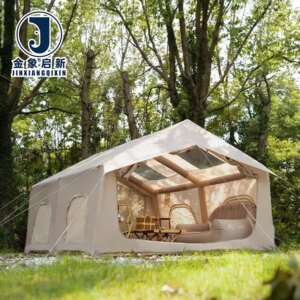
Inflatable Tent Family Size Four-Season Quick Automatic Opening Waterproof 2-8 Person Factory Direct Sale
Read more -
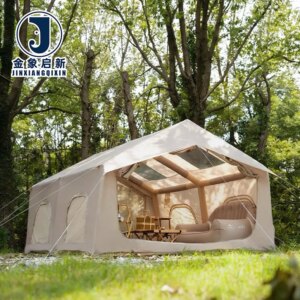
Inflatable Four-season Camping Tent-PVC Coated Waterproof Eco-Friendly Quick Inflation CE Certified ODM/OEM Accepted
Read more