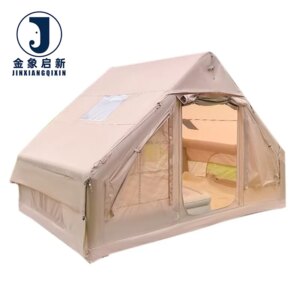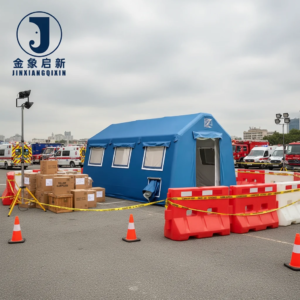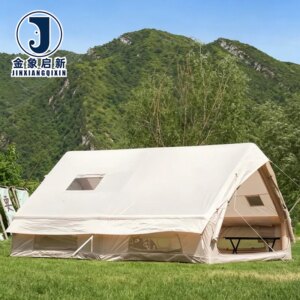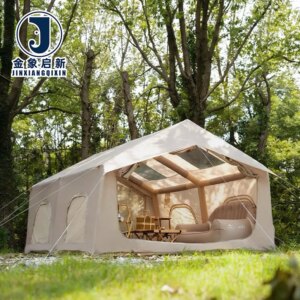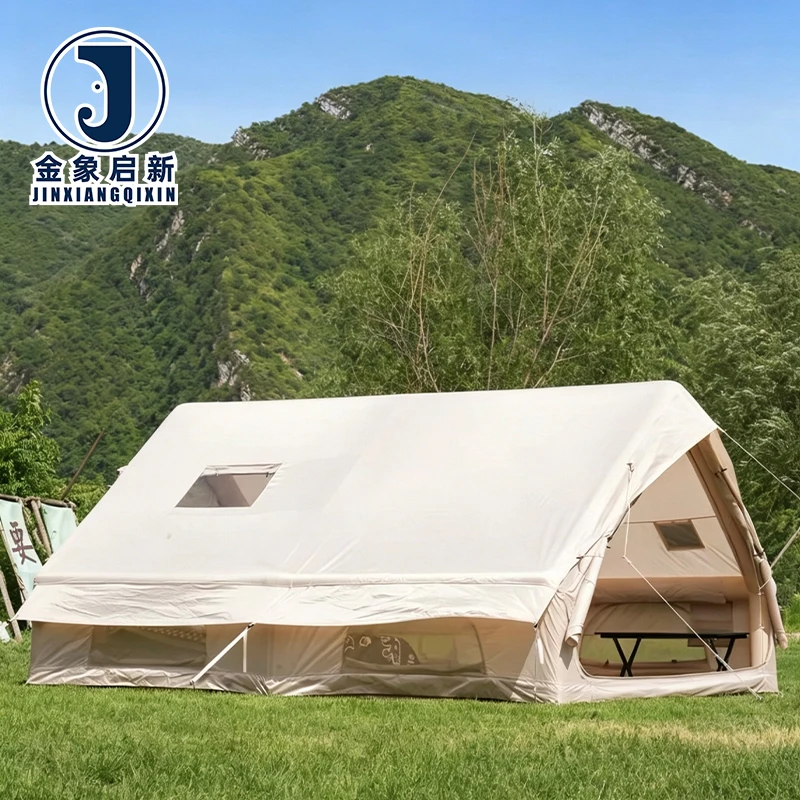
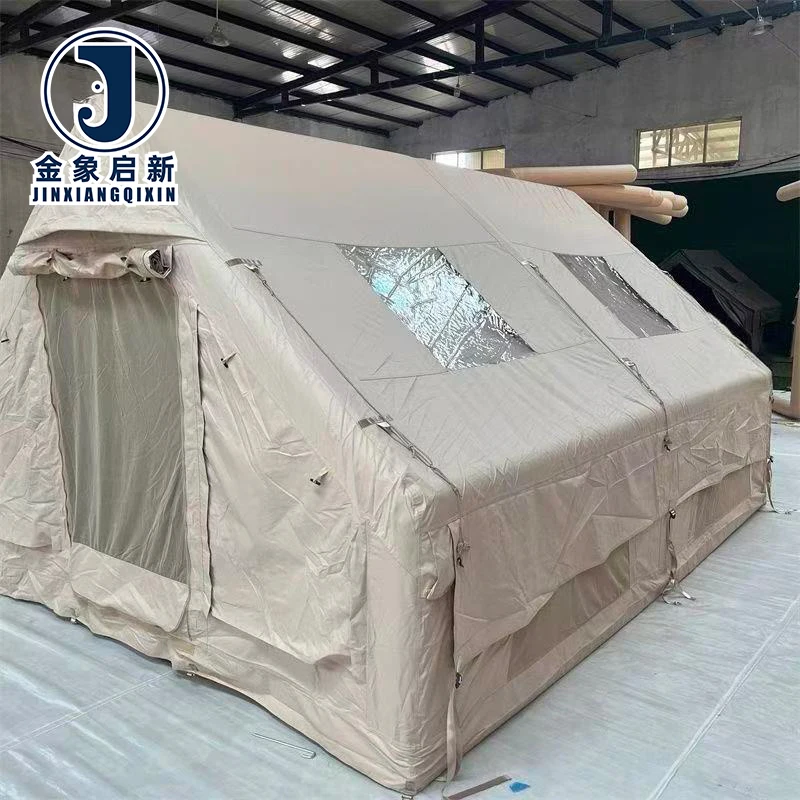
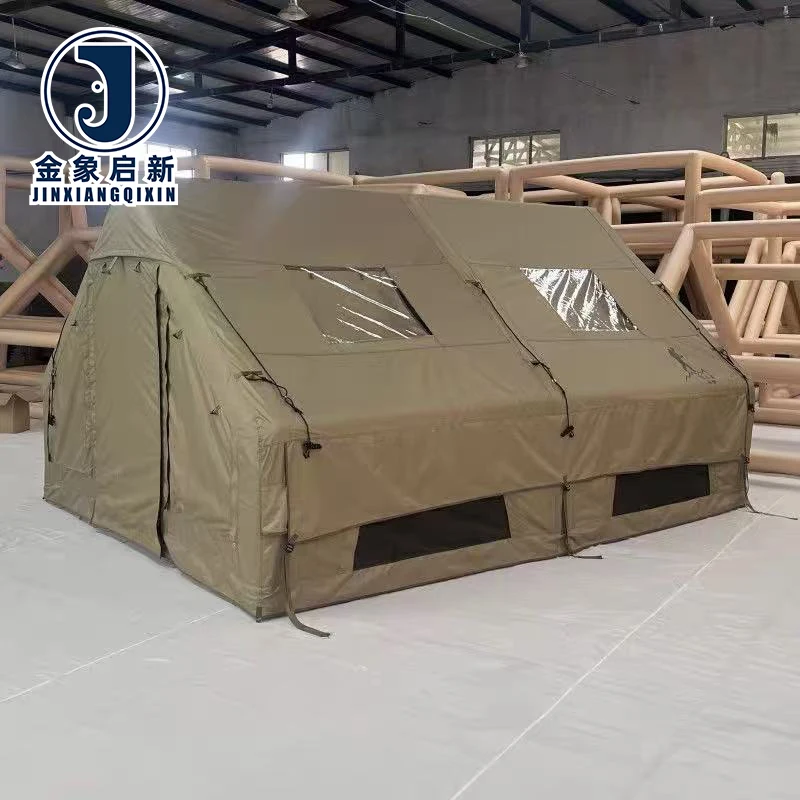
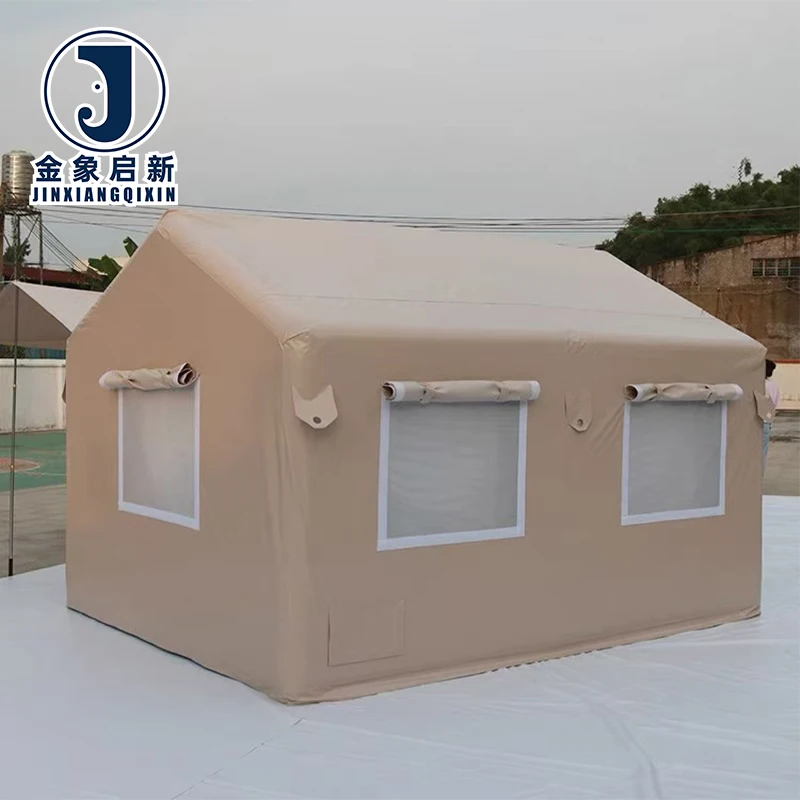
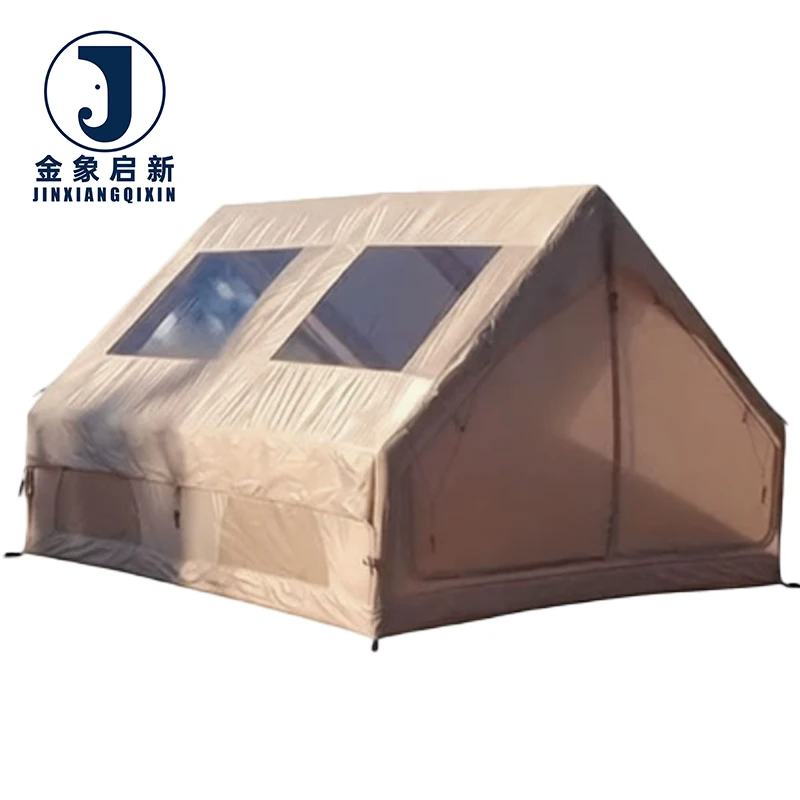
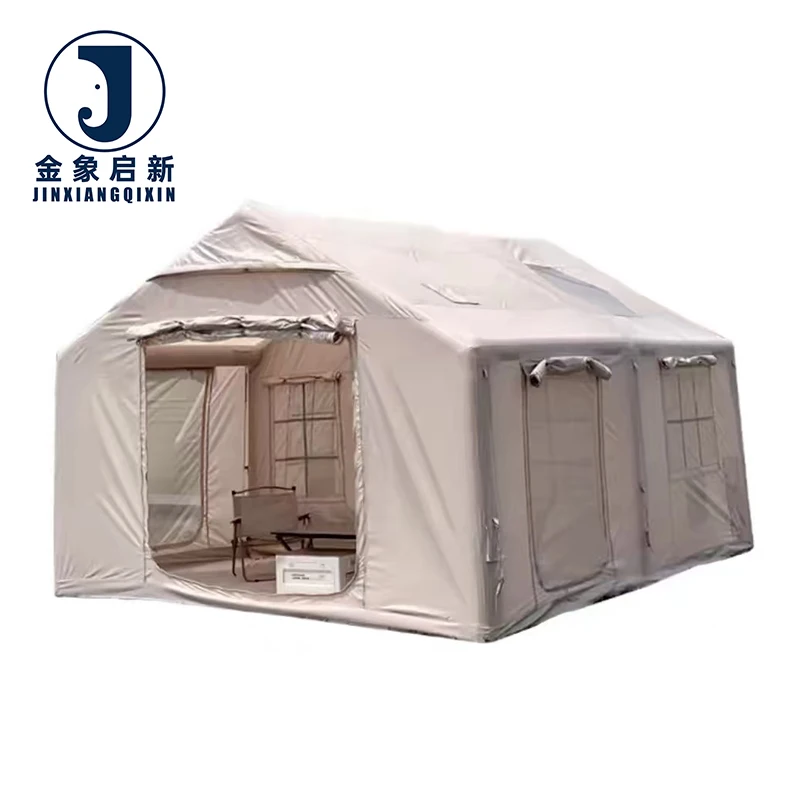
Large Inflatable Camping Tent — 8-10 person capacity, waterproof PVC tarpaulin construction with UV-resistant and tear-resistant performance.
- Engineered for rapid deployment in commercial projects where setup speed and weather resistance matter most
- In-house PVC tarpaulin production with 3 full lines and 36 sets of processing equipment ensures consistent material quality across your entire order
- Full OEM/ODM customization available, from custom sizing to pattern printing, supported by our 10-person technical team
Samples developed within days so you can verify material and construction before committing to volume production.
Description
Deep Process Control Over Coated Fabric — every roll of PVC tarpaulin for inflatable tents passes over the scale before leaving our coating line, because underweight fabric means soft air columns that will not hold shape.
Technical Specifications
| Parameter | Value |
|---|---|
| Product Type | Inflatable Tent |
| Core Material | PVC tarpaulin |
| Capacity | 8–10 Person |
| Key Performance | Waterproof, UV-resistant, tear-resistant |
| Certifications | ISO 9001, ISO 14001, ISO 45001, CE |
| Customization | OEM & ODM, sample customization, pattern printing |
| Production Lines | 3 full production lines |
| Processing Equipment | 36 sets of professional processing equipment |
| R&D Support | 10 technicians |
Application Suitability
| Application | Exposure & Requirement |
|---|---|
| Temporary event pavilions | Wind load on inflated structure, frequent setup and teardown, UV exposure across multi-day outdoor events |
| Industrial site shelters | Dust and debris abrasion, chemical splash, prolonged sun exposure on static installations |
| Mobile exhibition spaces | Repeated inflation cycles, transport vibration, surface scuffing during pack and deploy |
| Equipment storage | Moisture ingress prevention, UV degradation of stored assets, tear risk from sharp-edged inventory |
| Temporary work areas | Welding spark proximity, heavy foot traffic at entry points, weather sealing for sensitive operations |
Why Batch Consistency Matters More Than the Quoted Weight for Inflatable Tent Fabric
An inflatable tent stands or sags based on whether every metre of air-column fabric meets the agreed specification — not just the sample.
Sourcing large inflatable tents for commercial projects often means receiving rolls where the stated weight does not match what arrives at the factory floor. When the PVC tarpaulin comes in lighter than quoted, the air columns lack rigidity. The tent inflates but will not hold its profile under wind or rain load. I have watched production lines halt because an entire container of material tested below the purchase order value, forcing the buyer to reject the shipment and delay their project timeline [NEED_CITE: weight variance tolerance standards for coated fabrics in inflatable structures].
What Makes Commercial-Grade Inflatable Tent Fabric Different
The distinction between event-grade and industrial-grade inflatable tent material comes down to coating weight uniformity and base fabric density. Our PVC tarpaulin production runs on three dedicated lines with 36 sets of processing equipment, giving us control over coating thickness at every metre. When an Inflatable Tent aftermarket supplier quotes a weight, the buyer needs confidence that the full roll — not just the sample swatch — hits that number consistently.
How the Air Column Design Depends on Material Integrity
Every seam on an inflatable tent carries internal air pressure continuously during use. If the PVC coating adhesion to the base fabric is uneven, the heat-welded joints become the first failure point. Our R&D team of 10 technicians develops inflation-compatible panel patterns and weld profiles, testing seam peel strength before approving any new inflatable tent design for production. This matters because a failed seam at an air column joint is not a repair job — it is a full deflation event [NEED_CITE: seam peel strength testing for inflatable structure fabrics].
Reading the Specifications That Actually Affect Tent Performance
Waterproof, UV-resistant, and tear-resistant claims only mean something when tied to the material construction. Waterproof performance in PVC tarpaulin depends on full coating coverage with no pinholes through the base fabric weave. UV resistance is available in treatment grades — confirm the grade required for your target market and expected service duration. Tear resistance is governed by the denier of the base yarns and the weave density; a higher-denier polyester base resists tear propagation far better than a lighter weave at the same coated weight. The interaction between base fabric construction and coating adhesion determines whether the tent fabric flexes cleanly during inflation or develops stress whitening at fold lines. For inflatable tent applications, the balance between material stiffness and flexibility directly affects how quickly the structure reaches full inflation pressure and how it behaves under lateral wind load.
The Hidden Cost of Specifying Inflatable Tent Fabric by Price Alone
When buyers select coated fabric based on unit cost without verifying the actual delivered weight, the consequences show up during inflation testing. Lighter-than-specified PVC tarpaulin produces air columns that feel soft and require higher blower pressure to maintain shape. That extra pressure accelerates seam fatigue. In batch production of inflatable tents, one underweight roll mixed into an otherwise correct shipment causes inconsistent performance across units — some tents stand firm while adjacent ones sag, and the buyer faces warranty claims they cannot explain to their own customers [NEED_CITE: field failure analysis of inflatable structures due to material weight variance].
Why Buyers Source Inflatable Tent Fabric from This Facility
Nearly 30 years of focused coated fabric production means our process control over coating weight and adhesion is built into every production step, not inspected in after the fact. Three full production lines with 36 sets of professional equipment support bulk inflatable tent orders with reliable on-time delivery across multiple container loads. A dedicated 10-person R&D team handles material selection, pattern development, and custom sizing — so whether you need a specific panel width or a branded print for an exhibition tent, the sample reaches you within days. Every roll undergoes QA at each production stage, and 100% inspection before shipment means the weight and specification you ordered is what arrives. ISO and CE certification is maintained across our management systems, providing the documentation trail that regulated markets require.
Documentation & Verification
- Material specification sheet stating PVC tarpaulin base fabric, coating type, and weight reference
- UV and flame-retardant test reports provided where applicable grades are specified
- Pre-shipment inspection record confirming weight and visual quality per roll
- ISO 9001, ISO 14001, ISO 45001, and CE certificates included with every shipment
- Roll packing list with individual roll identification for traceability
- Certificate of origin and customs documentation prepared per destination market
Fabrication, Handling & Storage
- Heat-weld air column seams using temperature and dwell time profiles matched to the PVC tarpaulin coating thickness
- Reinforce blower port and valve attachment points with additional PVC patches to distribute inflation stress
- Store rolls on pallets in a dry environment to prevent moisture trapping between coating layers
- Avoid stacking heavy objects on stored rolls to prevent permanent creasing in the PVC coating
- Clean deployed tent surfaces with mild detergent — solvent-based cleaners may degrade the PVC top finish
- Cut panels with consideration for weave direction to optimise tear resistance along inflation stress axes
Requesting a Quotation for Your Inflatable Tent Project
Provide your target inflation dimensions, expected deployment conditions including wind and UV exposure, and whether you require finished panels or roll stock for your own fabrication line. Let us know if your market mandates specific fire classification or anti-static grades so we can match the correct treatment from the outset. Specify colour requirements and whether pattern printing or branding is needed, and indicate your expected annual volume so we can plan production scheduling accordingly.
Frequently Asked Questions
Q: What customization options are available for the inflatable tent?
A: We offer full OEM and ODM services including custom panel sizing, colour matching, pattern printing, and branding. Our R&D team develops samples based on your inflation design and material specification requirements. Custom widths and lengths are produced on our three dedicated lines, and we can adjust coating parameters to meet your stiffness or flexibility targets.
Q: Which certifications does the inflatable tent material hold?
A: Our production facility operates under ISO 9001, ISO 14001, and ISO 45001 management systems, and products carry CE marking. Additional test reports for specific performance properties are available upon request. Confirm the certification requirements of your destination market so we can align documentation before production begins.
Q: Do you provide samples before mass production?
A: Yes. Our R&D team develops samples within days based on your specification requirements. We encourage buyers to approve material samples for weight, colour, flexibility, and weld compatibility before authorising full production. Sample approval ensures the production run matches your expectations for the inflatable tent application.
Q: How is batch-to-batch consistency ensured across rolls?
A: Every roll passes through quality checkpoints at each production stage, with weight verification against the stated specification before dispatch. Our three production lines and 36 equipment sets are calibrated to maintain uniform coating weight and adhesion. Pre-shipment inspection covers 100% of the order, so no roll leaves the facility below standard.
Q: What documentation accompanies each shipment?
A: Each shipment includes a material specification sheet, pre-shipment inspection record, roll packing list with individual identification, certificate of origin, and applicable ISO and CE certificates. For orders specifying treated grades, relevant test reports are included. Customs support documentation is prepared according to the destination market requirements.
Related products
-
Outdoor Camping Inflatable Tent Luxury All-Season Use PVC Waterproof Quick Automatic Opening Rainproof Insulated
Read more -
Inflatable Four-Season Event Tent Outdoor Waterproof PVC Quick Automatic Opening 6-8 Person Custom Logo
Read more -
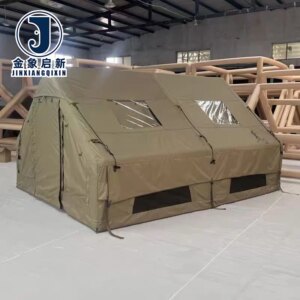
Waterproof Inflatable Camping Tent Outdoor Easy Setup Air Tent for Camping
Read more -
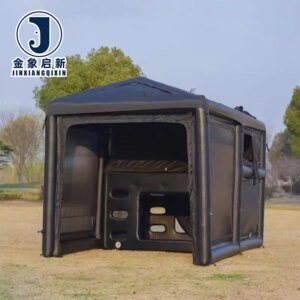
Premium Four-season Inflatable Tents for Camping Easy-to-Use Spacious Portable Waterproof Outdoor Tent Quick
Read more