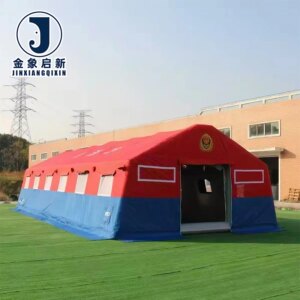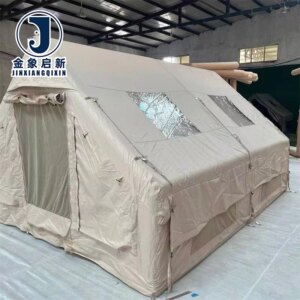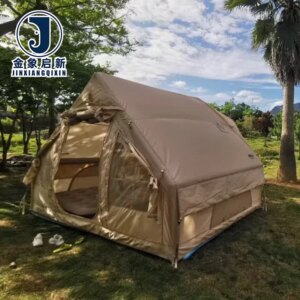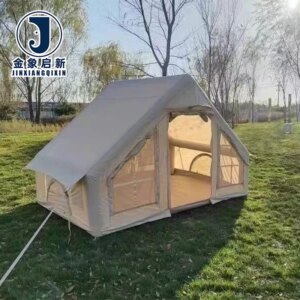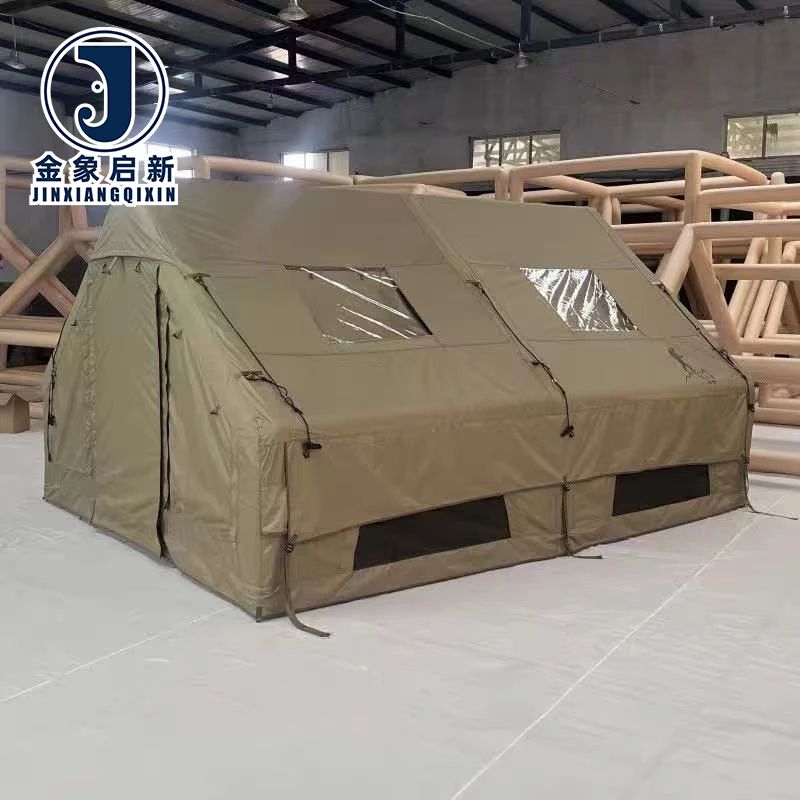
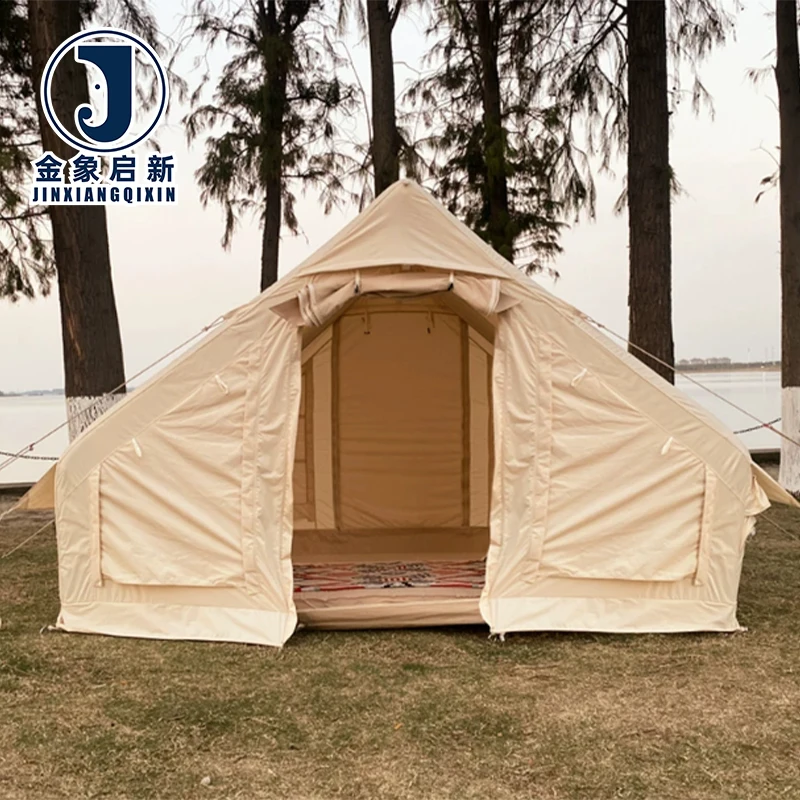
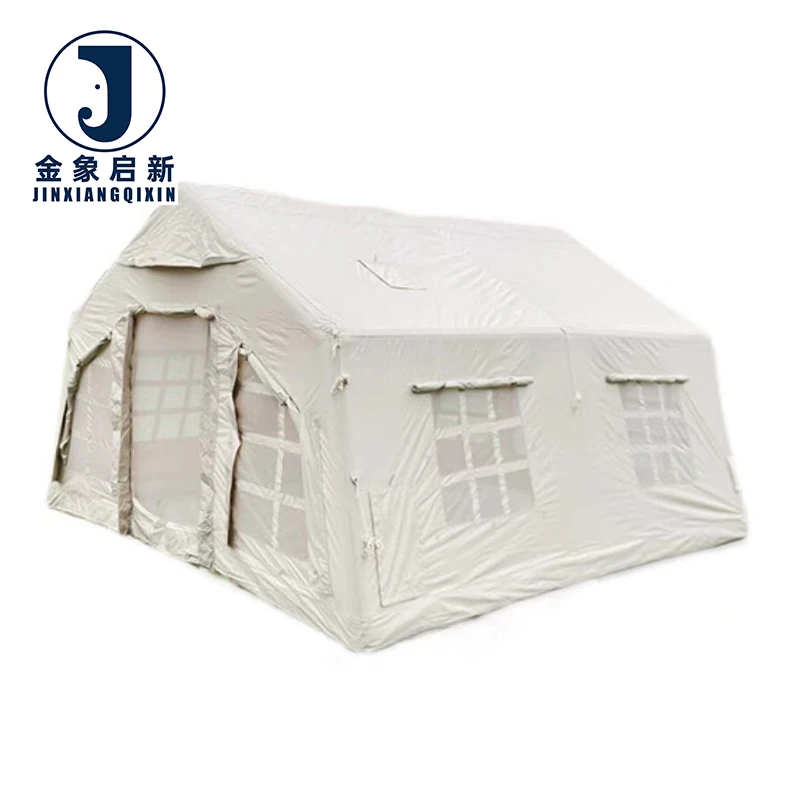
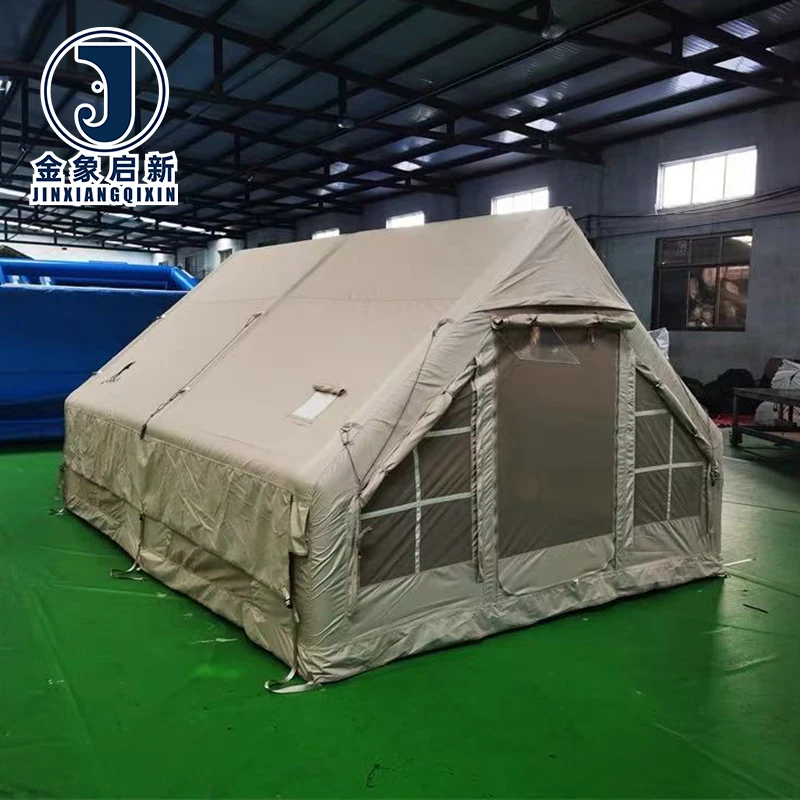
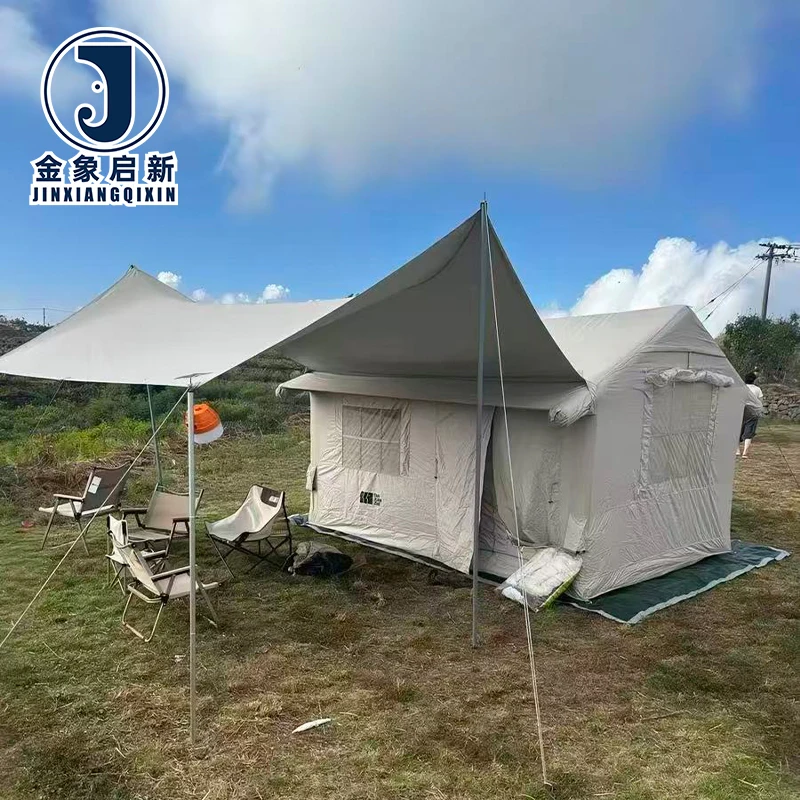
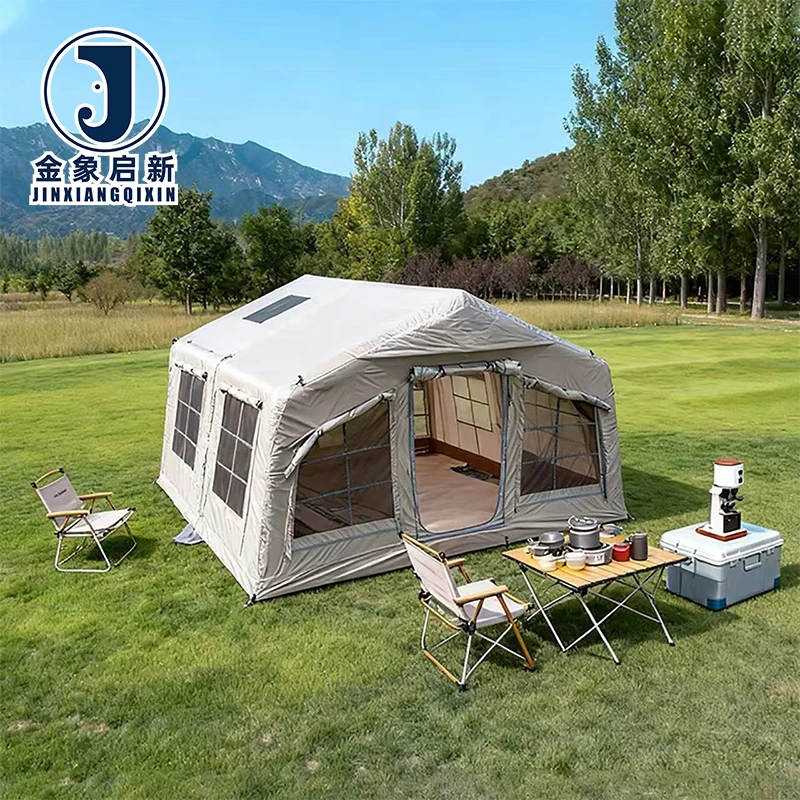
Waterproof Inflatable Family Camping Tent, PVC Coated Fabric, 4-6 Person — featuring quick automatic air-beam setup with cabin design for structured interior volume.
Engineered for outdoor event management, industrial site shelters, and temporary exhibition spaces where rapid deployment matters. PVC coated fabric delivers verified waterproof and tear-resistant performance across commercial applications.
- UV-resistant treatment with full OEM/ODM customization including dimensions, color matching, and pattern printing
- Supported by three production lines and dedicated QA/QC with 100% pre-shipment inspection
Description
Verified Process Control — Every inflatable tent order runs through dedicated QA checkpoints, ensuring the PVC coated fabric matches your specified GSM, color, and treatment before dispatch.
Technical Specifications
| Parameter | Value |
|---|---|
| Product Type | Inflatable Tent |
| Core Material | PVC coated fabric |
| Capacity | 4-6 Person |
| Design | Cabin Design |
| Layer | Single layer |
| Setup Type | Quick automatic opening (inflatable air beam) |
| Waterproof | Yes |
| Tear-Resistant | Yes |
| UV-Resistant | Available in UV-resistant grades — confirm the grade required for your market |
| Flame Retardant | Available in flame retardant grades — confirm the grade required for your market |
| Customization | OEM & ODM (custom dimensions, color matching, logo printing, specialized fabric treatments) |
| Standards | ISO 9001, ISO 14001, ISO 45001, CE |
Application Suitability
| Application | Exposure & Requirement |
|---|---|
| Outdoor event management | Repeated assembly and teardown cycles, direct sunlight exposure, rain and wind loads |
| Temporary exhibition spaces | High foot traffic, branded surface requirements, indoor and outdoor deployment flexibility |
| Industrial site shelters | Abrasion from equipment movement, dust and moisture ingress, prolonged sun exposure |
| Disaster relief supply storage | Rapid deployment under field conditions, waterproof integrity, transport and storage durability |
| Mobile commercial operations | Frequent relocation, variable weather conditions, surface branding and visibility demands |
Why GSM Verification Matters for Inflatable Tent Procurement
The stated weight must be backed by per-roll inspection records, not just a line on the quotation.
Buyers of inflatable tent fabric frequently encounter a gap between the quoted specification and the material that arrives at the warehouse. A batch that weighs lighter than agreed compromises the structural rigidity of air beam chambers and reduces resistance to puncture during ground contact. Over multiple inflation and deflation cycles, this deficit accelerates seam fatigue and shortens the operational window of each unit. [NEED_CITE: ISO 1421 tensile and tear test methods for coated fabrics]
How PVC Coated Fabric Supports Inflatable Tent Performance
The PVC coated fabric used in this inflatable tent construction provides a continuous waterproof barrier across the entire tent envelope. Unlike laminated alternatives, the coating penetrates the base weave, creating a bond that resists delamination under the repeated stress of inflation pressure changes. This characteristic is essential for commercial operators who deploy and collapse units frequently across event seasons.
The cabin design maximizes usable interior volume while maintaining a single-layer envelope. This configuration reduces overall packed weight and simplifies the inflation sequence, allowing rapid setup by small crews at trade shows, construction sites, or emergency response staging areas.
Customization Depth Beyond Standard Dimensions
Commercial inflatable tent orders often require more than a size adjustment. The OEM and ODM capability covers pattern printing for branded event structures, color matching to corporate palettes, and specialized fabric treatments for markets with specific fire safety or UV exposure mandates. Each customization path begins with sample development so buyers can validate hand feel, color accuracy, and weld behavior before committing to production volume.
The 10-person R&D team manages material selection and treatment specification based on your deployment environment. Whether the requirement is a specific shade consistency across multiple tent units or a flame retardant grade aligned with a regional safety code, the development process produces a documented specification before cutting begins. [NEED_CITE: fire classification standards for temporary structures]
Understanding Specification Choices and Their Field Impact
The relationship between base fabric density and coating weight determines how the inflatable tent responds to sustained internal pressure. A tightly woven base resists tearing propagation when the air beam flexes under wind load, while adequate coating thickness prevents moisture ingress at stress points. Evaluating GSM alone without examining the base fabric construction gives an incomplete picture of field performance.
Surface finish selection influences both maintenance cycles and branding quality. A smoother surface accepts printed graphics with sharper registration, important for exhibition tents where visual impact drives foot traffic. A matte finish reduces glare under direct sun and shows fewer scuff marks during handling, which matters for units deployed on rough terrain at industrial or disaster relief sites.
The single-layer construction simplifies cleaning and inspection between deployments. Operators can quickly identify surface damage, clean mud or chemical residue, and conduct a visual weld check without separating inner and outer membranes. This practical advantage reduces turnaround time between consecutive events or site rotations.
The Cost of Overlooking Batch Consistency
When color shifts between rolls in the same inflatable tent order, the difference becomes visible once panels are welded side by side and the structure stands fully inflated at an event or site. Buyers absorb the rework cost of replacement panels, delayed deployment, and damaged client relationships. Consistent batch matching requires controlled coating runs with documented color references per production lot, not reliance on supplier assurances alone. [NEED_CITE: color consistency measurement methods for coated textiles]
Welded seams on inflatable tents carry the full inflation load at the points where air beams bend under structure flex. If the welding temperature or pressure is not calibrated to the specific coating composition of the batch, the seam becomes the first failure point — separating before the fabric body shows any sign of wear. This failure mode is particularly costly because it renders the entire tent inoperable on site.
Sourcing Advantages for Commercial Inflatable Tent Buyers
The production facility operates three full production lines and 36 sets of professional processing equipment, supporting bulk inflatable tent orders with reliable scheduling for seasonal event calendars and project timelines.
A dedicated QA and QC protocol inspects every unit at each production stage, generating a pre-shipment inspection record that documents waterproof integrity, dimensional accuracy, and color consistency against the approved sample.
Sample development for custom inflatable tent configurations is completed within days, allowing buyers to verify material behavior, print registration, and weld strength before authorizing the full production run.
Full-process quality control means that GSM verification, coating adhesion checks, and treatment validation are recorded at the point of production, not deferred to a final spot check that might miss a systematic deviation.
The documentation package accompanying each dispatch includes material specification sheets, test reports where applicable, and certification records — assembled to satisfy procurement compliance requirements across international markets.
Documentation & Verification
- Material specification sheet stating PVC coating weight, base fabric, and color reference per inflatable tent order
- UV-resistant or flame retardant test report aligned to the grade specified for your deployment market
- Pre-shipment inspection record covering dimensional checks, weld integrity, and surface quality
- ISO 9001, ISO 14001, ISO 45001, and CE certificates included with shipment documentation
- Roll and unit packing list matching each inflatable tent to its corresponding production batch
Fabrication, Handling & Storage
- Set heat welding temperature to match the PVC coating formulation of this specific batch for optimal seam adhesion
- Avoid folding inflatable tent fabric at sharp angles during storage to prevent permanent coating crease marks
- Store PVC coated rolls upright on padded racks in climate-controlled conditions to maintain coating flexibility
- Use mild detergent for cleaning; aggressive solvents may degrade the PVC coating surface layer
- Inspect air beam weld zones before each redeployment to catch early signs of seam fatigue
- Inflate to manufacturer-specified pressure only; overinflation stresses welded joints beyond design tolerance
Requesting a Specification-Matched Quotation
To receive an accurate quotation for your inflatable tent requirement, provide the deployment environment including expected weather exposure, ground conditions, and frequency of assembly cycles. Specify the dimensions, capacity range, and any branding or color matching requirements tied to your corporate identity or event theme.
Indicate whether your market requires a specific flame retardant grade or UV-resistant treatment, along with the applicable standard. Confirm whether you need finished units or cut-to-size panels for your own fabrication process, and state your target delivery window and order volume.
Frequently Asked Questions
Q: What customization options are available for commercial inflatable tent orders?
A: We provide OEM and ODM services covering custom dimensions, color matching to your brand palette, logo printing, and specialized fabric treatments. Each order begins with a sample approval step where you verify the material, print quality, and weld characteristics before production proceeds. Our R&D team supports material selection based on your specific deployment requirements.
Q: How is waterproof and UV-resistant performance verified and documented per batch?
A: Every production batch undergoes waterproof integrity checks during the pre-shipment inspection process. UV-resistant treatment is documented through test reports available on request, tied to the specific grade selected for your market. The inspection record accompanying your shipment confirms that the delivered inflatable tent units match the approved specification.
Q: What certifications accompany each shipment for regulatory and market compliance?
A: Each dispatch includes ISO 9001, ISO 14001, ISO 45001, and CE certification documentation. Where flame retardant or specialized treatment grades are specified, the corresponding test reports are included. The full documentation package is assembled to meet procurement and customs requirements across international markets.
Q: How does the sample approval process work before mass production begins?
A: Upon confirming your specification, our R&D team develops a sample reflecting your exact requirements for dimensions, color, printing, and fabric treatment. You evaluate the sample for material feel, weld quality, and visual accuracy. Once approved, the sample becomes the production reference, and the full order is manufactured to that validated standard.
Q: What documentation is provided for OEM integration into existing product lines?
A: We supply a complete material specification sheet, pre-shipment inspection records, and certification documents with each order. For OEM partners, we also provide batch-level traceability data so you can match each inflatable tent unit to its production records for your own quality assurance and end-customer documentation requirements.
Related products
-
Premium Four-season PVC Inflatable Tents for Camping Easy-to-Use Spacious Portable Waterproof Outdoor Tent with Pump
Read more -
Inflatable Camping Tent PVC Four-Season Waterproof Outdoor Air Tent with Quick Automatic Opening for 2-3 Person
Read more -
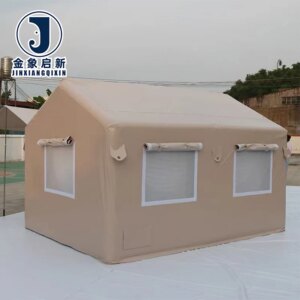
Inflatable Four-Season Event Tent Outdoor Waterproof PVC Quick Automatic Opening 6-8 Person Custom Logo
Read more -
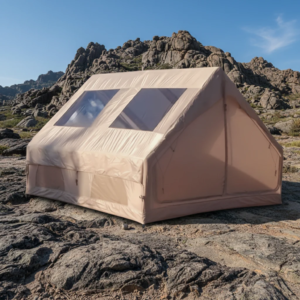
High Quality Four-Season Inflatable Tent for Camping Durable PVC Material All-Weather Resistance Quick Automatic Opening
Read more