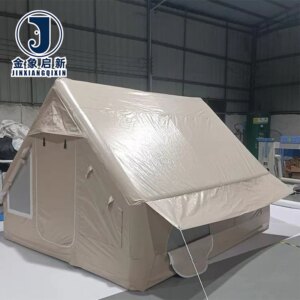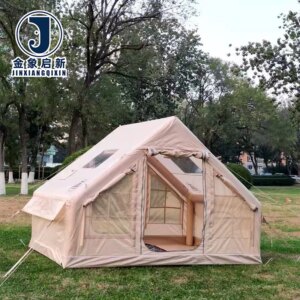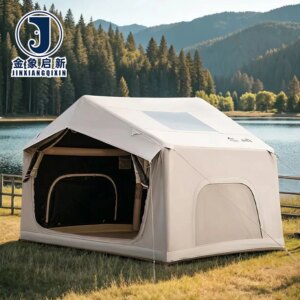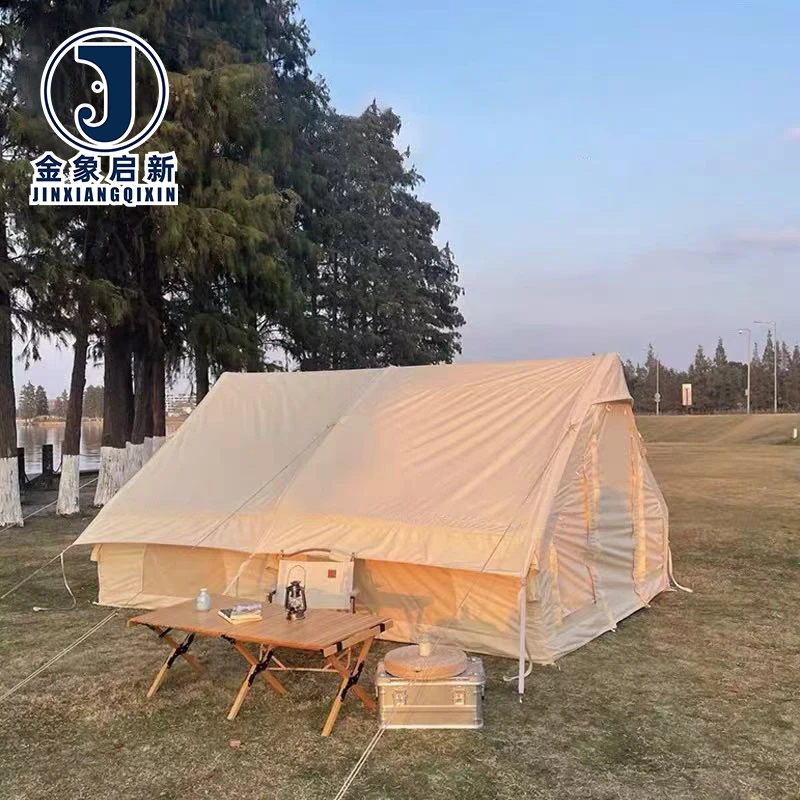
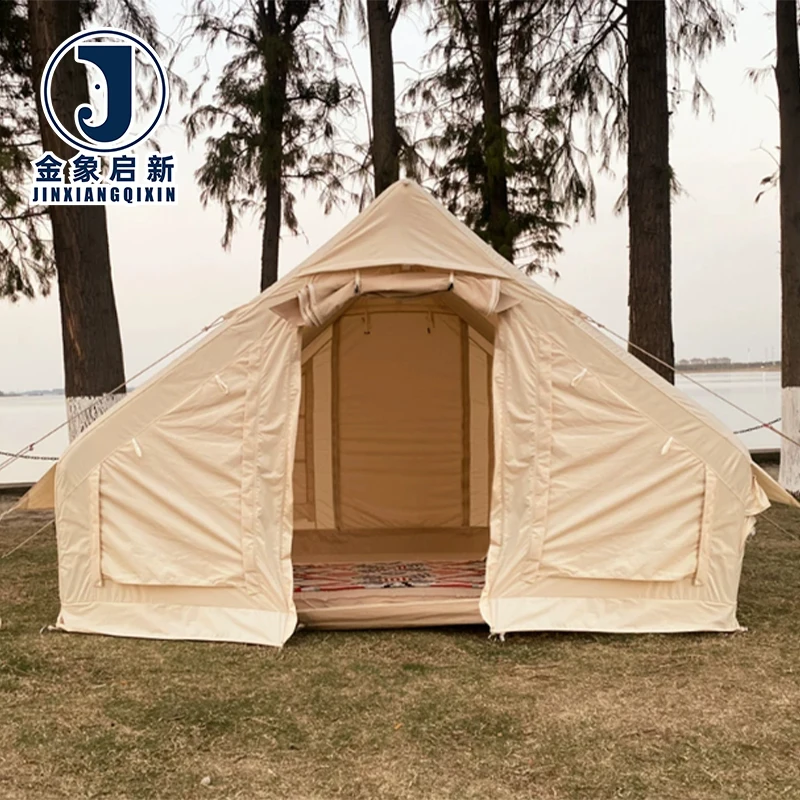
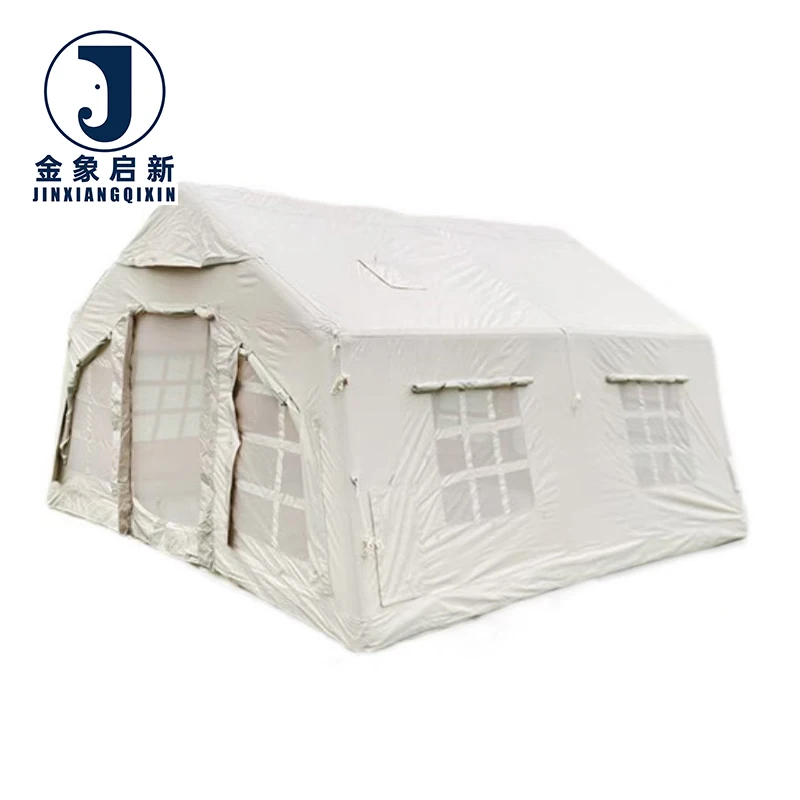
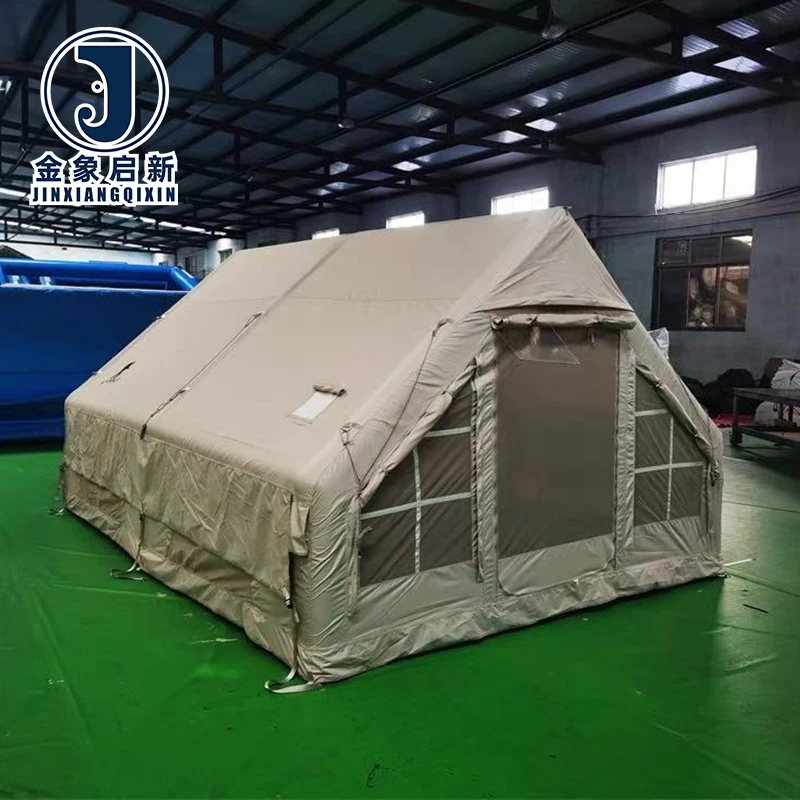
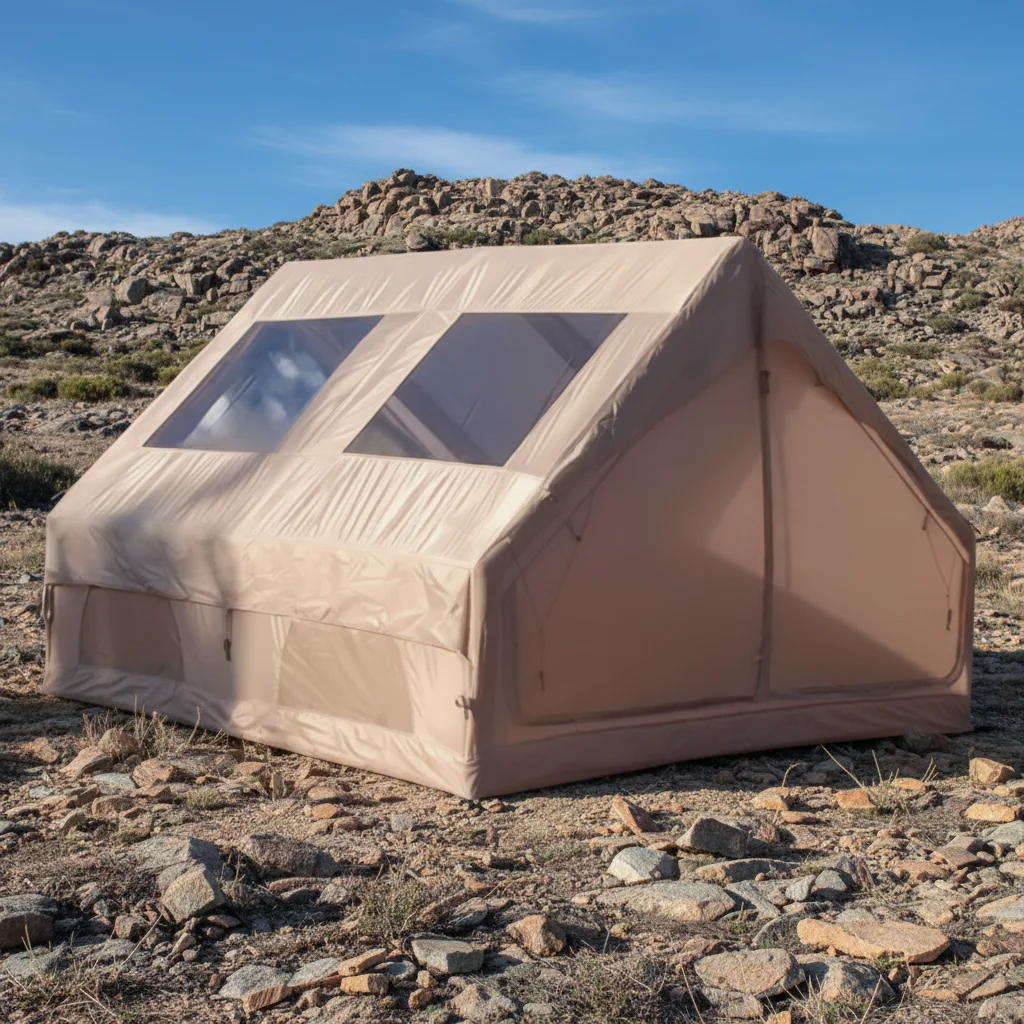
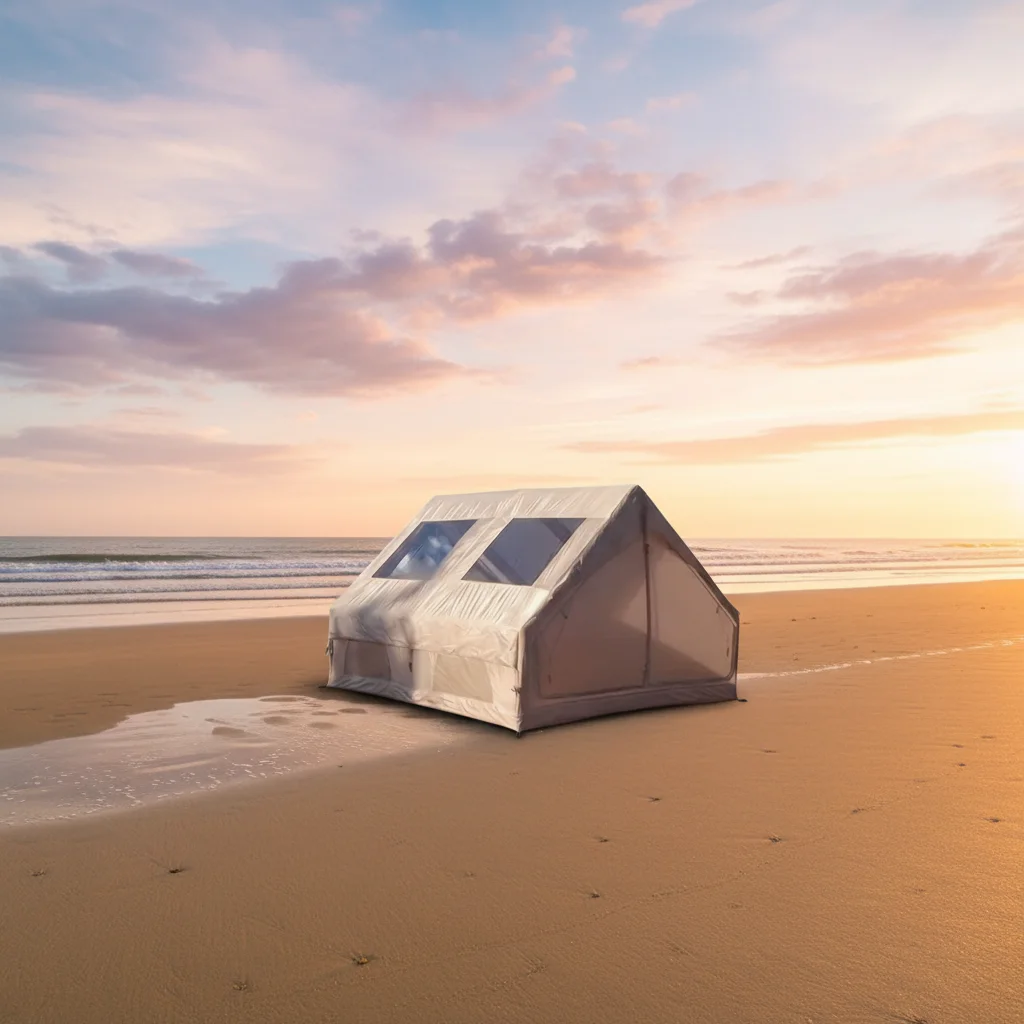
Waterproof PVC Four-Season Glamping Outdoor Camping House Tent — inflatable tent structure with knife-coated PVC tarpaulin, hydrostatic head ≥10,000mm, tear strength 1500N/5cm, and EN 13501-1 fire-retardant fabric.
- Quick automatic opening for efficient site deployment
- Full OEM & ODM: custom size, colour matching, pattern printing, and logo application
- Four-season performance for luxury camping resorts, eco-tourism facilities, and event accommodation
Backed by a 10-technician R&D team developing samples within days, 3 full production lines ensuring on-time bulk delivery, and 100% pre-shipment inspection on every unit.
Description
Proven Custom Capability — A 10-person R&D team develops and refines every Inflatable Tent structure from pattern printing to mechanism tuning, backed by three full production lines delivering consistent output.
Technical Specifications
| Parameter | Value |
|---|---|
| Product Type | Inflatable Tent |
| Core Material | PVC Tarpaulin (knife-coated PVC) |
| Waterproof Rating | Hydrostatic head ≥10,000mm |
| UV Resistance | 5000+ hours sunlight exposure (test basis not stated) |
| Fire Retardancy | EN 13501-1 compliant |
| Tear Strength | 1500N/5cm (warp and weft, test standard not stated) |
| Wind Resistance | Beaufort scale 8 |
| Opening Mechanism | Quick automatic opening |
| Product Form | Finished tent structure |
| Customization | OEM & ODM — size, color matching, pattern printing, logo application |
| Key Features | Waterproof, UV-resistant, tear-resistant, fire-retardant, anti-static |
Application Suitability
| Application | Exposure & Requirement |
|---|---|
| Luxury camping resorts | Permanent or semi-permanent installation, continuous UV and rainfall exposure, guest-facing aesthetics, four-season thermal performance |
| Eco-tourism facilities | Low-VOC material compliance, ISO 14001 environmental alignment, minimal site disruption during setup, long-term weathering in sensitive environments |
| Event accommodation services | Rapid deployment and breakdown cycles, high-frequency inflation and deflation, transport abrasion, variable ground conditions |
| Seasonal glamping operations | Repeated assembly over multiple seasons, storage between operating periods, resistance to mold and moisture during off-season storage |
Why a Waterproof Rating Without Test Data Leaves Commercial Buyers Exposed
Hydrostatic head values must come with batch-specific verification, not just a quotation claim.
Operators deploying inflatable glamping tents across resort sites have discovered that a stated waterproof rating does not always survive the first heavy rainfall season. Fabric that passes an initial lab sample can behave differently in production rolls when coating weight or adhesion varies between batches. [NEED_CITE: hydrostatic head test methods for coated fabrics per ISO 1421]. Without documented inspection data tied to the actual rolls used in your order, a four-season Inflatable Tent rated for commercial use may leak before the second season concludes — and the supplier has no obligation to honour a claim backed only by a brochure figure.
Material Construction and Coating Adhesion
PVC knife-coated tarpaulin forms the structural shell of this Inflatable Tent, where the coating is applied directly to the base fabric under controlled tension. This method produces a bond between the PVC layer and the woven substrate that resists delamination during repeated inflation cycles. The knife-coating process also allows precise control over coating thickness, which directly influences both waterproof integrity and the fabric’s ability to hold welded seams under the stress of wind loading.
Fire-Retardant Certification for Commercial Accommodation Compliance
Commercial glamping sites operate under building and fire codes that vary by jurisdiction. The EN 13501-1 fire-retardant grade carried by this fabric addresses European classification requirements and is widely referenced in markets that adopt EU standards. [NEED_CITE: EN 13501-1 classification system for construction products]. Resort operators and event companies deploying an Inflatable Tent across multiple regions should confirm with local authorities whether EN 13501-1 satisfies their specific accommodation fire codes, and request the supporting test report before committing to volume orders.
Reading the Specifications Behind the Finished Tent
The tear strength of 1500N/5cm in both warp and weft directions indicates a balanced weave that resists tear propagation from any direction — critical for an inflatable structure where wind pressure at Beaufort scale 8 concentrates stress unevenly across curved panels. The waterproof hydrostatic head of ≥10,000mm positions this material well above typical rain-shelter thresholds, meaning prolonged driven rainfall will not force moisture through the coated surface. UV resistance rated at 5000+ hours of sunlight exposure addresses cumulative solar degradation, though buyers should verify the test methodology and whether the rating reflects accelerated weathering or natural exposure. [NEED_CITE: UV weathering test standards for PVC coated textiles]. Together, these parameters determine whether the Inflatable Tent survives continuous outdoor deployment across seasons rather than requiring replacement after a single summer.
The Real Cost When Specification Gaps Surface After Installation
Colour inconsistency across a batch of tents becomes immediately visible once they stand side by side on a resort site — a problem that traces back to inadequate batch-matching controls during coating and dyeing. Seams that fail before the fabric itself does typically result from welding parameters set for a different material grade, leaving the Inflatable Tent vulnerable at the exact flex points that bear the highest inflation pressure. Fire-retardant certification that cannot be produced on demand stalls site inspections and delays opening dates, costing operators revenue during peak booking periods. [NEED_CITE: common failure modes in welded PVC tent structures]. These are not theoretical risks; they are recurring pain points in commercial glamping deployments.
Why Procurement Teams Source This Inflatable Tent Here
Three dedicated production lines and 36 sets of processing equipment provide the capacity to fulfil large-volume resort orders without sacrificing individual tent inspection. A 10-technician R&D team handles every custom request — from non-standard sizing and mechanism adjustments to pattern printing and branded logo application — in-house rather than outsourcing design work. Pre-production samples are developed for client approval before mass manufacturing begins, ensuring dimensions, colour, and material performance match the agreed specification. Each shipment includes batch-specific quality documentation covering waterproof, UV, and flame-retardancy test data. Nearly 30 years of focused coated-fabric production underpins every material decision, from base fabric selection to final coating adhesion control.
Documentation & Verification
- Material specification sheet confirming PVC tarpaulin grade, coating type, and tear-strength values for each production batch
- EN 13501-1 fire-retardant test report supplied with shipment for site compliance verification
- Waterproof hydrostatic head test data recorded per batch, not quoted as a generic catalogue figure
- Pre-shipment inspection record documenting colour consistency and seam integrity across the order
- ISO 9001, ISO 14001, ISO 45001, and CE certificates included in dispatch documentation
Fabrication, Handling & Storage
- Welded seams on the PVC knife-coated tarpaulin require temperature and dwell-time settings matched to the specific coating thickness to prevent delamination at inflation stress points
- Quick automatic opening mechanism components should be inspected and tested before each deployment season to confirm reliable inflation performance
- Finished tent structures must be stored dry and loosely folded in ventilated conditions to prevent crease damage and mildew formation on the coated surface
- Pattern printing and logo application on the PVC surface require compatible solvent-based inks to maintain adhesion through repeated UV exposure and cleaning cycles
- Transport packaging should protect tent panels from compression damage that could create permanent crease lines across the coated fabric
What to Include in Your Inquiry
Provide the intended deployment environment — climate zone, expected wind conditions, and whether the Inflatable Tent will remain installed year-round or be assembled seasonally. Specify your target market’s fire-safety classification requirements so the correct test documentation is prepared. Confirm whether you need finished structures with custom sizing and branding, or standard configurations, along with your projected unit volume and preferred delivery timeline.
Frequently Asked Questions
Q: How is batch colour consistency controlled across a multi-tent resort order?
A: Pre-production samples are submitted for approval before manufacturing begins. During production, each batch of PVC tarpaulin is checked against the approved colour reference. A batch-specific inspection record accompanies the shipment, documenting colour uniformity across all tents in the order to prevent visible variation once installed side by side on site.
Q: What fire-retardant grade does the tent fabric meet, and is it accepted in my market?
A: The fabric is certified to EN 13501-1, which satisfies fire-safety requirements across European markets and many jurisdictions that reference EU classifications. Buyers targeting other regions should confirm local acceptance with their authority having jurisdiction. The test report is included with each shipment for inspector review.
Q: What customization options are available for dimensions and branding?
A: OEM and ODM services cover custom sizing, colour matching, pattern printing, and logo application. The 10-person R&D team develops each configuration in-house, producing a pre-production sample for your approval. This ensures the finished Inflatable Tent meets your resort’s aesthetic and functional requirements before volume manufacturing begins.
Q: How are welded seams inspected to prevent failure at high-stress flex points?
A: Every seam undergoes visual and mechanical inspection during the 100% pre-shipment quality check. Weld parameters are calibrated to the specific PVC tarpaulin coating weight, and inspection focuses on the inflation stress points where flex loading is greatest. Any seam showing inconsistent adhesion or insufficient bond width is rejected before dispatch.
Related products
-
Premium Four-season PVC Inflatable Tents for Camping Easy-to-Use Spacious Portable Waterproof Outdoor Tent with Pump
Read more -
Inflatable Four-Season Event Tent Outdoor Waterproof PVC Quick Automatic Opening 6-8 Person Custom Logo
Read more -
Luxury PVC Inflatable Tent for Glamping Outdoor Waterproof with Quick Automatic Opening Four-Season Foldable Design and Pump
Read more -
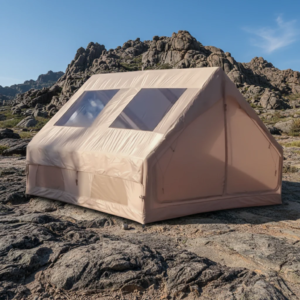
High Quality Four-Season Inflatable Tent for Camping Durable PVC Material All-Weather Resistance Quick Automatic Opening
Read more