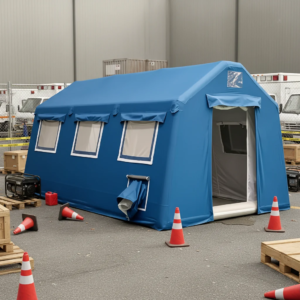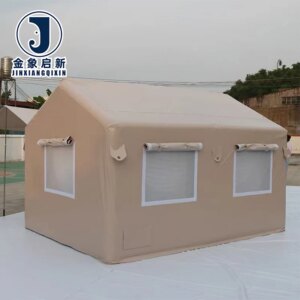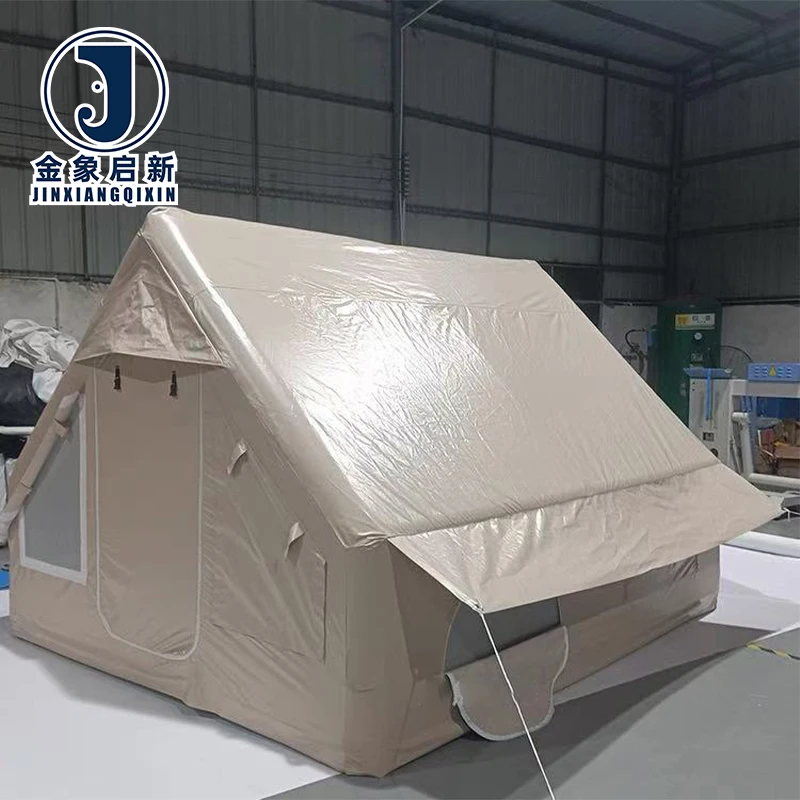
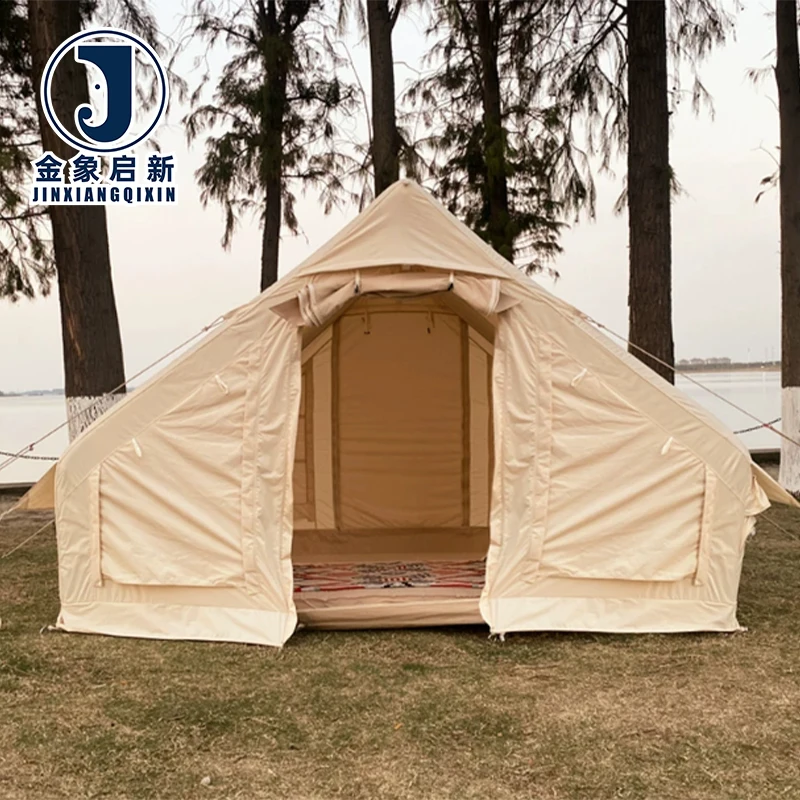
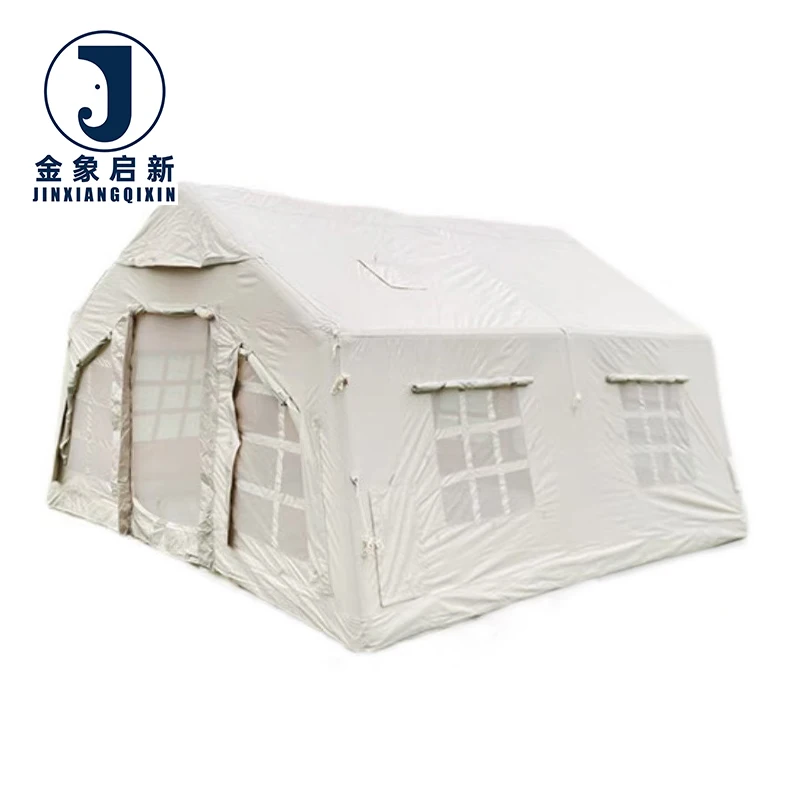
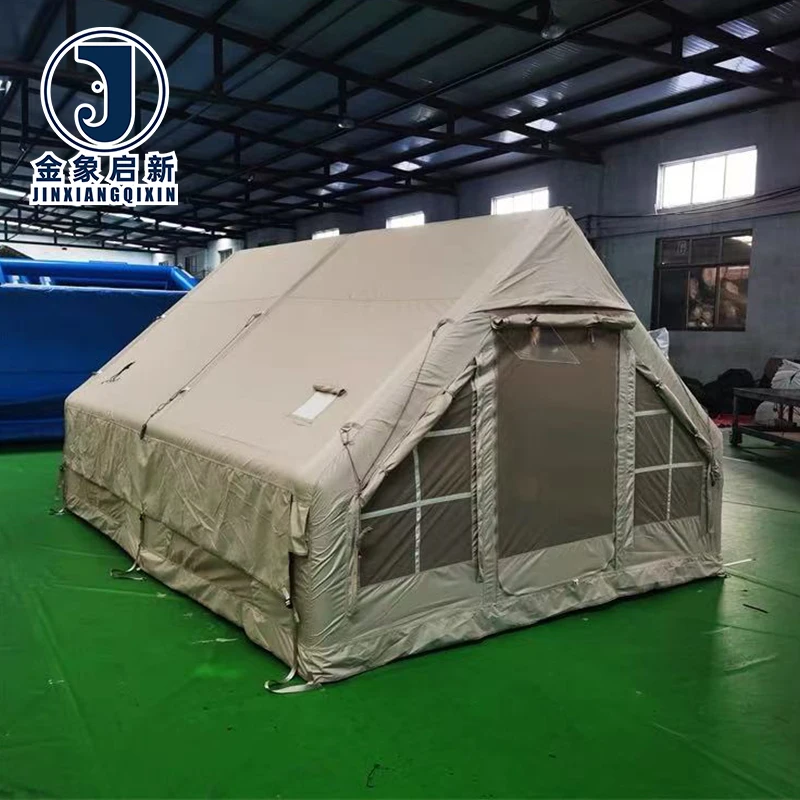
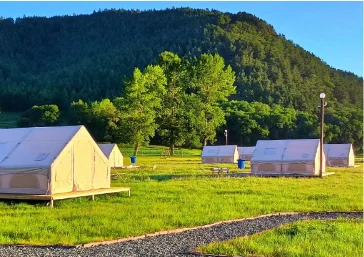
Waterproof Inflatable Camping Tent, 5-8 Person Capacity, PVC Tarpaulin Construction — four-season design with quick automatic opening for rapid deployment across industrial workforce housing, field base camps, and commercial outdoor event facilities.
- Waterproof, UV-resistant, and tear-resistant PVC tarpaulin fabric ensures reliable performance in variable weather conditions
- OEM & ODM customization available for material selection and product design to meet project-specific requirements
- Single-layer architecture reduces setup complexity while maintaining structural integrity under wind and rain loads
Backed by nearly 30 years of coated fabric expertise, 100% pre-shipment inspection, and dedicated QA/QC protocols at every production stage.
Description
Proven Coated Fabric Expertise — Nearly 30 years of PVC coating process control applied to every inflatable tent we produce, ensuring batch-to-batch consistency across commercial-scale orders.
Technical Specifications
| Parameter | Value |
|---|---|
| Product Type | Inflatable Tent |
| Core Material | PVC Tarpaulin |
| Capacity | 5-8 Person |
| Design | Four-Season, Single Layer, Quick Automatic Opening |
| Key Performance | Waterproof, UV-Resistant (test basis not stated in source), Tear-Resistant |
| Flame Retardant | Available in flame retardant grades — confirm the grade required for your market |
| Anti-Static | Not confirmed in source |
| Customization Service | OEM & ODM (Material Selection, Product Design) |
| Waterproof Verification | Hydrostatic pressure testing per ISO standards (specific standard not stated in source) |
| Certification | ISO9001, ISO14001, ISO45001, CE |
Application Suitability
| Application | Exposure & Requirement |
|---|---|
| Industrial workforce housing | Continuous outdoor exposure, wind load on inflatable frame, repeated inflation cycles, UV and rain contact |
| Field operation base camps | Rapid deployment across uneven terrain, temperature fluctuation, abrasion from ground contact and equipment movement |
| Commercial outdoor event facilities | High-visibility public use, frequent setup and teardown, crowd contact and cleaning chemical exposure |
| Temporary accommodation for project teams | Multi-week continuous occupation, ventilation requirements, weather sealing against driven rain |
Why Fabric Consistency Matters More Than Quoted Specifications
A specification sheet only tells you what was agreed — the real test is whether every unit in your order matches it.
Commercial buyers ordering multiple inflatable tents for workforce camps or event infrastructure often discover that material weight and coating adhesion drift between production runs. A batch that tests correctly on the first sample can arrive with lighter coating on subsequent units, compromising waterproof integrity at the seams [NEED_CITE: hydrostatic pressure test methods for coated fabrics per ISO standards]. When you are deploying shelters across remote project sites, an inconsistent inflatable tent manufacturer creates risk you cannot inspect away on arrival.
Coating Weight and Adhesion Across the Inflatable Frame
The inflatable structure places continuous stress on the PVC tarpaulin at every curved panel and welded joint. Our coating process maintains uniform weight distribution across the full fabric width, which directly affects how the material behaves when the airframe flexes under wind load. When you source a custom inflatable tent for commercial deployment, consistent coating adhesion prevents delamination at the seams where the structure bends most during inflation and deflation cycles.
Weld Integrity at High-Stress Panel Junctions
Every inflatable tent relies on heat-welded seams to hold air pressure and resist panel separation. The welding temperature, dwell time, and pressure must match the specific PVC formulation and coating weight of the batch being fabricated. Our production lines maintain documented welding parameters matched to each material run, so seam strength tracks with the fabric’s rated performance rather than falling short at the points where the structure flexes [NEED_CITE: tensile and seam strength test methods for PVC coated fabrics].
Reading the Specifications That Actually Predict Field Performance
The PVC tarpaulin core material determines how the inflatable tent handles sustained weather exposure, but capacity and design features alone do not reveal durability. Four-season construction signals that the fabric and seam construction can handle temperature variation, yet the actual waterproof performance depends on hydrostatic pressure test results rather than marketing claims. Quick automatic opening reduces deployment time, but the airframe material must maintain coating flexibility across the temperature range the tent will encounter — a coating that stiffens in cold conditions risks cracking at fold lines during packing. UV-resistant treatment is listed as a key performance attribute, though buyers should confirm the specific test standard applicable to their deployment region before committing to volume orders.
The Hidden Cost of Underspecified Material on Commercial Projects
Selecting an inflatable tent based on capacity and price while overlooking coating specification gaps leads to failures that surface after deployment. Seams that separate during the first storm season, fabric that chalks and loses waterproof performance within months, and airframe panels that develop pinhole leaks at weld lines all trace back to material choices made at the quoting stage [NEED_CITE: common failure modes in inflatable structure fabric applications]. For buyers managing multi-site projects, replacing failed units in the field costs far more than specifying verified material properties upfront.
Why Buyers Source Inflatable Structures From This Facility
Our three full production lines handle commercial-volume inflatable tent orders without splitting batches across subcontracted workshops, which is where consistency typically breaks down. The 10-person R&D team develops custom material selections and product designs for OEM and ODM projects, producing samples within days so buyers can validate performance before committing to full production. A 12-step quality inspection process with dedicated QA and QC staff checks coating weight, seam integrity, and dimensional accuracy at every stage rather than relying on final random sampling. Full-process inspection means the pre-shipment inspection record documents the actual units being dispatched, not a proxy batch [NEED_CITE: ISO 9001 quality management requirements for batch traceability]. ISO9001, ISO14001, ISO45001, and CE certifications underpin the management systems governing production, environmental compliance, and occupational safety.
Documentation & Verification
- Material specification sheet stating PVC base fabric, coating weight, and colour reference for each order
- Hydrostatic pressure test results documenting waterproof performance per ISO standards for the production batch
- Pre-shipment inspection record covering seam integrity, dimensional accuracy, and inflation test results
- ISO and CE certificates available for compliance submissions to project owners and regulatory bodies
- UV and flame retardant test reports supplied when specific grades are confirmed at the quotation stage
Fabrication, Handling & Storage
- Heat welding parameters matched to the PVC tarpaulin coating weight to prevent seam failure at inflatable panel junctions
- Reinforced webbing and D-ring attachments positioned at load-bearing points to distribute tie-down forces across the coated fabric
- Store rolled inflatable tents in dry conditions away from direct sunlight to prevent surface tackiness and coating degradation
- Deploy below minimum recommended temperature risks cracking the PVC coating at fold lines during unfolding
- Clean with mild detergent compatible with PVC surfaces to preserve UV-resistant treatment effectiveness
What We Need to Quote Your Inflatable Tent Project
Provide your deployment environment details including expected wind loads, temperature range, and duration of continuous inflation so we can recommend the appropriate PVC tarpaulin grade and seam construction. Specify any fire classification or compliance requirements mandated by the project owner or local authority in your target market. Indicate the order volume, required lead time, and whether you need finished units or fabric supplied for your own fabrication line.
Frequently Asked Questions
Q: What customization options are available for size, material, and design features?
A: Our OEM and ODM service covers PVC tarpaulin material selection, dimensional adjustments beyond the standard 5-8 person capacity, and product design modifications including panel layout and valve positioning. The R&D team develops physical samples within days so you can evaluate inflation behaviour, seam construction, and fabric hand feel before authorising mass production.
Q: How is waterproof performance tested, and what documentation accompanies each batch?
A: Each production batch undergoes hydrostatic pressure testing per ISO standards to verify waterproof integrity of both the PVC tarpaulin fabric and the welded seams. A batch-specific test report accompanies the shipment, documenting the actual results rather than generic product family data, so you have verifiable evidence for project compliance submissions.
Q: What is the typical lead time for custom inflatable tent orders after sample confirmation?
A: Lead time depends on order volume, customisation complexity, and current production line scheduling across our three full lines. We confirm the specific dispatch date at the quotation stage once sample approval is complete, and our planning team provides production milestone updates so you can coordinate site readiness with delivery timing.
Q: How do you ensure colour and material consistency across multiple units in a single order?
A: All units in a custom inflatable tent order are produced from the same PVC tarpaulin coating batch on a dedicated production run, eliminating the roll-to-roll colour variation that occurs when orders are split. The 12-step inspection process includes visual colour matching against the approved sample reference before packing.
Q: Can you provide certified test reports for UV resistance and flame retardancy if required?
A: UV-resistant and flame retardant treatments are available in multiple grades to match specific project specifications or regional compliance standards. Confirm the exact grade and test standard required by your market at the inquiry stage, and we will supply the corresponding certified test report with your shipment documentation.
Related products
-
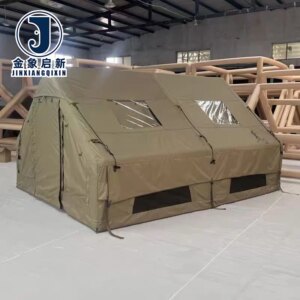
Waterproof Inflatable Camping Tent Outdoor Easy Setup Air Tent for Camping
Read more -
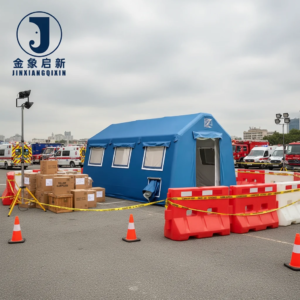
Inflatable Camping Tent Waterproof PVC Outdoor Air Tent Easy Setup Family Camping Shelter Four-Season >3000mm Waterproof Quick
Read more -
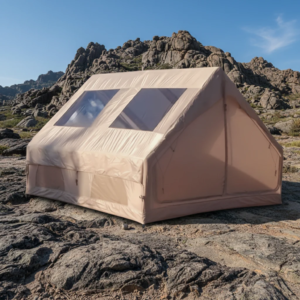
High Quality Four-Season Inflatable Tent for Camping Durable PVC Material All-Weather Resistance Quick Automatic Opening
Read more -
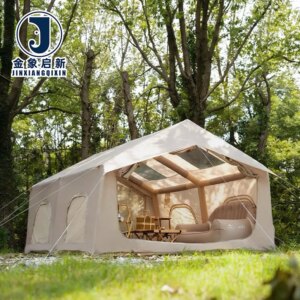
Inflatable Tent Family Size Four-Season Quick Automatic Opening Waterproof 2-8 Person Factory Direct Sale
Read more