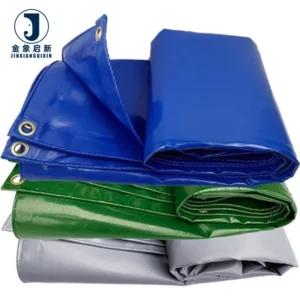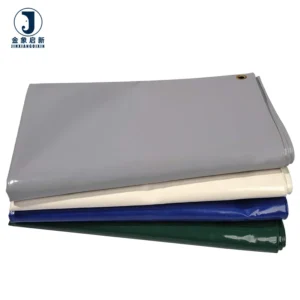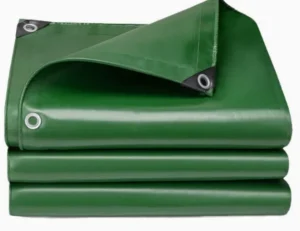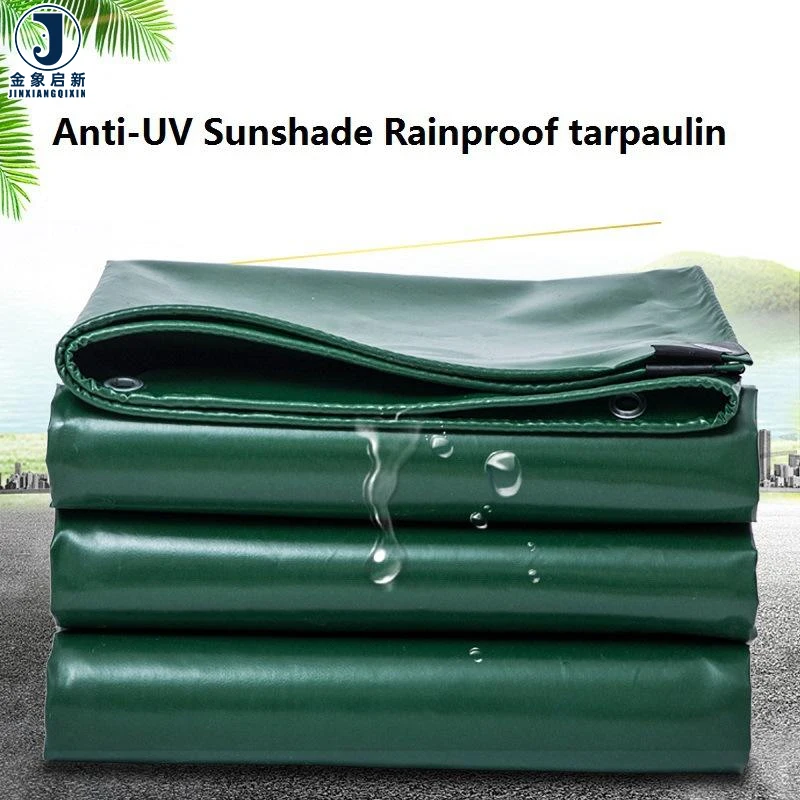
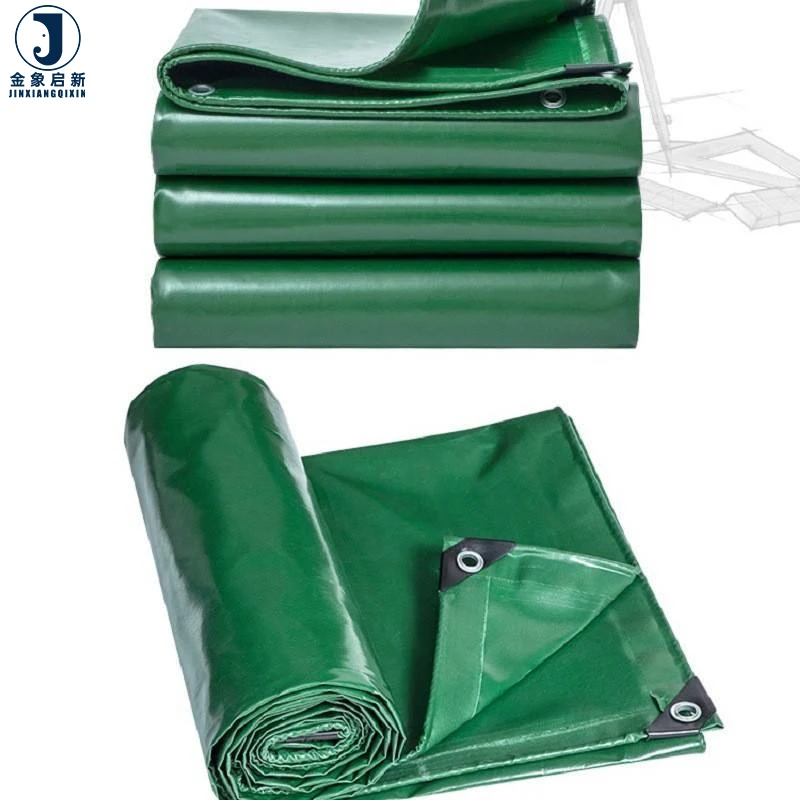
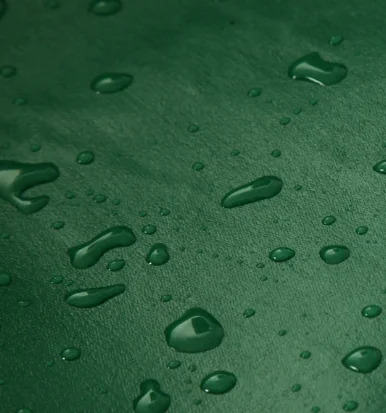
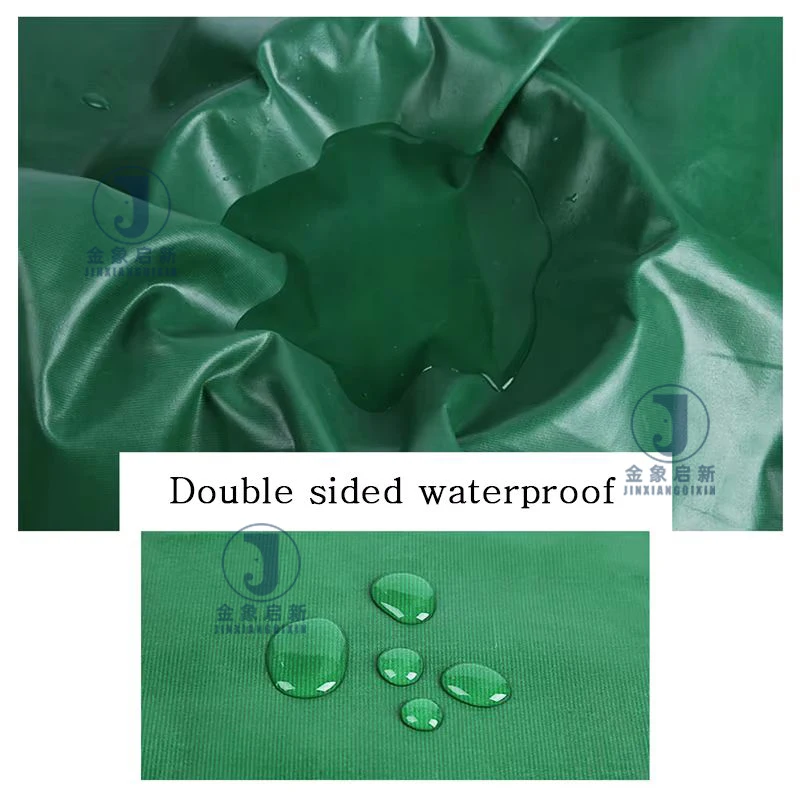
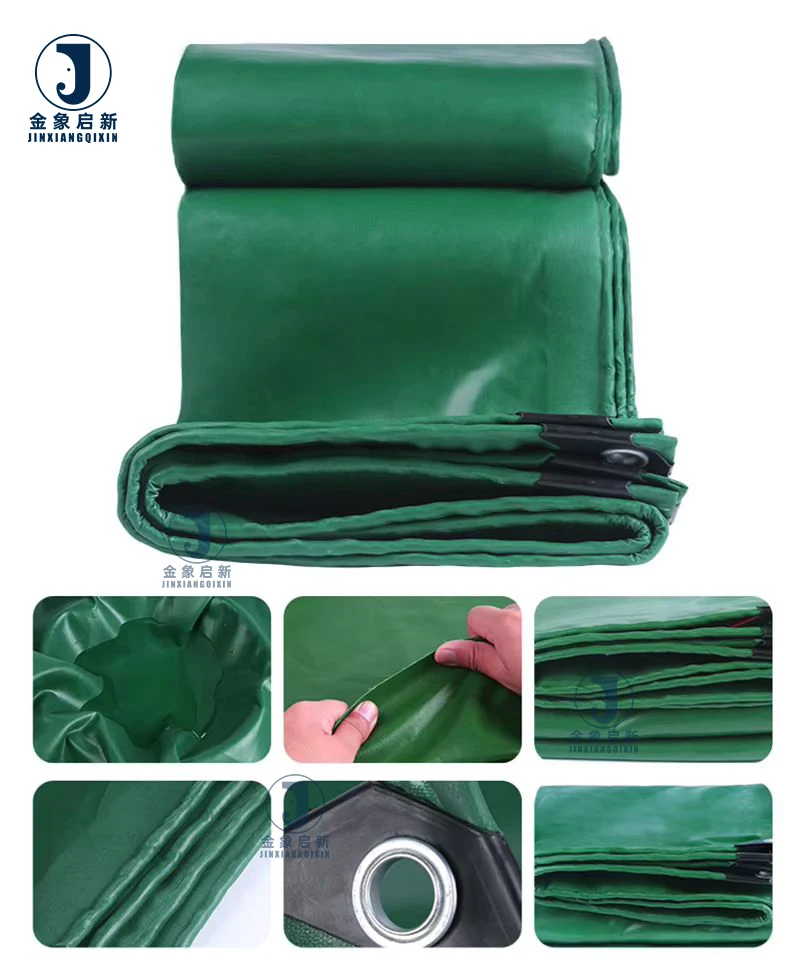
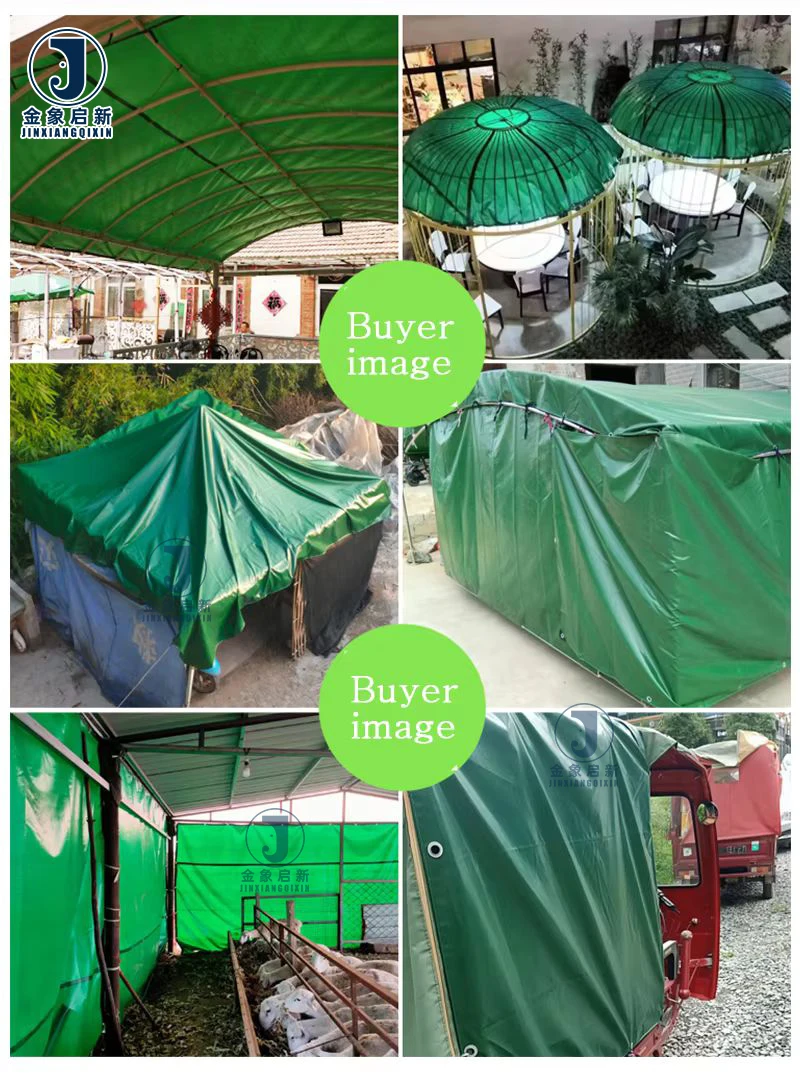
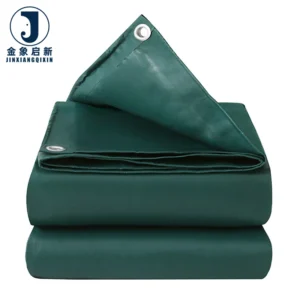
PVC Coated Tarpaulin 450-900 g/m², 500D-500D polyester base, double-side coated for waterproof and anti-UV protection
- Smooth leather-like surface with strong abrasion resistance
- Hot air weldable seams at flex points
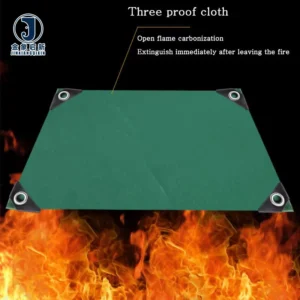
- Flame retardant options with verified test reports
Coating weight and base fabric density jointly determine tensile and tear strength; our controlled coating process ensures consistent adhesion and reliable heat welding performance for fabricated covers.
Ninety percent of orders ship on schedule thanks to three dedicated production lines and 100% pre-shipment inspection.
Description
Three Decades of Coated Fabric Mastery — we control PVC adhesion and coating weight on every roll, from lightweight to heavy-duty grades, ensuring consistent performance across full container loads.
Technical Specifications
| Parameter | Value |
|---|---|
| Product Type | PVC Coated Tarpaulin |
| Base Fabric | 500D-500D Polyester |
| Coating Material | PVC Double-Side Coating |
| Weight Range | 450-900 g/m² |
| Surface Finish | Smooth and soft surface with a leather-like texture |
| Waterproof Performance | Fully waterproof coated construction |
| Flame Retardancy | Flame-retardant type customizable (confirm grade required for your market) |
| UV & Aging Resistance | Anti-UV treatment available — test report supplied per order |
| Abrasion Resistance | High resistance to mechanical wear |
| Repairability | Repairable by hot air welding |
| Service Life Expectancy | Suited to extended outdoor exposure |
| Standards | ISO, CE |
Application Suitability
| Application | Exposure & Requirement |
|---|---|
| Truck and Trailer Covers | Constant flexing at load points, road abrasion, UV exposure, weather sealing for moving cargo |
| Awning and Tent Structures | Tension stress at frame joints, prolonged sun exposure, rain shedding, repeated setup and takedown |
| Construction Site Covers | Debris impact, wind lift, dust containment, temporary weather protection for materials |
| Machine and Equipment Covers | Outdoor storage exposure, UV degradation, dust ingress prevention, abrasion from contact |
| Wood and Timber Covers | Moisture ingress prevention, fungal growth avoidance, long-term outdoor stacking exposure |
| Agricultural and Aquaculture Operations | Continuous water contact, biological contamination risk, chemical exposure from feed or soil |
What Happens When Your Tarpaulin Fails at the Weld Line
Fabric that holds but seams that split is a specification failure, not a material failure.
I have seen heavy-grade coated rolls fail at the weld line while the fabric itself remained intact. The flex points on a truck side curtain endure thousands of articulation cycles per trip, and if the hot air welding temperature does not match the PVC coating formulation, the seam becomes the weakest link in the entire cover. Sourcing a PVC coated tarpaulin aftermarket supplier who controls both the coating chemistry and the fabrication parameters eliminates this mismatch. [NEED_CITE: tensile and tear test methods for coated fabrics per ISO 1421]
Coating Weight and Base Fabric — Why GSM Is Only Half the Story
The 500D-500D polyester base fabric in this PVC coated tarpaulin provides the tensile skeleton. Coating weight applied to both sides determines waterproofing, abrasion resistance, and hand feel, but it does not independently define strength. A heavier GSM on a loosely woven base will peel faster under mechanical stress than a moderate GSM on a tightly woven scrim.
When you specify material for truck and trailer covers that flex daily, the bond between the PVC layer and the polyester yarns matters more than the total weight alone. Our production lines control coating adhesion through calibrated temperature and pressure at each stage.
Batch-to-Batch Colour Consistency Across Full Container Loads
Distributors and fleet operators ordering multiple rolls in one shipment need every panel to match when installed side by side. Colour variation between rolls is a common complaint when pigment dosing is not locked to the batch formulation. We mix pigment against a signed-off reference swatch and run spectrophotometer checks at the coating head. [NEED_CITE: colour fastness testing standards for coated textiles]
This discipline means the PVC coated tarpaulin aftermarket supplier you work with can guarantee roll-to-roll consistency, whether you are cutting covers for a transport fleet or stocking standard grades for resale.
Reading the Specification Sheet Beyond the Headline Weight
The 450-900 g/m² range covers applications from light machine covers to heavy-duty truck side curtains. Within this range, the 500D-500D yarn count defines the denier of both warp and weft — a balanced weave that distributes load evenly in both directions. When a cover is pulled taut over an irregular load, balanced denier prevents one axis from stretching while the other holds rigid.
The leather-like surface texture is not cosmetic. A smooth PVC face sheds water more effectively than a matte or embossed finish and resists dirt adhesion during long-term outdoor exposure. For applications requiring printed branding, the same smooth surface provides better ink adhesion than textured alternatives. Flame-retardant grades are customizable — confirm the classification your local authority requires before placing a bulk order. [NEED_CITE: DIN 4102 fire classification for building materials]
The Hidden Cost of Specifying on Price Per Kilogram Alone
When procurement decisions rest solely on cost per kilogram, suppliers compensate by reducing coating thickness while maintaining the stated base fabric weight. The result arrives looking correct on a scale but fails prematurely because the PVC layer is too thin to protect the polyester scrim from UV penetration and abrasion. Welded seams also suffer — insufficient coating material at the overlap leaves a starved joint that cracks under flex load.
A flame-retardant certificate issued for one formulation does not cover a lighter alternative shipped under the same product name. [NEED_CITE: verification of fire-retardant treatment persistence after weathering]
Why Source This PVC Coated Tarpaulin Through Our Production Lines
Three full production lines and 36 sets of professional equipment mean we run dedicated coating campaigns for your order rather than squeezing it between unrelated jobs. This control is what keeps GSM consistent from the first roll to the last in a container load.
Our 10-person R&D team develops custom samples within days, adjusting coating weight, colour, and surface finish to your application before you commit to bulk production. QA inspection runs at every stage — base fabric incoming check, mid-coat adhesion test, final weight and colour verification — with 100% pre-shipment inspection on every roll.
We supply documentation packages matched to your market: ISO and CE certificates, test reports for UV and flame-retardant grades where specified, and packing lists formatted for customs clearance in your destination country.
Documentation & Verification
- Weight verification per roll against the stated 450-900 g/m² range before dispatch
- Flame-retardant and anti-UV test reports shipped with the documentation set when grades are specified
- Roll packing list showing net weight, gross weight, and roll dimensions for container loading
- Certificate of origin prepared to match import requirements in your destination market
- Pre-shipment inspection record with photographic evidence available before container is sealed
Fabrication, Handling & Storage
- Hot air welding temperature must match the PVC coating formulation — request our recommended settings for the 450-900 g/m² range before fabrication
- Eyelet spacing should account for the 500D-500D base fabric load capacity and local wind load codes
- Store rolls upright on pallets in a shaded, ventilated area to prevent flat-spot deformation of the coating
- Avoid dragging rolls across concrete floors — the leather-like surface can scuff and compromise waterproofing
- Clean with mild detergent only; solvents may soften the PVC coating and reduce flame-retardant treatment effectiveness
What We Need to Quotation Accurately
Tell us the end use — truck side curtain, static equipment cover, awning, or roll stock for resale — along with the environmental exposure conditions your covers will face. Specify the width and roll length that match your cutting patterns to minimize waste. If your market mandates a particular flame-retardant classification, name the standard so we can formulate and test before production. Confirm whether you need finished covers with eyelets and reinforced hems, or roll stock only, and whether colour matching against a Pantone or RAL reference is required.
Frequently Asked Questions
Q: How do I verify the GSM on arrival matches what was quoted?
A: Every roll is weighed during pre-shipment inspection and recorded against the quotation specification. We include the inspection record with your documentation set, and you can cross-check with a handheld scale on receipt. Discrepancies are flagged before the container leaves our facility, not after delivery.
Q: Can I get flame-retardant test results with my shipment?
A: When you specify a flame-retardant grade, the corresponding test report is included in the documentation package shipped with your goods. We test against the standard you name — confirm the classification your local fire authority requires before we begin production so the formulation matches from the first roll.
Q: What is the sample lead time for custom colour or finish?
A: Our R&D team develops colour and finish samples within days once we receive your reference swatch or Pantone code. Samples are cut from production-line material, not lab batches, so what you approve is what runs at scale. Approval locks the formulation for your bulk order.
Q: Do you support custom width and roll length for my cutting patterns?
A: We run custom widths and lengths on our coating lines to match your fabrication patterns and reduce offcut waste. Provide your panel dimensions and annual volume so we can recommend the most efficient roll configuration and confirm minimums per colour or specification.
Q: How is colour consistency maintained across multiple rolls in one order?
A: Pigment is mixed against your signed-off reference at the start of the production run, and spectrophotometer checks run at intervals during coating. Rolls outside tolerance are pulled before packing. This ensures panels cut from different rolls in the same shipment install without visible colour variation.
Related products
-
Wholesale Pvc Tarpaulin Wear-resistant Waterproof Multi-purpose Heat-resistant Tarpaulin
¥2.00 Add to cart -
500gsm MULTI-PURPOSE Green Waterproof Green Tarp for Emergency Rain Shelter. Outdoor Cover
¥7.72 Select options This product has multiple variants. The options may be chosen on the product page -
Secure Green PVC Coated Blackout Tarpaulin Truck Tent Cover Anti-Aging Waterproof Folding Design Breathable Woven Technics
¥0.83 Select options This product has multiple variants. The options may be chosen on the product page -
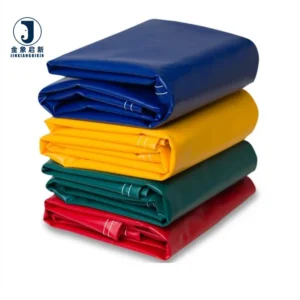
Heavy Duty Truck Tarpaulin 1000d Pvc Tarp Waterproof Pvc Canvas
¥1.20 Add to cart