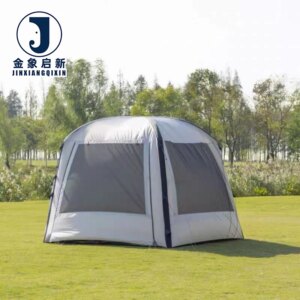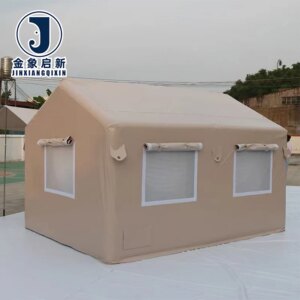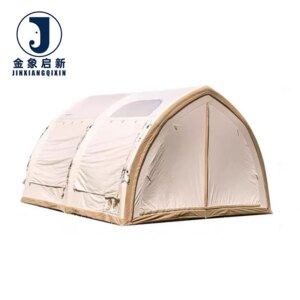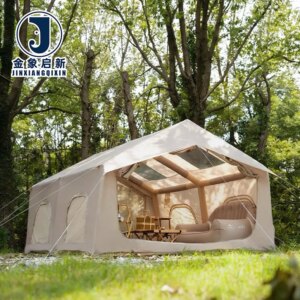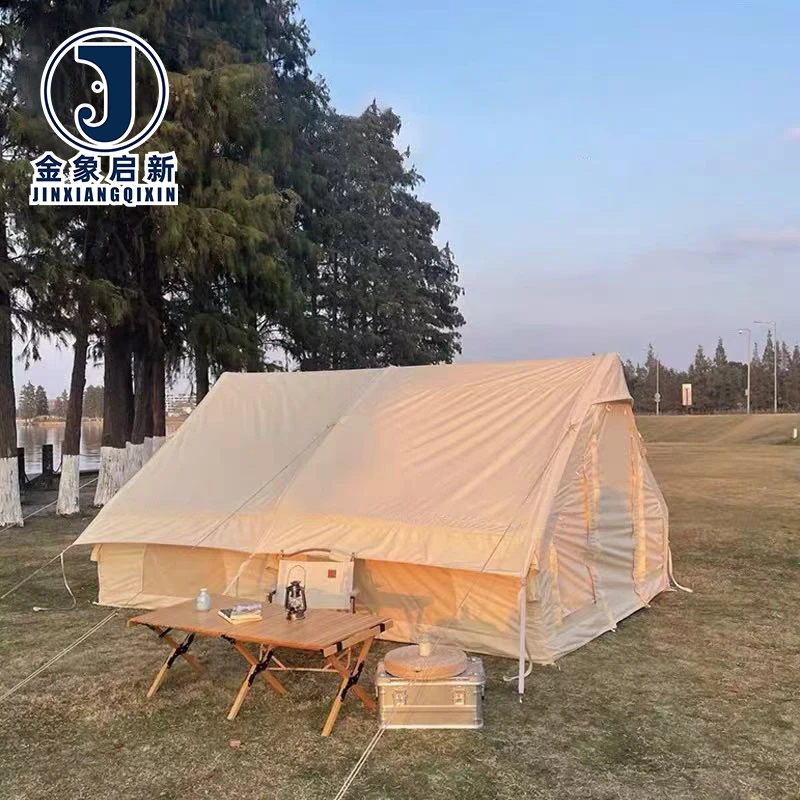
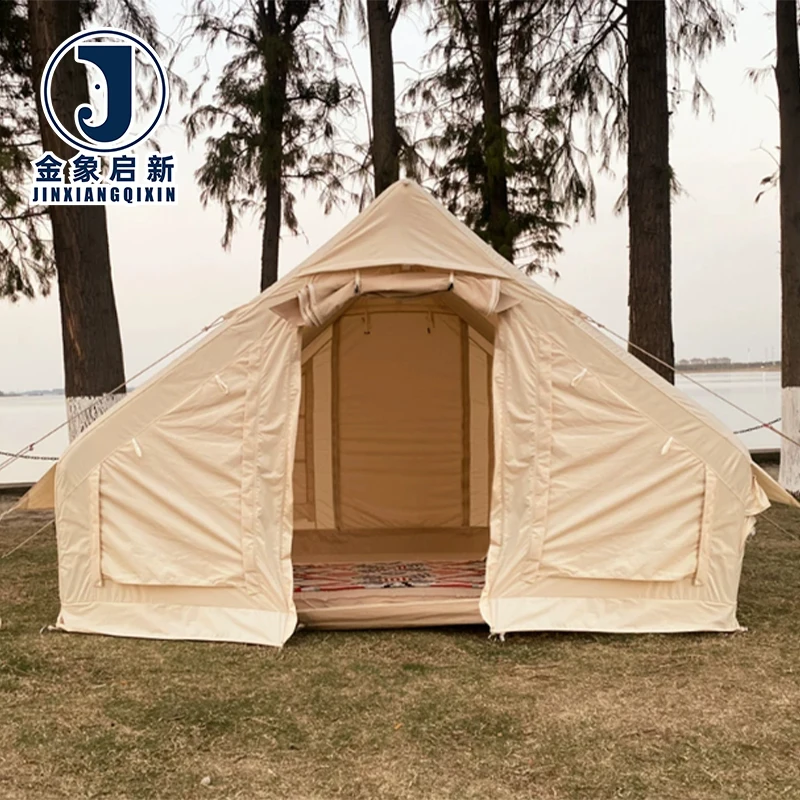
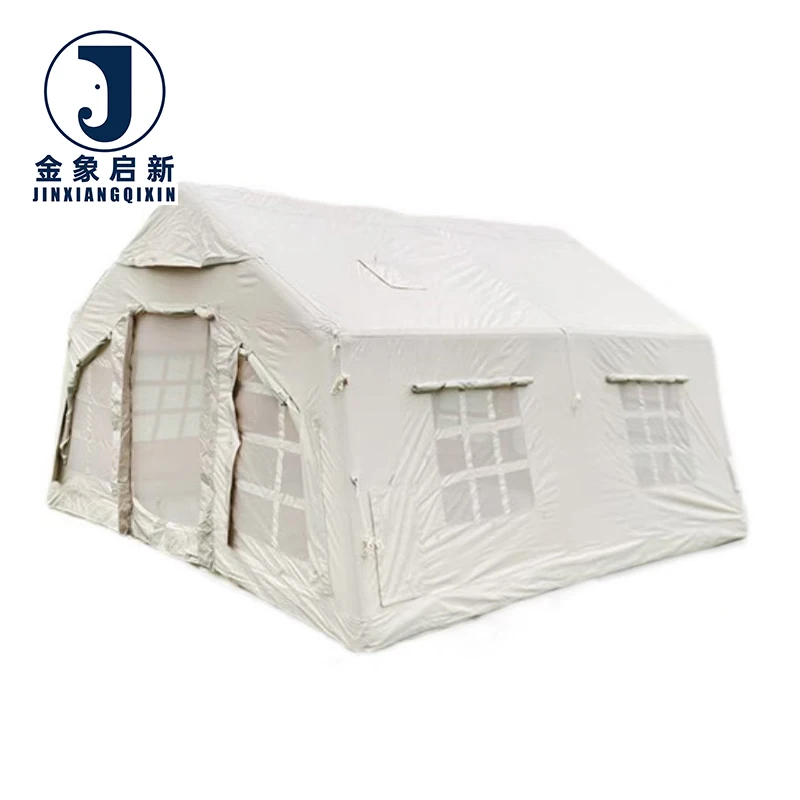
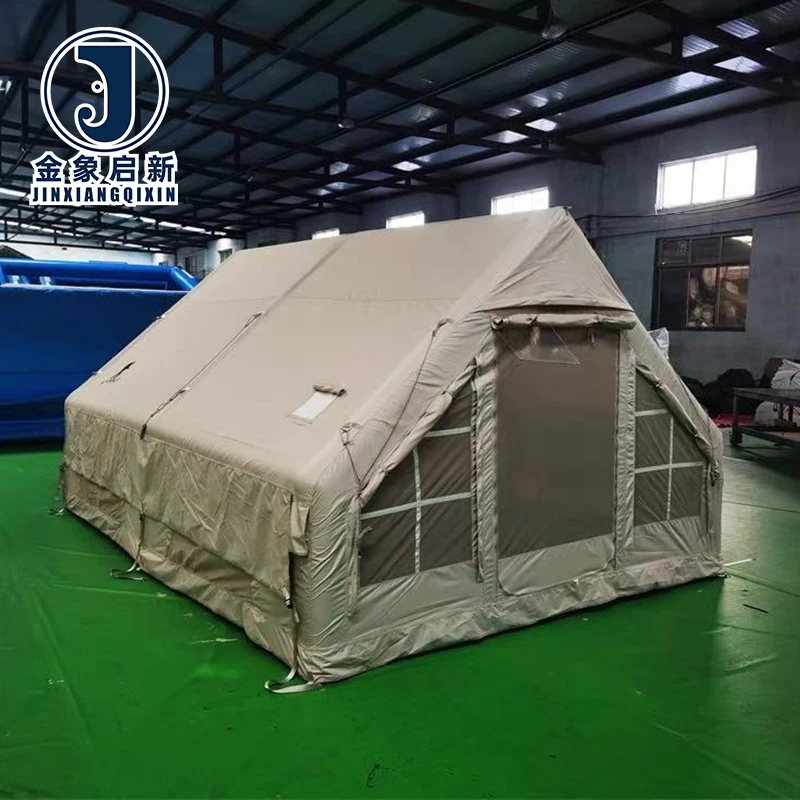
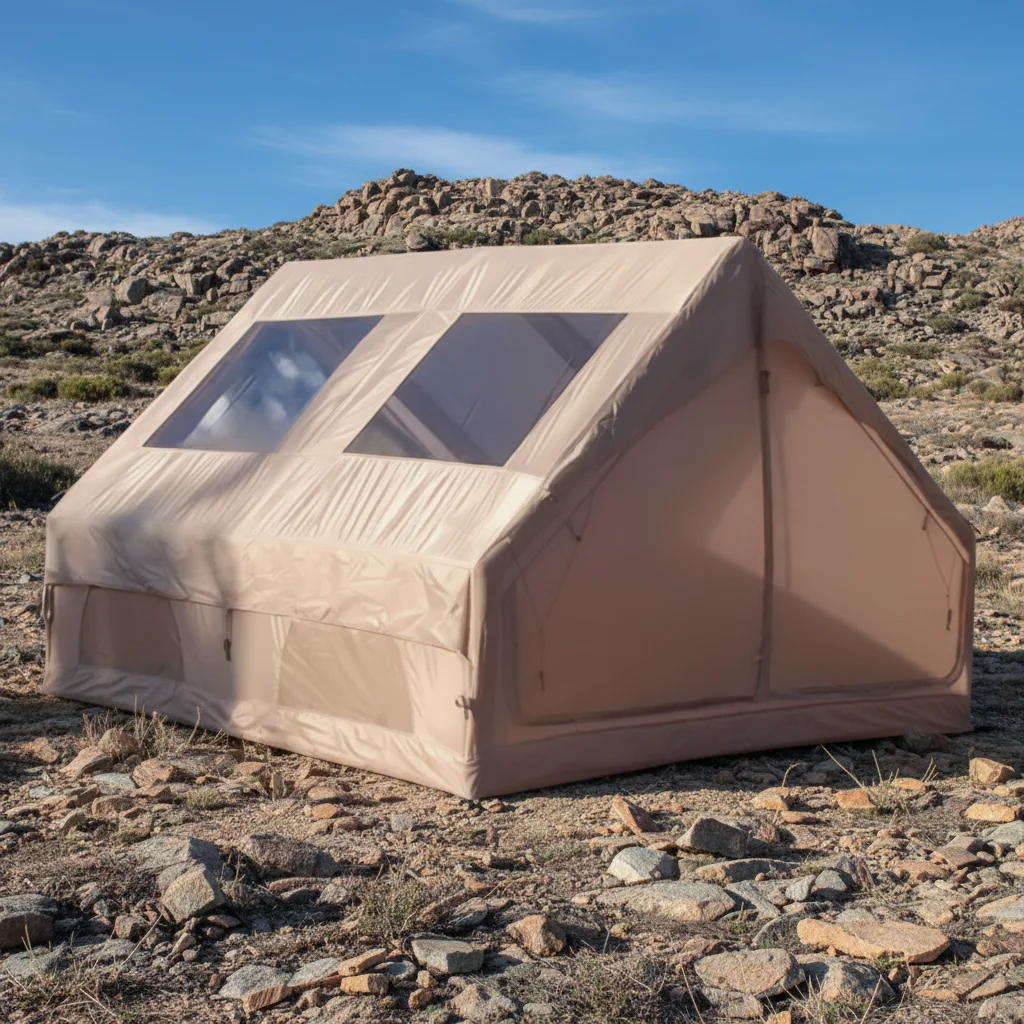

Waterproof PVC Four-Season Glamping Outdoor Camping House Tent — engineered with industrial-grade PVC tarpaulin delivering verified waterproof, UV-resistant and fire-retardant performance to EN 13501-1.
- Tear strength 1500N/5cm warp and weft for structural integrity under wind load
- Anti-static treatment for commercial accommodation safety compliance
- Full OEM & ODM customization including size, pattern printing and branding
Supported by a 10-technician R&D team handling material selection and sample development, with dedicated QA/QC at every production stage and 100% pre-shipment inspection across 3 full production lines.
Description
Deep Process Control Over Coating — verified through 36 sets of professional processing equipment managing adhesion, weight, and surface finish across every roll of PVC glamping tent fabric we produce.
Technical Specifications
| Parameter | Value |
|---|---|
| Product Type | PVC Tent |
| Core Material | PVC Tarpaulin (knife-coated) |
| Waterproof Rating | Hydrostatic head ≥10,000mm (source value — verify against manufacturer catalog) |
| UV Resistance | 5000+ hours sunlight exposure (source value — verify against manufacturer catalog) |
| Fire-Retardant Standard | EN 13501-1 (grade stated, specific class not stated in source) |
| Anti-Static | Stated (surface resistance or standard not stated in source) |
| Tear Strength | 1500N/5cm warp and weft (test standard not stated in source) |
| Wind Load Resistance | Beaufort scale 8 (source value — verify against manufacturer catalog) |
| Product Form | Finished tent structure |
| Customization | OEM & ODM — sample customization, pattern printing, size adjustments, custom color matching, logo application |
| Quality Control | 8 critical inspection points, pre-production sample approval, 100% pre-shipment inspection |
| Standards | ISO 9001, ISO 14001, ISO 45001, CE |
Application Suitability
| Application | Exposure & Requirement |
|---|---|
| Luxury glamping resorts | Year-round weather exposure, guest comfort, fire safety compliance for commercial hospitality |
| Eco-tourism facilities | Prolonged UV and rainfall contact, low environmental impact expectations, semi-permanent installation |
| Event accommodation services | Rapid deployment and breakdown cycles, frequent handling, transport abrasion |
| Seasonal camping operations | Temperature fluctuation across seasons, wind load during storms, repeated assembly stress |
| Permanent outdoor hospitality installations | Continuous sun and moisture exposure, structural integrity over extended service periods |
Why Fire-Retardant Claims Without a Grade Leave Buyers Exposed
A tent marketed as "flame retardant" means nothing at the port of entry if the certificate does not name the standard and class.
Commercial glamping operators purchasing PVC glamping tent structures for international markets regularly discover upon arrival that the fire-retardant claim on the invoice does not match the documentation in the container. The tent fabric may carry a treatment, but without EN 13501-1 classification or equivalent test data tied to the specific batch, local fire inspectors reject the installation. [NEED_CITE: EN 13501-1 fire classification for building and tent materials] The cost is not just delayed opening — it is full replacement, re-certification, and lost booking revenue across an entire season.
Customization From Fabric Selection to Finished Structure
The complete range of PVC glamping tent configurations begins with the base fabric choice. Operators specify the coating weight, surface finish, and colour reference that match their brand environment and climatic zone. A resort in a coastal region may prioritise salt-spray resistance and lighter colourways for solar reflectance, while a mountain site selects heavier grades for wind load and thermal retention. Pattern printing and logo application on the tent fabric allow each structure to carry site-specific branding without compromising the coated surface integrity.
Sizing, Mechanism, and Structural Fit for Each Project
No two glamping sites share identical ground conditions or operational workflows. The PVC glamping tent structures are produced in adjusted sizes to fit platform dimensions, deck layouts, and access constraints specific to each project. The quick automatic opening mechanism reduces on-site assembly labour, which matters when a resort is preparing multiple units before peak season. [NEED_CITE: deployment time considerations for commercial tent installations] Sample development allows operators to verify dimensions, colour consistency, and mechanism operation before committing to a full production run.
Reading the Specification Sheet Beyond Surface Numbers
Tear strength of 1500N/5cm in warp and weft indicates how the base fabric resists propagation once a cut or puncture initiates — but this value only holds if the coating adhesion prevents delamination under the same stress. Knife-coated PVC tarpaulin achieves bonding between the yarn substrate and the polymer layer through direct paste application, which typically produces higher peel strength than laminated alternatives. This matters at welded seams where tent panels join: if the coating separates from the base fabric, the weld fails regardless of the base yarn strength. Fire-retardant classification to EN 13501-1 defines reaction-to-fire behaviour under controlled test conditions, and the specific class within that standard determines whether the fabric passes local hospitality or temporary-structure fire codes. Buyers should confirm which sub-class their jurisdiction requires before placing a production order. Anti-static treatment reduces surface charge accumulation, relevant in dry climates where dust attraction affects both appearance and guest comfort.
What Happens When Specifications Are Chosen on Price Alone
A glamping resort operator who selects tent fabric based on the lowest quoted GSM often encounters failures that appear unrelated to material weight. Seams split at flex points during the first storm season because the base fabric lacked the density to distribute load across the weld zone. [NEED_CITE: weld failure frequency relative to base fabric specification in coated textiles] Colour variation between tents installed side by side becomes visible to guests once the full fleet is erected, forcing selective replacement that disrupts booking schedules. Fire-retardant treatments applied without batch-specific test documentation lead to rejected inspections and delayed resort openings — a cost that far exceeds the initial savings on material.
Why Procurement Teams Source Their Glamping Tent Fabric Here
Nearly 30 years of focused work on coated fabric translates into process parameters that are adjusted per order rather than applied generically. The 10-person R&D team develops samples within days, handling material selection, colour matching, and mechanism customisation before production begins. Three full production lines and 36 sets of professional equipment support volume orders while maintaining batch-controlled coating consistency — the factor that eliminates visible colour variation across a multi-tent project. Dedicated QA and QC personnel operate at 8 critical inspection points from raw material receipt through final assembly, with 100% pre-shipment inspection on every order. ISO 9001, ISO 14001, ISO 45001, and CE certifications frame the management system, but the practical evidence appears in the documentation package accompanying each shipment.
Documentation & Verification
- Material specification sheet stating PVC coating type, base fabric construction, and colour reference per tent order
- Test report for EN 13501-1 fire classification linked to the specific production batch
- UV resistance and tear strength test data included with each shipment for buyer records
- Pre-production sample approval sign-off documented before mass manufacturing begins
- Pre-shipment inspection record covering all 8 critical quality checkpoints
- ISO 9001, ISO 14001, ISO 45001, and CE certificates provided for customs and compliance verification
Fabrication, Handling & Storage
- Heat-weld parameters should be calibrated to the knife-coated PVC surface to prevent coating delamination at seam lines
- Reinforced hems and tie-down points must distribute load across the base fabric weave, not just the coating layer
- Store finished tent structures in dry, ventilated conditions to prevent moisture trapping between folded PVC panels
- Avoid dragging tent fabric across abrasive ground surfaces during deployment to protect the coated finish
- Clean with mild, non-solvent detergents to preserve the fire-retardant and anti-static surface treatments
- Inspect weld seams after each seasonal assembly cycle for early signs of coating separation or yarn exposure
Planning Your Next Glamping Tent Order
To move from inquiry to sample, share your site’s climatic conditions, intended installation duration, and the fire-safety classification your local authority requires. Specify whether you need finished tent structures or semi-finished fabric components for your own assembly line. Confirm the colour reference, logo artwork, and any pattern printing requirements so the R&D team can produce a representative sample before production commitment.
Frequently Asked Questions
Q: What customization options are available for size, color, pattern printing, and logo on tent fabric?
A: We provide full OEM and ODM customization including size adjustments to match your platform dimensions, custom color matching to your brand reference, pattern printing, and logo application directly on the PVC tent fabric. The 10-person R&D team develops pre-production samples so you can verify every visual and structural detail before mass manufacturing begins.
Q: Does the tent meet fire-retardant certification requirements for my target market?
A: The tent fabric carries fire-retardant treatment classified to EN 13501-1. The specific class within that standard determines compliance in different jurisdictions, so we recommend confirming your local authority’s requirement before production. Batch-specific test documentation accompanies each shipment for inspection and verification purposes.
Q: How do you ensure colour consistency across multiple tents in the same project order?
A: Our batch-controlled coating process and in-process QA at 8 critical inspection points maintain colour uniformity across every tent in a single order. Pre-production sample approval ensures the colour reference is confirmed before mass production, and 100% pre-shipment inspection catches any deviation before dispatch.
Q: What is the sample development process and lead time for custom glamping tent orders?
A: Once we receive your specifications — including size, colour, mechanism preferences, and any printing requirements — the R&D team produces a sample within days for your review. After sample approval, typical multi-week lead times apply for custom production runs depending on order volume and complexity.
Q: What documentation is provided for customs clearance and compliance verification?
A: Each shipment includes a material specification sheet, EN 13501-1 test report linked to the production batch, pre-shipment inspection record, ISO and CE certificates, packing list, and certificate of origin. This documentation package supports both customs clearance and on-site compliance verification in export markets.
Related products
-
Luxury Inflatable Tent for Glamping Outdoor Waterproof Air Tent with Pump
Read more -
Inflatable Camping Tent PVC Four-Season Waterproof Outdoor Air Tent with Quick Automatic Opening for 2-3 Person
Read more -
Outdoor Waterproof Inflatable Tent for Camping Portable Air Camping Tent Shelter
Read more -
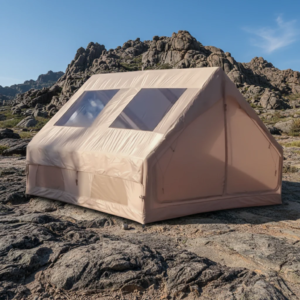
High Quality Four-Season Inflatable Tent for Camping Durable PVC Material All-Weather Resistance Quick Automatic Opening
Read more