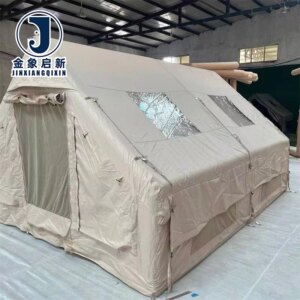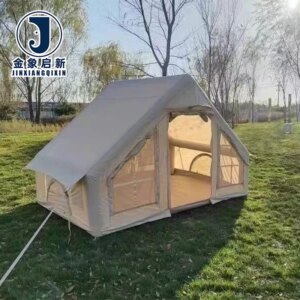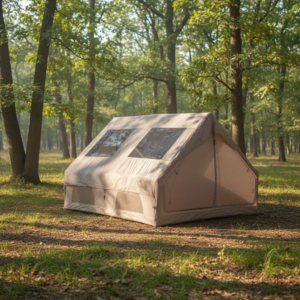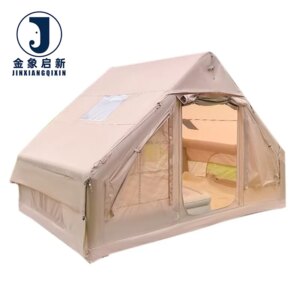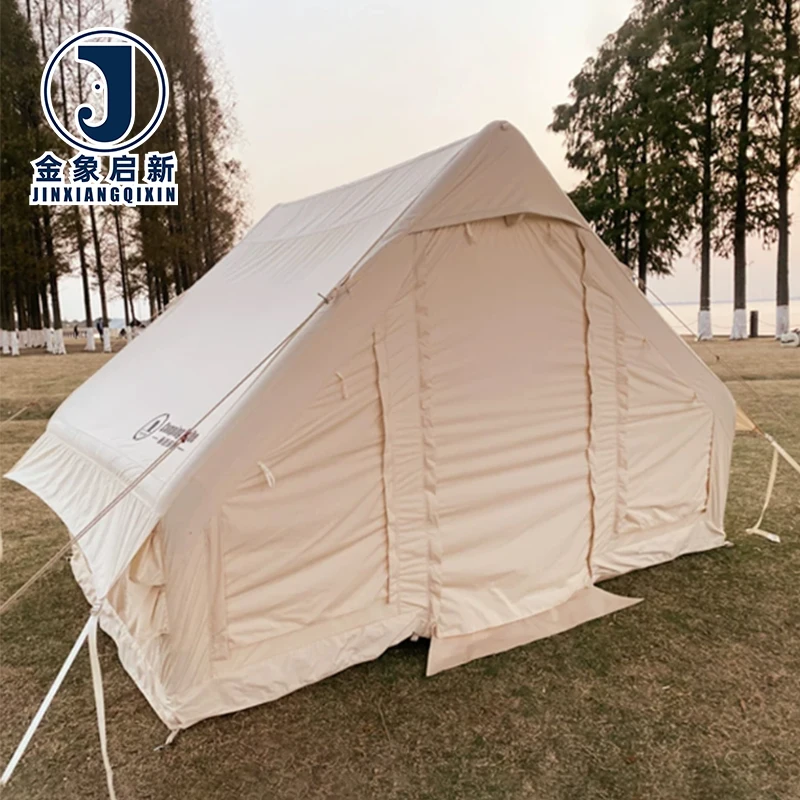
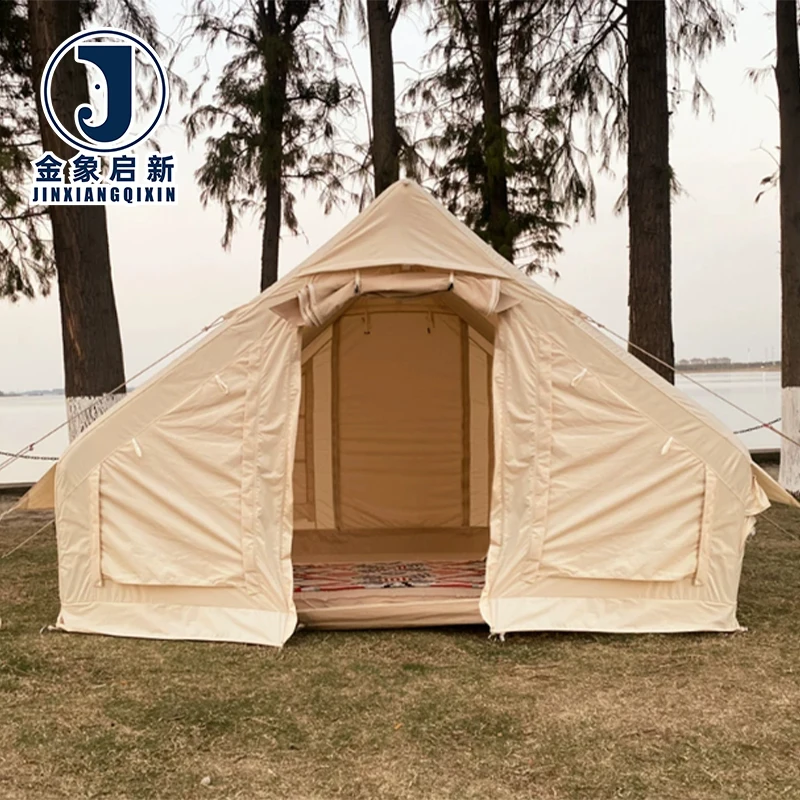
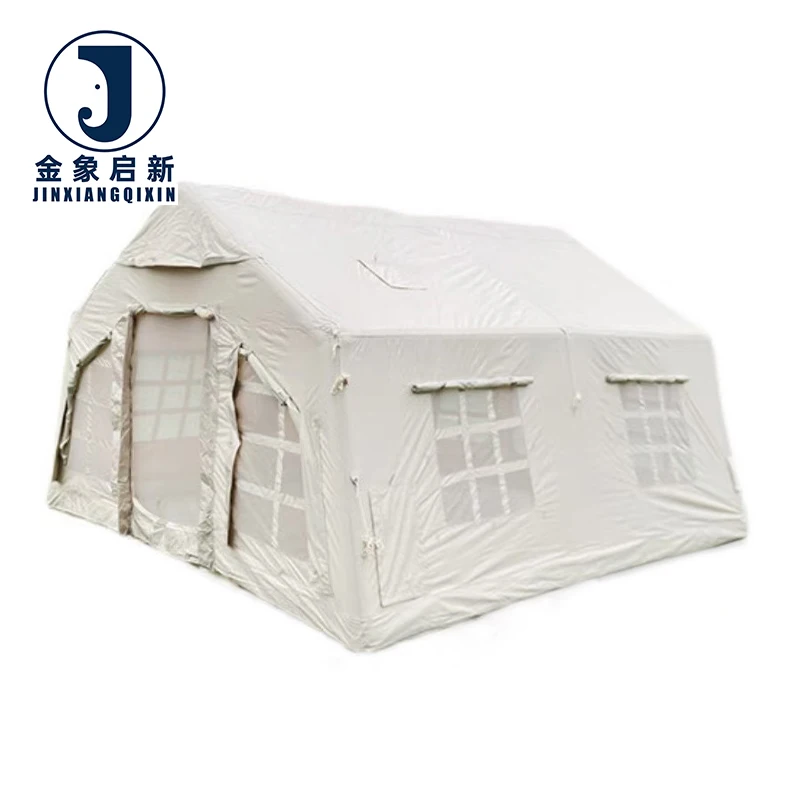
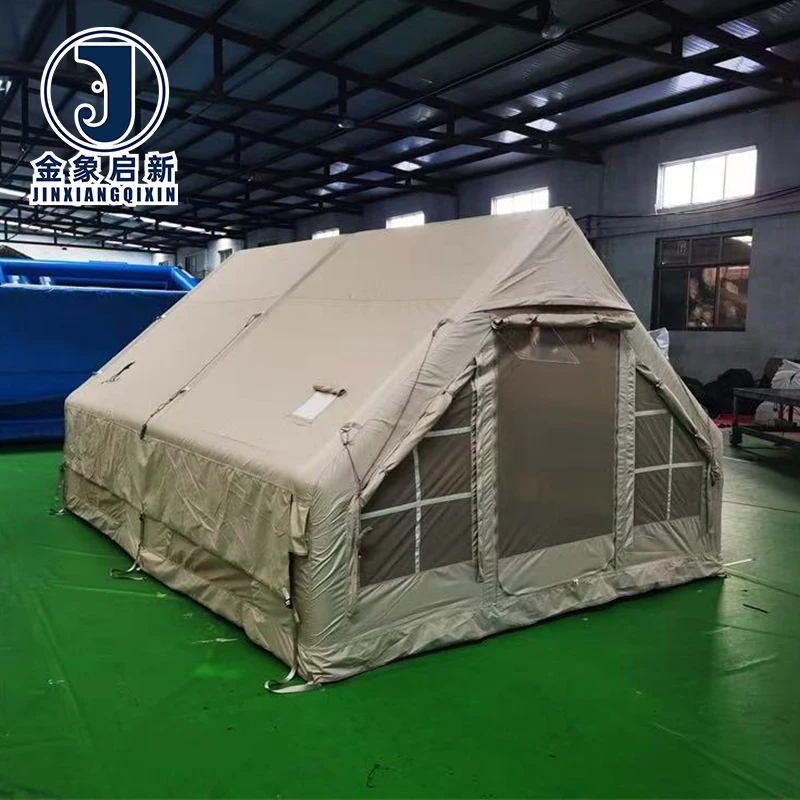
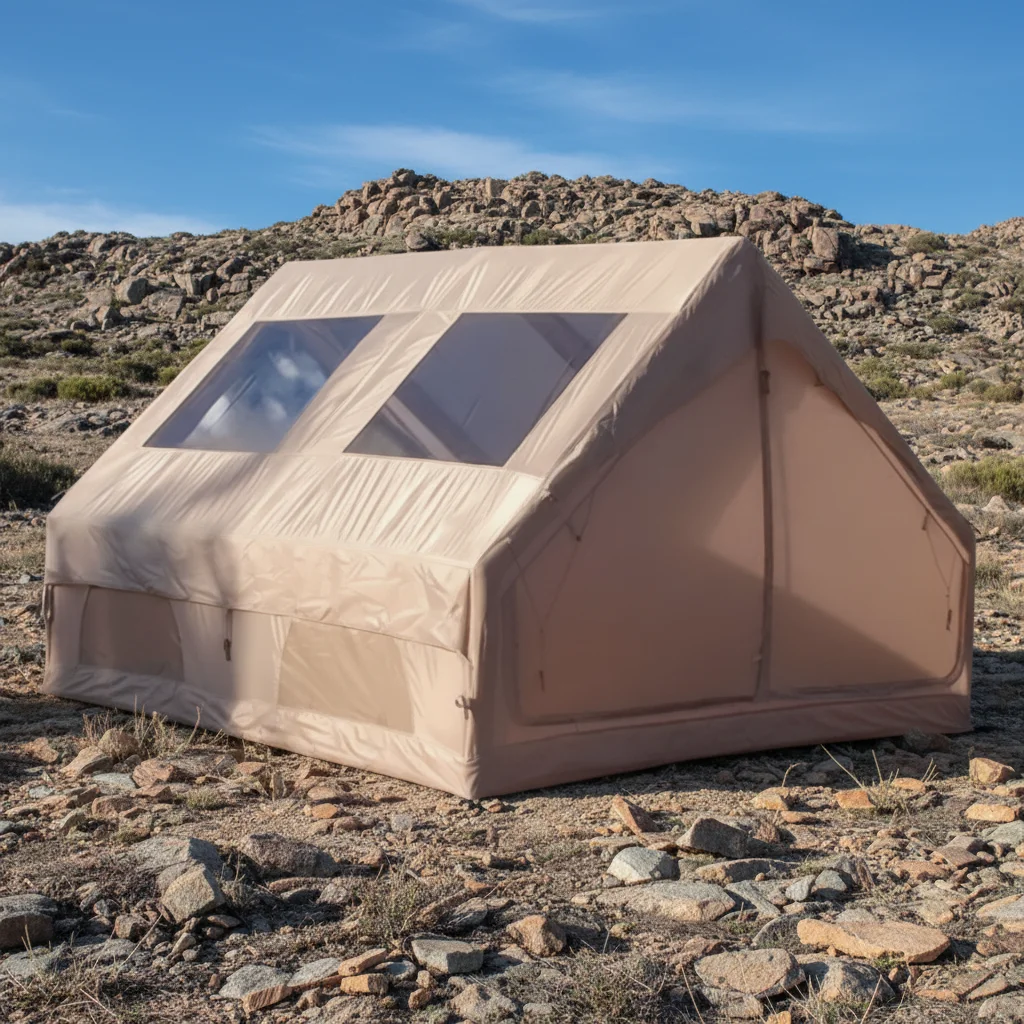
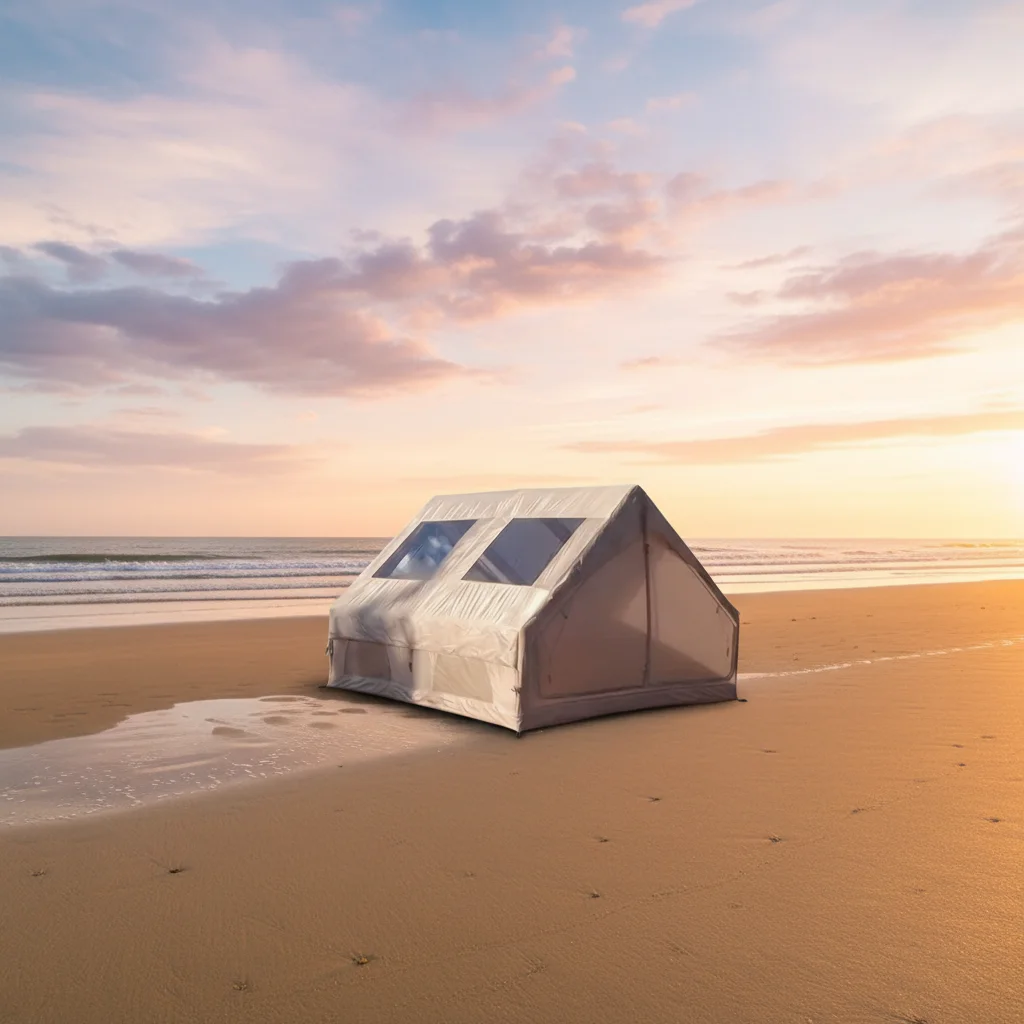
PVC Inflatable Camping Tent — waterproof, UV-resistant, fire-retardant to EN 13501-1, tear strength 300N (ISO 13937-2)
- Custom dimensions, pattern printing, and colour matching across rolls with sample turnaround in days
- High-frequency welded seams held to ±3% strength tolerance, tested alongside base fabric
- Selectable GSM, coating weight, and glossy or matte finish to suit climate and durability targets
Backed by a 10-technician R&D team and 9,180 m² facility running three dedicated lines for consistent batch output.
Description
Precision-coated inflatable tent fabric with batch-traceable QA — Every roll undergoes 24-hour continuous air pressure decay testing before dispatch, ensuring seam and coating integrity hold to documented tolerances.
Technical Specifications
| Parameter | Value |
|---|---|
| Product Type | Inflatable Tent |
| Core Material | PVC tarpaulin |
| Product Form | Inflatable structure, single layer construction |
| Fire-Retardant Compliance | EN 13501-1 |
| Tear Strength | 300N per ISO 13937-2 |
| UV Resistance | Retains 85% tensile strength after 500 hours accelerated weather testing |
| Air Pressure Test | 24 consecutive hours, pressure decay ≤5% |
| Seam Strength Uniformity | Within ±3% tolerance |
| Key Features | Waterproof, UV-resistant, tear-resistant |
| Customization Service | OEM & ODM, sample customization, pattern printing |
| Sample Turnaround | 5-day prototype development |
| Production Lead Time | 15–20 days for orders under 1000 units |
| Production Facility Area | 9,180 m² |
| Production Lines | 3 full production lines |
| Processing Equipment | 36 sets of professional equipment |
| R&D Team Scale | 10 technicians |
| QA & QC Staff | 8 professionals |
| On-Time Delivery Rate | 98.5% over the past 3 years |
| Defective Rate | Below 0.3% |
| Standards & Certifications | ISO9001, ISO14001, ISO45001, CE, EN 13501-1, ISO 13937-2, EU REACH |
Application Suitability
| Application | Exposure & Requirement |
|---|---|
| Commercial camping ground operations | Repeated inflation/deflation cycles, prolonged sun exposure, ground moisture contact |
| Large-scale outdoor event facilities | High wind loading on inflated forms, UV exposure across wide surface areas, fire code compliance on public sites |
| Industrial temporary shelter projects | Rough terrain deployment, abrasion from equipment handling, flame-retardant requirements for worksite approval |
| Construction camps and expedition bases | Multi-season weather cycling, transport damage risk during relocation, rapid assembly requirements |
| Commercial adventure parks | Heavy public use frequency, branding and colour consistency across multiple units, all-season durability |
| Outdoor gear manufacturing product lines | Batch-to-batch roll consistency for factory integration, OEM branding and pattern printing on fabric |
What Happens When Inflatable Tent Fabric Fails Mid-Season
Batch inconsistency in PVC inflatable tent fabric causes more commercial disruption than material failure alone.
When an outdoor gear manufacturer runs a production schedule built around a single fabric order, colour variation between rolls means finished units do not match on the showroom floor. A delayed replacement shipment then pushes delivery dates past the camping season window. PVC Inflatable Camping Tent aftermarket supplier reliability depends as much on coating weight consistency and roll-to-roll colour control as on the stated material grade. [NEED_CITE: colour variance tolerances in coated fabric production runs]
Coating Weight and Base Fabric Interaction in Inflatable Structures
PVC Inflatable Camping Tent fabric performance depends on how coating compound bonds with the woven base. A high-denier polyester scrim provides the skeleton that resists tear propagation, while the PVC coating seals the weave and carries the air pressure load across the panel surface. When coating adhesion is uneven, the inflated form develops soft spots that distort under wind loading. The tear strength figure of 300N tested to ISO 13937-2 reflects the combined behaviour of base fabric and coating acting as a unified system rather than either component alone.
Seam Integrity Under Continuous Inflation Pressure
Every inflatable tent panel joins at welded seams, and those seams experience concentrated stress each time the structure inflates or deflects in wind. Seam strength uniformity held within ±3% tolerance means that no single joint becomes the weak link in the air-bearing envelope. High-frequency welding parameters must match the PVC compound’s plasticiser content and coating thickness to achieve full fusion without burning through the face. A seam that passes initial inspection but degrades after several inflation cycles points to a mismatch between welding energy and material formulation. [NEED_CITE: high-frequency welding parameters for PVC coated fabrics]
Reading the Specification Sheet Beyond the GSM Number
Buyers often focus on GSM as the single indicator of material quality, but for inflatable tent fabric the base fabric denier and weave density matter equally. A lighter-coated fabric with a tight, high-denier weave can outperform a heavier material built on a loose scrim when it comes to tear resistance and puncture behaviour. The 300N tear strength reading per ISO 13937-2 captures this combined effect. Coating method also influences end performance: knife-coated PVC builds a thicker, more uniform film that supports higher inflation pressures, while laminated constructions may separate under repeated flex cycles. Selecting the right balance of base fabric density and coating weight determines how the finished inflatable structure behaves across temperature swings and sustained air pressure.
The Cost of Overlooking Fire-Retardant Documentation at Site Inspection
Commercial event venues and construction camps increasingly require documented proof of fire-retardant compliance before any temporary structure goes up. EN 13501-1 compliance on this PVC Inflatable Camping Tent fabric provides that baseline, but the grade must be confirmed against the specific market and application. Procurement teams that accept a verbal assurance of flame retardancy without the corresponding test report in the shipment documentation package risk having the entire installation rejected at the compliance check. The cost of a resubmission delay compounds when the event date or project milestone cannot shift. [NEED_CITE: EN 13501-1 classification scope for temporary structures]
Why Consistency Matters More Than Peak Performance Numbers
A PVC inflatable tent fabric that performs well on a sample roll but varies across the production batch creates downstream problems that no single test certificate can prevent. Colour drift between rolls in one order becomes visible when panels from different rolls sit side by side on the finished structure. Inconsistent coating thickness leads to uneven inflation behaviour, where some panels hold shape and others sag. Sourcing from a facility with 3 full production lines and 36 sets of processing equipment, supported by 10 R&D technicians and 8 QA/QC professionals, means batch parameters are monitored at each stage. The below 0.3% defective rate and 98.5% on-time delivery record over the past 3 years reflect process control rather than post-production sorting.
Documentation & Verification
- Material specification sheet stating GSM, base fabric denier, coating type and colour reference per roll
- EN 13501-1 test report for fire-retardant grades included where applicable in shipment package
- UV resistance data with accelerated weathering results documented per batch
- 24-hour air pressure decay test record with ≤5% threshold confirmed before dispatch
- EU REACH compliance and CE documentation supporting customs clearance
- Certificate of Conformance with batch-specific test data for waterproof rating and tensile strength
Fabrication, Handling & Storage
- High-frequency welding energy must match PVC compound plasticiser content to achieve full seam fusion across the inflatable envelope
- Store rolls vertically on padded racks to prevent flat-spot deformation that affects inflation uniformity
- Allow fabric to reach ambient temperature before unrolling in cold conditions to avoid coating micro-cracking
- Use PVC-compatible cleaning agents only; solvent-based products degrade the coating surface
- Repair minor punctures with matching PVC patch material heat-welded to the single layer construction
Starting Your Inflatable Tent Fabric Enquiry
Provide the intended application environment, including typical weather exposure and any fire code requirements for your target market. Specify the panel dimensions, required colour or pattern printing details, and whether you need rolls or pre-cut panels. Confirm your annual volume so that production scheduling and batch consistency controls can be planned accordingly.
Frequently Asked Questions
Q: What custom sizing and pattern printing options are available for inflatable tent fabric?
A: OEM and ODM services cover custom panel dimensions, colour matching, and pattern printing directly onto the PVC surface. The 10-person R&D team handles material selection and print layout, with a 5-day sample turnaround for prototype confirmation before full production begins. First-time orders require sample approval.
Q: How is GSM and material thickness verified on arrival against the quotation?
A: Every roll ships with a material specification sheet confirming GSM, base fabric denier, and coating type. Pre-shipment inspection records document actual measured values against the quoted specification. Any roll falling outside tolerance is flagged before dispatch rather than arriving as a surprise at the receiving dock.
Q: What fire-retardant documentation accompanies the shipment?
A: Fire-retardant grades comply with EN 13501-1, and the corresponding test report is included in the shipment documentation package. Buyers should confirm the specific grade required for their market and application before placing the order so the correct compound is selected at the production stage.
Q: How do you control batch colour consistency across multiple rolls in one order?
A: Colour reference is locked at the sample approval stage, and in-process QA monitors pigment dosing across all rolls in the batch. The 8-person QA/QC team inspects every roll before packing. Rolls showing visible deviation from the approved reference are held and reworked rather than shipped.
Q: What are the lead times and minimums for custom inflatable tent fabric?
A: Standard production lead time runs 15–20 days for orders under 1000 units. Custom colour, pattern printing, or non-standard sizing may adjust this window. Provide your full specification at enquiry stage so the quotation reflects accurate scheduling and any sample development time needed before bulk production.
Related products
-
Inflatable Tent Four-Season Quick Automatic Opening PVC 3000mm Waterproof Foldable Eco-Friendly 2-3/3-4/6-8 Person Outdoor Use
Read more -
Inflatable Camping Tent Waterproof PVC Outdoor Air Tent Easy Setup Family Camping Shelter Four-Season >3000mm Waterproof Quick
Read more -
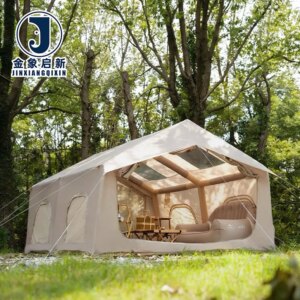
Camping Tent Inflatable UV Resistant Customizable Four-season Waterproof PVC Eco-Friendly Windproof Foldable Quick Automatic
Read more -
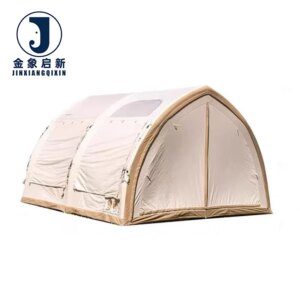
Premium Four-season PVC Inflatable Tents for Camping Easy-to-Use Spacious Portable Waterproof Outdoor Tent with Pump
Read more