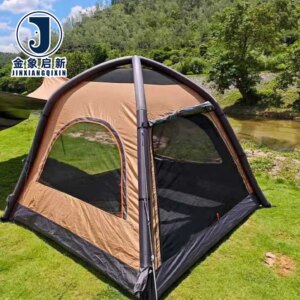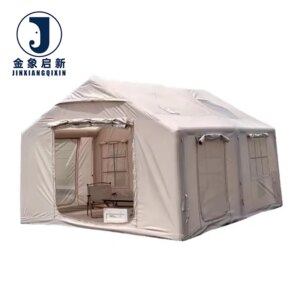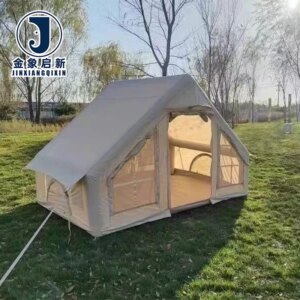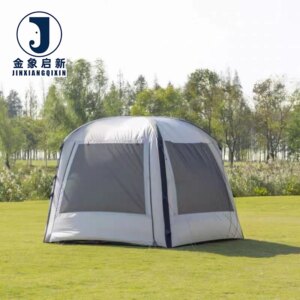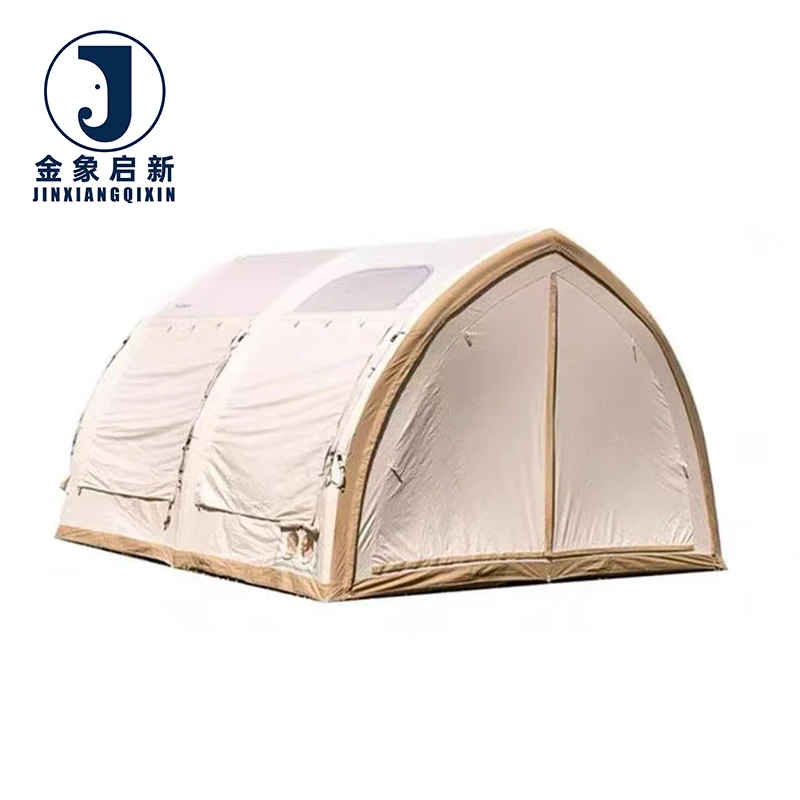
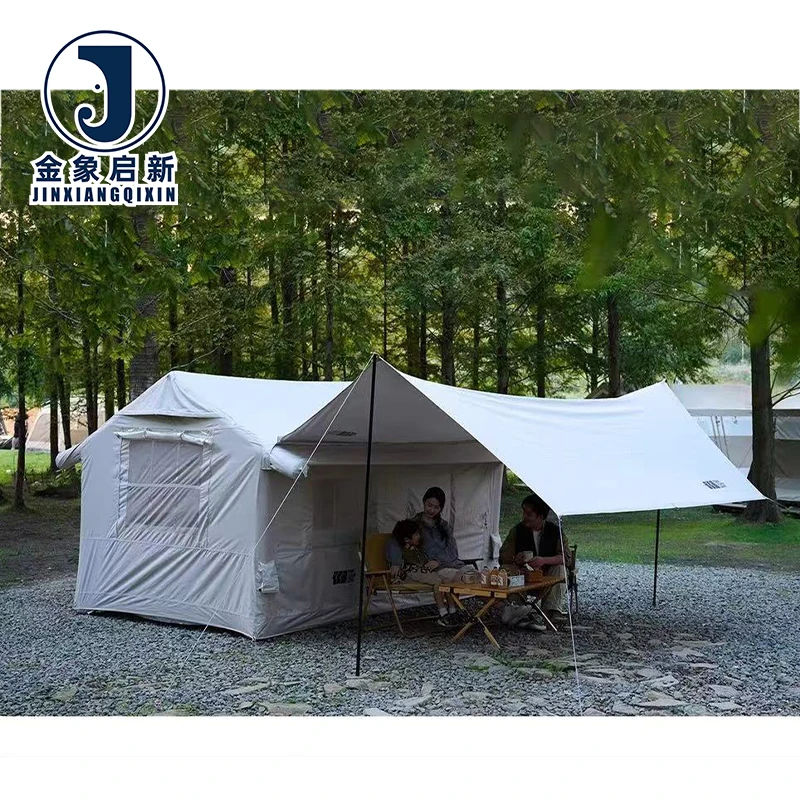
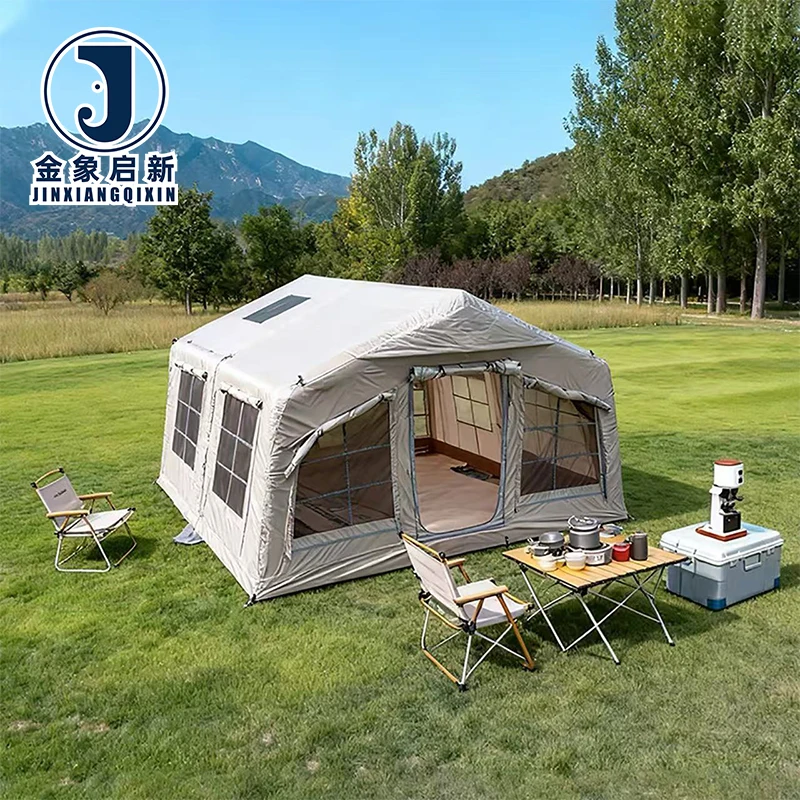
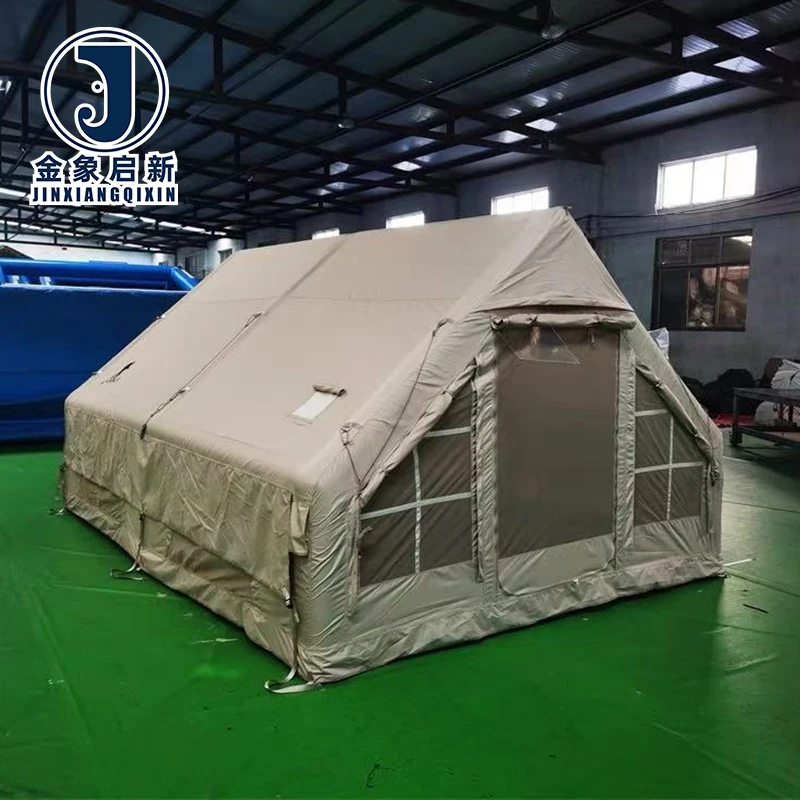
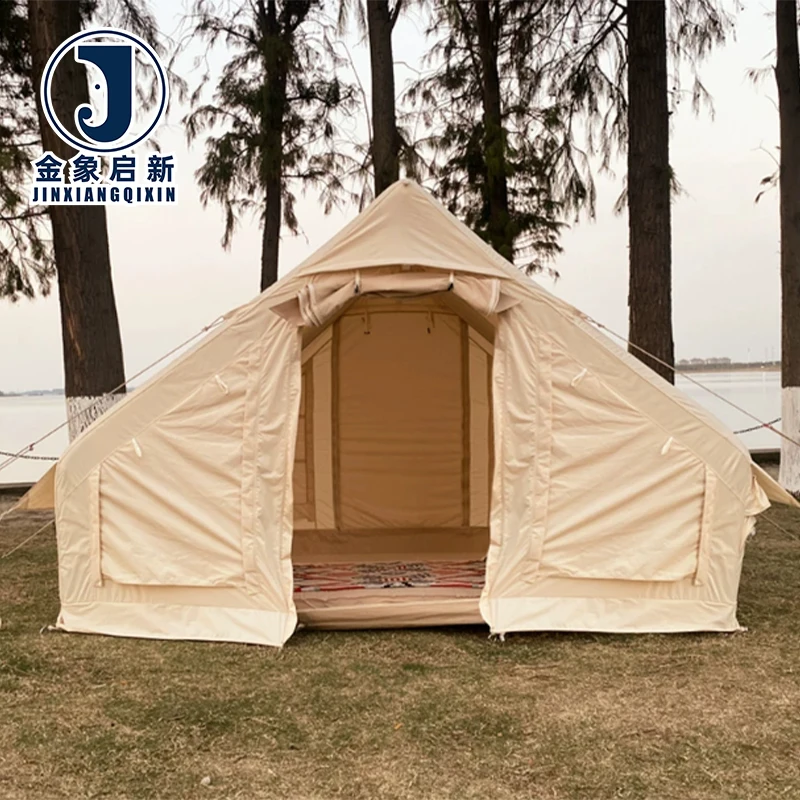
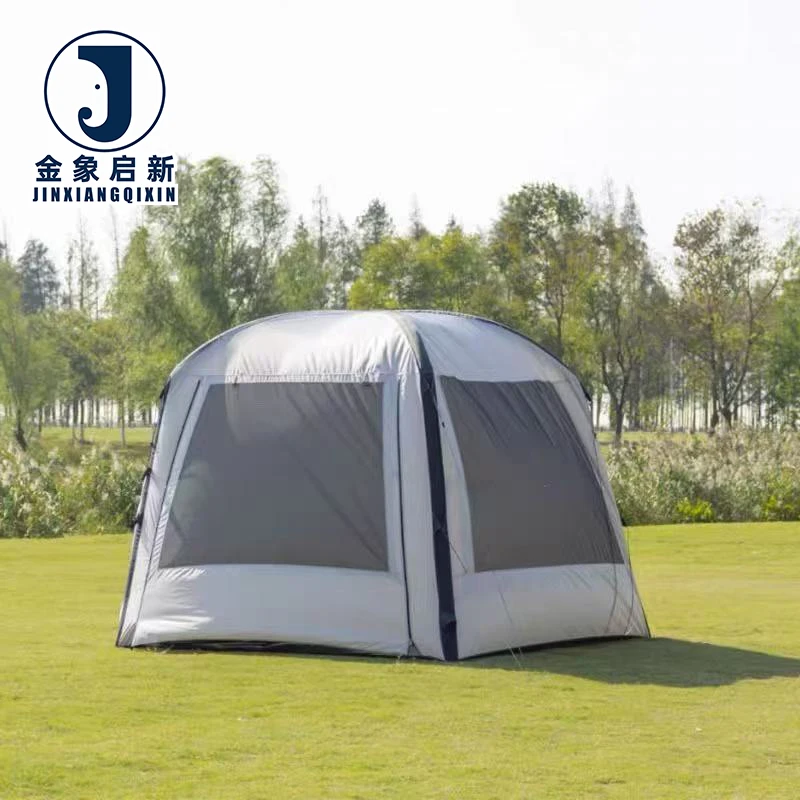
PVC Inflatable Camping Tent — waterproof, UV-resistant and tear-resistant PVC tarpaulin with automatic opening mechanism for rapid single-operator deployment across four-season conditions. Single-layer construction optimised for compact packing and efficient bulk transport to project sites.
Engineered for commercial and industrial outdoor use where consumer-grade shelters fail: verified material specs, batch-consistent coating weight and reliable seam integrity under real job-site stress. Every unit undergoes 24-hour airtightness pressure testing before dispatch.
Backed by 100% pre-shipment inspection on a 9,180 m² facility running 3 full production lines, with a 10-person R&D team handling custom sizing and pattern printing.
- ISO 9001, ISO 14001, ISO 45001 and CE certified production
- OEM & ODM: sample customization and branding available
- Standard sample lead time: 7 working days; customized 10–14 days
Description
Fabrication Readiness Backed by Process Control — Every roll of coated PVC tarpaulin used in our inflatable structures undergoes stage-gated inspection across three full production lines to ensure airtightness, dimensional stability, and seam integrity before shipment.
Technical Specifications
| Parameter | Value |
|---|---|
| Product Type | Inflatable Tent Fabric / Inflatable Structure |
| Core Material | PVC Tarpaulin |
| Construction | Single-layer |
| Key Features | Waterproof, UV-resistant, Tear-resistant, Four-Season Use |
| Flame Retardant | Available in flame retardant grades — confirm the grade required for your market |
| Anti-Static | Available in anti-static grades — confirm the standard required for your site |
| Product Form | Inflatable structure with automatic opening mechanism |
| Customization | OEM & ODM (Sample customization, Pattern printing) |
| Quality Control | 12 checkpoints with dedicated QA & QC staff |
| Pressure Testing | 24-hour airtightness verification before dispatch |
| Sample Lead Time | Standard 7 working days; customized 10–14 days |
| Production Lead Time | 45 days after sample approval (standard orders) |
| Certifications | ISO 9001, ISO 14001, ISO 45001, CE |
Application Suitability
| Application | Exposure & Requirement |
|---|---|
| Temporary site shelters on construction projects | Wind loading, rain ingress, repeated inflation cycles, site debris abrasion |
| Mobile storage facilities for logistics operations | UV exposure during extended outdoor staging, forklift proximity, puncture risk from cargo |
| Auxiliary accommodation for industrial camps | Multi-season temperature swings, occupant safety, fire compliance on remote sites |
| Commercial emergency preparedness deployments | Rapid single-operator setup, transport compactness, durability across multiple deployments |
| Outdoor commercial events and pop-up structures | Branding print surface, weather variability, frequent teardown and repack |
Why Stated Material Properties Fail Without Verification on Inflatable Structures
Verified coating weight, documented test basis, and batch traceability separate a reliable inflatable shelter from one that deflates on the first cold night.
Buyers regularly source inflatable tents based on spec sheets claiming waterproofing, fire retardancy, and UV resistance with no supporting test data. When these shelters deploy on active construction sites or industrial camps, the gap between claimed and actual performance becomes a compliance and safety issue — not just a commercial disappointment. Inflatable structures concentrate stress at seam lines and valve attachment points, making material consistency across the entire production batch far more critical than in static tarpaulin applications. [NEED_CITE: tensile and tear test methods for coated fabrics per ISO 1421]
A PVC inflatable tent manufacturer that cannot supply batch-specific test documentation leaves the buyer carrying all the risk when site auditors request proof of fire classification or waterproof rating.
Pattern Printing and Dimensional Customization for Commercial Branding
Commercial deployments of inflatable tents frequently require corporate branding, safety signage, or event graphics printed directly onto the PVC tarpaulin surface. Our 10-person R&D team handles pattern layout, colour matching, and print adhesion testing to ensure branding survives repeated inflation, deflation, and repacking cycles. Available customization covers dimensions, colour, and logo placement, with sample confirmation typically completed within 7 working days for standard requests and up to 14 days for fully bespoke designs. This OEM and ODM capability ensures the PVC inflatable tent fabric meets both structural and visual requirements of the end application.
Airtightness Engineering and Four-Season Material Stability
Inflatable structures depend entirely on sustained internal pressure to maintain their form. The 24-hour pressure testing protocol applied to every unit before dispatch catches micro-leaks at valve interfaces and heat-welded seams that shorter inspections miss. The single-layer PVC tarpaulin construction is engineered to retain flexibility across seasonal temperature ranges, reducing the risk of low-temperature embrittlement during winter deployments or excessive softening in sustained heat. This four-season design approach is what allows the same inflatable shelter specification to serve construction sites in northern latitudes and logistics staging areas in arid zones without material substitution. [NEED_CITE: low-temperature flexibility testing standards for PVC coated fabrics]
How Base Fabric Density and Coating Weight Interact in Inflatable Applications
The performance of PVC tarpaulin in inflatable structures is governed by the interplay between base fabric denier, weave density, and coating weight rather than any single parameter in isolation. A heavier coating does not compensate for a loosely woven base fabric when it comes to tear propagation resistance — the yarn density in both warp and weft directions determines how effectively a puncture is contained before it spreads. For inflatable tent applications, where internal pressure creates constant biaxial stress across the entire surface, the coating adhesion to the base fabric becomes equally critical. Poor adhesion leads to delamination at fold lines after repeated inflation and deflation cycles, compromising airtightness long before the coating itself degrades. [NEED_CITE: coating adhesion test methods for PVC tarpaulin per ISO 2411]
The Hidden Cost of Undocumented Material Substitution
When inflatable tent fabric is sourced from suppliers who do not maintain batch-level traceability, the risk of undocumented material substitution rises significantly. A lighter base fabric or reduced coating weight may pass visual inspection but will fail prematurely at stress concentration points — particularly around inflation valves, door zippers, and anchor attachment zones. In commercial and industrial deployments, this type of failure does not just mean a replacement order; it means project downtime, failed safety audits, and potential liability when shelters are occupied during adverse weather. Batch-to-batch colour variation is a secondary but equally costly problem when multiple inflatable units are deployed side by side on a single site. [NEED_CITE: batch consistency requirements for coated fabric in commercial structures]
Why Industrial Buyers Source Inflatable Tent Fabric Through This Facility
Dedicated QA and QC staff operate at 12 checkpoints throughout production, ensuring that every PVC inflatable tent is pressure-tested for 24 hours before it leaves the facility. Three full production lines and 36 sets of professional processing equipment provide the capacity to fulfil bulk orders for industrial camp deployments without compromising the inspection rigor applied to each unit. The in-house R&D team of 10 technicians supports the full customization workflow — from initial material selection and pattern printing layout through to sample development and pre-production approval. ISO 9001, ISO 14001, ISO 45001, and CE certifications are maintained as active management systems rather than static certificates, directly informing the documentation package that accompanies every shipment.
Documentation & Verification
- Material specification sheet stating PVC base fabric type, coating composition, and available flame retardant grades
- Batch-specific quality inspection report covering airtightness pressure test results and dimensional verification
- Fire-retardant and anti-static test certificates matching the compliance standard specified at inquiry stage
- UV resistance test basis documentation confirming treatment type and exposure classification
- Pre-shipment inspection record linked to order batch for audit traceability
- Certificate of origin and customs documentation for international dispatch
Fabrication, Handling & Storage
- Heat-weld seams using temperature and dwell time settings matched to the single-layer PVC tarpaulin thickness to avoid coating burn-through
- Store rolled inflatable tent fabric vertically in a dry environment to prevent permanent creasing along the fold lines
- Avoid dragging packed inflatable units across abrasive surfaces during deployment to protect the PVC coating surface
- Use PVC-compatible adhesive patches for field repairs on punctures, ensuring the repair area is clean and dry before application
- Clean the tarpaulin surface with mild detergent solutions only — solvent-based cleaners degrade the PVC coating bond
- Inflate to full operating pressure during storage checks to verify valve and seam integrity before redeployment
Request a Specification Match for Your Deployment Requirements
To receive an accurate quotation and sample proposal, provide your target deployment environment including climate zone and expected seasonal exposure conditions. Specify any fire-retardant or anti-static compliance standards your site requires so that the correct material grade can be included in the sample. Indicate your preferred dimensions, colour references, and whether pattern printing or logo branding is needed. State your estimated annual volume and whether you require finished inflatable units or fabric rolls for your own fabrication.
Frequently Asked Questions
Q: How is the waterproof rating verified and documented for each batch?
A: Every production batch undergoes inspection at 12 checkpoints, with a 24-hour airtightness pressure test applied to each inflatable unit before dispatch. Batch-specific quality inspection reports covering waterproof performance and material composition are available with every shipment. We recommend requesting this documentation at the inquiry stage so that your compliance team can review it before order confirmation.
Q: What fire-retardant and anti-static certifications are available for industrial site compliance?
A: Fire-retardant and anti-static treatments are available across multiple grade options. The specific certification supplied with your order depends on the compliance standard required by your deployment site. State your target standard at the inquiry stage — whether it relates to building material classification, mining safety regulations, or aviation ground operations — so the correct grade is included in your sample and production batch.
Q: How does UV-resistant treatment perform over extended outdoor exposure?
A: The UV-resistant treatment applied to the PVC tarpaulin is designed for four-season commercial outdoor deployment. The specific test basis and exposure classification depend on the material grade selected. We recommend requesting the UV treatment test documentation during the sampling phase so you can evaluate suitability against your expected deployment duration and climate conditions.
Q: What customization options are available and what is the sample development timeline?
A: Full OEM and ODM customization covers dimensions, colour selection, pattern printing, and logo branding. Standard samples are typically ready within 7 working days, while fully customized samples require 10 to 14 days. A pre-production sample approval step ensures all specifications — including print placement and colour accuracy — are confirmed before bulk production begins on any of our three production lines.
Q: What is the production lead time for customized inflatable tent orders?
A: Standard production lead time is 45 days after sample approval. This timeline accounts for material preparation, fabrication across our 36 sets of processing equipment, and the mandatory 24-hour pressure testing applied to every unit. For urgent commercial schedules, discuss your deployment deadline at the inquiry stage so production sequencing can be evaluated against current line capacity.
Related products
-
Luxury PVC Inflatable Tent for Glamping Outdoor Waterproof with Quick Automatic Opening Four-Season Foldable Design and Pump
Read more -
Inflatable Four-season Camping Tent-PVC Coated Waterproof Eco-Friendly Quick Inflation CE Certified ODM/OEM Accepted
Read more -
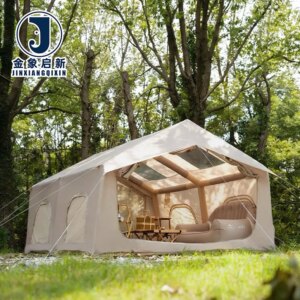
Camping Tent Inflatable UV Resistant Customizable Four-season Waterproof PVC Eco-Friendly Windproof Foldable Quick Automatic
Read more -
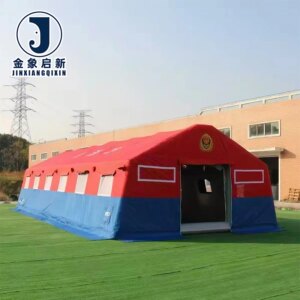
Inflatable PVC Camping Tent Four-Season Waterproof CE Certified Quick Automatic Opening 3000mm+ Factory Direct Sale
Read more