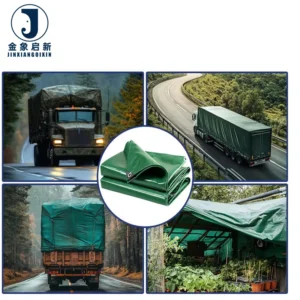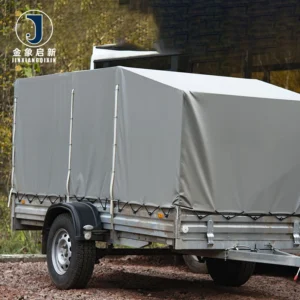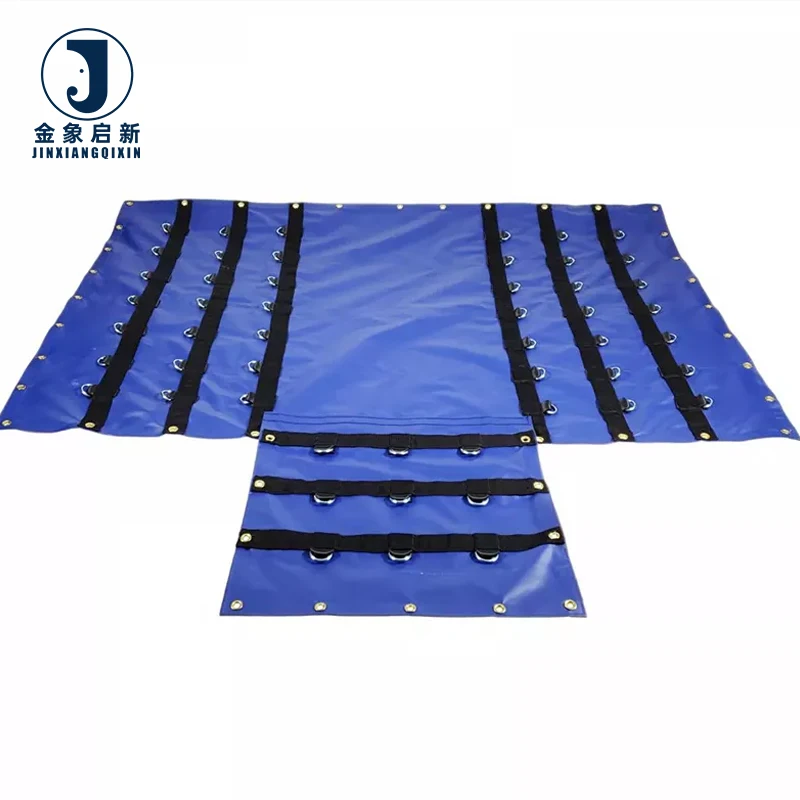
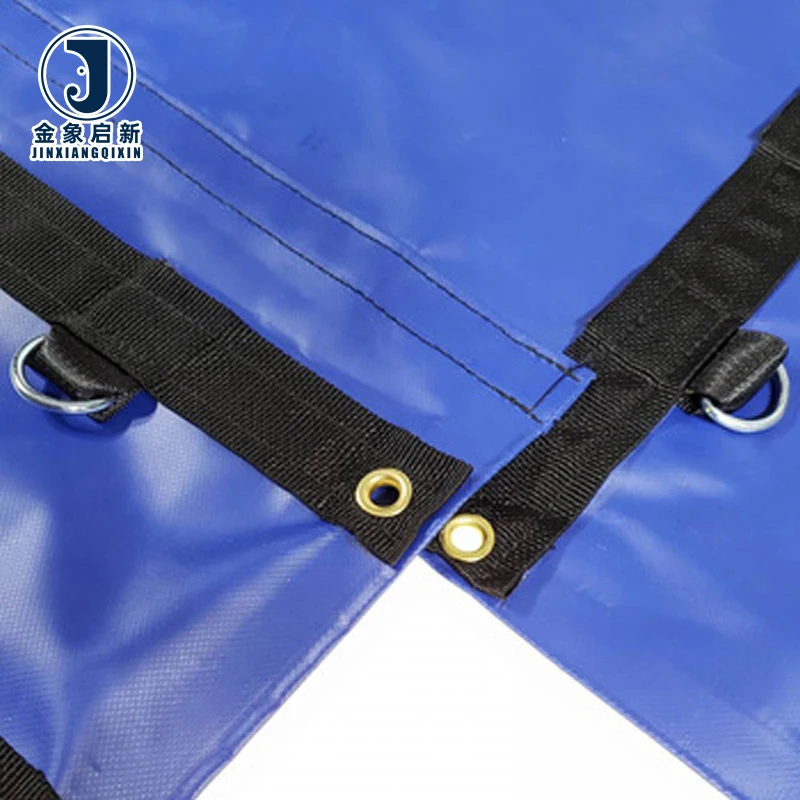
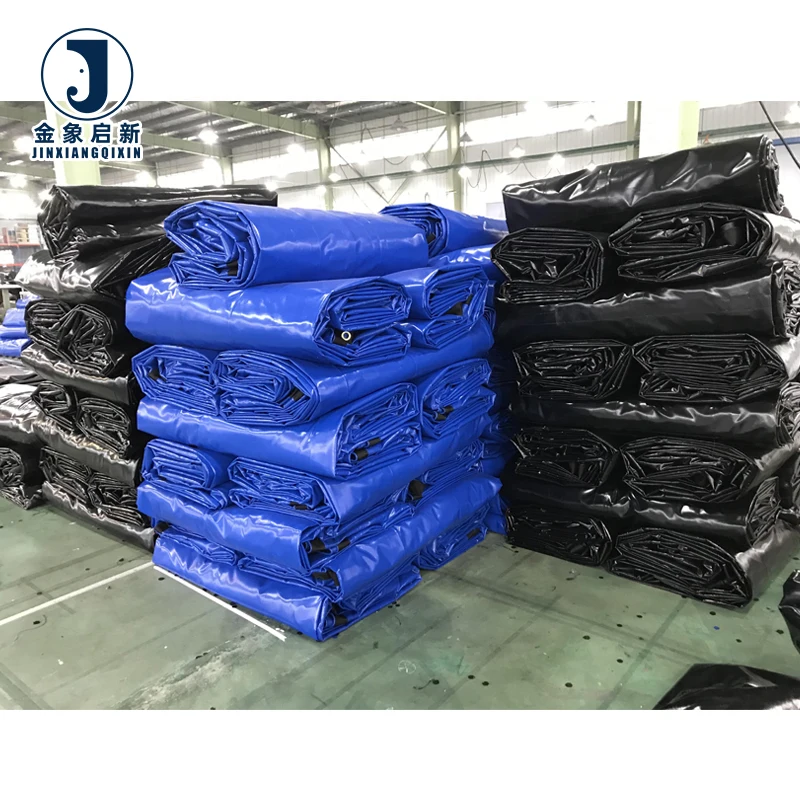
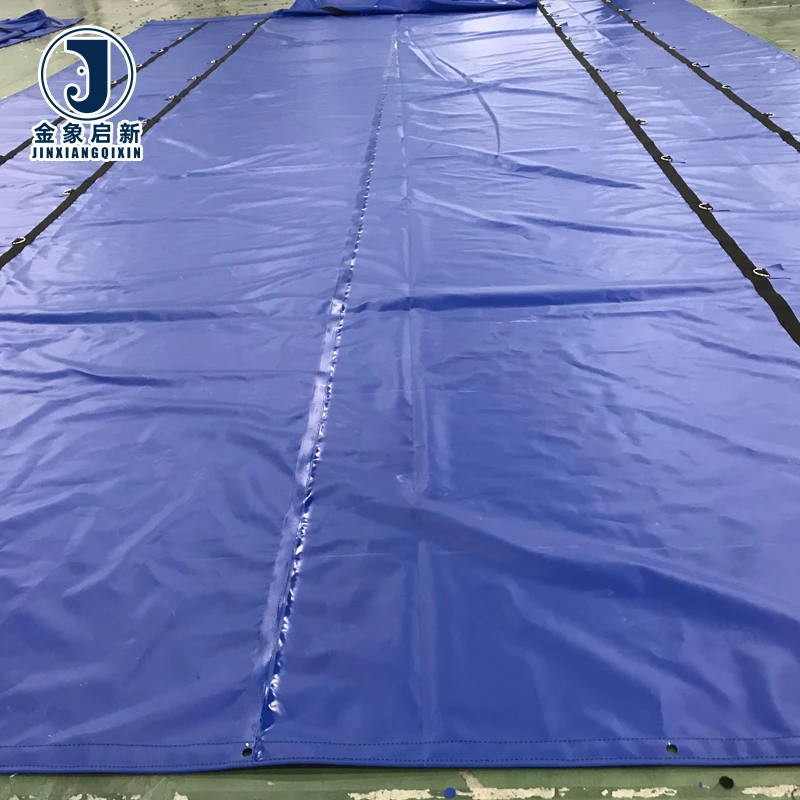
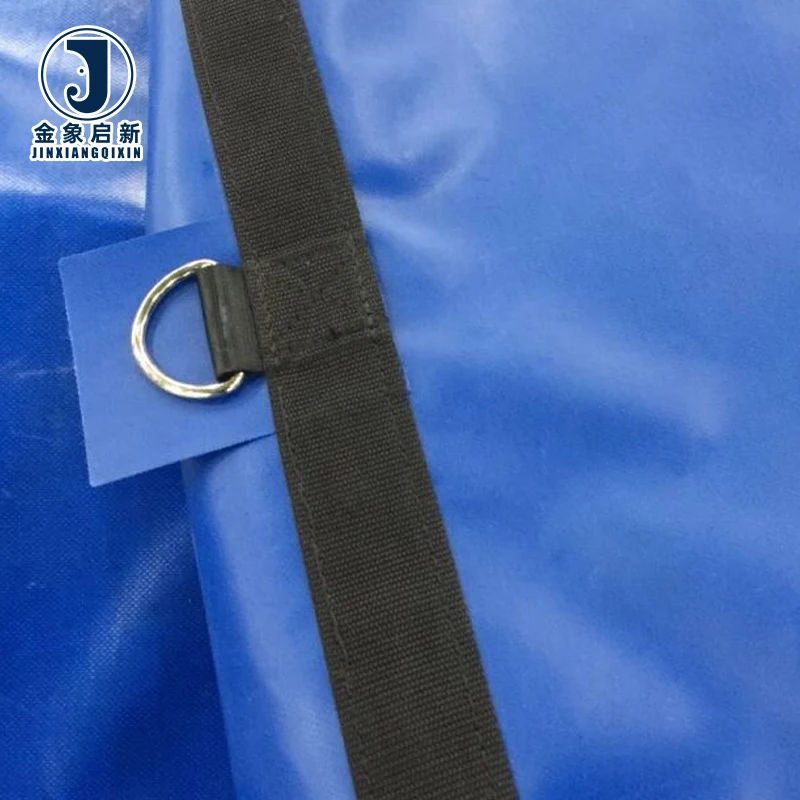
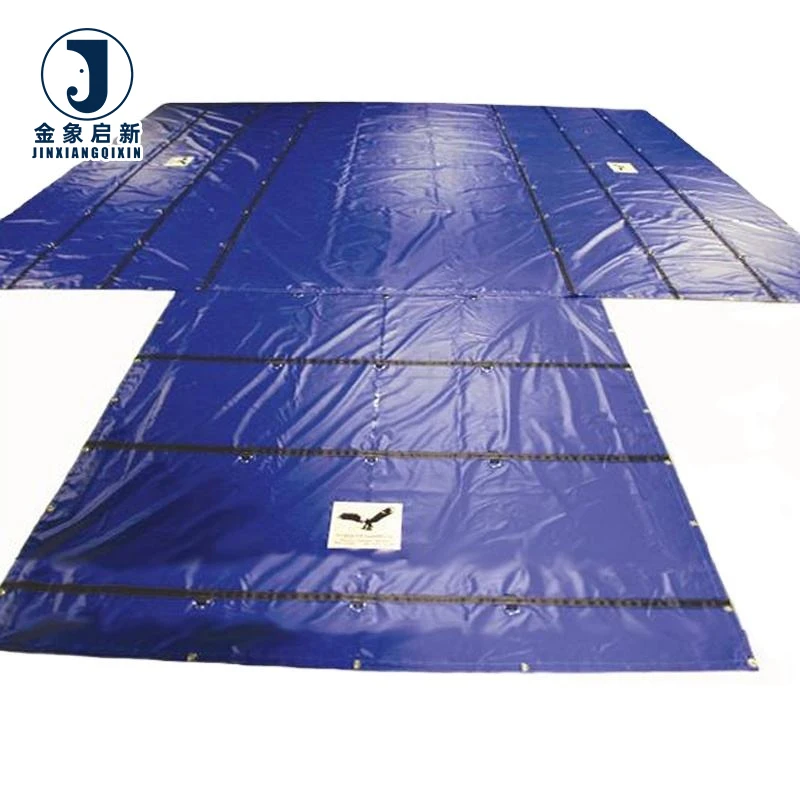
PVC Lumber Tarpaulin 24′ x 27′, 18 oz (610 gsm), 1000 x 1000D Base — with 8ft drop and 3 rows of D-rings for flatbed trailer loads.
- 1000D base fabric delivers tear resistance at flex points where loads shift under highway wind, while heat-welded seams outlast stitching at stress zones.
- Custom drop lengths and D-ring spacing match your trailer model, so every edge sits flush against stacked lumber or wall panels.
Supported by dedicated QA at every production stage with 100% pre-shipment inspection and material spec sheets verifying exact coating weight on delivery.
Description
Proven Coating Control — Nearly three decades of PVC formulation and coating weight management ensure each lumber tarpaulin leaves the facility with verified GSM and consistent adhesion across every panel.
Technical Specifications
| Parameter | Value |
|---|---|
| Product Type | PVC Truck Cover |
| Dimensions | 24′ x 27′ (with 8 ft drop) |
| Base Fabric | 1000D × 1000D polyester |
| Mesh Count | 20 × 20 |
| Coating Material | PVC |
| Weight | 610 gsm (18 oz) |
| Thickness Range | 0.70–1.0 mm |
| Temperature Range | -35 °C to 70 °C |
| Hardware | 3 rows of D-rings |
| Tensile Strength | Warp 2000–2500 N/5cm, Weft 1800–2200 N/5cm (family range — confirm grade) |
| Flame Retardant Grade | Grade not stated — available in flame retardant grades, confirm requirement |
| UV Treatment | Test basis not stated — UV treated options available, confirm for your market |
| Anti-Static | Not confirmed |
| Color Options | Black / Blue |
| Drop Options | 4 ft (tail flap), 6 ft and 8 ft (tail wing) |
| D-Ring Configuration | 3 rows on 6 ft and 8 ft drops; 2 rows on 4 ft drops |
Application Suitability
| Application | Exposure & Requirement |
|---|---|
| Flatbed lumber hauling | Rain ingress on stacked timber, UV degradation on long hauls, road debris abrasion on lower panels |
| Wall panel and building material transport | Tall load profiles requiring full 8 ft drop coverage, wind-driven rain at highway speed |
| Steel rod and pipe loads | 4-sided tarp configurations without flaps, metal edge abrasion at contact points |
| Nose tarp (smoke tarp) use | Exhaust soot and heat exposure on the front face of the load, wind whistling through pipe cargo |
Why Generic-Sized Tarps Fail on Your Specific Trailer Model
A lumber tarp that does not match your trailer’s drop length leaves the top two courses of stacked timber exposed to driving rain.
When a PVC truck cover manufacturer cuts to a generic 24′ x 27′ template without accounting for your trailer’s deck height and typical load profile, the result is predictable. The side panels ride up under crosswind, the tail flap falls short of the load base, and water channels down into the cargo. We have observed this pattern repeatedly across fleet operators who source standard-size tarps and then spend more time re-rigging than driving [NEED_CITE: common flatbed tarp failure modes in regional logistics surveys]. The solution is not a bigger tarp but a correctly measured one, developed as a sample to your exact drop, length, and tie-down layout before any production run begins.
Custom Drop Lengths and D-Ring Layouts by Trailer Model
Every flatbed trailer has a different deck height and load-bearing profile. This PVC lumber tarpaulin is produced with selectable drop lengths — 4 ft with a tail flap for lower-profile steel loads, or 6 ft and 8 ft with tail wings for stacked lumber and wall panels. The D-ring configuration adjusts accordingly: three rows on the deeper drops to distribute tie-down tension across the high-flex zone where the tarp wraps the load edge, and two rows on the 4 ft option where leverage forces are lower. As a PVC truck cover manufacturer working from pattern-level specifications, we develop a physical sample to your trailer dimensions so the fit is confirmed before the production order is cut.
Weld Integrity at the Tie-Down Stress Points
The most common failure point on a lumber tarp is not the fabric but the welded seam where D-rings are anchored. When a driver tensiones a strap over stacked timber, the force concentrates at the weld boundary, and if the heat-weld parameters were set for a lighter-grade material, the seam peels before the fabric reaches its tensile limit. Our production process calibrates weld temperature and dwell time to the 610 gsm PVC coating weight, ensuring the bond exceeds the base fabric strength [NEED_CITE: heat-weld adhesion testing methods for PVC coated textiles]. Each D-ring anchor point is reinforced with an additional layer of coated fabric, creating a load path that distributes strap tension across a wider area rather than a single weld line.
Reading the Specification Sheet Beyond GSM
The 1000D × 1000D base fabric with a 20 × 20 mesh count provides the structural skeleton of this tarpaulin. Denier alone does not determine performance — a 1000D yarn in a loose 9 × 9 weave would tear far more easily than the same yarn in this tighter 20 × 20 construction, because the dense mesh restricts tear propagation across the weave. The 610 gsm PVC coating weight fills and encapsulates that mesh, adding abrasion resistance and waterproofing while contributing to overall stiffness. A heavier coating on a lighter base fabric can feel substantial in hand but will split at the weave under tie-down tension, which is why the base fabric specification must always be evaluated alongside the coating weight. The stated tensile strength range of Warp 2000–2500 N/5cm and Weft 1800–2200 N/5cm reflects the combined contribution of both elements working together.
The Hidden Cost of Incorrect Specification Choices
Specifying a lighter-grade PVC to reduce unit cost often surfaces as a far larger expense downstream. A coating weight that falls below the stated GSM will flex and crack in cold weather long before a verified 610 gsm panel would, because the thinner PVC film has less plasticiser reserve to maintain flexibility at -35 °C. Similarly, colour inconsistency between rolls in the same shipment becomes visible the moment two tarps are deployed side by side on adjacent trailers — a cosmetic problem that prompts fleet operators to reject entire deliveries [NEED_CITE: batch colour variation complaints in coated fabric procurement]. Welded seams that fail at the tie-down points within the first season of use leave cargo exposed and generate insurance claims that dwarf any per-unit saving on the original purchase.
Why Procurement Teams Source This Tarp Here
Our 10-person R&D team handles material selection, pattern development, and custom sizing from initial enquiry through sample approval, so your D-ring layout and drop dimensions are locked in before production starts. Three full production lines and 36 sets of professional equipment support bulk capacity with consistent coating weight control across every roll in the order. Dedicated QA/QC operates at every production stage — coating adhesion, colour matching, weld strength, and hardware placement are all checked before the tarp leaves the line. A 100% pre-shipment inspection with documented records means you receive photographic evidence of D-ring placement and hem reinforcement before the shipment is released. Samples for custom sizing, colour confirmation, and D-ring configuration are developed within days, not weeks.
Documentation & Verification
- Material specification sheet stating confirmed 610 gsm and 1000D × 1000D base fabric for cross-check on receipt
- Pre-shipment inspection record covering D-ring placement, weld integrity, and hem reinforcement
- ISO and CE certificates accompanying every dispatch
- Certificate of origin and customs documentation for cross-border shipment
- Roll packing list with individual panel identification for fleet allocation
- Test report for UV or flame retardant grades where applicable and confirmed at order stage
Fabrication, Handling & Storage
- Heat-weld parameters must match the 610 gsm coating weight — lower settings risk incomplete bond at D-ring anchors
- Store rolled tarps on their cores horizontally to avoid crease marks that become permanent in cold conditions
- Clean with mild detergent only; aggressive solvents can degrade the PVC coating surface and reduce waterproofing
- Allow tarps to acclimatise to ambient temperature before unfolding in winter to prevent stiff-panel cracking
- Field repairs to minor punctures use PVC-compatible adhesive patches applied to clean, dry coating surfaces
- When cutting for custom fitment, seal all raw edges with PVC weld tape to prevent base fabric wicking
Request a Sample or Quotation
Provide your trailer model, typical load height, and the cargo type you haul most frequently so we can recommend the correct drop length and D-ring layout. If your operation spans regions with specific fire safety or environmental compliance requirements, include those standards in your enquiry. Let us know whether you need finished tarps cut to size or roll stock for your own fabrication line, and specify colour preferences and any branding requirements.
Frequently Asked Questions
Q: How can I verify the 610 gsm weight claim when the tarps arrive?
A: Every shipment includes a material specification sheet stating the confirmed GSM and base fabric construction. You can cross-check by cutting a measured sample from the delivered tarp and weighing it against the stated 610 gsm. We also conduct weight verification at our facility before dispatch and include the results in the pre-shipment inspection documentation.
Q: Can you match my existing tarp colour and D-ring layout?
A: Yes. Provide a physical sample or colour reference of your current tarp, along with your trailer dimensions and existing D-ring spacing. We develop a sample panel with the matched colour and hardware layout for your approval before commencing the full production run, ensuring roll-to-roll colour consistency across your fleet.
Q: What drop length suits my trailer and load type?
A: An 8 ft drop with tail wing suits stacked lumber and tall wall panel loads where full side coverage is required. A 6 ft drop works for mixed-height building materials. The 4 ft option with tail flap is intended for lower-profile steel and pipe loads. Send us your trailer deck height and typical cargo dimensions for a precise recommendation.
Q: What evidence is provided for UV treatment claims?
A: UV treated options are available, and the specific test basis depends on the grade selected for your market. State your regional compliance or performance requirement in the enquiry, and we will provide the applicable test report with the shipment documentation. Confirm the UV grade needed before placing the production order.
Q: Do you supply matching smoke tarps and steel tarps for mixed loads?
A: Yes. Alongside lumber tarpaulins, we produce nose tarps for exhaust and soot protection on the front face of loads, as well as flat steel tarps without drops for metal cargo. All are cut from the same PVC coated fabric range, so colour and weight remain consistent across your mixed tarp inventory.
Related products
-
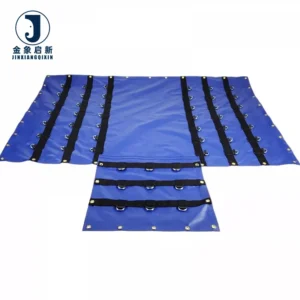
Heavy Duty 24′ X 27′ PVC Lumber Tarpaulin Waterproof 8ft. Drop with 3 Rows of D-Rings Coated and Woven Flatbed Tarps
¥190.00 Add to cart -
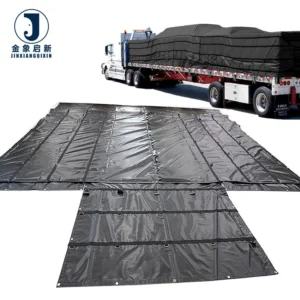
Factory Wholesale 14oz 18oz RipSTOP Flatbed Semi Truck Lumber Tarp with 8′ Drops 1PC 2PC 3PC Custom Waterproof Tarp
¥200.00 Add to cart -
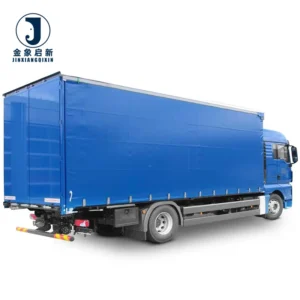
Custom PVC Tarpaulin Truck Cover for Trailer Side Curtain
Read more -
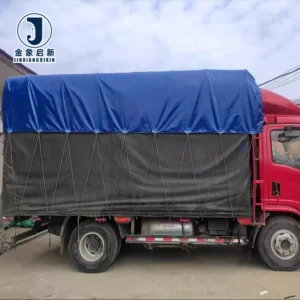
Heavy Duty Tent for Lorry/Laminated Sheet PVC/Vinyl Canvas Tarp for Truck Trailer
¥1.25 Select options This product has multiple variants. The options may be chosen on the product page