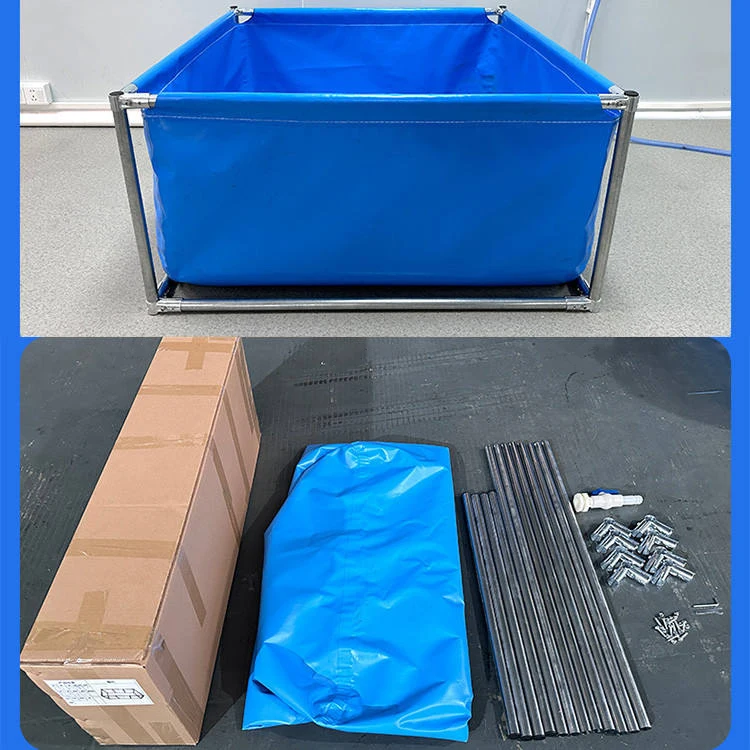
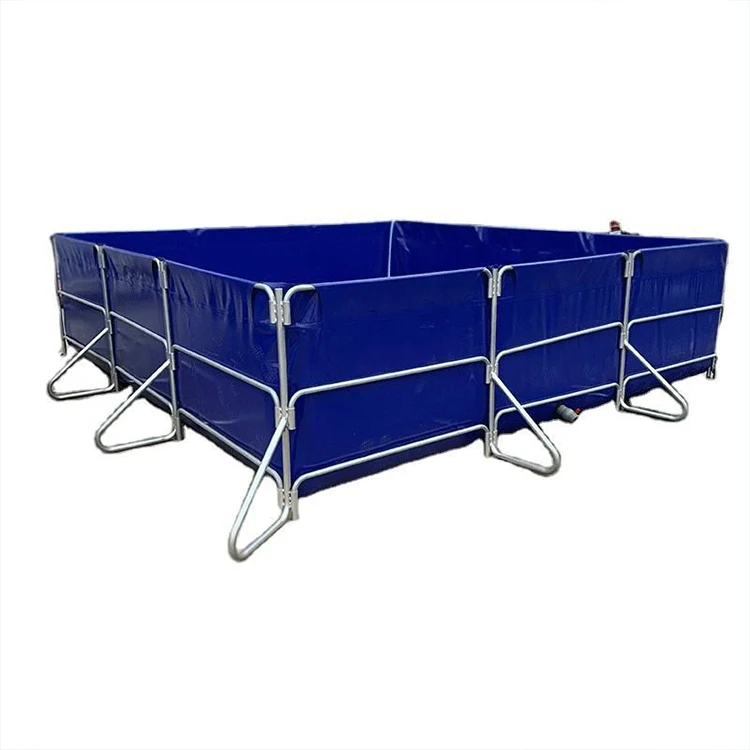
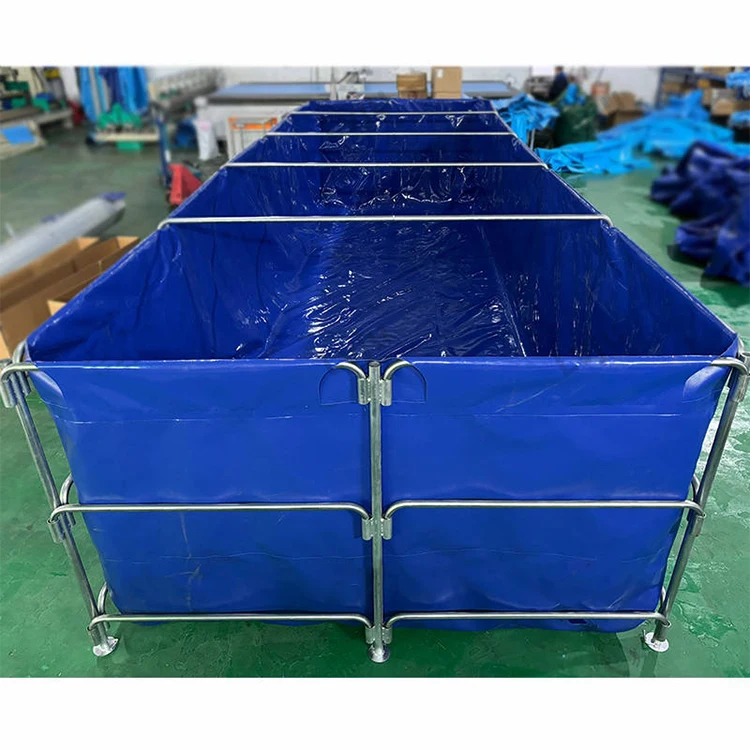
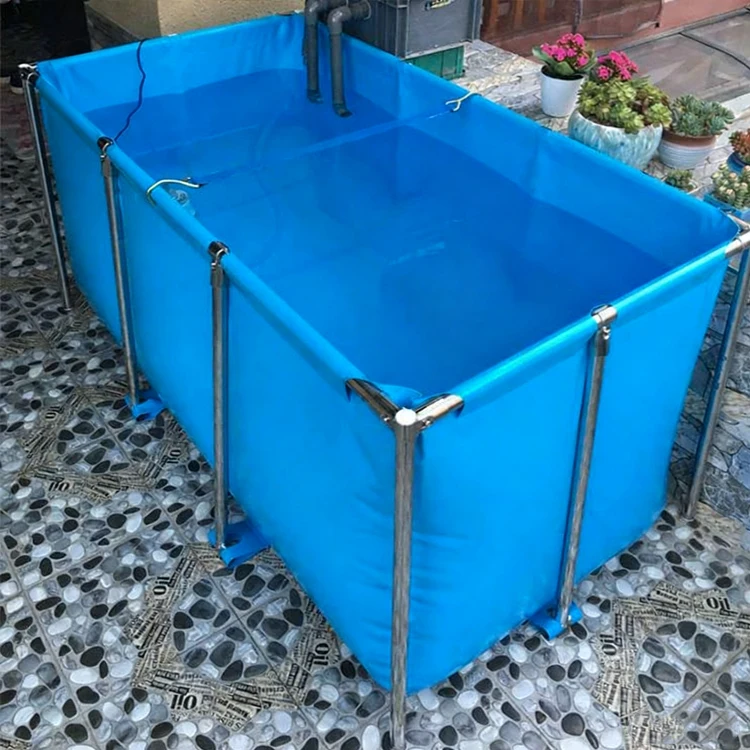
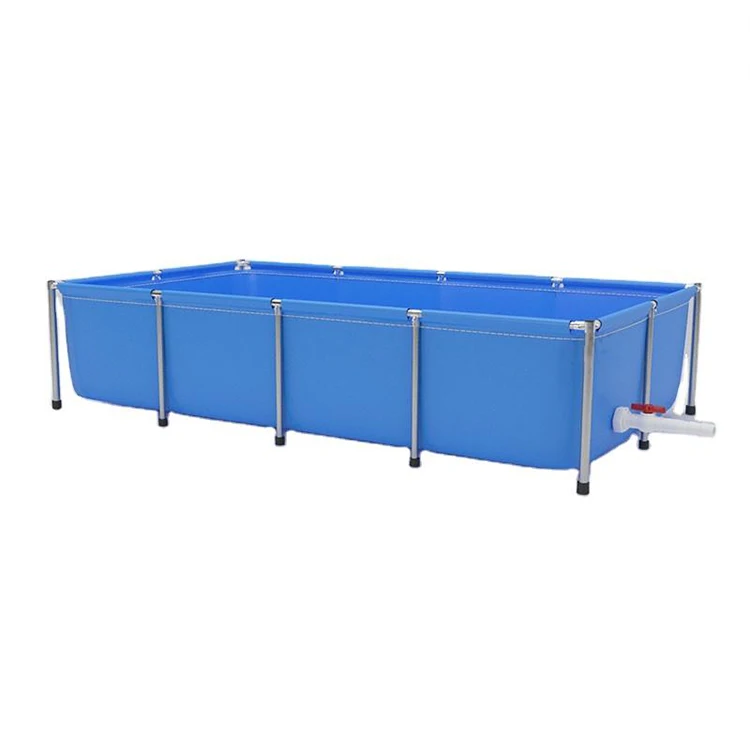
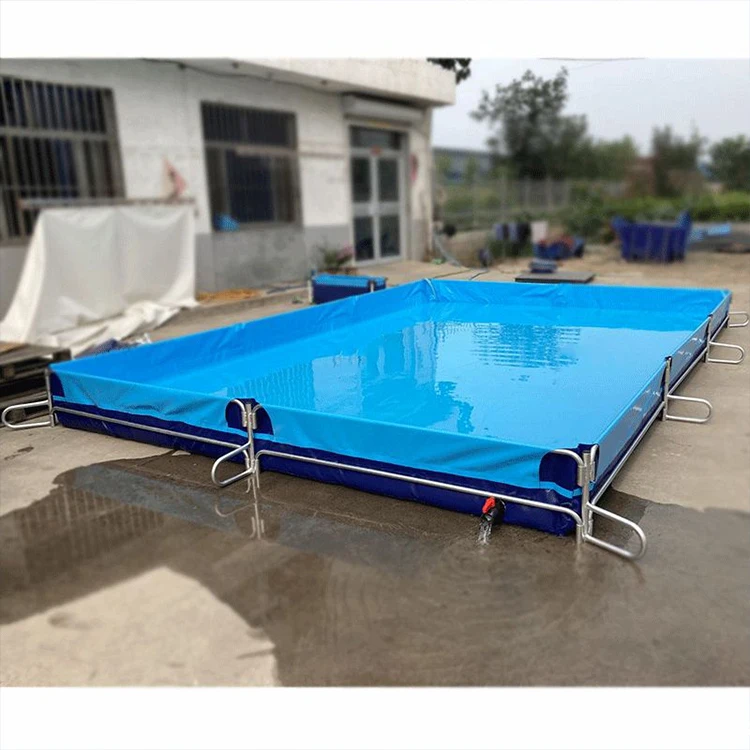
Foldable PVC Tarpaulin Fish Pond, Circular and Rectangular Shapes — heat-welded seam construction tested to hold under water load at flex points, with anti-UV treatment for sustained outdoor aquaculture exposure.
- Base fabric denier and PVC coating weight matched to pond depth and water pressure
- Custom sizing with eyelet and hem reinforcement for site-specific installation
- GSM and coating weight verified against material specification sheet before dispatch
Supported by dedicated QA/QC at every production stage with 100% inspection, three full production lines ensuring reliable on-time delivery, and samples developed within days for custom requirements.
Description
Proven coating adhesion control — nearly 30 years of PVC coating process refinement ensures every roll of fish pond tarpaulin leaves our Jinan facility with verified weight and consistent layer bonding.
Technical Specifications
| Parameter | Value |
|---|---|
| Product Type | PVC Tarpaulin Fish Pond |
| Shape Options | Circular / Rectangular |
| Structure | Foldable |
| Material | PVC Tarpaulin |
| Certification | ISO, CE |
Application Suitability
| Application | Exposure & Requirement |
|---|---|
| Aquaculture fish farming tanks | Continuous water immersion, biofouling contact, structural load from water volume |
| Fish breeding containment | Temperature fluctuation, UV exposure in outdoor hatchery sites, frequent draining and refilling |
| Temporary water containment | Rapid deployment and teardown, ground abrasion, puncture risk from subsoil debris |
| Agricultural pond lining | Long-term sun exposure, algae and chemical contact, soil settlement stress |
Why Seam Integrity Matters More Than Fabric Weight in PVC Tarpaulin Fish Ponds
A pond liner that fails at the weld is a total loss — the fabric itself rarely tears first.
I once tracked a batch rejection where the PVC tarpaulin fish pond material tested within GSM tolerance, yet the welded seams opened under hydrostatic pressure within weeks of filling. The coating formulation had shifted slightly between production runs, altering the heat-weld window without triggering a flag on the weight check [NEED_CITE: heat-weld compatibility and PVC plasticiser migration in coated fabrics]. Since then, we treat weld performance as a separate quality gate — not something you assume from a spec sheet number alone. When stocking circular or rectangular aquaculture tanks, the seam carries the full water load at every fold and corner, and that is where most containment failures originate in the field.
Designing the Foldable Structure Around Water Load
A foldable PVC tarpaulin fish pond must hold its geometry under the lateral pressure of thousands of litres of water without the panels creeping or the base lifting at the edges. The circular option distributes load evenly around the circumference, reducing point stress on any single weld line. The rectangular configuration demands reinforced corner welds where two seam lines intersect, since that junction sees compounded tension when the pond is full. We configure the panel layout and weld sequence based on which shape you specify, so the finished pond stands true without external bracing beyond a basic frame.
Matching PVC Tarpaulin Fish Pond Material to Site Conditions
Outdoor aquaculture sites expose containment fabric to sustained UV radiation, temperature swings between day and night, and biological growth that can degrade unprotected surfaces. The PVC tarpaulin fish pond material we supply is available with anti-UV treatment — confirm the UV grade required for your climate zone and expected exposure duration before placing your order. For sites where the pond sits on uneven or stony ground, we recommend specifying a higher denier base fabric to resist puncture during installation and throughout the stocking cycle [NEED_CITE: puncture resistance test methods for flexible pond liners].
Reading the Spec Sheet Beyond the GSM Number
GSM tells you the total coated weight per square metre, but it does not reveal how that weight is distributed between the base fabric and the PVC coating layers. A sheet with a heavy coating over a light base fabric may show the target GSM yet lack the tensile backbone to resist tearing when the pond is dragged into position or when fish stock is harvested with nets. Conversely, a dense base fabric with thin coating may have strong tear resistance but insufficient waterproofing at the yarn intersections. The balance between denier, weave density, and coating thickness determines whether the material performs as a reliable containment barrier or becomes a liability mid-season. Coating adhesion — how firmly the PVC bonds to the woven scrim — directly affects heat-weld strength, since a poorly bonded layer will delaminate at the weld zone before the fabric itself reaches its breaking point [NEED_CITE: coating adhesion and peel strength testing per ISO 2411].
The Hidden Cost of Skipping Pre-Shipment Weld Verification
We have seen aquaculture operators receive full container loads of pond liners where the fabric weight matched the purchase order, yet the welded seams separated during the first fill cycle. The root cause was a coating batch variation that changed the optimal welding temperature by a narrow margin — enough to produce a visually clean weld that had not fully fused at the molecular level. By the time the leak appeared, the ponds were stocked, and draining meant losing an entire grow cycle. That kind of loss does not show up on a GSM certificate [NEED_CITE: weld integrity failure modes in PVC coated fabric containment]. Colour variation between panels in the same order is another field-level problem; when two panels of visibly different shade are welded side by side in a visible pond installation, the customer flags the entire batch even though the material is technically sound.
What Our Production Process Brings to Your Pond Liner Order
Three full production lines and 36 sets of professional equipment give us the capacity to run your PVC tarpaulin fish pond order on schedule without squeezing it between unrelated jobs. The 10-person R&D team handles custom sizing and panel layout, developing samples within days so you can verify fit and weld behaviour before committing to bulk. Dedicated QA/QC runs at every production stage — not just a final visual check — meaning coating weight, colour consistency, and weld test panels are reviewed before the material reaches the packing area. Every roll and finished panel undergoes 100% inspection before dispatch, backed by a pre-shipment inspection record you receive with your documentation set. We have supplied foldable pond liners to aquaculture operations across more than 20 countries, adapting panel dimensions and reinforcement details to each site’s frame system and stocking density.
Documentation & Verification
- Material specification sheet confirming PVC coating type, base fabric denier, and verified GSM for your pond liner order
- UV and flame-retardant test reports supplied where applicable, matched to the treatment grade specified
- Pre-shipment inspection record covering weld integrity, panel dimensions, and surface quality for every pond unit
- Colour consistency verification across all panels within the same foldable pond order before packing
- Roll and panel packing list with gross and net weights for customs and freight planning
- Certificate of origin and customs documentation support for your destination market
Fabrication, Handling & Storage
- Heat-weld temperature and dwell time must match the specific PVC coating formulation on your pond panels — request our weld parameter sheet before fabrication
- Reinforced hems on foldable pond edges should be double-layer welded to distribute frame-rail contact load across a wider PVC coating zone
- Store folded pond panels flat and avoid stacking heavy items on top to prevent permanent crease marks in the PVC coating
- Deploy the PVC tarpaulin fish pond above minimum recommended temperature to avoid coating stiffness that risks cracking at fold lines during unfolding
- Clean biological growth with pH-neutral agents only — aggressive solvents will attack the plasticiser in the PVC coating and reduce seam flexibility
Getting Your Specification Right Before Production
Tell us the intended pond dimensions, water depth, and whether the installation is on prepared ground or an existing frame. Share your site’s typical sun exposure and temperature range so we can recommend the appropriate anti-UV treatment grade. If you need custom panel sizes beyond standard roll widths, send us the layout drawing and we will return a cutting plan with seam positions and material utilisation figures. Specify whether you need finished, welded ponds or flat sheets for your own fabrication line, and request a sample panel if weld compatibility with your existing equipment needs confirming.
Frequently Asked Questions
Q: What GSM and coating weight is recommended for my pond depth?
A: Deeper ponds exert higher hydrostatic pressure on the base and side walls, requiring a denser base fabric rather than simply a heavier coating. We match the base fabric denier and PVC coating thickness to your stated water depth and frame type, then verify the combined GSM against the material specification sheet before production. Send us your pond dimensions and target depth so we can recommend the correct construction.
Q: Can you supply custom dimensions beyond standard roll widths?
A: Yes. Our R&D team develops custom panel layouts for both circular and rectangular foldable ponds, welding multiple panels where the required diameter or length exceeds a single roll width. We provide a cutting plan showing seam positions so you can evaluate structural integrity and material utilisation before approving the sample. Turnaround on custom-sized samples is typically within days.
Q: How are the seams welded and tested for water-tightness?
A: Seams are heat-welded using parameters matched to the specific PVC coating formulation on your pond panels. We run test welds from each production batch and perform peel and tear checks at the weld zone to confirm the bond strength meets or exceeds the base fabric strength. A weld integrity record is included in your pre-shipment inspection documentation.
Q: What anti-UV or anti-leak treatments are available and certified?
A: We offer PVC tarpaulin fish pond material with anti-UV treatment in grades suited to different climate zones and exposure durations. Confirm the UV stability grade required for your market before ordering, and we will supply the corresponding test report. Anti-leak performance is achieved through the double-side PVC coating construction itself — verified by hydrostatic testing on finished welded panels.
Q: How do you ensure colour consistency across multiple panels in one order?
A: Every panel in your PVC tarpaulin fish pond order is checked against the approved colour reference under controlled lighting before packing. Panels destined for the same pond are grouped and compared side by side to catch any shade drift between production runs. The pre-shipment inspection record documents the colour verification result for your batch.
Related products
-
Foldable Circular Rectangular PVC Tarpaulin Fish Pond Tarpaulin for Fish tank
¥0.53 Select options This product has multiple variants. The options may be chosen on the product page -
Custom Made PVC Fish Pond Liner for Aquaculture – Full Range
Read more -
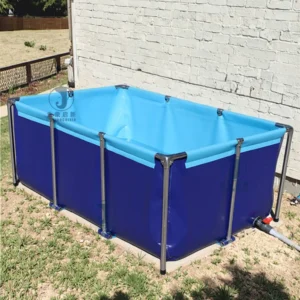
PVC Tarpaulin Roll for Fish Pond – Custom Made
Read more -
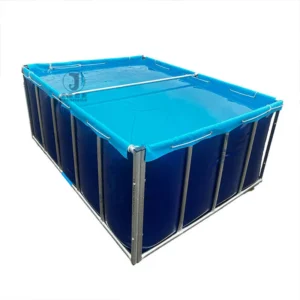
Coated PVC Laminated Tarpaulin Above Ground Swimming Pool Metal Frame High Tensile Foldable Tarp
¥1.00 Select options This product has multiple variants. The options may be chosen on the product page