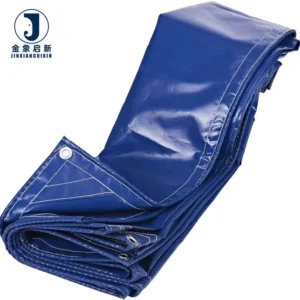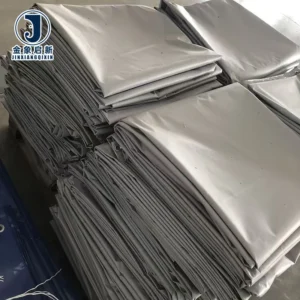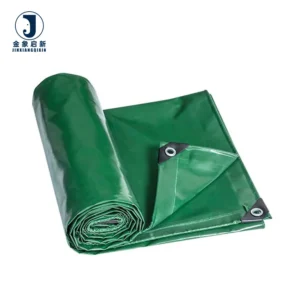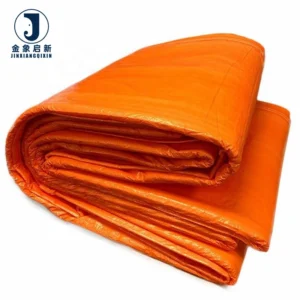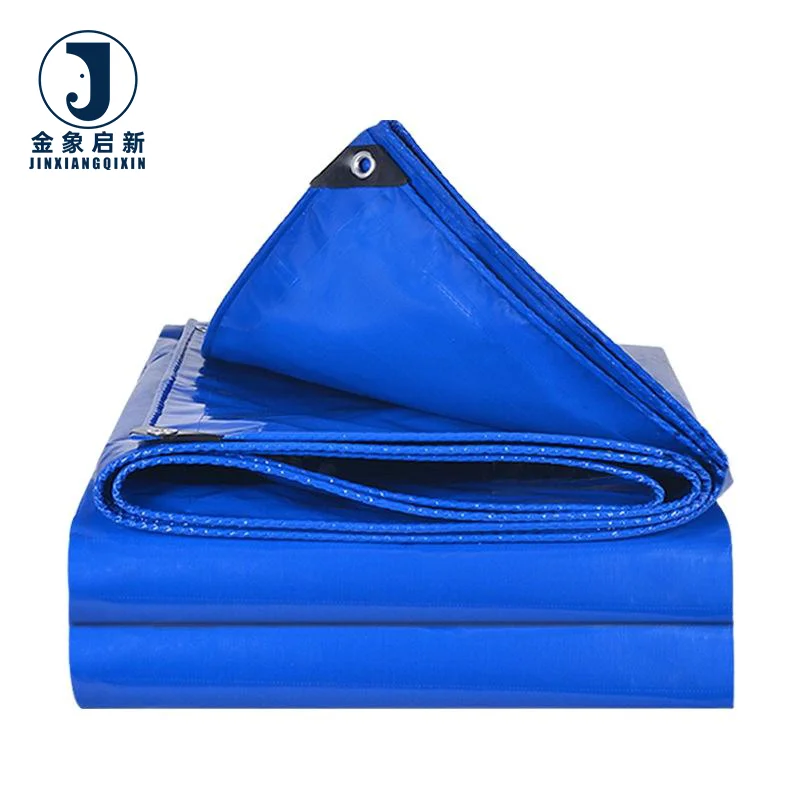
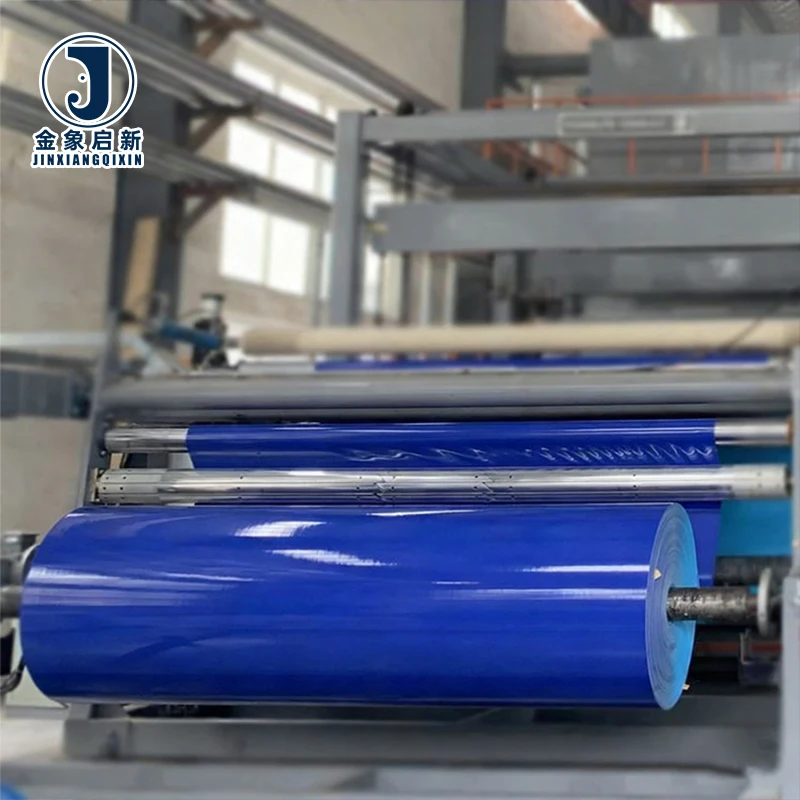
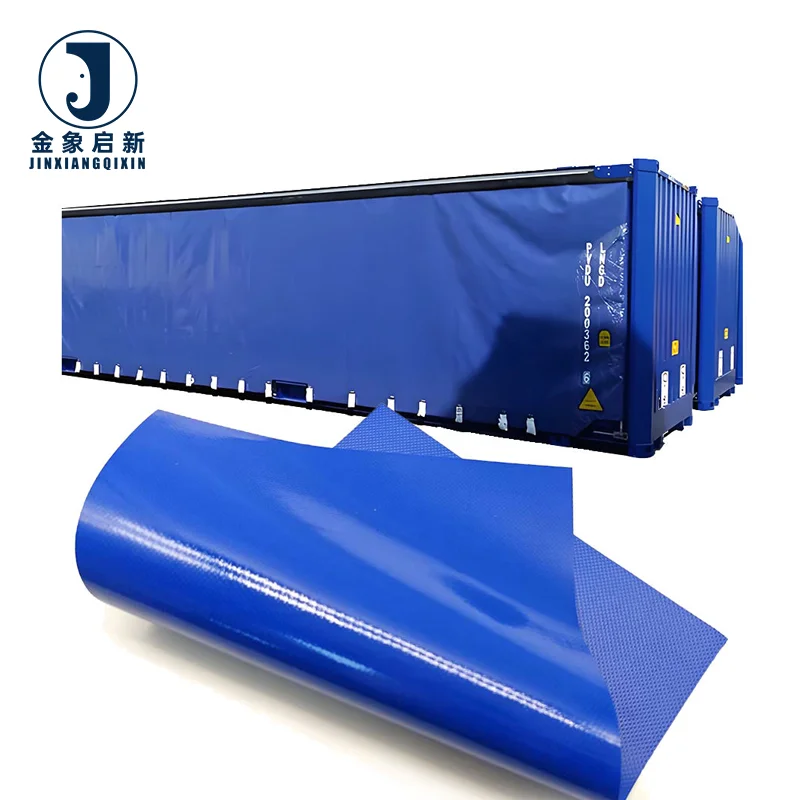
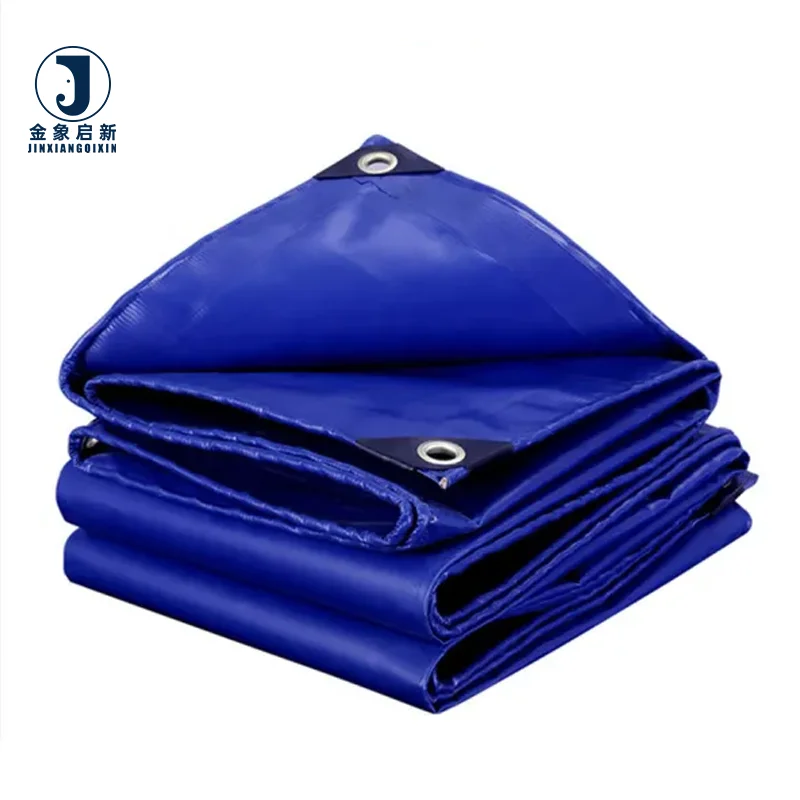
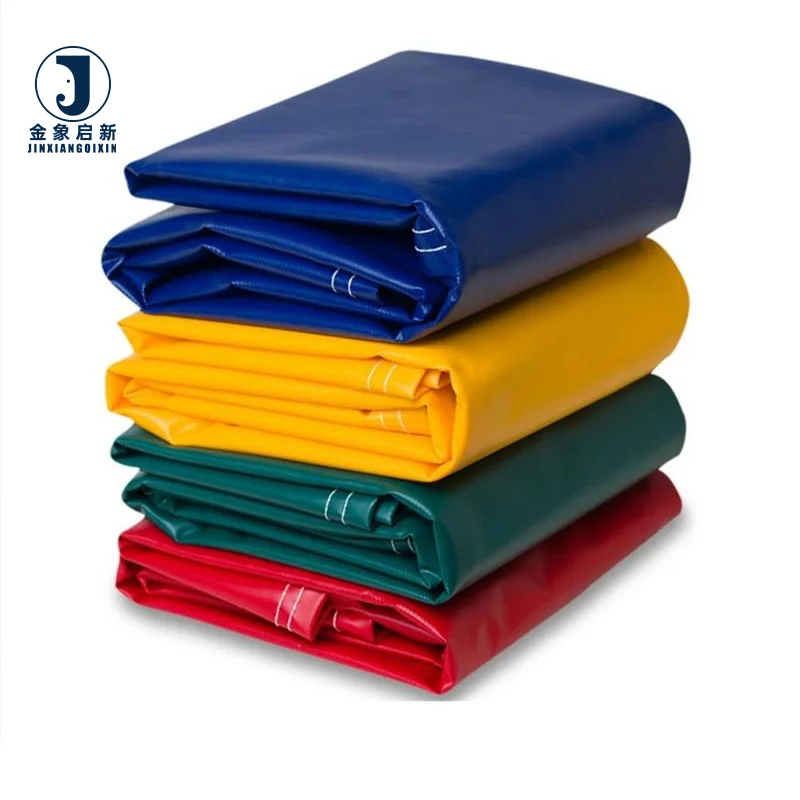
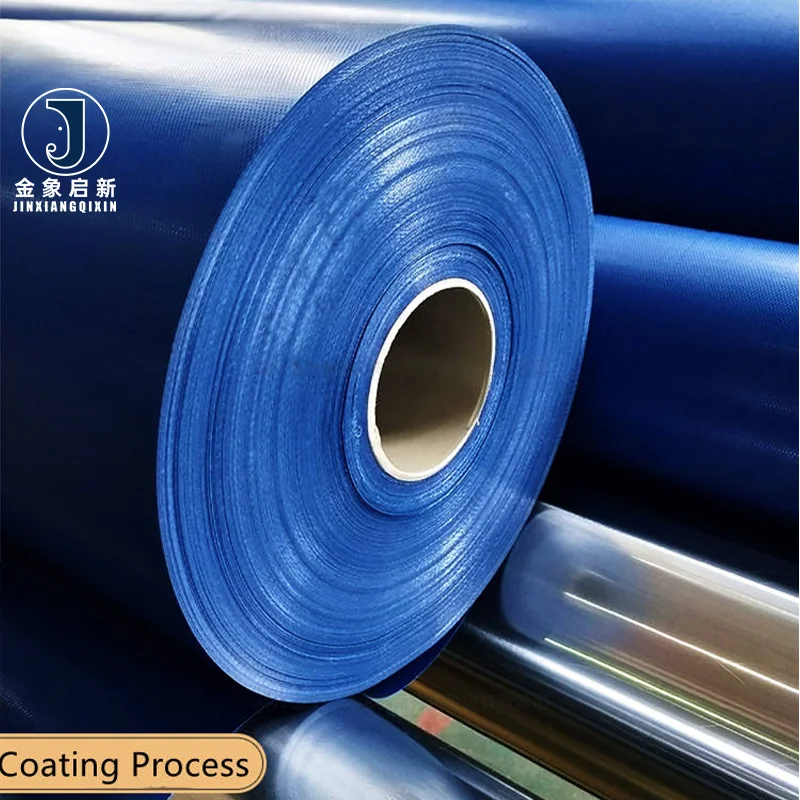
PVC Coated Tarpaulin, 350–750gsm, Hot-melt Coated, 2m Width — high-strength polyester mesh base with glossy or matte surface for poultry curtains and agricultural covers.
- Laminated and hot-melt coating delivers reliable adhesion strength and cold-crack resistance across temperature ranges.
- Custom width, colour, eyelets, reinforced hems and pattern printing available within a single production run.
- Roll stock and finished cut sizes supplied together, eliminating cross-batch colour variation.
Dedicated QA at every stage with 100% pre-shipment inspection, supported by a 10-person R&D team handling material selection and sample development within days.
Description
Deep Process Control — Every roll is weighed and verified against the stated GSM on the production floor, ensuring the PVC coated tarpaulin aftermarket supplier delivers exactly what the spec sheet says.
Technical Specifications
| Parameter | Value |
|---|---|
| Product Type | PVC Coated Tarpaulin |
| Base Material | High-strength polyester mesh fabric |
| Weight Range | 350 gsm / 420 gsm / 500 gsm / 550 gsm / 600 gsm / 750 gsm |
| Thickness Range | 0.32 mm / 0.35 mm / 0.4 mm / 0.45 mm / 0.5 mm / 0.65 mm |
| Coating Technology | Laminated technology & Hot-melt Coating technology |
| Surface Finish | Glossy Surface / Matt Surface |
| Colour Options | Blue / Red / Yellow / Light blue / Grey (Customized) |
| Roll Dimensions | 2 m width × 75 m length / 2.1 m width × 50 m length |
| Finished Sizes | Custom items as per customer’s needs or sold by inventory |
| Key Features | Waterproof, Sunproof, Cold Crack Resistance, Anti-Mildew, Anti-Static treatment |
| Service Life | 3-7 years under normal circumstances |
| Standards | ISO, CE |
Application Suitability
| Application | Exposure & Requirement |
|---|---|
| Poultry coop curtains | Daily roll-up friction, ammonia-rich air, light control, thermal regulation, frequent washing |
| Agricultural covers | Rain saturation, UV exposure, wind load, contact with organic matter and fertilisers |
| Construction covers | Abrasion from scaffolding and tools, puncture from sharp debris, prolonged sun exposure |
| Temporary industrial tarp covers | Chemical splash, heavy equipment contact, dust containment, variable weather |
| Equipment covers | Standing water, UV degradation, dust ingress, mechanical abrasion from wind flap |
| Scaffolding enclosure | High wind load, tearing at tie-off points, UV exposure, debris impact |
| Truck awning | Road vibration, flexing at bow supports, UV and rain exposure, fuel and exhaust contact |
Why Stated GSM Without Verification Leads to Cover Failure
A quoted weight means nothing unless every roll is physically checked before it leaves the factory floor.
When a PVC coated tarpaulin aftermarket supplier ships fabric that tests lighter than the agreed GSM, the consequences rarely show up on day one. The material feels thinner during installation, but it is only after weeks of wind load or daily roll-up cycles that the shortfall reveals itself. Seams start to separate at stress points. The base fabric tears along the warp where the coating adhesion is weakest. For poultry curtains, a lighter fabric means less thermal mass and poor temperature control inside the coop [NEED_CITE: relationship between coating weight and thermal insulation in agricultural fabrics]. In transport covers, insufficient GSM translates to early failure at the flex points where the load shifts. The financial loss extends well beyond the fabric cost — rejected shipments, return freight, and a buyer who will not place a second order.
The Full Catalogue Advantage for Buyers Sourcing Multiple Formats
Sourcing roll stock from one mill and finished cut sizes from a converter creates an inherent problem: the base fabric batch and coating run differ between the two, producing visible shade variation once installed side by side. Our PVC coated tarpaulin aftermarket supplier model keeps roll stock and custom cut sizes on the same production lines. The same coating bath and the same polyester mesh feed both formats, so a buyer ordering stock rolls for warehouse inventory and finished curtains for immediate deployment gets consistent colour, weight, and surface finish across the entire shipment. This eliminates the mismatch that forces contractors to segregate panels or request partial replacements mid-project.
How Coating Technology Defines the Fabric’s Working Behaviour
The choice between laminated and hot-melt coating technology is not just a manufacturing detail — it determines how the PVC bonds to the polyester mesh at a molecular level [NEED_CITE: coating adhesion mechanisms in PVC tarpaulin production]. Laminated construction sandwiches the base fabric between two PVC films under heat and pressure, producing a smooth surface on both sides that resists dirt accumulation and cleans easily. Hot-melt coating drives liquid PVC into the weave structure, creating a mechanical lock that delivers higher peel strength and superior performance at the weld line. For applications where the fabric will be heat-welded into large panels — such as truck awnings or construction enclosure — the hot-melt variant reduces the risk of seam delamination under load. Both technologies are available across the full GSM range, allowing the specification to match the fabrication method rather than the other way around.
Reading the Specification Sheet Beyond the Weight Number
The GSM figure tells you how much coating has been applied per square metre, but it does not tell you how that weight is distributed or what base fabric carries it. A 550 gsm fabric built on a low-denier, open-weave mesh will behave very differently from the same weight on a high-tenacity, tight-weave polyester. The tight weave provides more yarn intersection points per centimetre, distributing tear forces across a wider area and slowing tear propagation once initiated. Thickness, measured independently of weight, indicates the total caliper of the coated fabric and correlates with stiffness — a 0.65 mm material handles and installs differently from a 0.35 mm one, even if both carry the same GSM. Surface finish adds another layer: a glossy surface sheds water and dirt more readily, while a matt surface provides better grip during handling and reduces glare in bright sunlight. Cold crack resistance becomes critical for poultry curtains in colder climates, where the fabric must flex at low temperatures without the PVC turning brittle. Anti-mildew treatment protects the fabric in the high-humidity environment inside a coop, where organic matter and moisture create ideal conditions for fungal growth [NEED_CITE: anti-mildew treatment standards for PVC coated fabrics in agriculture].
What Happens When the Wrong Grade Reaches the Site
Specifying a PVC coated tarpaulin by price per kilogram alone invites a specific category of failure. The lighter grade arrives, installs correctly, and performs adequately through the first season. Then the coating begins to chalk and micro-crack under UV exposure. The base fabric, which was never designed for the mechanical load of daily curtain operation, starts to fray at the hem line. In a poultry operation, this means replacing curtains mid-cycle — a disruption that stresses the birds and drops production [NEED_CITE: impact of curtain replacement timing on poultry production cycles]. For construction enclosure, a fabric that was specified at 350 gsm when the wind load calculation required 600 gsm will billow and tear at the grommet points during the first storm. The cost of the replacement fabric is minor compared to the site downtime, the safety incident report, and the contractor’s damaged reputation with the project owner.
Why Production Control Matters More Than Factory Size
Three full production lines with 36 sets of professional equipment mean that a custom colour run does not displace a stock order — both can run simultaneously without lead-time compromise. The 10-person R&D team develops samples within days when a buyer needs a specific shade, width, or surface treatment validated before committing to a bulk order. Dedicated QA/QC at every production stage catches coating weight drift before a full roll is produced, not after it has been wound and packed. The 100% pre-shipment inspection means every roll is unspooled, weighed, and visually checked for colour consistency against the approved reference sample. ISO and CE certification underpins the quality system, but the practical proof is in the inspection record that ships with every container.
Documentation & Verification
- Material specification sheet listing exact GSM, base fabric denier, coating type, and colour reference code
- Test reports for UV stability and flame retardancy provided when these treatments are specified on the order
- Pre-shipment inspection record with measured weight per roll logged against the quoted GSM
- Roll packing list with individual roll numbers, dimensions, and net weight for container loading verification
- Certificate of origin and customs documentation prepared to match the destination country’s import requirements
Fabrication, Handling & Storage
- Hot-weld temperature must match the coating technology — hot-melt coated rolls tolerate higher weld heat than laminated grades
- Reinforced hems should be folded and welded at least 50 mm wide on 550 gsm and above to distribute grommet pull-out forces
- Store rolls horizontally on a flat rack; standing rolls on end causes permanent edge deformation on 0.5 mm and thicker grades
- Unroll glossy surface variants slowly in cold weather to avoid surface micro-cracking before the PVC reaches ambient temperature
- Clean matt surface fabric with mild detergent only; solvent-based cleaners can soften the PVC coating and reduce adhesion strength
- Cut panels from 2.1 m wide rolls should be nested to minimise off-cuts, especially when ordering custom finished sizes
Before You Request a Quotation
Provide the end-use application and the environmental conditions the fabric will face — including temperature range, exposure to chemicals or organic matter, and mechanical load type. Specify whether you need roll stock for your own fabrication or finished cut sizes with hems and eyelets. If your project requires a specific colour match or printed branding, share the Pantone or RAL reference and the print area dimensions so the sample can be developed accurately before bulk production begins.
Frequently Asked Questions
Q: What GSM and thickness grade fits my application?
A: Lighter grades from 350 gsm to 420 gsm suit temporary covers and indoor partitioning where flex life and low weight matter. Mid-range grades at 500 gsm and 550 gsm handle agricultural curtains and equipment covers with daily operation. Heavy-duty grades at 600 gsm and 750 gsm are specified for truck awnings, construction enclosure, and permanent outdoor structures where wind load and abrasion resistance are the priority.
Q: Can I order custom width, colour, and finished sizes in one shipment?
A: Yes. Roll stock and finished cut sizes run on the same production lines, so a single container can carry stock rolls for your warehouse alongside custom-coloured finished curtains. This ensures batch-to-batch colour consistency across all formats and eliminates the shade mismatch that occurs when sourcing from separate suppliers.
Q: How do you verify GSM and treatment claims before dispatch?
A: Every roll is weighed and measured during the pre-shipment inspection, with actual values recorded on the inspection report. For UV and flame-retardant treatments specified on the order, test reports from the production batch are included with the shipping documentation so you can verify compliance against your market requirements.
Q: What is the lead time for custom sizes and colours?
A: Custom colours and widths require sample approval before bulk production, adding a brief development phase to the schedule. Once the sample is approved, production runs on the same lines as stock material. Exact lead times depend on order volume and the current production queue — confirm timing at the quotation stage.
Q: Do you supply roll stock and finished cut sizes from the same production line?
A: All formats are produced in-house across three full production lines. Roll stock, custom-width rolls, and finished cut sizes with hems and eyelets all originate from the same coating bath and base fabric batch, guaranteeing consistent weight, colour, and surface finish throughout your entire order.
Related products
-
Pvc Plastic Canvas Strong Waterproof PVC Tarpaulin HDPE Coated Tarpaulin
¥1.80 Select options This product has multiple variants. The options may be chosen on the product page -
630 Gsm Blue/Grey/Orange Pvc Tarpaulin Roll Pvc Tarpaulin Truck Tarpaulin Pvc Coated Tarpaulin
¥1.66 Add to cart -
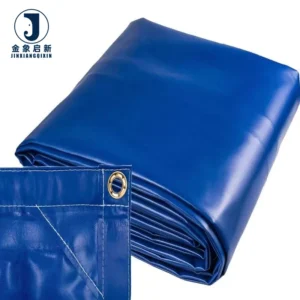
Heavy Duty Outdoor Tarpaulin Thickened for Outdoor Waterproof Large Tarpaulin with 3 Meter Width
¥7.78 Add to cart -
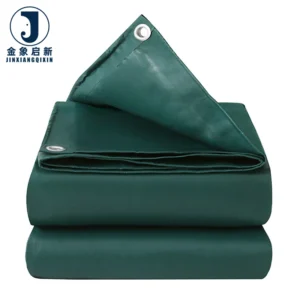
Secure Green PVC Coated Blackout Tarpaulin Truck Tent Cover Anti-Aging Waterproof Folding Design Breathable Woven Technics
¥0.83 Select options This product has multiple variants. The options may be chosen on the product page