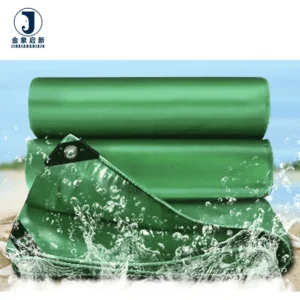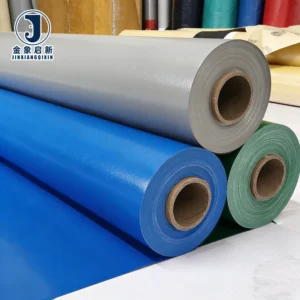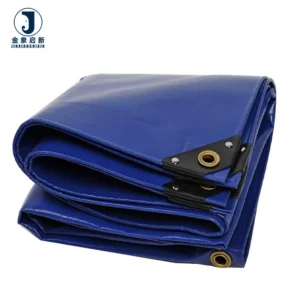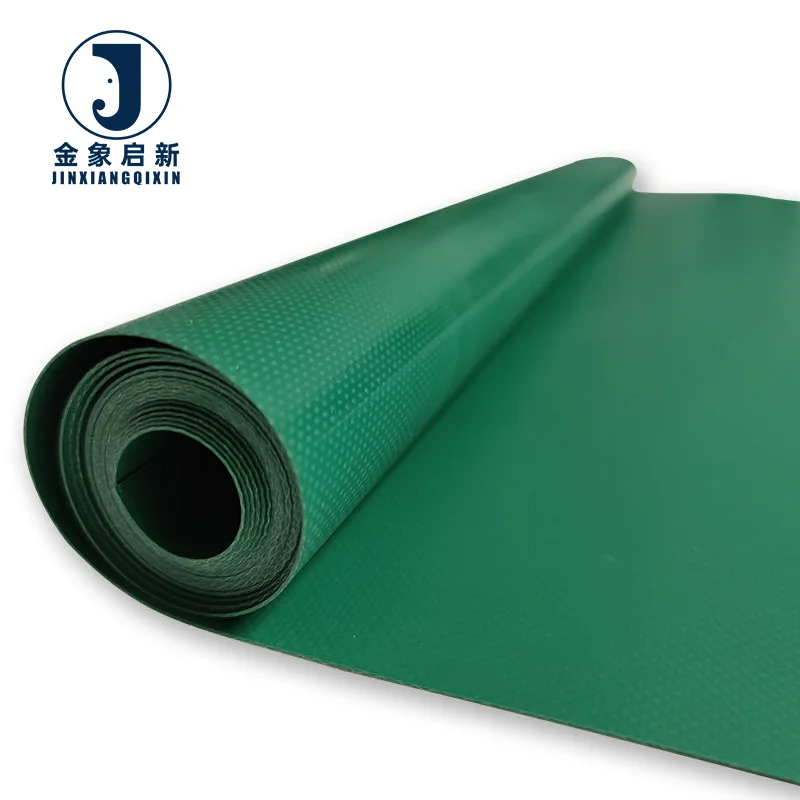
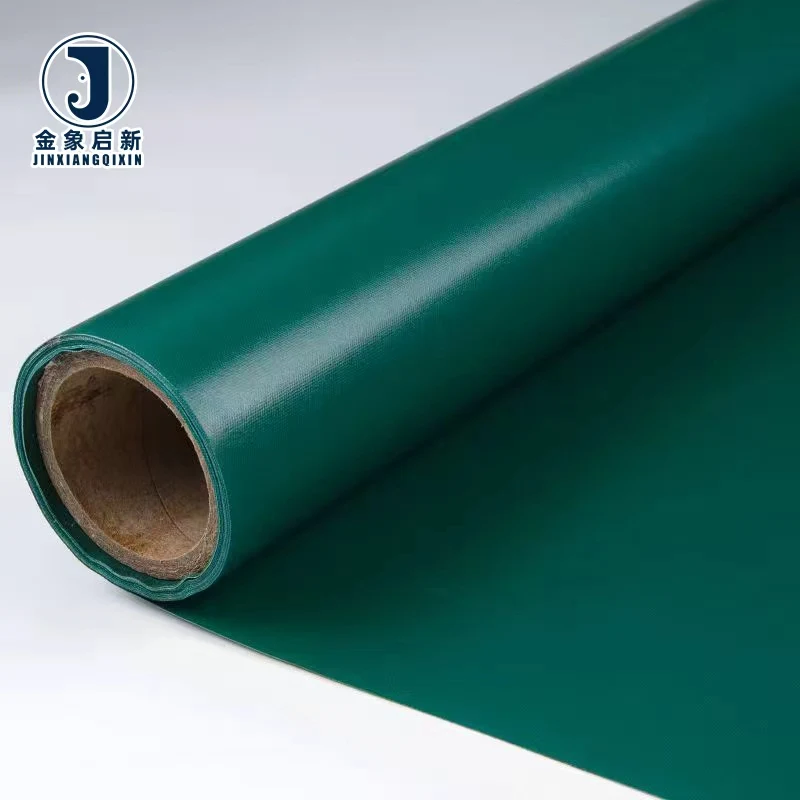
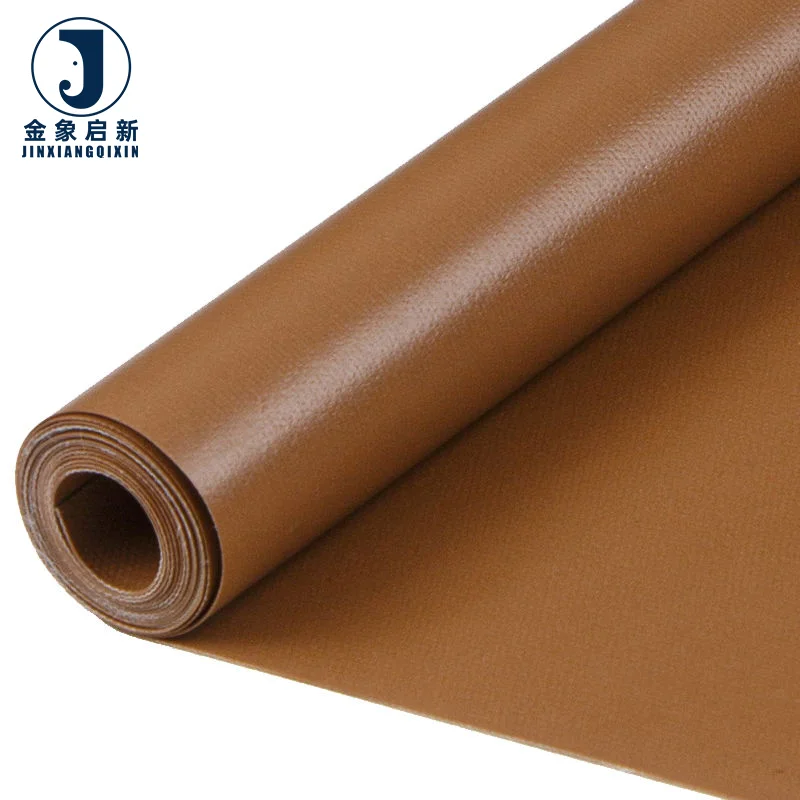
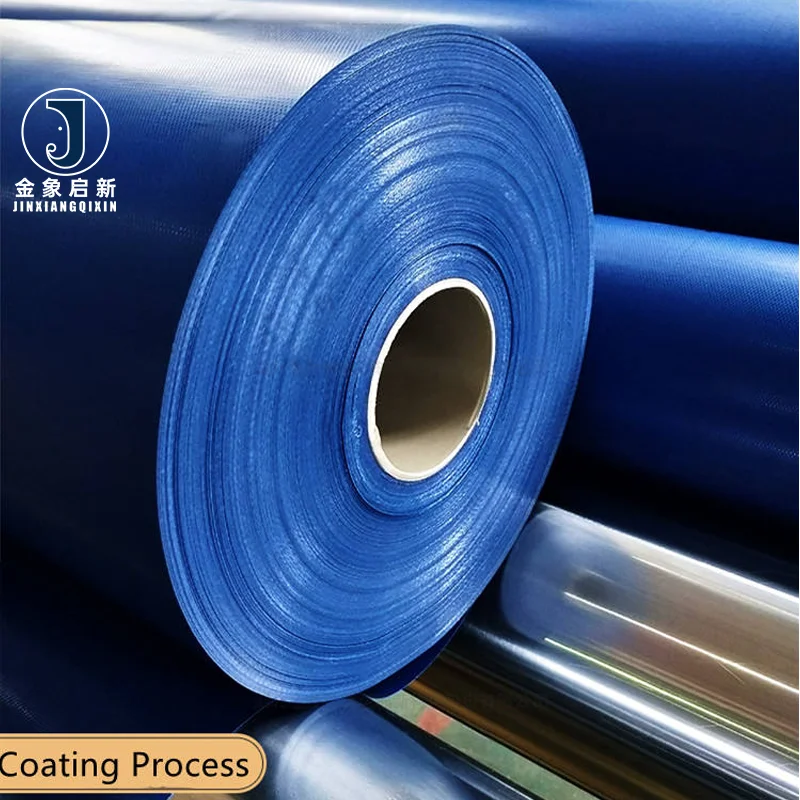
PVC Coated Tarpaulin Roll — 350–900g/m² weight range, 500D to 1300D polyester base, double-side PVC coating with water resistant and anti-UV treatment.
- Designed for buyers evaluating full roll stock options: weight-to-strength ratio, coating adhesion method, and roll width impact on cutting yield and seam count
- Backed by 100% pre-shipment inspection, dedicated QA at every stage, and complete documentation including material spec sheet and test reports
Description
Precision Coating Control — Every PVC coated tarpaulin roll is verified for GSM and coating weight at each production stage with a documented pre-shipment inspection record before dispatch.
Technical Specifications
| Parameter | Value |
|---|---|
| Product Type | PVC Coated Tarpaulin |
| Material Composition | PVC & Polyester |
| Yarn Count Options | 500D500D / 500D840D / 500D1000D / 1000D1000D / 1000D1300D / 1300D1300D / 1000D*2000D |
| Weight Range | 350 g/m² – 900 g/m² |
| Thickness Range | 0.29 mm – 0.65 mm |
| Density | 1.15 – 2.00 g/cm³ |
| Tensile Strength (Warp) | 1650 N – 3900 N |
| Tensile Strength (Weft) | 1600 N – 3500 N |
| Tensile Strength (General) | 50 – 80 MPa |
| Brittle Temperature | ≤ -50 to -60 °C |
| Softening Temperature | ≥ 80 °C |
| Melting Point | 212 °C |
| Flame Retardant | Available in flame retardant grades — confirm the grade required for your market |
| UV Treatment | Available with anti-UV treatment — request test basis for your climate zone |
| Waterproof | Fully waterproof coated construction |
| Key Features | Water Resistant, Flame Retardant, Waterproof, Anti-UV |
| Standards | ISO, CE |
Application Suitability
| Application | Exposure & Requirement |
|---|---|
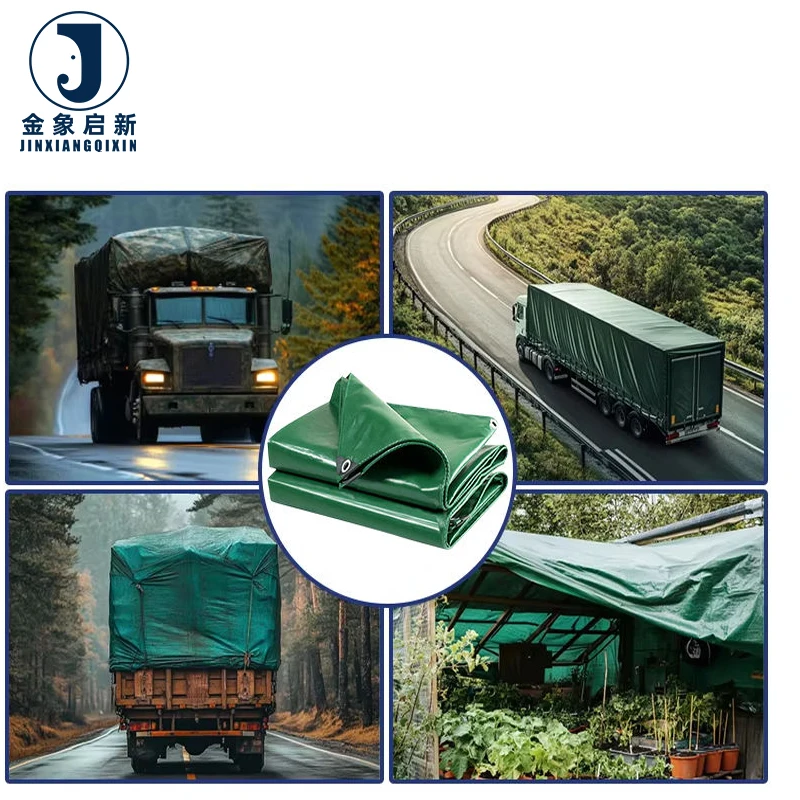
| Truck and trailer side curtain fabric | Constant flexing at load points, road abrasion, multi-directional tie-down tension, weather and UV exposure |
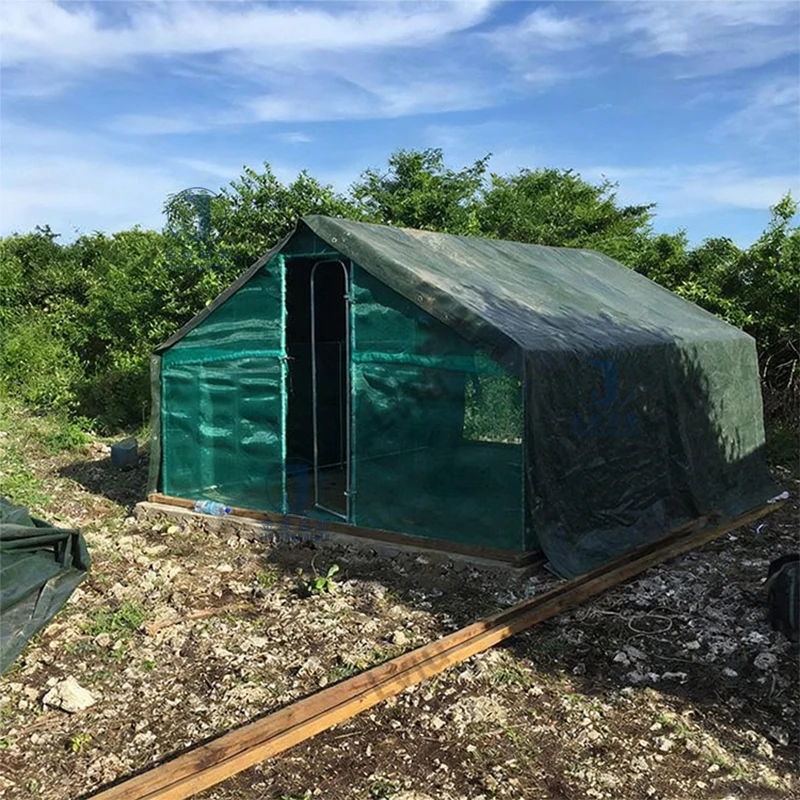
| Tent and awning manufacturing roll stock | Batch colour consistency across rolls, weld seam adhesion for panel joining, UV and water exposure |
| Machine and equipment covers | Puncture risk from sharp edges, indoor or outdoor storage, dust and moisture sealing |
| Balcony window and pergola rain covers | Permanent water contact, UV exposure, wind uplift tension on eyelet points |
| Garden furniture and plant covers | Seasonal UV exposure, moisture ingress prevention, repeated folding and storage |
| Outdoor car rainproof cloth | Water pooling, abrasion from wind-induced fabric movement against vehicle surfaces |
Why Quoted GSM and Delivered Weight Rarely Match Without Inspection Protocol
GSM verification is the single most common dispute point in coated fabric procurement.
A PVC coated tarpaulin roll quoted at a specific weight often arrives lighter when coating application is not controlled at every stage. Coating weight and base fabric denier together determine the final GSM, and variance in either parameter shifts the mechanical performance of the finished fabric. Buyers who do not receive a pre-shipment weight record have no baseline to claim against. [NEED_CITE: ISO test methods for mass per unit area determination of coated fabrics]
Material Selection for Roll-Stock Buyers
Purchasing fabric by the roll requires confidence that every roll in a shipment meets the same specification. The yarn count range — from 500D500D to 1000D2000D — provides a selection path from lighter tarpaulin grades suited to seasonal covers through to heavy-grade material for transport and construction use. Matching the correct denier and mesh count to the end application prevents over-specification on cost or under-specification on strength.
Coating Consistency Across the Production Run
Double-sided PVC coating on a polyester base fabric delivers a fully waterproof construction when coating adhesion is uniform across the roll width. Variance in coating thickness between rolls in the same order becomes visible once the fabric is installed side by side, particularly on tent and awning panels where colour and surface finish must align. Consistent coating weight per square metre is maintained through in-process quality control at each stage of the production line. [NEED_CITE: tensile and tear test methods for coated fabrics per ISO 1421]
How Denier and Mesh Count Define Real-World Performance
The polyester base fabric denier directly influences how the PVC coated tarpaulin roll handles tearing propagation under load. A 1000D1000D yarn count delivers higher warp and weft tensile values compared to a 500D500D construction, but GSM alone does not capture this difference. Two fabrics at the same weight can exhibit substantially different tear resistance if their base fabric density and weave structure differ. The coating method determines how well the PVC bonds to the polyester yarns — stronger adhesion means the coating and base fabric act as a single composite under stress rather than delaminating at the weld or flex point. Temperature behaviour also matters: with a brittle temperature at or below -50 °C and a softening point above 80 °C, the material remains flexible in cold climates while retaining dimensional stability in hot environments. Selecting the correct thickness within the 0.29 mm to 0.65 mm range should be driven by the puncture risk and flex cycle of the specific application rather than by weight alone.
The Hidden Cost of Specification Mismatch at the Weld Line
Welded seams fail before the fabric does when the coating adhesion or base fabric weight is insufficient for the flex cycle at the joint. On truck side curtains, the fabric flexes repeatedly at the load’s edge during transit, concentrating stress at the weld. A lighter-grade material may pass a static tensile test but fail prematurely under dynamic loading conditions. [NEED_CITE: dynamic fatigue testing methods for coated fabric weld seams]
Why Buyers Source Their PVC Coated Tarpaulin Roll Here
The dedicated R&D team handles material selection, pattern printing, custom sizing and sample development — allowing buyers to request roll stock matched to their fabrication process and end-use environment.
Three full production lines and 36 sets of professional equipment support bulk roll output with consistent coating weight and colour across the entire order.
A 100% pre-shipment inspection is conducted on every roll, with GSM, coating adhesion and colour verified before dispatch, documented in a pre-shipment inspection record shared with the buyer.
Samples are developed within days for custom width, colour or treatment requirements, allowing buyers to validate material suitability before committing to a production run.
Every roll ships with a material specification sheet stating exact GSM, base fabric denier, coating material and colour reference, eliminating ambiguity between quotation and delivery.
Documentation & Verification
- Material specification sheet stating exact GSM, base fabric denier and colour reference per roll
- Test report for flame retardant grades — confirm the standard and grade applicable to your market
- Pre-shipment inspection record covering weight, coating adhesion and colour for every roll
- Roll packing list with roll count, dimensions and weight for container loading planning
- ISO and CE certificates provided with each shipment
Fabrication, Handling & Storage
- Heat sealing parameters should match the PVC coating thickness selected from the 0.29 mm to 0.65 mm range to avoid delamination
- Store rolls upright on pallets to prevent flat-spot deformation across the polyester base fabric width
- Cut patterns should account for the selected roll width to minimise offcuts and reduce seam count
- Eyelet placement at stress points should be reinforced based on the tensile strength grade of the yarn count chosen
- Avoid dragging rolls across abrasive surfaces during handling to protect the glossy or matte coating finish
Requesting a Quotation for Your Roll Requirement
Provide the intended application, required GSM or yarn count, and whether the PVC coated tarpaulin roll is needed in stock widths or a custom width. Specify any flame retardant or anti-UV grade required by your market regulations. Indicate whether you need plain roll stock or custom colour and pattern printing on the fabric surface.
Frequently Asked Questions
Q: How is GSM verified on each roll before shipment?
A: Every roll undergoes weight verification at each production stage with a 100% pre-shipment inspection. A documented inspection record stating the measured GSM per roll is shared with the buyer before dispatch. Buyers may also conduct arrival re-inspection against this record.
Q: What width and roll length options are available?
A: Roll stock is available in standard widths with custom width options developed through the in-house R&D team. Minimum order quantities apply for non-standard widths and custom colours. Request a sample to confirm dimensions and suitability before placing a bulk order.
Q: How is batch colour consistency controlled across rolls?
A: Coating colour is matched against a reference standard and verified at every production stage. Rolls within the same order are inspected side by side to detect any visible variation. A colour reference is documented on the material specification sheet provided with each shipment.
Q: What flame-retardant and anti-UV grades can be applied?
A: Flame retardant and anti-UV treatments are available — the specific grade and test standard depend on your market requirements. Confirm the applicable regulation before ordering so the correct treatment and test documentation can be provided with the shipment.
Q: What custom printing options are available on roll stock?
A: Pattern printing and branding can be applied to the PVC surface of the roll stock. The R&D team develops print samples for buyer approval before production. Provide artwork files and specify the repeat pattern and colour requirements with your inquiry.
Related products
-
Best Quality 650gsm Waterproof Polyester Heavy Duty Bache PVC Tarpaulin Manufacturer
¥1.25 Select options This product has multiple variants. The options may be chosen on the product page -
Wholesale 650 Gsm Waterproof Outdoor Tarp Roll Pvc Coated Industrial Tarpaulin Roll for Tent
¥1.26 Select options This product has multiple variants. The options may be chosen on the product page -
PVC Coated Tarpaulin Outdoor Poly Tarp Plastic Canvas Tarpaulin Roll 650 Gsm for Truck Tent. Roof Cover
¥2.70 Add to cart -
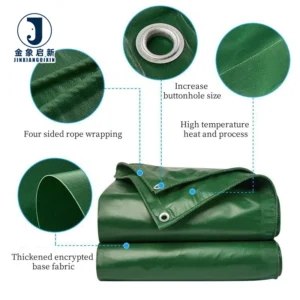
New Design Waterproof Coated Heavy Duty Pool Cover Cargo Covers Tarp for Truck
¥1.15 Add to cart