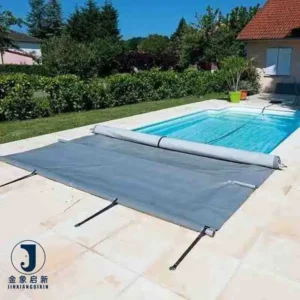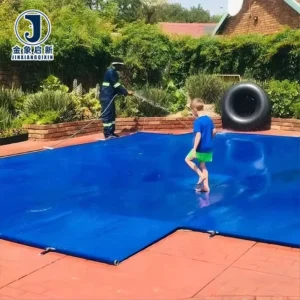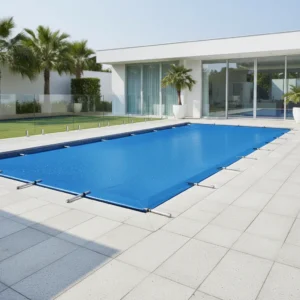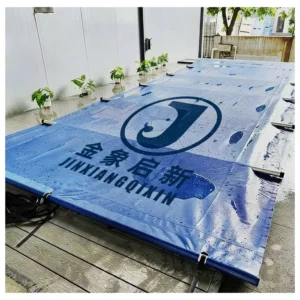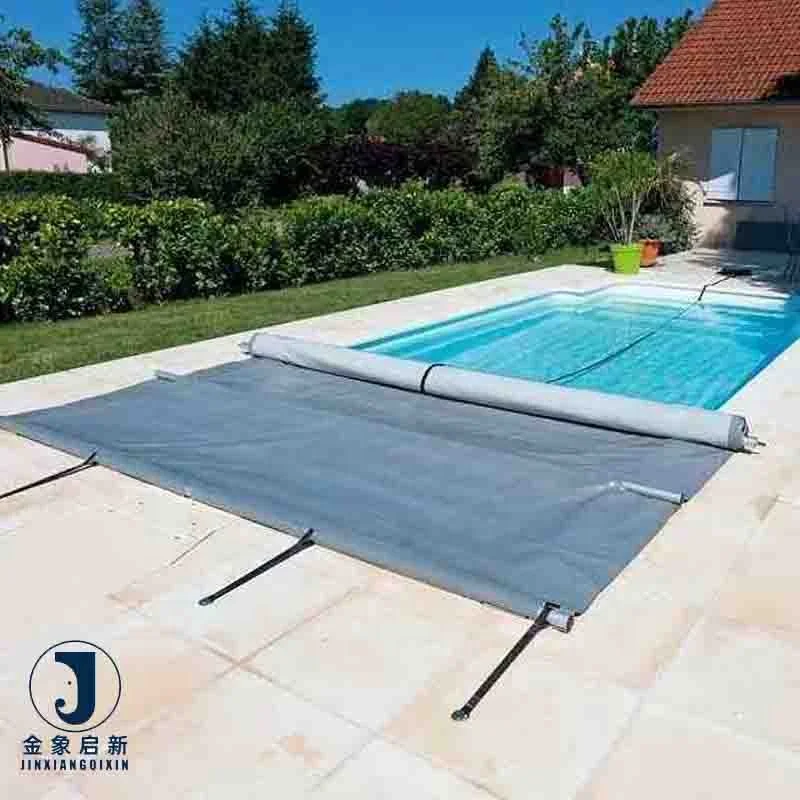
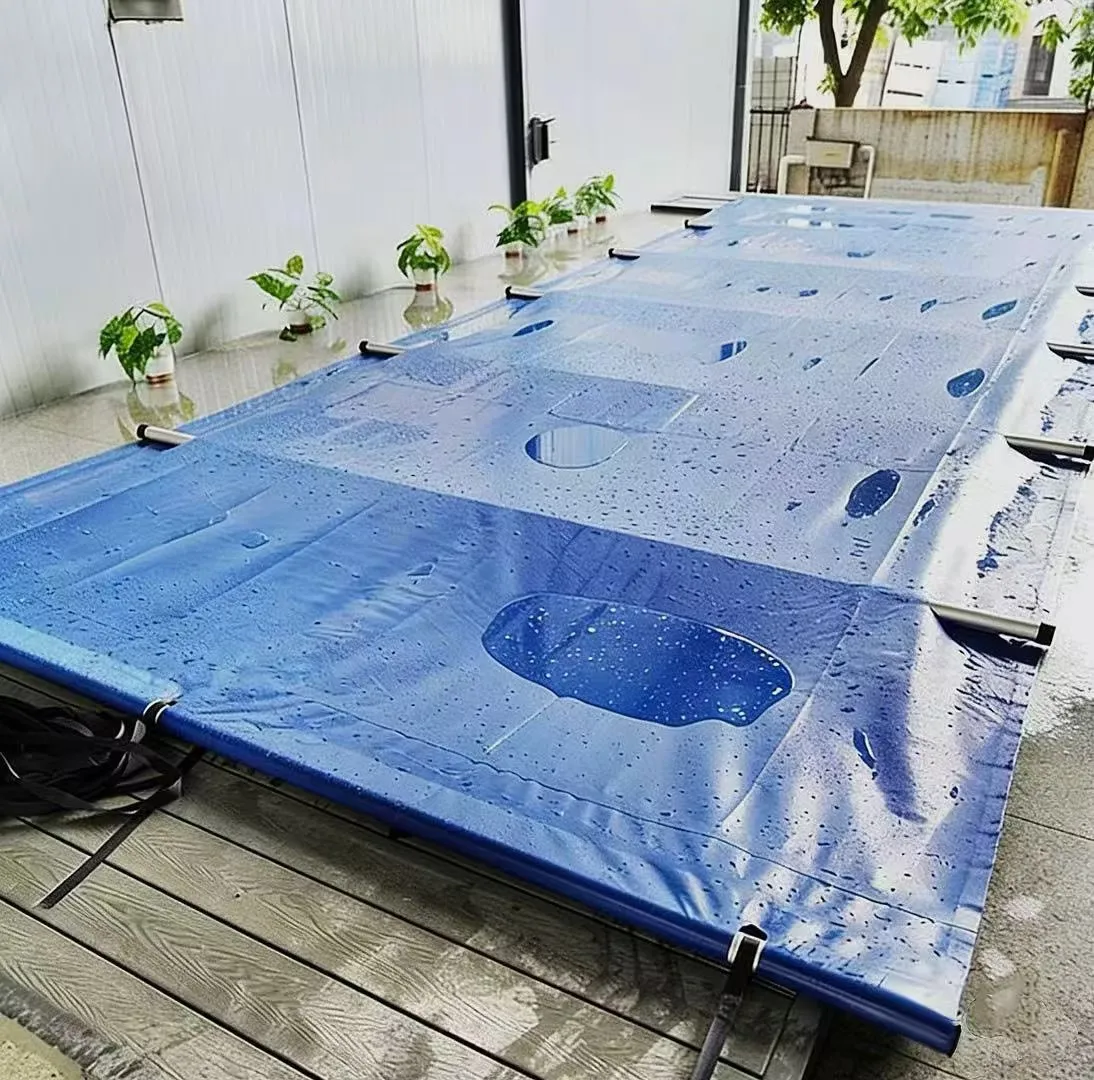
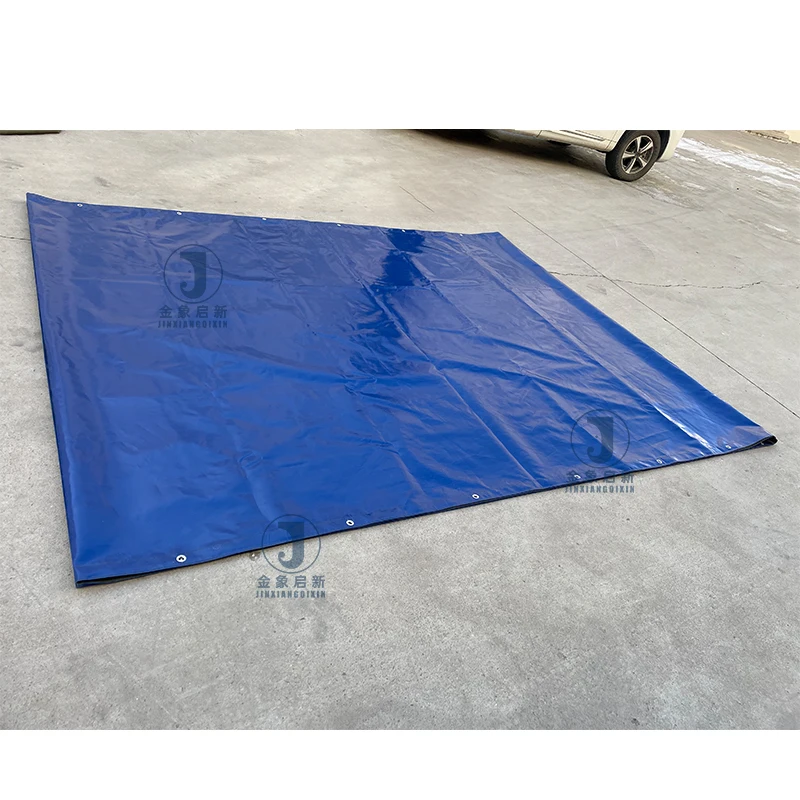
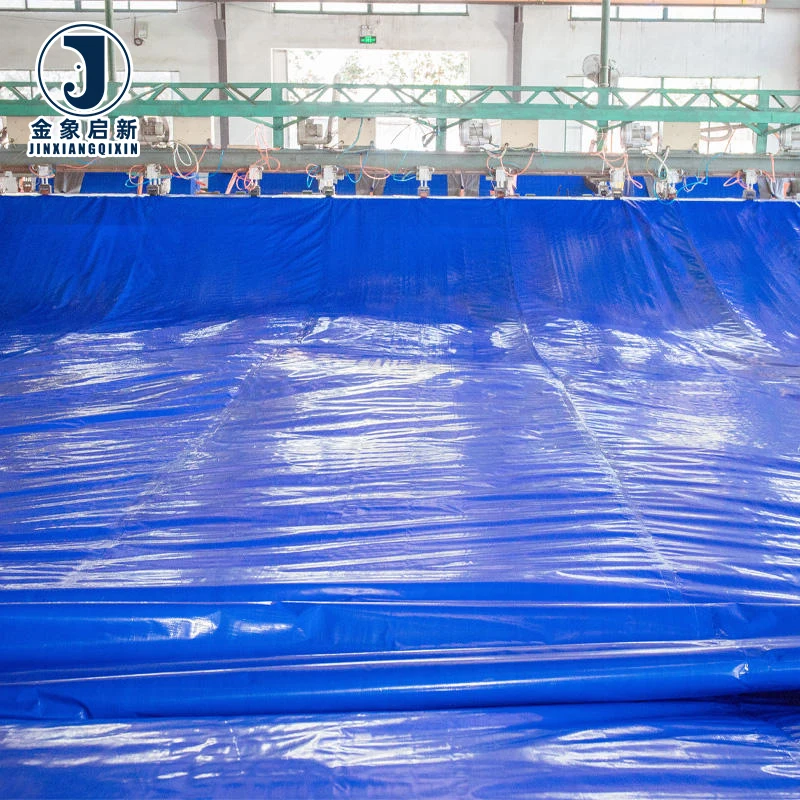
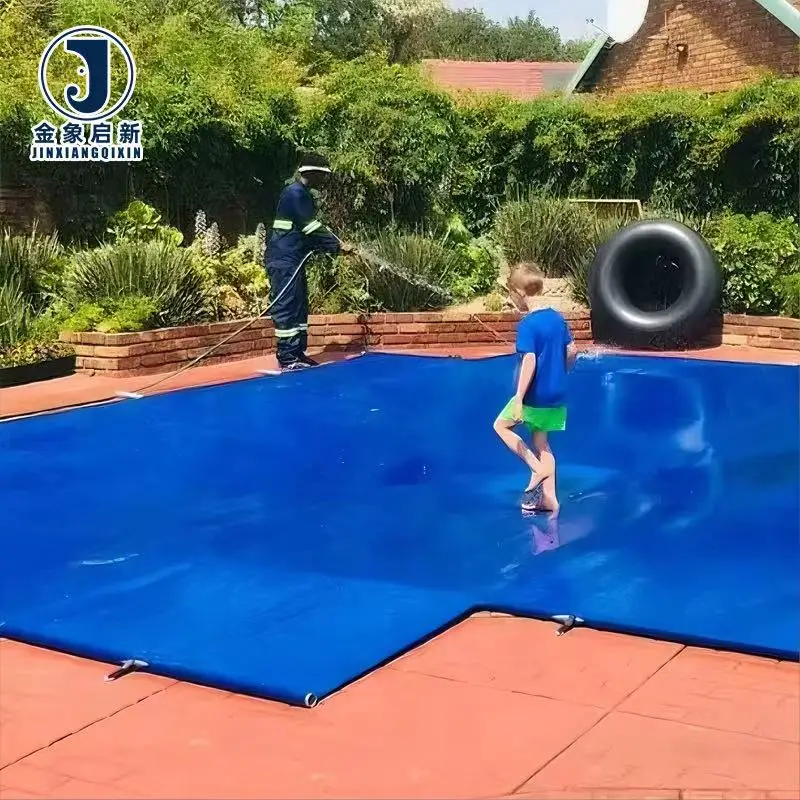
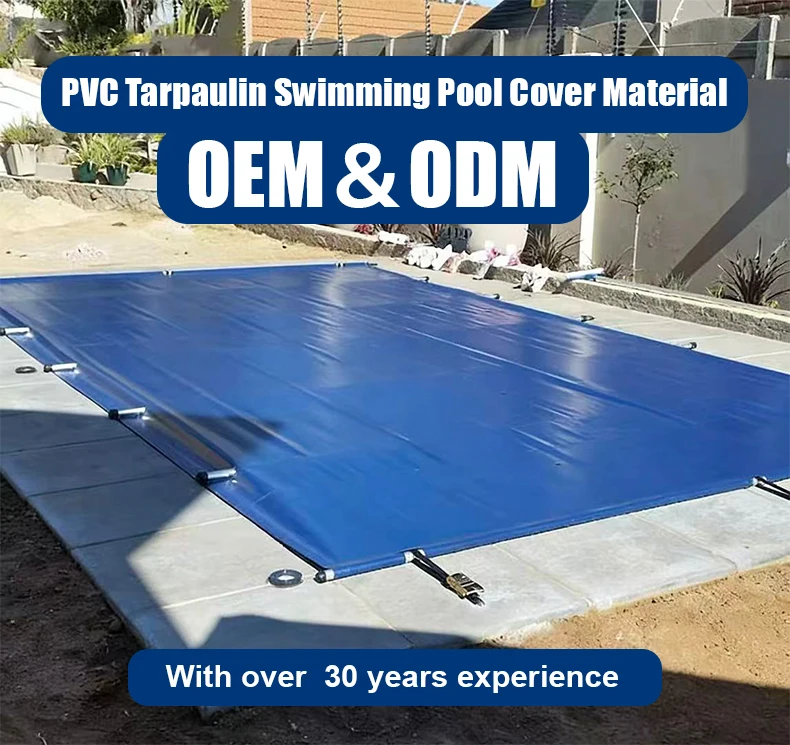
PVC Laminated Pool Cover Tarpaulin — PVC+High-strength polyester mesh, 350gsm–750gsm, 0.32mm–0.65mm thickness, 2m×75m or 2.1m×50m rolls
- Laminated and hot-melt coating technology delivers strong adhesion between coating and base fabric, supporting reliable heat-welded seams at high-flex points
- Anti-UV, flame retardant and anti-static treatments available with test reports supplied on request
Backed by nearly 30 years of coated fabric process control, 100% pre-shipment inspection, and a 10-person R&D team handling custom sizing and sample development within days.
Description
Precision Coating Control — deep process mastery over PVC lamination weight and adhesion verified through 100% pre-shipment inspection on every pool cover roll before dispatch.
Technical Specifications
| Parameter | Value |
|---|---|
| Product Type | PVC Tarpaulin Swimming Pool Cover |
| Material | PVC + High-strength polyester mesh fabric |
| Coating Method | Laminated technology & Hot-melt Coating technology |
| Weight (GSM) | 350gsm / 420gsm / 500gsm / 550gsm / 600gsm / 750gsm (range covers product family — confirm the grade for your project) |
| Total Thickness | 0.32mm / 0.35mm / 0.4mm / 0.45mm / 0.5mm / 0.65mm (range covers product family — confirm the grade for your project) |
| Roll Width | 2m / 2.1m |
| Roll Length | 75m / 50m |
| Color | Blue / Red / Yellow / Light blue / Grey (Customized) |
| UV Treatment | Anti-UV (test basis not stated) |
| Anti-Static | Anti-Static treatment (surface resistance or standard not stated) |
| Anti-Mildew | Yes |
| Cold Crack Resistance | Yes |
| Waterproof | Yes |
| Color Fastness | Best color fastness (manufacturer claim) |
| Special Treatments | Flame Retardant, Anti-Static, Anti-cold, Anti-mildew, 3P (grades not stated — confirm requirements for your market) |
| Standards | ISO, CE |
Application Suitability
| Application | Exposure & Requirement |
|---|---|
| Residential swimming pool covers | Continuous UV exposure, debris load, tension from hook or bar systems, seasonal temperature swings |
| Commercial and municipal pool enclosures | Heavy daily use, chemical splash from water treatment, high wind uplift on large spans |
| Aquaculture fish tank and pond covers | Permanent water contact, evaporation reduction, algae control, biological residue accumulation |
| Tent and awning fabric for poolside structures | Flexing under wind load, folding and storage stress, colour matching across adjacent panels |
| Roll stock for pool cover fabricators | Batch colour consistency across multiple rolls, weld seam integrity at cut edges, inventory shelf life |
Why Quoted GSM Does Not Guarantee the Pool Cover You Specified
A material specification sheet with verified coating weight is the only way to confirm what arrives matches what you ordered.
Buyers sourcing PVC Pool Cover Tarpaulin manufacturer supplies frequently report that the GSM printed on the quotation does not match the material received. The roll feels lighter, the base fabric shows through at stress points, and the tensile behaviour under tension bars reveals a thinner coating than agreed [NEED_CITE: material weight verification methods for coated fabrics per ISO 3801]. Without documentation that ties coating weight to base fabric denier and mesh count, a number on an invoice carries no structural meaning. This gap between specification and delivery is one of the most common disputes in coated fabric procurement, and it directly affects how long a pool cover survives its first winter.
How Lamination and Hot-Melt Coating Define Pool Cover Durability
The PVC laminated construction bonds the PVC film to a high-tenacity polyester mesh under heat and pressure, creating adhesion that resists delamination when the cover flexes under wind or snow load. Hot-melt coating technology further ensures the PVC penetrates the mesh structure rather than sitting on the surface. For pool cover fabricators, this means welded seams hold at the same strength as the body fabric, reducing failure at the edges where tension concentrates.
Colour Consistency Across Rolls in a Single Shipment
When a commercial pool requires multiple panels installed side by side, even a slight shade variation between rolls becomes visible in direct sunlight. Dedicated QA/QC at every production stage controls pigment dosing and coating temperature to maintain colour uniformity. This PVC Pool Cover Tarpaulin is available in Blue, Red, Yellow, Light blue, and Grey with custom colour matching — each order verified against a colour reference before dispatch so that what you unroll on site matches across the entire installation.
Reading GSM, Thickness and Coating Method Together
A higher GSM does not automatically mean a stronger pool cover. The tensile and tear performance depends on the base polyester mesh denier and weave density working together with the coating weight. A 500gsm laminated fabric with a tight mesh may outperform a 600gsm material with a looser base. The coating method matters equally — laminated technology produces a clean bond line suited to high-frequency welding, while the thickness range from 0.32mm to 0.65mm correlates to different load requirements. Lighter grades suit residential pool covers with moderate span, while heavier grades handle commercial installations with wider tension bar spacing and higher wind uplift. Understanding this relationship prevents over-specifying or under-specifying for the actual exposure [NEED_CITE: tensile and tear test methods for coated fabrics per ISO 1421].
The Hidden Cost of Specifying by Price Per Kilogram Alone
Choosing a PVC Pool Cover Tarpaulin based on the lowest price per kilogram often leads to receiving material with a lighter base fabric masked by excess filler in the coating. The cover may pass an initial weight check but fail at the weld seams within one season because the polyester mesh lacks the density to hold a proper weld bead. Colour drift between rolls forces fabricators to reject entire batches. Cold crack resistance claimed without a test temperature means the cover becomes brittle in the first frost, splitting at fold lines during removal [NEED_CITE: cold crack test methods for flexible PVC coated textiles].
What Process Control Means for Your Pool Cover Order
Three full production lines with 36 sets of professional equipment support consistent output across large-volume pool cover roll orders. A 10-person R&D team handles material selection, custom sizing and sample development for specific pool dimensions and tension systems. Coating weight and adhesion are monitored at every stage rather than checked only at final inspection. Samples are developed within days for custom colour, sizing and print requirements so you can verify material behaviour before committing to bulk. Pre-shipment inspection covers every roll, not a statistical sample, with results documented before dispatch.
Documentation & Verification
- Material specification sheet stating exact GSM, base fabric and coating weight for each roll
- Colour reference card matched against production batch before packing
- Test report for UV and flame-retardant grades where applicable to pool cover specification
- Pre-shipment inspection record with weight verification per roll against the stated GSM
- Roll packing list with net and gross weight for container loading calculations
- Certificate of origin for customs clearance at destination port
Fabrication, Handling & Storage
- Weld temperature and dwell time must match the specific GSM grade — test on offcuts before production runs
- Reinforce hems at eyelet spacing points where tension bars apply concentrated pull on the coated surface
- Store rolls upright on pallets to prevent flat-spot creasing that becomes permanent in cold conditions
- Allow laminated rolls to acclimatise to workshop temperature before unrolling to avoid coating micro-cracking
- Use PVC-compatible adhesives for field repairs — solvent-based contact cement bonds to the laminated surface
- Plan cut patterns across the 2m or 2.1m roll width to minimise offcut waste on irregular pool shapes
What We Need to Quote Your Pool Cover Project
Share the pool dimensions, cover type (flat tension, track-guided or anchored), and the environmental exposure at your site including typical wind load and temperature range. Specify whether you need roll stock for your own fabrication or finished panels with edge reinforcement. Let us know your target GSM or the thickness range you have used previously so we can recommend the matching grade from our laminated range.
Frequently Asked Questions
Q: How is GSM verified on arrival and what documentation supports the quoted weight?
A: Each roll is weighed and measured during 100% pre-shipment inspection, with results recorded on the inspection report. A material specification sheet accompanies every order stating the exact GSM, base fabric construction and coating weight, so you can cross-check against the quotation before accepting delivery.
Q: What UV treatment is applied and is there a test report available?
A: Anti-UV treatment is applied during the coating process for outdoor pool cover exposure. Where a specific UV performance standard is required for your market, confirm the test method needed so the correct grade can be specified and the corresponding test report provided with your shipment.
Q: How is colour consistency controlled across multiple rolls in the same order?
A: Pigment dosing and coating temperature are monitored at every production stage. Each roll is compared against the order colour reference before packing. This ensures panels installed side by side on a commercial pool show no visible shade difference.
Q: What custom sizing and edge options are available for pool cover fabrication?
A: The material is available as roll stock in 2m and 2.1m widths or cut to your specified panel dimensions. Edge reinforcement, hemming and eyelet placement can be configured to match your tension bar or anchor system requirements.
Q: What is the sample and approval process before bulk production begins?
A: Samples are developed within days for custom colour, GSM grade and sizing requirements. You receive the physical sample to test weld compatibility, colour match and flexibility before approving bulk production, ensuring the material meets your fabrication process.
Related products
-
PVC Laminated Waterproof Breathable Anti-UV Blackout Organic Plain Weft Swimming Pool Covers Tarpaulin Coated
¥1.78 Select options This product has multiple variants. The options may be chosen on the product page -
Rain Permeability Coated Organic Weft Plain Boys Blackout Blue Mesh Pool Safety Cover 18x36ft Rectangular Inground 4x8ft Center
¥0.83 Select options This product has multiple variants. The options may be chosen on the product page -
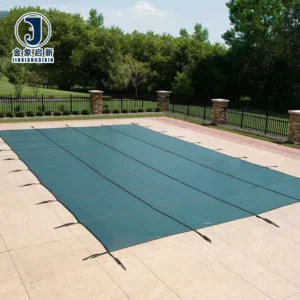
JX China Manufacturer Organic Blackout 500gsm Heavy Duty PVC Coated Tarpaulin Swimming Pool Cover
¥1.78 Select options This product has multiple variants. The options may be chosen on the product page -
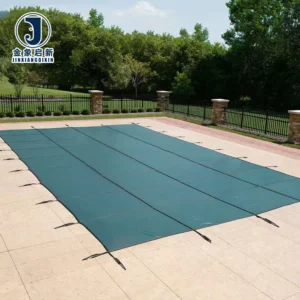
PVC Pool Cover In-ground Winter Swimming Pool Cover PVC Fabric Safety Pool Covers
¥0.50 Add to cart