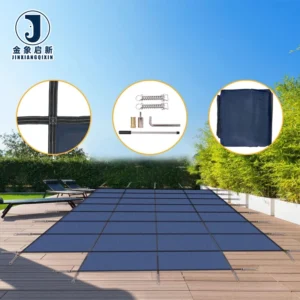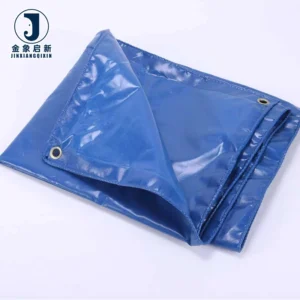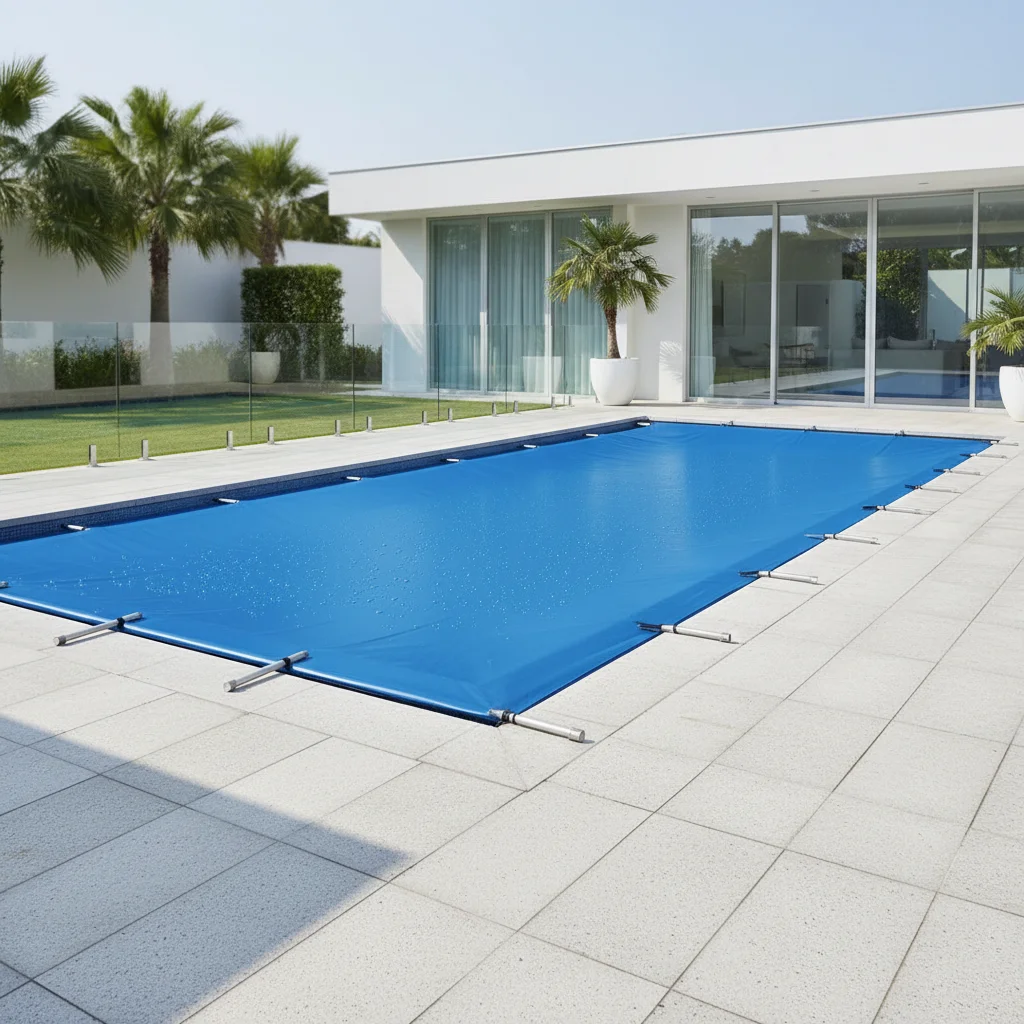
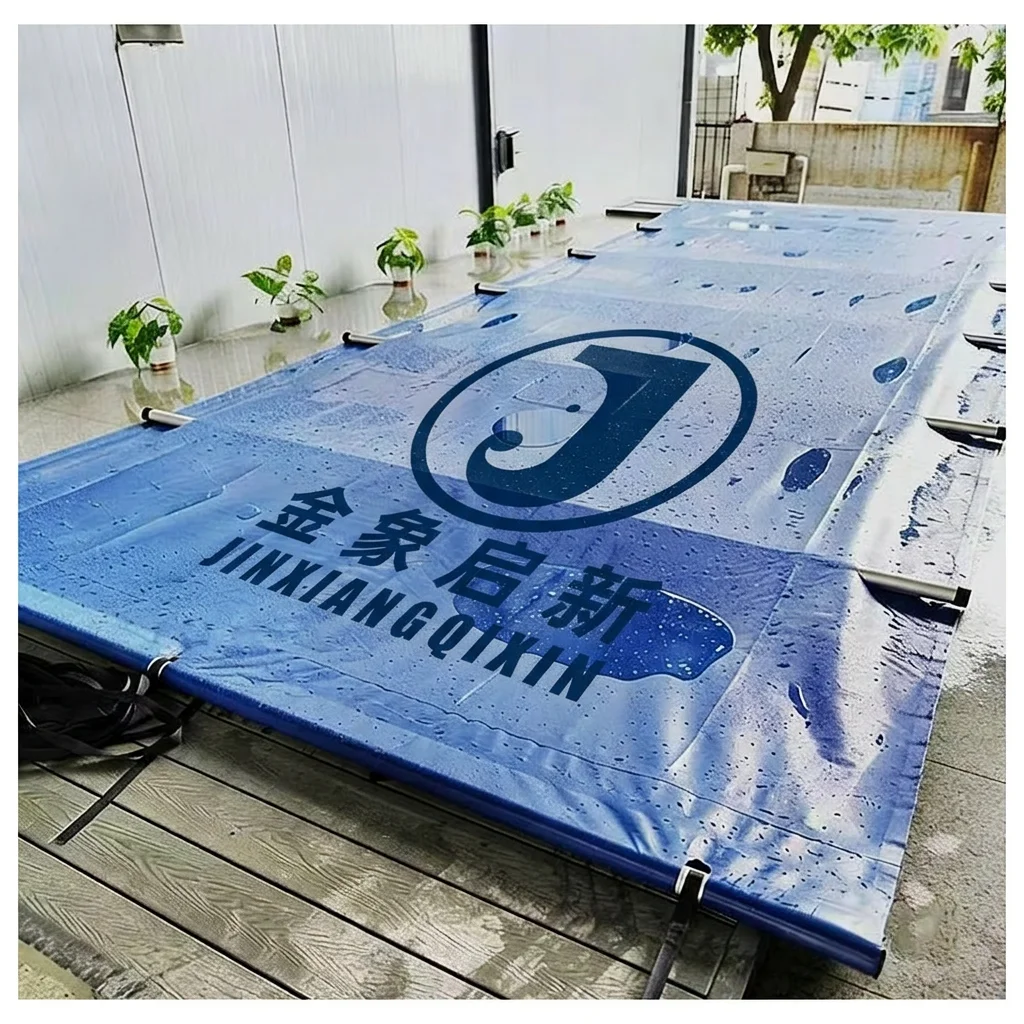
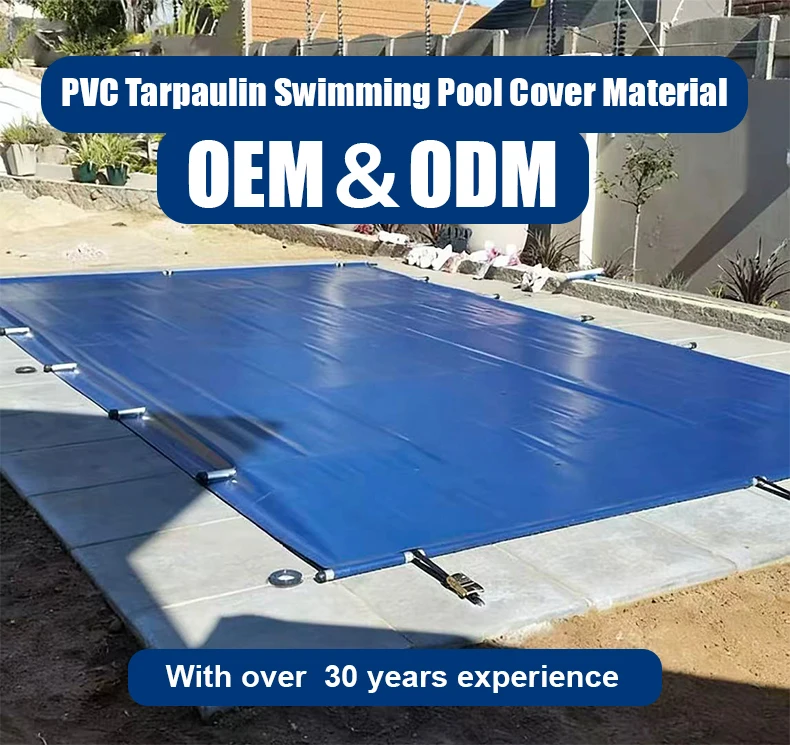
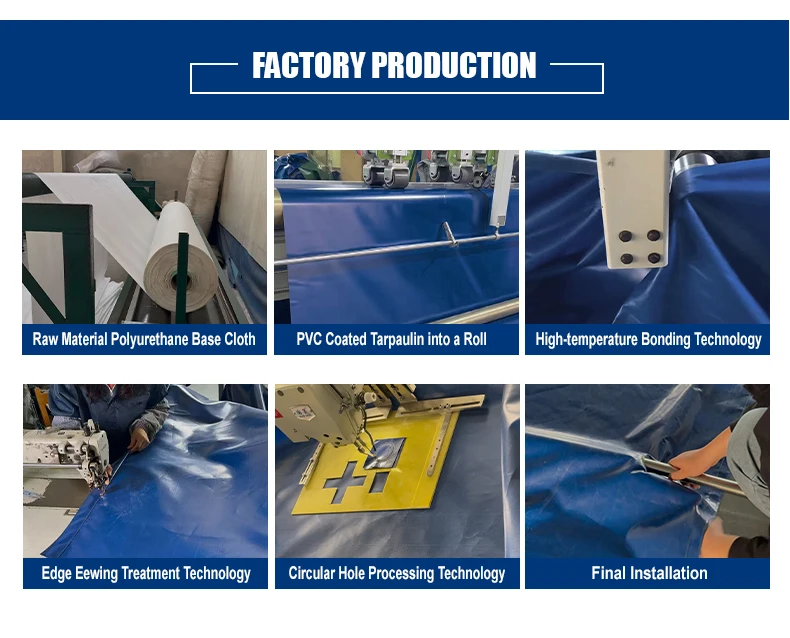
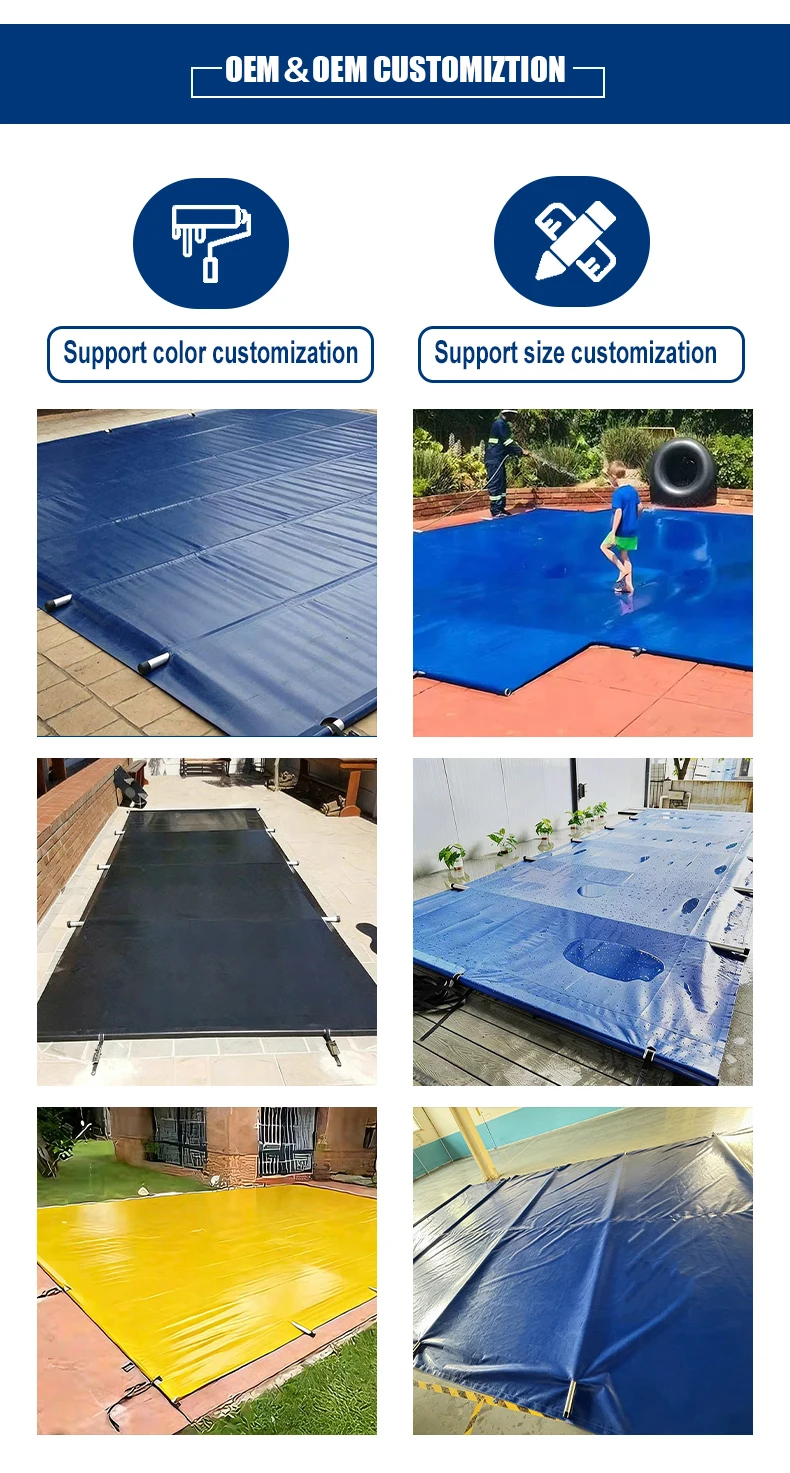
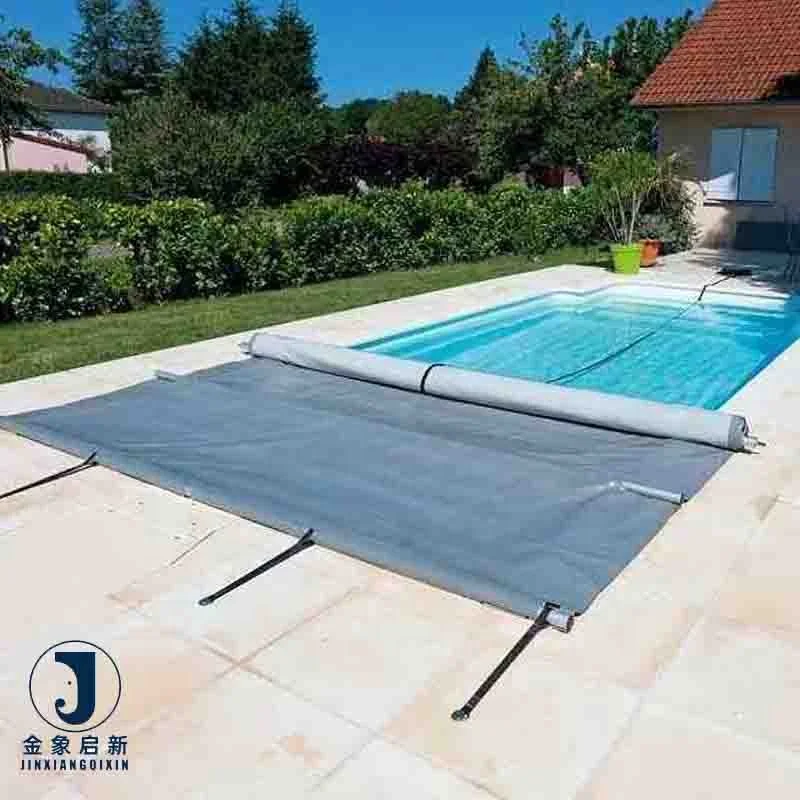
PVC Pool Cover — anti-UV treated, waterproof, medium weight PVC coated tarpaulin with full size and color customization. Coating weight and base fabric denier matched to intended span and load for prolonged outdoor exposure, with reinforced hems and eyelet spacing engineered to maintain tie-down integrity under wind stress. Each roll undergoes dedicated QA at every production stage with 100% pre-shipment inspection before dispatch.
Description
Process-Controlled Coating — PVC coating weight and base fabric adhesion verified at every production stage for consistent awning, shade sail and pool cover performance.
Technical Specifications
| Parameter | Value |
|---|---|
| Product Type | PVC Coated Tarpaulin |
| Coating Material | PVC |
| Weight Grade | Medium Weight (exact GSM available on request) |
| UV Treatment | Anti-UV treatment (test basis available on request) |
| Waterproof Rating | Waterproof (hydrostatic rating available on request) |
| Color | Available in custom colours |
| Finish | Glossy or matte finish available |
| Base Fabric Denier | Confirm required denier for your span and load |
| Mesh Count | Confirm required mesh count for your application |
| Coating Method | Confirm coating method (knife-over-roll or laminated) for your performance needs |
| Total Thickness | Varies by weight grade — confirm for your project |
| Width | Custom width available |
| Roll Length | Custom roll length available |
| Tensile Strength | Tested to ISO 1421 on request |
| Tear Strength | Tested to ISO 1421 on request |
| Flame Retardant Grade | Available in flame retardant grades — confirm the grade required for your market |
| Eyelet & Hem Options | Reinforced hems and eyelets available on finished covers |
| MOQ | Confirm with sales based on width, colour and finish |
Application Suitability
| Application | Exposure & Requirement |
|---|---|
| Residential pool cover | Seasonal sun, rain and debris; requires UV stability and waterproof seal |
| Outdoor awning and canopy | Prolonged UV, wind flap and rain pooling; demands tensile integrity at seams |
| Shade sail | Constant tension, UV degradation risk and wind load; requires tear resistance at corner fixings |
| Pet and dog house cover | Daily weather cycling, abrasion from animal contact; needs waterproof and washable surface |
| Equipment and machinery cover | Dust, moisture and incidental impact; requires puncture resistance and hem durability |
Why Coating Weight Matters More Than Stated GSM for Pool Covers and Shade Sails
A quoted GSM means nothing if the coating-to-fabric ratio is uncontrolled.
When buyers specify a medium weight PVC coated tarpaulin for a pool cover or shade sail, the number on the quotation is only the starting point. Two fabrics at the same stated GSM can behave completely differently if one carries a heavier base fabric with a thin coat while the other uses a lighter base with a thicker coat. The coating carries the waterproofing and the UV stabilisers; the base fabric carries the mechanical load. Without verifying both components independently, a pool cover may pass a weight check on arrival yet still crack at the fold line after one season of sun exposure. PVC coated tarpaulin custom manufacturer specifications must address coating weight and base denier as separate line items, not a single combined figure. [NEED_CITE: tensile and tear test methods for coated fabrics per ISO 1421]
How Base Fabric and Coating Layer Interact Under Load
A shade sail holds tension across its span, concentrating stress at the corners and along the hem. The base fabric denier and weave density determine how well that stress distributes before a tear initiates. The PVC coating, meanwhile, must remain bonded to the base through repeated flexing — if adhesion is weak, the coating delaminates and the bare yarn degrades under UV. When sourcing PVC coated tarpaulin for tensioned structures, request both the base fabric specification and the coating adhesion test result.
Matching UV Treatment Grade to Actual Exposure Duration
Anti-UV treatment is not a single standard. Different formulations stabilise the PVC against different cumulative UV doses. A pool cover installed in a northern latitude faces a lower annual UV load than a shade sail deployed in a subtropical zone. Rather than accepting a blanket "anti-UV" label, ask for the test basis behind the treatment and match it to the UV index and exposure duration of your target installation region. [NEED_CITE: UV weathering test protocols for PVC coated textiles]
Reading GSM in Context — Not as a Standalone Spec
GSM tells you the total mass per square metre, but it does not tell you how that mass is distributed between yarn and coating. A higher GSM achieved through a dense, low-denier base may offer better tear resistance than one achieved through a thick, low-adhesion coating layer. For awning and canopy applications where the fabric flexes in wind, the coating-to-fabric bond strength matters as much as the total weight. Specify base fabric denier, mesh count and coating weight as separate parameters to remove ambiguity from your PVC coated tarpaulin custom manufacturer order.
Spec Interpretation — What the Parameters Mean in Practice
Coating method directly affects the bond between PVC and base fabric. Knife-over-roll coating drives the compound into the yarn interstices, producing higher adhesion and better weld strength — important when shade sail panels are joined by heat welding. Laminated coating sits on the surface and may separate under repeated flex. Base fabric denier and mesh count together determine the tear propagation path: a higher-denier yarn with an open mesh resists tear spread better than a low-denier yarn in a tight weave of the same GSM. Surface finish also plays a functional role — glossy finishes shed dirt and water more easily, suiting pool covers that must be rolled and stored; matte finishes reduce glare, which is preferred for awning and canopy installations in residential settings. Confirm whether flame retardant grades are required for your market’s building codes before placing a bulk order, as the additive package changes the coating formulation and the welding parameters the fabricator must use.
What Happens When Specifications Are Not Verified Before Dispatch
A shade sail cut from a roll whose coating weight falls below the specified level will degrade faster at the tension points, and the seam may delaminate before the fabric body fails. A pool cover that arrives lighter than the quoted GSM often signals a thinner coating or a lower-denier base — both of which compromise waterproofing and puncture resistance. Batch colour variation between rolls becomes visible the moment two panels are installed side by side on a large awning, forcing a costly replacement of the entire section rather than a single panel. These failures trace back to insufficient in-process QA, not to the material category itself. [NEED_CITE: common failure modes in PVC coated tarpaulin field installations]
Why Sourcing From This Production Line Reduces Risk
Three full production lines and 36 sets of professional equipment mean that medium weight PVC coated tarpaulin orders are processed on dedicated coating heads rather than squeezed into gaps between unrelated product runs, supporting reliable on-time delivery even for custom widths and colours. A 10-person R&D team handles material selection, sample development and pattern printing in-house, so a shade sail prototype or a custom-sized pool cover sample can be developed within days rather than weeks. Dedicated QA/QC runs at every production stage — coating weight checks, adhesion tests and colour comparison against the approved reference — with 100% inspection before shipment. ISO and CE certified production ensures the quality management system is auditable, and a pre-shipment inspection record is available for buyer review before the goods leave the factory.
Documentation & Verification
- Material specification sheet listing GSM, base fabric denier, coating weight and colour reference per roll
- Anti-UV test report matching the treatment grade specified on the purchase order
- Flame retardant certificate issued against the grade confirmed for your destination market
- Pre-shipment inspection record covering weight verification, seam integrity and colour consistency
- ISO and CE certificates accompanying the shipping documentation set
- Certificate of origin and customs support documents provided on request
Fabrication, Handling & Storage
- Heat weld medium weight PVC coated tarpaulin at temperatures matched to the specific coating formulation — confirm parameters with the mill before first run.
- Reinforce eyelets with PVC patches at corner stress points on shade sails to prevent tear initiation at the metal ring edge.
- Store rolls horizontally on a flat rack, not stacked more than three high, to prevent permanent creasing of the glossy or matte surface.
- Unroll and allow the fabric to relax at ambient temperature before cutting to avoid dimensional distortion from cold-transport stiffness.
- Clean pool cover surfaces with mild detergent only; solvent-based cleaners can soften the PVC coating and reduce its waterproof performance.
- Cut panels with a minimum margin to maximise roll utilisation and reduce the number of welded seams in large awning and canopy assemblies.
What We Need From You to Quote Accurately
Provide the intended application — pool cover, shade sail, awning or pet shelter — along with the span dimensions and the environmental exposure conditions at the installation site. Specify whether you need roll stock or finished cut sizes with reinforced hems and eyelets. If your market requires a particular flame retardant grade or any third-party certification, state it on the enquiry so we can confirm formulation and test availability before sampling. Share your target colour reference or Pantone code, and whether glossy or matte finish is preferred, so the first sample matches your project requirement.
Frequently Asked Questions
Q: How do I verify that the GSM on the quotation matches what arrives?
A: We conduct weight checks at every production stage and perform 100% pre-shipment inspection. Each roll ships with a material specification sheet stating GSM, base fabric and coating details. You may also request a witness inspection or appoint a third-party surveyor to verify weight and coating thickness before dispatch.
Q: Is the anti-UV treatment supported by a test report?
A: Anti-UV treatment is available at different stabilisation levels. We supply a test report matching the grade specified on your order. Confirm the UV index and expected exposure duration for your installation region so we can recommend the appropriate treatment level and provide the corresponding test documentation.
Q: How is colour consistency maintained across multiple rolls?
A: Each production run is checked against the approved colour reference under standardised lighting. Rolls within a single order are produced in the same coating batch where possible, and the pre-shipment inspection record documents colour comparison results before dispatch.
Q: What is the sample development process for custom sizes and finishes?
A: Share your application, dimensions, preferred finish and any treatment requirements. Our R&D team produces a specification recommendation and develops a sample within days. Once you approve the sample, we proceed to bulk production with the same material and process parameters locked in.
Q: What documentation ships with a PVC coated tarpaulin order?
A: A material specification sheet, pre-shipment inspection record, packing list and certificate of origin are standard. Anti-UV and flame retardant test reports, ISO and CE certificates are included where applicable to your product specification and destination market requirements.
Related products
-
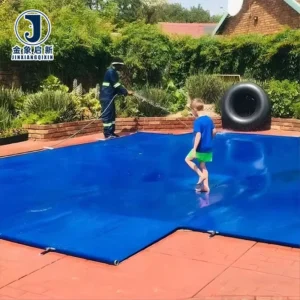
Custom PVC Pool Cover Tarpaulin – Waterproof Anti-UV
Read more -
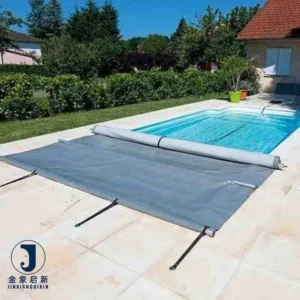
Custom PVC Pool Cover Tarpaulin for Pools – Manufacturer
Read more -
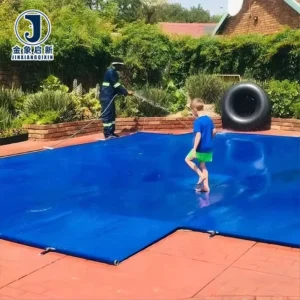
PVC Laminated Waterproof Breathable Anti-UV Blackout Organic Plain Weft Swimming Pool Covers Tarpaulin Coated
¥1.78 Select options This product has multiple variants. The options may be chosen on the product page -
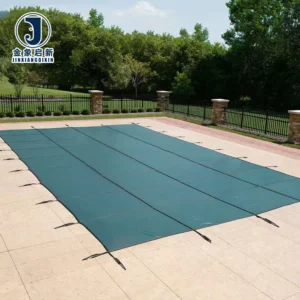
Custom PVC Pool Cover for In-ground Winter Safety – Manufacturer
Read more