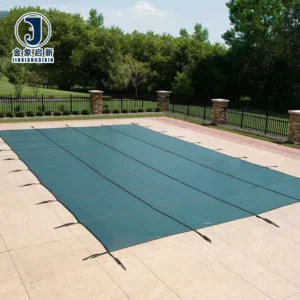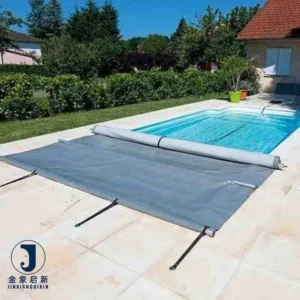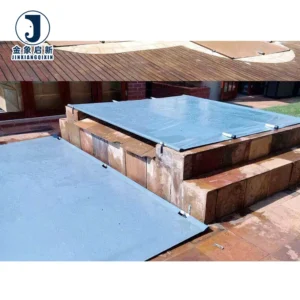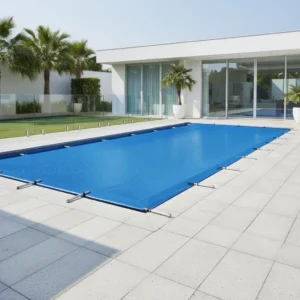
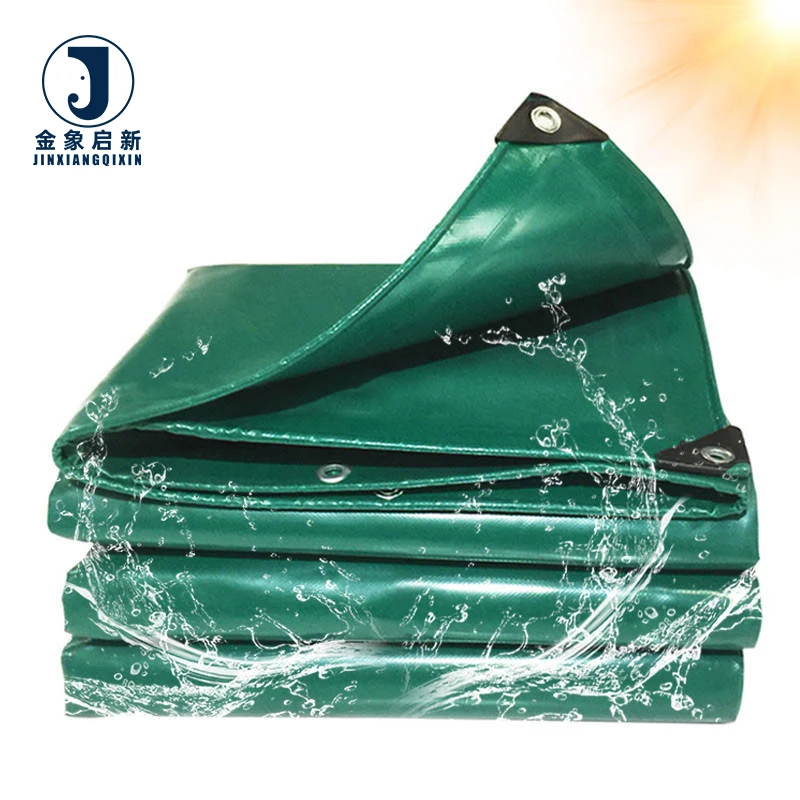
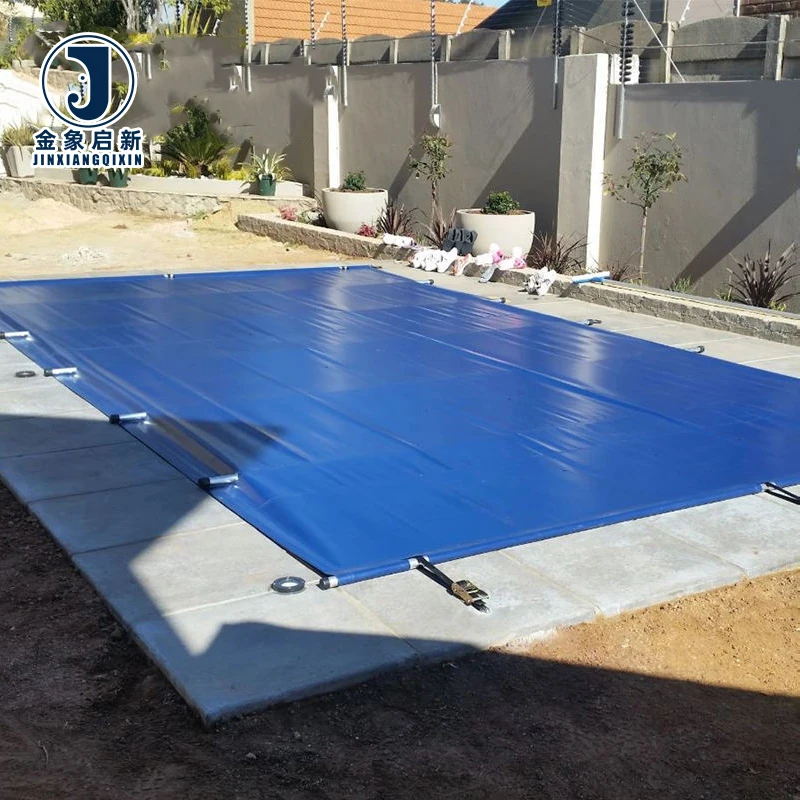
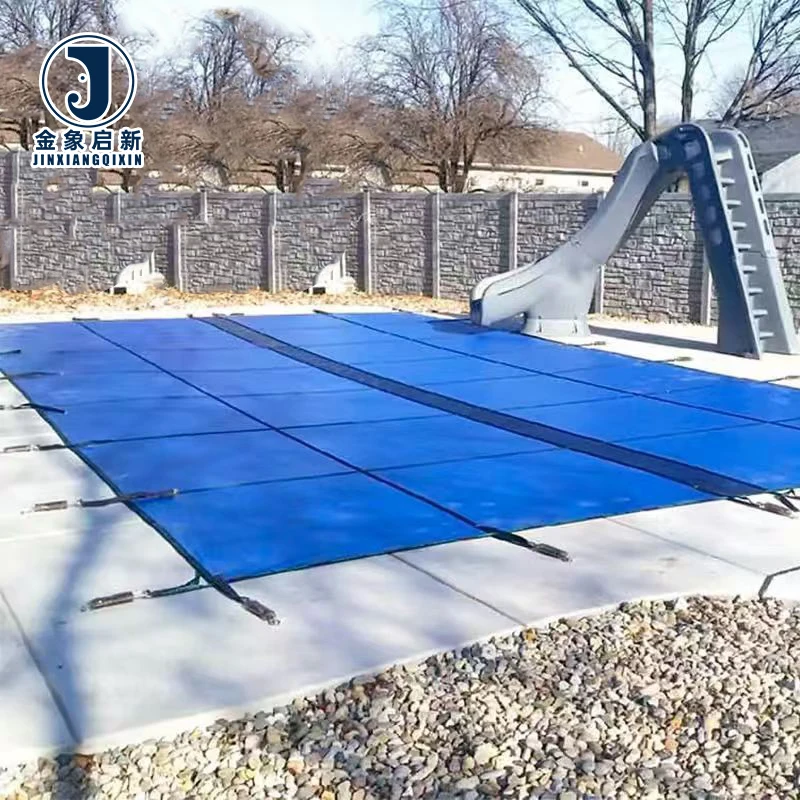
PVC Pool Cover — 100% waterproof, UV-resistant, knife-coated PVC fabric with anti-mildew treatment and easy-clean surface. Custom sizes and colors available.
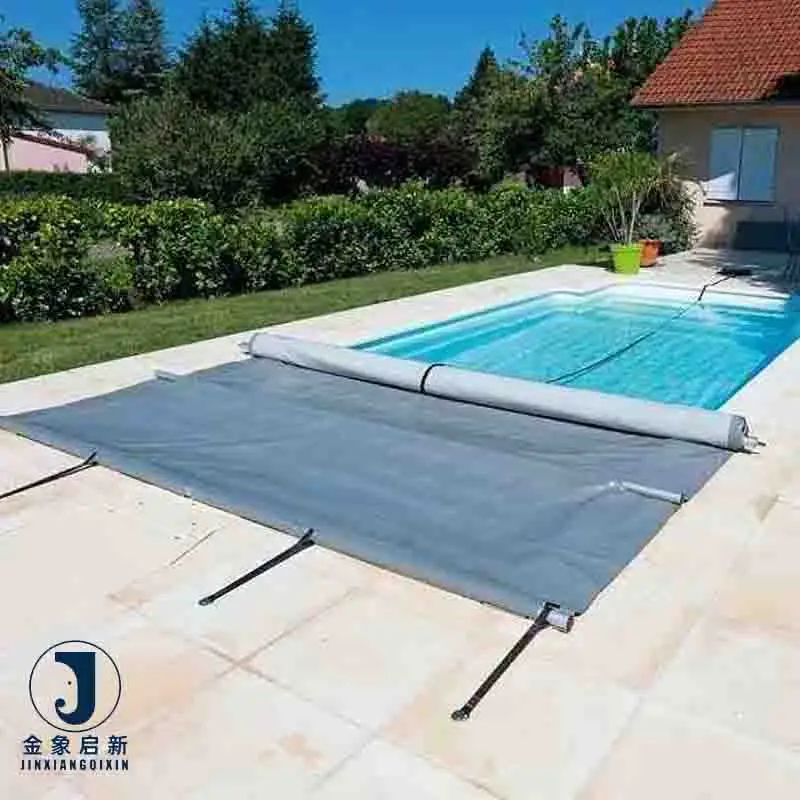
- Cut to your pool’s exact dimensions, eliminating edge gaps and mid-cover sag that let debris and water escape.
- Knife-coated construction ensures consistent GSM across the full sheet; welded seams at high-stress flex points outlast the fabric itself.
- Backed by ISO and CE certification, with 100% pre-shipment inspection and full test documentation on every order.
Description
Proven Coating Process Control — Knife-coated PVC fabric with controlled coating weight and adhesion ensures consistent GSM across every pool cover we produce.
Technical Specifications
| Parameter | Value |
|---|---|
| Product Type | PVC Pool Cover |
| Material | PVC Coated Fabric (Knife Coated) |
| Waterproof | Fully waterproof coated construction |
| UV Resistant | Anti-aging treatment (test basis available upon request) |
| Weather Resistance | Rain, wind, snow, extreme temperatures |
| Tear Resistant | High strength and tear resistant |
| Anti-Mildew | Treated against mildew growth |
| Surface | Easy clean finish |
| Custom Size | Available to pool dimensions |
| Custom Color | Available |
| Standards | ISO, CE |
Application Suitability
| Application | Exposure & Requirement |
|---|---|
| Residential pools | Seasonal debris, UV exposure, standing water on cover surface, wind uplift at edges |
| Hotel pools | Year-round weather exposure, frequent handling for maintenance, visual consistency across multiple pool areas |
| Outdoor pools in tropical climates | Intense UV, high humidity, mildew pressure, heavy rainfall accumulation |
Why Generic Covers Fail Where Custom PVC Pool Covers Succeed
A cover cut to exact pool dimensions eliminates the gaps and sag points that let debris and water through.
I spent years watching buyers order off-the-shelf pool covers that looked right on paper. They arrived, got pulled tight over the pool, and within weeks you could see the material pulling away from the anchor points because the size was close but not exact. The stress concentrates at the corners, and that is where rips start. A PVC Pool Cover aftermarket supplier who works from your pool drawings instead of a catalogue size removes that failure point entirely. [NEED_CITE: tensile and tear test methods for coated fabrics per ISO 1421]
Knife-Coated Construction for Reliable Pool Coverage
The knife-coated process applies PVC directly onto the base fabric under controlled tension, creating a bond that resists delamination when the cover is dragged across coping stones or folded for seasonal storage. This matters for pool covers because the material gets handled far more often than truck tarps or static building wraps. Every time maintenance crews pull the PVC Pool Cover back and reposition it, the coating adhesion is tested.
Seam Welding at the Points That Actually Break
Welded seams on a pool cover must hold when water pools in the centre and the entire weight bears down on the joint lines. We position welds away from the highest-flex zones where the cover folds over the pool edge, and we reinforce hems with additional fabric strips. [NEED_CITE: weld peel strength testing for coated PVC fabrics] This approach keeps the seam intact through repeated tensioning and release cycles that generic heat-sealed joints cannot survive.
Reading the Specs That Determine Pool Cover Performance
GSM alone tells you how much material is in the fabric, but it does not tell you whether that weight comes from a dense base fabric or a thick coating layer. A pool cover needs both: a strong base fabric to resist tearing when anchors pull at the eyelets, and sufficient coating weight to keep water from migrating through. Knife coating delivers a more uniform layer than lamination, which means the waterproof barrier stays consistent across the entire cover surface rather than thinning at the edges. Anti-mildew treatment in the coating compound prevents biological growth on the underside where condensation collects against the pool water.
The Hidden Cost of Skipping Material Verification
Buyers who accept a PVC pool cover without checking the delivered GSM against the quoted specification often discover the material is lighter than agreed once it is unrolled on site. The cover feels thinner, flexes more in wind, and shows wear at the anchor points within the first season. Colour variation between rolls becomes visible when multiple covers are installed side by side at a hotel or resort with several pools. [NEED_CITE: batch colour consistency standards for PVC coated fabrics] These problems surface after installation, when return logistics become expensive and the pool is already exposed.
What Sets This Supply Chain Apart
Three full production lines and 36 sets of professional equipment support bulk orders without compressing lead times on custom-sized pool covers. A 10-person R&D team handles material selection, custom sizing, and sample development, producing samples within days so you can verify fit and finish before committing to a full order. Dedicated QA and QC checks run at every production stage, with 100 percent inspection before any PVC Pool Cover ships. Nearly 30 years of focused coated fabric production means the process control behind coating weight and adhesion has been refined through continuous operation, not recent expansion.
Documentation & Verification
- Material specification sheet stating GSM, base fabric type, and coating method for each pool cover order
- UV and anti-aging test report provided for the specific grade used in your covers
- Pre-shipment inspection record confirming colour consistency across all rolls in the order
- ISO and CE certificates covering the production facility and coating processes
- Roll packing list with individual cover dimensions and eyelet placement details
Fabrication, Handling & Storage
- Weld seams using hot air at temperatures matched to the knife-coated PVC grade to prevent delamination at pool cover joints
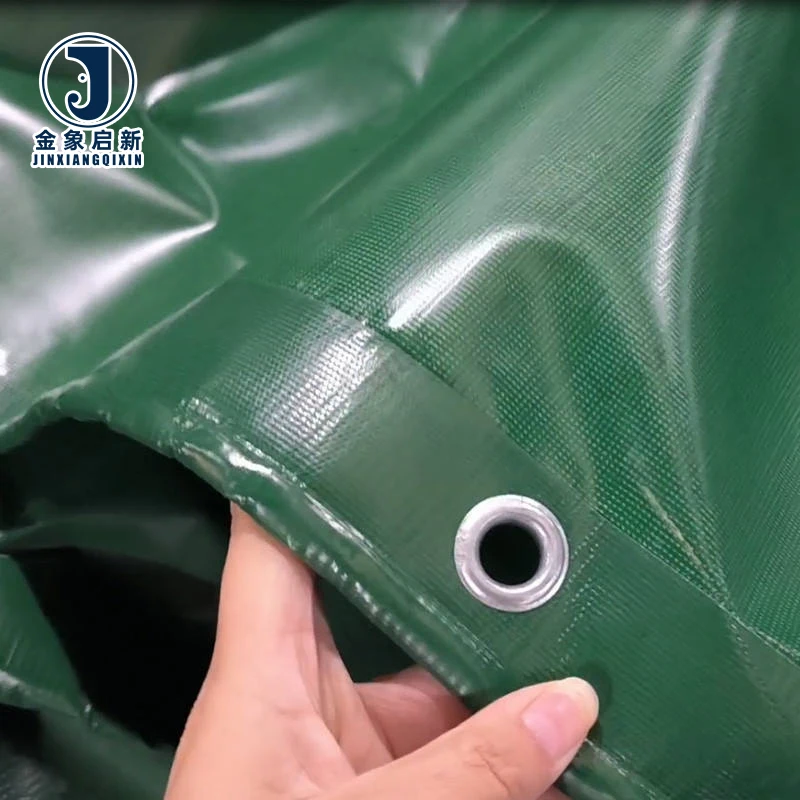
- Reinforce eyelet zones with extra fabric patches to distribute anchor load across the coated surface
- Store rolled covers upright on pallets to avoid flat-spot creases that weaken the coating over time
- Clean with mild detergent only; harsh solvents can degrade the anti-mildew treatment in the coating
- Allow covers to reach ambient temperature before unfolding in cold weather to prevent cracking at fold lines
What We Need to Quote Accurately
Provide your pool dimensions including length, width, and any irregular shape details such as stepped ends or spa cutouts. Specify the climate zone and whether the cover will remain installed year-round or be removed seasonally, as this affects the treatment grade we recommend. Let us know if you need finished covers with eyelets and reinforced hems, or roll stock for your own fabrication operation.
Frequently Asked Questions
Q: What GSM grade is appropriate for a pool cover in a high-UV tropical climate?
A: Higher GSM grades provide more coating mass and a heavier base fabric, which together improve resistance to UV degradation and physical wear from frequent handling. We recommend sharing your climate zone and expected handling frequency so we can match the material grade to the actual exposure conditions rather than defaulting to a middle option.
Q: Can the pool cover be printed with a hotel logo or brand marking?
A: Yes, pattern printing and branding are available on knife-coated PVC fabric. The coating surface accepts ink well, and we can match colour references for consistent branding across multiple covers. Share your artwork and Pantone references during the sample stage so we can confirm print clarity before production.
Q: How is colour consistency maintained when ordering multiple pool covers?
A: We run a roll-to-roll colour consistency check during pre-shipment inspection and document the results. All covers in a single order are cut from the same production batch to minimise variation. If your project spans multiple orders over time, we retain the colour reference on file for future matching.
Q: What reinforcement options exist at the eyelets and hems?
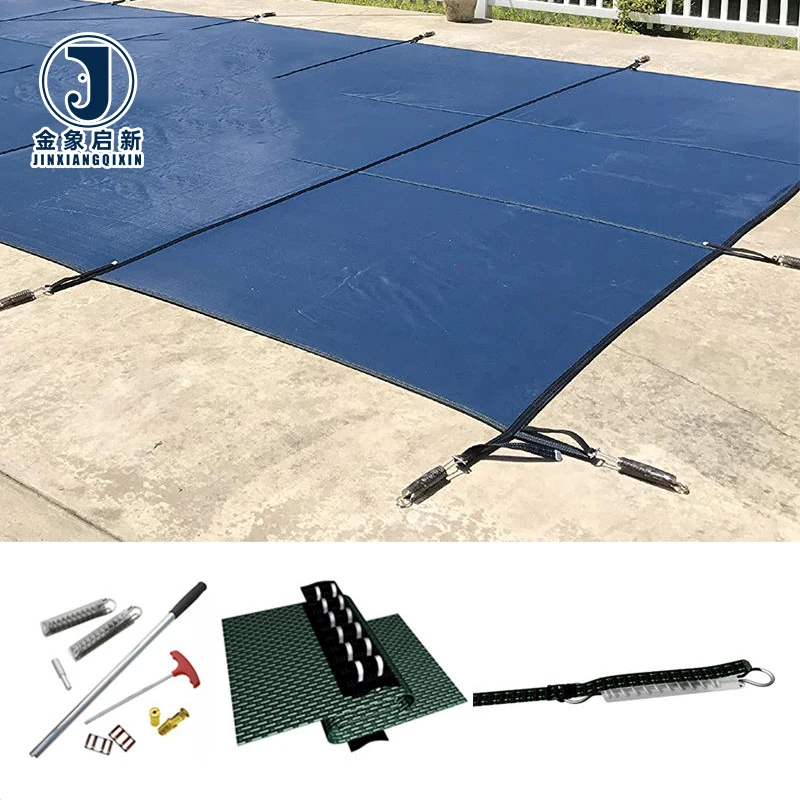
A: Reinforced hems use additional fabric strips welded along the perimeter to distribute anchor tension. Eyelets are set through doubled material layers with metal or welded PVC rings. Spacing can be adjusted based on your anchoring system and expected wind load at the installation site.
Q: What documentation ships with a pool cover order?
A: Each order ships with a material specification sheet, relevant test reports for UV and anti-aging treatment, a pre-shipment inspection record, ISO and CE certificates, and a detailed packing list showing dimensions and reinforcement details for every cover in the shipment.
Related products
-
JX PVC Tarpaulin Swimming Pool Cover Material Knife Coated Fabric Waterproof UV-Resistant Windproof
¥13.00 Select options This product has multiple variants. The options may be chosen on the product page -
Custom PVC Pool Cover for In-ground Winter Safety – Manufacturer
Read more -
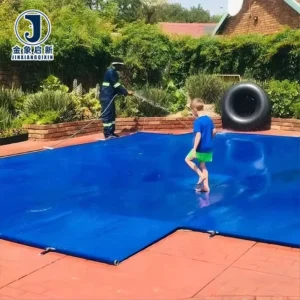
PVC Laminated Waterproof Breathable Anti-UV Blackout Organic Plain Weft Swimming Pool Covers Tarpaulin Coated
¥1.78 Select options This product has multiple variants. The options may be chosen on the product page -
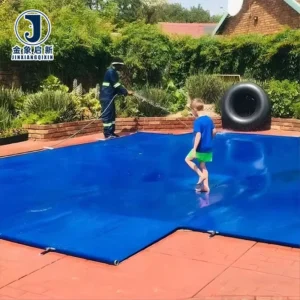
Custom PVC Pool Cover Tarpaulin – Waterproof Anti-UV
Read more