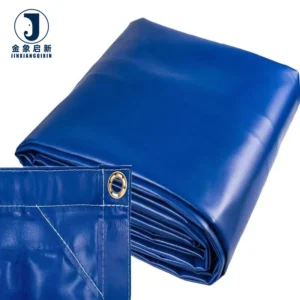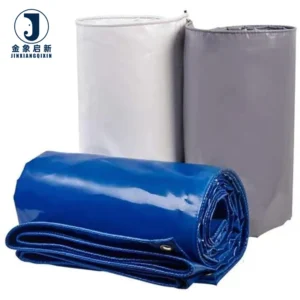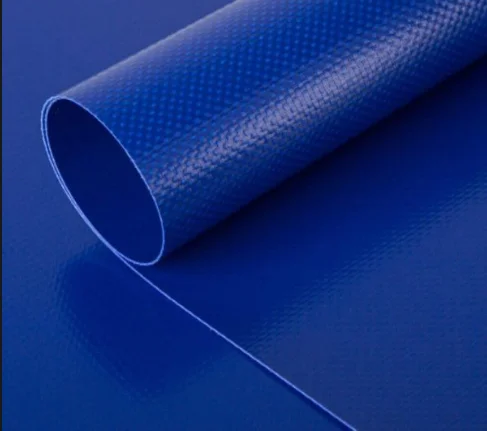
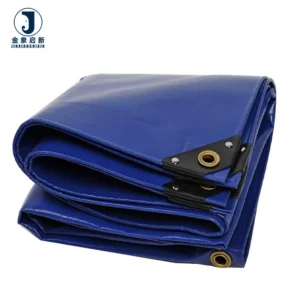
PVC Knife Coated Tarpaulin Roll with tensile, tearing and peeling resistance, full treatment menu including fire retardant, UV resistance and antibacterial options, compatible with HF, hot air and sewing.
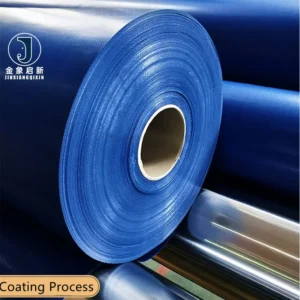
- Knife coating process ensures strong adhesion between PVC layers and base fabric, delivering reliable peel strength at welded seams and flex points.
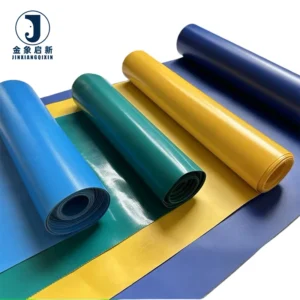
- Custom width, colour and GSM grades available with roll-to-roll consistency across bulk orders.
- 10-person R&D team delivers material samples within days, supported by 100% pre-shipment inspection on every roll.
Description
Deep Coating Weight Control — Every roll of this PVC knife coated tarpaulin passes in-line coating weight verification across three production lines, ensuring the GSM and adhesion specified at inquiry match what arrives at your fabrication floor.
Technical Specifications
| Parameter | Value |
|---|---|
| Product Type | PVC Coated Tarpaulin |
| Coating Method | Knife coated |
| Coating Material | PVC |
| Flame Retardant Grade | Available in flame retardant grades — confirm the grade required for your market (grade not stated in source) |
| UV Treatment | UV stabilised options available — test basis to be confirmed per order (test basis not stated in source) |
| Anti-Mildew | Antibacterial and mildew proof options available — test basis to be confirmed per order |
| Chemical Resistance | Oil, stain, acid and alkali resistance |
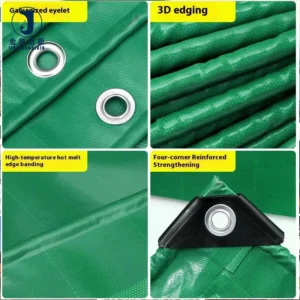
| Welding Compatibility | High-frequency (HF), hot air, sewing |
| Surface Finish | Self-cleaning surface system |
| Temperature Resistance | High temperature and cold resistant (specific range not stated in source) |
| Key Features | Tensile, tearing and peeling resistance; highly flexible with crack resistance |
Application Suitability
| Application | Exposure & Requirement |
|---|---|
| Tensile and membrane structures | Long-term UV exposure, sustained tensile load, wind-driven rain, architectural fire code compliance |
| Stadium roof and shade systems | High solar gain, thermal cycling, pooled water drainage, aesthetic colour retention |
| Portable storage structures | Forklift and pallet abrasion, UV and moisture ingress, repeated assembly and tear-down |
| Airport hangar fabric | Wide-span tensile stress, jet fuel and hydraulic fluid contact, stringent aviation fire standards |
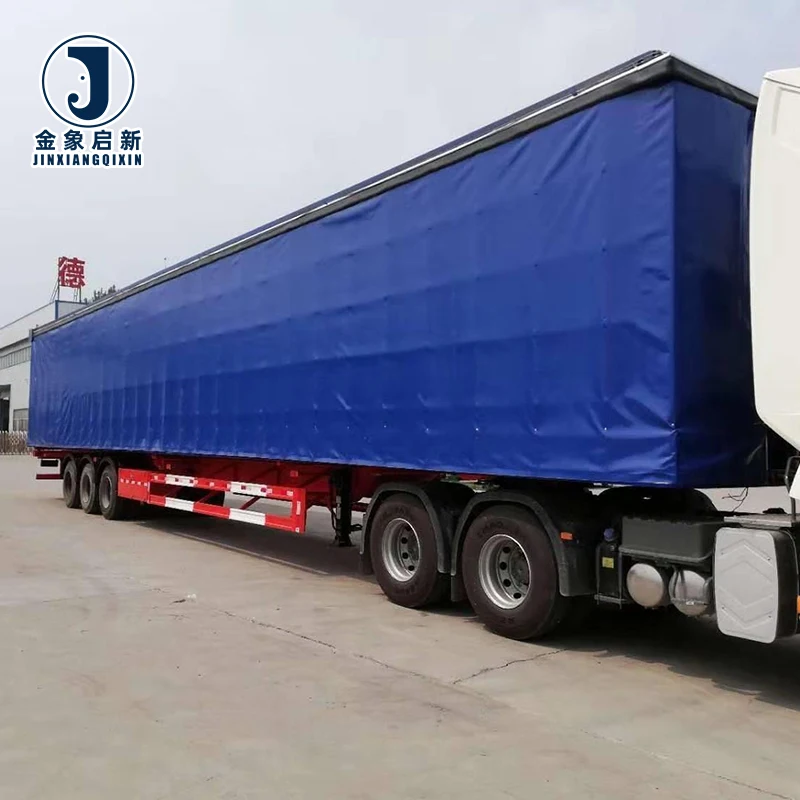
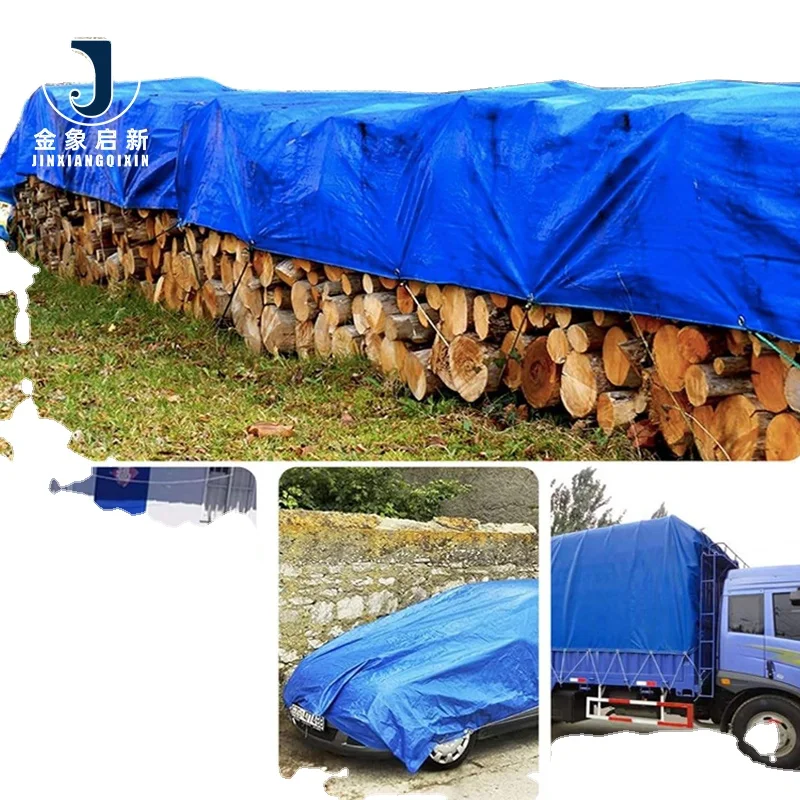
| Truck side curtain and cover | Constant flexing at tie-down points, road debris impact, diesel and oil splash, daily roll-up stress |
| Large format technical textiles | Digital print adhesion, flat panel welding, dimensional stability under tension |
Why Stated GSM Does Not Guarantee Tensile and Tear Strength
Coating weight and base fabric denier must be evaluated together, not in isolation.
A heavy coat applied over a low-denier, loosely woven base will meet the quoted GSM on the scale but fail at the weld line when the structure flexes under wind load. Knife coating allows the PVC compound to penetrate the yarn interstices rather than sitting on top, which changes how the material resists tear propagation. When buyers focus on GSM alone and skip the base fabric specification, the result is a roll that feels substantial in the hand but tears along the heat-welded seam under moderate tension [NEED_CITE: tensile and tear test methods for coated fabrics per ISO 1421]. Requesting both the coating weight breakdown and the base fabric denier alongside the GSM figure eliminates this blind spot before the order is placed.
Knife Coating Process and Adhesion Integrity
The knife coated construction drives PVC compound directly into the weave of the base fabric under controlled blade pressure, rather than laminating a pre-formed film on top. This produces a mechanical bond between coating and yarn that resists delamination at the high-stress zones where panels are joined. For PVC coated tarpaulin roll applications that demand reliable heat welding, this penetration is critical — a laminated surface tends to separate at the seam before the base fabric yields. The result is a material where the welded joint performs in line with the body of the fabric.
Welding Compatibility and Seam Planning
This PVC coated tarpaulin roll supports high-frequency welding, hot air welding, and sewing, giving fabricators flexibility in choosing the join method that matches the structure’s load profile. High-frequency welding creates a homogeneous bond at the molecular level, suited to tensile panels that carry sustained load. Hot air welding is preferred for field repairs and complex three-dimensional joints. Sewing with welded tape overlays serves applications where mechanical fastening is specified. Matching the weld method to the exposure condition prevents seam failure before the fabric itself reaches end of service [NEED_CITE: HF welding parameters for PVC coated polyester fabrics].
Coating Weight, Base Fabric Denier, and Real-World Tear Resistance
The relationship between GSM and actual field performance is governed by two independent variables: the denier of the polyester yarn in the base fabric, and the proportion of that total weight contributed by the PVC coating versus the woven scrim. A higher denier base with moderate coating weight will resist tear propagation far better than a lighter base smothered in heavy coating to reach the same GSM figure. Knife coating adds another dimension — because the compound penetrates rather than caps the weave, the effective peel strength between layers is higher, which matters when a welded seam is subjected to peeling forces at flex points. The self-cleaning surface finish further reduces the accumulation of particulate and biological growth, which can otherwise degrade coating adhesion at the microscopic level over extended outdoor exposure.
The Hidden Cost of Colour Variance Across Rolls
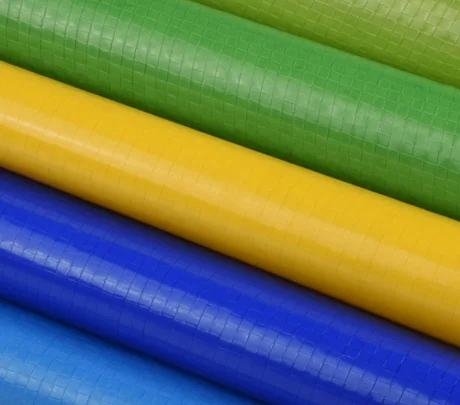
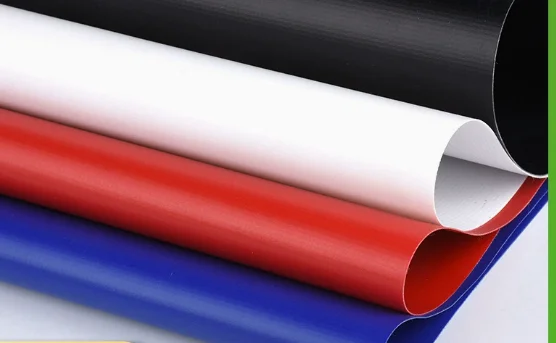
When a distributor orders multiple rolls for a single project and the colour shifts from one roll to the next, the defect is invisible in the warehouse but glaring once panels are installed side by side on a tensile canopy or shade structure. The customer rejects the installation, the contractor absorbs the rework, and the distributor is left holding replacement stock. This type of batch-to-batch colour inconsistency is one of the most frequent quality complaints in the coated fabric trade, and it is almost always traceable to insufficient pigment dosing control at the compounding stage [NEED_CITE: colour consistency standards in industrial coated fabric production]. Specifying a Pantone or RAL reference at inquiry and requiring a pre-production sample from the actual dye lot eliminates the risk before full production begins.
What Thirty Years of Coated Fabric Focus Delivers for Your Order
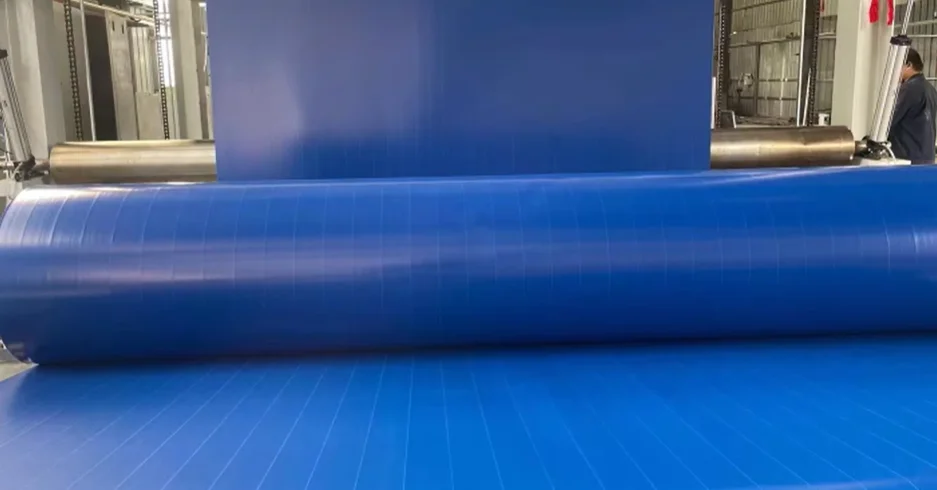
Three full production lines with thirty-six sets of professional equipment allow this facility to run bulk PVC coated tarpaulin roll orders while maintaining in-line coating weight monitoring throughout the shift. The ten-person R&D team handles custom width slitting, colour matching to Pantone or RAL standards, pattern printing specifications, and sample development that typically turns around within days rather than weeks. A dedicated QA/QC function inspects every roll at each production stage, culminating in a full pre-shipment inspection that verifies coating weight, colour, and surface quality against the approved sample. This is not a generalist mill running coated fabric as one product among many — the entire facility is configured around PVC and PE coated textiles, which is why process control remains consistent across repeat orders.
Documentation & Verification
- Material specification sheet stating GSM, base fabric denier, coating weight, and colour reference for each roll batch
- Test report for UV and flame retardant grades matched to the production batch supplied
- Pre-shipment inspection record with coating weight verification per roll included
- Roll packing list with certificate of origin for customs clearance
- ISO and CE certificates covering the manufacturing facility and product scope
Fabrication, Handling & Storage
- Set HF welder frequency and dwell time to match the PVC coating thickness for consistent molecular bonding across the seam
- Hot air weld temperature and travel speed must account for the self-cleaning surface finish, which may require adjusted heat input
- Store rolls upright on pallets in a covered area to prevent flattening and permanent creasing of the knife coated surface
- Allow rolls to acclimatise to ambient workshop temperature before unrolling to prevent coating micro-cracking in cold conditions
- Use only PVC-compatible plasticisers and cleaners on the self-cleaning surface to avoid stripping the finish
- Plan panel cutting layout to minimise off-cut waste, accounting for the full available custom width
Requesting a Specification That Matches Your Project
Provide the end-use application, the structural load the fabric must carry, and any fire classification your local building code requires so the correct flame retardant grade can be specified. State the required roll width, colour reference, and whether you need plain rolls or finished panels with hems and welding. If this is a first order or a new colourway, request a production sample from the dye lot to confirm colour, hand feel, and weld behaviour before committing to full volume.
Frequently Asked Questions
Q: How do you verify GSM and coating weight before shipment?
A: Each roll passes through in-line coating weight measurement during production, and a dedicated QA/QC check is performed at the pre-shipment inspection stage. The inspection record includes the measured coating weight per roll and is supplied with the shipping documentation so you can cross-check on arrival against the material specification sheet.
Q: Can I get a test report for UV or flame retardant treatment with my order?
A: Yes. When UV stabilised or flame retardant treatment is specified at inquiry, a test report traceable to the production batch is provided with the shipment documentation. Confirm the specific flame retardant grade your local building code requires at the quotation stage so the correct compound is selected.
Q: What custom widths and roll lengths are available, and what are the minimums?
A: The facility supports custom width slitting and custom roll lengths across all GSM grades. Minimums vary by colour and treatment combination. Submit your required width, length, and colour at inquiry for a confirmed minimum and lead time from the production planning team.
Q: Will colour be consistent across all rolls in a single order?
A: Colour consistency is controlled at the compounding stage, with pigment dosing matched to the approved Pantone or RAL reference. A pre-production sample from the actual dye lot is available for your approval before full production, ensuring every roll in the order matches the confirmed standard.
Related products
-
Factory Custom 9×11 Poultry Curtains Tarpaulin PVC Coated Waterproof and Anti-Static Tarp for Chicken Coop Farms
¥0.85 Add to cart -
PVC Tarpaulin Waterproof Triangular Tarpaulin Folha De Tarpaulina Truck Tarpaulin
¥0.90 Select options This product has multiple variants. The options may be chosen on the product page -
Heavy Duty Fire Retardant Waterproof PVC Coated Tarpaulin Rolling Tarp Materials for Truck Cover Tents Outdoor Usage
¥1.40 Add to cart -
PVC Coated Tarpaulin Outdoor Poly Tarp Plastic Canvas Tarpaulin Roll 650 Gsm for Truck Tent. Roof Cover
¥2.70 Add to cart